 Skip to content

SRS airbag module reset after deployment — What to do
Direct answer: After an airbag deploys, the SRS airbag module stores crash data and may go into a fault state — it usually needs to be inspected, diagnosed with a scan tool, and either reset or replaced by a trained technician. Resetting means clearing crash records and reprogramming the module so the vehicles airbag system is safe and functional again.
Ship your SRS module to LockNCal from anywhere in the US. We clear the crash data and restore it to a factory-like state for all makes 2008 and newer. Start a mail-in airbag module reset or call (469) 277-7277.
After a fault like this, the airbag/SRS module often needs resetting to clear the warning light — that’s our airbag module reset service, mobile in DFW or mail-in nationwide with free two-way shipping.
Key Takeaways
- SRS airbag module reset after deployment requires professional diagnosis and specialized tools.
- Resetting clears crash data and reprograms the module; replacement is required if the module is physically damaged or non-reprogrammable.
- Safety first: never drive with an airbag light on — it means the restraint system may not work in a second crash.
- LockNCal offers both mobile and mail-in SRS module reset services nationwide.
What is the SRS airbag module and what happens when it deploys?
The SRS (Supplemental Restraint System) airbag module is the central control unit for airbags and some seat belt pretensioners. When a crash triggers deployment, the module records crash data, stores diagnostic trouble codes (DTCs), and often sets the airbag warning light. Many modules are designed with a crash-record flag that prevents normal operation until the data is cleared or the module is replaced.
Why you cant just clear the light and drive
Clearing the airbag light with a basic OBD2 scanner rarely fixes the underlying issue after deployment. The SRS module commonly keeps a crash-record status that tells the vehicle the system has already deployed. That stored record must be properly removed and the module reprogrammed by a qualified technician; otherwise the system may not be prepared for another collision.
Step-by-step: what a professional SRS airbag module reset after deployment looks like
Heres the typical professional workflow. This is not a DIY checklist — it requires special tools, factory software, and experience with safety systems.
- Verify ownership and vehicle history (to comply with legal and safety protocols).
- Scan the vehicle with a full SRS-capable diagnostic tool and save the crash snapshot and DTCs.
- Inspect the vehicle for deployed airbags, cut seat belt pretensioners, damaged sensors, wiring harness damage, and structural issues.
- Decide whether the original module is serviceable. Some modules are reprogrammable/clearable; others must be replaced.
- If resettable: use factory-level or approved service tools to clear crash data and reflash the module with the correct calibration and VIN data.
- After reset or replacement, rerun diagnostics, perform any required seat belt or sensor replacements, and verify the airbag system passes all built-in self-tests.
- Road test and final inspection, plus provide a diagnostic report to the owner.
Important safety notes
- Reset must only be performed after all deployed components are replaced and vehicle structural repairs are complete.
- Clearing codes without addressing physical damage or sensor faults is unsafe and may be illegal in some places.
- Always keep documentation of the repair and the technicians diagnostic report.
Symptoms that indicate a module needs reset or replacement
- Airbag (SRS) warning light is on and remains on after a quick code clear.
- Deployed airbags or cut pretensioner labels visible.
- Multiple SRS-related DTCs when scanned (for example, crash data stored codes).
- Vehicle self-test fails or airbags don’t deploy in diagnostics (simulation) mode.
Reset vs Replace: how to decide
Not every deployed car needs a new module. The decision depends on module type, damage, and whether the module is designed to be serviceable. The table below summarizes typical factors.
| Factor | Reset (reprogram) | Replace |
|---|---|---|
| Module records crash data | Can be cleared if the module supports reflash and shows no internal damage | Required if memory or internal circuitry is damaged or flagged non-serviceable |
| Physical damage | Not suitable | Required |
| Manufacturer policy | Allowed by some OEMs and third-party services | Mandatory when OEM specifies replacement |
| Cost and availability | Often faster and less disruptive if permitted | May be necessary if reset not allowed or parts are displaced |
Typical DTCs and plain-English explanations
Diagnostic trouble codes vary by manufacturer, but here are common SRS code types and what they usually mean:
- Crash-data present / Crash flag codes — The module logged a deployment event and put the system into a non-operational state until cleared or replaced.
- Sensor/impact sensor circuit open or short — A deployed sensor or damaged wiring needs repair or replacement.
- Seat belt pretensioner circuit fault — The pretensioner may have fired (cut) and needs replacement.
- Module communication errors (CAN bus) — The module may not be communicating correctly with other systems and could need reprogramming or repair.
How long does a proper reset take?
From the technicians perspective, the hands-on reset or reflash typically takes an hour or two once the module and all replaced components are present. But total repair time depends on parts procurement, body repairs, and any additional diagnostics. For scheduling and quotes, call (469) 277-7277.
Can I do the reset myself?
No. The SRS is a lifesaving system. Resetting a module after deployment requires factory-level tools, access to OEM programming files, and knowledge of vehicle safety repairs. Improper resets can leave the system inoperative and unsafe.
Options: mobile service vs. mail-in SRS airbag module reset
There are two common service models for SRS module resets:
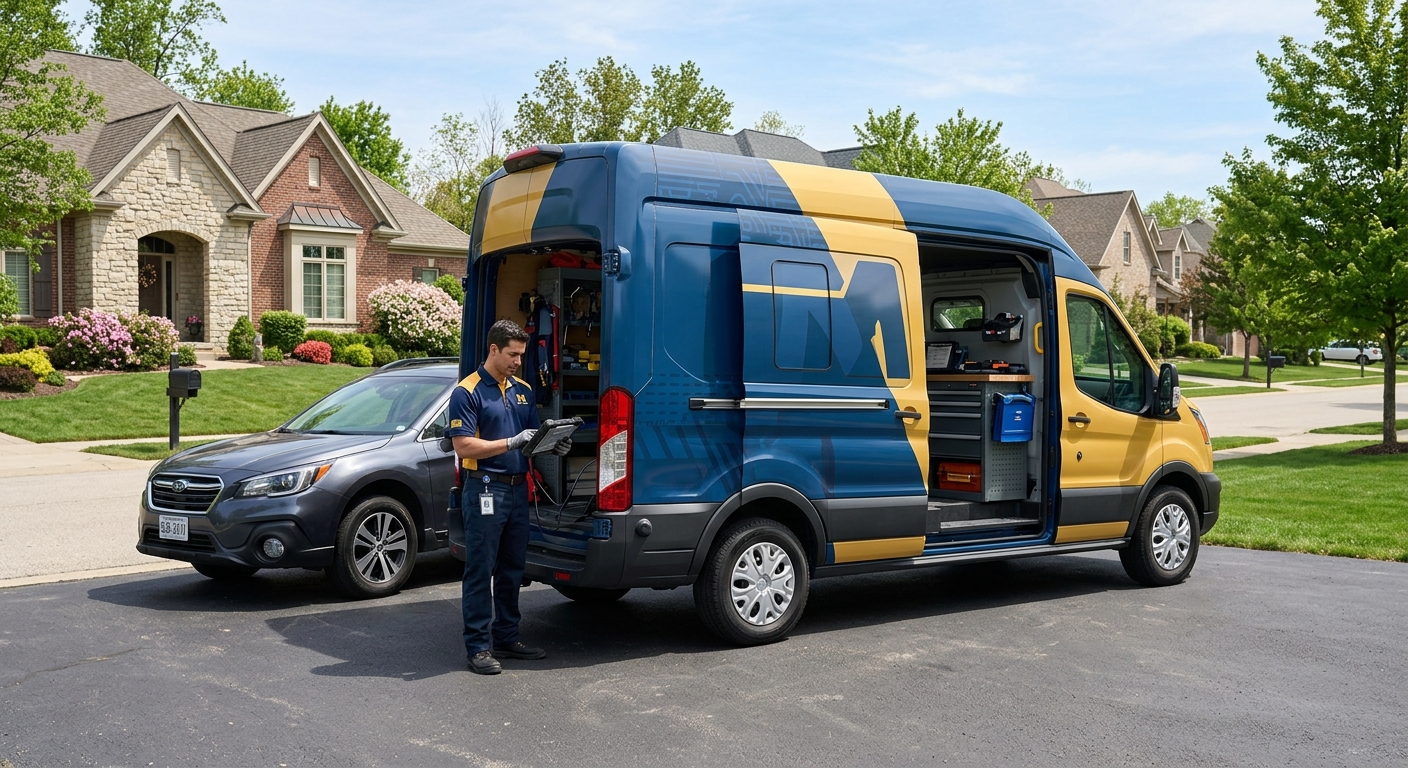
- Mobile service: A trained technician comes to your Fort Worth home or shop to diagnose and, when possible, reset modules on-site.
- Mail-in service: You ship the SRS module to a specialized facility for secure reset and return shipping.
Both have pros and cons. Mobile service is convenient for vehicles that are drivable or on-site; mail-in works well if you already removed the module or prefer the controlled-shop environment.
When to involve other repairs
Resetting an SRS module is only one part of making the vehicle safe after a crash. Typical accompanying repairs include:
- Airbag replacement (deployed bags)
- Seat belt pretensioner replacement
- Impact sensor replacement
- Clock spring or steering wheel controls repair
- Structural/body repairs and sensor alignment
For combined services (airbag, SRS, seat belt, clock spring), see our vehicle safety system services: https://lockncal.com/vehicle-safety-system-services/
What we recommend in Fort Worth (and nationwide)
If youve had a deployment, start with a full SRS diagnostic. If you prefer a technician to come to you, our mobile team provides on-site inspection and some resets — learn more about our mobile service here: https://lockncal.com/mobile-airbag-module-reset-service/. If you want a controlled-shop approach, our mail-in option accepts modules from anywhere in the U.S.: https://lockncal.com/mail-in-airbag-module-reset-service-free-shipping/.
Common misconceptions
- Myth: “Any scan tool can reset an airbag module.” Reality: Only specific factory or approved tools and procedures can safely clear crash data.
- Myth: “Resetting is always cheaper and fine.” Reality: Resetting is appropriate only when the module is serviceable and all deployed parts are replaced.
FAQ
Q: Is it legal to reset an airbag module after deployment?
A: Laws vary. Technically, resetting for proper repair and safety documentation is a valid service when performed by a qualified technician. Keep ownership records and repair documentation. Check local laws if youre unsure.
Q: Will resetting delete crash data permanently?
A: A proper reset clears the modules crash flags and stored crash snapshot according to OEM procedures. Reputable services preserve diagnostic logs and provide a report for your records.
Q: How do I know if my module can be reset or must be replaced?
A: A technician must scan the module and inspect it. Some modules are flagged non-serviceable by the OEM or show internal damage; in those cases replacement is required.
Q: Can you reset my module on-site in Fort Worth?
A: Yes — depending on the vehicle and module, our mobile technicians can diagnose and, where possible, reset SRS modules on-site. Call (469) 277-7277 to discuss your specific vehicle.
Q: How do I start a mail-in reset?
A: Visit our mail-in airbag module reset page for instructions and free shipping details: https://lockncal.com/mail-in-airbag-module-reset-service-free-shipping/
If your vehicles airbag light is on after a crash, dont delay. For professional help in Fort Worth or nationwide mail-in service, schedule a mobile visit or start a mail-in reset. Learn about scheduling and services here: https://lockncal.com/schedule-your-service-appointment/ or call (469) 277-7277. Well walk you through the safest next steps.


