 Skip to content

B1000 ECU Internal Fault Airbag: Causes, Symptoms, Fixes
What B1000 means: Control unit internal fault — on most vehicles the airbag/restraint control module. It is a airbag / SRS code.
If the airbag module is holding crash data or an internal fault, it needs a professional reset. Ship it to LockNCal from anywhere in the US; we restore it to a factory-like state for all makes 2008 and newer. Start a mail-in airbag module reset or call (469) 277-7277.
Does LockNCal handle this? Yes — B1000 involves your vehicle’s airbag / SRS system, which is exactly what our mobile team specializes in. Call or text (469) 277-7277 or book online and we’ll take care of it.
Direct answer: B1000 means the airbag control unit (ECU) reports an internal fault inside the module — not just a loose connector. It can stop airbags and seatbelt pretensioners from arming. Diagnosis usually requires scanning, visual checks, and sometimes module repair or replacement by a trained technician.
Key Takeaways
- B1000 signals an internal fault in the airbag/SRS control module (ECU).
- Common symptoms: SRS/Airbag light on, horn chime, airbags disabled — driving may be unsafe.
- Diagnosis needs a scan tool, live-data checks, and wiring verification; sometimes the module can be repaired or reset.
- Legal and safety steps matter if crash data is present — follow shop guidance.
What the B1000 Code Means
On many vehicles the trouble code B1000 (or similarly named) is logged when the airbag ECU detects an internal malfunction — that means the control unit itself flagged a problem inside its electronics or memory. This is different from a simple wiring fault or a disconnected sensor. When the ECU senses an internal error it may disable airbag deployment to avoid unpredictable behavior.
Why it matters
Because the airbag ECU controls deployment logic, an internal fault can mean the Supplemental Restraint System (SRS) may not deploy in a crash. That’s why a B1000 should be diagnosed and repaired promptly — it’s a safety system fault, not just an annoying dash light.
Common Symptoms You’ll See
- SRS / Airbag warning light stays solid or flashes on the dash.
- A chime or repeated warnings when you start the car.
- Airbag, seatbelt pretensioner, or SRS-related systems show as unavailable in diagnostics.
- Sometimes other body modules report related codes if they communicate with the airbag ECU.
Usual Causes of B1000
- Internal memory or processor error inside the airbag ECU.
- Corrosion or water damage that weakened internal components.
- Previous crash damage or electrical event that corrupted stored crash data or firmware.
- Failed solder joints, capacitor/voltage regulation problems, or other electronics failures inside the module.
How Technicians Diagnose It
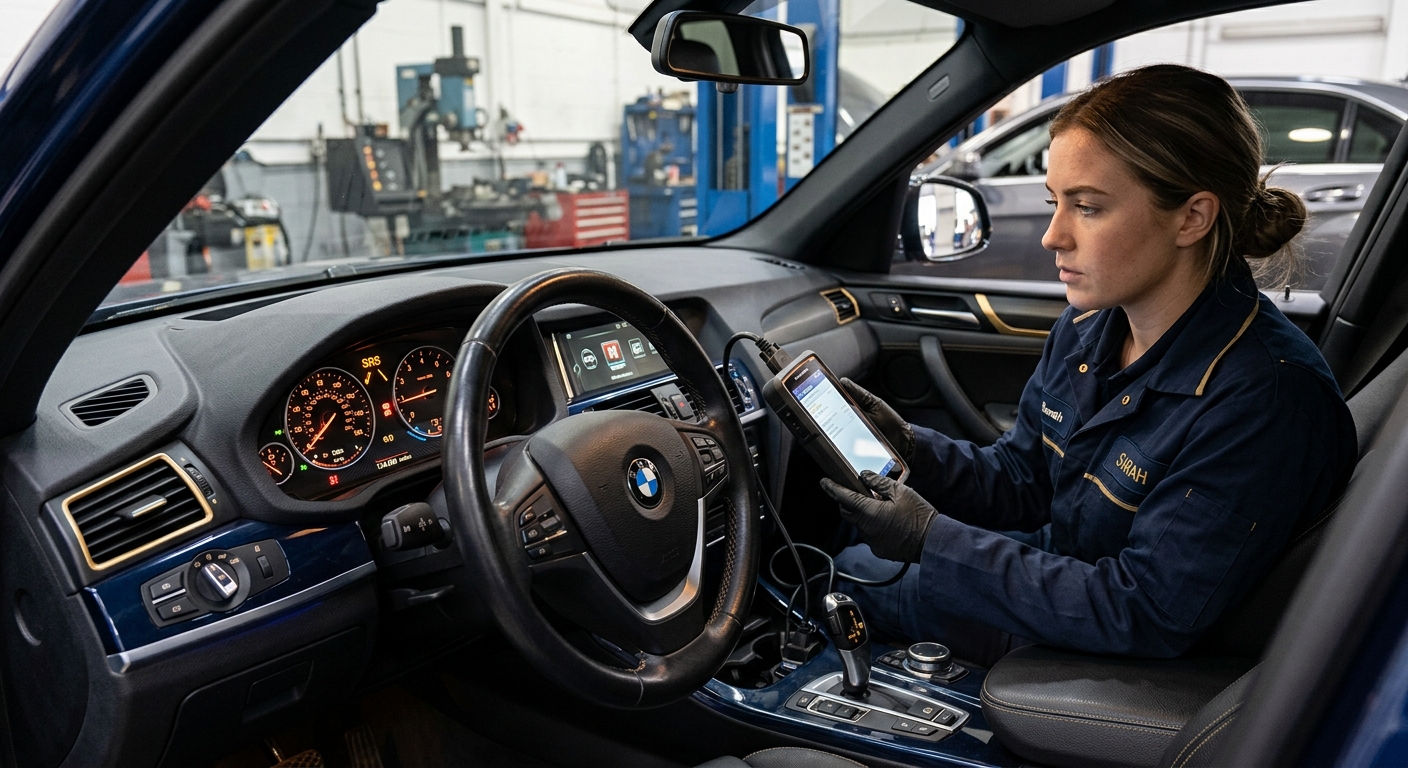
Diagnosing B1000 is methodical. A qualified technician will:
- Read the exact DTCs with a professional scanner and note freeze-frame data.
- Check for related codes from ABS, BCM, or instrument cluster that indicate a communication problem.
- Inspect wiring, connectors, and ground points for damage, corrosion, or rodent chew.
- Confirm power and ground at the airbag ECU with the battery at normal voltage.
- Assess whether crash data is present — if the module recorded a collision, it usually needs a proper reset or qualified repair.
Tools and tests that help
Professional scan tools (with SRS capabilities), wiring diagrams, and sometimes bench-testing or module programming tools are required. Attempting resets with a consumer OBD-II reader may not clear an internal ECU fault.
Reset vs Repair vs Replace
Once the cause is known, the options are:
- Repair or rework the module (electronics repair) if the fault is internal but the module is serviceable.
- Reset/clear crash data and codes if the module is otherwise healthy and no hardware fault exists (requires proper tools and legal compliance).
- Replace the ECU and program it to the vehicle when repair isn’t possible or when crash damage is present and the module is not serviceable.
| Symptom | Likely Cause | Typical Fix | Urgency |
|---|---|---|---|
| SRS light steady on | Internal module error or communication fault | Scan, inspect, repair or replace module | High — safety system compromised |
| Codes for crash data present | Previous collision recorded in module memory | Qualified reset/repair or replace (follow legal procedures) | High — requires proper handling |
| Intermittent SRS light | Corroded connector or weak ground | Repair wiring/clean connectors, retest | Medium — fix before long-term driving |
DIY Checks You Can Do Safely
- Do not disconnect the battery or work on the airbag system unless you are trained. Airbags can be dangerous when mishandled.
- Visually inspect the airbag ECU area for water, oil, or rodent damage (usually under the center console or under a seat).
- Check visible connectors and grounds for corrosion or looseness — tightening a ground can sometimes restore communication.
- If you see signs of collision damage, do not attempt to reset the module yourself — get it checked by a professional.
Bench Repair and Mail-In Options
Some modules are repairable on a bench. Bench repair means the module is removed from the vehicle and a specialist repairs failed components or updates firmware. LockNCal offers a nationwide mail-in airbag module reset and bench service if your module can be serviced off-vehicle. For a fully mobile option where we come to you in Fort Worth or surrounding DFW areas, see our mobile airbag module reset service for on-site assistance.
Important note: clearing crash data or reprogramming an SRS module has safety and legal implications. A qualified shop will verify ownership, inspect the vehicle repairs, and follow the right procedures before clearing crash memory.
Typical Repair Workflow
- Scan and record all DTCs and freeze-frame data.
- Inspect wiring, connectors, and mounting — correct simple issues first.
- If internal fault remains, remove the module for bench testing or arrange a mail-in service.
- Repair or replace and then program/recalibrate as needed.
- Verify system health with a final scan and road-test if required.
When It’s Safe to Drive
If the SRS/airbag light is on because of a B1000, your supplemental restraint systems may not deploy correctly. Driving to a repair shop is usually safe, but avoid long trips and do not delay repairs. If other warning lights or drivability issues appear, have the vehicle towed.
FAQ
What exactly does code B1000 mean?
B1000 indicates the airbag control module detected an internal fault — a hardware or memory problem inside the ECU. It means the module reported an error it couldn’t resolve internally.
Can I clear B1000 with a basic OBD-II scanner?
Usually no. Consumer scanners often can’t clear internal SRS ECU faults. Professional tools, bench repair, or reprogramming may be required after the root cause is fixed.
Is it safe to keep driving with the SRS light on?
It’s not recommended. The SRS may not deploy in a crash. You can drive a short distance to a repair facility, but prioritize a diagnosis and repair soon.
Can crash data be removed from the module?
Yes, crash data can be cleared by qualified technicians following proper procedures and owner authorization. Laws and requirements vary, so a professional shop should handle this.
How much will it cost to fix B1000?
Costs depend on the vehicle, whether the module can be repaired, and if programming is needed. For an accurate quote call our Fort Worth team at (469) 277-7277.
Next Steps — Fort Worth Help
If you’ve got a B1000 code or an SRS light on in Fort Worth, don’t ignore it. We can diagnose on-site, perform bench repairs, or accept your module by mail for a professional reset. Learn more about our vehicle safety system services or call (469) 277-7277 for a diagnosis and quote. If you prefer to schedule, visit our service page.
Vehicle safety system services • Call (469) 277-7277


