 Skip to content

Used Car Pre-Purchase Inspection in Irving — What to Expect
Direct answer: A used car pre-purchase inspection in Irving is a detailed, independent check of a vehicle’s mechanical, electrical, and structural condition to uncover hidden problems before you buy. It saves time, reduces risk, and gives negotiating leverage by identifying safety, repair, or title issues a seller may not disclose.
LockNCal inspects the vehicle’s safety systems before you buy, wherever the car is across Dallas–Fort Worth. Book a pre-purchase inspection or call (469) 277-7277.
Key Takeaways
- A pre purchase used car inspection looks beyond aesthetics to the engine, brakes, frame, electronics, and safety systems.
- Bring the vehicle history report and test drive the car when the inspector is present.
- Important red flags include frame damage, persistent coolant or oil leaks, mismatched paint, and illuminated warning lights like the airbag/SRS light.
- Mobile inspectors in Irving can perform a full on-site inspection or recommend follow-up module programming or SRS services if needed.
Why a pre purchase inspection for used car matters
Buying used is smart money, but vehicles hide problems. A pre purchase inspection for used car uncovers issues that are expensive or unsafe—before you sign. In Irving and the Dallas–Fort Worth area, road salt, hot summers, and urban wear can accelerate certain problems. An inspection turns uncertainty into facts so you can negotiate, walk away, or plan repairs.
What a complete used car pre purchase inspection includes
Inspections vary by provider, but a thorough pre-purchase car inspection typically covers these systems:
- Exterior and body: rust, paint mismatch, and frame or structural damage.
- Underbody: rust, suspension damage, and fluid leaks.
- Engine and transmission: cold start, idle, leaks, and shifting behavior.
- Brakes and tires: pad thickness, rotor condition, and tire wear pattern.
- Electrical: battery health, charging system, lights, and infotainment features.
- Safety systems: airbag/SRS status, seat belts, and crash module codes.
- Diagnostics: OBD-II scan for DTCs (diagnostic trouble codes) and road-test verification.
Common inspection tools and tests
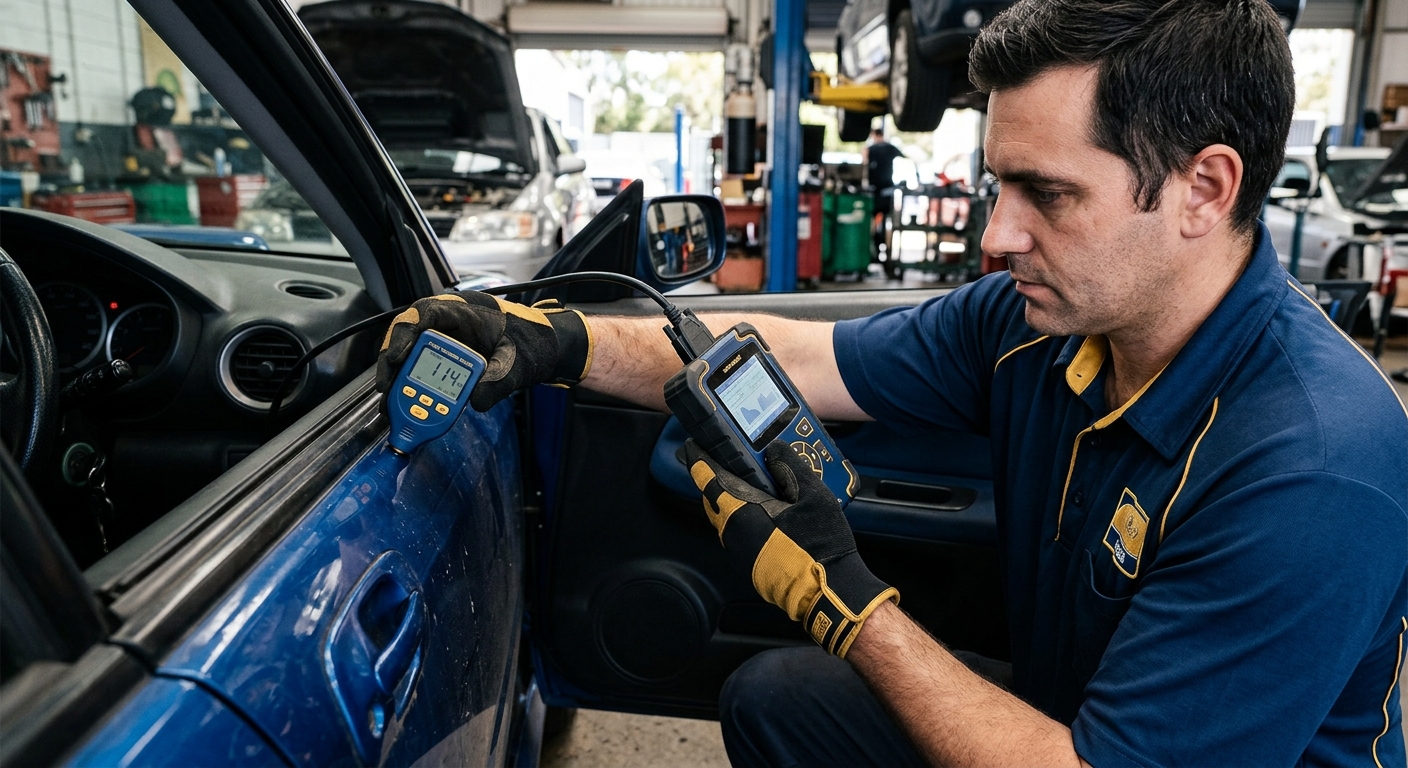
- OBD-II scanner to read DTCs (these are codes the car’s computer stores when it detects problems).
- Compression and leak-down checks for engine health (when suspicious noises or low power are present).
- Visual frame measurement and paint thickness gauge to detect previous collisions.
- Road test to evaluate transmission shifts, steering pull, vibrations, and noises.
How to prepare for a pre purchase inspection
- Bring the seller’s maintenance records and any vehicle history report (Carfax, AutoCheck).
- Test drive the car for at least 10–15 minutes with the inspector—city and highway if possible.
- Turn on every light, climate control setting, and infotainment function while the inspector watches.
- Disclose anything the seller told you about accidents, repairs, or recurring issues.
Red flags that should stop a purchase
Finding a problem doesn’t always mean “don’t buy,” but some issues are deal-breakers or require immediate repair and price adjustment:
- Structural/frame damage or major weld repairs—these affect crash safety and resale value.
- Persistent oil or coolant leaks that indicate engine or head gasket problems.
- Transmission slipping or delayed shifts during the road test.
- Multiple active DTCs related to brakes, airbags (SRS), or engine misfire codes that the seller can’t explain.
- Rust in critical areas like suspension mounts, rocker panels, or subframe.
Short table: Inspection priority checklist
| Priority | What inspector checks | Why it matters |
|---|---|---|
| High | Frame/structural damage, airbag/SRS faults | Affects crash safety and may be expensive to repair correctly |
| Medium | Transmission behavior, engine noises, leaks | Indicates major mechanical or long-term reliability problems |
| Low | Minor cosmetic damage, non-critical electronics | Often fixable and lower cost; affects appearance and comfort |
Understanding OBD-II codes and safety system warnings
On an OBD-II scan you may see DTCs—short for diagnostic trouble codes. They’re not a sentence; they’re clues. For example:
- P0300 means random/ multiple cylinder misfires—could be ignition, fuel, or engine mechanical issues.
- P0420 indicates catalytic converter efficiency below threshold—could be exhaust or sensor-related.
- B00xx or U01xx style codes often relate to body or network communications (airbag modules and other control modules).
If the inspection finds an airbag/SRS warning light, that’s important. SRS (Supplemental Restraint System) warnings mean the airbags or seat belt pretensioners might not deploy in a crash. Fixing SRS problems can require module diagnostics, crash data review, reset, or module replacement—services we perform through our vehicle safety system services and mail-in airbag module reset options.
When to ask for specialized follow-up
- If the inspector finds module errors or crash data stored in the SRS module, ask about an airbag module reset or crash data deletion service.
- If ADAS features (lane assist, adaptive cruise) aren’t working or the vehicle had windshield or suspension work, an ADAS calibration may be required.
- Modern cars often need module programming after key or body control changes—ask about mobile module programming if keys, immobilizer, or modules are suspect.
We handle many of these specialized services. See our vehicle safety system services and our ADAS calibration offerings for details.
How inspectors report findings
A good report contains photos, a prioritized list of issues, and recommended next steps. Expect clear language: what needs repair now, what can wait, and estimated effort (not price). Ask for clarification on any technical term. If the inspector lists DTCs, they should explain each code in plain English so you know whether it’s urgent.
Buying strategies after the inspection
- Walk away if there’s undisclosed structural damage or an unresolved safety-system fault.
- Request repair or a price adjustment backed by written proof (shop estimate) for major fixes.
- Buy with a plan if only cosmetic or low-priority items are present—but factor in repair time and parts availability.
How LockNCal helps Irving buyers
We offer mobile pre-purchase vehicle inspections across Irving and DFW, with focused testing on safety systems and module diagnostics. If the inspection shows SRS or module issues, we can provide mobile services or a mail-in airbag module reset depending on the problem. Learn more about our full pre-purchase service at our pre-purchase vehicle inspection page.
FAQ
Q: How long does a pre-purchase inspection take?
A: Most thorough inspections take 45–90 minutes on site, including a road test and diagnostic scan. Time varies by vehicle complexity and any additional tests requested.
Q: Will an inspection find flood or hidden frame damage?
A: Yes—inspectors look for flood signs (odor, corrosion in hidden areas) and use paint thickness gauges and measurements to detect previous frame repairs. A good report flags probable flood or structural repairs.
Q: If the airbag light is on, should I still buy the car?
A: Not without further diagnostics. An illuminated airbag/SRS light means the system may not deploy in a crash. The inspector should identify the stored codes and recommend a reset, module repair, or replacement. We provide vehicle safety services and mail-in airbag module reset options.
Q: Can an inspector verify the odometer is accurate?
A: Inspectors compare wear patterns, service records, and diagnostic module data. They can’t guarantee odometer history, but they can often spot inconsistencies suggesting rollback or tampering.
Q: Do you offer mobile inspections in Irving?
A: Yes. We offer mobile pre purchase inspection services across Irving and the DFW area and can follow up with mobile programming, ADAS calibration, or mail-in module services if the inspection finds issues.
Next steps
If you’re buying a used car in Irving, schedule a professional pre purchase inspection before you finalize the deal. We provide clear reports and can handle follow-up SRS or module work if needed—learn more about our pre-purchase vehicle inspection and call (469) 277-7277 to discuss your vehicle and get a quote.


