 Skip to content
B0001 Airbag Code Meaning and How to Fix It
What B0001 means: Driver Frontal Stage 1 Deployment Control (driver airbag deployment loop). It is a airbag / SRS code.
If the airbag module is holding crash data or an internal fault, it needs a professional reset. Ship it to LockNCal from anywhere in the US; we restore it to a factory-like state for all makes 2008 and newer. Start a mail-in airbag module reset or call (469) 277-7277.
Does LockNCal handle this? Yes — B0001 involves your vehicle’s airbag / SRS system, which is exactly what our mobile team specializes in. Call or text (469) 277-7277 or book online and we’ll take care of it.
Direct answer: The B0001 airbag code is an SRS (airbag) fault indicating a problem in the airbag system—often a wiring, connector, sensor, or control module issue. It requires a careful safety-first diagnosis with a scan tool and visual checks; some fixes are simple, others need module repair or replacement by a trained tech.
Key Takeaways
- B0001 flags a fault in the airbag/SRS system and can come from several components.
- Don’t ignore it: airbags and pretensioners may not deploy correctly with this code present.
- Diagnosis requires a proper scan, visual inspection, and sometimes resistance checks—avoid experimenting with live airbag connectors.
- Fixes range from reconnecting or repairing wiring to resetting or replacing the airbag control module; LockNCal offers mail-in and mobile SRS services.
What the B0001 Airbag Code Means
Technically, B0001 is a diagnostic trouble code that indicates a fault in the Supplemental Restraint System (SRS). The exact definition can vary by manufacturer, but it typically points to an open, short, or communication problem in an airbag circuit, sensor, or module. In plain terms: the car’s brain says, “I detected something wrong with the airbag system.” That means your vehicle’s airbags, seatbelt pretensioners, or related safety components may be disabled or unreliable until repaired.
Common Causes of B0001
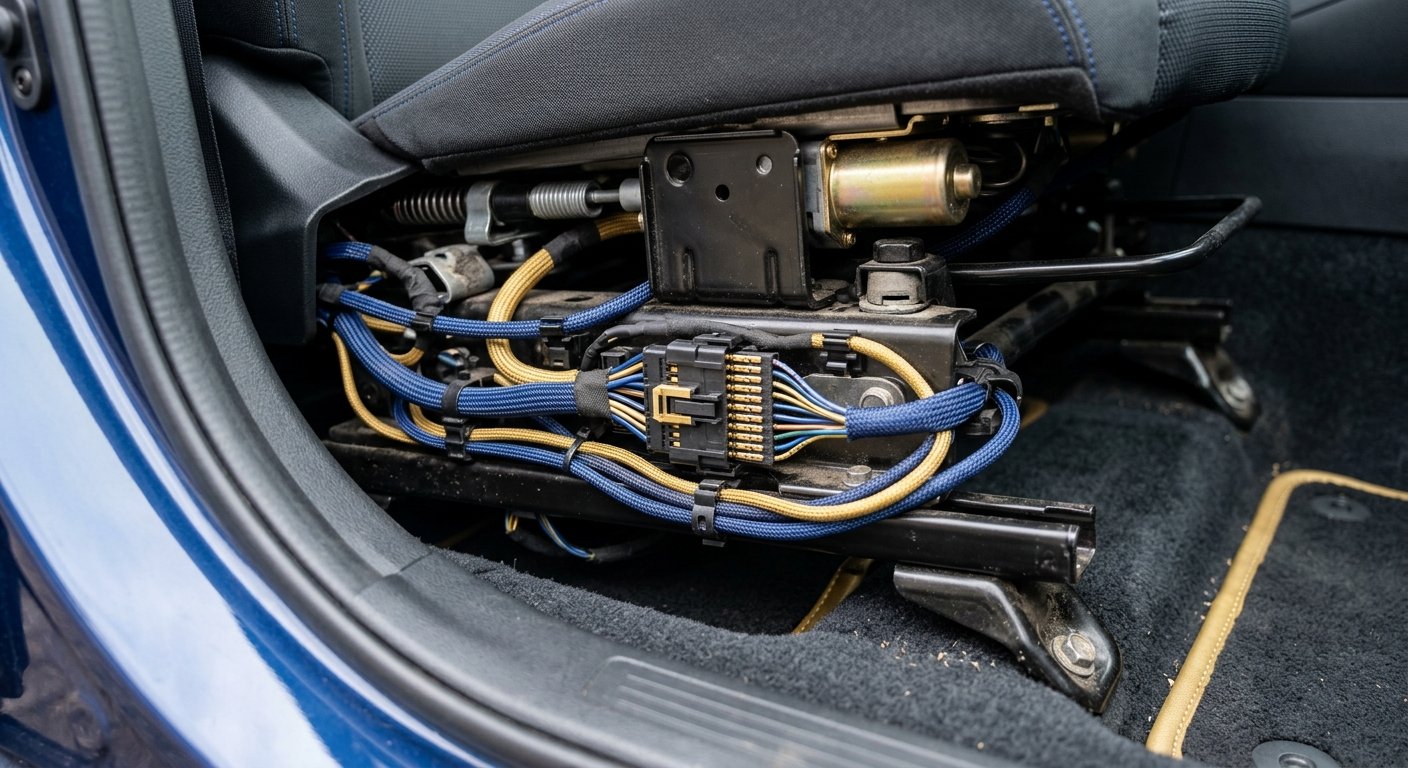
- Damaged or loose connectors under the seats, in the dash, or at the airbag module.
- Faulty clock spring (steering wheel flex cable) affecting driver-side airbag circuits.
- Seat-belt buckle or seat occupancy sensor problems (false open/shorts).
- Short, open, or chafed wiring—often from seat movement or previous repairs.
- A damaged or previously-deployed airbag or inflator that wasn’t restored correctly.
- Airbag control module (ACM) fault or stored crash data preventing normal operation.
- Low battery voltage or poor grounding affecting module operation.
Safety First: Before You Touch Anything
Airbags are explosive devices by design. If you’re not a trained technician, don’t disconnect or probe airbag connectors while the battery is connected. Always disconnect the negative battery terminal and wait the manufacturer-recommended time before working in the SRS area. If the vehicle has been in a crash, assume the system may have recorded crash data; improper handling can prevent legal and safe restoration.
How a Technician Diagnoses B0001
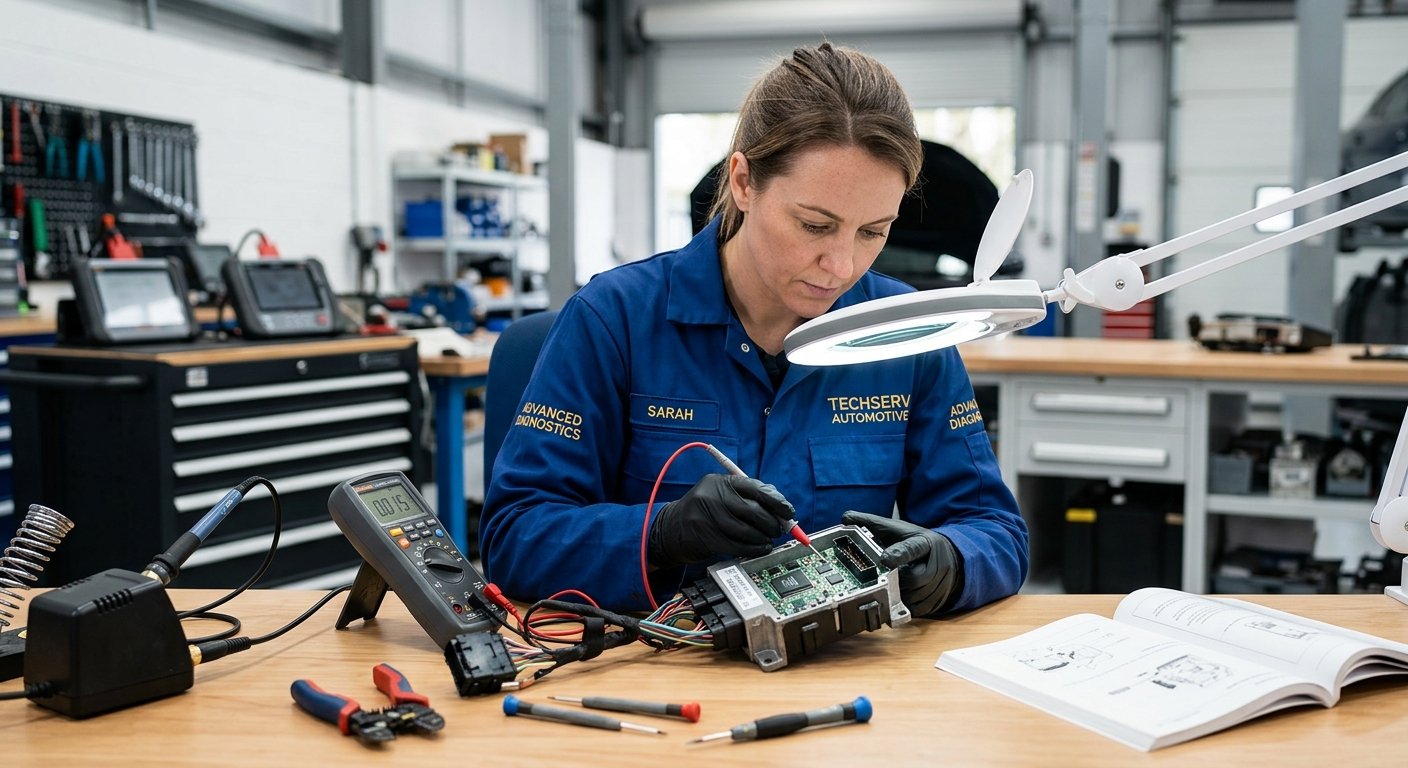
Here’s the practical workflow an SRS-trained technician follows—what you should expect when you bring the car to a shop or call a mobile service in Fort Worth.
- Scan the car with a professional SRS-capable scan tool. Record all airbag-related codes and freeze-frame data.
- Check battery voltage and grounds—SRS modules are sensitive to low voltage and bad ground connections.
- Visually inspect connectors and wiring under seats, in the dash, and at the module for corrosion, looseness, or damage.
- Check seat-belt buckles and seat occupancy (PPS) sensors; move the seat through its range and watch for intermittent faults.
- Perform targeted resistance checks on squib/airbag circuits when safe and appropriate (done by a technician).
- Read the airbag control module for crash data or internal faults that may block reset.
- Decide whether the module can be safely reset, needs professional repair, or must be replaced with proper programming and recoding.
Reset vs Repair vs Replace: A Quick Comparison
| Option | What it means | When it’s appropriate |
|---|---|---|
| Reset (clear stored faults) | Clearing codes or erasing non-crash, intermittent errors from the SRS module. | When code is caused by a temporary issue (bad connection) and module has no crash data. |
| Repair (module or wiring) | Fixing damaged wiring, connectors, clock spring, sensors, or repairing the module’s electronics. | When a specific faulty component is identified and can be made reliable again. |
| Replace | Installing a new or remanufactured airbag control module or airbag components and programming them to the vehicle. | When the module is physically damaged, contains crash data, or is not repairable. |
Typical Fixes You’ll See
- Tighten or clean a loose connector under the seat or at the module.
- Replace a worn clock spring behind the steering wheel.
- Repair chafed wiring or replace a damaged seat-belt buckle sensor.
- Module reset or repair if no crash data is present. If crash data exists, the module usually must be cleared by a professional service that deletes crash data or replaced.
- Full module replacement and programming if the module is physically damaged or not serviceable.
Why professional SRS services matter
Airbag systems are safety-critical. A DIY reset or an unqualified repair can leave airbags disabled or trigger unintended deployment. Professional shops (or a trusted mobile SRS technician) use calibrated tools, follow safety protocols, and can handle airbag module data correctly. If the airbag control module contains crash data, it should be handled legally and safely—LockNCal offers both mobile and mail-in options for SRS module reset and data handling.
For customers who prefer not to bring the vehicle in, our mail-in airbag module reset service provides nationwide, secure handling and return shipping. We also offer on-site help and programming where available—see our mobile airbag module reset details.
Preventive Tips
- Don’t ignore the airbag warning light—address SRS codes promptly.
- After any collision, even minor, have the SRS system scanned before driving extensively.
- Avoid DIY airbag connector unplugging with the battery connected—always use a qualified technician.
- Keep records of any airbag or SRS repairs for resale and safety history.
FAQ
Q: Can I clear B0001 myself with a basic OBD2 scanner?
A: Most basic OBD2 scanners cannot read or clear SRS-specific codes. Clearing without fixing the root cause can hide a real safety problem. Use a professional SRS-capable scanner or call a qualified technician.
Q: Will disconnecting the battery reset the airbag code?
A: Disconnecting the battery may temporarily clear some faults, but it won’t fix an underlying wiring fault, sensor issue, or crash data stored in the module. It’s not a reliable repair and can cause more issues if done improperly.
Q: My car was in a minor fender-bender and now shows B0001—what should I do?
A: Have the SRS system scanned as soon as possible. Even minor collisions can trigger stored events or damage sensors and connectors. Don’t delay—your restraint system may not work correctly in another crash.
Q: Can a clock spring cause B0001?
A: Yes. A damaged clock spring can open the driver-side airbag circuit and trigger SRS codes. A technician can test and replace the clock spring if needed.
Q: What are my options if the airbag module has crash data?
A: If the module contains crash data, it often requires either professional data clearing (where legally allowed) or module replacement and reprogramming. LockNCal offers both mail-in and mobile SRS services to handle module resets and safe restoration—contact us to discuss the correct path for your vehicle.
If you’re in Fort Worth and seeing B0001, we can help diagnose and repair the issue safely. Learn more about our full vehicle safety work on the vehicle safety system services page, or call (469) 277-7277 to speak with a technician and schedule service.


