 Skip to content

Auto Transponder Key Programming — Denton
Direct answer: Auto transponder key programming links the small chip inside your key to your car’s immobilizer so the engine will start. In Denton, a trained technician uses a handheld or OEM-level programmer, the vehicle’s OBD port (or dealer tools), and the vehicle VIN/PIN to program one or more keys on-site or at a shop.
Need a key made or programmed? Our automotive locksmith service in DFW comes to you across Dallas–Fort Worth.
Key Takeaways
- Programming a transponder key pairs the key’s chip to the vehicle’s immobilizer so the car will start.
- Most techs use a handheld transponder key programming tool or OEM-level module programming equipment via the OBDII port.
- If you have zero working keys, some vehicles need an OEM PIN/dealer access or module programming to add keys.
- Mobile services in Denton can save towing and dealer wait times for reprogramming and on-site key cutting.
What is a transponder key and why does it need programming?
A transponder key contains a tiny RFID chip (the transponder) in the head of the key. When you insert the key and turn it, the car’s immobilizer reads the chip code. If the code matches what the car’s immobilizer stores, the engine will start. Programming links the chip’s unique code to your vehicle’s immobilizer or body control module so the vehicle recognizes that key.
Common terms explained
- Immobilizer: the anti-theft system that prevents the car from starting without an authorized key.
- Key transponder programming: the process of adding a transponder key’s code to the car’s immobilizer database.
- On-board programming: adding a key using the car’s own programming procedure (usually requires an existing working key).
- Module programming: using an external tool or dealer software to write the key data into the immobilizer or BCM/ECU.
Signs you need transponder key programming
- Car won’t start but turns over—immobilizer light stays on or flashes.
- You have a new cut key that starts the door but not the engine.
- You lost all keys and need replacements added to the system.
- After replacing an immobilizer module, BCM, or ECU the keys no longer start the car.
Types of keys and which programming method they need
| Key type | Transponder chip? | Typical programming method |
|---|---|---|
| Standard transponder key (cut blade, no remote) | Yes | On-board programming if you have a working key; otherwise external programmer or dealer PIN |
| Remote head key (transponder + remote) | Yes | Transponder programming plus remote sync; often done with a transponder key programming tool |
| Proximity / smart key (keyless start) | Yes — rolling codes and PKI in newer cars | OEM-level module programming or dealer tools; can require VIN and PIN |
| Cloneable key (some aftermarket chips) | Depends | May be cloned with a transponder key programming tool if chip type matches |
How a technician programs a transponder key (step-by-step)
Below is a typical workflow a professional technician follows when programming a transponder chip key programming or programming a transponder key on-site.
1. Verify key type and vehicle requirements
We check the key blank, the transponder chip type, and the vehicle model/year. Some vehicles list the transponder type (e.g., ID46, 46-bit, etc.) in service documents; technicians also use chip-readers to identify unknown chips.
2. Confirm number of working keys
If you have at least one working key, many cars allow on-board programming. If you have zero working keys, the tech will check whether the vehicle accepts an OBD reflash or requires dealer PIN access or immobilizer module programming.
3. Cut the key blade
After the key is cut to match your locks, the transponder chip is ready to be programmed. Mobile locksmiths usually bring blanks and cutting equipment to your location.
4. Connect a transponder key programming tool
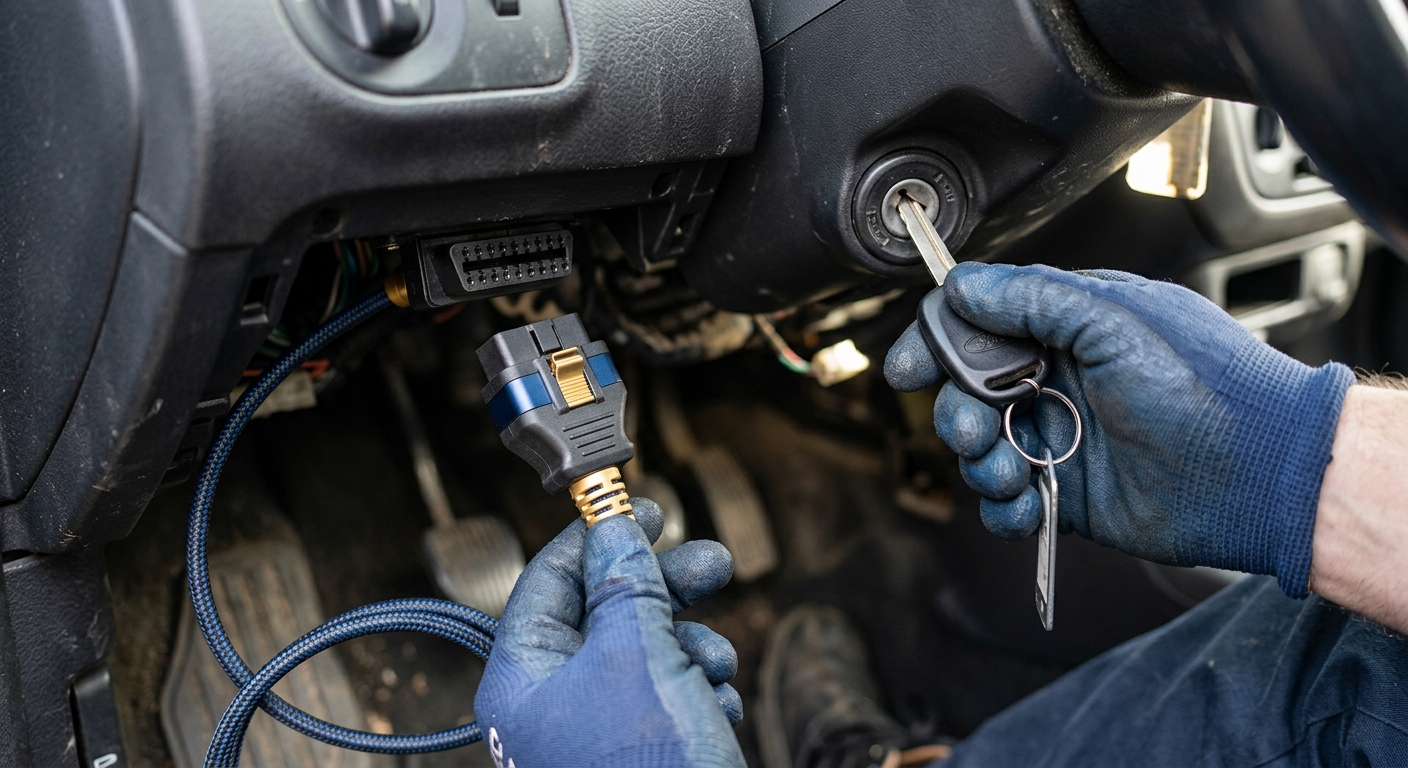
The tech connects a handheld transponder chip key programming tool or an OEM diagnostic tool to the OBDII port, follows prompts to enter the VIN or PIN if required, and chooses the “add key” or “program key” function.
5. Program and verify
The programmer writes the chip code to the immobilizer. We then test the key: door functions, remote lock/unlock (if applicable), and, crucially, starting the engine. If the vehicle uses immobilizer modules, sometimes module programming (module write/reset) is required; in those cases we use specialized module programming tools or refer to dealership-level procedures.
Tools you’ll hear about
- Handheld transponder programming tools: portable devices that read and write transponder codes through the OBD port or by cloning an existing chip.
- OEM/Dealer diagnostic equipment: full-featured tools that can retrieve the immobilizer PIN and program keys for newer vehicles.
- Key cutters and code machines: for cutting the physical key blade to match your locks.
- Chip readers/cloners: for cloning a transponder chip when an identical clone is allowed by the vehicle.
When programming gets complicated
Some modern vehicles use encrypted smart keys and PKI (public key infrastructure). That can mean the car needs a dealer-level security access, the factory PIN, or a module swap and module programming. In those cases, a locksmith may need to do module programming or factory-level diagnostics to add keys. If module work is required, our technicians handle module programming and related services — see our module programming page for details.
DIY vs. professional programming
Some older cars allow owner programming with a simple sequence of key turns or button presses. However, unfamiliar sequences, wrong chip types, or interrupted programming can lock the immobilizer and add complexity. For most modern cars, professional programming is the safer, faster option—especially when you’ve lost all keys or when proximity/smart keys are involved.
Practical tips for Denton drivers
- If you still have a working key, bring it. That often saves time and avoids needing dealer PINs.
- Have your vehicle title or registration ready if all keys are lost; technicians may need proof of ownership before adding keys.
- Use mobile services when possible—the technician can program and cut keys at your home or workplace, avoiding towing and dealership wait times. Our mobile car key copy services are set up to do exactly that: mobile car key copy services.
- If your vehicle won’t accept a new key after programming, it may point to a faulty immobilizer module, damaged key transponder, or communication error—this is when module programming or diagnostics are necessary.
Troubleshooting checklist
- Battery voltage: low car battery can interrupt programming—ensure the battery is charged.
- Correct chip type: aftermarket blanks sometimes use non-matching chips; verify chip compatibility.
- Count of keys: some cars erase all keys when programming new ones—confirm the correct procedure first.
- Tool firmware: programmers need current firmware for newer vehicles; professionals keep tools updated.
FAQ
Q: How long does transponder key programming take?
A: Typical on-site programming and cutting takes 20–60 minutes depending on the vehicle, whether a PIN is required, and whether additional diagnostics or module programming are needed.
Q: Can I program a transponder key myself?
A: For some older models yes, using the vehicle’s on-board sequence. For most modern cars, owner programming isn’t possible or is risky without proper tools. If you’re unsure, call a pro to avoid locking out the immobilizer.
Q: What if I lost all my keys?
A: If you have zero working keys the technician will check whether the vehicle supports on-board adding or whether the immobilizer requires a PIN or module programming. Many times a mobile locksmith can still add keys, but some cases need dealer-level access.
Q: Do I need to bring proof of ownership?
A: Yes—when all keys are lost, technicians commonly ask for proof of ownership (title or registration) before programming new keys to prevent fraudulent key cloning.
Q: Will a replacement key include the remote buttons?
A: If you order a remote head key or a complete fob, the tech will program both the transponder chip and sync the remote buttons. If you only get a cut blade, the remote functions won’t work until paired.
Final notes
Auto transponder key programming is a precise, security-sensitive job. In Denton, a mobile technician with the right transponder programming tools can usually cut and program keys at your location, or escalate to module programming when required. Pricing depends on the vehicle—call us at (469) 277-7277 for a clear quote and to confirm what you’ll need.
Ready to get a new key or reprogram an existing one? You can schedule an appointment or call (469) 277-7277 and we’ll send a technician to your Denton location.


