 Skip to content

Airbag Module Replacement: Garland Guide
Direct answer: Airbag module replacement means swapping the vehicle’s airbag control module (SRS/ECU) when it’s damaged, shows crash codes, or can’t be cleared. Many issues can be reset safely, but a true replacement or repair is needed if the module is physically damaged, reports crash data that won’t clear, or fails self-tests.
Key Takeaways
- Not every airbag light means a full module replacement — sometimes a reset or repair will fix it.
- Replacement decisions depend on crash data, module damage, and diagnostic trouble codes (DTCs).
- Vehicle make/model changes the process — examples include Nissan, VW, BMW E90/E46, Honda Civic, Miata, and Infiniti G37.
- Mail-in resets are a safe nationwide option if the module isn’t physically damaged; mobile services handle on-site diagnostics and programming.
What is an airbag (SRS) control module?
The airbag control module, also called the SRS (Supplemental Restraint System) module, stores crash data, monitors sensors, and tells the airbag and seatbelt pretensioners when to deploy. It runs self-checks and lights the airbag warning light if it finds a fault.
When do you need an airbag module replacement vs a reset or repair?
There are three common scenarios:
- Reset — Module records a non-crash fault or a harmless sensor glitch and can be cleared by diagnostics or a professional reset service.
- Repair — Internal components or connectors are faulty but repairable (board-level work or replacing connectors).
- Replacement — The module is physically damaged in a crash, permanently records deployment crash data, or fails self-tests and cannot be repaired safely.
Choosing the right path requires a diagnostic scan of the DTCs and inspection of the module for crash damage, water intrusion, or tampering.
Common signs that point to module replacement
- Airbag light stays on after scanning and clearing DTCs.
- Multiple SRS system DTCs persist (sensor failures + communication errors).
- Module shows recorded crash data indicating deployment or impact.
- Physical damage, burned components, or corrosion inside the module housing.
- Loss of communication between the module and other vehicle modules even after reprogramming.
How diagnostics determine the need for replacement
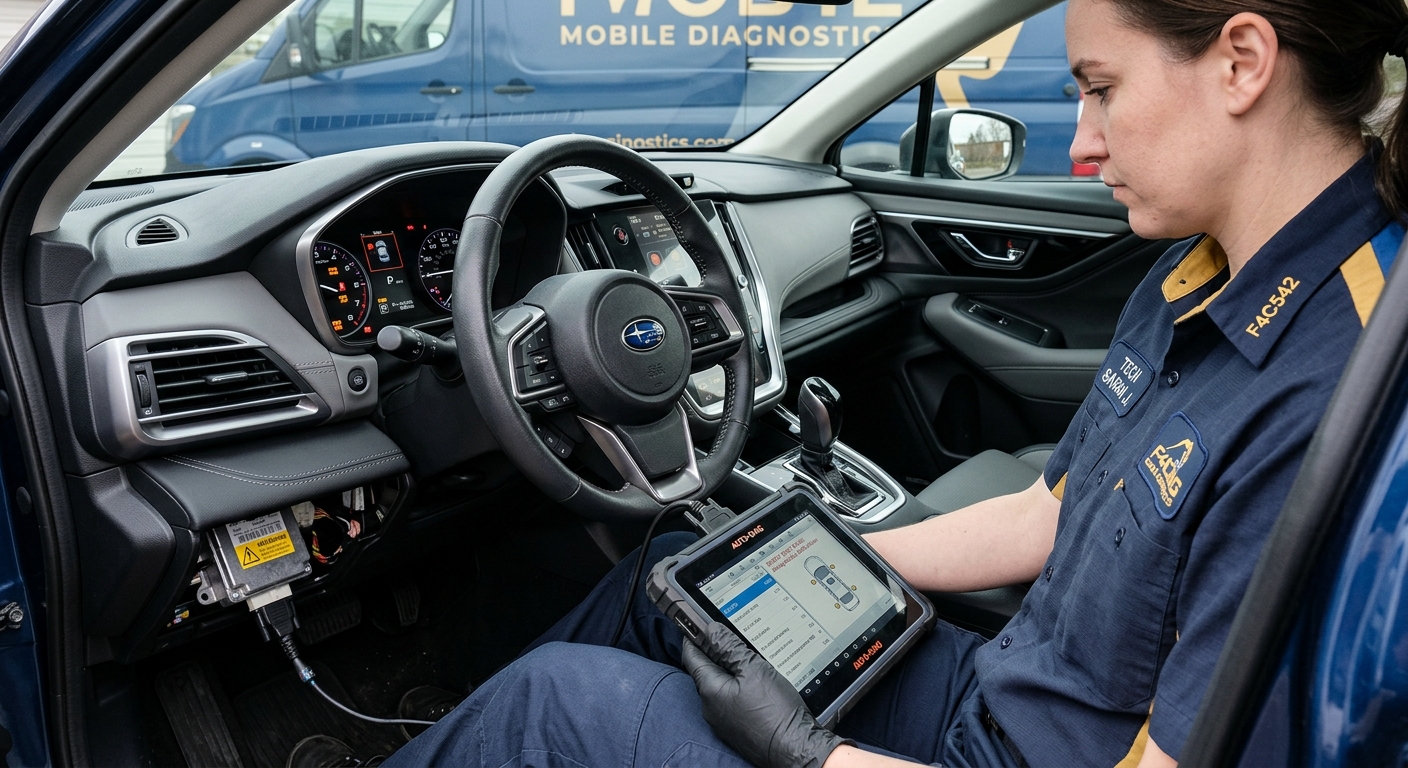
A technician runs a full SRS scan tool that reads DTCs, crash event memory, and communication lines. We explain common DTCs plainly so you know what the scanner found:
- U-codes (network errors) — show communication problems between modules. These may be wiring, power, or module issues.
- B-codes (body) and C-codes (chassis) — can point to specific sensor failures like impact sensors or seatbelt pretensioners.
- Stored crash event data — if present, most OEMs require module replacement or specific steps before a reset is allowed.
Vehicle-specific notes (why model matters)
Each maker has different rules and connectors. A few examples:
- Nissan airbag module replacement often needs dealer-level scanning and sometimes programming steps unique to the model year.
- VW airbag control module replacement can require matching VIN or coding to the vehicle; some modules are coded to the car.
- 2017 Honda Civic airbag module replacement: newer Civics may record detailed crash logs; proper reset vs replacement depends on the event memory.
- BMW E90 and BMW E46 airbag module replacement: BMWs often need module programming and VIN coding after swap.
- NA Miata airbag module replacement: older cars may have simpler modules but watch for connector corrosion.
- 2012 Infiniti G37 airbag module replacement: Infiniti modules can require manufacturer-level tools for final calibration or reset steps.
Reset vs replace — which is safer?
Safety first: if the module has recorded a crash event or shows physical damage, replacement or manufacturer-compliant repair is the safe route. If the issue is a sensor fault, wiring problem, or a false alarm, a reset (local or mail-in) may be enough. Mail-in resets are especially useful when the module is intact but needs event memory cleared by a qualified technician.
Options for service: mobile, mail-in, or dealer?
- Mobile diagnostic & reset services come to your location and can test the system, clear or program modules, and handle many makes on-site. Search services like mobile airbag module reset for local help: https://lockncal.com/mobile-airbag-module-reset-service/
- Mail-in module reset lets you ship the module to a specialist who clears crash memory and returns it. This is a nationwide option with free shipping on some services: https://lockncal.com/mail-in-airbag-module-reset-service-free-shipping/
- Dealer service is required in some cases (manufacturer restrictions or warranty reasons) and will do OEM replacements and programming.
What to expect during an airbag module replacement
Here’s a simplified step-by-step of the safe, professional process:
- Full SRS diagnostic scan and clear explanation of DTCs and crash data.
- Inspection of the module and associated wiring, sensors, and seat belt pretensioners.
- If replacement is required: removal of the old module, installation of a new or OEM-approved refurbished module, and proper mounting to OEM specs.
- Programming/coding to the vehicle VIN if required, plus system calibration and final road/test checks.
Quick reference table: symptom, likely cause, recommended action
| Symptom | Likely cause | Recommended action |
|---|---|---|
| Airbag light on, single sensor DTC | Faulty sensor or wiring | Test/replace sensor; reset module |
| Airbag light on, crash event stored | Module recorded impact | Replace or follow OEM-approved reset procedures |
| Intermittent light, water damage visible | Corrosion in module or connectors | Inspect, repair or replace module and connectors |
| No communication with module | Power, fuse, or module failure | Check power/wiring, program or replace module |
Airbag module replacement cost — what affects price?
Cost depends on several factors: vehicle make/model/year, whether you need a new OEM module or an approved used/refurbished unit, required programming, and whether mobile service or a dealer is used. Because prices vary widely by vehicle, please call (469) 277-7277 for a clear quote for your specific car.
Is a used or refurbished module safe?
Used or professionally refurbished modules can be safe when they have been tested, cleared of crash event data, and reprogrammed correctly. The key is that the module must pass diagnostics and, if required, be re-coded to your vehicle. If the module is physically damaged, it should not be reused.
Signs to watch for after replacement or reset
- Airbag light should stay off after repeated ignition cycles and test drive.
- No new SRS DTCs should appear on a follow-up scan.
- All linked systems (seat belt pretensioners, impact sensors) should report normal status.
When to choose mail-in reset vs mobile service
If the module is accessible and not physically damaged, mail-in reset is convenient: ship the unit to a specialist who clears event records and returns it. If wiring, sensors, or on-car programming are needed, a mobile technician who can diagnose and program on-site is better. Learn more about our nationwide mail-in option: https://lockncal.com/mail-in-airbag-module-reset-service-free-shipping/
How LockNCal helps
We offer mobile diagnostics, on-site programming, and nationwide mail-in resets performed to manufacturer standards. If your vehicle needs module programming after replacement, our technicians can handle module programming and system verification: https://lockncal.com/mobile-module-programming-services/
FAQ
Can you reset an airbag module after a minor crash?
Sometimes. If the module only recorded a minor event and has no physical damage, a qualified technician can inspect and may be able to clear the crash data according to OEM rules. Not all events are resettable.
How long does an airbag module replacement take?
Timing varies by vehicle and whether programming is needed. A professional diagnostic, replacement, and programming typically take a few hours, but schedule availability and required calibrations can affect the total time.
Will a replaced module need VIN programming?
Often yes. Many modules must be coded or programmed to the vehicle VIN. That step ensures the module communicates properly with the rest of the vehicle systems.
Is it legal to reset crash data in the airbag module?
Rules vary by region and manufacturer. Resetting crash data must be done only when permitted by OEM procedures and in a way that does not hide crash history from required inspections or legal processes.
Can I drive if the airbag light is on?
It’s not recommended. An illuminated airbag light means the SRS system may not deploy correctly in a crash. Have the system diagnosed promptly.
Final thoughts and next steps
If you’re in Garland or anywhere nationwide and suspect your airbag module needs service, start with a professional SRS diagnostic. For many vehicles, a safe and cost-effective path is a certified reset or programming — for others, a full replacement is the right choice. Call (469) 277-7277 to discuss your vehicle or schedule a professional inspection. If you’re ready to book a service or want a specific repair option, learn more about our vehicle safety system services: https://lockncal.com/vehicle-safety-system-services/


