 Skip to content

Crash Data Reset vs Replacing the Airbag Module | Fort Worth
Direct answer: In many crashes the airbag module (SRS control unit) can be safely cleared of crash data and returned to service after proper diagnostics and any damaged components are repaired. Replacement is required if the module is physically damaged, its internal crash-sensing circuitry failed, or safety rules/vehicle manufacturer guidance demand it.
After a fault like this, the airbag/SRS module often needs resetting to clear the warning light — that’s our SRS module reset, mobile in DFW or mail-in nationwide with free two-way shipping.
Key Takeaways
- Crash data reset clears recorded event data in the SRS module; replacement swaps the whole unit.
- Reset is appropriate only after full diagnostics and repair of any crashed sensors or wiring.
- Safety and manufacturer guidance determine whether reset or replacement is allowed.
- Certified technicians use scans, DTCs, and live data to choose reset vs replace.
- LockNCal offers mail-in and mobile SRS resets performed by trained pros; call (469) 277-7277 for a quote.
What is “crash data” and the airbag (SRS) module?
Crash data is the event information recorded by the vehicle’s Supplemental Restraint System (SRS) — often called the airbag module or airbag control unit. It stores pre-crash and impact sensor signals, time stamps, and whether airbags or seatbelt pretensioners deployed. Technically this can be called event data or an Event Data Recorder (EDR) in some vehicles.
Why the module records data
Manufacturers record data to help with diagnostics, safety research, and post-crash analysis. The module also uses internal crash logic to decide whether to deploy airbags during an impact.
How a crash data reset works
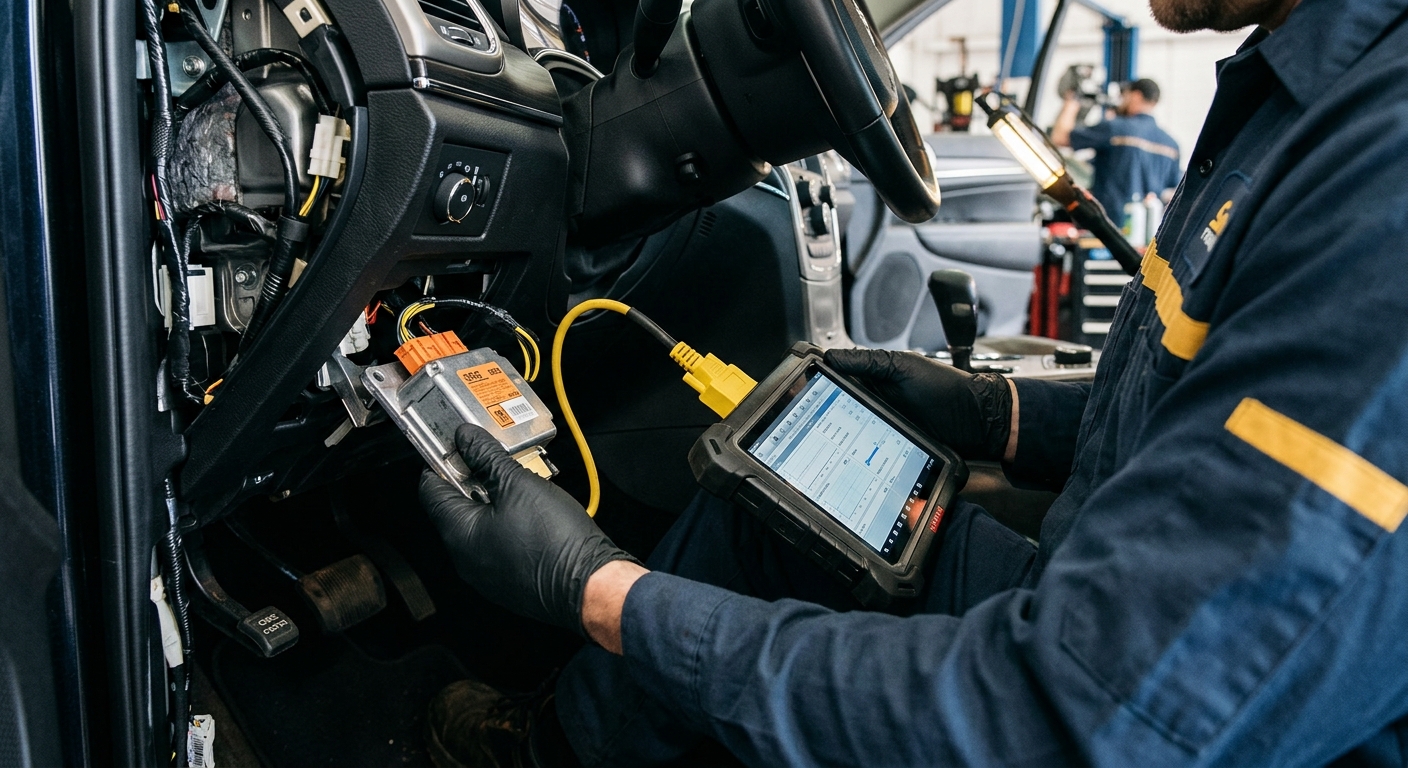
A crash data reset is not just clearing a fault light. A qualified technician will:
- Connect a professional scan tool and read all SRS and network codes.
- Inspect and test crash sensors, seatbelt pretensioners, wiring, and connectors.
- Repair or replace any damaged components (sensors, wiring, seats, clips) that caused the DTCs or deployments.
- Run manufacturer-recommended procedures to clear event data and reset airbag readiness — often using a specialized tool or software.
- Verify the system by reading live data and ensuring no SRS DTCs or warnings remain.
Important technical terms explained
- SRS (Supplemental Restraint System): The airbag system plus sensors and the module that controls deployment.
- EDR (Event Data Recorder): The part of the module that logs crash-related data points.
- DTC (Diagnostic Trouble Code): A code thrown when the vehicle detects a problem. Codes with prefixes often tell you the area — for example, codes starting with “B” often relate to body systems like the airbag; “U” codes are communication/network issues; “P” codes are powertrain. A specific SRS code means the module saw a problem in a particular circuit or sensor and helps the tech find the fault.
Replace the airbag module when…
- The module is physically damaged by a crash or water intrusion.
- Internal diagnostics show the module’s crash-trigger circuitry failed and cannot be trusted.
- Manufacturer repair instructions or safety regulations require replacement after certain deployment events.
- Required by a state or insurer for a clean title or post-accident certification in your area.
Safety, legal, and ethical considerations
Resetting crash data touches safety and, sometimes, legal issues. You should expect a professional to document the repair and to follow the vehicle manufacturer’s service information. In some situations, manufacturers explicitly require replacement of the module after airbag deployment. In other cases, they provide approved reset procedures.
Ask your technician to show the service procedure they followed and why the reset was safe for your vehicle. If you need mail-in handling or nationwide support, we offer a certified mail-in airbag module reset with return shipping and documentation.
Crash data reset vs replacing the airbag module — quick comparison
| Factor | Crash Data Reset | Replacement |
|---|---|---|
| When recommended | After diagnostics show module logic intact and only recorded event data needs clearing | When module is physically or electronically damaged, or manufacturer requires it |
| Safety | Safe if done following manufacturer procedures and after repairing sensors/wiring | Generally safest because you install a new, unspent unit |
| Documentation | Technician should provide paperwork showing tests and reset procedure | Replacement comes with part records and usually a clearer service history |
| Time | Often faster if all parts are available and no replacement needed | Longer due to sourcing, programming, and calibration |
| When to choose | Minor non-deployments or documented resets allowed by manufacturer | Major impacts, water damage, or failed module diagnostics |
How technicians decide: the diagnostic steps
A proper decision starts with a full system scan. The tech will:
- Read all SRS and network DTCs and explain what each code means in plain language.
- Test airbags, sensors, and continuity of wiring (resistance checks on squib circuits) where applicable.
- Inspect connectors for corrosion or impact damage.
- Determine if the module stored event data without deploying — some modules log a crash even if the airbag didn’t fire.
- Follow OEM service procedures for resetting or replacing the module and/or programming replacements.
Note on DTCs
When a DTC appears, it points to a specific circuit or sensor. For SRS, codes help the technician know if the fault is in a sensor, the harness, a seatbelt pretensioner, or the module itself. A cleared code without repair usually returns — that’s why repairs come first, then reset.
Common post-reset tasks
- Re-scan the system and confirm no SRS warning lights remain.
- Perform any necessary module programming so the vehicle recognizes the reset unit.
- Check related systems like seatbelt pretensioners and crash sensors.
- Document the work for your service records and future buyers.
When replacement is the better choice
- If the module was submerged or shows signs of internal damage.
- If diagnostic tests show failed internal components that can’t be repaired.
- If the vehicle manufacturer explicitly requires replacement after certain deployments.
Why choose a specialist
Airbag and SRS systems protect lives. A specialist has the right diagnostic tools, training, and follow-up checks. LockNCal technicians handle SRS resets and replacements and also provide related services like module programming and overall vehicle safety system repairs. Learn more about our full list of vehicle safety system services.
If you need module programming after a replacement, our mobile module programming service can program the new unit on-site as needed.
FAQ
Q: Is it legal to delete crash data from an airbag module?
A: Regulations vary. Technically a reset clears event data used for diagnostics. A reputable shop will follow manufacturer procedures, keep repair records, and inform you about any legal or insurance considerations.
Q: Will clearing crash data hide evidence of an accident?
A: Resetting a module according to factory procedures removes recorded event data from that module. That is not the same as hiding damage to the vehicle. Proper documentation and honest disclosure are important for safety and law compliance.
Q: Can any shop reset my airbag module?
A: No. A qualified technician with the right tools and access to manufacturer service information should perform resets. Improper resets risk leaving a system unsafe.
Q: How do I know if my module needs replacement rather than a reset?
A: A full diagnostic check is required. If the module has internal electrical failure, water damage, or manufacturer-mandated replacement after deployment, it should be replaced.
Q: How much does a reset or replacement cost?
A: Pricing depends on the vehicle and the exact work required. Call (469) 277-7277 for a clear estimate for your car or truck.
Next steps
If your vehicle in Fort Worth or anywhere in the U.S. needs a trusted SRS check, we offer certified mail-in resets with free shipping and documented service: mail-in airbag module reset. For mobile service and on-site diagnostics, check our vehicle safety system page above. Call (469) 277-7277 to discuss your situation and get a quote — we’ll explain what’s safest for your vehicle and show the test results before any work.


