 Skip to content

Vehicle Salvage Inspection Report: What It Includes and What Safety Inspectors Look For
As an auto safety technician serving DFW and The Colony TX, I see the same confusion over and over: someone gets a vehicle salvage inspection report back after a rebuilt vehicle inspection and has no idea what the notes, codes, or comments really mean—especially around airbags, SRS, and hidden wiring issues.
LockNCal inspects the vehicle’s safety systems before you buy, wherever the car is across Dallas–Fort Worth. Book a pre-purchase inspection or call (469) 277-7277.
This guide breaks down the report in plain English: what’s on it, what inspectors actually check, how SRS and airbag findings are documented, and what you should do before you re-apply for a rebuilt title or try to register the vehicle. I’ll also show where services like Vehicle Diagnostic, SRS Airbag Module Reset, Mail-In Airbag Module Reset, Airbag Module Programming, Module Programming, Seat Belt Replacement, Pre-Tensioner Replacement, and ADAS Calibration fit in.
Critical safety note: SRS/airbag systems contain explosive components. They are not like changing a headlight. DIY shortcuts, resistor tricks, or “borrowed” modules can create false readiness, hidden faults, or unsafe deployment behavior. Use this article to understand the documentation, then get qualified help when safety systems are involved.
Before you dig into your report, it can help to confirm your vehicle’s build data and equipment with a VIN check. You can use LockNCal’s VIN decoder to see original options and safety equipment.
What Is a Vehicle Salvage Inspection Report?
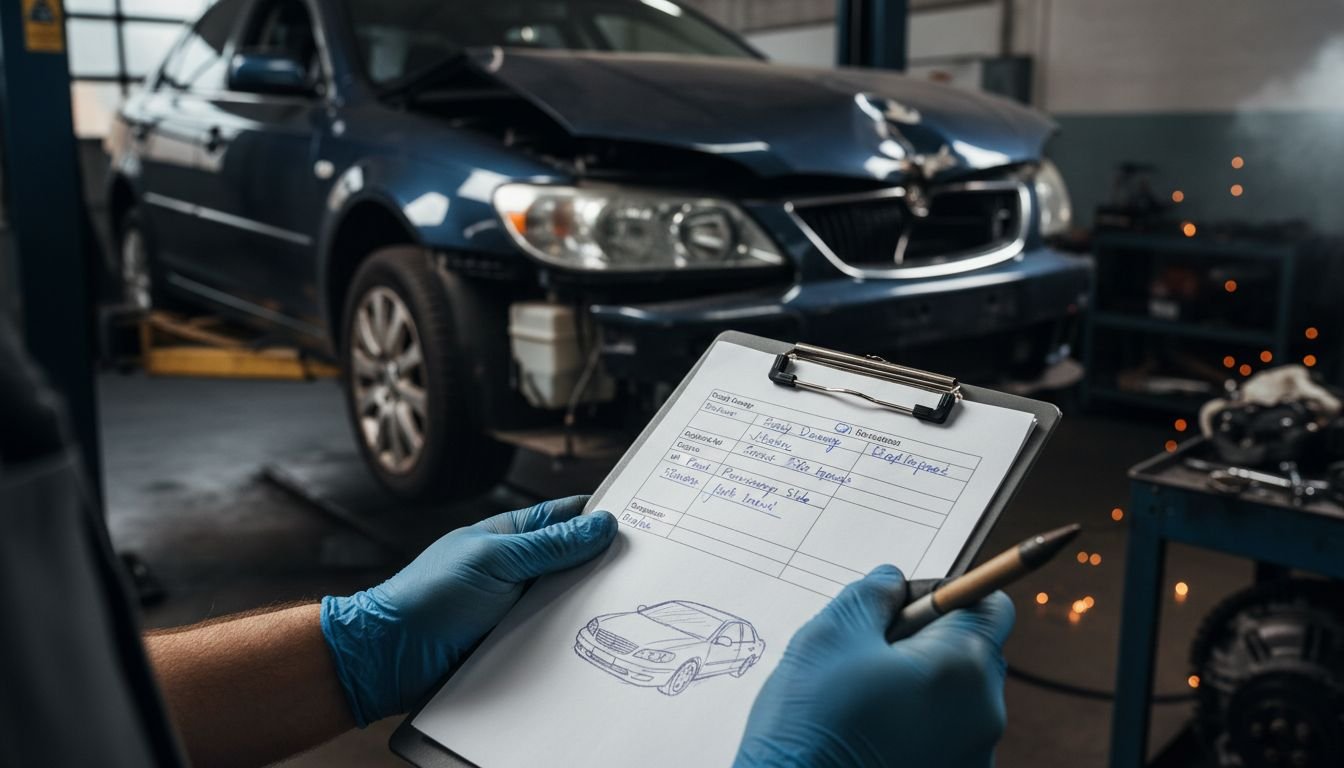
In plain terms, a vehicle salvage inspection report is the written record created after a rebuilt vehicle inspection. It documents:
- Basic ownership and vehicle details
- Evidence of prior damage and which major parts were replaced
- Verification of safety systems, especially SRS/airbags and restraints
- Any problems, missing documentation, or reasons for failure
Every state uses its own forms and terminology. Texas salvage title inspection documentation will look different from Oklahoma or California paperwork, but the core ideas are the same:
- Does the vehicle identity (VIN, title) line up with the paperwork?
- Were major components replaced properly and legally sourced?
- Do critical safety systems show proper function and no obvious tampering?
Buyers, rebuilders, and owners use this report to help decide:
- Whether the vehicle is ready to move toward a rebuilt/reconditioned title
- What repairs or documentation are still missing
- Whether there are lingering safety issues that need to be corrected first
When You Usually Need a Vehicle Salvage Inspection Report
You’ll typically see a salvage inspection report in a few key scenarios.
After a salvage vehicle has been rebuilt
Once frame, body, and mechanical repairs are done, the vehicle usually has to go through a formal salvage or rebuilt inspection before it can return to the road with a new title status. The report documents what was inspected and what passed or failed.
Before applying for a rebuilt or revived title
Most states require an inspection report as part of your rebuilt title or similar application package. Missing, incomplete, or inconsistent reports can delay or block your title progress.
Before buying a previously damaged vehicle
Smart buyers will review any available vehicle salvage inspection report to see:
- What damage was recorded
- What major parts were replaced
- Whether there were any SRS inspection findings or “cannot verify” notes
When a vehicle has known SRS or airbag history
If a vehicle has a history of airbag deployment or seat belt pretensioner activation, the report is a valuable clue. It can confirm whether the airbag warning light after rebuild was addressed, whether crash data in the airbag module was cleared, and whether any hidden resistor bypass in airbag circuit was caught.
Explain the contents of a salvage/rebuilt inspection report: required fields, SRS/airbag items to verify, hidden-resistor/bypass findings, crash-data notes, how inspectors evidence safety items, and sample report templates.
Report layouts vary, but almost every vehicle salvage inspection report includes the same types of sections. Here’s how to read them.
Required owner and vehicle identification fields
These are the “who and what” of the vehicle:
- Owner name – The person or business presenting the vehicle.
- Address – Where the vehicle and owner are based.
- VIN – The 17-digit vehicle identification number; must match the vehicle’s visible VIN plates and stickers.
- Year / Make / Model / Body Style / Color – Basic descriptor fields, often auto-populated from the VIN.
- Title number / Salvage certificate number – References to prior ownership and salvage status documents.
What to watch for: Any mismatch between the VIN on the vehicle, the VIN on the title, and the VIN printed on the report can cause serious delays. Use a trusted VIN decoder to make sure your VIN and build data match what’s on the paperwork.
Rebuild and parts documentation fields
This section focuses on what was replaced and where it came from:
- Major component parts replaced – Engines, transmissions, airbags, seat belts with pretensioners, steering columns, dash assemblies, and sometimes modules.
- Source of parts – Salvage yard, dealer, aftermarket supplier, etc.
- VIN/ID numbers on donor parts (when applicable) – Some states want the VIN of the donor vehicle for certain structural or safety-critical parts.
- Repair descriptions – Brief notes describing collision damage and repairs performed.
- Receipts and supporting paperwork – Proof of purchase for the major components listed.
Common failure point: Missing or incomplete receipts. If a report notes “unable to verify parts source” or “documentation incomplete,” you may need to dig up or reprint receipts before your next step.
SRS and airbag items inspectors may verify
This is where many rebuilt vehicles run into trouble. Inspectors and safety-focused technicians will typically check:
- Airbag presence and condition – Is the airbag actually installed behind the steering wheel, dash, or seat panel? Is it the correct type for that vehicle?
- SRS warning lamp status – Does the airbag light come on for a bulb check and then go off, or stay illuminated? A light that doesn’t come on at all can be a red flag for tampering.
- Scan-tool fault results – A proper Vehicle Diagnostic session with an appropriate scan tool should show if there are active or stored SRS faults.
- Occupant restraint components – Seat belts, buckles, seat belt pretensioner inspection, occupancy sensors, and related wiring.
- Airbag system verification after rebuild – Inspectors may mark whether the system appears operational, has stored faults, or cannot be verified due to tampering or missing parts.
Critical warning: A clean, normal-looking dash with no airbag light does not guarantee that the SRS system is intact. If resistors, dummy loads, or hacked wiring are used to trick the module, the report may note suspected tampering if it’s discovered.
Hidden resistor and bypass findings
Some rebuilders try to hide SRS issues by installing resistors or bypass devices in place of real airbags or pretensioners. These tricks are extremely dangerous.
What resistor tricks/bypasses are:
- A resistor or dummy plug wired into an airbag connector to mimic the electrical load of a real airbag.
- A looped connector bridging two wires so the module “sees” a complete circuit even when a component is missing.
Why this is a red flag:
- The system may not deploy when it should, or deploy unpredictably.
- Inspection notes may say “possible hidden resistor bypass in airbag circuit” or “SRS wiring modified.”
- These findings can lead to failure or additional scrutiny before you can move forward.
On a report, you might see comments like:
- “SRS connector shows non-factory resistor – recommend further diagnosis.”
- “Airbag circuit resistance not in spec – suspected bypass.”
Crash-data notes and module status
After a significant collision, the airbag control unit usually stores a record of the crash event. This crash data in airbag module may lock the module down until it’s properly reset or replaced.
On your report, module-related notes may include:
- “Crash event stored – module locked.”
- “SRS faults present – Bxxxx codes stored.”
- “Module replaced – VIN not programmed.”
When you see this kind of language, it usually means you need services such as:
- SRS Airbag Module Reset – To safely clear crash event data and restore normal module function when appropriate.
- Mail-In Airbag Module Reset – If you’re outside the DFW area but want a specialist to handle your module properly.
- Airbag Module Programming or broader Module Programming – When a replacement module must be coded and married to your vehicle’s VIN and options.
How inspectors evidence safety items
Inspectors and safety technicians don’t just “eyeball it” and guess. They often generate safety system evidence using:
- Visual inspection – Looking for broken, missing, or non-OEM-looking components, loose connectors, or harness tape that suggests tampering.
- Scan-tool screenshots or printouts – Showing SRS modules and fault code status at the time of inspection.
- Photos of replaced components – Airbag labels, steering wheels, dash panels, and belts.
- Part labels / serials / receipts – Matching components to invoices and donor VINs where required.
- Seat belt and pretensioner verification – Ensuring belts retract smoothly, latch properly, and that pretensioners aren’t still in a deployed or locked state.
What a sample report template usually looks like
While there is no universal government form, a sample salvage inspection report template usually includes these sections, in some order:
- Header – Inspection date, location, inspector ID, owner info.
- Vehicle details – VIN, year/make/model, color, odometer.
- Damage history / repair summary – Brief notes about the original loss (front impact, side impact, flood, theft, etc.) and major repairs.
- Component checklist – Body, chassis, lights, glass, powertrain.
- SRS / restraint section – Airbags, belts, pretensioners, modules, scan results, and any SRS inspection findings.
- Documentation checklist – Titles, salvage certificates, parts receipts.
- Comments / reasons for fail – Narrative notes about what must be corrected.
- Inspector certification – Signature and date.
Common SRS Problems That Can Trigger Questions or Failure Notes
Most of the real trouble on a vehicle salvage inspection report comes from the SRS and restraint systems. Here are common issues we see flagged.
Airbag warning light stays on
If the airbag warning light after rebuild stays on, the system has detected a fault. Common causes:
- Deployed or missing airbags
- Faulty clockspring in the steering column
- Damaged wiring or connectors under seats or in the dash
- Uncleared crash data or mismatched modules
Correcting this usually starts with a Vehicle Diagnostic to see exactly which circuits or components are failing.
Crash data still stored in the module
Even if all physical components have been replaced, the module can still hold crash data from the original accident. When the report notes stored crash data, consider:
- SRS Airbag Module Reset – To clear valid crash data when the module is otherwise healthy.
- Mail-In Airbag Module Reset – If you’re not near DFW but want a specialized reset service.
- Airbag Module Programming – If a different module was installed and needs VIN and configuration programming.
Missing or incorrect airbags
We routinely see cars where the steering wheel and dash look fine on the surface, but:
- The actual airbag is missing or incorrect.
- Side curtain airbags were never reinstalled after headliner replacement.
- Seat-mounted airbags are unplugged or replaced with non-airbag seats.
Inspectors may flag “airbag cannot be verified” or note missing components in the report.
Deployed pretensioners not replaced
Seat belt pretensioners fire during a crash like a small pyrotechnic charge, locking the belt in place. After deployment, they must be replaced. If they’re left in place, inspectors may note:
- “Seat belt locked and will not retract properly“
- “Pretensioner deployment code present“
At that point, Pre-Tensioner Replacement and possibly Seat Belt Replacement is the only safe fix.
Seat belt issues after collision damage
Even without full deployment, belts can stretch, fray, or have internal retractor damage. For a deeper dive on those issues, see this resource on seat belt retractor and restraint system issues in DFW.
ADAS items overlooked after structural/body repair
Modern vehicles use advanced driver-assistance systems (ADAS) such as forward collision warning, lane-keeping, and automatic emergency braking. After front-end or structural repair, these systems often require ADAS Calibration.
On your report you may see comments like:
- “ADAS camera/radar disturbed – calibration required“
- “Forward camera mounting replaced – system not verified“
To understand why, see this article on why you must have your ADAS calibrated after collision repair.
Why Hidden Resistors, Bypass Devices, and DIY Fixes Are So Dangerous
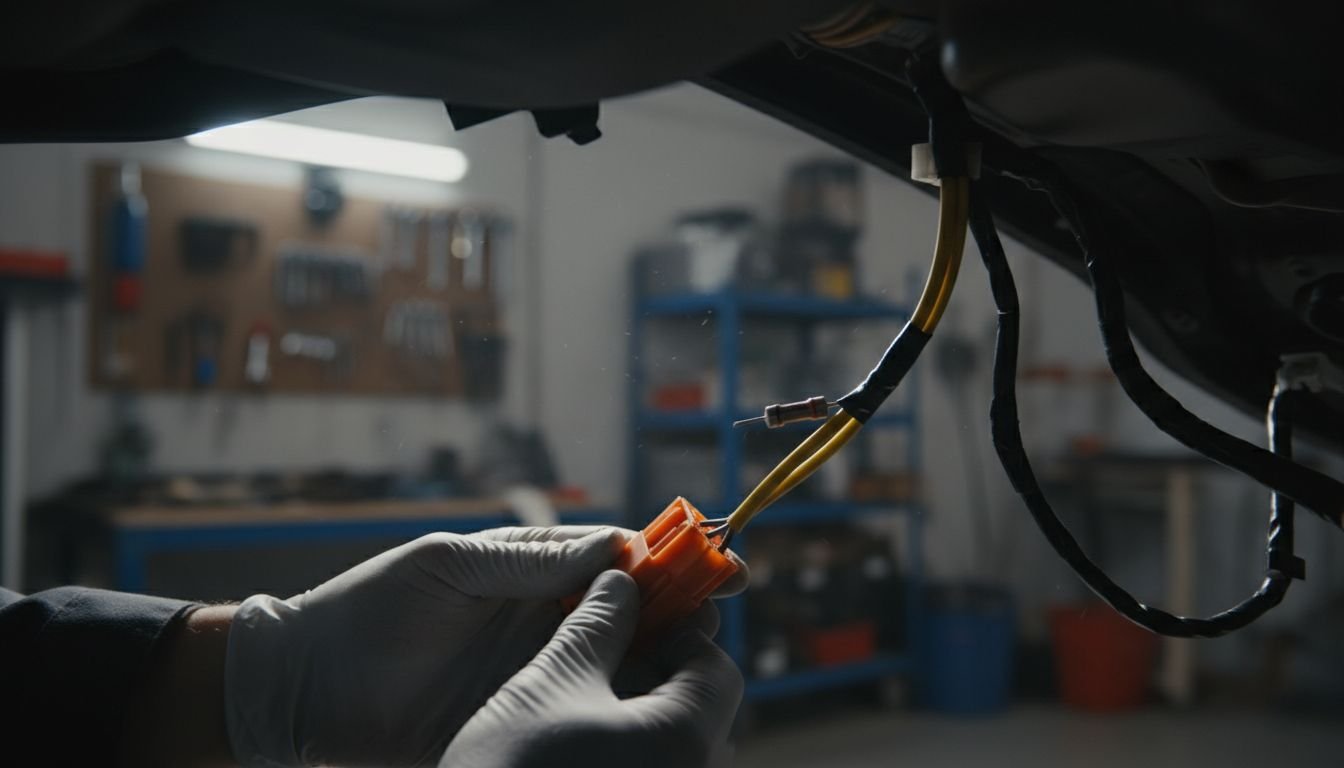
This is one of the most important sections in this entire article.
Why the SRS system contains explosive components
Airbags and many pretensioners use pyrotechnic charges to deploy. That means there are controlled explosive devices in the system. Mishandling wiring, probing connectors the wrong way, or installing junkyard parts without proper checks can cause:
- Unintended deployment during service
- Non-deployment when needed
- Delayed or asymmetric deployment (one side fires, the other doesn’t)
Why a cleared dashboard light does not prove the system is safe
It’s easy to focus only on what the dashboard shows:
- If the airbag light is off, you might assume everything is fine.
- If it comes on briefly at startup and then goes out, that looks “normal.”
Reality: With enough effort, someone can manipulate wiring or install hidden resistor bypass in airbag circuit so the light behaves correctly even when critical components are missing. That’s why inspectors use scan tools, visual checks, and wiring inspections instead of just trusting the light.
Why improper work can create liability, injury risk, and inspection setbacks
Shortcut repairs create several serious problems:
- Safety risk: Occupants may be unprotected or improperly restrained in the next crash.
- Liability: Sellers, shops, and rebuilders can be exposed to legal risk if they knowingly bypass safety systems.
- Inspection failures: Once tampering is noted on a salvage inspection report, you may face tougher reinspections and closer scrutiny.
If you suspect past DIY fixes, have a professional run a Vehicle Diagnostic and visually verify SRS wiring and components instead of just trusting the dash.
How to Troubleshoot a Salvage Inspection Report Before You Submit More Paperwork
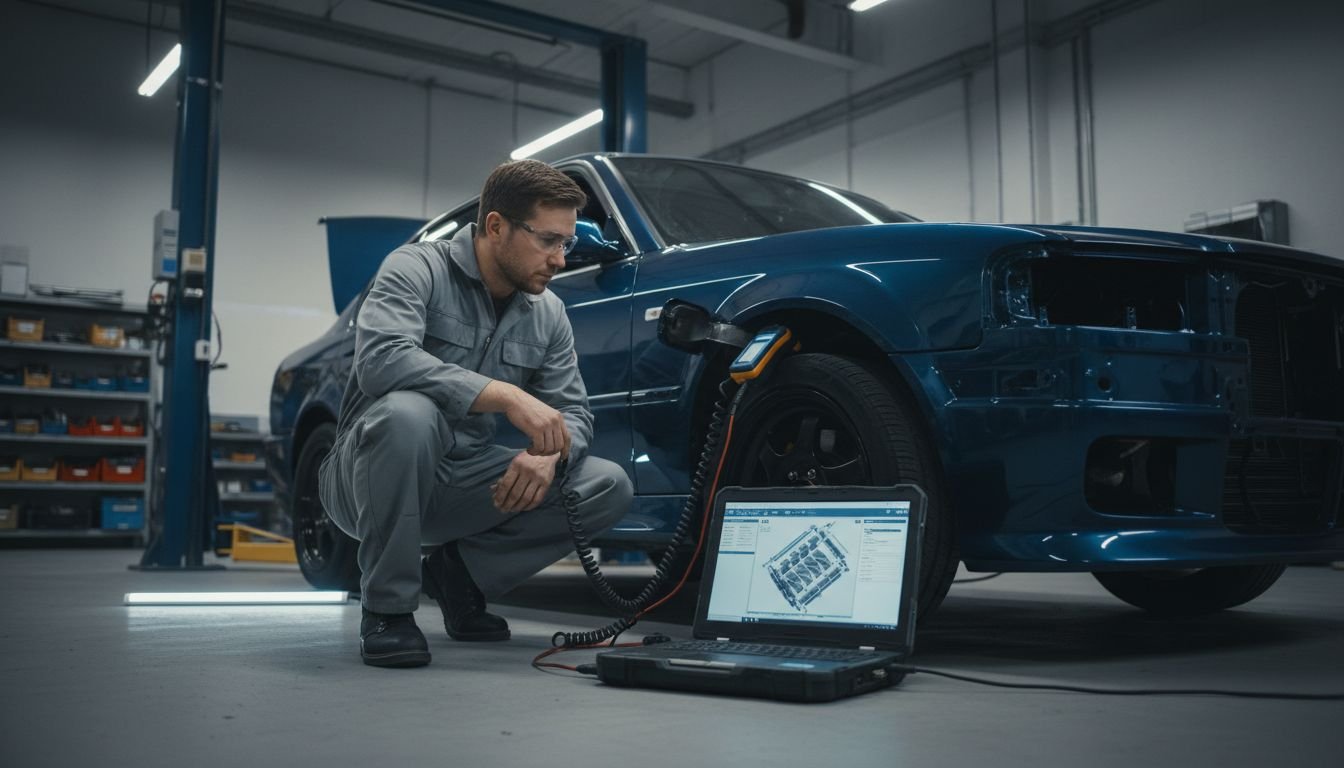
Before you re-apply for a rebuilt title or return for reinspection, use your report as a checklist.
Review the VIN and ownership fields first
Make sure every VIN and owner field on the report matches:
- Your title or salvage certificate
- The physical VIN on the dashboard and door jamb
- Any donor VINs mentioned in the documentation
Use the VIN decoder again if needed to confirm year, make, model, and factory equipment.
Match receipts to replaced major components
Pull every receipt and line it up with the report’s parts list:
- Engine, transmission, or major structural components
- Steering wheel, dash, and any airbag modules
- Seat belts, buckles, and pretensioners
Common failure point: Report notes a replaced part but the corresponding receipt is missing or shows an incorrect VIN or description.
Scan for SRS faults before reinspection
Don’t wait for another inspector to tell you the SRS is still unhappy. A pre-inspection Vehicle Diagnostic can reveal:
- Active SRS fault codes
- Pretensioner deployment codes
- Crash data still stored in the module
- Module communication issues
If the report references crash data or locked modules, plan for SRS Airbag Module Reset or Mail-In Airbag Module Reset, and possibly Airbag Module Programming if a replacement module is installed.
Verify seat belts, pretensioners, and module communication
Go through each seating position:
- Check that belts fully extend and retract smoothly.
- Confirm that latches click and hold securely.
- Have a technician verify that each pretensioner circuit reads correctly through the module.
If you’ve had low-speed collision damage to airbags and seatbelts, hidden issues may not be obvious to the naked eye. This article on low-speed collision damage to airbags and seatbelts explains how minor hits can still affect restraint performance.
Confirm whether calibration/programming is required
If your report mentions modules, cameras, or sensors being replaced or disturbed, you may need:
- Module Programming – So new modules talk correctly with the rest of the vehicle.
- ADAS Calibration – To properly align radar, cameras, and other safety sensors after body or glass repair.
Ignoring these steps can leave you with systems that appear to work but do not measure distance or lane position correctly.
Professional Help for Rebuilt Safety Systems in The Colony TX
If you’re in DFW or around The Colony TX, LockNCal focuses on the diagnostic and electronic side of safety systems after rebuilds. We do not issue official state salvage inspection reports, but we help owners and rebuilders prepare by finding and correcting the issues that often cause failures.
When to schedule a Vehicle Diagnostic
Schedule a Vehicle Diagnostic when:
- Your report notes SRS faults, but you don’t know exactly what’s wrong.
- The airbag light is on, or never comes on at all.
- You suspect past DIY wiring or resistors.
When an SRS Airbag Module Reset may be needed
You may need an SRS Airbag Module Reset if:
- The report lists stored crash-event data.
- The module is otherwise healthy but locked after deployment.
- You’ve replaced all deployed components but the module still sees the old crash.
When Mail-In Airbag Module Reset helps owners outside DFW
If you’re not near DFW but still want specialized help with your module, a Mail-In Airbag Module Reset allows you to ship the module for proper handling, rather than gambling on generic tools or guesswork.
When Seat Belt Replacement or Pre-Tensioner Replacement is the safer path
If your report notes locked, non-retracting, or deployed belts, Seat Belt Replacement and Pre-Tensioner Replacement are usually the correct next steps. Repair attempts or recycled, previously-deployed components are not a safe option.
When ADAS Calibration or Module Programming should be considered
After significant front-end repair, windshield replacement, or module swaps, consider:
- Module Programming – To ensure new or used modules match your VIN and configuration.
- ADAS Calibration – To restore camera and radar accuracy for lane keeping, collision avoidance, and related features.
What LockNCal Can Help With After Safety Issues Show Up on a Report
LockNCal does not perform bodywork, frame straightening, collision repair, or official state salvage inspections. What we do provide is focused, safety-centered support that directly connects to common report findings:
- Vehicle Diagnostic – To identify exact SRS, module, or ADAS faults behind the inspector’s notes.
- SRS Airbag Module Reset and Mail-In Airbag Module Reset – To correctly handle crash data when reset is appropriate.
- Airbag Module Programming and Module Programming – When modules are replaced and need VIN-specific coding.
- Seat Belt Replacement and Pre-Tensioner Replacement – To address deployed or damaged restraints the right way.
- ADAS Calibration – To help ensure modern driver-assistance systems are properly aligned and functional after repairs.
If your vehicle salvage inspection report includes notes you don’t understand, or mentions SRS, restraint, or ADAS issues, bringing the report and the vehicle to a specialist is often the fastest path to a safe, compliant fix.
Final Takeaway: How to Read a Vehicle Salvage Inspection Report With Confidence
A vehicle salvage inspection report is more than paperwork—it’s a safety snapshot of how well your rebuilt vehicle’s identity, structure, and restraint systems check out. Don’t just skim for “pass/fail.” Pay close attention to:
- Owner and VIN fields – Any mismatch can stall title work.
- Parts and receipts – Missing proof of major components is a common setback.
- SRS / airbag / seat belt notes – These are critical for occupant safety and inspection success.
- Crash data and module status – Unresolved crash events often require professional reset or programming.
- Comments about wiring or suspected bypasses – These point to high-risk DIY fixes that must be corrected.
Remember: a vehicle can look fully repaired from the outside and still have serious unresolved SRS, restraint, or calibration issues. A clean dash light alone is not proof of safety. When in doubt, use your report as a roadmap and involve professionals for diagnostics, module work, restraint replacement, and ADAS calibration.
FAQs
What is included in a vehicle salvage inspection report?
Most reports include owner and vehicle ID information, VIN and title references, damage and repair summaries, a checklist of major components, SRS inspection findings (airbags, belts, pretensioners, modules), documentation checks for parts receipts, and final comments on any required corrections or reasons for failure.
What do inspectors look for in the airbag and SRS system after a rebuild?
Inspectors and safety technicians look for the physical presence and condition of airbags, proper operation of the SRS warning light, scan-tool results for any SRS fault codes or crash data, correct seat belt and pretensioner function, and any signs of tampering such as resistors or modified wiring in airbag circuits.
Can a vehicle pass if the airbag warning light is off but parts were bypassed?
No. If an inspector or technician discovers a hidden resistor bypass in airbag circuit or other tampering, that’s typically treated as a serious safety defect. The light being off is not enough; the underlying components and wiring must be correct and verifiable.
What does crash data in an airbag module mean?
Crash data means the airbag control unit recorded a deployment or significant impact event. In many cases, the module will not fully reset itself, even after repairs. Proper SRS Airbag Module Reset, Mail-In Airbag Module Reset, or replacement with correct Airbag Module Programming may be required to clear the event and restore normal function.
How do inspectors verify seat belts and pretensioners after collision repairs?
Inspectors will check that belts extend and retract smoothly, latch securely, and are not frayed or physically damaged. They may also rely on scan-tool data to verify pretensioner circuits and to check for deployment-related codes. If belts are locked, slow to retract, or show deployment codes, Seat Belt Replacement or Pre-Tensioner Replacement is usually recommended.
Do salvage inspection report formats vary by state?
Yes. Every state uses its own forms, terminology, and layout. However, the core content is similar: identification fields, damage/repair summary, component checklist, SRS/restraint findings, documentation review, and inspector comments. This article focuses on those shared elements rather than any one state’s exact form.
When should I get a Vehicle Diagnostic or SRS Airbag Module Reset?
Get a Vehicle Diagnostic when your report mentions SRS faults, crash data, or module issues—or when the airbag light is on or behaving oddly. Consider SRS Airbag Module Reset or Mail-In Airbag Module Reset when the report or scan tool shows stored crash events in an otherwise healthy module, after you have replaced all deployed components with the correct parts.


