 Skip to content

Toyota Safety Inspection for Salvage Vehicle: What Owners Need to Know in Denton County TX
If you own a Toyota with a salvage or rebuilt title in Denton County TX, you will face at least two big hurdles before it can be driven legally: making the car truly safe and getting it through the required inspections. This guide explains what a typical toyota safety inspection for salvage vehicle involves, what inspectors look for, why many Toyotas fail on the first try, and how to prepare your vehicle safely.
LockNCal inspects the vehicle’s safety systems before you buy, wherever the car is across Dallas–Fort Worth. Book a pre-purchase inspection or call (469) 277-7277.
This is an educational guide from a safety-focused perspective, aimed at Toyota owners, rebuilders, and used-car buyers in and around Denton County and the broader DFW area. Always confirm current legal and procedural requirements with the State of Texas or your local county tax office; here we focus on the vehicle safety and preparation side.
For local Toyota owners in Denton County TX and surrounding communities, you can review regional service coverage at LockNCal Denton County TX service area.
What Is a Toyota Salvage or Rebuilt Title Inspection?
When you buy or repair a Toyota that has been declared a salvage vehicle after a collision, flood, or theft recovery, Texas will generally require inspection steps before the car can return to the road with a different title status. For many owners, this is informally called a toyota rebuilt title inspection, even though the exact name of the process can vary.
In simple terms, you will typically deal with three different but related concepts:
- Salvage title: Issued when the vehicle has been deemed a total loss by an insurance company or otherwise recorded as salvage. The car is not legal to drive in this condition.
- Rebuilt (or rebuilt salvage) title: Applied after the vehicle is repaired and passes the required inspections. This shows the history of major damage but allows the vehicle to be registered again.
- Safety inspection: A check to verify that the vehicle’s basic safety systems work correctly—lights, brakes, tires, steering feel, and especially airbags, seat belts, and warning lights.
On top of physical safety checks, there are also VIN and document checks to confirm the identity of the vehicle, detect potential theft, and verify major parts sources. Inspectors and agencies want to see that:
- All VIN plates and labels are present, legible, and consistent.
- Major replacement components (e.g., airbags, seat belts, modules) are legitimate and properly installed.
- There is no evidence of tampering with VINs or electronic modules.
Again, the exact paperwork and steps can change, so verify details with your local Texas DMV or county tax office. The rest of this guide focuses on the technical and safety preparation for getting a rebuilt Toyota ready for inspection.
Toyota-Specific Considerations for Salvage/Rebuilt Inspections: typical checks (airbags, restraints, wiring), documentation needed, common Toyota model trouble spots, and how to get past common inspection failures
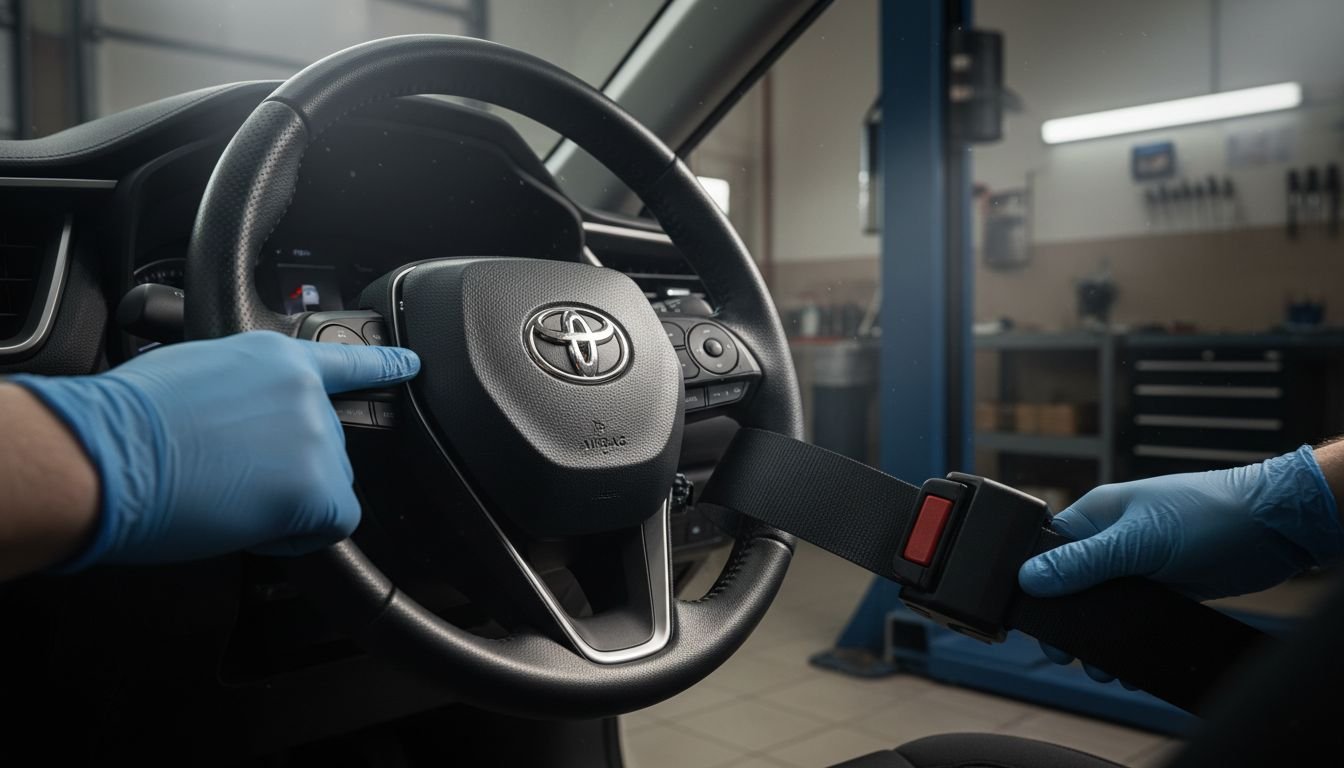
Toyotas such as the Camry, Corolla, Tacoma, RAV4, and Prius have robust safety systems, but those same systems are often the reason a salvage or rebuilt vehicle fails inspection. Here are Toyota-specific areas that draw extra scrutiny from inspectors and safety technicians.
Airbags, seat belts, pretensioners, and SRS warning lights
On any Toyota that has seen collision damage, the inspector and any competent technician will immediately look for signs of airbag or seat belt deployment and whether the systems have been restored correctly. Common focus points include:
- SRS airbag light on the instrument cluster (should turn on at key-on, then go off if the system is OK).
- Missing, taped-over, or obviously replaced airbag covers on the steering wheel, dash, or side curtains.
- Seat belts that do not retract properly, remain locked, or show signs of fraying, burns, or contamination.
- Pretensioners that fired in the crash but were never replaced or reset.
After a serious crash, Toyota’s supplemental restraint system (SRS) will usually store crash data in the airbag control module and lock certain components. Deployed components are not reusable and must be replaced, then the system typically needs:
- SRS Airbag Module Reset (to clear stored crash events when appropriate and safe).
- Airbag Module Programming or broader Module Programming after components like steering wheel airbags, dash airbags, side curtain airbags, or sensors are replaced.
- Seat Belt Replacement and Pre-Tensioner Replacement where belts have locked, are physically damaged, or have fired in the collision.
Important safety warning: SRS airbags and pretensioners are explosive safety devices. They contain pyrotechnic charges that can deploy violently if mishandled. DIY work on airbags, crash sensors, pretensioners, or the airbag control module can cause serious injury and may leave the vehicle unsafe or non-compliant for inspection.
Wiring, crash sensors, and module communication issues
Many rebuilt Toyotas look fine on the outside but fail because of wiring and communication faults inside. Inspectors do not always dig into wiring harness routing, but they do pay attention to:
- Persistent SRS lights, ABS lights, or other warning indicators.
- Obvious signs of twisted-together or taped wiring repairs under the dash, around kick panels, or near impact areas.
- Modules that do not communicate or show up on diagnostic scans.
On Toyota platforms, especially modern Camry, Corolla, RAV4, Tacoma, and Prius models, SRS, ABS, and ADAS components all communicate over shared networks. Poor wiring repairs or wrong components can cause:
- “U” or “B” network/communication codes stored in modules.
- Intermittent or permanent loss of communication with sensors.
- Modules that need configuration or programming before they recognize new parts.
Before presenting the car for inspection, a thorough Vehicle Diagnostic scan can identify hidden fault codes, network issues, and communication failures that might not show up as obvious dash lights. When modules or major SRS components have been replaced, Module Programming may be required so the car recognizes the new hardware correctly.
Toyota model trouble spots to watch
Every salvage Toyota is different, but some common impact areas tend to affect critical safety systems on popular models:
- Toyota Camry / Corolla: Front-end collisions can damage steering-wheel airbags, front crash sensors behind the bumper, and wiring in the radiator support area. Curtain airbags and seat-mounted airbags can deploy in moderate side hits.
- Toyota RAV4 / Highlander: Higher ride height means front radar sensors and cameras used for ADAS features (lane departure, pre-collision braking) are often affected even by moderate front damage. That may require ADAS Calibration and verifying steering-angle sensor values.
- Toyota Tacoma / Tundra: Frame and front-clip hits can affect front crash sensors, seat belt pretensioners, and under-dash harnesses. Off-road use after repairs can further stress marginal wiring.
- Toyota Prius: Front or rear impacts can affect high-voltage safety interlocks, crash sensors, and ADAS components. Wiring and modules in the rear floor area are especially vulnerable in back-end collisions.
None of these are factory defects—these are just typical impact zones that tend to involve airbags, seat belts, pretensioners, sensors, and modules. Failing to repair, reset, or program these systems properly is a frequent cause of inspection failure for rebuilt Toyotas.
What Inspectors Check on Salvage Vehicles
Owners frequently ask, “what inspectors check on salvage vehicles before they sign off?” While details vary by jurisdiction, most inspections focus on three broad categories: structural/visual safety items, restraint and electronic systems, and documentation.
Structural and visible safety items
An inspector will typically look for obvious signs that the Toyota is structurally unsafe or poorly repaired:
- Frame or unibody issues: obvious kinks, severe rust, misaligned crumple zones, or evidence of unsafe straightening.
- Panel alignment and gaps: doors, hood, and trunk that don’t close correctly can indicate bigger structural issues.
- Lights: all required exterior lights (headlights, tail lights, brake lights, turn signals, reverse lights) must work and be properly aimed.
- Glass and mirrors: no major cracks in the windshield that obstruct vision; side mirrors and rearview mirror securely attached and functional.
- Tires and wheels: adequate tread, no obvious sidewall damage, no bent wheels that cause vibration or steering pull.
- Suspension basics: vehicle sits level; no obvious broken springs, control arms, or leaking shocks.
- Steering response: no excessive play, binding, or wandering that indicates deeper damage.
Restraint and electronic safety systems
Modern Toyotas depend on electronic systems to protect occupants. Inspectors and safety technicians focus heavily on:
- Airbag (SRS) warning light: the light should illuminate briefly at key-on, then turn off. If it stays on or never comes on at all, that is a red flag.
- Seat belt operation: belts must latch securely, retract properly, and not be locked or frayed.
- Pretensioners: if they fired in a crash, they must be properly replaced or reset, not bypassed.
- Other warning lights: ABS, traction control, or ADAS alerts can suggest unresolved damage or missing calibrations.
- Module communication: many inspectors are now aware that clearing visible codes is not enough—if the car obviously had major damage, a professional Vehicle Diagnostic scan may be expected or requested by buyers, insurers, or follow-up shops.
- ADAS components where applicable: for Toyotas with front radar, windscreen cameras, or parking sensors, visible misalignment or obvious tampering can be grounds for further scrutiny or rejection.
Paperwork and proof of repairs
Even if your Toyota looks good and drives well, weak documentation can create problems. Inspectors and agencies may check:
- Title documents: salvage title, any prior title records, and the application for rebuilt or similar status.
- VIN consistency: VIN on the dash, door labels, engine bay, and any other tags must match and show no signs of tampering.
- Parts receipts: especially for high-value items like airbags, seat belts, modules, and major body panels.
- Photos of repairs: before/after pictures can help prove that damage was repaired properly, not just covered up.
- Calibration or programming records: paperwork showing that ADAS Calibration, Airbag Module Programming, or other Module Programming was performed by a qualified shop after collision repairs.
Salvage Vehicle Inspection Checklist for Toyota Owners
A structured salvage vehicle inspection checklist can save you time, money, and repeat trips. Use the following as a practical preparation guide before booking your inspection.
Before the appointment: documents to gather
Have these ready and organized in a folder:
- Current salvage title and any prior title paperwork.
- Government-issued ID and proof of ownership.
- Receipts for major repairs and safety components:
- Airbags, seat belts, pretensioners.
- SRS modules, crash sensors, and other electronic modules.
- Major body panels, lights, glass, and suspension components.
- VIN check results or printout if you used a tool such as a FREE VIN Decoder. You can run your Toyota’s VIN through the LockNCal FREE VIN Decoder to confirm basic build details and help cross-check parts.
- Any diagnostic reports or calibration/programming records (e.g., Vehicle Diagnostic printouts, ADAS Calibration reports, module programming confirmations).
- Photos of the car before and during repairs, if available.
Before the appointment: safety items to verify
Walk around and drive the Toyota (in a safe area) with this checklist:
- Exterior lights: headlights (low and high beam), turn signals, hazard lights, brake lights, reverse lights, tag lights.
- Glass and mirrors: windshield free of major cracks in the driver’s field of view; side and rear glass intact; mirrors stable and adjustable.
- Tires and wheels: no cords showing, no bulges, adequate tread, no severe cracks or bent rims.
- Steering and suspension: no major pulling, wandering, clunking, or bouncing.
- Seat belts: all belts latch, retract, and release correctly; no fraying or cuts; no belts stuck locked.
- SRS light: confirm that the airbag light comes on at key-on and then goes out. If the SRS light stays on or never comes on, that’s a serious red flag.
- Other warning lights: ABS, traction control, brake warning, or any ADAS alerts should be investigated with a Vehicle Diagnostic scan before inspection.
Day-of-inspection checklist
When it’s time for the inspection:
- Bring your document folder with titles, receipts, photos, and any diagnostic or calibration reports.
- Ensure the vehicle is clean inside and out so inspectors can see repairs clearly.
- Verify license plates or temporary tags are displayed as required for transport.
- Double-check that all warning lights are off and that the SRS light cycles normally at startup.
- Be ready to explain what damage occurred, what was replaced, and who performed key safety-related work (airbags, seat belts, modules, ADAS calibration).
How to Prepare a Salvage Car for Safety Inspection

To prepare salvage car for safety inspection, you need more than cosmetic repairs. For Toyotas, getting the electronics and restraint systems squared away is just as important as fixing bumpers and paint. Here is a structured approach.
Scan for warning lights and hidden codes first
Many rebuilt Toyota owners focus on visible damage and forget that the car’s modules keep detailed records of the crash and any ongoing problems. A professional Vehicle Diagnostic should be your first step, not your last:
- Scan the SRS, ABS, engine, transmission, and body control modules for stored codes.
- Look for crash data entries in the airbag control module.
- Identify any communication faults between modules (U-codes).
- Check for sensor-related codes affecting ADAS features such as lane departure or pre-collision braking.
Clearing codes without repairing the cause is not a safe or reliable strategy. Inspectors, buyers, and follow-up shops can usually tell when warning lights have been bypassed or temporarily cleared.
Address airbag and restraint issues before you show up
If crash data shows deployed components or the SRS light stays on, you need to resolve those issues before the car goes for inspection:
- Replace all deployed airbags and damaged clocksprings or impact sensors with suitable components.
- Perform Seat Belt Replacement and Pre-Tensioner Replacement on any belts that locked during the collision, are frayed, or do not retract.
- Have the airbag control unit evaluated for a safe and proper SRS Airbag Module Reset where appropriate, or consider replacement combined with Airbag Module Programming.
For Toyota owners outside the DFW area, a Mail-In Airbag Module Reset service can be a practical option: you remove the module, ship it to a qualified provider, and have it reset (when safe and applicable) and returned for reinstallation.
Remember: SRS airbags and pretensioners are explosive safety devices. Their handling, testing, and replacement should be performed by trained professionals with proper tools and safety procedures.
Verify calibration and programming after collision repairs
Many late-model Toyotas use cameras, radar, and steering-angle sensors to support features like adaptive cruise control, lane departure alert, and automatic emergency braking. After front-end, rear-end, or suspension repairs, you may need:
- ADAS Calibration to ensure cameras and radar sensors are correctly aligned and see the road accurately.
- Airbag Module Programming or other Module Programming after replacing SRS or body control modules, steering columns, instrument clusters, or engine control units.
- Steering-angle sensor checks and calibration following alignment, steering gear replacement, or major suspension work.
Skipping calibration and programming can leave ADAS systems inoperative or unpredictable. It can also cause warning lights and codes that raise questions during inspection and reduce buyer confidence if you plan to sell the car.
Common Reasons a Toyota Rebuilt Title Inspection Can Fail
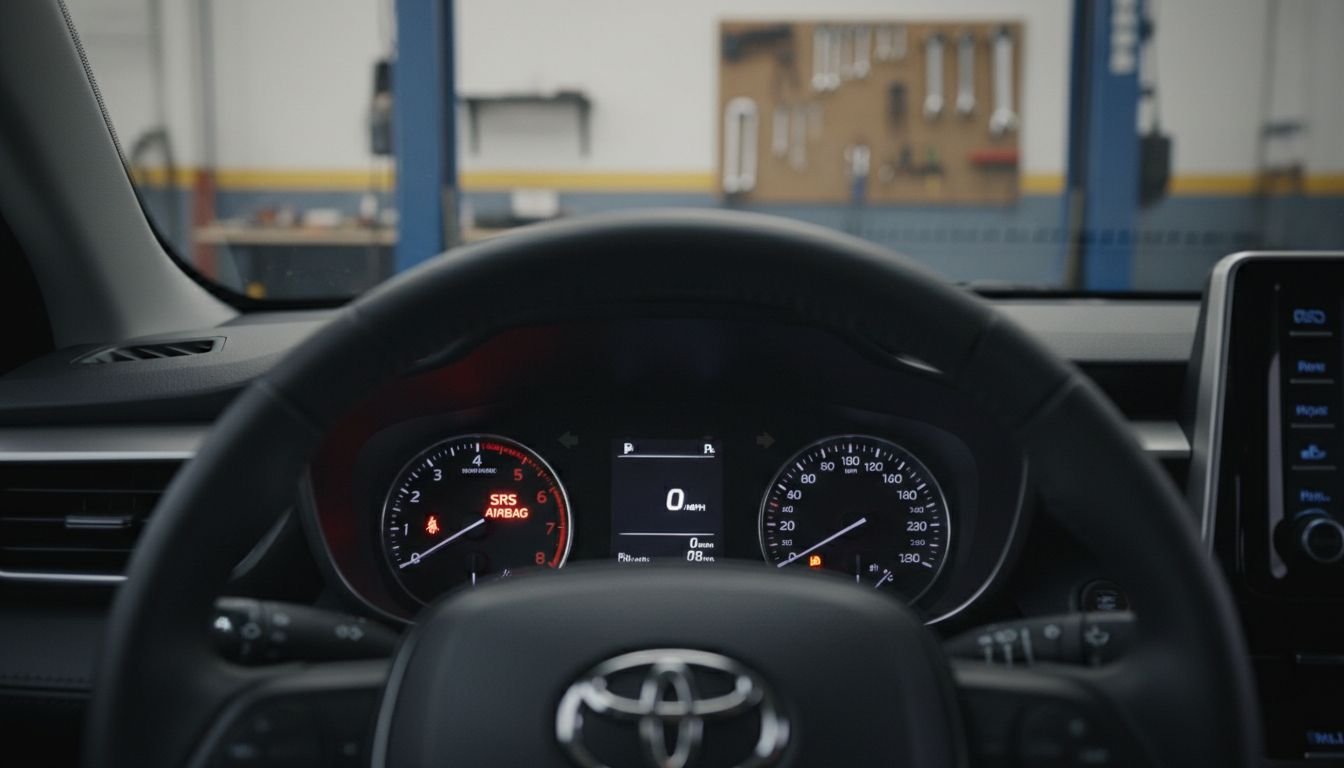
Even after bodywork and paint, a toyota rebuilt title inspection can fail for reasons that are easy to overlook. These are some of the most common problem areas we see on Toyota salvage and rebuilt vehicles.
Airbag light on or crash data still stored
If the SRS airbag light is on, flashing, or fails to illuminate at startup, the inspector will usually assume there is an unresolved safety issue. Common underlying causes include:
- Deployed airbags or pretensioners that were never replaced.
- Incorrect or incompatible replacement airbags or sensors.
- Crash data still stored in the SRS module that requires SRS Airbag Module Reset or Airbag Module Programming.
- Wiring or connectors damaged during the collision or during rushed repairs.
Seat belts locked, damaged, or not replaced after deployment
Inspectors expect to see fully functional seat belts on all seating positions. Fail points include:
- Belts that do not retract or remain locked all the time.
- Visible cuts, burns, or frayed edges on the webbing.
- Pretensioners that were clearly fired (often the belt is locked short) but were not replaced.
These issues generally require Seat Belt Replacement and, where applicable, Pre-Tensioner Replacement. Attempting to “unjam” or modify a locked belt unit is unsafe and may be detected during inspection.
Poor wiring repairs, missing receipts, or mismatched components
When a salvaged Toyota has obvious electrical issues or sloppy wiring, inspectors and potential buyers lose confidence quickly. Common mistakes include:
- Twisted and taped wires instead of proper soldering or crimping.
- Missing connectors replaced with generic plugs that do not seal or lock properly.
- Wrong part numbers for sensors, modules, or airbags (e.g., mixing components from different Toyota model years without proper Module Programming).
- Inability to produce receipts for key safety parts such as airbags, seat belts, or modules.
ADAS or module programming not completed after repairs
Late-model Toyota Camry, Corolla, RAV4, Tacoma, and Prius vehicles increasingly rely on advanced driver assistance systems (ADAS). Inspections may not label a specific calibration as “required,” but the following can cause failures or at least recommended repairs:
- Adaptive cruise, lane departure alert, or pre-collision systems not working after front-end repair.
- Warning messages about front radar, camera, or parking sonar faults.
- Modules swapped from donor vehicles but never configured with correct VIN and options via Module Programming.
For more background on how hidden collision damage and sensor issues can impact airbags, seat belts, and ADAS, see this article on hidden collision damage affecting seatbelts, airbags, and ADAS systems.
DIY Risks: Why Salvage Safety Systems Need Professional Attention
While many Toyota owners are comfortable with basic mechanical work, the systems that keep you alive in a crash are different. There are real risks when untrained DIY work is done on SRS and ADAS systems.
Key safety warnings:
- SRS airbags and pretensioners are explosive safety devices. Mishandling can cause accidental deployment, serious injury, or death.
- Bypassing warning lights by removing bulbs, taping over indicators, or altering instrument clusters does not solve the underlying safety problem and may violate regulations.
- Clearing codes without fixing the root cause can make a Toyota appear fine briefly, but stored or recurring faults will often return and can be discovered by inspectors, buyers, or insurers.
- Installing used airbags or seat belts incorrectly can leave systems non-functional or unpredictable in a crash.
- Skipping calibration and programming after collision repairs leaves ADAS and SRS components out of sync, reducing their ability to protect occupants.
Given the complexity of modern Toyotas, it’s usually safer and more cost-effective in the long run to have diagnostic, airbag, seat belt, and module work performed by professionals who work with these systems daily.
When to Get Professional Help in Denton County TX
If you are in Denton County TX or nearby DFW communities such as Denton, Lewisville, Carrollton, Frisco, Plano, or Flower Mound, it makes sense to involve a specialist shop before presenting your Toyota for inspection. The goal is not just passing, but making sure your salvaged or rebuilt Toyota is truly safe for daily driving.
Diagnostic help for warning lights and communication faults
If your Toyota shows any warning lights—especially the SRS airbag light—or if you have doubts about hidden crash codes, a professional Vehicle Diagnostic is the right starting point. A qualified technician can:
- Scan all major modules for current and stored faults.
- Identify network and communication issues between SRS, ABS, engine, and body modules.
- Confirm whether crash data is still present and whether an SRS Airbag Module Reset or module replacement is appropriate.
Restraint-system restoration services we provide
For Toyota owners preparing for inspection in Denton County TX and the broader DFW region, professional services can help address common failure points related to occupant protection, including:
- SRS Airbag Module Reset when safe and applicable, following proper diagnostic evaluation.
- Airbag Module Programming and broader Module Programming after replacing airbags, control units, or other critical modules.
- Seat Belt Replacement for belts that are locked, damaged, or slow to retract.
- Pre-Tensioner Replacement when pretensioners have fired or show damage.
- ADAS Calibration to restore correct operation of cameras, radar, and related sensors after collision or glass work.
These services help ensure that your Toyota’s primary safety systems are functioning as the manufacturer intended, which supports a safer inspection outcome and long-term use.
Mail-in options for airbag module reset outside DFW
If you are working on a Toyota salvage or rebuilt vehicle outside the DFW area, you may not have a local specialist who handles SRS modules every day. In that case, a Mail-In Airbag Module Reset service can be a practical option:
- You remove the airbag control module from your Toyota.
- You ship it to a qualified provider for evaluation and reset when appropriate.
- Once returned, the module is reinstalled and verified with a Vehicle Diagnostic scan.
This can be especially helpful if the car is not yet drivable or you are rebuilding it in a remote location. Just remember that all physical airbag and seat belt repairs still need to be done correctly on the vehicle itself.
For additional background if you are shopping for or evaluating a rebuilt Toyota, review this resource on hidden airbag and ADAS issues when buying a used or rebuilt vehicle in Denton County TX, as well as this article on hidden collision sensor damage that can disrupt ADAS calibration.
Final Pre-Inspection Tips for a Toyota Salvage Vehicle
Before you schedule or show up for a toyota safety inspection for salvage vehicle in Denton County TX, keep these final points in mind:
- Do a full Vehicle Diagnostic scan to catch hidden codes—not just visible warning lights.
- Never ignore the SRS light. Investigate and resolve the cause with proper SRS Airbag Module Reset, Airbag Module Programming, and necessary component replacement.
- Replace locked or damaged seat belts and pretensioners; do not attempt shortcuts.
- Confirm ADAS Calibration and module programming after collision or glass work on late-model Toyotas.
- Organize your paperwork—titles, receipts, photos, and diagnostic/calibration reports—to show that repairs were done correctly.
- Use tools like a FREE VIN Decoder (for example, the LockNCal VIN Decoder) to verify build details and ensure you’re using correct Toyota parts.
- When in doubt, consult a professional in Denton County TX or the greater DFW area who specializes in SRS, seat belts, modules, and ADAS calibration before sending your Toyota to inspection.
A rebuilt or salvage Toyota can be a smart purchase if the repairs are done right and the safety systems are fully restored. Use this guide as a pre-inspection checklist for your rebuilt Toyota, and consider professional support for diagnostics, SRS work, seat belt and pretensioner replacement, and ADAS calibration to help your vehicle meet safety expectations on the first try.
FAQs: Toyota Salvage & Rebuilt Inspections in Denton County TX
1. What is a Toyota safety inspection for a salvage vehicle?
A Toyota safety inspection for a salvage vehicle is a process where a qualified inspector checks that a previously damaged Toyota (with a salvage title) has been repaired to a safe, roadworthy condition. They review basic road safety items (lights, tires, steering, suspension), restraint systems (airbags, seat belts, pretensioners), and documentation to confirm the vehicle’s identity and major repairs.
2. What inspectors check on salvage vehicles before approval?
Inspectors typically check a salvage vehicle’s structural integrity, alignment of body panels, tires, steering, and all exterior lights. They also look at dash warning lights (especially the SRS airbag light), seat belt function, and any visible signs of poor-quality repairs. Paperwork such as titles, parts receipts, VIN tags, and photos of the repair process is also reviewed.
3. What documents do I need for a Toyota rebuilt title inspection?
While exact requirements can vary, you should plan to bring: your salvage title, government ID, receipts for major repairs and safety components (airbags, seat belts, modules, body panels), any diagnostic or calibration reports, and photos of the vehicle before and during repairs. Keeping these organized helps inspectors understand the work that has been done.
4. How can I prepare a salvage car for safety inspection?
Start with a Vehicle Diagnostic to check for hidden codes, then repair any issues with airbags, seat belts, pretensioners, and warning lights. Verify that all exterior lights, tires, glass, and mirrors are in good condition. On late-model Toyotas, make sure required ADAS Calibration and Module Programming have been completed after collision or glass work. Finally, gather your paperwork and take the car on a short test drive to confirm there are no obvious steering, braking, or suspension problems.
5. Why would a rebuilt Toyota fail inspection even after body repairs are finished?
Many rebuilt Toyotas fail inspection because the safety and electronic systems were not fully addressed. Common issues include an SRS airbag light that stays on, locked or damaged seat belts, missing pretensioner replacements, stored crash data in the SRS module, incomplete ADAS calibrations, or poor wiring repairs. Cosmetic bodywork alone is not enough to pass a thorough inspection.
6. Do airbag and seat belt problems affect salvage inspection results?
Yes. Airbag and seat belt problems are among the top reasons a salvage or rebuilt Toyota fails inspection. Inspectors take SRS warning lights, non-functioning seat belts, and obvious airbag issues very seriously, because these systems are directly responsible for protecting occupants in a crash. Proper Seat Belt Replacement, Pre-Tensioner Replacement, SRS Airbag Module Reset, and Airbag Module Programming are often required to resolve these problems.
7. Can LockNCal help if my Toyota has an SRS light or calibration issue before inspection?
LockNCal focuses on helping owners prepare their vehicles for inspection by addressing common safety-system issues. Services include Vehicle Diagnostic for warning lights and communication faults, SRS Airbag Module Reset, Airbag Module Programming, Module Programming, Seat Belt Replacement, Pre-Tensioner Replacement, and ADAS Calibration. For customers outside the DFW area, Mail-In Airbag Module Reset options can support safe SRS restoration. LockNCal does not perform the official state salvage inspection or handle title processing, but can help make your Toyota safer and better prepared for that step.


