 Skip to content

ADAS Calibration Irving — Mobile ADAS Service
Direct answer: ADAS calibration is the process of resetting and aligning cameras, radar, and sensors after repairs or part replacements so driver-assist systems work correctly. In Irving we perform mobile, OEM-grade calibrations (static and dynamic) for windshield replacement, collision repair, and sensor replacement using professional tools and verified procedures.
LockNCal calibrates cameras and radar on-site across Dallas–Fort Worth. See what ADAS calibration costs. On-site: $0 today, pay after the job. Book mobile ADAS calibration or call (469) 277-7277.
Driver-assist systems usually need recalibration after a repair — our mobile ADAS calibration comes to you across Dallas–Fort Worth.
Key Takeaways
- ADAS calibration makes sure cameras and radar are aligned so safety systems work reliably.
- There are two main methods: static (target-based) and dynamic (road-driving) calibration.
- Windshield replacement, front bumper work, wheel alignment, or steering angle sensor replacement usually require recalibration.
- Tools like Autel ADAS and proper mounting, vehicle-level specs, and calibrator targets matter more than price alone.
What is ADAS calibration and why it matters in Irving
Advanced Driver Assistance Systems (ADAS) include lane-keeping assist, automatic emergency braking (AEB), adaptive cruise control, blind-spot monitors, and more. These systems rely on accurate input from cameras, radar, and sometimes lidar or ultrasonic sensors. Calibration restores the relationship between the vehicle’s electronic control units and the physical sensors so the software can make correct decisions.
Common events that trigger a required calibration
- Windshield replacement or glass trimming—front-facing cameras are often mounted on or behind the windshield.
- Front or rear bumper removal, radar replacement, or grille work.
- Steering angle sensor (SAS) replacement, wheel alignment, or suspension repairs.
- ECU or module replacement and some software updates.
How ADAS calibration is done: step-by-step (what a tech will actually do)
Below is a technician-friendly sequence that shows what happens during a typical ADAS job. This helps you know what to expect and spot shortcuts that can cause problems.
- Verify the fault: scan the vehicle for ADAS-related DTCs and system messages on the dash (usually “camera blocked,” “system unavailable,” or specific sensor warnings).
- Check vehicle-level items: tire pressure, wheel alignment, suspension height, and steering centering. If alignment is off, fix it first — calibration depends on correct steering geometry.
- Determine OEM procedure: pull the factory procedure for that VIN. Some cars require target-based static calibration, others allow dynamic calibration or a combination.
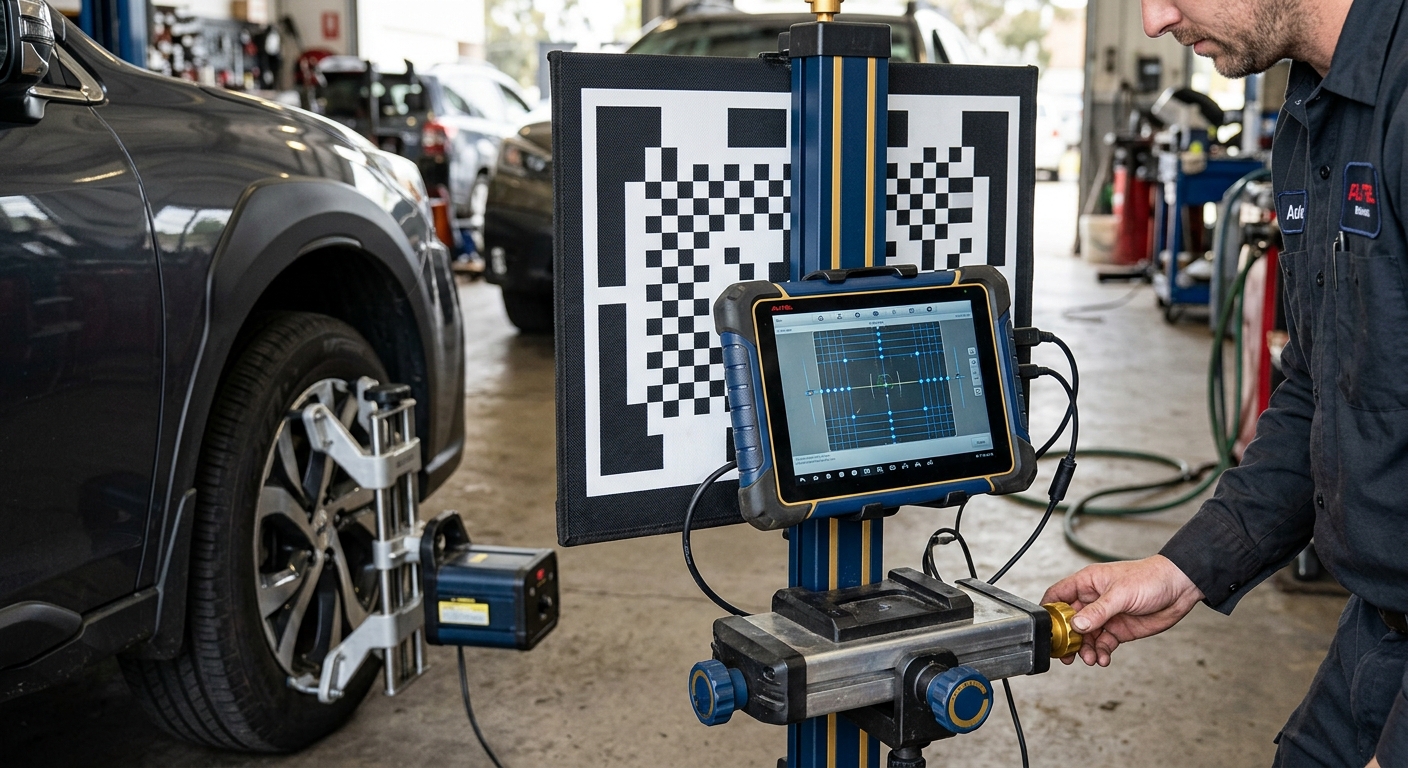
- Mount equipment: secure a calibration rig or targets at the precise height and distance. Tools like Autel ADAS or OEM-specific fixtures are used and adjusted to the vehicle’s measurement points (headlamp centerline, camera optical center, etc.).
- Perform calibration: follow the software prompts — this can include initializing cameras, running active sensor tests, or driving the vehicle on a measured route for dynamic calibration.
- Verify results: re-scan for DTCs, confirm the dash warnings are cleared, and test the systems in real-world conditions where safe (low-speed test of lane assist, AEB test with a soft target or controlled environment).
Static vs. dynamic calibration — which one does your car need?
Most shops will use one of two approaches. The right method depends on the manufacturer’s instructions and the part that was replaced.
| Method | When used | Pros | Cons |
|---|---|---|---|
| Static (target-based) | Windshield glass, camera removal, radar with fixed targets | High repeatability and precision; required for many modern cars | Needs space, accurate target setup, and time to mount targets exactly |
| Dynamic (road-driving) | Some radar and camera calibrations, final verification on the road | No large targets or rigs needed; verifies real-world performance | Requires specific road conditions, speed ranges, and may not be accepted by all OEMs alone |
Tools and equipment: what you should expect your technician to use
Professional ADAS calibration requires a combination of hardware and software, not just a tablet and tape measure. Expect to see:
- Autel ADAS calibration systems and comparable OEM-capable tools.
- Calibration targets, target stands, and adjustable mounts to set optical centers and heights precisely.
- Vehicle-specific adapter blocks and wheel chocks, and in some cases a controlled driving route with GPS logging for dynamic calibration.
- Diagnostic scan tools that read and clear ADAS DTCs and perform module reinitialization and coding.
Autel ADAS calibration — why it’s commonly used
Autel is a widely-adopted tool because it supports many makes and models and includes guided procedures. That said, the tool is only as good as the setup and the tech using it; proper positioning and vehicle prep are critical.
Why you shouldn’t skip professional calibration after windshield or bumper work
After a windshield replacement, the camera’s optical center may shift by millimeters — that’s enough for lane-keep assistance to drift. After bumper or radar replacement, even slight lateral or angular offsets can make adaptive cruise or automatic braking unsafe or useless. A correct calibration restores the system to factory tolerances and clears system warnings.
Real symptoms that mean calibration is needed
- Dash message: “System unavailable” or “Camera blocked.”
- Lane-keeping assist drifts or steers unexpectedly.
- Adaptive cruise control behaves erratically or won’t engage.
- Crash-avoidance systems fail self-checks after a repair.
ADAS calibration cost: what affects the price
People ask about ADAS calibration cost often. There isn’t a fixed number — price depends on the vehicle, required procedure (static is usually more labor- and equipment-intensive than dynamic), how many sensors need calibration, and whether pre-existing issues like alignment need correction first. Call (469) 277-7277 for an Irving-specific quote — we’ll diagnose first and explain what’s required.
Typical timeline and what to prepare for the appointment
- Bring the vehicle with the correct tire pressures and a centered steering wheel.
- Allow extra time if a wheel alignment or steering sensor reset is needed; that may add to the job.
- Static calibrations require flat ground, a few meters of clearance in front of the vehicle, and precise target placement — mobile technicians bring portable rigs.
- Dynamic calibrations require a safe stretch of road and sometimes specific speeds and conditions; plan for a longer drive time.
How we handle ADAS in Irving (what sets a good mobile service apart)
We treat ADAS calibration like a precision measurement task. That means checking alignment and steering before calibration, using OEM procedures and Autel-level tools, and verifying results through scans and test drives. If your vehicle needs airbag or SRS work that ties into the system, we coordinate with our vehicle safety services team so everything is restored safely — see our vehicle safety system services for related work.
If you want a mobile visit, search for ADAS calibration near me — our mobile team brings the tools to your location and performs target-based or dynamic calibration as required. For details on mobile coverage and how the mail-in or mobile services work, see our ADAS calibration near me page and our main ADAS calibration service page.
FAQ
Q: How long does ADAS calibration take?
A: Time varies by procedure. Dynamic calibrations can be completed in under an hour of driving plus setup, while static target-based jobs often take longer because of precise target setup and verification.
Q: Do I need calibration after a windshield replacement?
A: Usually yes if the windshield houses a camera or sensor. The camera’s mounting position changes with a new windshield and most manufacturers require recalibration.
Q: Will calibration clear the dash warning light?
A: If the warning was triggered by misalignment or a known repair and calibration is performed correctly, the warning and related DTCs should clear. If there’s a hardware fault, the code may persist and require repair.
Q: Can any shop do ADAS calibration?
A: Not effectively. You need the right tools, targets, and the manufacturer’s procedure. Some shops have generic tools but miss vehicle-specific setup steps — that’s why a trained technician with OEM-capable equipment matters.
Q: What should I do before the technician arrives?
A: Check tire pressures, make sure the steering wheel is centered, clear heavy cargo that changes ride height, and let the tech know of any recent repairs (windshield, bumper, alignment, SRS work).
Closing and next steps
If your vehicle in Irving needs ADAS calibration after windshield, bumper, or sensor work, we offer mobile, OEM-grade calibrations using Autel-class tools and proper target setups. For a clear quote and appointment, call (469) 277-7277 or schedule online at our ADAS calibration page and we’ll walk you through the exact steps and timeline for your car.


