 Skip to content

Airbag Light On After Minor Accident — What to Do
Direct answer: After a minor accident the airbag (SRS) light often stays on because the airbag control module detected an impact or a fault — even if no airbags deployed. You shouldn’t just clear the light: read the SRS codes, inspect connectors and seat sensors, and have a qualified technician reset or repair the module so the system is safe and legal.
Not near Dallas–Fort Worth? Mail us your airbag / SRS module.
We reset most airbag control modules by mail — free 2-way shipping and a fast turnaround. We clear the crash data, restore factory settings, and ship it right back, anywhere in the U.S.
After a fault like this, the airbag/SRS module often needs resetting to clear the warning light — that’s our mobile airbag module reset, mobile in DFW or mail-in nationwide with free two-way shipping.
Key Takeaways
- An airbag light after a minor crash usually means the SRS control unit logged an impact or a component fault.
- Don’t simply clear codes — the light can hide an unsafe system; read SRS-specific codes with the right scanner.
- Common causes: crash data in the ECU, damaged wiring/connectors, seat occupancy sensor or buckle switch faults, clock spring or sensor failures.
- Professional reset or module replacement is usually required; mail-in and mobile SRS reset services can clear crash data safely.
Why the airbag light comes on after a minor accident
Modern cars record an event when sensors detect rapid deceleration, even at relatively low speeds. The SRS (Supplemental Restraint System) control unit stores crash data and may set fault codes if it sees pre-tensioner deployment, sensor faults, or circuit opens/shorts. The airbag light exists to tell you the safety system may not deploy properly — you want that light taken seriously.
Short list of things the SRS sees after a crash
- Impact event recorded in the airbag control module (crash flags).
- Open or short in driver/passenger airbag circuits (wiring, connectors, or deployed airbags).
- Seat belt pretensioner deployment or buckle switch faults.
- Seat occupancy/presence sensor discrepancy on passenger side.
- Clock spring damage in the steering column (loss of airbag circuit continuity).
What you should do first (safe, practical steps)
After making sure everyone is physically okay, follow these steps. These are meant to be safe for most owners — anything involving the airbag module or deployed devices should be handled by a pro.
- Keep the vehicle off and move it somewhere safe if it isn’t already.
- Visually inspect the car for obvious damage near impact points and under seats (look for loose connectors, crushed wiring, or deployed pretensioners).
- Check the SRS fuse and related fuses in the under-dash fuse box (refer to your owner’s manual). A blown fuse can cause the light but is uncommon after an impact.
- Don’t repeatedly disconnect and reconnect the battery to “reset” the light — that can complicate diagnostics and may log additional events. If you must disconnect the battery, wait the manufacturer-recommended time for capacitors to discharge (often 10–15 minutes) and follow proper safety steps.
- Scan the SRS system with a diagnostic tool that can read airbag-specific DTCs. Generic OBD-II code readers often don’t show SRS details.
Common DTCs after an accident (what they mean)
DTCs (Diagnostic Trouble Codes) for airbags differ by make, but you’ll often see body/system (B) or network (U) codes. Here are examples you might encounter and what they generally mean:
| Code example | Plain-English meaning | Typical fix |
|---|---|---|
| B00xx (e.g., B0010) | Airbag circuit fault — driver/passenger squib circuit open or short. | Inspect clock spring, wiring, connector, or replace squib/airbag if deployed. |
| B1Axx / B2Axx | Pretensioner deployed or buckle switch fault. | Replace pretensioner or repair buckle wiring; clear crash flag after repair. |
| B0Cxx | Occupancy sensor/seat mat mismatch on passenger side. | Check seat connector, seat mat sensor, and seat control module. |
| U0xxx | Communication error between SRS ECU and other modules. | Check CAN bus wiring, module power/grounds, and scan other modules. |
| Stored crash flag (nonstandard) | SRS control unit recorded an impact; light forced on until crash data reset or module replaced. | Professional reset of the module or replacement; crash data handling rules apply. |
Note: the exact code numbers vary by brand. Any codes you see should be copied and shown to a technician — they guide the repair.
Why simply clearing the code usually doesn’t work
Some people try to clear the airbag light with a basic code reader or by disconnecting the battery. If the SRS control module still has crash flags or an unresolved fault, it will re-trigger the light immediately. Worse, clearing codes without repair leaves you with an unsafe restraint system that may not deploy in a future crash.
When a professional reset or replacement is needed
A trained technician will:
- Run a full SRS scan with the correct OEM-level or SRS-capable tool and record codes and freeze-frame crash data.
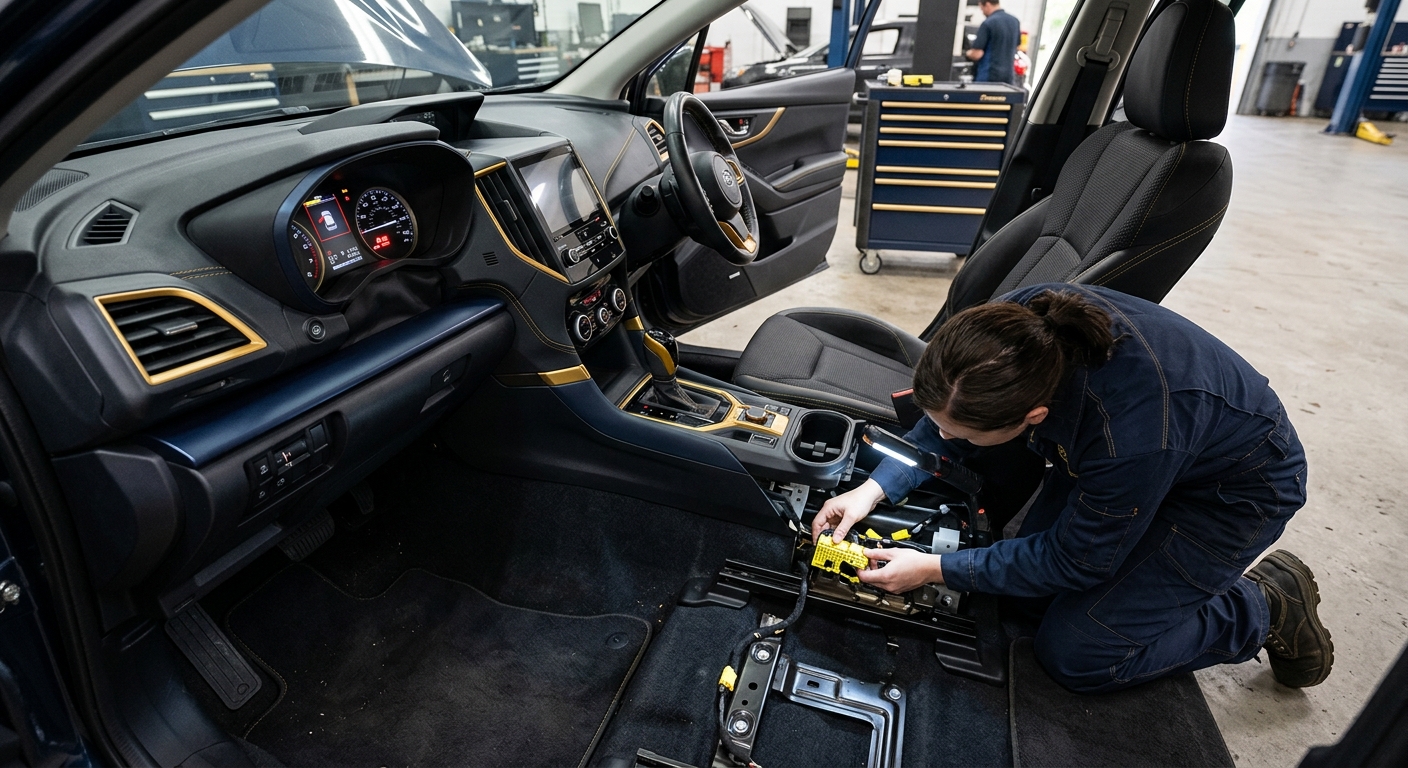
- Inspect wiring harnesses and connectors under both front seats, center console, dash (clock spring area), and front bumper impact zones (for sensor damage).
- Check pretensioners, airbags (squibs), and seat occupancy systems and replace any deployed components.
- Use a controlled, documented process to clear crash data in the SRS control module — this often requires a certified tool or service that follows manufacturer guidelines.
For many owners a mail-in airbag module reset is a convenient and safe option: technicians erase crash data and clear the stored crash flag without replacing the entire module. Learn more about our mail-in option at https://lockncal.com/mail-in-airbag-module-reset-service-free-shipping/.
DIY vs pro — what you can do and what you shouldn’t
Helpful DIY checks:
- Inspect visible connectors under seats and behind the glove box for loose plugs or obvious damage.
- Check SRS and related fuses with the key off.
- Document and write down any SRS codes shown by a scan tool to share with a technician.
Leave these to professionals:
- Resetting or deleting crash data from the SRS control module unless the technician follows manufacturer procedures.
- Replacing airbag inflators, squibs, pretensioners, or the control unit — these parts are single-use or require precise handling.
- Any work involving deployed airbags or cutting into wiring near airbag circuits.
Honda-specific note
Honda models are commonly mentioned because their SRS ECUs store crash flags that will keep the airbag light on until cleared by a proper SRS tool or the module is serviced. The repair flow is the same: scan the SRS, inspect seat and clock spring circuits, repair any damaged parts, and then clear the crash record via an approved procedure. If you see “Honda airbag light on after accident,” treat it the same as other makes — don’t clear codes until repairs are confirmed.
How long will the light stay on?
It depends. If the SRS module has a stored crash event, the light will remain until the fault is repaired and the module is reset. If the issue is a loose connector that you or a tech plugs back in, the light can clear after proper scanning and resetting. The key point: don’t assume time alone will clear it; an unresolved fault can make your vehicle unsafe.
Fast reference: cause, symptom, typical next step
| Cause | Symptom | Next step |
|---|---|---|
| Crash flag in SRS ECU | Airbag light stays on after impact, no deployment visible | Professional scan and module reset or replacement |
| Deployed pretensioner or airbag | Visible deployment or cut wires, obvious damage | Replace deployed components and reset module |
| Clock spring or steering column wiring | Driver airbag light, horn or steering wheel controls not working | Inspect/replace clock spring and re-scan |
| Seat occupancy sensor fault | Passenger airbag light behavior inconsistent | Inspect seat connectors and mat sensor, repair and reset |
Service options: mobile and mail-in
If you prefer a technician come to you, a trained mobile technician with SRS tools can diagnose and, in many cases, perform the reset on-site — see our mobile airbag module reset service for details: https://lockncal.com/mobile-airbag-module-reset-service/.
If you’re comfortable shipping the module out, our nationwide mail-in airbag module reset service handles crash data removal and resets the unit with free shipping both ways — details at https://lockncal.com/mail-in-airbag-module-reset-service-free-shipping/.
For broader work on airbags, seat belts, clock springs and other related parts, we cover full vehicle safety system services: https://lockncal.com/vehicle-safety-system-services/.
FAQ
Q: Can I reset the airbag light myself after an accident?
A: You can perform basic checks (fuses, visible connectors) and read codes, but resetting crash data or replacing safety components should be done by a qualified technician. Clearing codes without fixing the cause can leave the system unsafe.
Q: Why does the airbag light flash sometimes after an accident?
A: A flashing airbag light usually indicates an active fault in the SRS system or repeated comms errors — flashing draws attention to a persistent problem that needs scanning and repair.
Q: Will disconnecting the battery turn off the airbag light after a crash?
A: Disconnecting the battery may temporarily clear some lights but won’t remove a stored crash flag in the SRS controller. It can also complicate diagnostics; let a technician read and interpret codes first.
Q: Is it safe to drive with the airbag light on after a minor accident?
A: It’s not recommended. The light indicates the supplemental restraint system may not work properly. Drive only if necessary and at low risk, and arrange for diagnosis as soon as possible.
Q: How much does it cost to reset the airbag light after an accident?
A: Pricing depends on the vehicle, the needed repairs, and whether the module must be reset or replaced. Call (469) 277-7277 for a personalized quote.
If your airbag light came on after an accident, the safest next step is a professional SRS scan and inspection. For a convenient mail-in option or mobile service, learn more or schedule at our mail-in airbag module reset service: https://lockncal.com/mail-in-airbag-module-reset-service-free-shipping/ — or call (469) 277-7277 to discuss your vehicle and get a quote.


