 Skip to content
Hard Codes vs Soft Codes After Airbag Deployment — Clear Answer
Direct answer: After an airbag deployment, a hard code is a confirmed, active fault the airbag control module recorded during the crash and it usually prevents the system from arming until repaired. A soft code is a pending or historical fault that may be intermittent or cleared after a successful repair or reset. Both need proper diagnosis; hard codes generally require component replacement or module reset by a qualified technician.
Key Takeaways
- Hard codes are confirmed, active crash-related faults; soft codes are pending or intermittent.
- Hard codes often require parts replacement or SRS module reset; soft codes can clear after repair or successful reset.
- Clearing crash data and resetting SRS modules must be done with correct tools and procedures to keep the system safe and legal.
- Use a trusted provider (mobile or mail-in) to diagnose and reset the module—contact (469) 277-7277 for a quote.
What do technicians mean by “hard code” and “soft code”?
Technically, these terms describe how the airbag/SRS control module records diagnostic trouble codes (DTCs):
- Hard code: The module logged a confirmed fault during an event. It is active, persistent, and usually tied to a specific sensor, circuit, or collision event. The module will often disable deployment or display an airbag light until corrected.
- Soft code: The module recorded a pending or intermittent condition. It may represent a sensor that momentarily reported out-of-range values, a wiring glitch, or a historical fault that didn’t meet the module’s criteria for a confirmed failure.
Why the distinction matters after airbag deployment
After a crash, the SRS control unit evaluates sensors and records event data. Hard codes tell you the module confirmed a fault during the crash—this may include the deployment itself, seatbelt pretensioner firing, or a shorted impact sensor. Soft codes suggest unreliable inputs that could be repaired without replacing core components, but they still need attention.
Safety and legal reasons
Clearing codes without addressing the underlying problem can leave safety systems nonfunctional. In many places, vehicles with unresolved crash data are unsafe to sell or drive. Proper reset and verification ensure the SRS will work in a future collision.
Common causes of hard and soft codes after deployment
- Impact sensors triggered by the crash (hard code).
- Seatbelt pretensioner circuits showing deployment (hard code).
- Wiring damage from the crash causing intermittent signals (soft or hard, depending on severity).
- Airbag module internal crash flag or memory set to indicate deployment (usually a hard condition until reset).
- Loss of battery power during the post-crash event leading to pending faults (soft codes).
Readability tip: how codes appear
DTCs typically look like “B1234” or codes specific to a manufacturer. The code name alone doesn’t tell you hard vs soft—your scan tool and freeze-frame data (time-stamped crash sensor readings) indicate whether the code was confirmed during the crash.
How technicians diagnose hard vs soft codes
Diagnosis follows a methodical approach:
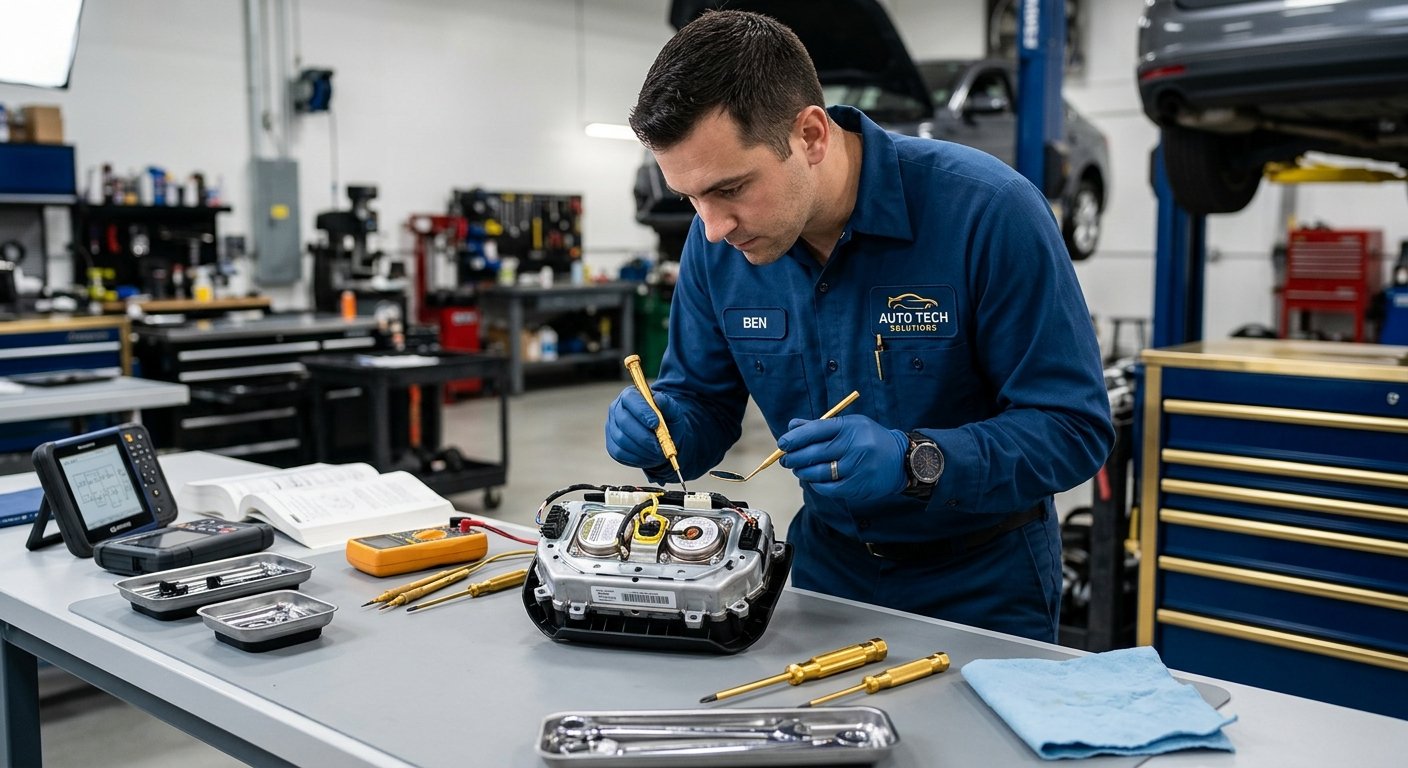
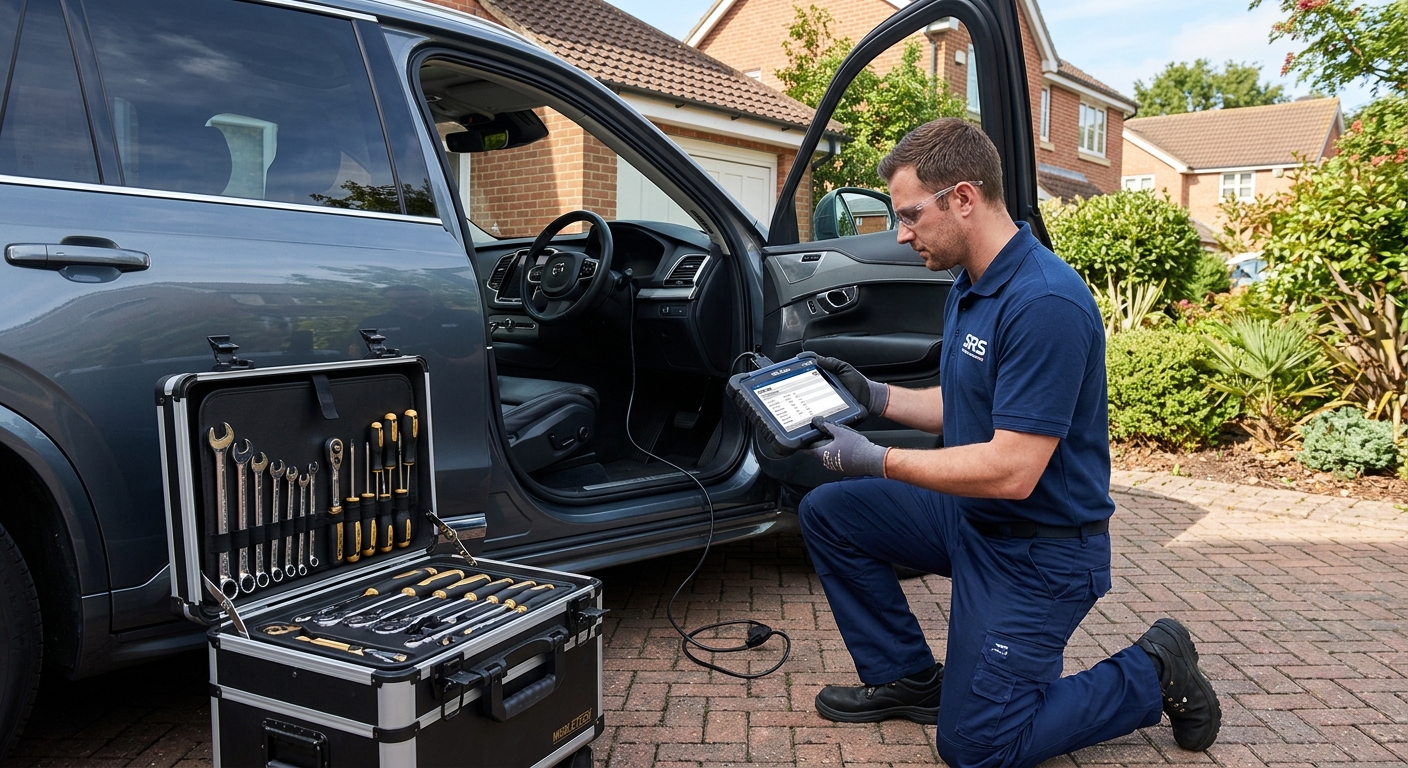
- Connect a capable SRS-capable scan tool and read DTCs and freeze-frame crash data.
- Identify which sensors or circuits reported events during the crash (these are likely hard codes).
- Inspect wiring, connectors, crash sensors, seatbelt pretensioners, and airbag modules for physical damage.
- Test components (continuity checks, resistance tests) while following manufacturer steps.
- Decide whether repair, part replacement, or module reset is needed.
What the diagnostic report tells you
Freeze-frame data and event memory tell the story: if the module recorded deployment or large impact values at a specific time, that fault is confirmed. If a code is listed as “pending” or appears in history without an event timestamp, it’s more likely a soft code.
Repair options and what to expect
Fixing SRS issues depends on the underlying cause. Options include wiring repair, replacing triggered seatbelt pretensioners, replacing damaged crash sensors, or resetting the airbag control module after parts are addressed.
| Problem Type | Typical Cause | Fix | Urgency |
|---|---|---|---|
| Hard code (confirmed deployment) | Deployed airbag, fired pretensioner, crash recorded in module | Replace damaged components, clear crash data with proper tool or send module for reset | High — do not drive long-term without repair |
| Soft code (pending/intermittent) | Loose connector, intermittent sensor reading, past low-voltage event | Repair wiring/connector, test sensor, clear code and monitor | Medium — inspect and fix soon |
Clearing crash data and SRS module reset: facts and safe procedure
Not all reset methods are equal. Proper SRS module reset should follow the manufacturer service manual and use tools that can safely clear event memory and restore module status. In many cases the module must be verified as intact and not physically damaged.
Two common approaches:
- Mobile or shop reset after on-vehicle repairs and verification (we offer mobile service for this).
- Mail-in module reset for units that can be safely removed and shipped to a specialist with secure return shipping.
For remote or nationwide service, the mail-in option often works well because the module can be fully flashed and cleared in a controlled environment. See our mail-in airbag module reset service for details: https://lockncal.com/mail-in-airbag-module-reset-service-free-shipping/.
When is replacement necessary?
If the airbag control module suffered internal damage during the crash, or if deployed components like pretensioners and airbags are physically spent or severed wiring can’t be reliably repaired, replacement of those components is required. Always confirm with diagnostic data before replacing parts.
How this applies in Arlington and nationwide
Whether you’re in Arlington or anywhere else, the diagnosis steps are the same: read the codes, inspect components, repair the root cause, then reset or replace the module as required. If you prefer on-site help, our mobile services can come to you; if mailing the module is better, our nationwide mail-in reset is available. Learn about on-site options and mobile resets here: https://lockncal.com/mobile-airbag-module-reset-service/ and our overall vehicle safety services: https://lockncal.com/vehicle-safety-system-services/.
Quick checklist for owners after a crash
- Do not ignore the airbag light — it means the system is not ready.
- Get a full SRS scan that includes event memory and freeze-frame data.
- Repair visible damage (sensors, wiring, seatbelt pretensioners) before clearing codes.
- Use a qualified technician to reset or replace the SRS module—ask for verification that crash data was cleared correctly.
FAQ
Do hard codes always mean the airbag won’t work?
Not always, but hard codes indicate a confirmed problem that can prevent the system from functioning properly. They require diagnosis and repair before the system can be trusted again.
Can I clear soft codes myself with a basic scanner?
Basic scanners can sometimes clear pending codes, but clearing without fixing the cause can be unsafe. For SRS work, use a professional with the right tools and know-how.
Is it legal to drive after the airbag light is on?
Legality varies, but it’s unsafe to drive long-term with SRS faults. Have the system inspected and repaired; don’t ignore deployed crash data.
What happens if crash data isn’t cleared correctly?
If crash data isn’t cleared or the module isn’t reset properly, the airbag system may remain disabled or record incorrect data in a future event. Proper reset procedures are crucial.
How do I get help if I’m in Arlington?
We offer both mobile SRS diagnostics and nationwide mail-in module reset services. Call (469) 277-7277 for a quote and to schedule. You can also review our mail-in reset service: https://lockncal.com/mail-in-airbag-module-reset-service-free-shipping/.
Need help with confirmed crash codes or a stubborn airbag light? We can diagnose, repair, and reset your SRS safely. Learn more or schedule service at our mail-in airbag module reset page: https://lockncal.com/mail-in-airbag-module-reset-service-free-shipping/, or call (469) 277-7277 for a personalized quote.


