 Skip to content

ADAS Calibration Systems: Types, Workflows, and How to Choose the Right Shop or Tool
Modern vehicles rely on ADAS calibration systems to keep critical safety features aimed correctly and functioning as designed. If you drive in Farmers Branch TX or anywhere in DFW, your vehicle’s cameras, radar, and other sensors are constantly working in the background to help prevent crashes and reduce the severity of impacts.
LockNCal calibrates cameras and radar on-site across Dallas–Fort Worth. On-site: $0 today, pay after the job. Book mobile ADAS calibration or call (469) 277-7277.
Driver-assist systems usually need recalibration after a repair — our mobile ADAS calibration comes to you across Dallas–Fort Worth.
This guide explains, in plain language, what ADAS calibration systems are, how they work, when they are needed after repairs or glass work, and how to choose the right shop or tool — with a focus on American and Japanese vehicles.
For local service details in Farmers Branch, see our area page here: LockNCal Farmers Branch TX.
What Are ADAS Calibration Systems and Why Do They Matter?
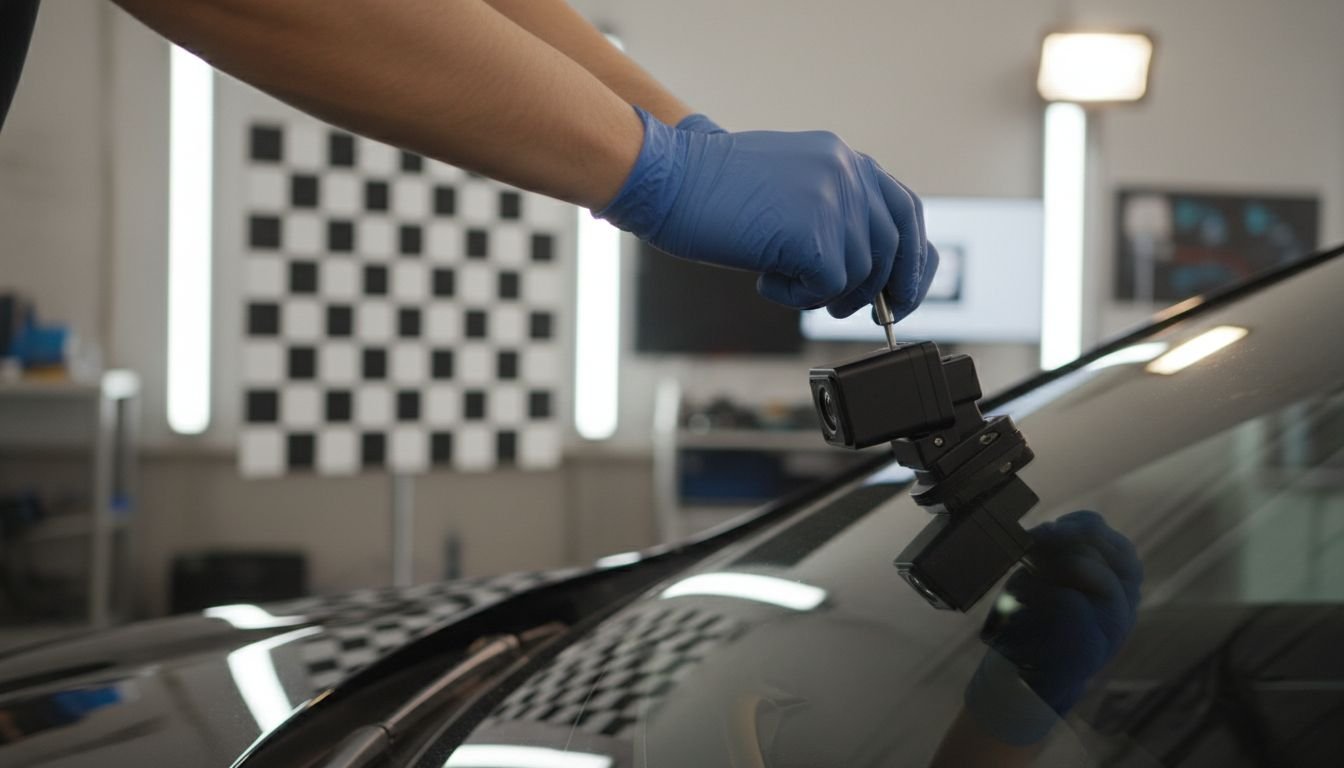
ADAS stands for Advanced Driver Assistance Systems. These are the electronic systems that help you avoid or lessen the impact of a collision. Common ADAS features include:
- Forward Collision Warning (FCW)
- Automatic Emergency Braking (AEB)
- Lane Departure Warning (LDW) and Lane Keeping Assist (LKA)
- Adaptive Cruise Control (ACC)
- Blind Spot Monitoring (BSM) and Rear Cross-Traffic Alert
- Parking assist, surround-view cameras, and automatic parking
These systems depend on multiple sensors — mainly cameras, radar, lidar, and ultrasonic sensors — that must be pointed and measured very precisely. Even a few millimeters or a fraction of a degree off can change when the vehicle thinks an object is too close or a lane line is where it really isn’t.
ADAS calibration is the process of restoring that precise aiming and alignment after something has changed, such as a windshield replacement, front-end repair, ride height change, or sensor replacement.
Why it matters:
- Incorrectly aimed cameras can cause lane-keeping and collision warning systems to misread the road.
- Misaligned radar can delay or trigger false automatic braking or following-distance control.
- Improper calibration can make the system shut down entirely, showing warnings like “Unavailable” or “Malfunction.”
Well-set-up ADAS calibration systems and procedures help make sure the safety features on your American or Japanese vehicle work as the manufacturer intended — not earlier, not later, and not at random.
Explain the different ADAS calibration system types (camera-based, radar, lidar, static vs dynamic), common calibration workflows, when each is required, pros/cons of OEM vs aftermarket systems, and how to choose a shop or tool.
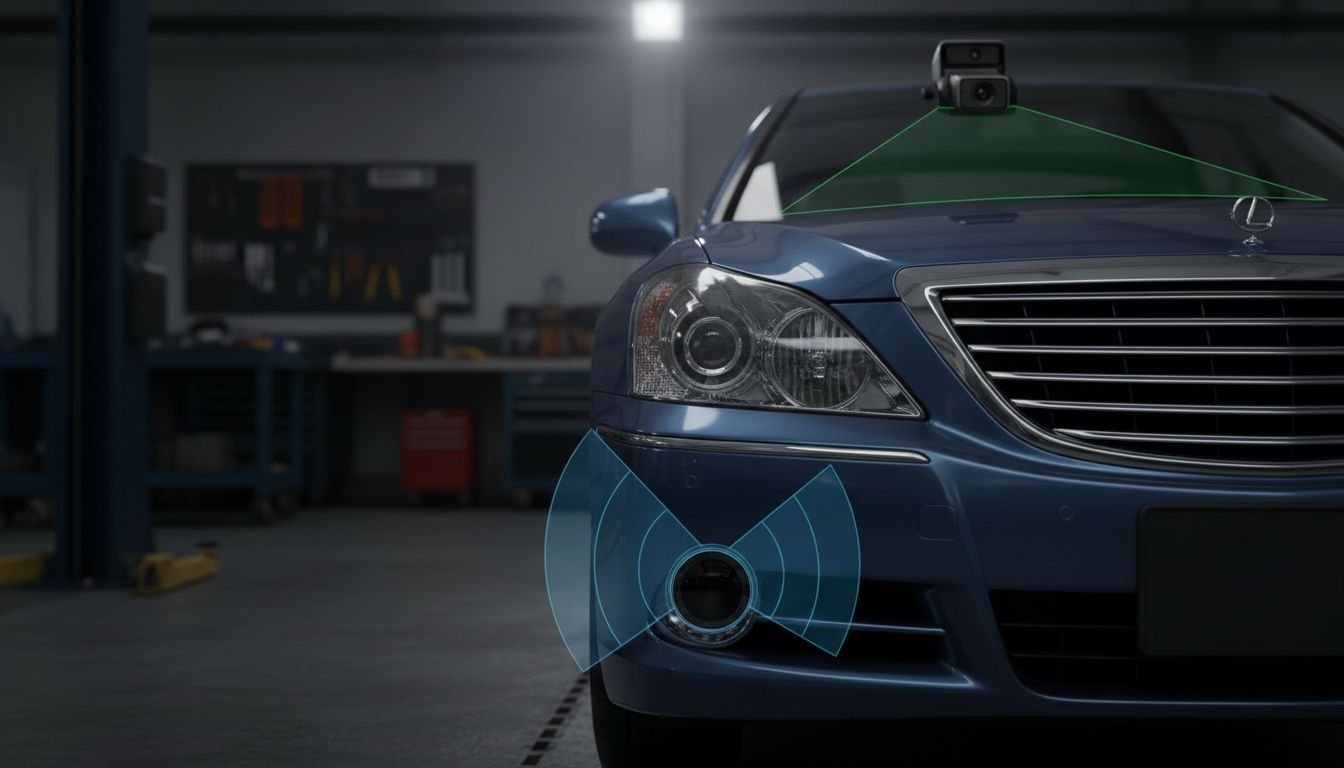
Camera-based calibration systems
Many ADAS functions rely on one or more forward-facing cameras, often mounted near the rearview mirror or on the grille. Camera calibration uses special targets, boards, or digital patterns placed at exact distances and heights in front of the vehicle.
Typical camera-supported features:
- Lane Departure Warning / Lane Keeping Assist
- Traffic Sign Recognition
- Forward Collision Warning and AEB (often combined with radar)
- Automatic High-Beam Control
Calibration systems for cameras may be static (targets in a controlled bay) or dynamic (performed while driving), depending on the manufacturer and model.
Radar calibration systems
Radar calibration is used for sensors that measure distance and speed of vehicles and objects ahead, behind, or beside you. These sensors are often located:
- Behind the front bumper cover
- Behind a grille emblem
- In the rear bumper corners for blind-spot monitoring
Radar-based features include:
- Adaptive Cruise Control (ACC)
- Forward Collision Warning / Automatic Emergency Braking
- Blind Spot Monitoring and Rear Cross-Traffic Alert
ADAS calibration tools for radar use reflective targets, stands, and measurement equipment to ensure the radar is pointed correctly in three dimensions (height, lateral position, and toe angle).
Lidar and ultrasonic/parking-related calibration considerations
Some advanced vehicles use lidar (light detection and ranging) or additional cameras to build a 3D map of the surroundings. More commonly, everyday American and Japanese vehicles in DFW use:
- Ultrasonic sensors for parking assist and park-distance control
- Rear or surround-view cameras for backing and low-speed maneuvering
These sensors sometimes need calibration or initialization after bumper service, harness repairs, or module replacement. While the process may be simpler than forward radar or camera calibration, it still requires the correct targets, distances, and scan-tool procedures.
Static calibration systems vs dynamic calibration systems
Static calibration is done in the shop with the vehicle sitting still. Special frames, lasers, or measuring systems align physical or digital targets with the vehicle’s thrust line and ride height.
Dynamic calibration is performed while driving the vehicle at specified speeds and under specific road conditions. The ADAS module learns real-world conditions (lane lines, road edges, traffic) during a controlled drive cycle.
Many vehicles require:
- Static calibration only
- Dynamic calibration only
- Both static and dynamic calibration in a precise sequence
When a vehicle may require one method or both
Which procedure is required is always determined by the manufacturer’s service information for that specific year, make, model, and option package.
Examples:
- Some Toyota and Honda forward cameras require a static target setup in the bay, followed by a dynamic road-calibration drive.
- Certain American trucks may use static target placement for radar, but dynamic calibration for lane-keep cameras.
- Some systems initialize automatically with a dynamic drive after components are replaced, but still require very exact alignment and ride height settings.
OEM systems vs aftermarket systems: pros, cons, compatibility, cost, training, updates
Shops in Farmers Branch TX and across DFW typically choose between OEM vs aftermarket ADAS systems (hardware and software) to perform calibrations.
OEM ADAS calibration systems:
- Use factory scan tools, targets, and fixtures
- Offer the highest level of procedure-by-procedure accuracy and coverage for the brand
- Require subscriptions and frequent updates directly from the manufacturer
- Are often expensive and may be limited to one or a few brands
Aftermarket ADAS calibration tools and systems:
- Support multiple brands of American and Japanese vehicles with one platform
- Can be more cost-effective for independent shops
- Depend heavily on proper setup, up-to-date software, and technician training
- May have coverage gaps and require careful confirmation for unusual trim levels or options
In reality, many professional ADAS providers blend OEM information, approved aftermarket tools, and strict procedures. What matters most for your safety is not the sticker on the tool, but whether the shop follows the correct procedure and verifies results.
| System Type | Typical Sensors | Static or Dynamic | Common Use Cases | Key Limitations |
|---|---|---|---|---|
| Camera-based ADAS | Windshield / grille cameras | Static, Dynamic, or Both | Lane keeping, traffic sign, FCW/AEB | Sensitive to ride height, glass type, target placement |
| Radar-based ADAS | Front/rear bumper radar units | Mainly Static (some dynamic checks) | Adaptive cruise, AEB, blind spot | Affected by bumper repair, brackets, and alignment |
| Lidar-based ADAS | Roof or grille-mounted lidar | Static with specialized tools | High-end mapping, advanced collision avoidance | More complex, limited to certain models |
| Ultrasonic / Parking | Bumper-mounted ultrasonic sensors | Initialization or simple setups | Park assist, parking distance warnings | Still affected by bumper repairs and sensor replacement |
If you want a deeper dive into why ADAS calibration matters for everyday driving in our area, review this local safety article: why Farmers Branch drivers need ADAS calibration now.
When Is ADAS Calibration Required After Service or Damage?
After windshield replacement
ADAS calibration after windshield replacement is one of the most common needs. If your vehicle has a camera behind the glass, replacing the windshield almost always requires:
- Camera static calibration with targets in a controlled bay, and/or
- Dynamic calibration drive afterward, according to OEM procedure
Even a “correct” glass part can position the camera slightly differently; calibration compensates for tiny changes so lane lines and objects are detected accurately.
After front or rear collision repair
Any collision or significant bump that affects the front or rear structure, bumper beams, or sensor brackets is a strong trigger for calibration. Even if the body work looks straight, sensors may have shifted by a small but important amount.
Examples:
- Front-end repair after a low-speed crash that damaged the bumper cover and grille
- Rear-end collision that pushed the bumper in but “popped back out” visually
- Frame or unibody pulls that change thrust angle or ride height
After bumper removal or sensor replacement
Removing and reinstalling bumpers, grilles, or mirrors on ADAS-equipped vehicles often requires calibration, even if no visible damage is present.
Common scenarios:
- Replacing a front radar unit behind the grille emblem
- Replacing a blind spot radar module in the rear bumper corner
- Removing a bumper to access other components, then reinstalling it
After wheel alignment or suspension/ride height changes
ADAS systems assume the vehicle has a certain ride height and thrust line. Changing either without recalibrating the sensors can throw off ADAS aiming.
Triggers include:
- Major wheel alignment changes after suspension work
- Installing lift or lowering kits on trucks and SUVs
- Replacing springs, struts, or control arms that affect vehicle attitude
On many American and Japanese vehicles, OEM procedures specifically call for recalibration of forward cameras and radar after these changes.
After module programming or battery-related events that affect learned values
Modern ADAS uses control modules that store learned values. These can be reset or lost when:
- Modules are replaced or reprogrammed
- The battery is disconnected for an extended period
- Voltage is very low or unstable during repairs
In many cases, the OEM procedure requires a Vehicle Diagnostic session to check for ADAS-related codes, then perform any necessary calibrations before the vehicle is returned to service.
A Typical ADAS Calibration Workflow Step by Step
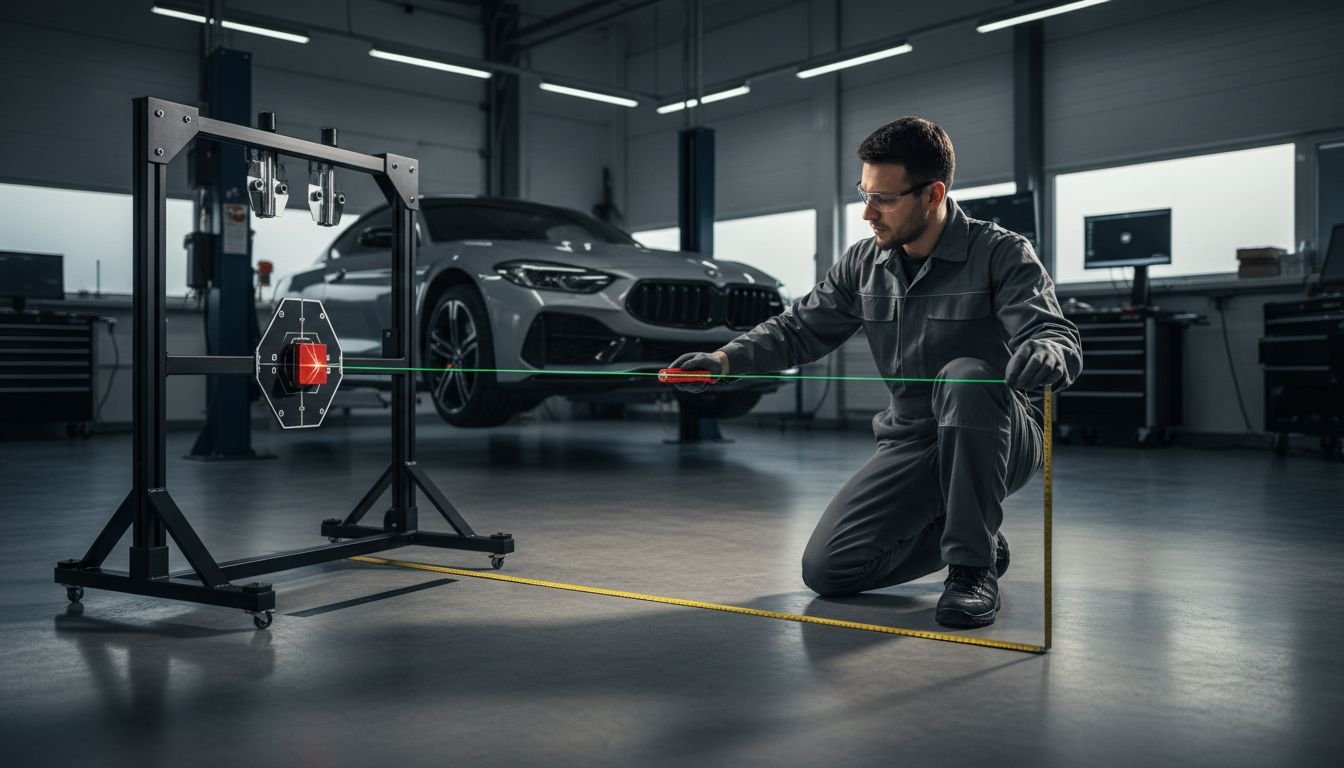
Different manufacturers specify different details, but a professional ADAS calibration in Farmers Branch TX should follow a structured workflow. Here is what that usually looks like for American and Japanese vehicles.
1. Pre-scan and fault check
The first step is a Vehicle Diagnostic scan. A technician connects a scan tool and:
- Checks for ADAS-related diagnostic trouble codes (DTCs)
- Confirms which systems are present on the vehicle (camera, radar, parking assist, etc.)
- Documents all codes before any work is performed
2. Verify tire pressure, ride height, fuel/load conditions, and alignment prerequisites
Before setting targets, the technician must ensure the vehicle is in “as-designed” condition:
- Tire size and tire pressure are correct and even
- Ride height is within spec; no obvious sagging, lift kits, or heavily loaded cargo
- Alignment is completed first, if required by OEM procedure
- Fuel level and seat loads meet manufacturer guidelines (some OEMs are very specific)
3. Prepare the bay: level floor, lighting, target placement, no obstructions
A proper calibration bay must have:
- A level floor and enough clear space around the vehicle
- Consistent lighting without harsh glare or shadows on targets
- No reflective surfaces or hanging objects interfering with sensors
Targets and stands are then positioned using lasers, chalk lines, or advanced measurement systems to reference the vehicle’s centerline and wheelbase.
4. Static target setup and measurement
For static calibration, the technician:
- Positions camera or radar targets at specific distances, heights, and angles
- Double-checks measurements side-to-side and front-to-back
- Uses the scan tool to command the module into calibration mode
- Follows on-screen instructions until the module reports success or flags an error
5. Dynamic road-test calibration when specified
When dynamic calibration is required, the vehicle is then driven on suitable roads at OEM-specified speeds and conditions. During this drive:
- The technician keeps the vehicle centered in the lane as consistently as possible
- The system observes lane markings, traffic, and surroundings
- The module records these data points to “self-learn” its environment
This is not just a casual test drive; it’s a controlled procedure that must be completed exactly as instructed.
6. Post-scan, documentation, and verification
Once calibration completes, the technician:
- Runs a post-scan to confirm no remaining ADAS codes
- Saves or prints pre- and post-scan reports for your records
- Verifies basic system function with a road test, when appropriate
When you choose a calibration shop in Farmers Branch TX, you should always expect this level of structure and documentation.
How to Choose Between OEM and Aftermarket ADAS Calibration Systems
—IMAGE_BLOCK: Photorealistic close-up of two different scan tools and an ADAS target frame on a workbench, suggesting OEM and aftermarket equipment options without branding. Cinematic lighting, photorealistic, 8k resolution, neutral workshop background—
Best fit for dealer-level procedures
Dealerships usually rely on OEM ADAS calibration systems for their own brand. This is ideal when:
- You drive a late-model vehicle still under factory warranty
- There are complex manufacturer campaigns or recalls tied to ADAS
- You require very brand-specific updates or software-level changes
Best fit for independent shops
Quality independent facilities that focus on ADAS Calibration for American and Japanese vehicles often use approved aftermarket ADAS calibration tools plus OEM repair information. This setup can provide:
- Broader coverage across multiple brands
- Efficient service for local collision centers and glass shops
- Lower overall cost while still following OEM procedures
Coverage vs cost tradeoffs
No single tool covers everything perfectly. A responsible ADAS provider will:
- Verify that your specific year/make/model is covered
- Check OEM procedures for any unique requirements
- Use supplemental methods or refer out rare cases when needed
Software subscriptions, updates, accessories, and training considerations
Whether the system is OEM or aftermarket, staying current matters:
- Regular software updates to cover new models and procedures
- Correct target kits, brackets, and accessories for your vehicle
- Technicians trained specifically in ADAS, not just general repair
When you talk to a calibration shop in Farmers Branch TX, ask how often their systems are updated and what brands of vehicles they focus on. For American and Japanese vehicles, LockNCal provides ADAS Calibration and Vehicle Diagnostic workflows designed around local driving conditions and repair needs.
How to Choose a Calibration Shop or Tool in Farmers Branch TX
Questions to ask before trusting a shop
Before you hand over your keys, ask the shop:
- What brands do you specialize in? (You want clear experience with American and Japanese vehicles.)
- Do you provide pre- and post-scan reports?
- Is your calibration bay level and dedicated to ADAS work?
- Do you follow OEM procedures, including alignment and ride-height checks?
- Will you document the exact calibration procedures performed?
Why documentation, scan reports, and proper setup matter
Accurate documentation isn’t just paperwork. It’s proof that the systems were checked, corrected, and verified. This is important for:
- Your peace of mind as a driver
- Insurance records after a collision or glass claim
- Future diagnostics if another shop needs to review what was done
Why local experience in Farmers Branch TX and DFW roads/repair conditions is useful
Driving conditions, traffic density, and common vehicle types vary by region. A local ADAS specialist who works daily in Farmers Branch TX and the broader DFW area:
- Understands typical local collision patterns and repair workflows
- Is familiar with the mix of American and Japanese vehicles on our roads
- Knows where dynamic calibration routes can be driven safely and consistently
LockNCal offers ADAS Calibration and Vehicle Diagnostic services tailored to drivers and repair shops across Farmers Branch TX and nearby cities in Dallas County and the DFW corridor. If you are unsure what your vehicle needs, you can start by decoding your VIN here: LockNCal VIN decoder.
Common Driver Questions, Warning Messages, and Troubleshooting Basics
Warning lights and “Unavailable” messages
Modern dashboards can show many ADAS warnings, including:
- “Collision Mitigation System Unavailable”
- “Front Camera Temporarily Unavailable”
- “Lane Keep Assist Disabled”
- “Radar Cruise Control Unavailable”
Important: These messages do not always mean the sensor is broken. Often they indicate:
- A failed or incomplete calibration
- Blocked or dirty sensor surfaces
- Ride height or alignment out of range
- Software or learned-value issues after battery work
About “toyota pre collision system malfunction reset” searches
Many drivers search for terms like toyota pre collision system malfunction reset hoping for a quick button sequence or code clear. In reality, if a Toyota (or most other brands) detects that a camera or radar is out of spec, a simple reset often won’t fix the underlying problem.
In these cases, the correct path is:
- Perform a proper Vehicle Diagnostic scan to see which module is upset and why.
- Inspect physical mounting, brackets, and alignment or ride height issues.
- Carry out the specified ADAS Calibration procedure (static, dynamic, or both).
Just clearing codes without fixing alignment or completing calibration can leave you with a false sense of security — or cause the system to shut off again.
Diagnostic systems and restraint warnings
ADAS diagnostics increasingly overlap with other safety systems, including SRS (Supplemental Restraint System) modules that control airbags and seatbelt pretensioners. These components are literally explosive devices designed to protect you in a crash.
DIY probing, back-probing connectors, or guessing with generic tools can accidentally affect SRS circuits, leading to unsafe conditions or accidental deployment. For a deeper look at how restraint-system diagnostics should be handled professionally, see this article: BMW passenger restraint system malfunction causes and diagnostics (the principles apply broadly, even though LockNCal focuses service support on American and Japanese vehicles).
Whenever you see safety-related warnings, treating them as a job for professional Vehicle Diagnostic work is the safer option.
Why DIY ADAS Calibration Is Risky
Risks of incorrect target placement and unlevel floors
Professional ADAS calibration tools and procedures exist for a reason. Common DIY issues include:
- Targets placed a few inches off in distance or height
- Using non-level garage floors or driveways
- Ignoring ride height or alignment problems
- Guessing at target patterns instead of using approved ones
Those “small” errors can shift camera or radar aiming by enough to affect when your vehicle brakes, warns, or steers.
Skipped preconditions and incomplete scans
Even if a DIYer manages to start a calibration, they might:
- Skip pre-scan and post-scan documentation
- Ignore existing codes in related modules
- Fail to complete the full dynamic drive cycle
The result can be intermittent warnings, unreliable operation, or systems that appear to work until a critical moment.
How inaccurate calibration affects braking support and lane control
Improper calibration is not just about annoying dash lights. It can affect:
- When and how aggressively Automatic Emergency Braking steps in
- How lane-centering and lane-keeping systems steer
- How close your vehicle follows others under adaptive cruise
Any of these can change collision risk, especially at highway speeds around DFW.
SRS and explosive components: a broader safety reminder
Some ADAS diagnostics interact with modules that also manage airbags, seatbelt pretensioners, and other SRS components. These components contain explosive charges designed to deploy in milliseconds during a crash.
Untrained attempts to diagnose or reset these systems can create very real safety hazards. For your safety and your passengers, ADAS issues should be handled by a professional shop with the right tools, training, and procedures.
When to Schedule Professional ADAS Calibration in DFW
Signs the vehicle should be checked
You should schedule ADAS Calibration and possibly a Vehicle Diagnostic if:
- You recently had a windshield replacement and your vehicle has a forward camera
- Your vehicle was in a front or rear collision, even at lower speeds
- A shop replaced or removed a bumper, grille, or mirror with sensors
- You had suspension work, ride-height changes, or a major alignment
- You see persistent ADAS warning lights or “Unavailable” messages
- You notice ADAS behaving differently (late braking, incorrect lane warnings, etc.)
Why prompt inspection matters after repair work
Delaying calibration is a safety risk. Driving for weeks with misaligned ADAS sensors can mean:
- The system might not intervene when you expect it to
- It might brake or steer in ways that surprise you
- It may shut down entirely, leaving you without the support you paid for
Call to action for ADAS Calibration and Vehicle Diagnostic at LockNCal
If you’re in Farmers Branch TX or nearby DFW communities like Carrollton, Addison, or Dallas, and you’re unsure whether your vehicle’s ADAS is properly calibrated, it’s best to get it professionally evaluated.
LockNCal focuses on ADAS Calibration and Vehicle Diagnostic for American and Japanese vehicles. Whether your trigger was a windshield job, bumper repair, suspension change, or a persistent warning message, we can:
- Scan and document your ADAS systems
- Identify which calibrations are required
- Perform static and dynamic procedures according to OEM guidance
For more background on how simple services like washes or detailing can affect your ADAS, see this article: how misaligned ADAS sensors can happen after washes or detailing.
And if you want to confirm your vehicle’s equipment before calling, you can use our VIN tool here: VIN decoder.
Frequently Asked Questions
1. What are ADAS calibration systems?
ADAS calibration systems are the tools, targets, software, and procedures used to realign cameras, radar, lidar, and ultrasonic sensors so that advanced driver assistance features work correctly. Calibration ensures that systems like lane keeping, automatic emergency braking, adaptive cruise control, and parking assist can interpret the road and surrounding traffic with the precision the manufacturer intended.
2. What is the difference between static and dynamic ADAS calibration?
Static calibration is performed in a controlled shop environment with the vehicle stationary, using precise targets and measurements. Dynamic calibration is completed on the road while driving under specific conditions so the system can learn from real-world lane lines and traffic. Some vehicles need static only, some dynamic only, and many require both methods in sequence.
3. When does a vehicle need ADAS calibration?
You typically need ADAS calibration after events that affect sensor position, ride height, or learned values, including:
- Windshield replacement on vehicles with forward-facing cameras
- Front or rear collision damage and repairs
- Bumper removal, replacement, or sensor swapping
- Suspension or alignment changes that alter ride height or thrust angle
- Module replacements, programming, or significant battery-related events
4. Can a warning light be fixed with a Toyota pre collision system malfunction reset alone?
Often, no. While many drivers search for a quick toyota pre collision system malfunction reset, the warning usually means the system sees a real issue — such as a misaligned camera or radar, or missing calibration after a repair. Clearing codes without addressing the root cause can allow unsafe operation or cause the system to shut down again. A proper Vehicle Diagnostic and, if needed, ADAS Calibration is the correct way to resolve these warnings.
5. Are OEM ADAS calibration systems better than aftermarket systems?
OEM systems offer brand-specific coverage and procedures, which is ideal for dealer environments. Aftermarket systems can provide excellent results across multiple brands of American and Japanese vehicles when paired with OEM service information and trained technicians. What matters most is that the shop follows the correct procedures, uses properly maintained equipment, and verifies the results with pre- and post-scan documentation.
6. How do I choose the right ADAS calibration shop in Farmers Branch TX?
Look for a shop that:
- Specializes in ADAS work for American and Japanese vehicles
- Has a dedicated, level calibration bay and appropriate targets
- Provides pre- and post-scan reports
- Follows OEM procedures, including checks for alignment and ride height
- Is experienced with local driving conditions around Farmers Branch TX and DFW
7. Can I perform ADAS calibration myself?
It is strongly discouraged. Accurate ADAS calibration requires specialized tools, level floors, precise measurements, OEM procedures, and professional Vehicle Diagnostic capabilities. Incorrect DIY attempts can lead to misaligned ADAS sensors that affect braking support, lane centering, and collision warnings. Some related diagnostics involve SRS components and explosive devices such as airbags and pretensioners, which can be dangerous without proper training. For safety-critical systems, professional calibration is the right choice.
Compare your options and costs in our guide to what ADAS calibration costs.


