 Skip to content

If your seat belt needs replacing, our seat belt replacement service restores it to factory condition, mobile across DFW.
LockNCal replaces and repairs seat belts at your location across Dallas–Fort Worth. See what seat belt replacement costs. On-site: $0 today, pay after the job. Book mobile seat belt service or call (469) 277-7277.
Automatic Seat Belt Replacement in Fort Worth TX: Costs, Failure Signs, and Safe Options
Older automatic (motorized) seat belt systems are reaching the age where failure, wear, and parts obsolescence are common. If your belt track has stopped moving, the shoulder belt hangs loose, or warning lights are on, you are right to be concerned. As an expert auto safety technician serving Fort Worth and the broader DFW area for LockNCal, our priority is simple: help you make a safe, compliant, and cost‑smart decision about automatic seat belt replacement.
If you’re unsure whether to diagnose, install a kit, or fully replace a seat belt, this guide walks you through symptoms, risks, options, and realistic costs—so you know when it’s time to book professional Seat Belt Replacement or a Vehicle Diagnostic in Fort Worth TX.
Schedule Seat Belt Replacement in Fort Worth TX or start with our free VIN decoder to confirm your vehicle details.
What Is an Automatic Seat Belt and Why Do These Systems Fail?
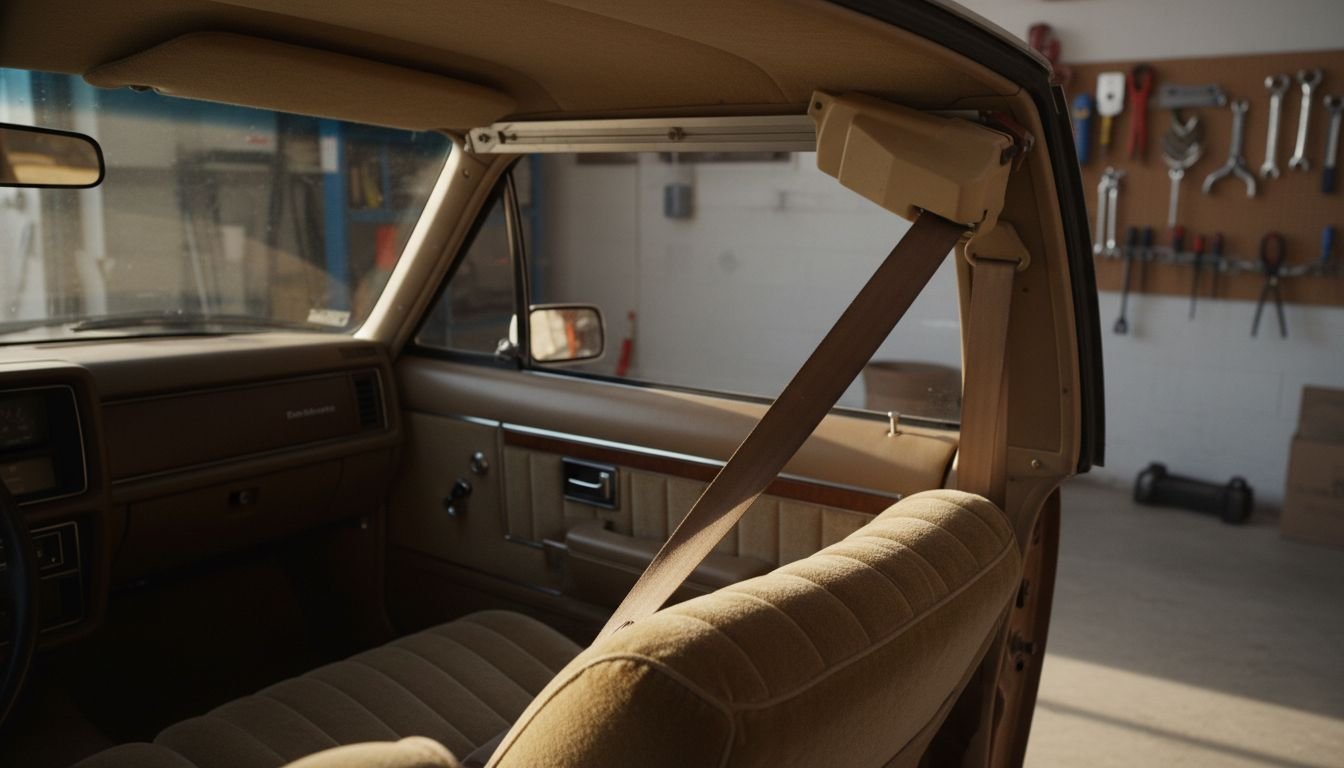
In many American and Japanese vehicles from the late 1980s through the 1990s, manufacturers used automatic seat belts (also called motorized seat belts or automatic shoulder belts) to meet federal safety rules before dual front airbags became standard.
These systems typically came in two designs:
- Track-mounted automatic shoulder belt: A small motor moves the shoulder belt along a track on the door frame or roof rail when you open or close the door, or turn the key. The lap belt is often manual, while the shoulder belt rides the powered track.
- Door-mounted automatic belt: The shoulder belt is anchored to the door itself. Opening or closing the door changes the belt’s position around the occupant.
Over time, these systems became less common because modern three-point belts with pretensioners and multi‑airbag systems provide better protection with simpler, more reliable hardware. By now, many of the original automatic belt components are decades old, exposed to Texas heat, dust, and repeated use—making automatic seat belt replacement a frequent need for older American and Japanese vehicles in Fort Worth.
Signs You May Need Automatic Seat Belt Replacement
If you are searching for car seat belt repair, you are probably already dealing with one or more of these issues. Here is what typically tells us it is time to evaluate for Seat Belt Replacement rather than continued use.
Belt track stops moving or moves inconsistently
If the shoulder belt carrier:
- Doesn’t move when you open/close the door or turn the key
- Stops halfway along the track
- Moves very slowly or only after tapping or jiggling something
…that usually points to motor wear, track contamination, or electrical switch issues. When the belt doesn’t reach its designed position, it cannot restrain you correctly in a crash. In many cases, the safest solution is automatic seat belt replacement with known-good components.
Buckle or latch issues
Any of the following is a red-flag safety concern:
- Buckle will not click or release reliably
- You have to “wiggle” the tongue to latch
- Visible cracks, missing springs, or broken plastic housings
Because the buckle is the last link in the restraint chain, intermittent function is not acceptable. Instead of trying informal “car seat belt repair” tricks, a Seat Belt Replacement is usually the safer route.
Frayed webbing, damaged guides, or visible wear
Look closely at the belt webbing and guides:
- Fraying edges or cuts
- Sun-bleached, stiff, or brittle fabric
- Webbing that has melted spots or chemical staining
- Cracked or missing plastic guides and trim pieces
Old or damaged webbing can tear or stretch excessively under load. When we see this level of wear in Fort Worth vehicles that have spent decades in the sun, we recommend full Seat Belt Replacement, not repair patches or sewing.
Warning lights, collision history, or restraint-system faults
If your dash shows an SRS/airbag light, seat belt light, or you know the vehicle has prior accident damage, the restraint system may have multiple hidden issues, especially if pretensioners or airbag modules were deployed or replaced. That is when a Vehicle Diagnostic and possibly Pre-Tensioner Replacement become part of the plan, along with automatic seat belt replacement as needed.
Belt retracts poorly or does not position correctly
Even if the motorized carrier still moves, poor retraction or awkward belt positioning is a concern:
- Belt hangs loose instead of staying snug
- Retractor is slow, noisy, or sticks halfway
- Shoulder belt rides too low or too high and doesn’t adjust
Repeated DIY attempts at car seat belt repair—like adding lubricants to the retractor or twisting the belt—can actually reduce effectiveness. Proper Seat Belt Replacement restores the engineered geometry the system was designed for.
Why a Faulty Automatic Seat Belt Is a Serious Safety Risk
Automatic belts were engineered as part of a complete restraint system, often working alongside early airbag or pretensioner technologies. When they fail or are modified, overall crash performance changes in ways that are not obvious from the driver’s seat.
How a failed restraint can change occupant protection
When the shoulder belt does not move to the correct position, or the retractor does not lock properly, you can:
- Submarine under the lap belt in a frontal crash
- Contact the steering wheel, dash, or side structure harder
- Experience increased neck and chest loading
In severe crashes, a compromised belt can be the difference between walking away and serious injury. That is why we treat automatic seat belt replacement as a safety decision—not just a convenience fix.
Why DIY fixes can create compliance and liability problems
DIY attempts like splicing wires, bypassing limit switches, swapping used components from a junkyard, or modifying anchor points can:
- Disable or confuse SRS logic
- Interfere with airbag timing and seat belt locking
- Make the vehicle non-compliant with safety standards it originally met
If the vehicle is later sold or involved in a crash, undocumented “repairs” can raise liability questions. LockNCal focuses on documented Seat Belt Replacement and, where needed, Pre-Tensioner Replacement and Vehicle Diagnostic to keep you on the safest possible path.
When crash history changes the replacement decision
If your vehicle has:
- A salvage or rebuilt title
- Airbag deployments in its history
- Significant structural or hail damage repaired in the past
there is a higher chance that original belt, anchor, and pretensioner components were damaged, replaced incorrectly, or left in questionable condition. We strongly recommend reviewing what salvage-title buyers in Fort Worth should check and scheduling a Vehicle Diagnostic to verify restraint integrity, not just visible operation.
Explain the mechanics of automatic (motorized) seat belts, typical failure modes, diagnostic steps, replacement options (kits vs components), cost comparisons, and when a professional repair is required for safety compliance.
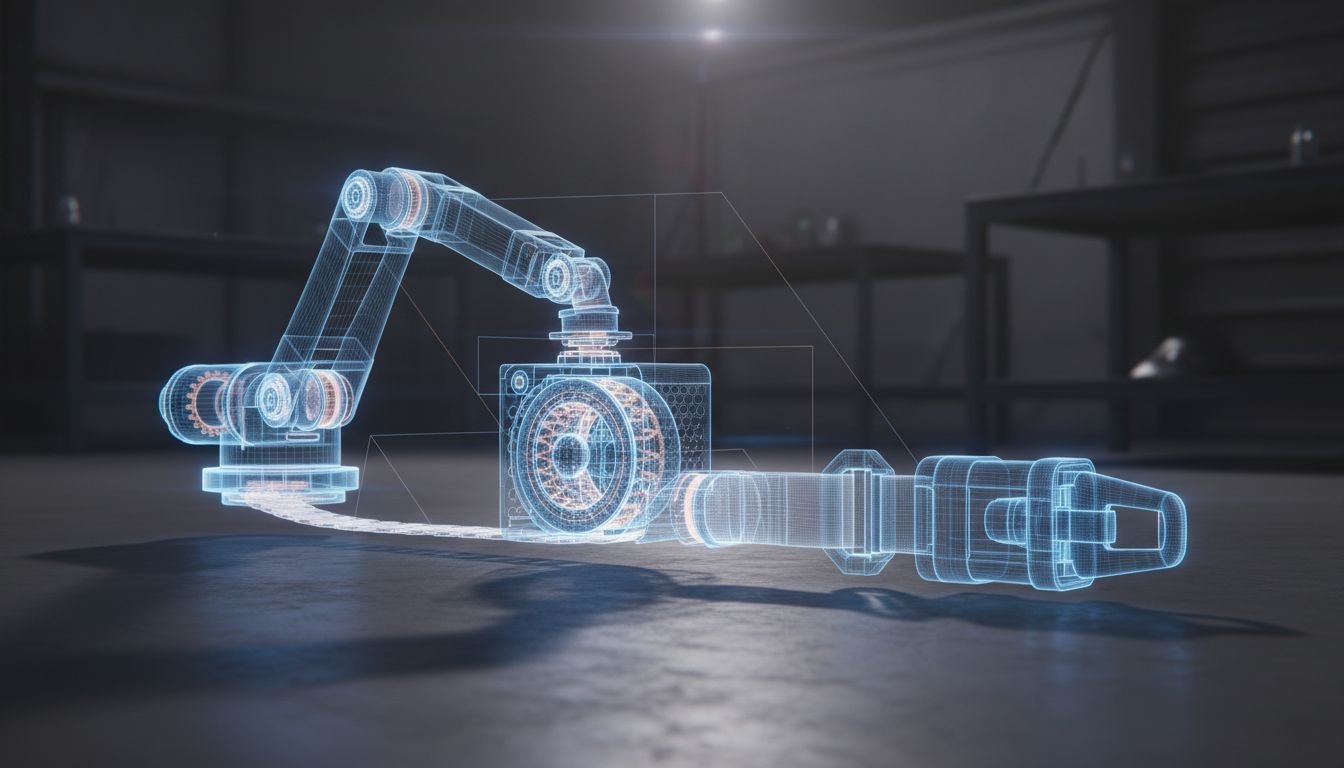
This is the core of your decision process. Understanding how automatic belts work—and how they fail—helps you choose between partial fixes, full Seat Belt Replacement, or retiring the automatic system entirely in favor of safer configurations when possible.
How the motor, track, retractor, buckle, and anchors work together
A typical automatic seat belt system on older American & Japanese vehicles includes:
- Electric motor and drive cable: Powers the belt carrier along the roof or door track when doors open/close or the ignition state changes.
- Track and carrier: The mechanical path the shoulder belt rides along, positioning the belt correctly at your shoulder.
- Retractor: Spring- and inertia-based spool that manages webbing tension and locks under sudden deceleration or impact.
- Buckle and latch plate: The mechanical connector holding the lap/shoulder belt around you.
- Anchors and mounting hardware: Reinforced points attached to the vehicle structure to transmit crash loads.
All of these pieces must work together correctly to give you real crash protection. If even one link is weak, automatic seat belt replacement may be the safest path.
Common failure modes: motor wear, track jams, switches, webbing damage, anchor fatigue
On high-mileage Fort Worth vehicles, we often see:
- Motor wear or burnout from years of cycling every time the door is opened.
- Track jams from debris, cracked plastic sliders, or bent rails.
- Failed door or ignition switches that no longer trigger belt movement.
- Webbing wear from UV exposure, dirt, or contaminants.
- Anchor and hardware fatigue from prior crash loads or corrosion.
Some of these issues can be diagnosed, but once structural components, webbing, or core mechanicals are compromised, Seat Belt Replacement is the recommended solution.
Basic diagnostic steps before replacement
Before committing to parts, a proper Vehicle Diagnostic for an automatic belt system often includes:
- Confirming power and ground to the belt motor
- Checking door and ignition switch inputs
- Inspecting track, carrier, and physical obstructions
- Evaluating webbing condition and retractor behavior (tension and lockup)
- Scanning for SRS fault codes when pretensioners or airbags are integrated
This diagnostic time protects you from guessing at parts and helps determine whether it is smarter to replace a seat belt assembly entirely instead of chasing intermittent faults.
Replacement options: full assembly vs individual components vs kit solutions
Once we understand the failure, options may include:
- Full OEM-style seat belt assembly replacement: Replaces retractor, webbing, and related hardware as a matched system. This is often the safest, most compliant choice.
- Component-level replacement (where appropriate): In limited cases, a specific module (such as a retractor or buckle) can be replaced with an equivalent OEM-style part if the track/motor system is still sound.
- Kit solutions: For certain models, especially some Ford applications, a ford seat belt replacement kit or model-specific kit may reconfigure the restraint to a more modern-style three-point system. Fitment and compliance must be evaluated case by case.
LockNCal focuses on sourcing correct, compatible components for American & Japanese vehicles, and guiding you away from poorly matched universal kits that can compromise safety.
Cost comparison: OEM-style parts, aftermarket kits, labor, and diagnostic time
Actual pricing depends heavily on year, make, model, seating position, and collision history, but typical cost influences include:
- Diagnostic time: Expect $75–$150 in most Fort Worth cases, depending on the complexity of the system and whether SRS code scanning is required.
- OEM-style or quality replacement assemblies: A typical automatic belt assembly can range from $200–$600+ per seating position, depending on availability and whether specialized components are required.
- Aftermarket or kit solutions: Model-specific kits (including some ford seat belt replacement kit options) might appear cheaper online, sometimes $150–$400, but may require extra labor and trim modification.
- Labor for installation: Removing interior trim, handling SRS connectors, and calibrating components can add $150–$350 per belt depending on vehicle design and complexity.
It can be tempting to chase the lowest advertised parts price, but if an online kit fits poorly or requires repeated rework, total cost ends up higher. A professional evaluation up front reduces that risk.
When a professional must handle the job for safety compliance
You should plan on professional Seat Belt Replacement and possibly Pre-Tensioner Replacement when:
- SRS warning lights are on or there is known airbag/pretensioner involvement
- Structural mounts, anchors, or seat bases may have seen crash loads
- The vehicle has a salvage or rebuilt title
- There is uncertainty about compatibility of any ford seat belt replacement kit or other kit-based solutions
This is not just a convenience issue—restraint-system work can involve SRS explosives and pretensioner devices that can cause injury if mishandled. Professional handling keeps your family, your vehicle, and your liability exposure safer.
Get a Quote for Automatic Seat Belt Replacement in Fort Worth and surrounding DFW cities, or start with a Vehicle Diagnostic if the fault is not clear.
Repair vs Replace: What Is the Smarter Option?
Online, you will see a lot of talk about car seat belt repair. In practice, for aging automatic systems, we frequently recommend you replace a seat belt assembly instead of trying to repair it piecemeal.
When people search for “car seat belt repair”
Drivers usually type that phrase when they notice:
- Loose or non-retracting belts
- Noisy or stuck track motors
- Intermittent warning lights
- Cracked buckles or “temporary fixes” already in place
We acknowledge that search term—but at LockNCal, we do not offer vague or partial “repair” services on safety restraints because it is difficult to guarantee long-term integrity on a patchwork system.
Why replace a seat belt is often the safer recommendation
With decades-old automatic belts, the underlying materials and mechanisms are simply worn. Trying to “repair” small parts on top of aged webbing, springs, and anchors often leaves you with an untested configuration in the next crash. That is why our recommended service path is Seat Belt Replacement using quality components and documented installation procedures.
When a ford seat belt replacement kit may be considered
On certain older Ford models, a carefully chosen ford seat belt replacement kit can convert or update the restraint to a more conventional setup. However:
- Not every kit is appropriate for every vehicle
- Universal kits can create alignment and anchor problems
- Some kits require trim and structural modifications that should not be DIY’d
We evaluate kit options on a case-by-case basis for American & Japanese vehicles and guide you toward the safest approach, whether that is an OEM-style assembly or a vetted model-specific kit.
Why mixing used, universal, or incomplete components can be risky
Pulling used belts from a salvage yard, or combining universal hardware with factory anchors, may look cost-effective, but you cannot see internal damage from prior crashes or UV exposure. These components were designed and tested as full systems—mixing and matching unknown parts can undermine that engineering. LockNCal’s focus in Fort Worth and DFW is on proper Seat Belt Replacement, not improvising unproven combinations.
Replacement Options for Older American and Japanese Vehicles
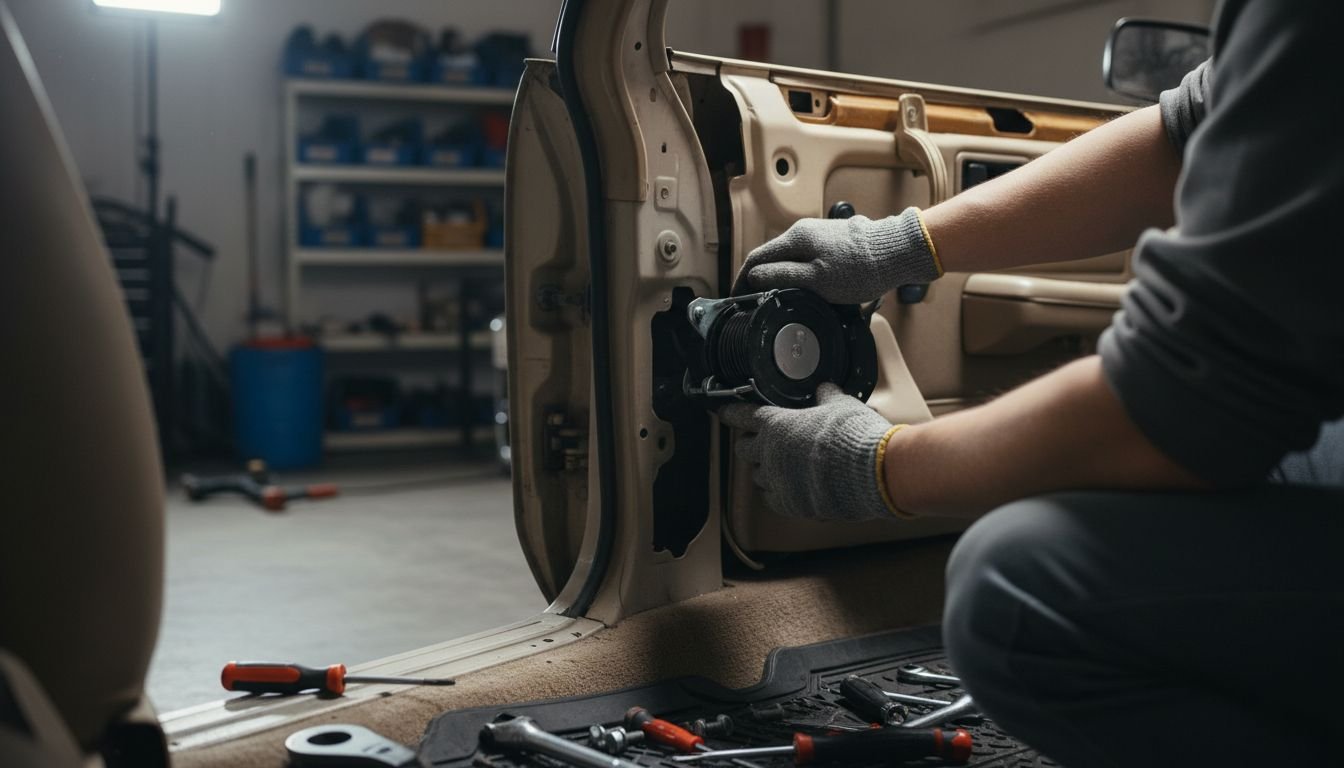
Most of the automatic belt systems we see around Fort Worth TX are on older American & Japanese vehicles—for example, legacy Ford, GM, Honda, Toyota, Nissan, and similar brands. Parts availability and the smartest replacement strategy will depend on the specific platform.
OEM-style replacement assemblies
Where available, OEM-style replacement seat belt assemblies are usually the gold standard. They are engineered for your exact seat, pillar, and body structure. This kind of automatic seat belt replacement typically provides the best alignment, anchor integrity, and performance in a crash.
Model-specific kits and hardware considerations
In cases where OEM-style automatic components are discontinued, a model-specific kit—such as a carefully selected ford seat belt replacement kit or equivalent for other brands—can be an option. These kits must be evaluated for:
- Anchor compatibility and load paths
- Shoulder height and geometry for adults
- Potential interference with airbags or trim
This is where a Vehicle Diagnostic and visual inspection make a real difference. We confirm that the replacement will work with your vehicle’s structure and other safety systems.
Component replacement vs full system replacement
Sometimes, only part of the system has failed:
- A retractor that no longer locks
- A damaged buckle but functioning track motor
- A corroded anchor bolt or bracket
In limited cases, replacing just that component can be acceptable if the rest of the assembly is structurally sound and within serviceable condition. However, when webbing is aged, anchors show prior load, or SRS integration is uncertain, we lean toward full Seat Belt Replacement to restore the entire restraint chain.
Fitment concerns for older Ford applications
Older Ford vehicles with automatic shoulder belts require particular care:
- Door- vs body-mounted belt differences
- Unique trim panels around the A- and B-pillars
- Anchor reinforcement behind sheet metal
Not every ford seat belt replacement kit advertised online is appropriate for every Ford model or year. Our job as your Fort Worth area safety specialists is to verify fitment and avoid unsafe modifications.
For more on how hidden damage can affect restraints and airbags, see our article on seatbelt and airbag module issues in Fort Worth.
Typical Automatic Seat Belt Replacement Cost in Fort Worth TX
Every vehicle is different, but Fort Worth and DFW drivers usually want a realistic range before committing to automatic seat belt replacement. Keep in mind these are estimates, not guarantees.
Diagnostic cost factors
For older automatic belts, plan for a professional Vehicle Diagnostic in the $75–$150 range. Complexity increases when the belt system is tied into SRS modules, pretensioners, or door control units.
Parts cost factors
Parts pricing is driven by:
- Whether the belt is front driver, front passenger, or rear
- Availability of OEM-style assemblies vs. kit solutions
- Whether pretensioners or other SRS devices are involved
As a rough guide, expect $200–$600+ per seating position for quality assemblies on older American and Japanese vehicles, with some specialty or discontinued applications going higher. Model-specific kits, including some ford seat belt replacement kit options, may be somewhat lower or similar, but installation complexity can offset the savings.
Labor cost factors
Labor for Seat Belt Replacement usually falls in the $150–$350 per belt range depending on:
- How much interior trim must be removed
- Whether seats must be removed or loosened
- Access to anchors and routing paths
- Any SRS-related steps, such as safe battery disconnect and connector handling
Why the cheapest online option may cost more later
The apparent savings of a low-cost kit or used assembly can disappear when:
- The parts do not fit correctly
- Warning lights remain on after installation
- Additional trim or hardware is needed
- Rework or complete re-install is required
Starting with a professional plan—and having the job done correctly the first time—often costs less overall while preserving safety. If you drive in and around Fort Worth TX, consider the long-term value of a properly installed, compliant restraint system.
Get a Quote for Automatic Seat Belt Replacement today, or use our VIN decoder to speed up parts identification.
When You Need a Professional Instead of DIY
Certain situations move automatic seat belt replacement firmly out of the DIY category. Restraint systems are not like cosmetic trim—errors here can have life-or-death consequences.
Vehicles with collision history
If the vehicle has been in a crash, even if the belts still appear to work, anchors, retractors, and pretensioners may have absorbed loads or partially deployed. In these cases, you should not attempt your own car seat belt repair. Professional evaluation and Seat Belt Replacement (and possibly Pre-Tensioner Replacement) are strongly recommended.
Anchor, mounting, or trim removal concerns
On older American & Japanese vehicles, accessing belt components often requires:
- Removing A-, B-, or C-pillar trim
- Working around side-curtain airbag modules in some later models
- Unbolting seats or seat tracks
Incorrectly reinstalled trim can interfere with belt geometry or airbag deployment. Professionals are trained to route belts and seat wiring correctly and to torque anchors to spec.
SRS warning lights or seat belt pretensioner involvement
If your vehicle shows an SRS or airbag light—or your belts have integrated pretensioners—there are SRS explosives / pretensioner devices in play. These components must be handled with strict safety precautions and proper procedures to avoid accidental deployment or future malfunction. That is the time to book a Vehicle Diagnostic and have Seat Belt Replacement or Pre-Tensioner Replacement performed by a qualified technician.
Situations requiring Vehicle Diagnostic or Pre-Tensioner Replacement
Plan on professional diagnosis if:
- You see warning lights you cannot clear
- A prior owner “fixed” restraint issues themselves
- You recently bought a used or salvage-title vehicle and are unsure what was replaced
- The car has been through hail or flood damage and you suspect hidden issues
For more context on hidden damage in our area, review our guide on seatbelt and airbag module issues in Fort Worth and our article on other hidden safety problems after road damage.
Why Drivers in Fort Worth TX Choose LockNCal for Seat Belt Replacement
LockNCal serves Fort Worth TX, Tarrant County, and the broader DFW area—including Arlington, Dallas, Grand Prairie, North Richland Hills, Irving, Plano, Frisco, McKinney, and many other surrounding cities—with a focused, safety-first approach to Seat Belt Replacement and related restraint services.
Safety-first process
We treat every automatic seat belt replacement as a critical safety repair, not a basic accessory swap. That means:
- Targeted Vehicle Diagnostic where required
- Careful handling of SRS connectors and pretensioners
- Attention to OEM-style routing, anchor torque, and component compatibility
Experienced work on older American and Japanese vehicles
Our daily work includes aging American & Japanese platforms that many general repair shops see less often now. We understand the quirks of older motorized belt systems and the realities of parts availability, especially for legacy Ford, GM, Honda, Toyota, and similar brands.
Clear recommendations based on condition and fitment
Instead of pushing a single “universal” answer, we:
- Assess whether component-level replacement is safe
- Advise when a full Seat Belt Replacement assembly is the smarter long-term choice
- Evaluate ford seat belt replacement kit and other model-specific options realistically
Local service value for Fort Worth and DFW drivers
LockNCal combines safety-focused workmanship with local knowledge of Fort Worth and DFW driving conditions, weather, and used-vehicle market risks. Whether you are in Fort Worth, Arlington, Dallas, Grapevine, Mansfield, or nearby, we help you protect your family and your vehicle’s value.
Book Seat Belt Replacement in Fort Worth TX
If your automatic belt is slow, stuck, frayed, or tied to an SRS warning light, now is the time to address it. Aging automatic systems will not get better on their own—and DIY car seat belt repair shortcuts can leave you with more risk, not less.
LockNCal is here to guide you through safe, compliant automatic seat belt replacement on older American & Japanese vehicles across Fort Worth and the DFW region.
- Schedule Seat Belt Replacement in Fort Worth TX
- Book a Vehicle Diagnostic if Your Seat Belt System Is Failing
- Use our VIN decoder to speed up parts matching and estimate your cost.
Frequently Asked Questions
1. What is automatic seat belt replacement?
Automatic seat belt replacement is the process of removing aging or faulty motorized seat belt assemblies—typically from older American and Japanese vehicles—and installing safe, compatible replacement components. This can include the belt, retractor, track hardware, buckles, and, where applicable, related pretensioner or SRS-connected parts. At LockNCal, this is handled as a safety-critical Seat Belt Replacement service.
2. How do I know if my motorized seat belt needs replacement?
Signs include a belt carrier that will not move, inconsistent track operation, poor retraction, frayed or sun-damaged webbing, broken buckles, or SRS/seat belt warning lights. If your vehicle has crash history or a salvage title, you should assume a higher risk of hidden restraint damage. In these cases, schedule a Vehicle Diagnostic so we can advise whether to replace a seat belt assembly.
3. Can I repair this or do I need to replace it?
We understand why people search for car seat belt repair, but in many cases, especially where webbing, retractors, tracks, anchors, or crash-related components are involved, replacement is the safer option. LockNCal focuses on Seat Belt Replacement, Pre-Tensioner Replacement, and Vehicle Diagnostic—not undefined partial repairs that may not hold up in a real-world crash.
4. How much does automatic seat belt replacement cost in Fort Worth TX?
Most Fort Worth TX drivers can expect:
- $75–$150 for diagnostic time, depending on system complexity
- $200–$600+ per belt for quality assemblies or model-specific kits, depending on vehicle and availability
- $150–$350 per belt for labor, depending on how much interior work is required
Your exact cost will depend on your year/make/model, belt position, and whether there is crash or SRS involvement. Contact us with your VIN (use our VIN decoder) to get a more accurate estimate.
5. Is it safe to install a universal or aftermarket kit?
Universal kits are rarely the safest choice for older automatic systems. They may not align correctly with your seat and pillar geometry, and they may not work properly with your existing SRS components. In some cases, a model-specific kit—such as a vetted ford seat belt replacement kit—can be appropriate, but it should be evaluated and installed by a professional. When in doubt, OEM-style Seat Belt Replacement is typically the safest path.
6. When should a professional handle the job instead of DIY?
You should rely on a professional when there is collision history, SRS or seat belt warning lights, suspected pretensioner involvement, or any cutting or modification of anchors and interior structure required. Work involving SRS explosives / pretensioner devices, hidden wiring, or complex interior trim should never be DIY. That is exactly when LockNCal’s Vehicle Diagnostic, Seat Belt Replacement, and Pre-Tensioner Replacement services are designed to help.
7. Do you service older Ford and other American or Japanese vehicles?
Yes. LockNCal focuses on American & Japanese vehicles, including many older Ford, GM, Honda, Toyota, Nissan, and similar platforms using automatic or motorized belts. If you are in Fort Worth TX or the surrounding DFW cities we serve—such as Arlington, Dallas, Grand Prairie, Grapevine, Hurst, North Richland Hills, Plano, or Frisco—reach out for a quote on automatic seat belt replacement and related diagnostics.
Understanding and Resolving DTC P0571 Code in Your JeepUnderstanding DTC Ford P1261: Essential Insights for Vehicle Diagnostics in Celina, TXUnderstanding DTC P062B in Lincoln Vehicles: What You Need to KnowOBD Scanner Readings Explained: How to Read Live Data and Check Engine Light Results in Trophy Club TXUnderstanding and Addressing DTC Lincoln P00C6: Ensuring Your Vehicle’s Safety


