 Skip to content

Chevy Key Fob Programming: How It Works, DIY Limits, and When to Call a Pro
If you’re searching for chevy key fob programming, you’re likely dealing with a new fob that won’t work, a used fob you’re trying to reuse, or a lost key situation. As a mobile locksmith service in Lake Worth TX and the DFW area, LockNCal programs Chevy keys and fobs on the vehicle every day. This guide explains what programming really does, when DIY is realistic, and when you need professional help.
LockNCal cuts and programs car keys and fobs right where your vehicle is, anywhere in Dallas–Fort Worth. On-site: $0 today, pay after the job. Book online & see your price in 60 seconds or call (469) 277-7277.
Need a key made or programmed? Our mobile key fob programming comes to you across Dallas–Fort Worth.
What Chevy key fob programming means
Chevy key fob programming is the process of teaching your vehicle to recognize a specific key, remote, or smart fob so it will unlock, start, and secure the vehicle correctly.
There are three main layers to understand:
- Basic remote pairing (buttons only)
This covers simple chevy remote programming for lock, unlock, trunk, panic, and sometimes remote start. On some older models, this can be done with onboard button/ignition sequences. - Transponder key programming
Here, a chip in the key talks to the vehicle’s anti-theft system. Even if the metal key turns the ignition, the car will not start unless the transponder key programming is successful. This usually requires specialized tools and security procedures. - Smart key programming (proximity / push-button start)
Newer Chevys with push-button start and proximity entry use smart fobs. Smart key programming handles the encrypted wireless handshake that lets you start the vehicle with the fob in your pocket.
Important: Programming steps change based on:
- Model and model year (e.g., older Impala vs newer Tahoe)
- Trim level and options (remote start, hatch, etc.)
- Ignition type (metal key vs turn-knob vs push-button)
- Whether you still have at least one working key or fob
Because of these differences, there is no single “one-size-fits-all” procedure, especially for model-specific cases like chevy silverado key fob programming.
Explain Chevy fob programming workflows, model-specific notes (Silverado etc.), troubleshooting, and whether owners can self-program or need a pro
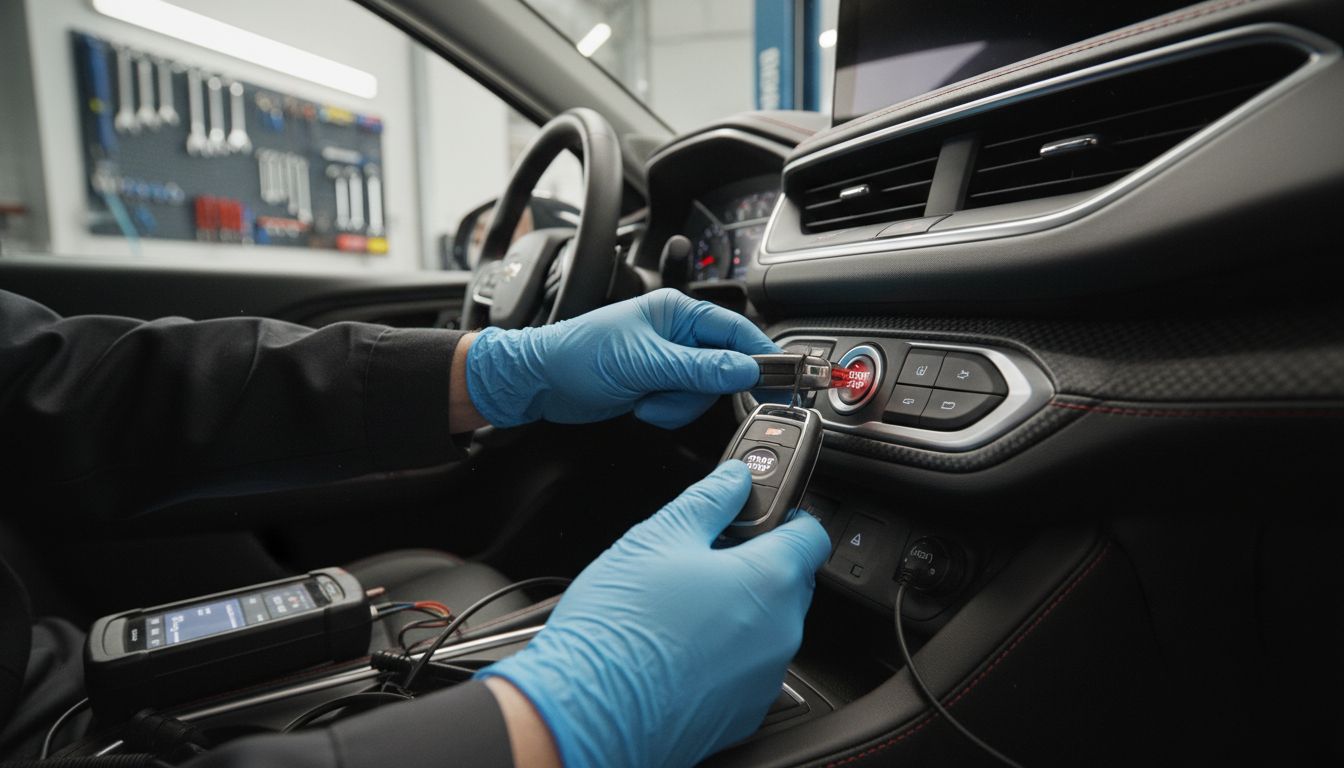
This section walks through real-world workflows we see in the DFW area: older keyed ignitions, newer proximity systems, chevy silverado key fob programming differences, and when DIY can work versus when you’ll usually need professional tools.
Older Chevy remote and keyed-ignition programming workflows
Some older American Chevy vehicles with a metal key and simple remote use onboard procedures. These usually involve a sequence like turning the key on/off, pressing door lock switches, or holding specific buttons on the remote.
Common traits of these older systems:
- Separate remote and key blade (the remote does not contain a transponder chip).
- Programming often affects remote functions only (lock, unlock, panic).
- The ignition and door locks are conventional, not push-button.
Caution: Not every “older” Chevy supports a simple button-sequence DIY. Even when it does, the steps are year- and model-specific. Always verify the procedure for your exact VIN using a trusted source such as a VIN decoder or owner’s manual before you start.
Newer Chevy push-button start and proximity fob workflows
Newer Chevy models (Malibu, Equinox, Traverse, Tahoe, Suburban, many Silverados, etc.) often use proximity smart keys. These systems are more secure, but they are also less DIY-friendly.
With these vehicles:
- Programming typically requires a specialized scan tool and security access.
- There may be a limited owner procedure only if you already have one working fob present (for adding a spare).
- All-keys-lost situations usually require professional Smart Key Programming and often Vehicle Key Cutting for the mechanical/emergency blade.
Many of these systems will not allow you to finish programming without going through a timed security routine. Guessing at procedures can force the vehicle into a lockout or anti-theft delay.
Chevy Silverado key fob programming notes
Chevy Silverado key fob programming is a good example of why you should never assume “one procedure fits all”. The steps to program a Chevy Silverado key fob can change significantly across generations and trim levels.
In general:
- Older Silverados with metal keys and separate remotes may support basic chevy remote programming through onboard sequences.
- Mid-generation trucks with transponder keys usually need Transponder Key Programming tools when you don’t have a working key.
- Newer push-button start Silverados often require Smart Key Programming with professional equipment, especially in Vehicle All Keys Lost situations.
Required caution: Do not rely on one internet guide that claims a single set of steps will work for all Silverados. Always verify by VIN, year, and trim first using a resource like LockNCal’s VIN decoder.
Other Chevy models that may differ
Chevy models like the Malibu, Equinox, Traverse, Tahoe, Suburban, Colorado, and Cruze can each have different key systems across years:
- Some years use blade keys with transponders.
- Others use flip keys (key-in-remote) that combine transponder, remote buttons, and blade.
- Newer trims often have proximity fobs with push-button start and remote start.
Because of this variety, the safe process is:
- Decode the exact vehicle details (year, trim, options) via VIN lookup.
- Match the FCC ID and part number on the fob to an approved list.
- Use the correct programming path: basic remote pairing, Transponder Key Programming, or Smart Key Programming.
Can you program a Chevy key fob yourself?
You can sometimes handle parts of chevy key fob programming yourself, but not always. Whether DIY is realistic depends on the age of the vehicle, key type, and whether you have at least one working key or fob.
Cases where DIY may work
Owners in Lake Worth and DFW sometimes succeed with DIY when:
- The vehicle is an older Chevy with a simple remote and non-transponder key.
- You are adding a remote, not trying to start from zero.
- You have the correct, brand-new compatible replacement fob (FCC/part number matches your original).
- You have a verified onboard programming procedure for your exact year/model and follow it precisely.
Even in these cases, it’s smart to test every function (lock/unlock/panic/remote start) after programming.
Cases where DIY usually does not work
DIY programming is usually not realistic when:
- The vehicle uses a push-button start or proximity smart key.
- You have no working key or fob to start from.
- The key contains a transponder chip and you’re trying to add or replace it without a known-good key.
- You’re working with a used fob and don’t know its history or compatibility.
- The vehicle refuses to enter learn/programming mode or kicks you out of the process.
These situations often require professional Transponder Key Programming or Smart Key Programming with the right tools and procedures.
What happens if you have no working key or fob
When you have a lost Chevy key fob situation and no spares (known as Vehicle All Keys Lost):
- The vehicle will not recognize any new key or fob until it’s correctly programmed.
- All existing keys/fobs may need to be relearned or replaced during programming.
- DIY options are extremely limited, especially on newer American and Japanese vehicles.
This is where a specialized mobile locksmith like LockNCal comes in. We offer on-site Vehicle All Keys Lost service, including Key Fob Replacement & Programming, and Vehicle Key Cutting when needed, for Chevy vehicles in Lake Worth TX and across the DFW metroplex.
Common reasons Chevy key fob programming fails
When chevy key fob programming doesn’t work, it’s usually one of these real-world issues:
- Dead or weak battery in the fob
A weak coin cell can cause intermittent pairing or short working range. Always start with a fresh, correct battery type. - Wrong fob FCC/part number
If the chevy replacement key fob doesn’t match your vehicle’s required FCC/part number, the vehicle may never recognize it, no matter how many times you try. Verify compatibility by VIN, year, trim, and FCC ID first. - Used fob incompatibility
Some used fobs from other vehicles cannot be reused once they are locked to the original vehicle. Others can only be reused after a specific erase procedure. There is no universal rule that “all used fobs are fine.” - Vehicle not entering learn mode
If the doors don’t cycle, the locks don’t respond, or the dashboard doesn’t show the expected prompts, the vehicle may not actually be in programming mode. The cause could be procedure error, incorrect timing, or a system issue. - BCM/security lockout issues
Modern vehicles include sensitive anti-theft and body control electronics. Repeated failed attempts or low system voltage can trigger temporary lockouts that block programming for a period of time. - All previously programmed fobs erased during relearn
Some programming sequences erase all existing fobs when you add a new one. If you don’t immediately reprogram every working fob during that session, those old fobs can stop working.
Safety note: Modern Chevy and other American/Japanese vehicles use safety-critical electronics. Guessing at programming steps can cause lockouts, disable working keys, or leave you stranded. When in doubt, stop and get professional help.
Chevy key fob troubleshooting checklist before you call for service
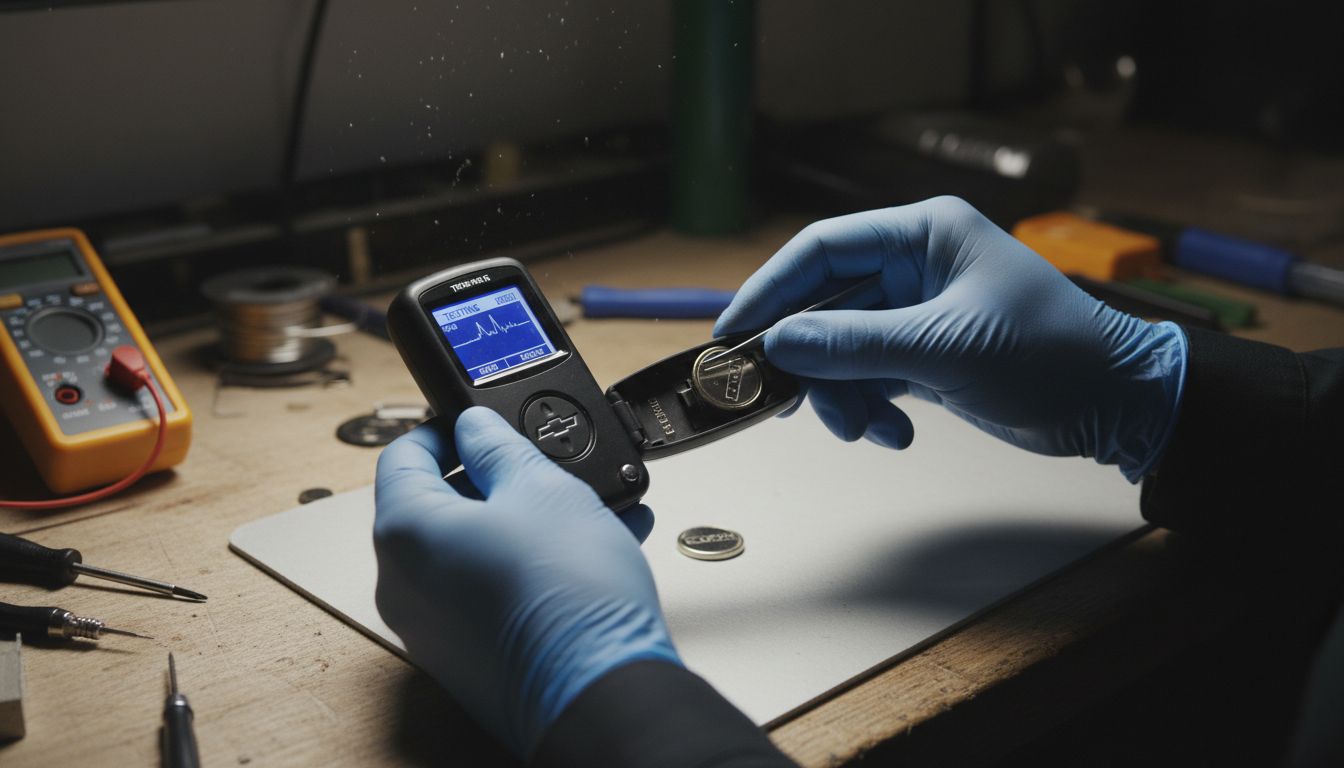
Before you schedule Locksmith Services in Lake Worth or the DFW area, run through this quick checklist. It can save you time and help you describe the issue clearly to a technician.
Check the battery first
- Install a fresh, correct-type coin cell in the fob.
- Make sure the contacts are clean and the battery is seated firmly.
- Try the fob from outside the vehicle and closer to the driver’s door.
Confirm the correct replacement fob
- Check that the FCC ID and part number on your new fob match what your vehicle requires.
- Use your VIN in a trusted VIN decoder or parts lookup to cross-check compatibility.
- Be skeptical of ultra-cheap online remotes that don’t list clear compatibility by year/model.
Try the vehicle-side relearn steps only if verified for your exact model
- Use only verified instructions that match your year, model, and key type.
- Follow the steps exactly—timing and order matter.
- Stop if the vehicle behaves unexpectedly (no lock cycling, no chime, strange messages).
Test lock, unlock, panic, remote start, and proximity features separately
- After any programming attempt, test every button: lock, unlock, trunk/hatch, panic, remote start if equipped.
- For smart keys, also test proximity functions (door handle touch, push-button start) with the fob inside and outside the vehicle.
Know when to stop and get professional help
Stop DIY attempts and call a pro if:
- The vehicle will not enter programming/learn mode.
- You’ve tried multiple times and previously working keys are now unreliable.
- You’re in an all keys lost situation with no working key or fob.
- You suspect a deeper vehicle-side issue (e.g., no power to locks, other electrical problems). In those cases, you may also benefit from a vehicle diagnostics guide for DFW drivers to understand broader electronic issues.
At this point, it’s safer and often cheaper to call LockNCal for Key Fob Replacement & Programming, Smart Key Programming, or Transponder Key Programming on-site.
Chevy key fob programming in Lake Worth TX: when local drivers should call a pro
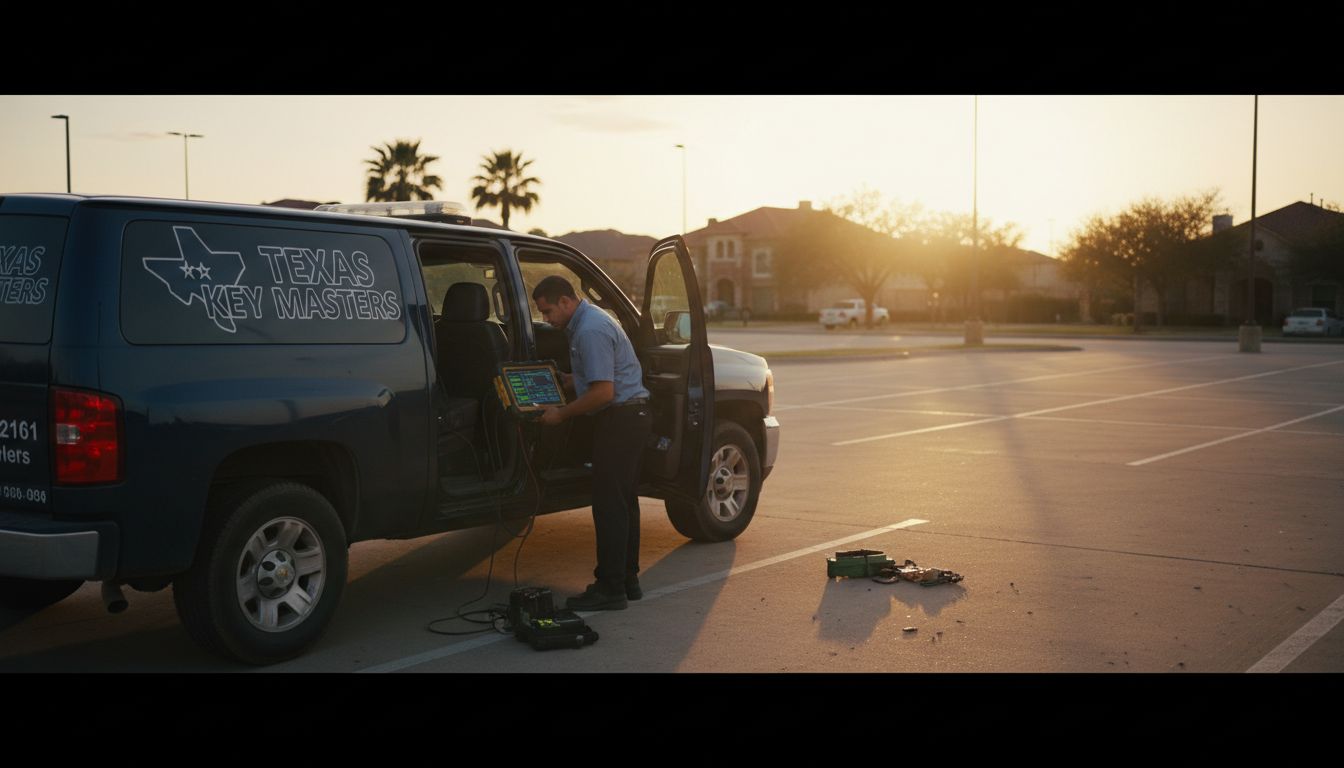
In the real world around Lake Worth TX and the greater DFW area, Chevy owners usually call us in situations like these:
- Lost fob at work or at the store – You come out to the lot and can’t find your key anywhere.
- Dead fob in a parking lot – The truck won’t unlock or start, and you’re stuck.
- Only one remaining key – You bought a used Chevy (Silverado, Malibu, Tahoe, etc.) with a single worn-out key or fob.
- Recently purchased used truck – You want to ensure unknown or old fobs are removed and your new fobs are the only ones that work.
LockNCal is a mobile locksmith serving Lake Worth TX, Fort Worth, Saginaw, White Settlement, Watauga, and other nearby DFW communities. Instead of towing your vehicle or waiting for an opening at a dealership, we come to you for on-site Key Fob Replacement & Programming.
Benefit-driven CTA: If your DIY attempts have stalled—or you don’t want to risk a lockout—LockNCal can usually offer same-day availability for Chevy key and fob programming in Lake Worth and surrounding DFW areas.
Professional Chevy key fob replacement and programming options from LockNCal
LockNCal focuses on mobile automotive locksmith work for American and Japanese vehicles, including a wide range of Chevys. Here’s how we typically help with Chevy key issues.
Key Fob Replacement & Programming
For broken, missing, or unreliable remotes and smart keys, we:
- Supply a compatible chevy replacement key fob (remote or smart fob, depending on the model).
- Program it to your vehicle on-site so it locks, unlocks, and starts correctly.
- Remove or overwrite lost fobs as required by the system’s programming process.
Smart Key Programming
For push-button start Chevys, we provide Smart Key Programming that:
- Pairs new or additional proximity fobs with your vehicle.
- Ensures door handles, push-button start, and remote start (if equipped) all function correctly.
- Is especially important when you’ve lost your only smart key.
Transponder Key Programming
For keyed-ignition or flip-key Chevys with an embedded chip, our Transponder Key Programming service:
- Programs the chip so the vehicle’s anti-theft system recognizes the new key.
- Works alongside Vehicle Key Cutting when a new metal key blade is needed.
Vehicle All Keys Lost
If you’ve lost all of your Chevy keys and fobs:
- We come to your location in Lake Worth or the broader DFW region.
- Cut new keys when needed and perform the appropriate Smart Key Programming or Transponder Key Programming.
- Get you back into a drivable, secure vehicle without a tow.
Vehicle Key Duplication for spare fobs/keys
Driving around with a single working key or fob is risky. LockNCal offers:
- Vehicle Key Duplication for spare keys and fobs.
- On-site cutting and programming so you leave with a fully tested backup.
These services are part of our broader mobile Locksmith Services across Lake Worth TX and neighboring cities like Fort Worth, Saginaw, North Richland Hills, and more.
What to expect from a professional key fob programming visit
Here’s how a typical LockNCal visit for chevy key fob programming works for drivers in Lake Worth and the DFW area:
- 1. Verify vehicle and key details
We confirm your year, model, trim, and VIN, and check any existing keys/fobs you have. - 2. Confirm a compatible key or fob
We match the appropriate key style and fob (correct FCC/part number) based on the vehicle and options. - 3. Vehicle Key Cutting (when needed)
If a metal or emergency key blade is required, we cut it on-site so it turns the locks and ignition. - 4. Programming the key/fob
We perform the correct Key Fob Replacement & Programming, Smart Key Programming, or Transponder Key Programming steps using professional tools. - 5. Functional testing
We test lock, unlock, panic, trunk/hatch, remote start, and proximity entry/start (if equipped) so you know everything works before we leave.
Actual time on-site varies by vehicle year, key type, and whether we’re adding a spare key or handling a Vehicle All Keys Lost situation. We don’t promise exact times, but in many cases we can offer same-day availability in Lake Worth and nearby DFW cities.
Final takeaway: DIY is possible on some Chevys, but many need professional programming
To sum up:
- Older Chevys with simple remotes may allow limited DIY chevy remote programming if you have the right procedure and a compatible fob.
- Newer Chevys with transponder keys or push-button start usually require professional tools for safe, reliable programming.
- There is no single procedure that works for all models, and chevy silverado key fob programming in particular can vary a lot by year and trim.
- Used fobs are not guaranteed to be reusable, and guessing through steps can cause lockouts or erased keys.
If you’re in Lake Worth TX or the surrounding DFW area and you’re unsure how to program a Chevy key fob, or your DIY attempts have failed, LockNCal can help with on-site Key Fob Replacement & Programming, Smart Key Programming, Transponder Key Programming, Vehicle All Keys Lost solutions, and Vehicle Key Duplication for spares.
Next step: Use your VIN with our VIN decoder to identify the correct fob type, then contact LockNCal for mobile locksmith services in Lake Worth TX and the greater DFW area.
FAQs about Chevy key fob programming
1. Can I program a Chevy key fob myself?
Sometimes. Older Chevys with basic remotes and non-transponder keys may allow DIY programming if you have the correct procedure for your exact year/model and a compatible new fob. Many newer Chevys with transponder keys or smart fobs require professional Transponder Key Programming or Smart Key Programming, especially in all-keys-lost situations.
2. Do all Chevy models use the same key fob programming steps?
No. Programming steps vary by model, year, trim, ignition type, and key system. What works on an older Colorado may not work on a newer Tahoe. Even within the Silverado line, procedures change between generations. Always verify by VIN and key type.
3. Can I program a used Chevy key fob from another vehicle?
Not always. Some used fobs can be reused; others are locked to the original vehicle. There is no guarantee that a random used fob will work, even with the right FCC ID. If you’re unsure, it’s usually safer to use a properly matched new fob and have it programmed by a professional.
4. Why is my Chevy not entering programming mode?
Common reasons include incorrect procedure for your model/year, poor timing of the steps, a weak fob battery, incompatible fob, or a vehicle-side security/BCM issue. Repeated failed attempts can also trigger temporary lockouts on some systems. If this happens, stop and contact a professional locksmith to avoid making the situation worse.
5. What should I do if I lost all my Chevy keys and fobs?
You’re in a Vehicle All Keys Lost situation. DIY options are extremely limited, especially on newer vehicles. Your best move is to contact a mobile locksmith like LockNCal for on-site Key Fob Replacement & Programming, Smart Key Programming, or Transponder Key Programming, along with Vehicle Key Cutting if needed.
6. Is Chevy Silverado key fob programming different by year?
Yes. Chevy silverado key fob programming can change significantly between older keyed-ignition trucks, mid-generation transponder-key models, and newer push-button start versions. Always verify your procedure by year, trim, and VIN before attempting anything.
7. Do I need a locksmith or dealership for Chevy key fob programming?
You can often choose either, but a mobile locksmith like LockNCal can come to your location in Lake Worth or DFW, which is especially helpful if your vehicle won’t start or is stuck in a parking lot. For many Chevy models, we can provide on-site Key Fob Replacement & Programming, Smart Key Programming, Transponder Key Programming, and Vehicle All Keys Lost services without a tow.
See what to budget in our guide to our fob & transponder programming service.


