 Skip to content

Engine Diagnostics Guide for DFW Drivers: From Check Engine Lights to Full Vehicle Diagnostics
Key Takeaways
LockNCal brings mobile automotive locksmith, airbag, ADAS and module programming service to you. On-site: $0 today, pay after the job. Book online & see your price in 60 seconds or call (469) 277-7277.
- Engine diagnostics use your car’s onboard diagnostic (OBD-II) system, sensors, and modules to track down what is really behind a check engine light or drivability problem.
- A quick code read or free scan is not the same as a full engine diagnostic; proper testing includes data analysis, visual and mechanical checks, and step-by-step troubleshooting.
- In DFW, a professional Vehicle Diagnostic can prevent breakdowns, help you pass Texas inspections, and protect critical safety systems like airbags, seat belts, and ADAS calibration.
What You Will Learn
- ⚙️ What Engine Diagnostics Actually Are
- 🚨 Check Engine Light Diagnosis & Common Symptoms
- 📊 How OBD-II, Sensors, and Modules Work Together
- 🧪 Step-by-Step Engine Diagnostic Workflow in DFW
- 🛡️ When DIY Is Risky and You Need a Professional
- 📍 Engine Diagnostics for Lake Worth TX Drivers
- ❓ Engine Diagnostics FAQs
What Is Engine Diagnostics?
Engine diagnostics is the process of using your vehicle’s onboard diagnostic system, scan tools, and hands-on testing to find the root cause of a problem. It goes far beyond plugging in a cheap reader and writing down a code. Proper engine diagnostics connect the computer data to what is actually happening under the hood.
A check engine light diagnostic or check engine diagnostic usually starts with the symptom you see on the dash. Full vehicle diagnostics take it further, checking related systems like the transmission, emissions system, and sometimes safety electronics if they are tied into the fault.
At LockNCal, we provide professional Vehicle Diagnostic services for American and Japanese vehicles across DFW and Lake Worth TX. We use advanced scan tools, live data, and a structured process to help you avoid guesswork and unnecessary parts.
OBD-I vs. OBD-II and Why It Matters
Onboard diagnostic (OBD) systems are the way your car’s computer monitors itself and stores trouble codes. Older vehicles used OBD-I with limited capabilities and brand-specific procedures. Most cars and light trucks from 1996 and newer use OBD-II, which is standardized across brands.
With OBD-II, diagnostic trouble codes (DTCs) usually start with a “P0xxx” format for powertrain issues. These codes are a starting point, not a diagnosis by themselves. A code tells you what system noticed something out of range, but it does not instantly name the failed part.
Systems Covered During Engine Diagnostics
A quality engine diagnostic looks at more than just the engine block itself. Modern vehicles tie together fuel, ignition, air, and emissions in one big network. That is why proper testing considers the whole picture, not just one sensor.
- Engine management: fuel injectors, ignition coils, spark timing, crankshaft and camshaft position.
- Emissions systems: oxygen (O2) sensors, catalytic converter efficiency, EGR system, EVAP system for fuel vapor leaks.
- Idle and airflow: mass airflow (MAF) sensor, manifold absolute pressure (MAP) sensor, throttle body, idle control.
- Related modules and wiring: sometimes SRS airbag modules, ABS, or body modules are checked if codes or data suggest electrical or communication problems.
Many modern faults are intermittent or spread across multiple modules. That is why a full system diagnostics approach is critical instead of relying on one quick scan.
Check Engine Light Diagnosis & Common Symptoms
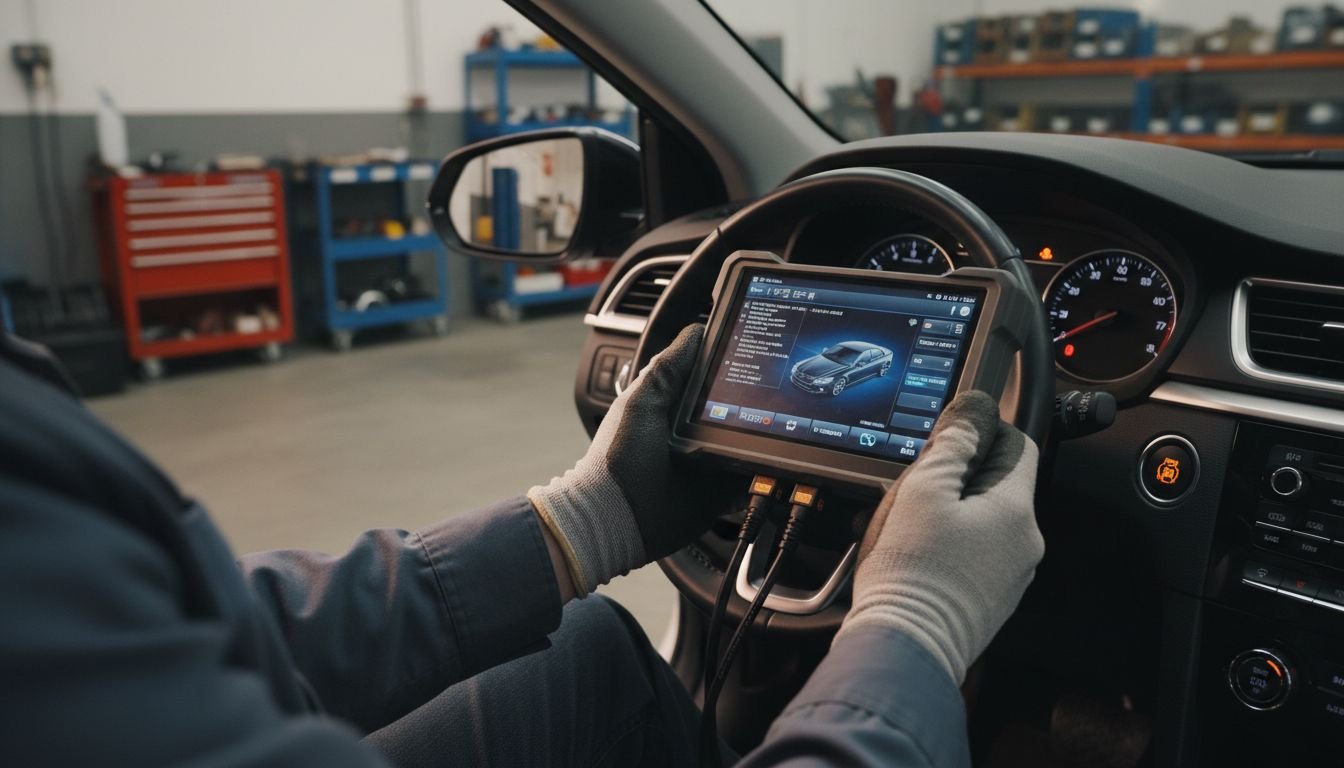
Most DFW drivers first think about engine diagnostics when the check engine light pops on. A proper check engine light diagnosis connects what the light is telling you with how the car is actually behaving. Ignoring that light, especially in Texas heat and traffic, can turn a minor issue into a costly repair.
Shops and parts stores may offer a quick engine light diagnostic or code pull for free. That is fine for basic awareness, but it is not the same as a full diagnostic where a technician interprets data, inspects components, and verifies the true cause.
Steady vs. Flashing Check Engine Light
A steady check engine light usually means there is a problem with emissions or drivability that is not yet causing immediate, severe damage. You should still schedule a diagnostic soon, because small issues can get worse over time. Waiting can affect fuel economy, performance, and your ability to pass Texas emissions testing.
A flashing check engine light is different and much more serious. It often points to a significant misfire that can quickly damage your catalytic converter or leave you stranded. If the light is flashing, especially if the engine runs rough or smells like raw fuel, pull over safely and arrange professional help rather than continuing your drive.
Other Symptoms That Call for Engine Diagnostics
Your check engine light is just one clue. How the vehicle feels and sounds is just as important to a proper check engine diagnostic. When you describe these symptoms clearly, your technician can narrow down the issue faster.
- Rough idle, shaking at stoplights, or stalling at low speeds.
- Hesitation, surging, or loss of power when merging onto I-35, I-20, or Loop 820.
- Poor fuel economy, needing to refuel much more often than usual.
- Hard starting, long cranking, or no-start conditions.
- Strong fuel smell, black smoke, overheating, or unusual noises from under the hood.
A proper engine light diagnostic combines these real-world symptoms with scan data to build a clear diagnostic plan instead of guessing.
OBD-II Basics, Common Codes, and What They Really Tell You
This section dives into how OBD-II works, what common codes really mean, and why you should not order parts just because of one line on a code reader. When you understand this, it is easier to see why a true Vehicle Diagnostic is worth the time and money. It also helps you talk to your technician in clear terms about what you are experiencing.
How OBD-II Monitors Your Engine
Your engine is surrounded by sensors that report back to the main computer, often called the engine control module (ECM) or powertrain control module (PCM). These sensors include oxygen sensors, MAF and MAP sensors, coolant temperature sensors, crankshaft and camshaft sensors, and more. Each one sends constant data about air, fuel, timing, and temperature.
The control module uses this data to adjust how much fuel to inject, when to fire the spark plugs, and how to manage emissions. It constantly compares readings to expected values stored in its programming. When something is out of range for long enough, the module sets a Diagnostic Trouble Code (DTC) and may turn on the check engine light.
Some issues trigger codes immediately, while others require the problem to happen several times or under specific driving conditions. That is why a problem may show up only at highway speed or only in stop-and-go traffic around Dallas, Arlington, or Fort Worth.
Example Check Engine Codes and Plain-English Meanings
Here are a few common generic OBD-II codes and what they often mean in plain English. These are examples only; each one still requires testing to confirm the exact cause.
- P0300 – Random/multiple cylinder misfire: The engine computer is seeing misfires on more than one cylinder, which can cause shaking, poor power, and catalytic converter damage if ignored.
- P0171 – System too lean (bank 1): The computer sees too much air or not enough fuel on one side of the engine, often due to vacuum leaks, fuel delivery problems, or dirty MAF sensors.
- P0420 – Catalyst system efficiency below threshold: The catalytic converter is not cleaning up exhaust gases as expected, which may be due to a failing converter, upstream issues like misfires, or sensor problems.
- P0442 – Small EVAP system leak: The system that seals fuel vapors has detected a small leak, often a loose or failing gas cap, cracked hose, or faulty EVAP component.
A deeper dive into individual codes can be very helpful, especially for specific makes and models. For example, you can read more in resources like Understanding specific diagnostic trouble codes like Suzuki DTC P0969 to see how a single code fits into a bigger diagnostic picture.
Why a Code Reader Alone Is Not Engine Diagnostics
A basic parts-store scan or cheap handheld reader will tell you what codes are stored. It might also erase them. That can be useful as a starting point, but it is not full engine diagnostics.
A professional Vehicle Diagnostic adds several layers on top of the basic code pull. A trained technician reviews live data graphs, freeze-frame data (a snapshot of conditions when the code set), and may run bi-directional tests where the scan tool commands components on and off. Visual and mechanical inspections confirm whether the data and the physical condition of parts match.
In short, codes point you in the right direction but do not name the failed part. Replacing parts based only on codes is one of the fastest ways to waste money.
How Modules and Sensors Interact During System Diagnostics
Modern system diagnostics are not limited to just the engine. Your vehicle uses several modules that talk to each other over a data network. When there is a problem, more than one module may set a code, or one failing system may affect others.
Engine, Transmission, and Safety Modules Talking Together
On most late-model American and Japanese vehicles, modules communicate over what is called a CAN bus. Think of it as a shared conversation line where each module sends and receives messages. The engine module, transmission module, ABS module, and SRS airbag module can all share information.
For example, a serious engine misfire can cause the transmission module to change how it shifts, or ABS/traction control to limit power. Electrical problems, low voltage, or communication faults can cause multiple warning lights to turn on at once. Proper vehicle diagnostics look at data from all these modules instead of treating them in isolation.
When Engine Issues Affect Safety Systems
Sometimes an engine or power issue is just the tip of the iceberg. Electrical faults, charging problems, or wiring damage can also affect airbag modules, seat belt pre-tensioners, or steering wheel clocksprings. In other cases, stored crash data in the SRS system shows that the vehicle has been in a collision even if repairs were done elsewhere.
That is where targeted services come in, such as SRS Airbag Module Reset, Airbag Module Replacement, Airbag Replacement, Seat Belt Replacement, Pre-Tensioner Replacement, and Clock Spring Replacement. Accurate diagnostics help determine whether an SRS module can be safely reset or must be replaced after a crash event. You can learn more about why careful diagnostics matter before clearing crash data in resources like Why accurate diagnostics matter before clearing crash data or resetting airbag modules.
Safety Warning: Airbag modules, seat belt pre-tensioners, and some steering wheel components contain explosive charges and sensitive electronics. Attempting DIY work on these SRS parts can cause accidental deployment, serious injury, or system failure in a crash. Always have SRS diagnostics, resets, and replacements performed by trained professionals.
Engine Diagnostic Workflow in DFW: What Happens During a Professional Vehicle Diagnostic
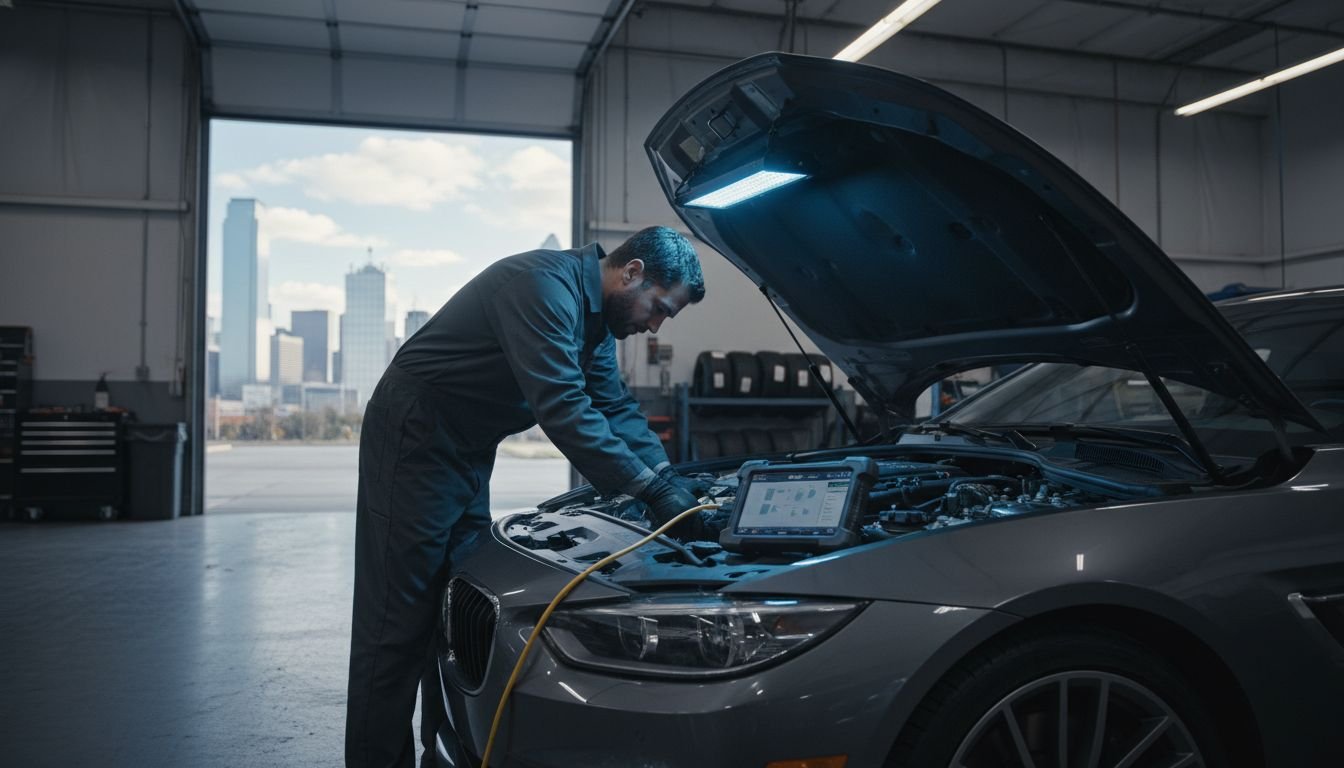
When you schedule a Vehicle Diagnostic at LockNCal, you are getting a structured process, not just a quick scan. This helps protect your engine, transmission, and safety systems while giving you clear answers. Here is what typically happens when you bring in an American or Japanese vehicle in DFW.
Step 1 – Interview and Symptom Check
A good diagnostic starts with listening. Your technician will ask when the check engine light came on, what you were doing at the time, and whether it is steady or flashing. We also ask about noises, smells, how the car behaves in DFW traffic, and any recent repairs or maintenance.
Details like “it only happens on the highway between Lake Worth TX and downtown Fort Worth” or “it stumbles after long idles in Arlington traffic” are valuable. This symptom review helps narrow down which systems to test first.
Step 2 – Onboard Diagnostic Scan and Data Capture
Next, we connect a professional onboard diagnostic scan tool to the OBD-II port. We read stored, pending, and history codes from the engine, transmission, ABS, SRS, and other modules as needed. We also look at freeze-frame data that tells us the conditions when each code set.
The scan includes a check of readiness monitors, which is critical for passing Texas emissions and state inspection. If monitors are not set, the vehicle may fail inspection even if the check engine light is off. Understanding why a monitor is not ready is part of proper diagnostics.
Step 3 – Visual and Basic Mechanical Checks
Data alone is not enough. We perform a visual inspection under the hood, looking for loose or damaged connectors, rubbed-through wiring, vacuum hose issues, and visible leaks. Many “mystery” problems in DFW end up being heat-damaged plastic or brittle rubber.
Basic checks may include vacuum leak checks, quick timing or belt condition checks where appropriate, and verification that fluids are at proper levels. These steps catch obvious problems before moving on to more advanced testing.
Step 4 – Targeted Testing Based on Codes and Symptoms
Once we combine your symptoms, codes, and visual findings, we build a focused test plan. That can include testing sensors for proper voltage, resistance, and response time, or comparing one sensor’s data to another while the engine runs. We may check fuel pressure, flow, or run cylinder compression or leak-down tests when misfires or power issues are involved.
This is where professional experience really matters. Anyone can read codes; interpreting conflicting data and tracking down the root cause is what separates a real diagnostic from guesswork.
Step 5 – Results, Estimate, and Next Steps
A proper Vehicle Diagnostic ends with clear communication, not just a printout of codes. You should receive a plain-English explanation of what we found, which items are urgent, and which can wait. You will also receive a written estimate for any recommended work.
When issues involve engine or transmission repairs beyond our approved menu, we explain the findings so you can work with a trusted mechanic or dealer. When diagnostics reveal safety-system concerns—such as SRS fault codes, seat belt pre-tensioner issues, or ADAS calibration needs—LockNCal can directly help with services like SRS Airbag Module Reset, airbag and seat belt related replacement, and ADAS Calibration when applicable.
DIY Code Readers vs. Professional Engine Diagnostics: Risks and Limitations
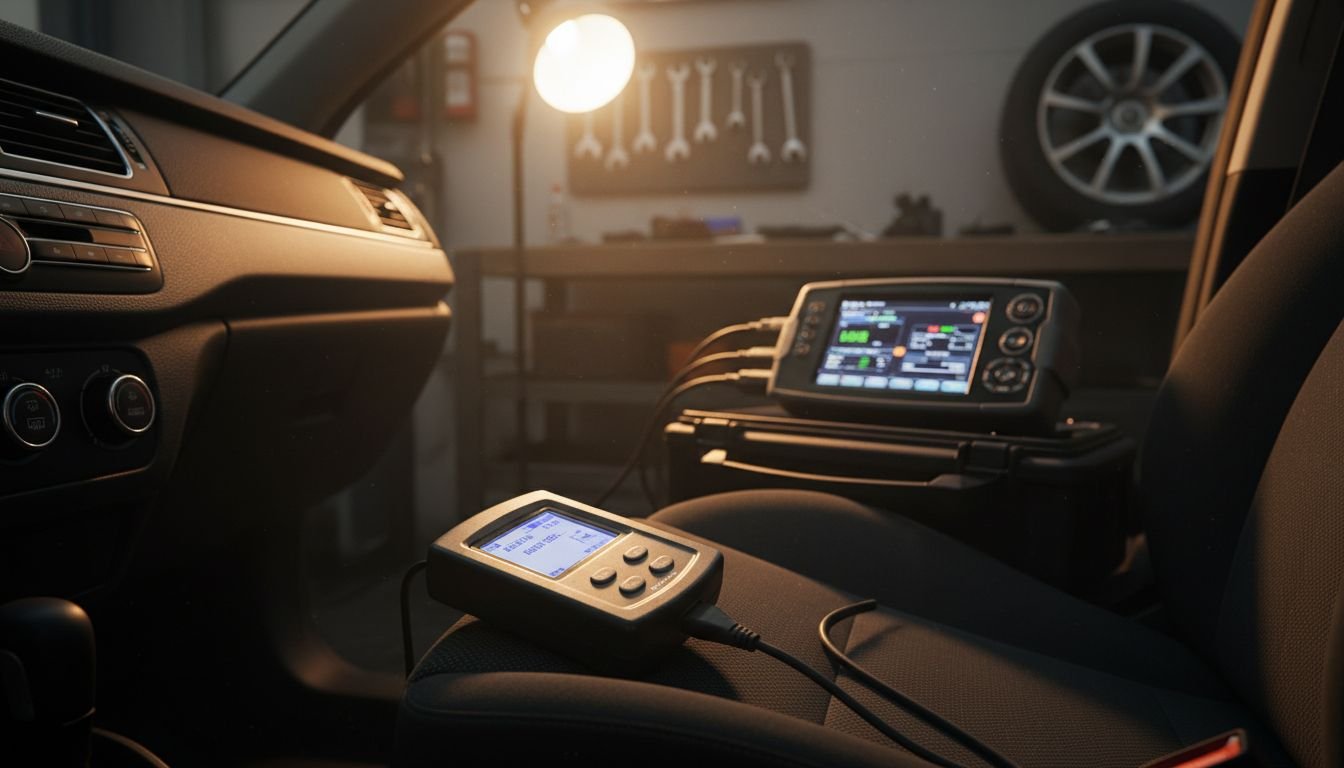
There is nothing wrong with wanting to understand your own vehicle. Basic tools and information can help you make smarter decisions. The key is knowing where safe DIY ends and where a professional engine diagnostics service is the better choice.
What You Can Safely Do Yourself
A simple code reader or free parts-store scan can give you a rough idea of what system is complaining. You can write down the codes and note exactly when symptoms happen. Checking for a loose gas cap, low fluids, or obviously disconnected hoses is also reasonable for most drivers.
Bringing that information to a shop can speed up the diagnostic process. Just remember that the code is not a command to install a part; it is a clue for a trained technician to investigate.
When DIY Becomes Risky or Expensive
DIY turns risky when you start throwing parts at a problem based only on codes or forum posts. Misdiagnosis can lead to hundreds of dollars in sensors, coils, or other components that do not fix the issue. Meanwhile, the real problem—such as an intermittent wiring fault or fuel system issue—continues to get worse.
Some systems are also flat-out dangerous to work on without training and proper equipment. That includes high-voltage hybrid systems, high-pressure fuel systems, and anything tied into the SRS and airbag circuits. Mistakes here can cause fires, injury, or leave safety systems disabled without any visible sign.
Safety Warning: Airbag modules, seat belt pre-tensioners, and some steering wheel components contain explosive charges and sensitive electronics. Attempting DIY work on these SRS parts can cause accidental deployment, serious injury, or system failure in a crash. Always have SRS diagnostics, resets, and replacements performed by trained professionals.
Why Professional Vehicle Diagnostics Are Worth It
A professional Vehicle Diagnostic in DFW costs more than a free scan, but it usually costs far less than repeated guesswork and unnecessary parts. You get faster root-cause identification, better protection for your engine and transmission, and peace of mind about your safety systems. You also receive documentation that can help with CarFax Report entries and maintenance records when selling or trading your vehicle.
At LockNCal, we focus on diagnostics and safety-system solutions for American and Japanese vehicles. That includes Vehicle Diagnostic services, SRS-related resets and replacements, ADAS Calibration, and even key and locksmith services when immobilizer or key-related issues overlap with warning lights.
Engine Diagnostics in Lake Worth TX and the Greater DFW Area
Living and driving in the Dallas–Fort Worth area creates unique stress on your vehicle. Whether you are commuting from Lake Worth TX, Saginaw, Arlington, Plano, or Denton, local conditions make proper engine diagnostics even more important. Understanding those conditions helps explain why symptoms show up when they do.
How DFW Driving Conditions Affect Engine Health
Texas heat is hard on sensors, wiring, plastic connectors, and cooling systems. Long stretches of 100°F+ days around Dallas, Fort Worth, and Arlington can turn minor issues into major failures. Stop-and-go traffic on highways like I-30, I-35, and the George Bush Turnpike adds further load.
Drivers from suburbs such as Lake Worth TX, The Colony, McKinney, and Burleson often face long highway commutes combined with short in-town trips. That mix can cause some OBD-II monitors to set slowly and can highlight weaknesses in ignition, cooling, and fuel systems. You can read more about how local weather affects modern vehicle electronics in resources like How Texas weather and storms can affect sensors, ADAS, and safety electronics in Lake Worth TX.
Texas Emissions and State Inspection Considerations
In many parts of Dallas County, Tarrant County, Collin County, Denton County, and Rockwall County, vehicles must pass emissions testing as part of the state inspection. An active check engine light or unset readiness monitors can cause an automatic fail. Clearing codes right before your test can delay the process because monitors need time and proper driving conditions to reset.
Scheduling engine diagnostics before your inspection can save time, towing, and re-test fees. A professional tech can explain what needs to be fixed now and what you should watch for down the road so you are not surprised at inspection time.
When to Choose LockNCal for Vehicle Diagnostics
LockNCal serves drivers and small dealers across much of the Metroplex, including Addison, Allen, Arlington, Carrollton, Coppell, Dallas, Denton, Euless, Flower Mound, Fort Worth, Frisco, Garland, Grand Prairie, Grapevine, Irving, Lake Dallas, Lake Worth TX, Lewisville, McKinney, Mesquite, North Richland Hills, Plano, Richardson, Rockwall, Saginaw, Southlake, The Colony, Trophy Club, and more. If you are unsure whether your area is covered, you can review our Lake Worth service page at https://lockncal.com/Lake-Worth-TX.
We are a strong fit if you:
- Drive an American or Japanese vehicle with a persistent check engine light, especially after basic repairs have already been tried.
- Just purchased a used vehicle and want vehicle diagnostics plus safety and code checks for transparency.
- Have been in a crash or had an airbag deployment and need diagnostics plus SRS Airbag Module Reset or compatible replacement services.
Same-day or next-day diagnostic appointments are often available, depending on schedule and workload. The goal is always clear information, not pressure—you stay in control of what work gets done and where.
Engine Diagnostics FAQs
What is the difference between a check engine light diagnostic and full engine diagnostics?
A check engine light diagnostic usually focuses on why the light is on right now and which codes are stored. Full engine diagnostics go further by reviewing live data, inspecting components, and running targeted tests to confirm the true cause. In practice, a quick code pull might take a few minutes, while a full diagnostic workflow is a structured process aimed at root-cause, not just symptom clearing.
How long does a professional engine diagnostic usually take in DFW?
Most routine engine diagnostics take about 30–90 minutes, depending on how complex the symptoms are and how many codes are stored. Intermittent problems, severe misfires, or communication issues between modules may take longer to trace accurately. The goal is to be thorough rather than rushing and missing the real issue.
Is it safe to drive my car if the check engine light is on but the car seems to run fine?
If the light is steady and the vehicle feels normal, it is usually safe to drive short distances but you should schedule diagnostics soon. If the light is flashing, if you feel loss of power, smell fuel, see smoke, or the temperature gauge climbs, it is safer to pull over and seek help. In DFW’s high-heat conditions, continuing to drive with a serious fault can quickly damage expensive components like the catalytic converter.
Can a basic code reader or free parts-store scan replace a professional Vehicle Diagnostic?
No, a basic reader or free scan is only a first step. It tells you which systems are complaining, but not why, and it cannot perform advanced testing like bi-directional commands, in-depth data logging, or proper system diagnostics. A professional Vehicle Diagnostic uses those tools plus experience to avoid misdiagnosis and unnecessary parts replacement.
How can an engine diagnostic at LockNCal help with airbag, seat belt, or ADAS problems?
During a Vehicle Diagnostic, we can scan and interpret data not only from the engine but also from the SRS airbag module, seat belt pre-tensioners, and ADAS-related modules where applicable. If diagnostics reveal SRS or ADAS faults, LockNCal offers services such as SRS Airbag Module Reset, Airbag Module Replacement, Airbag Replacement, Seat Belt Replacement, Pre-Tensioner Replacement, Clock Spring Replacement, and ADAS Calibration when needed. Accurate diagnostics make sure those replacements and resets are done for the right reason and restore system safety instead of just clearing lights.
If you are unsure where to start, one of the easiest steps is to decode your VIN and understand exactly what you are driving. You can use our FREE VIN Decoder to get basic build information before scheduling a Vehicle Diagnostic.


