
Transponder Key Programming Explained: How It Works, What the Immobilizer Does, and When Drivers in Colleyville TX Need a Locksmith
Many drivers around Colleyville TX and the DFW area assume that if a key is cut to fit their ignition, the car should start. With modern American and Japanese vehicles, that is only half the story. The metal blade might turn, the buttons on the fob might lock and unlock the doors, but without proper transponder key programming or smart key programming, the engine may never start.
Need a key made or programmed? Our mobile automotive locksmith comes to you across Dallas–Fort Worth.
This info blog walks you through what is really happening between your key, your immobilizer, and your vehicle computer, so you can decide when DIY is realistic and when calling a professional locksmith is the safer move.
Safety-first note: Modern vehicles use sensitive electronic control systems. Improper DIY work around the steering column, ignition components, or wiring can create safety, drivability, and diagnostic risks. Some trim and access points are close to SRS airbag components and pyrotechnic devices; careless DIY work here can expose you to SRS explosives and risks of DIY. When in doubt, get qualified help.
If you’re unsure what your vehicle was built with, you can look it up using your VIN with this simple tool: LockNCal VIN Decoder.
What Is Transponder Key Programming?
A transponder key is a regular-looking car key that has a small electronic chip inside the plastic head. That chip talks to your vehicle’s immobilizer system. The immobilizer is a theft-prevention module that decides whether the key is approved to start the engine.
On many American and Japanese vehicles built in the last couple of decades:
- The metal blade of the key is what turns the ignition cylinder.
- The transponder chip is what allows the engine to actually start and keep running.
You can have a key that is cut perfectly and turns smoothly, but if the chip is missing, damaged, or not programmed to your car, the immobilizer will block the start. That’s what transponder key programming is: pairing that chip’s digital ID with your vehicle’s immobilizer memory so the car recognizes it as an authorized key.
Modern anti-theft systems are designed so that even if a thief manages to copy the metal pattern of your key, they still cannot start the car without the correct programmed chip.
How Transponder and Smart Key Systems Actually Work
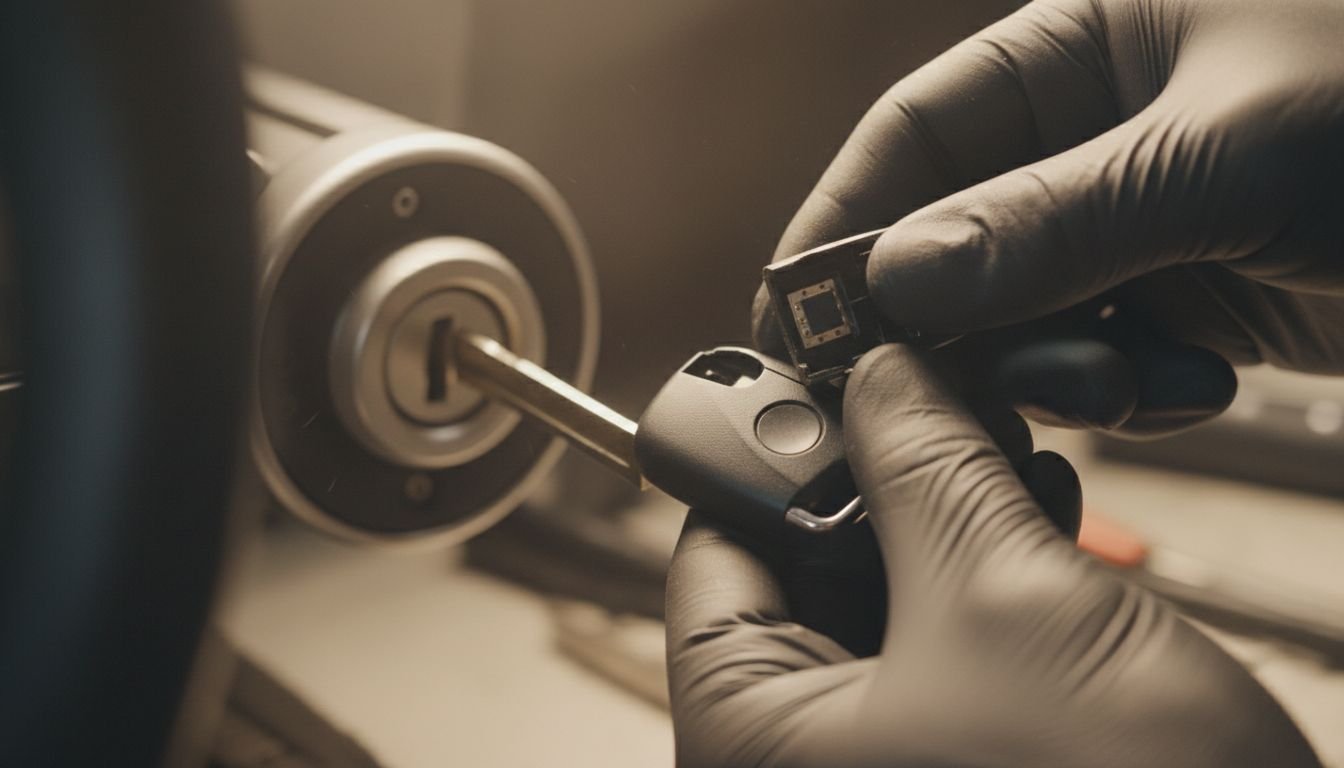
Whether you drive a traditional key-ignition vehicle or a push-button start model, the process is similar: the vehicle’s immobilizer looks for a valid digital “handshake” from a chip in your key or fob before it allows fuel and spark.
The transponder chip, antenna ring, and immobilizer handshake
Here’s a simplified breakdown of what happens on a typical American or Japanese vehicle when you try to start the engine:
- You insert and turn the key.
The metal blade operates the mechanical lock, allowing the ignition switch to move from OFF to ON/START. - The antenna ring wakes the chip.
Around the ignition cylinder there is usually an antenna ring (or coil). When you turn the key, this ring sends out a low-power radio signal that energizes the transponder chip inside the key head. - The chip sends its ID code.
The chip responds with a unique identification code. Think of it as saying, “It’s key #3 for this car.” - The immobilizer checks its memory.
The immobilizer module (sometimes integrated with the engine computer) compares that ID against a list of stored, approved keys. - Approved or denied.
If the code matches, the immobilizer allows fuel injection, spark, and sometimes starter operation. If it doesn’t match or there’s no response, the engine may crank and immediately die, not crank at all, or trigger a flashing security light.
Transponder key programming is the process of telling the immobilizer, “This new chip ID is now an approved key” (and sometimes removing old, lost, or stolen keys from that list).
How smart key programming differs from standard transponder key programming
Smart keys, also called proximity keys, are common on newer push-button start vehicles. They still use a transponder-type chip, but instead of sitting in the ignition, they communicate wirelessly while the fob stays in your pocket or bag.
Key differences:
- Location: Smart key chips are typically in a larger fob, not a traditional metal key head.
- Detection: The vehicle uses multiple antennas (in the cabin, near the trunk, sometimes in the door handles) to detect that the fob is within range.
- Authorization steps: The smart key system validates both the proximity signal and the transponder ID before allowing the START button to work.
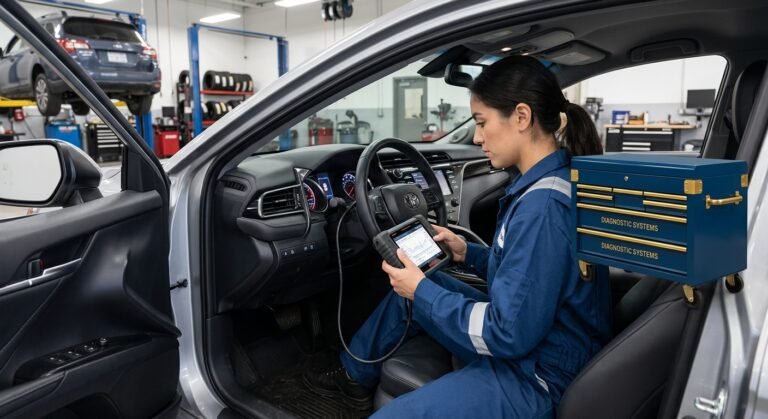
- Programming tools: Smart key programming usually requires more advanced diagnostic equipment than standard chip keys.
The result is more convenience, but also more complexity. When a smart key isn’t programmed correctly, you might be able to unlock the doors by touching the handle but still get a “Key not detected” or similar message when you press START.
When a key only needs cutting vs when it also needs programming
Here’s the practical difference for drivers in Colleyville and around DFW:
- Vehicle Key Cutting only may be enough when:
- You have an older vehicle without an immobilizer, or
- You’re copying a simple metal “valet” or door-only key that never had a chip.
- Vehicle Key Cutting + Transponder Key Programming is needed when:
- Your original key had a plastic head with a chip.
- There is a security/immobilizer light on the dash.
- The vehicle is a later-model American or Japanese car or truck with anti-theft built in.
- Smart Key Programming is needed when:
- You have a push-button start or proximity key system.
- You’ve added a new fob or replaced a lost smart key.
A key can be cut perfectly and still fail to start the engine if the chip inside is not programmed. That’s why “cut vs program a car key” is such an important distinction.
Why some vehicles need onboard steps and others require professional tools
Depending on the vehicle, transponder and smart key programming can work in different ways:
- Onboard programming (DIY possible in some cases)
Some older American and Japanese vehicles allow owners to add a spare key if they already have one or two working keys. This usually involves a sequence of ignition ON/OFF cycles or button presses and has to be done within strict time limits. - Diagnostic tool programming (professional tools)
Newer and more secure systems require a locksmith or dealer to connect a diagnostic tool to the OBD port to access the immobilizer. This process can include security PIN codes and waiting periods.
As security standards tightened, more models moved away from simple DIY onboard procedures. For many late-model American and Japanese vehicles, it’s safer and faster to have a locksmith with the right equipment handle the programming.
Signs the Problem Is Programming and Not Just a Dead Battery or Worn Key
Not every starting problem is a key problem, and not every key issue is about programming. Here are symptoms that often point toward a transponder or immobilizer issue rather than just a bad key blade or fob battery.
Engine cranks but will not stay running
On many immobilizer-equipped vehicles, the engine will crank and briefly start, then immediately stall if the key’s transponder chip isn’t recognized. It can feel like a fuel or sensor problem, but the security system is what’s shutting it down.
Security or immobilizer light stays on or flashes
If you see a security padlock icon or an immobilizer light flashing or staying solid when you try to start the car, that’s a direct clue that the system does not like the key or is having a communication issue.
Buttons work but the vehicle will not start
It’s common for a driver to say, “My remote locks and unlocks the doors just fine, but the car won’t start.” That points to the difference between:
- Remote button functions: Lock, unlock, trunk release, panic alarm (key fob radio functions).
- Transponder or smart authorization: The hidden chip that talks to the immobilizer.
The remote portion can work while the chip portion fails or is not programmed. That’s when immobilizer key programming becomes the real fix, not just “key fob programming.”
The key turns, but the car does not recognize it
When the key blade turns smoothly and the ignition switch feels normal but the dash says “Key not recognized” or the security light flashes, you’re likely dealing with:
- Chip issue: Missing, damaged, or unprogrammed transponder.
- Remote issue: Buttons stop working (often a battery, solder joint, or board problem), but this alone usually doesn’t stop a chipped blade from starting the car.
- Mechanical cutting issue: Worn key blade can jam or fail to turn locks and ignition even when the chip is fine.
If you’re not sure whether the problem is key-related or a different system fault, a proper Vehicle Diagnostic can save time and guesswork. For general no-start and warning light issues, see also LockNCal’s guide on OBD trouble code diagnosis for DFW drivers.
Common Reasons a Car Key Needs Programming
Here are typical situations where car key chip programming or smart key programming becomes necessary.
You added a spare key
Any time you add a chipped key or smart fob, it must be introduced to the immobilizer memory. This is spare key programming. On some older models, owners can do this if they already have required working keys; on most newer systems, a locksmith or dealer needs to perform the procedure.
You replaced a lost or stolen key
When a primary key is lost or stolen, the replacement requires Vehicle Key Cutting plus Transponder Key Programming or Smart Key Programming. In some cases, owners also choose to have old keys deleted from the system so they cannot start the vehicle if found by someone else.
You have an all-keys-lost situation
An Vehicle All Keys Lost scenario is more complex. With no working key to clone or use as a reference, the immobilizer may need to be accessed using security procedures and specialized tools. This is rarely a safe DIY situation and is a common reason to call a locksmith for programmed car key help in Colleyville or nearby DFW cities.
The vehicle module or immobilizer memory changed
If a vehicle control module or immobilizer unit is replaced (usually done by a dealer or repair facility), the keys often must be re-paired to the new memory. This is advanced work and not something LockNCal advertises as a direct repair service, but it’s important for owners to know that keys may need programming again when modules change.
You bought an aftermarket or used key that is not yet matched
Many DFW drivers buy aftermarket or used fobs online to save money. These pieces still require the correct transponder key programming or smart key programming to function. Some used smart keys cannot be re-used on certain models at all. Before spending on blanks or used fobs, it’s wise to talk with a local locksmith about compatibility.
Can You Program a Transponder Key Yourself?
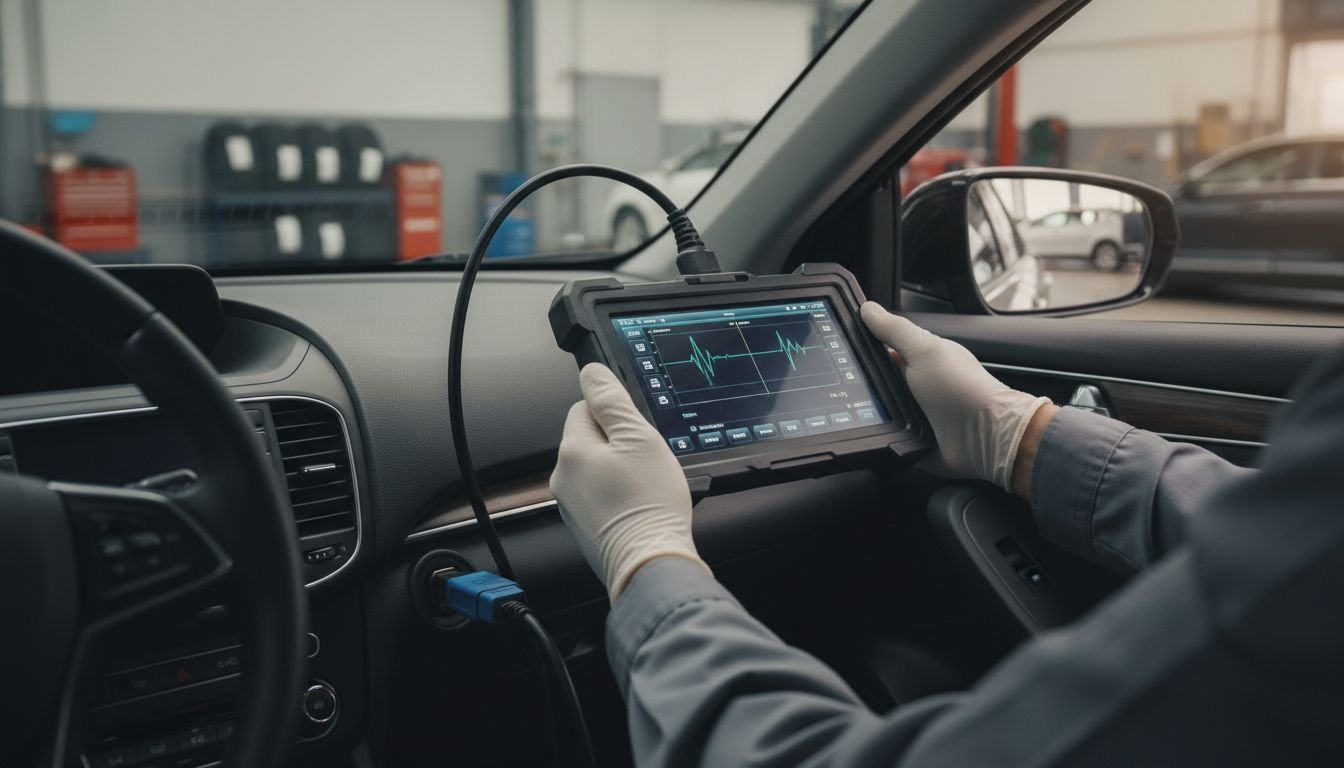
DIY key programming is possible in some scenarios, especially on older vehicles. The challenge is knowing where the line is between a simple owner procedure and a system that can only be safely handled with professional diagnostic tools.
Situations where DIY may work
DIY may be realistic when:
- Older vehicles: Many older American and Japanese models with basic immobilizer systems allow owners to add a spare key using a sequence of ignition cycles, as long as they have one or two valid keys already.
- You already have required working keys: Some systems only permit onboard programming when at least one working key is present to “authorize” the new one.
- Simple onboard procedures: If the owner’s manual clearly describes an onboard key-add procedure, and you are comfortable following exact timing steps, you may succeed without special tools.
Even then, you still need correct Vehicle Key Cutting and a compatible chip or smart fob. A VIN lookup via the LockNCal VIN Decoder can help you understand what type of key your vehicle expects.
Situations where DIY is likely to fail
DIY key programming usually fails or causes extra frustration when:
- No working key is available: An all keys lost programming situation almost always requires professional tools and security procedures.
- Newer encrypted systems: Many late-model vehicles use rolling codes, encrypted PINs, and online security checks. These are not owner-serviceable.
- Smart proximity systems: Push-button start and advanced proximity keys often require multi-step programming and antenna checks.
- Vehicles requiring diagnostic access: If the procedure involves going in through the OBD port with a scan tool or programmer, that’s work for a trained locksmith or dealer, not a typical DIY project.
What can go wrong during DIY attempts
Common issues we see after DIY programming attempts in the DFW area include:
- Failed pairing: The key never fully programs, leaving you with a cut key that still won’t start the car.
- Lost time and money on incorrect blanks: Buying multiple keys or fobs online only to learn they are the wrong frequency, wrong chip type, or locked from previous use.
- Immobilizer lockout: Repeated failed attempts or incorrect procedures can sometimes trigger extended lockout timers, adding more delay and frustration.
- Need for additional diagnostics: If there is a separate wiring, antenna, or module issue on top of the key problem, guessing at programming steps can waste hours before a proper Vehicle Diagnostic is finally done.
- Safety concerns: Removing steering column trim or working near ignition wiring without training can expose you to SRS explosives and risks of DIY where airbag components and pyrotechnic devices are located.
Typical Time and Cost Factors for Transponder, Smart Key, and Key Fob Programming
Drivers often ask, “How long will this take, and what will it cost?” Because every vehicle and situation is different, it’s important to keep expectations realistic.
What affects programming time
Programming time depends on the vehicle system, key availability, and whether diagnostics are needed. Key variables include:
- Vehicle year/make/model: Newer, more secure systems take longer to access and program than older, simpler systems.
- Number of working keys: Adding a spare is usually faster than recovering from an all-keys-lost scenario.
- Key type: A basic transponder key is usually quicker than a complex smart key or proximity fob.
- All-keys-lost vs spare key duplication: Vehicle Key Duplication / Vehicle Key Copying with at least one working key on-site is generally the quickest case.
Typical cost drivers
Costs vary by vehicle and key type, and they also depend on:
- Chip type and fob style: Basic chip keys are generally less expensive than multi-function smart fobs.
- Emergency or mobile service: Having a mobile locksmith come to your breakdown location adds convenience and usually some additional service cost compared to a scheduled, non-emergency visit.
- Cutting + programming combo: Many jobs involve both Vehicle Key Cutting and programming in a single visit.
- OEM vs aftermarket compatibility: Sometimes an aftermarket key works well; other times an OEM-style fob is the only reliable option. A professional can explain your options before you spend money.
Dealer vs locksmith vs DIY: what readers should realistically compare
When comparing options around Colleyville and the greater DFW area, consider:
- Dealer: Familiar with your brand, but you usually have to tow the vehicle in, and costs can be higher. Scheduling may take longer.
- Locksmith: Mobile service that comes to you, focused on Vehicle Key Cutting, Transponder Key Programming, Smart Key Programming, and Key Fob Replacement & Programming for many American and Japanese vehicles.
- DIY: Lowest direct cost if it works, but higher risk of buying wrong parts, failing the programming steps, or misdiagnosing a problem that actually requires Vehicle Diagnostic work.
For safety-critical topics, including immobilizer and SRS systems, see also LockNCal’s coverage on vehicle safety system checks for Colleyville parents.
Key Fob Programming Fort Worth Drivers Ask About Most
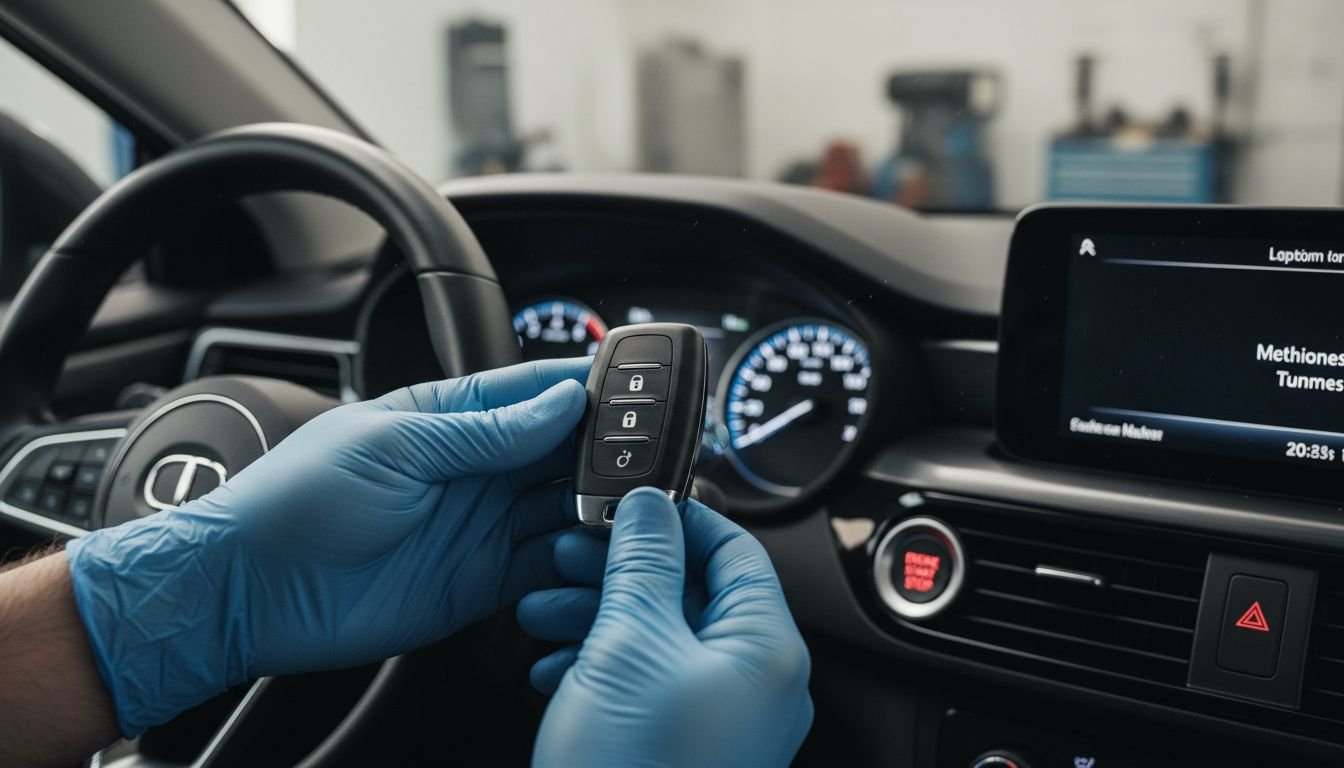
When people search online for key fob programming Fort Worth or call from Colleyville or nearby DFW cities, they often use “key fob” to describe any kind of remote or smart key. In reality, several different systems may be involved.
Remote button syncing vs chip programming vs proximity smart key setup
Here’s how the terms typically break down:
- Remote button syncing: This is the process of pairing the lock/unlock/trunk buttons to the vehicle’s body control system. On some vehicles, owners can do this via a sequence of ignition and door-lock moves.
- Transponder chip programming: Separate from the buttons, this tells the immobilizer that the chip inside the key or fob is approved to start the engine.
- Proximity smart key setup: This verifies that the fob can both communicate at close range (so the doors unlock when you touch the handle) and present a valid ID for push-button starting.
Locking/unlocking and starting are related but not identical functions. A remote can work as a door controller while the immobilizer still refuses to start the vehicle.
Why a fob can unlock doors but still fail to start the car
A few common reasons:
- Dead or weak transponder/smart chip: The remote battery powers the buttons, but the chip that the immobilizer needs is defective or missing.
- Unprogrammed chip: Someone copied the remote functions but never completed the immobilizer key programming step.
- Wrong fob type: The remote frequency might match the locks, but the immobilizer chip type and coding don’t match the vehicle.
If your fob still locks/unlocks the car but it won’t start, that’s usually the time to stop guessing and talk to a professional about Key Fob Replacement & Programming or Transponder Key Programming.
When It Makes Sense to Call a Locksmith in Colleyville TX
For drivers in Colleyville TX and surrounding DFW communities, here are clear situations where bringing in a professional locksmith is the safer and usually more efficient choice.
No working key available
In an all keys lost case, the chances of successful DIY are very low. You may need a combination of Vehicle Key Cutting, Transponder Key Programming, or Smart Key Programming with security access steps. This is exactly the type of situation where a mobile locksmith can come to your location.
The vehicle is immobilized and you need mobile help
If the car is stuck at home, work, or a parking lot in Colleyville, towing it to a dealer just for key work isn’t always the most efficient option. A locksmith offering Locksmith Services and key programming can usually handle Vehicle All Keys Lost, spare keys, and immobilizer-related no-starts on-site for many American and Japanese models.
You are unsure whether you need Vehicle Key Cutting, Transponder Key Programming, or Smart Key Programming
When you aren’t sure if the issue is the blade, the chip, the fob, or the vehicle itself, guessing with online parts can get expensive. A professional can identify whether you need:
- Vehicle Key Cutting only,
- Transponder Key Programming,
- Smart Key Programming,
- Key Fob Replacement & Programming, or
- a deeper Vehicle Diagnostic if the fault isn’t key-related at all.
You want to avoid buying the wrong blank or used key
Local locksmiths regularly see DFW drivers who ordered multiple used fobs or cheap keys that cannot be programmed to their car. Getting advice before you buy can prevent wasting money. If you’re located in Colleyville or any of the other DFW communities LockNCal covers, you can review our local service details here: LockNCal Colleyville TX Service Page.
What LockNCal Can Help With
As an info-focused resource and local locksmith option for Colleyville TX and the greater DFW area, LockNCal can assist with:
- Transponder Key Programming for many American & Japanese vehicles
- Smart Key Programming for push-button and proximity systems (within supported models)
- Key Fob Replacement & Programming
- Vehicle Key Cutting
- Vehicle All Keys Lost situations
- Vehicle Key Duplication / Vehicle Key Copying
- Vehicle Diagnostic when a no-start issue may go beyond the key itself
- General Locksmith Services for vehicle lockouts and related needs
For safety-critical systems, including SRS airbags, always treat DIY disassembly with caution. For background on why handling safety systems correctly matters, you can read LockNCal’s guidance on airbag recalls and what Texas drivers should do.
Final Takeaway: Understand the Risk Before You Try DIY Programming
To wrap it up for Colleyville and DFW drivers, here’s a simple way to think about your situation:
- If it is only a worn or uncut key blade: Vehicle Key Cutting may be enough, especially on older vehicles without immobilizers.
- If the chip is missing or unmatched: You need transponder key programming or smart key programming so the immobilizer will authorize the start.
- If the fob buttons fail: It could be a battery, a damaged board, or a need for Key Fob Replacement & Programming, but the starting system may still depend on a separate chip.
- If the immobilizer is rejecting the key: Security lights, “key not detected” messages, or crank-then-stall behavior often mean professional help and sometimes a Vehicle Diagnostic are the safest path.
Modern keys are no longer just metal; they are part of your vehicle’s electronic security system. Before you spend money on random fobs online or start pulling trim around the steering column, weigh the safety, time, and immobilizer risks of DIY.
If you are in Colleyville TX or nearby DFW communities and need help with a spare key, a no-start, or an all-keys-lost situation on an American or Japanese vehicle, LockNCal can provide clear guidance and, when appropriate, mobile Transponder Key Programming, Smart Key Programming, Key Fob Replacement & Programming, Vehicle Key Cutting, and Locksmith Services on-site.
Quick Glossary
Use this simple glossary to keep the terms straight:
- Transponder chip: Tiny electronic chip in your key or fob that sends an ID code to the immobilizer.
- Immobilizer: Anti-theft system that decides whether to allow the engine to start and keep running.
- Smart key: Proximity-style key/fob for push-button start systems that can stay in your pocket.
- Key fob: Remote that controls lock/unlock and often contains the transponder or smart key electronics.
- Onboard programming: Key-add or fob-sync procedure that can be done using a sequence of ignition cycles and button presses without special tools, on some older vehicles.
Comparison: DIY vs Calling a Locksmith
| Issue | What It Affects | DIY Chance | When to Call a Locksmith |
|---|---|---|---|
| Worn or uncut key blade | Key won’t turn locks/ignition | Low–Medium (requires accurate cutting) | Any time you need Vehicle Key Cutting and don’t have key-cutting equipment |
| Unprogrammed transponder chip | Engine does not start or stalls | Low–Medium (older vehicles only) | Most modern American & Japanese vehicles; especially if you have only one working key or none |
| Unprogrammed smart key | Push-button start won’t recognize key | Low (special tools often required) | Any push-button start vehicle that needs Smart Key Programming |
| Remote buttons not working | Lock/unlock, trunk, panic functions | Medium (battery replacement, simple resyncs) | If new fob won’t sync, or if you also have starting issues needing Key Fob Replacement & Programming |
| Immobilizer/security light on | Engine authorization | Low | If light stays on or flashes and the car won’t start, for Transponder Key Programming and/or Vehicle Diagnostic |
| All keys lost | Complete loss of access and start | Very low | Always – you need Vehicle All Keys Lost assistance and professional programming |
FAQs About Transponder Key Programming for Colleyville & DFW Drivers
1. What is transponder key programming?
Transponder key programming is the process of pairing the electronic chip inside your car key or fob with your vehicle’s immobilizer system. Until that digital ID is stored as an approved key, the immobilizer can block the engine from starting, even if the metal key blade turns in the ignition.
2. How do I know if my key needs cutting, programming, or both?
If the key will not physically turn in the ignition or door, you likely need Vehicle Key Cutting. If it turns but the engine will not start, stalls, or shows a security light, you likely need Transponder Key Programming or Smart Key Programming. Many replacement jobs require both cutting and programming, especially on modern American and Japanese vehicles.
3. Can I do transponder key programming myself?
Sometimes. A few older models allow owners to add a spare key if they already have working keys and follow specific onboard steps. However, many newer systems require professional diagnostic tools and security access. If you have no working key, or a push-button start vehicle, DIY success is unlikely.
4. What is the difference between transponder key programming and smart key programming?
Transponder key programming usually refers to a traditional metal key with a chip in the plastic head that must be recognized by the immobilizer. Smart key programming involves proximity or push-button start systems where a larger fob communicates wirelessly with the vehicle to both unlock and authorize the engine start. Smart key systems are generally more complex.
5. Why does my key fob unlock the car but not start it?
The lock/unlock buttons and the starting authorization can be separate systems. Your remote may still work for doors while the transponder or smart chip that the immobilizer relies on is missing, damaged, or not programmed. In that case, you may need Key Fob Replacement & Programming or immobilizer key programming rather than just a new battery.
6. How long does key programming usually take?
Programming time depends on the vehicle system, key availability, and whether diagnostics are needed. Adding a spare key to an older vehicle can be relatively quick, while programming a smart key on a newer model or recovering from an all-keys-lost situation can take longer, especially if security access or troubleshooting is required.
7. When should I call a locksmith in Colleyville TX instead of trying DIY?
Call a locksmith when you have no working keys, a push-button start or smart key system, persistent security or immobilizer warnings, or if you’re unsure whether the issue is the blade, chip, fob, or vehicle electronics. In those cases, professional Transponder Key Programming, Smart Key Programming, Vehicle Key Cutting, and Vehicle Diagnostic services are usually safer and more cost-effective than trial-and-error DIY.
If you are in Colleyville TX or another DFW community served by LockNCal and have questions about your specific vehicle, you can start by decoding your VIN here: LockNCal VIN Decoder, then reach out for guidance on the right key and programming path for your American or Japanese vehicle.
For a full price breakdown, see our fob & transponder programming service.