 Skip to content

Pre-Purchase Vehicle Inspection Checklist Plano – What to Check
Direct answer: Before you buy a used car in Plano, run a structured pre-purchase vehicle inspection checklist: confirm ownership and VIN, check the body and frame, test the engine, brakes, steering, electronics, and run an OBD-II scan. A professional mobile inspection catches safety, mechanical, and airbag/SRS issues you’ll otherwise inherit.
LockNCal inspects the vehicle’s safety systems before you buy, wherever the car is across Dallas–Fort Worth. Book a pre-purchase inspection or call (469) 277-7277.
Key Takeaways
- Use a consistent checklist so you don’t miss hidden problems.
- Always verify VIN, title status, and service history before negotiating.
- Test-drive, listen closely, and scan for DTCs (fault codes) with an OBD-II scanner.
- Inspect safety systems—airbags, SRS, seat belts, and ADAS—carefully; these are costly and critical.
- If you’re unsure, schedule a mobile pre-purchase inspection from a trusted local tech.
Why a pre-purchase inspection matters in Plano
Used cars often look fine at first glance. A pre-purchase inspection uncovers structural damage, hidden repairs, safety system faults, and electronic issues that can be expensive or dangerous. It gives you leverage in negotiations and peace of mind that the vehicle is safe for you and your family.
Quick pre-inspection prep
- Bring the seller’s contact info and the vehicle title or listing details.
- Have the VIN and license plate ready to verify history reports.
- Plan a test drive of at least 10–15 minutes that includes highway and local streets.
- Bring a flashlight, phone charger, and a friend to help spot issues.
Exterior and frame (what to check)
- VIN matches paperwork: check VIN on the dash and door jamb against the title.
- Rust and paint inconsistencies: different paint textures, overspray, or inconsistent gaps suggest repair.
- Panel gaps and alignment: uneven gaps can indicate prior collision repair or frame issues.
- Windshield and glass: look for chips or replaced windshields—replacement may affect ADAS cameras.
Interior and electronics
- Seat belts: check for frays, proper latching and self-retracting action.
- Airbag lights: a persistent SRS/airbag light is a red flag—don’t ignore it.
- Infotainment and HVAC: ensure screens, navigation, Bluetooth, AC and heat work on all settings.
- Window and door operation: power windows, locks, and mirrors should operate smoothly.
Engine bay and undercarriage
- Leaks: oil, coolant, brake fluid, or transmission fluid spots under the car or on engine parts.
- Belts and hoses: check for cracks, swelling or soft spots.
- Battery: corrosion on terminals or a swollen case may mean the battery needs replacement soon.
- Undercarriage rust or bent control arms: serious structural or safety concerns.
Test drive checklist
- Cold start: listen for knocking, excessive smoke, or odd noises on startup.
- Acceleration: car should accelerate smoothly without hesitation or misfires.
- Brakes: no pulsing, pulling to one side, or grinding noises. Test ABS by firm braking in a safe area (ABS will pulse the brake pedal).
- Steering and suspension: watch for wandering, clunking, or rough ride over bumps.
- Transmission: shifts should be smooth (automatic) or gears should engage cleanly (manual).
OBD-II scan and DTCs (what to know)
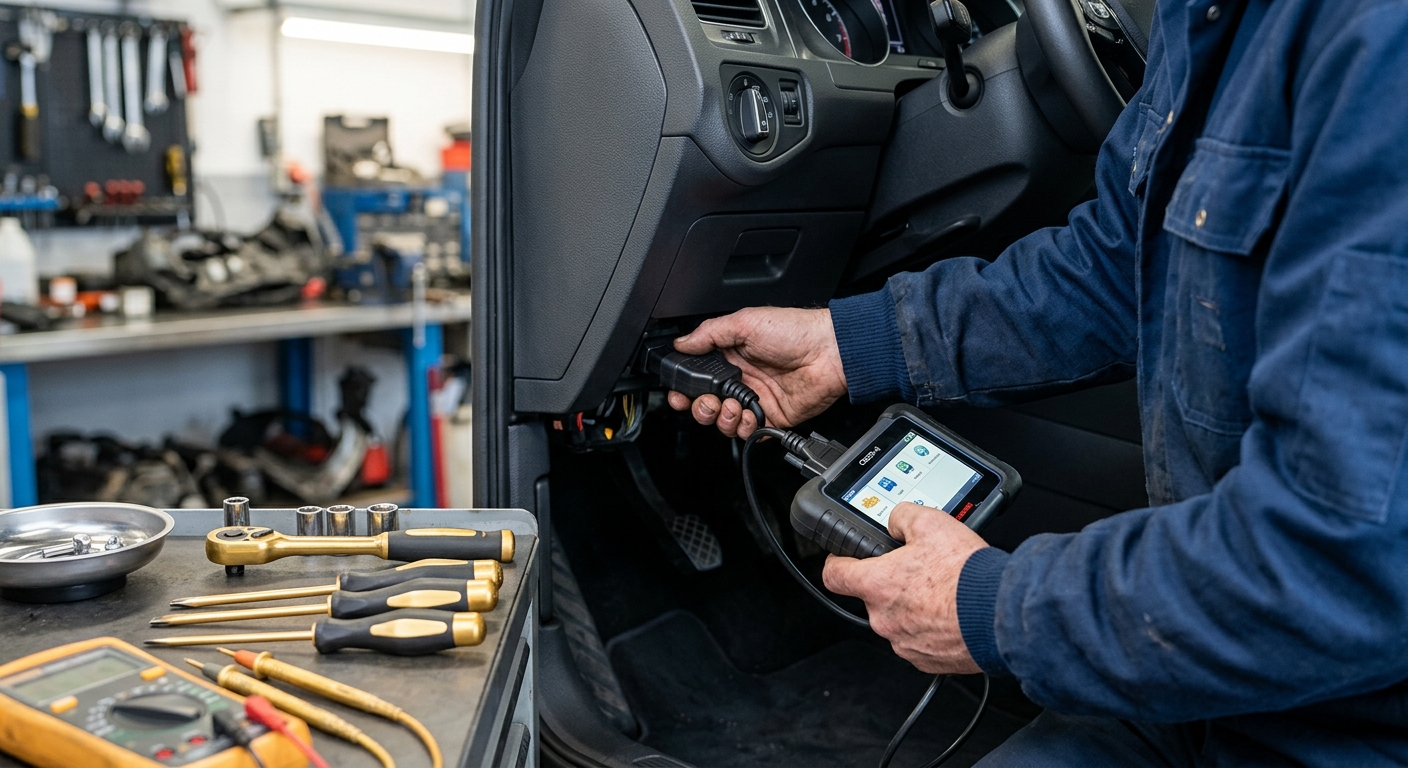
An OBD-II scan reads Diagnostic Trouble Codes (DTCs). These are short codes stored by the vehicle computer when a system detects a fault. DTCs fall into categories: Pxxxx (powertrain), Bxxxx (body), Cxxxx (chassis), and Uxxxx (network/communication). A stored code doesn’t always mean an immediate expensive repair, but unresolved codes—especially for airbags (SRS), ABS, or engine misfires—require attention.
Ask the seller if they’ll let you run a scan. If the scan shows SRS or airbag codes, don’t proceed without a full airbag/SRS check; you can arrange a mobile inspection or a mail-in module reset if appropriate.
Simple table: Common inspection items, what to look for, and likely cause
| Item | What to look for | Possible cause |
|---|---|---|
| Uneven tire wear | Feathering, inner/outer wear | Alignment issues, bad suspension, improper inflation |
| Airbag/SRS light on | SRS warning stays lit after start | Faulty airbag module, clock spring, sensor, or prior deployment |
| Frame damage | Welds, uneven panel gaps, misaligned doors | Collision repair or structural damage |
| Transmission shudder | Rough or delayed shifting | Low fluid, worn clutch (manual), or internal transmission wear |
When to walk away
- Unclear ownership, salvage title, or inconsistent VINs.
- Significant frame damage or rust that compromises structure.
- Persistent SRS/airbag faults with no clear service history—airbag issues can mean the vehicle is not safe.
- Major oil or coolant leaks that the seller won’t address or can’t explain.
Post-inspection steps
- Get written estimates for repairs before you buy. Pricing depends on the vehicle—call (469) 277-7277 for a quote specific to your vehicle.
- Request service records and a VIN history report to verify accident and maintenance history.
- If you find SRS or module faults, consider a professional reset or repair. We offer mobile and mail-in options for airbag module reset services.
Why use a mobile tech in Plano
Mobile inspectors come to the car’s location, saving time and letting you see any issues in context. They have tools to test-drive, scan the computer, and open modules safely. If you need airbag/SRS inspection or module programming, look for certified mobile services—those technicians will test and, when safe and appropriate, reset modules or direct you to the right repair.
For airbag, SRS, and seat belt issues specifically, our vehicle safety system services explain repair and reset options in plain terms: vehicle safety system services. For a full mobile pre-purchase check, see our dedicated service page: pre-purchase vehicle inspection. If electronics or programming are needed, our module programming page explains those services.
FAQ
Q: How long does a pre-purchase inspection take?
A: A thorough mobile inspection usually takes 45–90 minutes depending on vehicle condition and depth of diagnostics.
Q: What is an SRS or airbag module reset?
A: An SRS/airbag module reset clears crash data and stored fault codes from the airbag control module when the system is otherwise healthy. It must be done safely and legally; improper reset can leave the safety system impaired.
Q: If I find fault codes, should I buy the car?
A: It depends on the code. Some codes are minor; others (airbag, ABS, engine misfires) can be costly or unsafe. Get a professional diagnosis and repair estimate before deciding.
Q: Can a mobile technician clear airbag lights on site?
A: Sometimes. If the module and sensors are intact and a safe reset is possible, a trained technician can perform a mobile reset or advise mail-in options. If parts or repairs are required, they’ll explain next steps.
Q: How much does an inspection cost?
A: Pricing depends on vehicle and inspection depth. Call (469) 277-7277 for an exact quote and scheduling.
If you want professional help in Plano, we’ll come to the vehicle, run the full checklist, scan for all DTCs, and explain any safety or SRS concerns in plain terms. Schedule a mobile pre-purchase inspection here: pre-purchase vehicle inspection, or call (469) 277-7277 to discuss the vehicle and get a quote.


