 Skip to content

Direct answer: P0302 for a Dodge means the engine control unit detected a misfire on cylinder 2 (Cylinder 2 Misfire Detected). Fixing it requires methodical diagnosis — confirm the code and freeze-frame data, check ignition and fuel delivery for cylinder 2, test compression and wiring, and only then replace the failed component or have a trusted mechanic perform the needed service.
Key Takeaways
- P0302 dodge means Cylinder 2 Misfire Detected — confirm with a live scan and freeze-frame data.
- Common causes: bad ignition (coil, spark plug), clogged or leaking injector, low compression, vacuum leaks, or wiring/PCM issues.
- Diagnose by swapping coils/injectors, watching misfire counters, measuring fuel pressure, and doing a compression or leak-down test.
- A misfire can damage the catalytic converter and reduce safety — avoid hard driving and get it scanned by a technician.
What P0302 Means in Plain English
The powertrain control module (PCM) monitors crankshaft speed and ignition events. When it notices that cylinder 2 is not producing the expected combustion events, it logs P0302: Cylinder 2 Misfire Detected. That single code only identifies which cylinder is misfiring, not the specific cause.
Who sees P0302 on Dodge models
Drivers may see this code on many Dodge models: p0302 dodge ram 1500, p0302 dodge caravan, p0302 dodge grand caravan, p0302 dodge journey, p0302 dodge charger, and p0302 dodge durango. The diagnostic flow is the same across these models, though cylinder numbering and accessibility vary by engine.
Common causes of P0302 (quick list)
- Ignition: failed coil pack, coil-on-plug, bad spark plug, or poor spark connection.
- Fuel: clogged injector, shorted injector, or low fuel pressure to that cylinder.
- Mechanical: low compression from worn rings, burned valve, or head gasket leak.
- Air: vacuum leak or intake manifold gasket leak near cylinder 2.
- Wiring/controls: damaged injector or ignition wiring, poor connector, or PCM driver fault.
- Sensors: cam/crank sensor issues that upset ignition timing (less common).
Tools and data you’ll need
- OBD-II scanner with live-data and misfire counters (essential).
- Basic multimeter, spark tester, or ignition scope.
- Fuel pressure gauge and a way to isolate injectors (noid light).
- Compression tester or cylinder leak-down kit.
- Basic hand tools and service manual for cylinder numbering and connector locations.
Step-by-step diagnosis (recommended order)
Follow this sequence to find the root cause efficiently. Don’t skip data collection — a wrong guess wastes time and parts.
1. Confirm the code and capture freeze-frame data
Use a scan tool to read stored codes and any freeze-frame or fuel trim data. Note engine load, RPM, coolant temp, and whether the misfire is intermittent or constant. Also check for related codes (O2 sensors, fuel trims, cam/crank faults).
2. Look at live misfire counters
Run the engine and watch the per-cylinder misfire counters. If only cylinder 2 increases, the fault is confined. If other cylinders also show misfires, consider shared causes (fuel rail pressure, vacuum leaks).
3. Swap ignition components to isolate
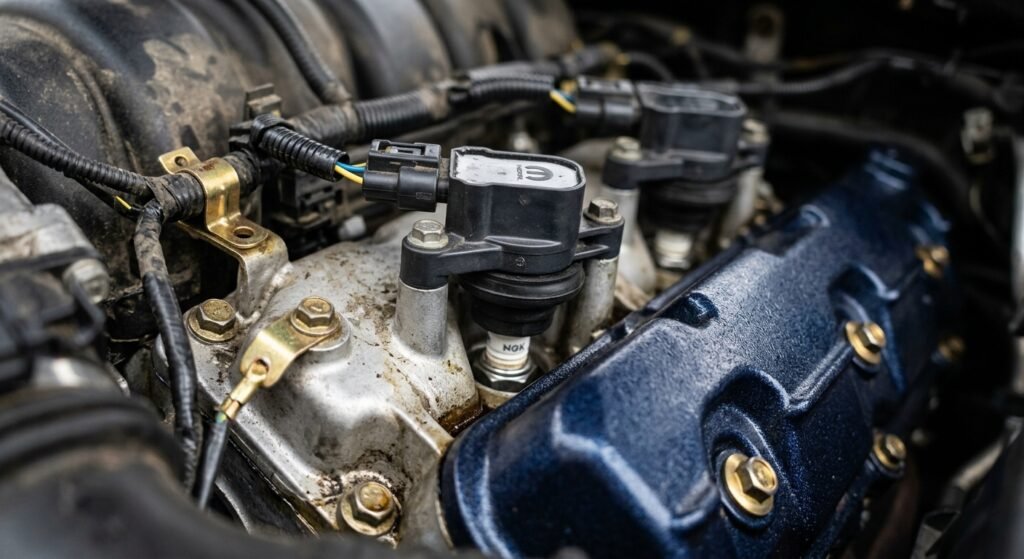
If the engine uses coil-on-plug units, swap the coil from cylinder 2 with another cylinder (for example cylinder 3). Clear codes, run the engine, and see if the misfire follows the coil. If it does, replace the coil. Repeat with the spark plug if needed.
4. Test the injector
Use a noid light to confirm the injector is being pulsed. Listen with a mechanic’s stethoscope for injector clicking. If pulsed but suspect flow, swap the injector with another cylinder and watch misfire counters. If misfire moves with the injector, replace or have the injector serviced.
5. Check fuel pressure and delivery
Low rail pressure or a starved rail can cause single-cylinder misfires, particularly near the end of the rail. Attach a fuel pressure gauge to the test port and compare readings to spec for your engine while cranking and at idle. If pressure is low, diagnose the fuel pump, filter, regulator, or a collapsed feed line.
6. Measure compression (or do a leak-down)
Low compression on cylinder 2 points to mechanical issues: worn piston rings, burned valve, or head gasket failure. A compression tester or leak-down test will tell you if combustion sealing is the problem. If compression is low, inspect the valve train and head gasket.
7. Scan for related sensors and timing
Verify camshaft and crankshaft sensor data and timing. If timing is off due to a skipped timing belt/chain tooth or tensioner issue, misfires will occur. Check variable valve timing solenoids where applicable and ensure the timing components are healthy.
8. Inspect wiring and connectors
Look for damaged insulation, corroded pins, or poor grounds on the injector and coil circuits. Wiggle tests while watching live data can reveal intermittent shorts or opens. Repair or replace damaged harness sections per manufacturer guidance.
Quick reference table: common causes vs fastest test
| Likely cause | Fastest test | If test fails |
|---|---|---|
| Bad coil | Swap coil with another cylinder | Replace coil |
| Bad plug | Inspect and swap spark plug | Replace plug |
| Bad injector | Noid light / swap injector | Service or replace injector |
| Low compression | Compression or leak-down test | Inspect valves, rings, head gasket |
| Fuel pressure issue | Fuel pressure gauge at rail | Diagnose pump/regulator/filter |
| Wiring/PCM | Wiggle tests / multimeter | Repair harness / test PCM |
Symptoms drivers notice
- Rough idle or shaking at idle
- Loss of power, hesitation, or stumble during acceleration
- Check Engine Light illuminated — steady or flashing (flashing indicates severe misfire that can damage catalytic converters)
- Increased fuel smell or poor fuel economy
Is it safe to keep driving with P0302?
Short answer: limited driving for a short distance at low load may be OK, but caution is required. A severe or flashing misfire can rapidly overheat the catalytic converter, causing expensive downstream damage and a potential exhaust fire risk. If the CEL is flashing or the vehicle is running very rough, stop driving and have it towed to a shop.
When to call a professional
- If misfire persists after basic checks (coil/plugs/injector swaps).
- If compression is low on cylinder 2 — this indicates internal engine work or a diagnostic shop with machine-shop options.
- If you see multiple codes or suspect PCM/driver faults or wiring harness damage.
- If you’re unsure how to safely do fuel pressure or compression testing.
For buyers, a pre-purchase vehicle inspection can reveal intermittent misfires and underlying causes before you buy. Consider a professional inspection: pre-purchase vehicle inspection.
Model-specific notes
While the diagnostic order remains the same, engines with coil-on-plug vs. distributor systems change which parts you test first. On many Dodge engines the cylinder numbering and the placement of coils/injectors vary — check a service manual for your Ram 1500, Caravan, Charger, Durango or Journey for the correct cylinder map before swapping parts. If you’re diagnosing multiple faults or safety systems, remember a specialist handles airbags, SRS, and related systems; learn more about our vehicle safety services at vehicle safety system services.
Estimated time-to-diagnose
A competent technician with a good scanner can often isolate the cause in 1–3 hours using swaps and live data. Mechanical causes requiring head removal or valve work take longer and involve machine-shop time.
FAQ
Q: What exactly does P0302 mean?
A: P0302 means “Cylinder 2 Misfire Detected” — the PCM saw combustion events missing in cylinder 2. It does not tell you who or what caused the misfire.
Q: Will replacing the spark plug fix P0302?
A: Sometimes. If the spark plug is worn or fouled, replacing it may stop the misfire. Always confirm by checking misfire counters and, if possible, swapping parts to see if the fault follows the component.
Q: Can a misfire damage my catalytic converter?
A: Yes. Unburned fuel entering the exhaust from a misfiring cylinder can overheat and damage the catalytic converter. Avoid driving a vehicle with a flashing CEL or severe misfire.
Q: My misfire happened after filling with cheap gas — could that cause P0302?
A: Contaminated or poor-quality fuel can foul injectors or plugs and cause temporary misfires. If suspected, try a fuel system cleaning and verify with a scan. Persistent misfires should still be diagnosed properly.
Q: How do I know if the PCM or wiring is the problem?
A: If you’ve swapped coils and injectors and the misfire stays on cylinder 2, but the wiring tests good, the PCM or driver circuit could be at fault. This is less common; seek a professional with wiring diagrams and scope tools.
LockNCal primarily handles vehicle safety and security systems (airbag/SRS module resets, ADAS calibration, seat belt and clock spring services). For engine misfires like P0302, use the guidance above and see a trusted mechanic or diagnostic shop for repairs.
Schedule an appointment or call (469) 277-7277 if you need help with vehicle safety systems, inspections, or to arrange a diagnostic service.


