 Skip to content

BMW Seat Belt Replacement: Costs, Safety Risks, and How to Choose the Right Service
If you’re searching for BMW seat belt replacement, you’re probably dealing with one of a few serious issues: a belt locked after a crash, frayed webbing, a BMW seat belt not retracting, a pretensioner that deployed, or a dashboard SRS / airbag warning light. You may also be comparing OEM vs aftermarket BMW seat belt replacement and trying to understand parts and labor costs.
As a safety-focused technician serving DFW (including Kennedale TX), I’ll walk you through when a BMW seat belt truly needs to be replaced, what typical costs look like, and how to choose a provider who treats restraint systems as critical safety components—not cosmetic parts.
Important safety warning: Modern BMW restraints use pyrotechnic pretensioners and SRS explosives. DIY removal, probing connectors, or trying to reuse deployed parts can be dangerous and may prevent the system from protecting you in a future crash.
When Does a BMW Seat Belt Need to Be Replaced?
Locked retractor after a collision
A common complaint is a BMW seat belt locked after an accident—the belt stops extending because the internal retractor and/or pretensioner has activated. In many crash scenarios, the safest option is complete seat belt replacement (often including the retractor and pretensioner assembly), not forcing the mechanism to move again.
- Sign: Belt will not pull out or only moves a tiny amount.
- Cause: Internal lock or pretensioner deployment.
- Buyer takeaway: Treat this as a crash-damaged safety component, not a simple mechanical jam.
Frayed or cut webbing
If the seat belt webbing is frayed, cut, melted, or heavily worn, its strength is compromised. On a BMW, this can result from normal wear at the B-pillar, rubbing on sharp trim, or contact with broken glass during a crash.
- Any exposed threads, cuts, or abrasions are a replacement-level defect.
- Glue, tape, or stitching repairs are unsafe on crash-critical webbing.
- After a significant crash, even if the webbing “looks okay,” internal fibers may be weakened.
Slow retraction or failure to latch properly
A BMW seat belt not retracting or failing to latch correctly is more than an annoyance. A slack or twisted belt may not position your body correctly in a collision.
- Symptoms: Belt hangs loose, retracts very slowly, or the buckle clicks intermittently.
- Risks: Increased forward movement in a crash; possible failure to restrain properly.
- Next step: Have a professional evaluate replacement versus limited mechanical cleaning. When in doubt, replacement is the safer option.
Pretensioner deployment and SRS warning lights
If the vehicle has been in a crash or you see an SRS / airbag warning light, there may be a BMW seat belt pretensioner replacement issue, even if the belt still moves.
- A deployed pretensioner can “preload” the belt once and is not designed to be reused.
- After deployment, some systems still allow the belt to move, hiding the damage from casual inspection.
- A proper Vehicle Diagnostic is recommended to confirm which SRS components were triggered.
Damage from prior repairs, moisture, or wear
Seat belts can also be compromised by water intrusion, prior body repairs, or mis-routed belts in rebuilt vehicles.
- Corrosion inside the retractor or pretensioner housing.
- Belt routed over, under, or behind trim panels incorrectly.
- Evidence of non-factory bolts, spacers, or missing hardware.
In these situations, a seat belt replacement ensures that the belt, retractor, and mounting points are restored to a safe configuration.
Why Driving with a Faulty BMW Seat Belt Is a Safety Risk
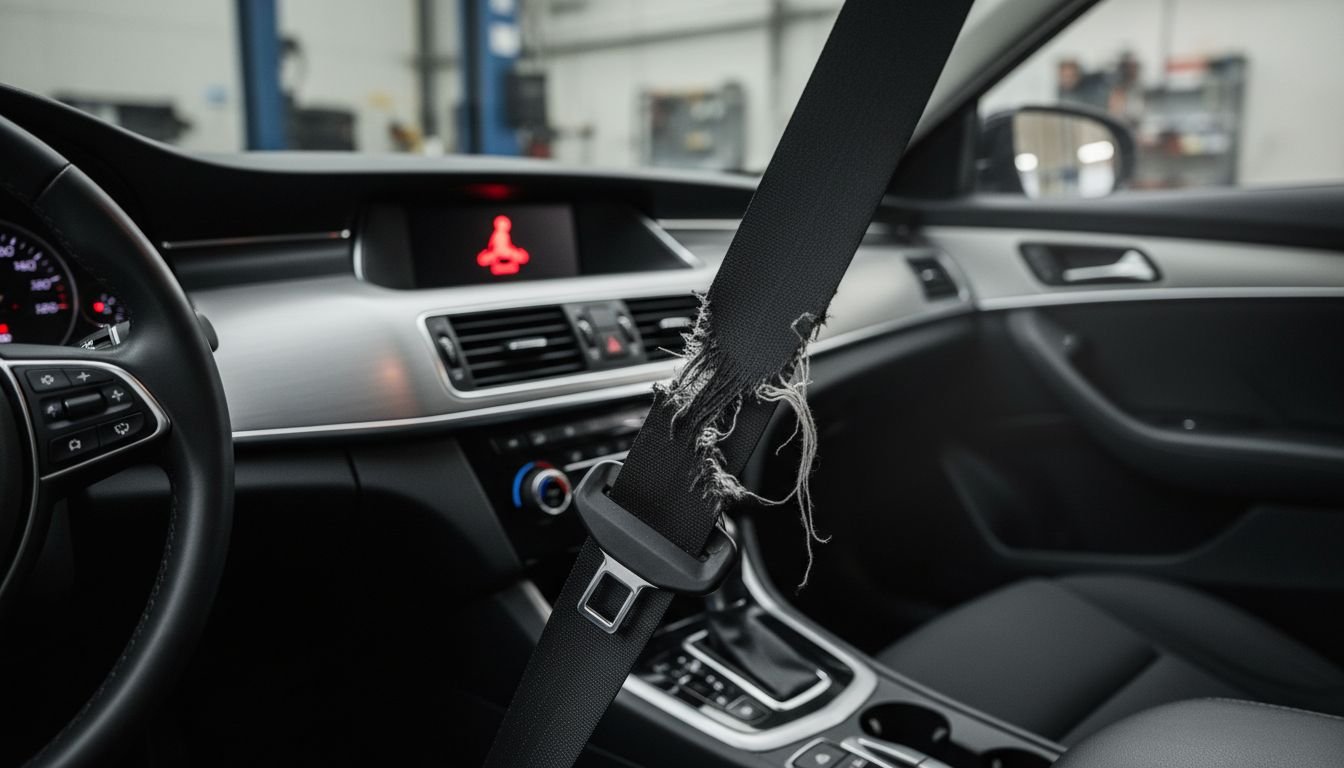
Driving with a questionable seat belt is not a “wait and see” problem; it’s a core crash safety issue. Even if the car still drives fine, the restraint system may no longer protect you as designed.
How seat belts work with airbags and pretensioners
On late-model BMWs, the seat belt, pretensioner, load limiter, and airbags are designed to work together:
- The pretensioner rapidly tightens the belt at the first milliseconds of a crash.
- The load limiter controls how much force your chest experiences.
- The airbags deploy in sync with belt tension and occupant position.
Any fault in the seat belt assembly can change how these components interact.
Why post-crash components may no longer protect correctly
Once a pretensioner has fired or a belt has experienced major load, internal parts can be stressed or deformed even if they still move. In a future collision, that same component may:
- Deploy late or not at all.
- Lock prematurely or fail to lock when needed.
- Allow more forward movement than the system was designed to permit.
This is why professional shops often recommend BMW seat belt replacement after certain types of crashes instead of relying on visual inspection alone.
Legal and liability concerns after an accident repair
If a vehicle has been repaired after a collision—especially a salvage or rebuilt BMW—using questionable restraint repairs (like undocumented rewebbing or module “hacks”) can create liability issues later.
- Insurance adjusters and future buyers may question the quality of the repair.
- Improperly restored safety systems can impact claim outcomes in a subsequent accident.
- Documented Seat Belt Replacement and Pre-Tensioner Replacement by a competent shop offer stronger peace of mind.
For more on post-collision concerns, see: crash data explained and what buyers should verify after an accident.
DIY dangers around SRS explosives and hidden damage
BMW pretensioners are pyrotechnic devices. Attempting DIY work around them can be dangerous:
- Risk of accidental deployment while probing or applying power.
- Static electricity or incorrect testing methods can trigger components.
- Hidden SRS faults may only be visible through proper diagnostics.
For these reasons, restraint work should be coordinated through professionals who can perform or coordinate a Vehicle Diagnostic and proper Seat Belt Replacement and, where necessary, Pre-Tensioner Replacement.
BMW-specific seat belt failure modes, OEM vs aftermarket replacements, typical parts & labor ranges, why replacement is often safer than rewebbing after crash deployment, and steps to find the right service
This section is your buyer’s quick guide to how BMW restraints typically fail, how to think about OEM vs aftermarket options, what typical BMW seat belt replacement cost ranges look like, and how to select a safe provider.
Common BMW seat belt and pretensioner failure patterns
Across late-model BMWs, we commonly see:
- Front belt retractor lock after moderate crash – belt will not extend or retract properly.
- Pretensioner deployment with SRS light on – belt may still move but internal device has fired.
- Slow, sticky retraction – often worse in cold weather or after liquid spills.
- Webbing edge wear at B-pillar and buckle area – progressively frays over time.
Any combination of these symptoms is a strong indicator that replacement, not spot “repair,” is the safer path.
OEM vs aftermarket seat belt assemblies: pros, cons, and fitment concerns
| Option | Pros | Cons / Risks |
|---|---|---|
| OEM BMW seat belt replacement |
|
|
| Aftermarket BMW seat belt replacement |
|
|
| Questionable “bargain” or reworked belts |
|
|
Buyer guidance: For safety-critical systems, lean toward OEM or high-quality aftermarket assemblies from reputable sources. Be extremely cautious with ultra-cheap or “repaired” restraint parts of unknown origin.
Typical BMW seat belt replacement cost ranges
Actual cost depends on model, year, trim, location (front vs rear), and whether the pretensioner is integrated and has deployed. The following are rough, non-binding ranges to help you budget:
- Front BMW seat belt replacement (single position): roughly $350–$850+ parts and labor combined in many markets.
- Rear BMW seat belt replacement (single position): often $250–$650+, depending on access and configuration.
- When pretensioners or multiple belts are involved: it’s not unusual for totals to reach $800–$1,500+ or more on complex models.
Disclaimer: These are general ranges only, not quotes. Exact pricing varies by BMW model, year, restraint position, trim level, OEM vs aftermarket parts, and whether crash components deployed.
Why replacement is often safer than rewebbing after crash deployment
You may see ads offering seat belt rewebbing or “reset” services by mail. While rewebbing may cosmetically improve the belt, it does not guarantee that the pretensioner, retractor, and internal energy management parts are functioning as designed.
- After a crash, multiple internal components may have absorbed energy.
- Simply sewing on new webbing does not restore those hidden parts.
- There is often no way for the vehicle owner to verify proper crash performance afterward.
For safety-critical systems, a documented Seat Belt Replacement and, where needed, Pre-Tensioner Replacement is usually the safer long-term decision than relying on low-cost rewebbing after a deployment.
Questions to ask before choosing a service provider
Before committing to BMW seat belt work, ask:
- Are you replacing the belt assembly with a new or certified part, or just rewebbing?
- How do you confirm whether the pretensioner has deployed?
- Can you coordinate or recommend a proper Vehicle Diagnostic if the SRS light is on?
- Will you document which components were replaced for my records and future buyers?
- Do you clearly explain parts, labor, and any additional work if SRS faults remain?
BMW Seat Belt Replacement Cost: What Owners Usually Pay
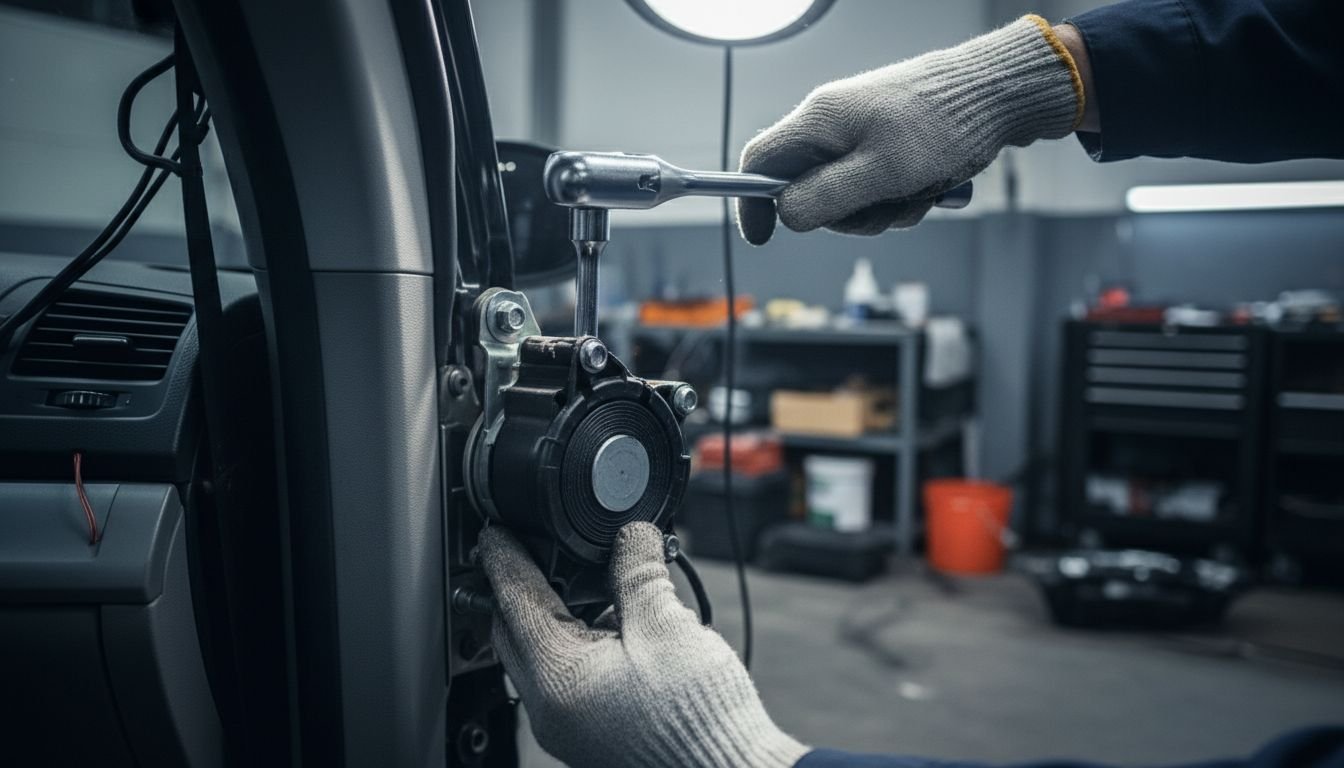
When budgeting for BMW seat belt replacement cost, you’re really looking at three major variables: parts, labor, and whether a pretensioner or related SRS components are involved.
Front seat vs rear seat cost differences
Front belts tend to be more complex and more frequently paired with pretensioners and advanced sensors.
- Front positions: Higher parts cost; sometimes more labor for trim removal.
- Rear positions: Often lower parts cost, but access can be time-consuming on some models.
Parts-only vs parts-and-labor pricing
Here is a simplified look at how costs typically break down:
| Cost Component | What It Covers | Typical Range (Estimate Only) |
|---|---|---|
| Parts – Standard belt assembly | Webbing, retractor, buckle, and mounting hardware (without pretensioner or with non-deployed unit) | $150–$500+ per position |
| Parts – With integrated pretensioner | Complete seat belt plus pretensioner where combined | $250–$700+ per position |
| Labor – Straightforward access | Seat belt removal/installation, basic trim removal | $100–$250+ per position |
| Labor – Complex access or diagnostics | Additional interior disassembly, routing, verifying SRS faults | $200–$400+ additional, depending on complexity |
Note: These figures are illustrative only and not specific quotes. Actual pricing in DFW or Kennedale TX will vary by vehicle and provider.
When pretensioner replacement increases the price
Once a pretensioner has deployed, the cost typically rises because:
- The assembly is more expensive than a simple belt and retractor.
- Additional diagnostics may be needed to clear SRS fault codes properly.
- Other related components (buckles with sensors, wiring, modules) may require inspection.
Why the cheapest option can cost more later
Choosing the lowest-price option—especially reworked or undocumented belts—can be more expensive in the long run:
- Potential repeat repairs if SRS lights remain or return.
- Difficulty proving proper repairs to future buyers or insurers.
- Higher safety risk, which no savings can justify.
A transparent, safety-first approach that includes proper Seat Belt Replacement, and where needed Pre-Tensioner Replacement and Vehicle Diagnostic, is a better long-term value.
Repair, Rewebbing, or Replacement: Which Option Makes Sense?
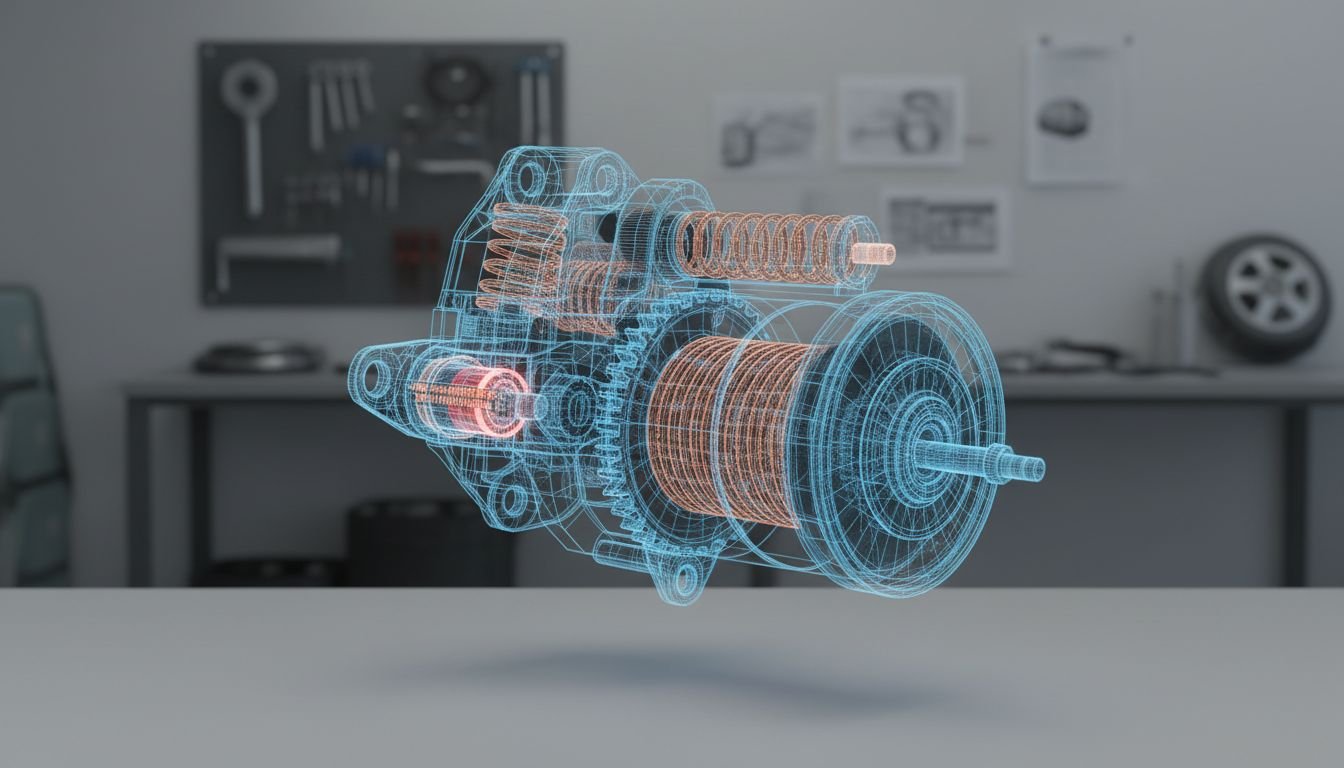
You’ll see many terms online—“repair,” “reset,” “reweb,” “rebuild.” From a safety perspective, it’s critical to understand the differences and why replacement
When rewebbing may look cheaper upfront
Seat belt rewebbing typically focuses on replacing the fabric while leaving the original retractor and pretensioner. The appeal is cost: it often appears significantly cheaper than full replacement.
But unless the provider can prove that the internal pretensioner and locking mechanisms are undamaged and functioning to original design, you’re taking on unknown risk.
Why replacement is the safer choice after crash deployment
After a meaningful crash where pretensioners or airbags may have fired:
- The safest standard is to replace the affected belt assemblies (and pretensioners) rather than trying to cosmetically restore them.
- Even if rewebbing is technically possible, it rarely matches the safety confidence of a documented replacement.
- In a second crash, those components need to work exactly once—correctly.
When a diagnostic is needed before replacing parts
If you have an SRS or airbag warning light, a Vehicle Diagnostic helps confirm:
- Which seat belt positions or pretensioners were flagged.
- If any sensors, modules, or wiring faults are present.
- Whether additional components beyond the belts require attention.
This prevents guessing and helps avoid replacing parts that are not actually the root cause.
Approved solutions to mention: Seat Belt Replacement, Pre-Tensioner Replacement, Vehicle Diagnostic
For safety-critical restraint concerns, focus on three core services:
- Seat Belt Replacement: Replacing damaged or crash-exposed belt assemblies with properly matched units.
- Pre-Tensioner Replacement: Replacing deployed or faulty pretensioner devices instead of trying to reuse them.
- Vehicle Diagnostic: Using proper tools to read SRS faults and verify which components must be addressed.
Need help evaluating a faulty restraint system? Start with a professional Vehicle Diagnostic so you’re making decisions based on data, not guesswork.
How to Find the Right Seat Belt Service in Kennedale TX
In Kennedale TX and the greater DFW area, you’ll see a range of offerings—from full-service collision centers to mobile specialists and mail-in belt services. Your goal is to choose a provider that treats restraint systems as life-critical components.
Check fitment, safety process, and parts quality
Use this quick checklist when evaluating a provider:
- They can clearly identify the exact belt assembly by VIN or part number.
- They prioritize new or high-quality replacement assemblies, not unknown used parts.
- They explain how they verify correct routing, mounting torque, and retractor alignment.
- They are transparent about whether they handle diagnostics in-house or coordinate with a trusted partner.
To verify your specific BMW configuration, you can use a VIN-based lookup like the LockNCal VIN decoder to understand your exact model and restraint setup.
Ask whether SRS faults and pretensioners are evaluated
Any provider you choose should acknowledge that seat belts, pretensioners, and SRS modules work together. If your SRS light is on, the provider should recommend or coordinate a Vehicle Diagnostic instead of ignoring it.
Avoid shops that treat deployed restraints like cosmetic repairs
Be cautious of any shop that:
- Offers to “clear the light” without explaining which components were repaired or replaced.
- Focuses only on appearance (new webbing color, etc.) without discussing crash performance.
- Cannot document what was replaced versus reset.
For broader insight into post-collision risks, see how hidden airbag and ADAS issues can linger after collision repairs in Kennedale.
Look for transparent estimates and clear service scope
Good providers will:
- Break down parts vs labor on your estimate.
- Explain when Pre-Tensioner Replacement is needed.
- Clarify what’s covered in a Vehicle Diagnostic and what’s not.
- Be honest about which vehicle makes they regularly service and where they may refer out specialized work.
Why Buyers Choose Safety-First Replacement Over Shortcuts
When it comes to BMW seat belt replacement, most informed buyers in DFW ultimately choose a safety-first path instead of the cheapest shortcut.
Better peace of mind after a crash
Knowing that compromised or deployed components were replaced—not patched—provides real peace of mind every time you buckle up, especially if the vehicle will carry family or passengers.
Reduced fitment and liability concerns
Proper fitment by model/year with the right belt assemblies helps ensure:
- Correct routing and belt geometry.
- Predictable interaction with airbags and pretensioners.
- Documented work that stands up to future inspections or resale.
Stronger case for OEM-quality replacement in safety-critical systems
In many cases, choosing OEM or equivalent-quality assemblies gives you the closest match to the original crash-tested configuration. When lives are at stake, that’s often worth more than the savings from a questionable bargain.
For vehicles that have already been rebuilt or salvaged, see also: why ADAS and post-collision safety issues can remain after a rebuilt vehicle repair.
Next Steps If You Suspect a Seat Belt or Pretensioner Problem
If you’re in Kennedale TX or the surrounding DFW area and you suspect a BMW seat belt or pretensioner issue, it’s time to move from research to action.
Start with a professional inspection
If you have a locked belt, frayed webbing, or a non-retracting BMW seat belt, schedule a professional inspection. Do not keep driving long-term with a known restraint fault.
Replace damaged belt assemblies instead of guessing
When a belt has been compromised by crash forces, visible damage, or pretensioner deployment, the safer path is usually Seat Belt Replacement—and if needed, Pre-Tensioner Replacement—with properly matched parts.
Consider a Vehicle Diagnostic if warning lights are present
If the SRS or airbag light is on, ask for a comprehensive Vehicle Diagnostic. This will help identify whether only the belts are affected or if additional SRS components need attention before you consider the system safe.
CTA: Call / request quote / verify available service options
In Kennedale TX and the greater DFW area, choose a safety-first provider that:
- Takes seat belt and pretensioner issues seriously.
- Explains Seat Belt Replacement, Pre-Tensioner Replacement, and Vehicle Diagnostic options clearly.
- Is transparent about parts quality, fitment, and costs.
Before you authorize any BMW seat belt work, use your VIN with a tool like the VIN decoder to confirm the exact configuration, then speak with a provider who prioritizes safety over shortcuts.
FAQs: BMW Seat Belt Replacement for Safety-Focused Buyers
1. How much does BMW seat belt replacement usually cost?
For many BMW models, a single front seat belt replacement (parts and labor) can fall in the $350–$850+ range, with rear positions sometimes slightly lower. Costs rise when integrated pretensioners or multiple belts are involved. Exact pricing depends on your BMW model, year, position, trim, and whether components deployed in a crash.
2. Can a BMW seat belt be reused after a crash?
If the belt or pretensioner has taken crash load or deployed, reuse is generally not recommended. Even if the belt appears intact, internal parts may no longer perform correctly. A Vehicle Diagnostic and, when indicated, Seat Belt Replacement and Pre-Tensioner Replacement provide a safer path.
3. What happens if the pretensioner deployed?
Once a pretensioner has deployed, it is designed for a single event. It should be treated like an airbag: used once and then replaced. Continuing to drive with a deployed pretensioner can leave you without full protection in a future collision.
4. Is OEM better than aftermarket for BMW seat belt replacement?
OEM BMW seat belt replacement usually offers the closest match to the vehicle’s original crash-tested configuration and integration. High-quality aftermarket parts can be acceptable in some cases, but bargain or reworked belts with unknown origins are higher risk. For safety-critical systems, OEM or equivalent-quality assemblies are strongly preferred.
5. Can I replace a BMW seat belt myself?
While physically removing a belt may seem straightforward, modern BMW restraints integrate with SRS explosives and pyrotechnic pretensioners. DIY work risks accidental deployment, incorrect routing, or missed faults. Professional replacement and diagnostics are strongly recommended.
6. Will a bad seat belt trigger an SRS or airbag warning light?
Yes, a faulty seat belt, pretensioner, or related wiring can trigger the SRS or airbag light. However, that same warning can also be caused by other SRS components. A Vehicle Diagnostic is the right first step to pinpoint the problem before replacing parts.
7. How do I choose the right seat belt replacement service in Kennedale TX or DFW?
Look for a provider that:
- Explains Seat Belt Replacement, Pre-Tensioner Replacement, and Vehicle Diagnostic clearly.
- Uses quality parts matched to your VIN and model/year.
- Is transparent about pricing and which components are being replaced.
- Treats restraint systems as critical safety components, not cosmetic items.
In Kennedale TX and the wider DFW area, that safety-first mindset is what you should prioritize when you choose who handles your BMW’s restraints.


