 Skip to content

BMW Module Programming: Costs, Risks, Dealer vs Independent Options, and What McKinney TX Drivers Should Know
As an auto safety technician in McKinney TX / DFW representing LockNCal, I talk to a lot of drivers who start researching bmw module programming after a no-start, a failed control module, or an electrical issue that just will not go away. This guide is written to help you understand your options, the real risks, and when it makes sense to start with a Vehicle Diagnostic before committing to any Module Programming work.
Important scope note: LockNCal focuses on American and Japanese vehicles. We do not advertise BMW or European-brand programming as a shop capability online.
If you drive a vehicle within our supported scope in North Texas, you can see our local service coverage here: LockNCal – McKinney TX Service Area.
What BMW Module Programming Means — and When Owners Start Looking for It
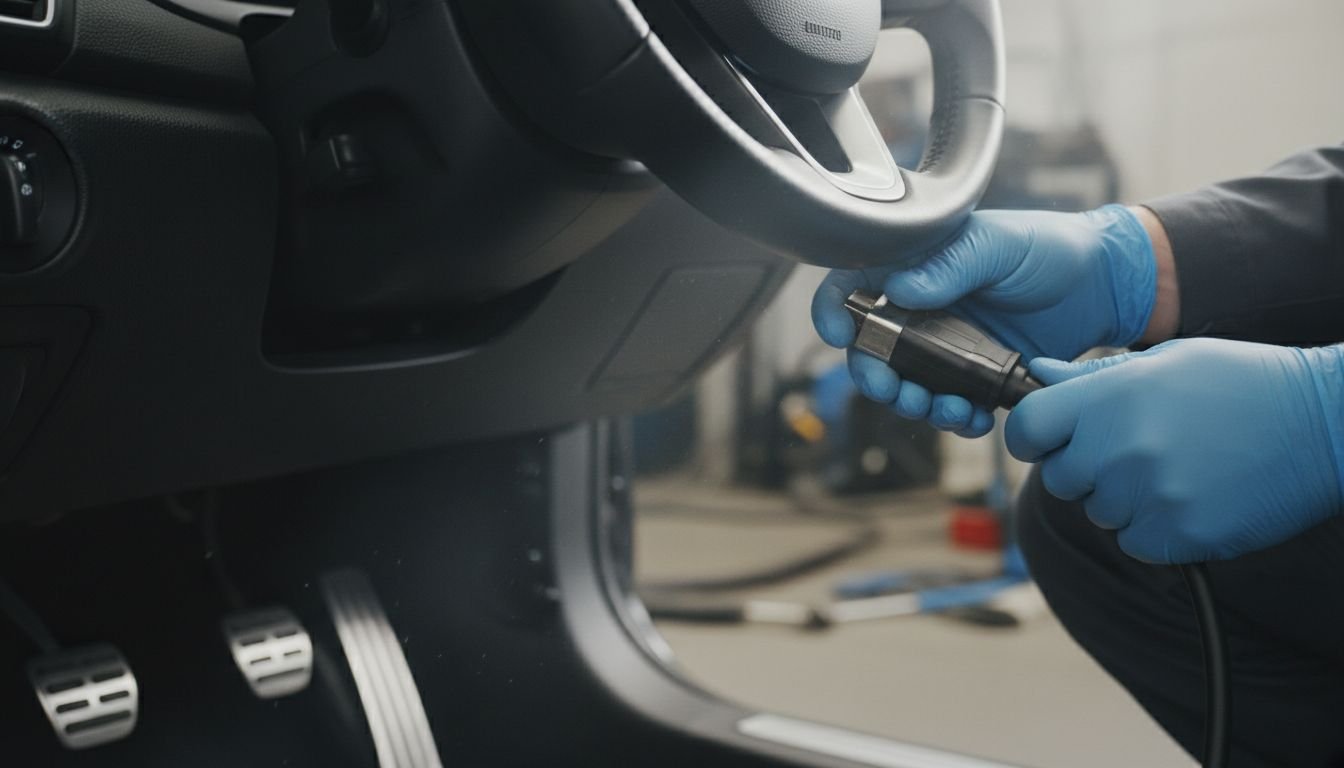
When drivers search for bmw module programming, they are usually dealing with a warning light, a feature that stopped working, or a vehicle that will not start after a repair. Under the hood (and inside the dash), modern BMWs use multiple control modules that talk to each other over a network. When one of these is replaced, updated, or loses communication, the car may require specialized software work before it behaves correctly again.
In plain English, Module Programming is the process of loading the correct software and configuration into a control unit so it matches your exact vehicle, options, and security systems. With BMWs, owners often hear several related terms that can be confusing:
- Programming – Writing or updating the core software inside a module (for example, the engine control unit after replacement). This is where things like an ECU update or full flash typically fall.
- Coding – Adjusting configuration and options inside a module that already has the correct base software. Module coding vs programming: think of coding as turning specific features on/off or tailoring the behavior for your exact equipment package.
- Software updates – Applying newer factory software to fix bugs, improve drivability, or resolve known communication issues. This is often part of BMW control module programming during dealer or specialist visits.
- Initialization / adaptation – Teaching a new or reset component its “home” positions or baseline values (for example, steering angle sensor calibration, ride height calibration, or window initialization after a regulator replacement).
Common triggers that send BMW owners online looking for help include:
- Replacement control module after an internal failure, water intrusion, or short.
- Used module swap to save money on a replacement – this is called used module programming when a donor unit must be matched to your car.
- ECU update or control unit software update recommended by a dealer or bulletin.
- Communication/network faults where one or more modules drop off the car’s data bus and cause multiple warning lights.
- No-start or feature loss after a module replacement, battery change, or electrical repair.
Before paying for any vehicle module programming service on a BMW, it is critical to confirm that the real issue is the module itself, not a wiring, power, or network problem. That is where a professional Vehicle Diagnostic can save you time and money.
The Risks of Getting BMW Module Programming Wrong
BMW electronics are not forgiving when programming is done incorrectly. While every vehicle platform is different, the risk categories are similar across brands – including the American and Japanese vehicles LockNCal services in McKinney TX and the wider DFW area.
Key risks buyers should understand:
- Wrong part number or compatibility – If the replacement module is not the correct part number or compatible supersession, it may refuse to program, fail to communicate, or cause new faults. That means you pay labor twice and still need another part.
- Interrupted voltage during flash – Programming requires stable battery support. If voltage drops during a flash, the software can corrupt. A “bricked” module may become unusable, even if it was brand new.
- Corrupted software or incomplete update – Losing communication during an update, or using the wrong procedure, can leave a module stuck in boot mode or unable to talk to other systems.
- Immobilizer and security issues – BMWs and other late-model vehicles integrate modules into the anti-theft system. If programming is incomplete or mismatched, the vehicle may crank but not start, or refuse to recognize the key.
- Safety system faults – Modules that talk to ABS, stability control, steering, or SRS airbag systems can trigger serious safety issues if incorrectly programmed or coded.
- Repeat labor and wasted parts cost – Every failed attempt at programming or incorrect part choice adds more labor time and may permanently damage modules.
Critical safety warning: SRS/airbag systems contain explosive components. Airbags, pretensioners, and some inflators are literally small pyrotechnic devices. DIY attempts to repair, clear, or code SRS modules can cause unintended deployment, personal injury, or non-functioning airbags in a crash. If you are researching safety-related options, review this detailed article on airbag module reset options and the risks of DIY crash repair.
Also understand that generic consumer scan tools and phone apps are often limited to basic code reading and simple coding. They usually cannot perform full programming or ECU updates safely, and they rarely provide the voltage support, security access, or validations required for a professional result.
Explain Common BMW Module Programming Use-Cases, Risks, Warranty, Dealer vs Independent, and Cost/Turnaround
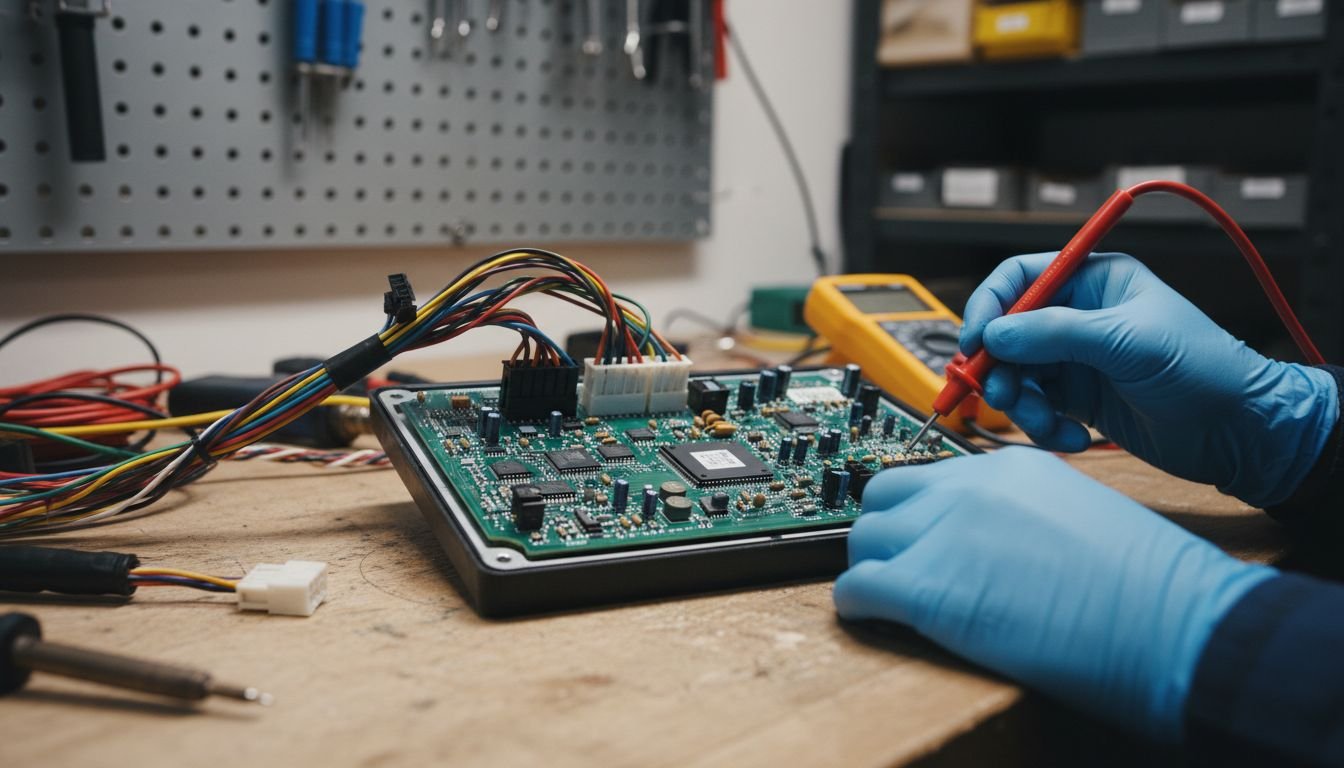
Common use-cases buyers ask about
While the brand details differ, BMW owners and other late-model drivers in North Texas usually ask about the same situations:
- Replacement module after failure – A control unit fails from age, heat, or internal damage. A new or remanufactured module may require Module Programming and sometimes coding or adaptation.
- Swapping in a used module – Buyers try to save money with a salvage-yard or used unit. On many platforms, used module programming is limited by security, previous coding, or vehicle-specific data already burned into the module.
- ECU or control unit software updates – A vehicle may have a known drivability or communication issue that’s addressed by an updated software version from the manufacturer.
- Post-repair configuration after electrical work – After installing new components (for example, steering racks, ABS pumps, or body control modules), the system may need coding, calibration, or initialization to restore full function.
- Restoring functions after communication/module faults – A module dropping off the network can cause multiple system errors. Once power, grounds, and wiring are confirmed, programming or replacement may be required.
Warranty and liability considerations
Before approving any BMW control module programming or comparable work on another vehicle, you should clearly understand how warranty and liability will be handled:
- Vehicle age and mileage – Older, high-mileage vehicles may have more brittle wiring, corroded connectors, or intermittent power issues that complicate programming and reduce warranty coverage.
- Aftermarket parts and prior modifications – Non-OEM electronics, audio systems, or performance tuners can interfere with communication, making outcomes less predictable.
- Used modules – Many shops will only warranty labor when working with customer-supplied used modules, not the part itself. If the unit is locked, wrong, or fails mid-flash, you may need to purchase another module.
- Ask specifically what is covered – Some facilities warranty only the labor, others offer coverage on labor plus a new part they supply. Very few will guarantee programming success on a used or questionable module.
Always ask: “Is your warranty on labor only, on the module itself, or on programming success?” The answer matters.
Dealer vs independent vs DIY
When comparing dealer vs independent programming and DIY options, here is how most buyers should think about it:
- Dealer
OEM-level access, factory software, and direct technical support. Typically the highest cost with structured processes and documentation. Scheduling can be tight, and hourly labor rates are often the highest in the market. - Independent specialist
A qualified independent shop with the right tools can often provide faster scheduling and competitive pricing, with comparable capabilities for many platforms. Capability varies widely, so you must verify experience, equipment, and warranty policies before approving work. - DIY
Lowest upfront cost if you already own tools, but usually the highest risk. Wrong cables, unstable laptop power, no battery support, or pirated software can destroy modules and create expensive no-start situations. For anything touching drivability, brakes, steering, or SRS, DIY programming is rarely a safe choice.
Cost and turnaround expectations
Shops that advertise exact BMW programming prices online are often oversimplifying the job. A realistic approach is to understand the factors that drive cost and timing:
- Module type – Programming an engine control module or transmission unit is typically more involved than a simple comfort or accessory module.
- Vehicle generation and complexity – Newer platforms, more options, and more integrated systems usually mean more time on the laptop and in post-program checks.
- Part status – New OEM module vs remanufactured vs used. Used components often require extra diagnostic time and carry higher failure risk.
- Need for diagnostics first – If there is any doubt about wiring, power, grounds, or network health, a Vehicle Diagnostic should come before approving programming. That adds time up front, but usually saves money by avoiding misdiagnosed modules.
Instead of quoting fake numbers, the honest answer is: programming cost and turnaround depend on module type, vehicle generation, part status, and whether diagnostics are needed first. Many straightforward jobs on supported vehicles can be handled with same-day availability where scheduling allows, but there are no guaranteed 24-hour outcomes.
Dealer vs Independent Service: What Smart Buyers Compare Before They Book
Tool access and software capability
Whether you are considering BMW-specific programming or similar work on another late-model vehicle, tools matter. Ask any shop:
- Do you have factory-level or equivalent programming software for my vehicle?
- Is your equipment licensed and up to date so that software versions and security protocols are correct?
- Can you handle both programming and coding, not just basic code clearing?
A facility offering Module Programming should be able to clearly explain their process and limitations before they touch your vehicle.
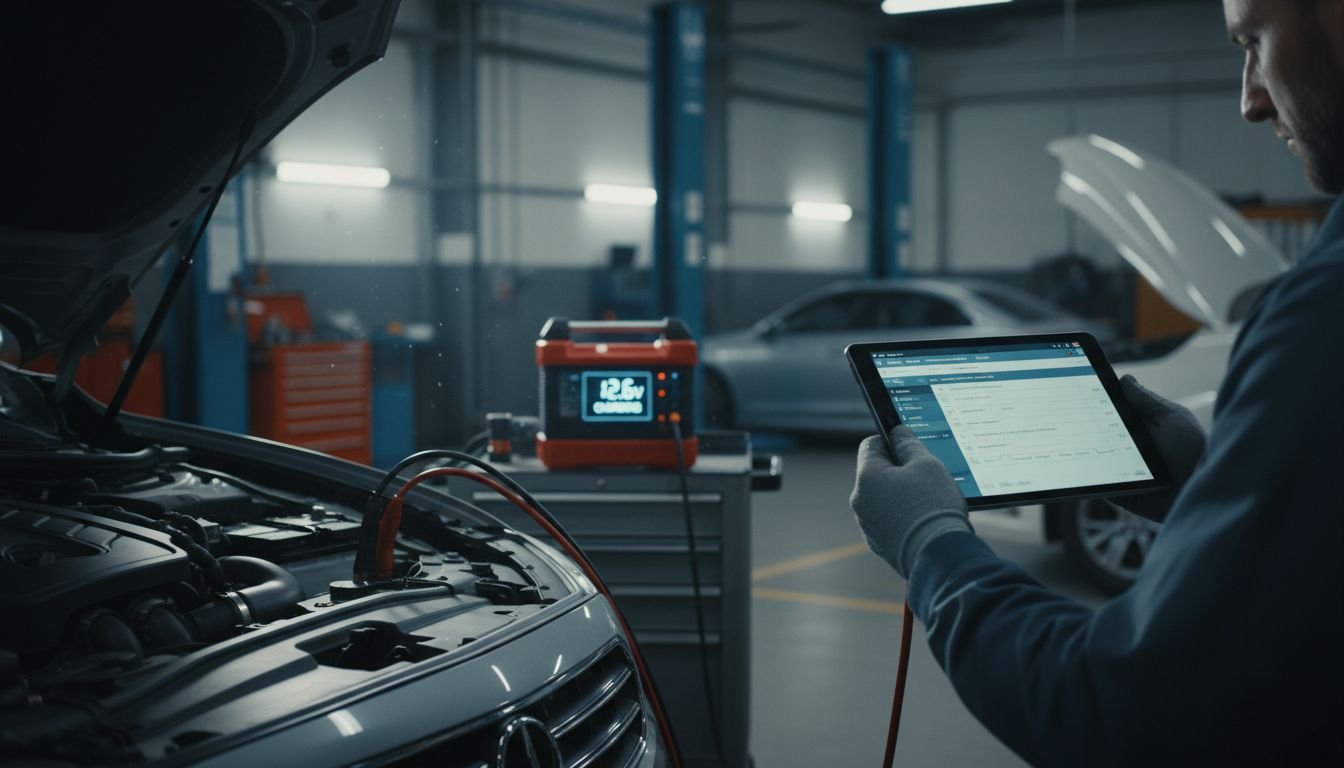
Battery support, scan verification, and post-program checks
Professional programming—whether at the dealer or a qualified independent—requires:
- Dedicated battery support/charger to hold voltage steady during the flash.
- Pre-scan to document existing fault codes and conditions.
- Post-scan and test drive to verify that all systems communicate and that no new faults have been introduced.
These steps protect both you and the shop. If you want more background on how deeper testing works, review our article for North Texas drivers on what a check engine light mechanic really does beyond just clearing codes.
Used module compatibility and part-number matching
If you are considering a used or salvage-yard component, insist that the shop:
- Confirms the part number and supersession for your exact VIN.
- Explains any limitations with used modules on your platform (for example, security data that cannot be changed, or options that will never match your car).
- Clarifies the warranty policy when working with customer-supplied parts.
This is often where the difference between dealer, independent, and DIY becomes painfully clear. Getting this wrong can double the cost of the job.
Whether diagnostics are included before programming
Some shops will program whatever you ask for with minimal questions. That can be dangerous. A professional facility in McKinney TX or anywhere in DFW should recommend a Vehicle Diagnostic first when symptoms are unclear or when multiple systems show faults.
By starting with diagnostics, you reduce the chance of paying for Module Programming on a part that was never the root cause.
When Diagnostics Should Come Before Module Programming
Many owners come in convinced they “just need module programming.” In reality, the underlying problem is often something else:
- Low system voltage or weak battery causing random communication faults and intermittent no-start.
- Network wiring issues (corroded connectors, pin damage, water intrusion) that knock modules off the data bus.
- Coding mismatch after prior repairs, rather than a true software failure.
- Failed sensors or actuators that a new module will not fix.
This is why a Vehicle Diagnostic is often the smartest purchase decision before approving any programming. During a structured diagnostic session, a qualified technician will:
- Scan all modules for current and stored fault codes.
- Verify power, grounds, and network integrity where needed.
- Check technical service information and pattern failures.
- Determine whether the module truly requires replacement or programming—or if the fault lies elsewhere.
For drivers across McKinney TX, Plano, Frisco, and the greater DFW area, that extra step often prevents unnecessary parts purchases and avoids the frustration of a vehicle that is still not fixed after programming.
Module Programming and Diagnostics in McKinney TX: What to Ask Before You Approve the Job
Whether you are driving a BMW or another late-model vehicle in North Texas, the questions you ask before you authorize work will determine your outcome. Use this checklist when you call or visit any shop in McKinney TX / DFW for programming or diagnostics:
- Is the module new, used, or remanufactured?
Used modules carry extra risk. Confirm what the shop will and will not stand behind. - Has the part number been verified by VIN?
Ask if they checked superseded numbers and compatibility, not just what the parts counter handed over. - Is diagnostics included or separate?
Clarify whether a Vehicle Diagnostic is required before programming and how that fee is handled. - Is dedicated battery support used during programming?
This is non-negotiable for safe programming. A charger alone is not always enough. - What warranty applies to labor vs the part?
Make sure you understand if the shop covers only their time, or also the module when they supply it. - What happens if the module is defective or will not program?
Ask how they document attempts, what you pay if the part is locked or incompatible, and what the next steps would be.
For safety-critical systems—especially airbags and seat-mounted or curtain airbags—programming and replacement decisions can get expensive.
When you are ready to confirm your own vehicle’s details, you can use the LockNCal VIN decoder to pull key information from your VIN before you call.
Why Drivers Choose LockNCal for Approved Programming and Diagnostic Services
LockNCal is a local specialist in McKinney TX and the wider DFW area for select electronics and safety-related services on American and Japanese vehicles. While this article discusses bmw module programming from a buyer’s perspective, our online service menu remains focused on vehicles within our established scope.
Drivers choose us for:
- Safety-first process: Any work touching SRS, ABS, or other safety systems is approached with conservative procedures, clear documentation, and no shortcuts. We recognize that modules and airbags are not just parts—they are life-safety components.
- Clear communication: Before we program a module, we explain what we are doing, what the risks are, and what we can and cannot warranty.
- Same-day availability where scheduling allows: Many programming and diagnostic appointments on supported vehicles can be handled with same-day availability, but timing always depends on parts, complexity, and workload.
- Local convenience: Serving McKinney TX, Plano, Frisco, Allen, and surrounding DFW communities, we are positioned for North Texas drivers who want dealer-level thoughtfulness from a local, specialized operation.
If your vehicle falls within our supported service scope, you can learn more about our McKinney-area coverage here: LockNCal – McKinney TX.
Our Recommended Next Step
Use this framework as you decide what to do next:
- If the cause is still unclear:
Do not approve programming just because someone “thinks” the module is bad. Your safest and most cost-effective move is to schedule a Vehicle Diagnostic first. That way you pay for accurate answers instead of gambling on expensive electronics.
If diagnostics or previous testing have already confirmed a programming need, ask about Module Programming options and same-day availability where applicable.
Frequently Asked Questions About BMW Module Programming
1. What is BMW module programming?
BMW module programming is the process of loading the correct factory software and configuration into a BMW control unit so it matches that vehicle’s VIN, options, and security system. Similar concepts apply to other late-model vehicles: after a module is replaced, updated, or reset, it often needs both programming (software) and sometimes coding (feature configuration) to work properly.
2. What’s the difference between coding and programming a BMW module?
Programming writes or updates the core software inside the module. Coding adjusts how that module behaves based on your car’s specific equipment, region, and options. In a buyer’s terms: programming is installing the software; coding is telling that software exactly what kind of vehicle it is in. Many jobs require both.
3. Can a used BMW module be programmed to another vehicle?
Sometimes, but not always. Security data, VIN information, and previous coding can limit what is possible with a used module. Even when it is technically possible, the risk of incompatibility, hidden damage, or programming failure is higher. Most shops will only warranty labor when working with customer-supplied used modules. This same logic applies to many other brands as well—used electronics are almost always a higher-risk choice.
4. How much does BMW module programming usually cost?
There is no single honest number. Programming cost and turnaround depend on the module type, vehicle generation, whether the part is new or used, and whether a Vehicle Diagnostic is needed first. Dealers often sit at the higher end of the price range; independent specialists can be more cost-effective if they have the right tooling and experience. Be cautious of any quote that does not factor in diagnostics or part condition.
5. How long does module programming take?
Some straightforward programming jobs can be completed the same day, while others take longer due to diagnostics, parts issues, or complex software packages. A realistic answer is that timing depends on module complexity, diagnostic findings, and parts status. Reputable shops avoid promising guaranteed 24-hour turnaround because too many factors are outside their control.
6. Is dealer programming always better than an independent vehicle module programming service?
Not always. Dealers have direct factory access and support, which is valuable. However, a qualified independent offering vehicle module programming service with the right tools, battery support, and testing procedures can deliver comparable quality on many platforms—often with more flexible scheduling and pricing. The key is not the logo on the building, but the shop’s actual equipment, process, and experience.
7. Can module programming affect warranty coverage?
Yes. Improper or unauthorized programming can jeopardize warranty coverage, particularly if it alters emissions or safety systems. If your vehicle is still under factory or extended warranty, ask how the work will be documented and whether it aligns with manufacturer guidance. On any safety-related system—especially SRS airbags, which contain explosive components—DIY coding or programming can create both safety risks and warranty headaches. When in doubt, have a professional evaluate the vehicle and recommend the correct path.
For a full price breakdown, see whether a dealer or a locksmith is the better deal.


