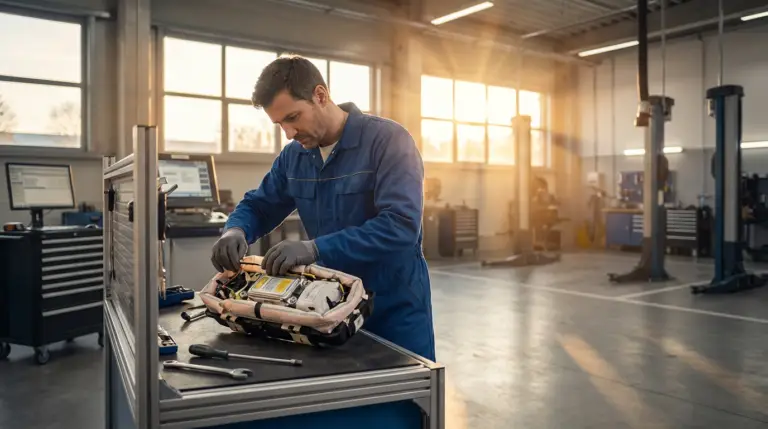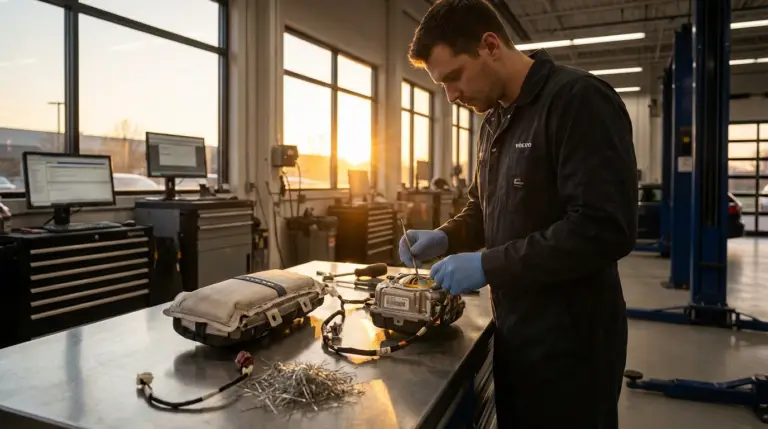

Airbag System Verification in Denton TX: What Technicians Check After a Collision or Rebuild
As an auto safety technician serving Denton TX and the DFW area for LockNCal, my job is simple: make sure your Supplemental Restraint System (SRS) is actually ready to protect you — not just make the dash light go away.
This buyer’s guide will walk you through how airbag system verification really works on American and Japanese vehicles after a crash, rebuild, or major repair, what documentation you should expect, and when you need Vehicle Diagnostic, SRS Airbag Module Reset, Mail-In Airbag Module Reset, Airbag Module Programming, Module Programming, Seat Belt Replacement, or Pre-Tensioner Replacement.
If you’re in Denton TX or nearby North Texas cities and need service now, you can see our Denton page here: https://lockncal.com/Denton-TX.
Why Airbag System Verification Matters After a Crash or Rebuild
After a collision, rebuild, or used-car purchase, it’s common to focus on paint, frame, and how the car drives. The reality is that the most important work is often hidden under the dash, under the seats, and inside the steering wheel: your SRS.
Problem: Many Denton TX drivers assume that if the SRS warning light is off, the system is fine. That isn’t always true. Modules can be cleared incorrectly, resistors can be used to fake sensor loads, or fired pretensioners can be left in place. A basic “we scanned it” is not the same as a thorough airbag safety inspection or professional airbag system verification.
Where this really matters:
- Post-collision vehicles that were repaired quickly to get back on the road.
- Rebuilt-title or salvage vehicles that changed hands multiple times.
- Recently repaired vehicles where body or mechanical shops focused on cosmetics, not full SRS checks.
A true post-collision airbag system verification or rebuilt title airbag system verification means the technician has walked through a defined process: history, inspection, diagnostics, wiring and sensor checks, module status, and final verification. That’s what you should expect — and what we deliver at LockNCal on American and Japanese vehicles.
The Danger of Driving Without Proper SRS Verification

Your SRS is your last line of defense in a bad crash. When it isn’t verified correctly, you take on risk you can’t see from the driver’s seat.
Safety risk:
- Airbags may not deploy when needed if sensors, wiring, or the module aren’t working correctly.
- Pretensioners may fail to tighten belts, letting occupants move farther forward into impact.
- Improperly handled components (loose connectors, bypass resistors) can cause unpredictable deployment or total failure.
Liability and resale risk:
- If you sell a vehicle in Denton TX or anywhere in DFW with misrepresented SRS status, you could face serious liability and trust issues.
- Buyers, shops, and inspectors increasingly ask for proof that airbag system verification was done, especially on rebuilt or previously totaled vehicles.
Inspection and buyer-confidence risk:
- Even if the car drives straight, a savvy buyer or shop will question vehicles that show signs of airbag deployment without documentation.
- Unresolved SRS faults or questionable wiring can kill a deal or reduce your resale value.
Remember what’s actually in the system on American and Japanese vehicles:
- Front, side, and curtain airbags
- Front and side impact sensors
- Seat belt pretensioners and retractor mechanisms
- Wiring harnesses, connectors, and grounds
- Steering wheel clockspring where applicable
- The SRS / airbag control module
Critical warning: You cannot safely “test deploy” airbags or pretensioners in a vehicle to see if they work. These are explosive devices. DIY probing with test lights, multimeters, or jumper wires on SRS connectors can cause accidental deployment and serious injury. Proper Vehicle Diagnostic, SRS Airbag Module Reset, Airbag Module Programming, Module Programming, Seat Belt Replacement, and Pre-Tensioner Replacement should always be handled by trained professionals.
Step-by-Step Airbag System Verification Process Technicians Use After a Collision or During a Rebuild
Denton TX drivers and rebuilders deserve more than “we scanned it, you’re good.” Here’s how a real airbag system verification workflow looks in our shop for American and Japanese vehicles.
Initial Vehicle History and Visual Review
We start with what the metal and plastic are already telling us.
- VIN review: Using a VIN decoder to confirm airbag and pretensioner equipment from factory build data.
- Collision history clues: Panel gaps, overspray, mismatched paint, or newer steering wheels and dashes on older vehicles.
- Prior deployment signs: Disturbed or missing trim clips, cut-out sections in pillar trim, replaced seat covers, or non-OEM fasteners around SRS areas.
- Steering wheel / dash irregularities: Wrinkling, poor fitment, or aftermarket pieces where OEM SRS covers should be.
For rebuilt title airbag system verification, this step is critical. It helps us spot missing airbags or pretensioners, “dummy” parts, or cosmetic-only repairs before we even plug in a scan tool.
Battery Safety Procedures and SRS Precautions
Before we touch any SRS connectors or components, we follow strict safety steps:
- Battery disconnect using the correct procedure and wait time so capacitors in the SRS system can discharge.
- No probing of airbag circuits with standard test equipment that can trigger deployment.
- Handling airbags and pretensioners as explosive devices, with appropriate positioning and storage while work is performed.
This isn’t optional. On American and Japanese vehicles, improper handling can cause accidental deployment, which is dangerous and can also damage the vehicle.
Scan Tool Diagnostics and SRS Fault Code Check
Next, we perform a structured airbag diagnostic scan with a professional tool — not a basic parts-store code reader.
- Connect a professional scan tool that can communicate directly with the SRS control module.
- Read current, stored, and history SRS codes (not just "present" faults).
- Check data related to occupancy sensors, impact sensors, buckle switches, pretensioners, and module communication.
- Compare the reported configuration with what we see physically installed in the vehicle.
Generic code readers often:
- Cannot access SRS modules on many American and Japanese vehicles.
- Miss manufacturer-specific fault codes or configuration errors.
- Do not show live data or readiness status needed for true post-collision airbag system verification.
This diagnostic step is typically billed as a Vehicle Diagnostic, and it is the foundation for deciding whether you need reset, programming, or replacement services.
Crash Data Review and Control Module Assessment
The SRS control module is the “brain” of the system. After a deployment or certain crash events, it can store crash data that locks the module for safety reasons.
During verification we:
- Check if crash event data is stored in the module.
- Determine whether the module is eligible for an SRS Airbag Module Reset based on vehicle make, model, and collision history.
- Confirm if a replacement module has already been installed that now needs Airbag Module Programming or general Module Programming to match the vehicle.
When reset makes sense: If the original module is intact and qualifies, an SRS Airbag Module Reset can clear eligible crash data and restore proper function, once the rest of the SRS hardware is correctly repaired or replaced.
When programming is required instead: If the module was replaced, is corrupted, or is incompatible, the correct path is Airbag Module Programming or Module Programming so it is properly configured to that specific American or Japanese vehicle.
Sensor, Wiring, Connector, and Ground Circuit Checks
Even with a clean code list, bad wiring can leave your system unsafe. We don’t skip this step.
- Inspect front and side impact sensors for correct mounting and damage.
- Check wiring continuity in SRS harnesses where collision damage or prior repairs may have pinched or cut wires.
- Inspect connectors and terminals for corrosion, broken locks, or signs they’ve been forced together.
- Pay special attention to under-seat connectors where movement and moisture can cause intermittent faults.
- Verify clockspring-related circuits in the steering column where applicable to ensure communication with driver airbags and controls.
This is where we often find why an “airbag light came back.” Repaired vehicles may have new parts but old wiring problems that make the system unreliable.
Seat Belt and Pre-Tensioner Verification
Pretensioners and seat belts are often overlooked because they don’t always show obvious external damage.
- Check whether pretensioners fired or locked during the crash, based on both scan data and physical inspection.
- Inspect seat belt webbing for stretching, fraying, or burn marks that indicate loading.
- Test retraction and locking behavior to see if the mechanism is compromised.
If a pretensioner has activated or a belt shows signs of damage, the safe and approved path is Pre-Tensioner Replacement and/or Seat Belt Replacement — not repair, and not “re-webbing” or DIY fixes. These are safety-critical devices and are treated as replacement items.
Final Verification, Code Clearing, and Re-Scan
Once the necessary corrective work is done (module reset, programming, wiring correction, Seat Belt Replacement, Pre-Tensioner Replacement, etc.), we verify the system one last time.
- Clear SRS fault codes after repairs are complete.
- Perform a final re-scan to confirm no active or relevant stored codes remain.
- Confirm proper communication with all SRS components and correct module configuration.
- Document findings and services on your invoice and diagnostic reports.
Final readiness is based on measurable diagnostic status and proper module communication — not on guesswork or the light simply being off.
What Documentation or Certificates Should Customers Expect?

After a professional airbag system verification in Denton TX, you should walk away with more than a verbal “all good.” While we don’t issue state inspection certificates or legal certifications, we do provide clear documentation, service records, and diagnostic reports so you (and future buyers) know what was done.
Ask for the following:
- SRS scan report or diagnostic summary
A printout or digital copy showing the SRS modules scanned, any codes present at the start of service, and the final status. - List of codes found and cleared
A brief summary of what faults were identified and resolved during the visit. - Module reset/programming documentation
If you had SRS Airbag Module Reset, Mail-In Airbag Module Reset, Airbag Module Programming, or Module Programming, there should be an invoice line item or note confirming that work. - Seat Belt Replacement / Pre-Tensioner Replacement records
Line items specifying which belts or pretensioners were replaced and which positions (e.g., “LF seat belt retractor”). - Clear invoice descriptions
Each charge should identify what was diagnosed and what service was actually performed, not just “labor.”
If you want to better understand why detailed diagnostics matter, LockNCal also provides educational resources such as this article on diagnostic trouble codes and why professional diagnostics matter.
Reset vs Programming vs Replacement: What Service Is Actually Needed?
Every vehicle and collision is different. Here’s a buyer-friendly overview of the approved service paths we offer for American and Japanese vehicles in Denton TX and across DFW.
| Service | What It Does | Typical When |
|---|---|---|
| Vehicle Diagnostic | Full SRS scan, history review, and inspection to identify what the system needs. | First step after a crash, rebuild, or when buying a used/rebuilt vehicle. |
| SRS Airbag Module Reset | Clears eligible crash data and resets the original SRS module when safe and supported. | Original module still installed and in good condition; SRS faults relate to crash data storage. |
| Mail-In Airbag Module Reset | Same reset service, but you mail the module to LockNCal from outside DFW. | Rebuilders or shops outside North Texas needing crash data reset. |
| Airbag Module Programming / Module Programming | Configures or initializes a replacement or virgin SRS module to your specific vehicle. | Module has been replaced or needs proper coding after repairs. |
| Seat Belt Replacement | Replaces compromised seat belt assemblies (e.g., stretched, damaged, or loaded belts). | Belts show signs of impact use or internal locking issues. |
| Pre-Tensioner Replacement | Replaces fired or damaged pretensioners so belts can function correctly in future crashes. | Pretensioners activated during collision or are faulted/damaged. |
When a Reset May Be Enough
A SRS Airbag Module Reset or Mail-In Airbag Module Reset can be viable when:
- The original SRS module is still present and compatible.
- The main issue is stored crash data after a deployment or crash event.
- All damaged hardware (airbags, pretensioners, sensors, wiring) has already been correctly replaced or addressed.
For local Denton TX and DFW drivers, we typically confirm reset eligibility during a Vehicle Diagnostic. For rebuilders or shops outside the area, Mail-In Airbag Module Reset provides a way to handle crash data without bringing the entire vehicle to North Texas.
When Programming Is Required
Airbag Module Programming or general Module Programming is needed when:
- A replacement module (new, used, or remanufactured) has been installed.
- The module must be coded, configured, or initialized to your specific American or Japanese vehicle.
- You see communication issues or configuration errors after a module swap or major SRS repair.
Programming aligns the module’s internal setup with your vehicle’s exact options and hardware, which is essential for reliable SRS operation.
When Replacement Is the Safer Choice
Certain SRS components are designed for one-time use. When they do their job, they should be replaced, not repaired.
- Pretensioners activated: If a pretensioner has fired, the correct service is Pre-Tensioner Replacement, not attempting to reset or repair it.
- Seat belts compromised: If belt webbing is stretched, frayed, melted, or the retractor/locking mechanism is questionable, the correct path is Seat Belt Replacement.
We do not “rebuild” or “repair” these parts. Replacing them ensures the SRS can work the way the manufacturer intended in the next crash.
Airbag System Verification for Rebuilt Title Vehicles in Denton TX

Rebuilt and salvage-title vehicles are common across Denton TX, Frisco, Lewisville, The Colony, and the rest of North Texas. Many of these vehicles were originally total losses because of airbag deployment. That’s why rebuilt title airbag system verification is so important.
On these vehicles, we frequently see:
- Hidden prior deployments with steering wheels, dash panels, and seat covers replaced but no proof of proper SRS work.
- Missing pretensioners or substituted parts installed only to avoid warning lights.
- Undocumented module issues where a used module was installed without proper module programming.
- Bypassed wiring using resistors or jumpers to fake sensor loads instead of fixing the root cause.
For buyers, sellers, and rebuilders in Denton County and surrounding DFW cities, a documented airbag system verification gives you:
- Confidence that SRS faults were properly diagnosed and addressed.
- Clear paperwork for future buyers, lenders, or shops.
- A safer vehicle that’s more than just “cosmetically rebuilt.”
If you’re exploring overall safety concerns on a rebuilt or long-distance road-trip vehicle, you may also find this article helpful: hidden vehicle safety system failures in Denton TX.
Why Denton TX Drivers Choose LockNCal for Post-Collision Airbag System Verification
LockNCal focuses on post-collision airbag system verification, diagnostics, reset, programming, and replacement of belts/pretensioners for American and Japanese vehicles in Denton TX and across North Texas — including nearby areas like Lewisville, Little Elm, Flower Mound, Plano, Frisco, Carrollton, Dallas, Fort Worth, and more.
Drivers, shops, and rebuilders choose us because we:
- Use a process-driven inspection that covers history, visual inspection, scan diagnostics, wiring checks, and module assessment.
- Offer only approved, safety-focused services: Vehicle Diagnostic, SRS Airbag Module Reset, Mail-In Airbag Module Reset, Airbag Module Programming, Module Programming, Seat Belt Replacement, Pre-Tensioner Replacement.
- Provide clear documentation and diagnostic reports instead of vague notes.
- Understand the realities of North Texas driving — high-speed highway traffic, frequent hail and storm damage, and heavy commuter use around Denton TX and DFW.
- Support local accountability; you know exactly who checked your SRS, and we’re close enough to see the vehicle again if needed.
If your SRS work affects cameras, radar, or other driver-assist systems, remember that you may also need proper ADAS setup. For more on that topic, see our guide on ADAS calibration in Denton TX after safety-system work.
Book Airbag System Verification in Denton TX
If you’re ready to move from guessing to knowing, here’s the safest path forward.
Step 1: Schedule a Vehicle Diagnostic
- Start with a professional Vehicle Diagnostic so we can scan, inspect, and evaluate your SRS.
- This visit determines whether you need SRS Airbag Module Reset, Airbag Module Programming, Module Programming, Seat Belt Replacement, or Pre-Tensioner Replacement.
Step 2: Approve the recommended SRS services
- We’ll explain whether your module is a candidate for SRS Airbag Module Reset or if it needs programming instead.
- If belts or pretensioners are compromised, we’ll recommend Seat Belt Replacement and/or Pre-Tensioner Replacement.
Step 3: Receive documentation for your records
- You leave with clear invoices, SRS scan results or summaries, and documentation of any reset, programming, or replacement work completed.
Local DFW / Denton TX: Book your airbag system verification and Vehicle Diagnostic through our Denton page: https://lockncal.com/Denton-TX.
Outside DFW / North Texas: If you’re a rebuilder or shop outside our service area, ask us about Mail-In Airbag Module Reset options. You can use our VIN decoder first to confirm equipment and then coordinate shipping your module for evaluation and reset when appropriate.
Whether you’re driving daily in Denton TX or rebuilding vehicles across the country, properly verified SRS work isn’t optional. It’s the difference between hoping your airbags will work and knowing you&rsquove given them every chance to do their job.
FAQs About Airbag System Verification in Denton TX
1. What is airbag system verification?
Airbag system verification is a professional process where a technician checks the SRS control module, sensors, wiring, seat belt pretensioners, and fault codes to confirm the system is communicating and configured correctly after a collision, rebuild, or major repair. It goes far beyond just clearing a warning light.
2. Can a car still have airbag problems if the warning light is off?
Yes. An SRS light turning off is helpful, but it doesn’t guarantee everything is correct. Crash data may still be stored, modules may be incorrectly programmed, or components like pretensioners and wiring may be compromised. A Vehicle Diagnostic with a proper airbag diagnostic scan is needed to confirm the real status.
3. What happens during post-collision airbag system verification?
We review vehicle history and prior repairs, follow safe battery/SRS procedures, perform a detailed scan for SRS codes, evaluate crash data and module status, inspect sensors and wiring, verify seat belts and pretensioners, then complete any needed services such as SRS Airbag Module Reset, Airbag Module Programming, Module Programming, Seat Belt Replacement, or Pre-Tensioner Replacement before a final re-scan.
4. What is rebuilt title airbag system verification?
Rebuilt title airbag system verification is the structured process used to confirm that a previously damaged or salvaged vehicle’s airbags, sensors, pretensioners, wiring, and SRS module have been properly addressed before the vehicle is trusted or sold. It is especially important in Denton TX where many buyers look at rebuilt vehicles to save money.
5. When do I need an airbag module reset vs airbag module programming?
You typically need an SRS Airbag Module Reset when the original module is still in the vehicle, is in good condition, and contains eligible crash data that needs to be cleared. You need Airbag Module Programming or Module Programming when the module has been replaced or requires specific coding and configuration to match your American or Japanese vehicle.
6. Do you offer airbag module reset service outside Denton TX?
Yes. For rebuilders and shops outside Denton TX and the DFW metro area, LockNCal offers Mail-In Airbag Module Reset where applicable. You ship us the module, we perform the reset when appropriate, and send it back, helping you complete safe SRS work without bringing the entire vehicle to North Texas.