 Skip to content

Automotive Car Key Replacement Dallas — Mobile Help
Direct answer: Automotive car key replacement in Dallas means getting a new mechanical key, transponder chip key, remote fob, or smart key cut and programmed to your vehicle by a mobile pro. A locksmith can usually do this on-site when you provide proof of ownership and the vehicle VIN; complexity depends on the key type and vehicle make.
Need a key made or programmed? Our automotive locksmith service in DFW comes to you across Dallas–Fort Worth.
Key Takeaways
- There are three common replacement paths: cut a new blade, clone/program the immobilizer chip, and pair the remote or smart key.
- Transponder and smart keys require programming—some cars allow OBD programming, others need dealer tools or module programming.
- Proof of ownership (ID + registration/title) and the VIN are essential; keep the PIN code if the vehicle needs it.
- Mobile locksmiths can usually replace keys on-site in Dallas; when all keys are lost the job can take longer but is still commonly done without towing.
What “automotive car key replacement” really means
When people say “car key replacement” they mean different things depending on the key type. At the simplest: a mechanical key blade is cut to the lock and ignition. At the next level, a transponder (chip) inside the head of the key must be programmed to the vehicle’s immobilizer. At the top end, smart keys or proximity fobs must be paired with the car’s computer, sometimes requiring module access or a factory security PIN.
Common key types and what replacement involves
- Mechanical key (blade): Cut from the VIN or door code; no programming needed.
- Transponder key: Blade plus a chip. Cut the blade and program or clone the chip to the immobilizer.
- Remote fob: Buttons to lock/unlock; may also include a transponder. Often needs battery, re-sync or reprogramming.
- Smart key / proximity key: No blade or a hidden blade, communicates via RF; requires secure pairing with the vehicle and sometimes module programming.
How the mobile replacement process works (step-by-step)
Most reputable mobile locksmiths follow a predictable flow. If you understand the steps, you’ll know what to expect and what documents to have ready.
- Confirm identity and ownership: Driver’s license plus vehicle registration or title. The locksmith will also record the VIN (on the dash or door jamb).
- Assess the key type: Technician inspects the lost key’s type (or the vehicle’s requirements) and explains options—cut-only, clone a chip, or full programming.
- Cut the blade (if needed): Portable key cutting machines are used on-site for most blades.
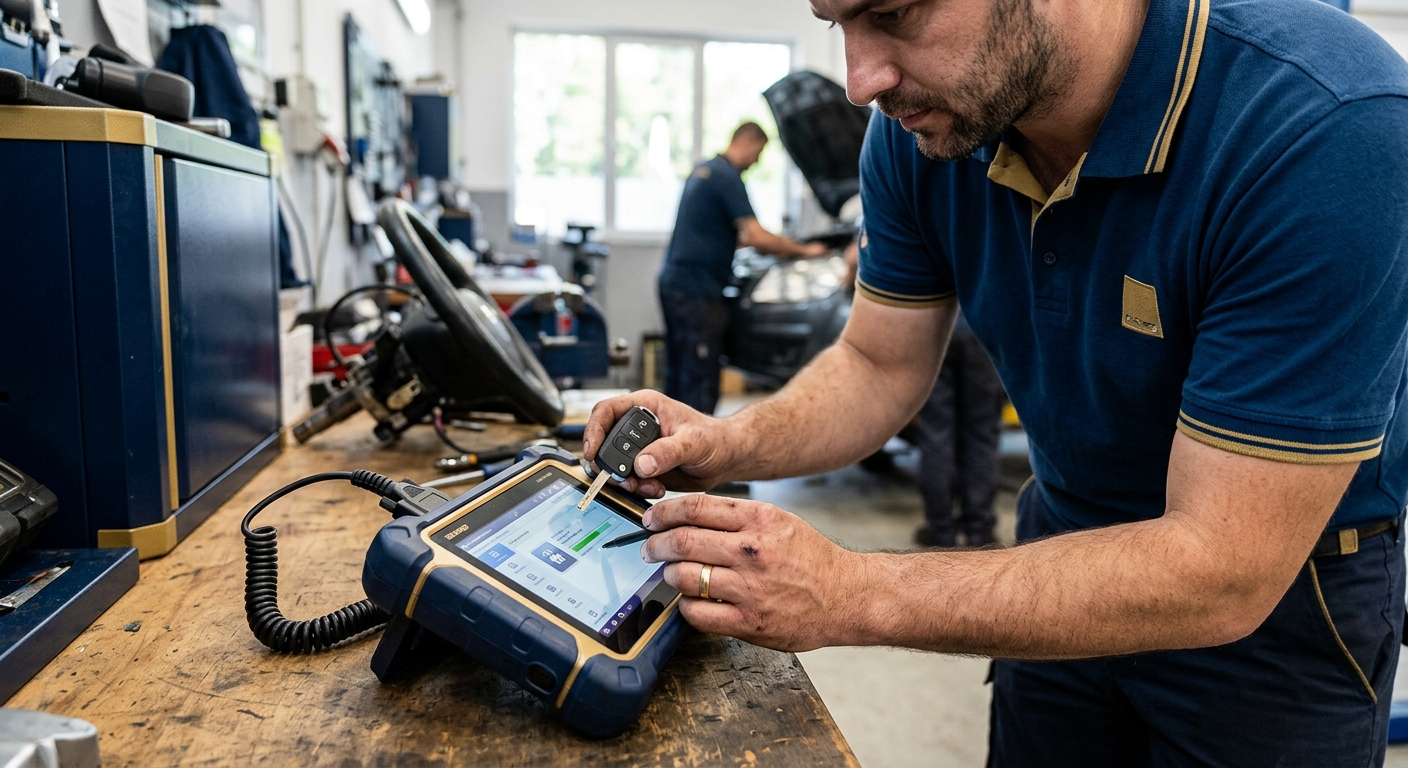
- Program or clone the chip: Using OBD or remote programming tools. If the vehicle requires a factory PIN or module programming, the tech will explain next steps.
- Pair the remote/smart functions: Confirm lock/unlock, trunk release, remote start, and proximity detection work.
- Test drive and final checks: Start the car, check immobilizer, and ensure all functions operate reliably.
When it’s quick vs. when it takes longer
Replacing a blade or swapping a battery can be minutes. Adding or cloning a transponder chip typically takes 10–30 minutes if the vehicle allows OBD programming. Smart keys for some European or luxury cars can take longer if the vehicle requires PINs, dealer-level security, or module replacement.
Key technical details a Dallas driver should know
Here are hands-on details technicians use to pick the right approach. These are the specific things that make one job simple and another complex.
- VIN and key code: The key code (if available) and VIN let a tech cut the correct blade without an original key. Many modern vehicles store a key code in the locksmith database or the manufacturer’s records.
- OBD vs. module-level programming: Some cars accept a new key via the OBD port. Others require access to the body control module (BCM), immobilizer module, or even dealer-level tools to write keys.
- PINS and security tokens: Some brands (often European) require a factory PIN or security token to add a key. If you have the PIN from the owner’s manual or previous dealer paperwork, bring it.
- Key cloning vs. writing: Cloning reads an existing chip and duplicates it—useful when a working key exists. Writing/programming creates a new key record in the car’s computer—used when you’ve lost all keys.
Model-specific notes (real technician-level tips)
- Toyota / Lexus: Many models allow dealer or locksmith OBD programming if you have the VIN and proof of ownership. Keyless smart systems can often be programmed on-site.
- Ford: Some Fords require a sequence with multiple working keys or a dealer tool, but later models are more locksmith-friendly.
- Honda / Acura: Often straightforward for locksmiths to program transponders via OBD, but smart keys may need special attention.
- BMW / Mercedes: Luxury brands sometimes require factory security access or module programming; technicians may need the vehicle’s security data or dealer cooperation for certain years.
- Fiat-Chrysler (FCA): Some vehicles require an immobilizer module reset or attention to the body computer; have VIN and title ready.
Useful comparison table: key type vs. on-site complexity
| Key type | On-site cut? | Programming required? | Typical on-site complexity |
|---|---|---|---|
| Mechanical blade | Yes | No | Low — portable cutter |
| Transponder key | Yes | Yes — OBD or module | Medium — programming tool |
| Remote fob | Sometimes (hidden blade) | Often — re-sync or program | Low–Medium |
| Smart key / proximity | Usually no blade | Yes — may need module access | Medium–High — security PIN or dealer access possible |
What to bring and how to prepare in Dallas
Gather these items before calling a mobile locksmith to speed the job.
- Valid photo ID (driver’s license).
- Vehicle registration or title showing the VIN.
- Existing keys, if any — even a damaged key can help.
- Any dealer paperwork or PINs you have for the vehicle.
- A safe, well-lit place for the tech to work—on the street or your driveway is usually fine.
Why choose a mobile locksmith in Dallas instead of the dealer
Mobile locksmiths bring tools to your car, avoiding a tow and often finishing the job on-site. Experienced techs can cut blades, program many transponders, and pair remotes without visiting a dealer. For complex cases requiring dealer-level security access, the locksmith will explain the path and next steps so you’re not left guessing.
If you’re locked out right now or just want a replacement key, we handle both emergency lockout situations and planned replacements like a normal key copy or smart key setup through our mobile car key copy services. To book or check availability, visit our schedule an appointment page.
Safety and security concerns
Replacing keys interacts with your vehicle’s security system. Proper programming prevents unauthorized keys from starting the car. Never hand over ownership documents or keys to strangers—always confirm the locksmith’s company credentials. If your vehicle was involved in an accident or required module work, ask about possible interactions between module programming and other vehicle systems—module reprogramming should be done carefully to avoid unintended resets.
FAQ
Q: How much does automotive car key replacement cost?
A: Pricing depends on the vehicle and the key type. Call (469) 277-7277 for an accurate quote and we’ll explain your options.
Q: How long does a replacement take?
A: Simple blade cuts can be minutes; transponder programming typically takes 10–30 minutes on-site. If the vehicle requires module or dealer-level programming (common with some luxury imports), it may take longer—your tech will explain the timeline after inspection.
Q: I lost all my keys—can you still replace them?
A: Yes. A locksmith can create new keys using the VIN and programming tools. Some vehicles require additional security steps or factory PINs; bring proof of ownership and any dealer documents if you have them.
Q: Do I need to tow my car to a dealer?
A: Almost never. Most replacements are done on-site by mobile technicians. If your car needs module replacement or dealer-only access, the tech will tell you the safest next step.
Q: Will replacing a key affect my car’s safety systems like airbags?
A: Key programming and immobilizer work are separate from SRS and airbag systems. Proper programming should not affect airbags. If your car needs module-level service that touches multiple systems, a qualified technician will follow safety procedures and explain any implications.
Closing — get a reliable replacement key in Dallas
If you need an automotive car key replacement in Dallas, a mobile locksmith can usually get you back on the road the same day. For fast, on-site service and clear next steps for complicated vehicles, visit our mobile car key copy services page: https://lockncal.com/mobile-car-key-copy-services/ or call (469) 277-7277 to discuss your vehicle and get a no-surprise quote.


