 Skip to content

Repair Seat Belt Buckle: How to Fix & Replace
Direct answer: A faulty seat belt buckle can often be cleaned, realigned, or have its latch replaced; if the buckle contains a seat belt sensor or airbag/SRS wiring, professional repair is safer. Diagnose noise, failure to latch, or warning lights first—call a pro if the sensor or wiring looks damaged.
If your seat belt needs replacing, our seat belt replacement service restores it to factory condition, mobile across DFW.
Key Takeaways
- Most simple buckle problems are mechanical—dirt, debris, or a misaligned latch.
- If a buckle has a sensor or SRS wiring, it is part of the airbag system and should be diagnosed and replaced by trained technicians.
- You can safely blow debris out of a buckle and test it, but a buckle that still won’t latch — or is worn or damaged — should be replaced, not repaired.
- Cost depends on vehicle and part — call (469) 277-7277 for a quote in Irving.
Why a Faulty Seat Belt Buckle Matters
Your seat belt buckle isn’t just metal and plastic—it secures the belt and often contains an electrical sensor that tells the car if the belt is buckled. A bad buckle can cause a seat belt warning light, prevent the belt from latching, or interfere with airbag and restraint systems. Fixing it properly protects you and keeps safety systems functioning.
Common Seat Belt Buckle Problems
- Latch won’t engage or releases unexpectedly.
- Stiff or sticky buckle—dirt or spills inside the mechanism.
- Seat belt warning light stays on due to a bad buckle sensor.
- Broken release button or cracked housing.
- Wiring damage in buckles with sensors (often after a crash or heavy wear).
Signs to watch for
- Clicking but no lock: mechanical misalignment or broken latch.
- Warning chime or light: electrical sensor issue.
- Visible damage or loose screws: consider replacement.
What You Can Safely Check Yourself
You don’t need to take anything apart. For a basic check you only need:
- A flashlight to look into the buckle opening.
- Compressed air to blow out crumbs, coins, or dust.
Do not unbolt the buckle, take it apart, or install a repair kit. The buckle, its anchor bolt, and the latch are crash-tested parts — if a clean buckle still won’t latch or release properly, it needs to be replaced.
Why we don’t recommend buckle repair kits
Seat belt buckle repair kits and loose aftermarket parts are not crash-tested with your vehicle’s restraint system, so LockNCal does not recommend them — and we do not repair seat belt buckles. If the latch jaws, housing, button, or sensor wiring are damaged, the safe fix is replacing the buckle or belt assembly with genuine OEM parts.
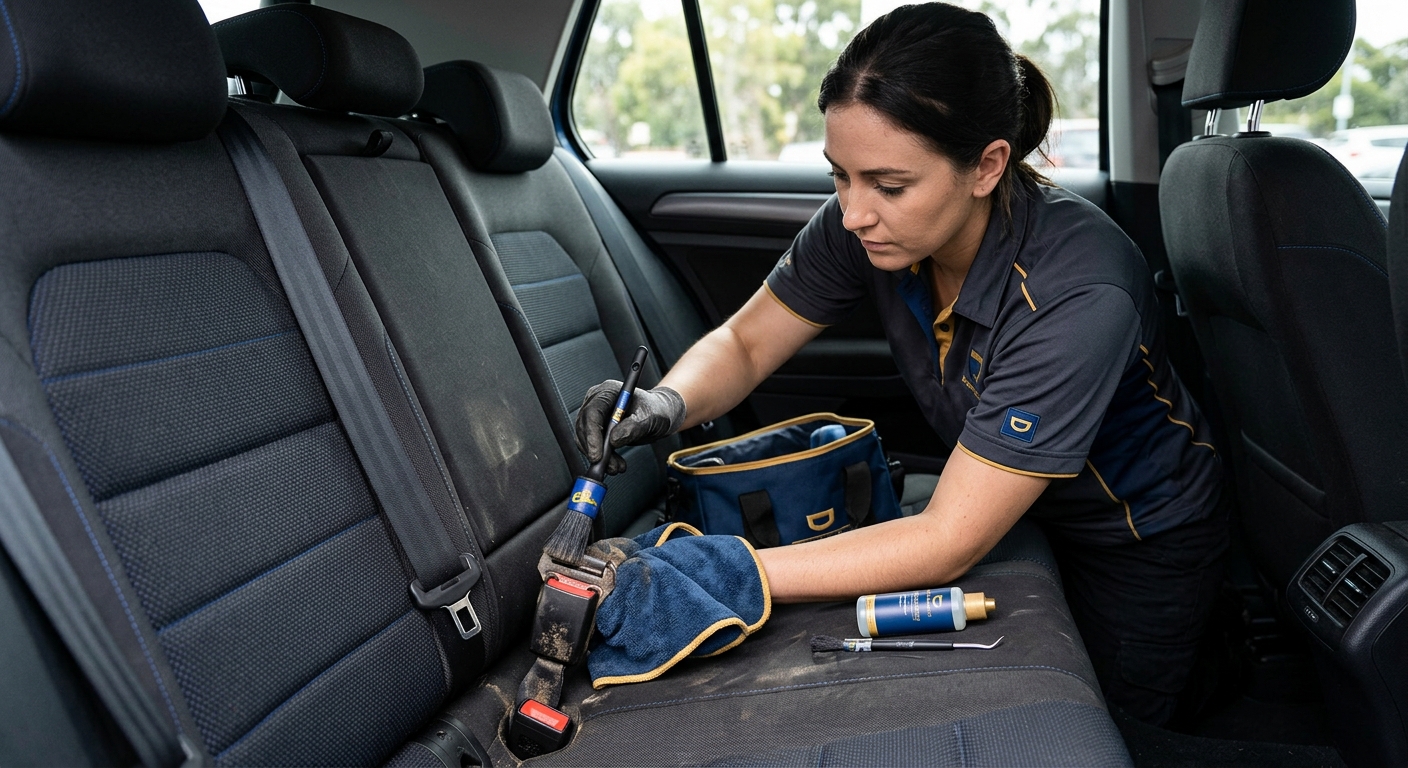
How to Diagnose a Faulty Seat Belt Buckle
These quick checks help you decide whether a simple cleaning will do or the buckle needs to be replaced.
- Visual check: Inspect for cracked plastic, missing screws, or exposed wires.
- Listen and feel: Insert the tongue—do you hear a firm click? If it wiggles free, the latch is worn or misaligned.
- Try compressed air: Blow out crumbs or dust and test again.
- Warning light check: If your seat belt warning light stays on while the belt is latched, don’t test the wiring yourself — buckle sensors are part of the airbag system. Have a technician scan for codes.
- Scan for codes: A diagnostic scanner can reveal restraint system DTCs tied to buckle sensors (codes will point to the seat belt buckle circuit).
Safe Checks You Can Do Yourself
These checks are safe for anyone and don’t involve taking anything apart:
- Look into the buckle opening with a flashlight for coins, crumbs, or other debris.
- Blow out the buckle opening with compressed air.
- Insert the tongue and listen for a firm, audible click, then tug the belt to confirm it holds.
- Press the release button and make sure the tongue ejects cleanly.
- Check that the seat belt warning light or chime behaves correctly.
Do not unbolt the buckle, take it apart, lubricate the latch mechanism, or install a repair kit. If the buckle still sticks, won’t latch, or won’t release after a cleaning, it needs to be replaced with genuine OEM parts.
Warning light still on?
If your seat belt warning light stays on even when the belt is latched, the buckle sensor may be faulty. Don’t probe the wiring yourself — buckle sensors are part of the airbag (SRS) system. A technician should scan for codes and replace the buckle if the sensor has failed.
When to Call a Professional
- The buckle contains wiring or is integrated with SRS/airbag systems.
- Visible damage to wiring, connectors, or the sensor housing.
- The warning light stays on after you cleaned and tested the buckle.
- You don’t have the tools or service manual to safely diagnose the sensor circuit.
Technicians will test wiring, verify DTCs with a scan tool, and replace the buckle or repair the sensor. Improper handling of SRS-related wiring can disable airbags or leave your vehicle unsafe—this is not the place for guesswork.
DIY vs Professional: Quick Comparison
| Issue | DIY Appropriate? | Why |
|---|---|---|
| Debris/Sticky Latch | Cleaning only | Blowing out debris often restores function; if it still sticks, replace the buckle. |
| Broken plastic button/housing | No | Repair kits aren’t crash-tested — replace the buckle. |
| Sensor or wiring fault | No | Requires diagnostics and possibly airbag system reset. |
| Latch mechanism failure | No | Needs full buckle replacement and torque-specific mounting. |
Vehicle-Specific Notes
Some models (for example Audi, Chevy, Ford F-150) use different buckle designs and sensor wiring. Replacing a buckle can mean removing interior panels, handling model-specific connectors, and torquing the anchor bolt to factory spec — which is why buckle replacement should be done by a trained technician. LockNCal’s mobile service covers American and Asian vehicles, 2008 and newer.
If you prefer a pro, our on-site mobile team offers safe buckle replacements and system checks—see our on-site mobile services overview to learn how we work at your location.
Seat Belt Buckle Sensor Problems and SRS Concerns
Many modern buckles include a sensor that tells the car whether the belt is latched. That signal can influence airbag deployment algorithms and warning lights. If the sensor or its wiring is damaged, you may see restraint system DTCs or an illuminated airbag light. The proper fix is scanning for codes, replacing the faulty buckle or damaged wiring, and resetting crash data if the vehicle has been in an incident.
For airbag module resets and crash data deletion, we provide nationwide mail-in services—see our mail-in services overview for details.
Seat Belt Buckle Repair Cost
Cost varies by vehicle, part availability, and whether the buckle contains sensors or SRS wiring. If you need a quote for Irving or the DFW area, call (469) 277-7277—we’ll ask your vehicle make, model, and year and give a tailored estimate.
FAQ
Can I fix a seat belt buckle myself?
You can safely blow out dirt or debris with compressed air and test the latch. Don’t take the buckle apart, lubricate the latch mechanism, or use a repair kit — if a clean buckle still sticks or won’t latch, it should be replaced.
How long does a seat belt buckle repair take?
A quick cleaning takes a few minutes. A professional buckle replacement takes longer, depending on the vehicle, access, and diagnostics.
Will a bad seat belt buckle affect my airbag?
It can. Buckle sensors feed the restraint system. A faulty sensor can trigger warning lights or affect deployment logic—have it diagnosed by a technician.
Where can I get Audi or Chevy seat belt buckle repair near me?
We don’t repair buckles — we replace them. For Chevy and other American and Asian vehicles (2008 and newer), we offer mobile buckle replacement across DFW, including Irving; we don’t service European makes like Audi on-site. Check our vehicle safety system services page or call (469) 277-7277 for help.
What is a seat belt buckle repair kit?
It’s a set of aftermarket parts sold to fix broken buttons or stuck latches. Because kits aren’t crash-tested with your vehicle’s restraint system, we don’t recommend them — a damaged buckle should be replaced with genuine OEM parts.
If your car needs professional attention or the buckle includes sensors or SRS wiring, our certified technicians can diagnose the system and safely replace the buckle or belt. Learn more about our seat belt and restraint services on the vehicle safety system services page or schedule an appointment. For a quote in Irving, call (469) 277-7277.


