
Honda Civic Airbag Light Reset: Safe SRS Troubleshooting Guide for Drivers in Seagoville TX
If you searched for “honda civic airbag light reset”, you’re probably hoping for a quick way to turn the light off — especially after a minor collision, battery issue, or moving the front seats. As an auto safety technician serving Seagoville TX and the DFW area, I want to be very clear up front:
After a fault like this, the airbag/SRS module often needs resetting to clear the warning light — that’s our mobile airbag module reset, mobile in DFW or mail-in nationwide with free two-way shipping.
The airbag (SRS) light is a symptom, not the problem itself. A true honda civic srs light reset is only safe after the fault has been correctly identified and corrected.
This guide will walk you through what that light really means, what you can safely check yourself, how codes and scan tools fit into the picture, and when it’s time for a professional Vehicle Diagnostic, SRS Airbag Module Reset, or Airbag Module Programming.
Local note: If you’re in Seagoville TX or the greater DFW area, you have local options. If you’re outside the area, a Mail-In Airbag Module Reset can still help in certain crash-data situations.
What the Honda Civic SRS or Airbag Light Means
The SRS light on your Civic’s dash is tied to the Supplemental Restraint System (SRS) — airbags, seat belt pretensioners, and related sensors and wiring.
Difference between the airbag light and other warning lights
- Engine light (MIL/Check Engine): Relates to emissions and engine/OBD-II faults.
- ABS light: Relates to anti-lock brake system issues.
- SRS/Airbag light: Relates specifically to airbag modules, impact sensors, seat belt pretensioners, seat occupancy sensors, clock springs, and SRS wiring.
Unlike some other lights, an illuminated SRS light usually means one or more parts of your crash protection system may not work correctly in a collision.
Why an SRS light should never be ignored
- Airbags may fail to deploy in a crash.
- Airbags or pretensioners could deploy at the wrong time or with incorrect timing.
- Other safety systems that “talk” to the SRS module (like seat occupancy detection) may not behave as designed.
Safety warning: SRS systems include explosive components (airbags and pretensioners). DIY work beyond basic visual checks can risk accidental deployment and serious injury.
What happens when the system detects a fault
- The SRS control module runs self-tests every key cycle.
- If it detects a fault (open/short, high resistance, crash event, internal module failure, etc.), it stores a diagnostic trouble code (DTC).
- The SRS or airbag light is turned on or kept on to warn you that the system is not fully functional.
Once a legitimate SRS fault is stored, simple battery disconnects usually will not clear it, especially on modern Honda Civics.
Common Symptoms That Come With a Honda Civic Airbag Warning Light
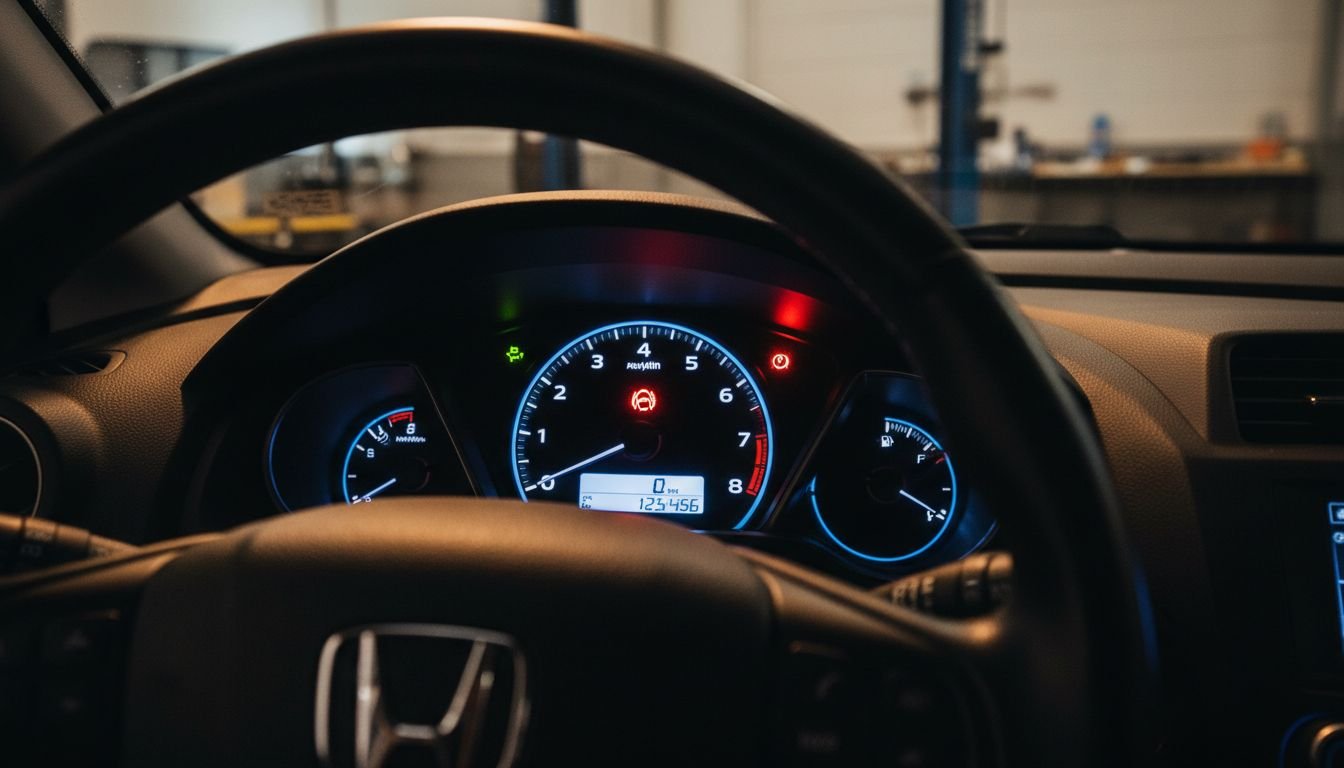
Different scenarios can trigger the airbag light, and the context matters for diagnosis.
Light stays on after startup
On most Civics, the SRS light will:
- Come on briefly during key-on as a self-test.
- Turn off if the system passes all checks.
If your light stays on or turns back on after a few seconds, the SRS module is seeing a persistent fault.
Light came on after a minor collision
Even a “minor” accident can:
- Trigger seat belt pretensioners.
- Store crash data inside the SRS module.
- Damage impact sensors or wiring.
On many Hondas, once crash data is stored, you will not clear the light with a basic code reader or battery disconnect. This is where SRS Airbag Module Reset or, in some cases, Airbag Module Programming after replacement becomes relevant.
Light appeared after seat movement, battery work, or interior repairs
This is extremely common on Honda Civics:
- Front seat moved all the way forward/back and tugged on an under-seat connector.
- Center console or steering wheel removed during stereo or interior work.
- Battery replaced or jump-started, exposing voltage fluctuations on a sensitive SRS system.
These scenarios often lead to connector issues, damaged wires, or loss of calibration, not just a “computer glitch.”
Why disconnecting the battery usually does not fix stored SRS faults
- SRS modules store faults and crash data in non-volatile memory.
- The module is designed to remember the problem until it’s properly repaired and cleared with an SRS-capable scan tool.
- A brief battery disconnect might clear a temporary low-voltage code but will not erase real hardware faults or crash records.
If your search was for “airbag light reset honda civic” or “how to reset airbag light on honda civic”, understand that without fixing the root cause, any reset will either fail or the light will come right back.
Model-specific troubleshooting for Honda Civic SRS/airbag light: common causes, interpreting OBD codes, step-by-step safe reset attempts, the difference between reset and programming, and criteria for professional service
Different generations of Honda Civics (early 2000s, 8th gen, 9th gen, 10th gen, etc.) share many SRS principles but have some model-specific behaviors and known issues. The logic below stays general enough to apply across most years while staying Civic-focused.
Common Honda Civic SRS fault categories owners see
On a proper SRS scan tool, common categories of codes on Civics include:
- Seat belt pretensioner circuits – open/short, high resistance, igniter circuit faults.
- Front or side airbag igniter circuits – driver, passenger, side curtain, or seat-mounted airbags.
- Occupant detection/seat sensor faults – front passenger seat sensor, weight sensor, or presence module.
- Clock spring (cable reel) faults – airbag wiring through the steering column.
- Impact sensor faults – front crash sensors or side impact sensors.
- Internal SRS module faults – hardware failure, configuration error, or stored crash data.
What a capable SRS scan tool can reveal
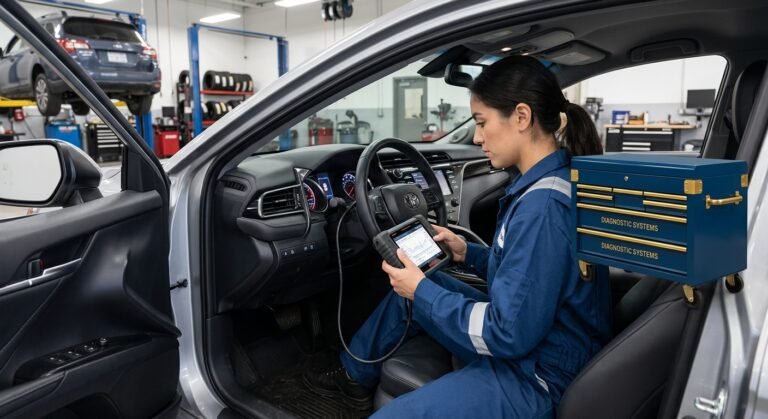
A generic OBD-II code reader usually only talks to the engine computer. For true honda civic srs light reset work, you need an SRS-capable scan tool that can:
- Access the SRS/airbag module directly.
- Read manufacturer-specific SRS codes (not just generic P0xxx engine codes).
- Show freeze-frame or live data for key SRS sensors where supported.
- Command the module to clear SRS codes after repairs.
On many Civics, the scan tool will also identify whether the module is storing crash data or flagged internal faults that may call for SRS Airbag Module Reset or Airbag Module Programming with a replacement unit.
Safe reset attempts that may be tried before professional service
Here’s a conservative, safety-first path for Civic owners:
- Document the context. Note when the light came on: after a collision, after seat movement, after electrical work, or with no obvious trigger.
- Perform limited visual checks (with battery disconnected and key out).
- Look under front seats for obvious loose or unplugged connectors.
- Inspect for pinched or visibly damaged wiring from recent interior work.
- Do not probe SRS connectors with a test light or multimeter; SRS wiring and igniters are sensitive.
- Use an SRS-capable scan tool.
- Read the SRS codes and write them down.
- Search for patterns: pretensioner code, airbag igniter code, internal module error, crash data stored, etc.
- Address obvious non-explosive issues.
- Secure a known loose under-seat connector carefully (no force, check for broken locks).
- Correct visible wiring routing issues caused by seat tracks or interior panels (if you’re confident and not disturbing yellow/orange SRS harnesses).
- Attempt a code clear only after correction.
- Use the SRS scan tool to clear the codes.
- If codes clear and the light stays off on multiple key cycles, the issue may be resolved.
Important: Any step involving removal of airbags, pretensioners, or directly unplugging yellow/orange SRS connectors should be left to a trained technician. These are explosive devices.
When a reset is not enough
A simple SRS reset (code clear) will not be enough when:
- Crash data is stored in the module from a previous impact.
- The module logs an internal hardware fault.
- The same fault code returns immediately after clearing.
- There is a genuine open/short or resistance issue in airbags, pretensioners, or sensor circuits.
In those cases, you need proper diagnosis and, sometimes, a specialized SRS Airbag Module Reset service or module replacement plus Airbag Module Programming.
When SRS Airbag Module Reset vs Airbag Module Programming applies
- SRS Airbag Module Reset:
- Applies when the original Civic SRS module is physically intact.
- Used mainly to remove crash data and certain internal records after an accident when all damaged SRS components have been properly repaired or replaced.
- Often paired with a Vehicle Diagnostic to confirm the rest of the system is safe.
- Airbag Module Programming:
- Applies when the original module is replaced due to failure, water damage, or severe internal faults.
- The replacement module (new or used/reman) must be programmed or configured to your Honda Civic: VIN, options, and sometimes seat/occupant settings.
- This is not the same as a simple reset; it’s a setup and configuration process.
Honda Civic SRS Light Reset vs Airbag Module Programming: What Is the Difference?
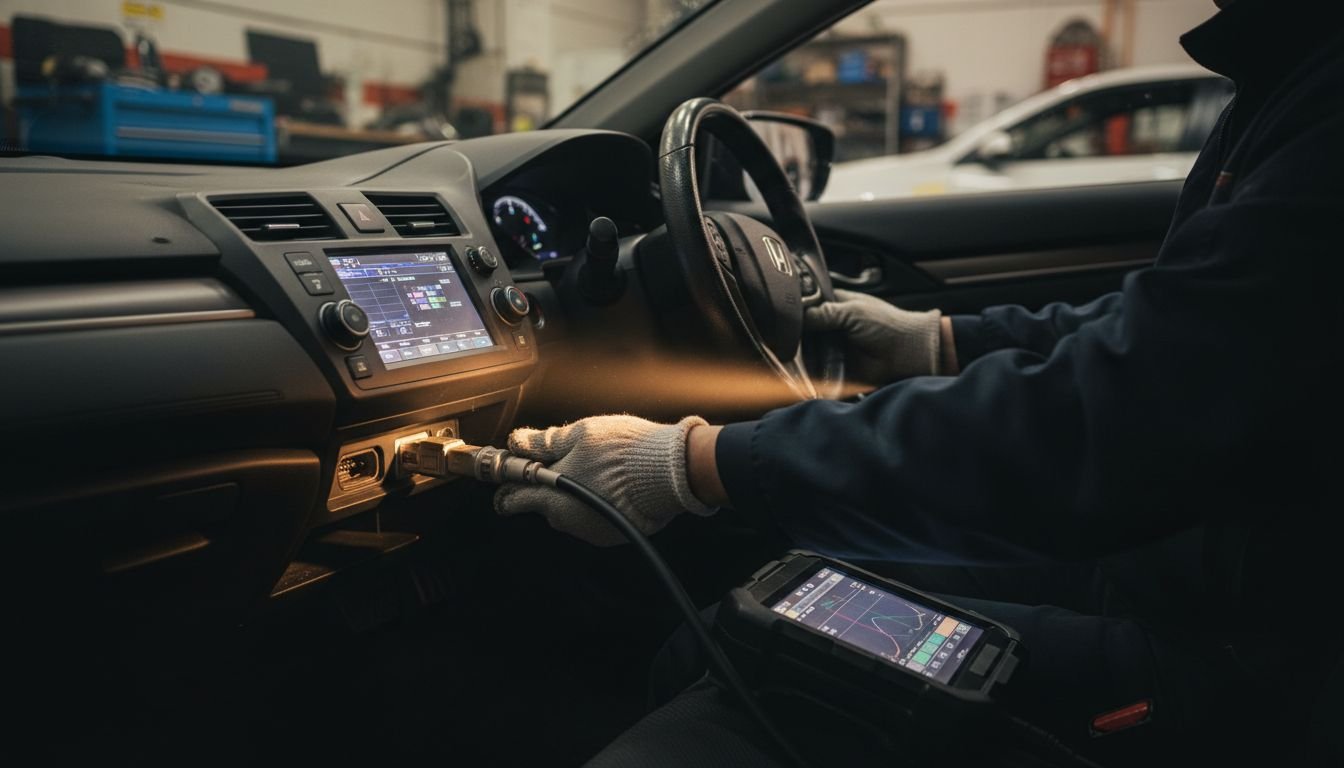
Many owners search for “honda civic airbag light reset” and assume it’s just a matter of clearing a dashboard light. In reality, the SRS module on a Honda is doing much more behind the scenes.
What a reset actually means
Reset typically refers to:
- Clearing stored SRS codes once repairs are complete.
- In some cases, erasing crash data or event history from the existing module (with proper equipment).
This is part of what a specialized SRS Airbag Module Reset service addresses when it’s appropriate for your Civic.
What programming means on a replacement module
Programming (or coding) is different:
- A replacement SRS module must be matched to your specific Civic’s configuration (model year, body style, airbags, options, VIN).
- This is done with dealer-level or advanced programming equipment.
- Without correct programming, the module may not communicate properly, may store configuration errors, or may not provide full protection.
That’s where Airbag Module Programming comes in – especially if your original module is not recoverable.
Why clearing codes is not the same as fixing the fault
- Clearing a pretensioner code without replacing a fired pretensioner does not make it safe.
- Clearing a clock spring code without fixing the broken ribbon cable will cause the fault (and light) to return.
- Clearing internal module faults doesn’t repair water damage or electronic failure.
Bottom line: A reset is only valid once the underlying hardware and wiring issues have been resolved. That’s why a professional Vehicle Diagnostic is often the safest first step.
How to Reset Airbag Light on Honda Civic Safely
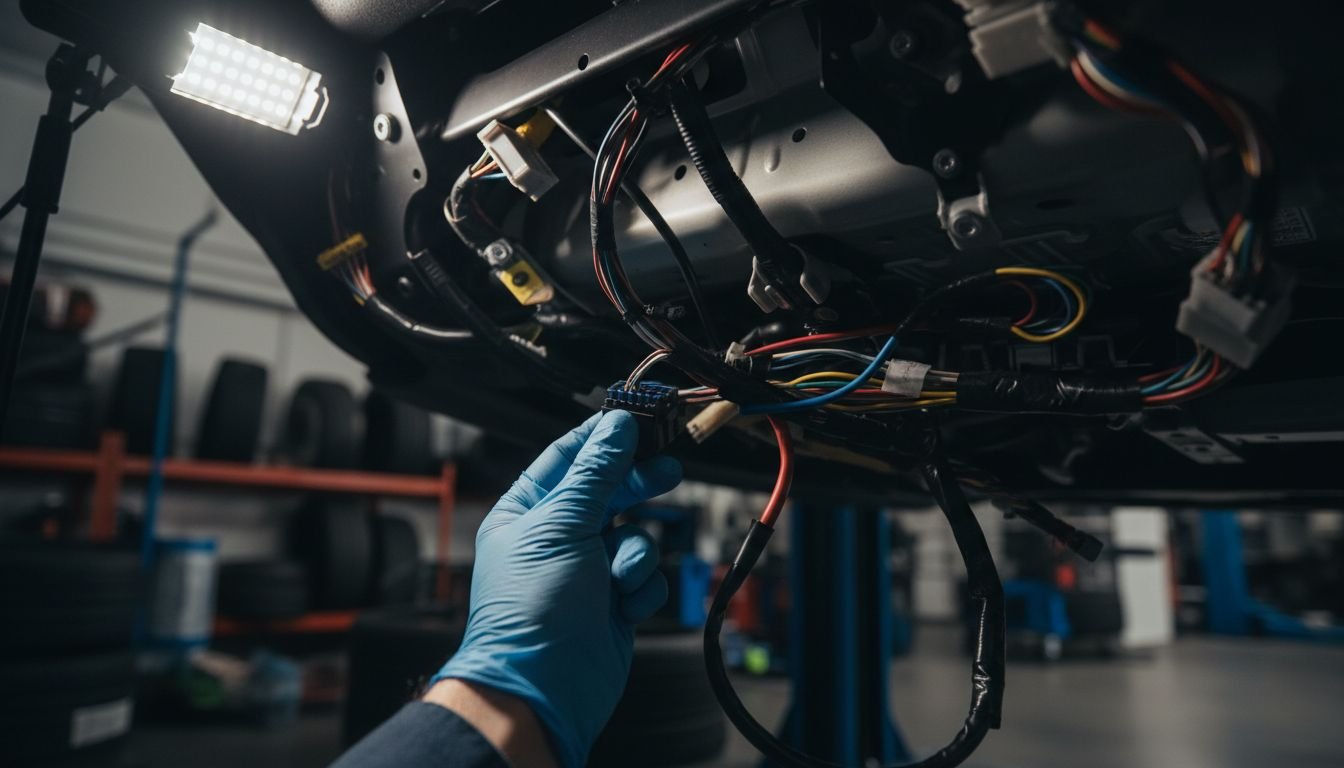
If you’re specifically looking for how to reset airbag light on Honda Civic, here is a safe, realistic framework. Note that true SRS work is not a casual DIY job.
Step 1: Confirm whether the issue followed a collision or previous repair
- If the light came on after a collision, assume possible crash data, deployed components, or hidden damage.
- If it followed interior work (stereo, seats, steering wheel, console), suspect connectors and wiring around those areas.
- If it appeared after a battery event (jump-start, replacement), low voltage may have revealed a borderline component, but is rarely the sole root cause on its own.
Step 2: Perform limited visual checks only
With the key off and battery disconnected:
- Look under the driver and passenger seats for loose or disconnected connectors.
- Check for obvious physical damage to wiring looms near recent work areas.
- Do not:
- Apply power to SRS connectors.
- Probe airbag/pretensioner circuits with a meter.
- Remove airbags or pretensioners yourself.
Step 3: Use an SRS-capable scan tool, not just a basic OBD2 reader
A cheap OBD2 reader that only pulls engine codes will not give you the full SRS picture. For practical honda airbag light troubleshooting you need:
- Access to the SRS module on your Honda Civic.
- The ability to read manufacturer-specific SRS codes.
- Support for clearing codes once issues are addressed.
If you don’t have access to this level of tool, that’s the point where a Vehicle Diagnostic with a professional technician becomes the smart choice.
Step 4: Address the fault before attempting to clear the light
Once codes are known:
- Wiring/connector issues: Need proper repair, not just taped connections.
- Seat belt pretensioner faults: Often require replacement of the affected pretensioner assembly. For more on this, see our seat belt and pretensioner safety guide.
- Crash data / internal module codes: May call for SRS Airbag Module Reset or Airbag Module Programming after replacement – not just a code clear.
Step 5: Verify whether the light returns immediately
- After repairs, use the SRS scan tool to clear codes.
- Cycle the key several times and perform a short road test.
- If the SRS light comes back quickly with the same code, the fault is still present and needs further diagnosis.
This step-by-step process keeps you safe while avoiding the trap of chasing the light instead of the underlying fault.
Honda Airbag Light Troubleshooting: Common Causes on Honda Civics
Across many model years of the Civic, certain SRS problems show up again and again. Understanding these helps you interpret what your scan tool (or technician) is telling you.
Stored crash data in the SRS module
- Occurs after an impact where sensors detect crash-level forces.
- Can be present even when airbags did not fully deploy.
- Often requires SRS Airbag Module Reset or, in severe cases, module replacement plus Airbag Module Programming.
Damaged or unplugged seat belt pretensioner or sensor circuits
- Pretensioners tighten the seat belt in a crash using a small explosive charge.
- Codes may indicate open circuit, short to power, short to ground, or resistance out of range.
- Any component that has fired or shows internal fault must be replaced; it is not a cosmetic issue.
Under-seat connector issues
- Very common on Civics when seats are moved fully forward/back or removed.
- Connectors may partially separate, pins may bend, or locking tabs may break.
- Improper repairs (twisted wires, household connectors) are unsafe in SRS circuits.
Clock spring or steering wheel circuit faults
- The clock spring (cable reel) allows steering while maintaining electrical connection to the driver’s airbag and steering wheel controls.
- Wear, aftermarket steering wheels, or incorrect removal/installation can damage it.
- Typical symptom: driver’s airbag igniter circuit code that returns immediately after clearing.
Collision-related wiring or impact sensor faults
- Front impact sensors or side sensors can be damaged, corroded, or disconnected in even low-speed hits.
- Wiring harnesses may be pulled, pinched, or cut by body damage or poor collision repairs.
Low voltage or battery history as a contributing factor, not a guaranteed root cause
- Weak batteries and jump starts can trigger low-voltage codes in Honda Civics.
- But if the light remains after voltage is stable and codes are cleared, there’s usually an underlying component or wiring issue.
- Don’t assume a fresh battery alone will solve a persistent SRS light.
How to Interpret OBD and SRS Codes Without Guessing
Many blogs tell you to “scan the codes” but never explain what that really means for a Honda Civic SRS system.
The difference between generic engine codes and SRS-specific codes
- Engine/OBD-II codes (P0xxx): Relate to engine, emissions, and powertrain.
- SRS codes: Manufacturer-specific, often accessed through the “Airbag” or “SRS” menu on a capable scanner.
For airbag work, those SRS-specific codes are the ones that matter.
Why a basic code reader may miss the real problem
- Low-cost readers usually cannot communicate with the SRS module.
- You may see “no codes” on the engine side while the SRS system is still storing serious airbag faults.
- This is why successful honda civic airbag light reset work almost always involves an SRS-capable tool.
What code patterns usually point to module reset, wiring faults, or programming needs
- Crash/event storage codes: Often call for SRS Airbag Module Reset after physical repairs are completed.
- Persistent igniter or pretensioner circuit codes: Suggest wiring issues or failed components that must be repaired before any reset will hold.
- Internal module or configuration codes: May indicate a failing module or a replacement unit that needs Airbag Module Programming.
Why code clearing without diagnosis can be unsafe
- Clearing codes repeatedly without fixing the cause can mask intermittent but serious issues.
- If the fault only appears under certain conditions (specific impact angle, seat position, or load), you may not know the system is compromised until a crash.
- Proper Vehicle Diagnostic focuses on why the code is there, not just how to make it disappear.
DIY Risks: When You Should Stop and Get a Professional Vehicle Diagnostic
Honda’s SRS components are engineered to deploy in milliseconds using pyrotechnic charges — they are not typical “plug-and-play” electronics.
SRS components can contain explosive devices
- Airbags and seat belt pretensioners rely on controlled explosions.
- Incorrect handling can lead to accidental deployment, causing injury, burns, or property damage.
- Even “unplugged” components can be dangerous if mishandled.
Why probing connectors or removing components can create risk
- Sending external voltage into an SRS circuit can trigger deployment.
- Static electricity, improper test equipment, or incorrect pin probing can damage sensitive electronics.
- Improvised repairs (soldering resistors, installing “airbag bypass” devices) are unsafe and can disable important protections.
Signs the car needs professional diagnosis now
- The SRS light comes on after any collision, even if you consider it minor.
- The light returns immediately after clearing codes.
- You see codes related to airbag igniters, pretensioners, or internal module faults.
- Any physical damage is visible to SRS components or harnesses.
- You do not have access to an SRS-capable scan tool.
In these cases, a professional Vehicle Diagnostic is the safest route for you and your passengers.
Honda Civic Airbag Light Help in Seagoville TX and DFW
If your honda civic airbag light reset attempts have failed, or you’re seeing crash data and module faults on a scan, here’s how we typically handle it in the Seagoville and DFW area.
When to schedule a Vehicle Diagnostic
Book a Vehicle Diagnostic if:
- The SRS light is on and you don’t know why.
- You only have access to a basic OBD reader (no SRS access).
- Coding, wiring, or module-related language appears on scan results.
- You want a safety-focused, documented test path instead of guesswork.
During a diagnostic, a trained technician uses a capable scan tool, wiring diagrams, and safe testing methods to identify whether you’re dealing with wiring, components, crash data, or a failing module.
When SRS Airbag Module Reset may be appropriate
This service is considered when:
- Your Civic’s SRS module is original and physically in good condition.
- All crash-damaged components (airbags, pretensioners, sensors, wiring) have been properly replaced.
- The module is storing crash data or related internal event codes that need to be cleared.
For more detail on why this matters after a collision, see our article on why airbag module resets matter after a collision.
Mail-in option for drivers outside DFW: Mail-In Airbag Module Reset
If you’re not local to Seagoville or the listed DFW cities, a Mail-In Airbag Module Reset can be a solution for certain crash-data cases:
- You remove the SRS module (or have a shop remove it safely).
- The module is shipped in for crash-data reset service.
- After reset and reinstallation, a local shop can confirm with a scan and test.
For an overview of how that works, read our guide to the mail-in airbag module reset service.
When Airbag Module Programming is needed after module replacement
Airbag Module Programming is considered when:
- Your original SRS module is water-damaged, physically cracked, or completely non-communicative.
- A replacement (new or remanufactured) module has been installed.
- The module needs to be aligned to your Civic’s VIN, build options, and SRS configuration.
Programming ensures the new module “knows” it’s in a specific Honda Civic and communicates correctly with the rest of the vehicle.
If you’re unsure which path fits your situation, start with a Vehicle Diagnostic so the decision is based on real data, not guesswork.
Final Takeaway: Resetting the Light Is Only Safe When the Cause Is Correctly Identified
Whether your search was “honda civic airbag light reset”, “airbag light reset honda civic”, or “honda civic srs light reset”, the key point is the same:
- The SRS light is a warning, not just an annoyance.
- Disconnecting the battery or blindly clearing codes does not repair airbags, pretensioners, or wiring.
- A correct fix usually involves proper diagnosis, safe repair, and then an SRS-capable reset or, if needed, Airbag Module Programming.
If you’re in Seagoville TX or the DFW area we cover (including Dallas, Mesquite, Garland, Grand Prairie, Arlington, Fort Worth, Plano, Frisco, McKinney, Rockwall, and other listed cities), a professional Vehicle Diagnostic is the safest way to move from a lit SRS light to a properly restored safety system.
Outside the area, you can still work with a trusted local shop and use a Mail-In Airbag Module Reset when crash data in the Civic’s module is part of the problem.
Not sure exactly which Civic you have? Use our free VIN decoder to confirm your model year and trim before starting any Honda airbag light troubleshooting.
FAQs
1. Can I reset a Honda Civic airbag light by disconnecting the battery?
Usually, no. Modern Honda Civics store SRS faults and crash data in memory that does not erase just because the battery is disconnected. At best, you might clear a temporary low-voltage code, but any real fault in airbags, pretensioners, sensors, or wiring will remain and the light will come back.
2. How do I reset airbag light on Honda Civic without a scanner?
There is no universally safe shortcut to reset the SRS light without an SRS-capable scan tool. Some online “jump wire” tricks are risky and can damage the system or create unsafe conditions. The safe approach is to diagnose the fault with proper equipment and clear codes only after repairs.
3. What causes the Honda Civic SRS light to come on after a minor accident?
Even a minor hit can trigger crash data storage, seat belt pretensioner activation, or impact sensor and wiring damage. Any of these will cause the SRS light to turn on. In many cases, the solution involves replacing damaged components and then performing an SRS Airbag Module Reset or programming a replacement module.
4. What is the difference between an airbag module reset and airbag module programming?
Airbag module reset focuses on clearing crash data and certain internal records from your existing module once the physical repairs are done. Airbag module programming is configuring a replacement module to match your Civic’s VIN and options so it communicates and functions correctly. Both are different from simply clearing codes.
5. Is it safe to drive with the airbag light on in a Honda Civic?
Driving with the SRS light on is a risk because it means the system may not protect you correctly in a crash. Some or all airbags and pretensioners may not deploy as designed. While this is not legal advice, from a safety standpoint you should treat an illuminated SRS light as a priority and schedule a Vehicle Diagnostic as soon as possible.
6. When should I get a professional Vehicle Diagnostic in Seagoville TX?
If your Honda Civic’s airbag light is on and does not go out after startup, returns immediately after clearing, or came on after a collision, interior work, or steering/seat issues, it’s time for a professional Vehicle Diagnostic. This is especially true if you are in Seagoville TX or the surrounding DFW cities we serve and do not have an SRS-capable scan tool or airbag experience.