
Automotive Key Fobs Explained: Components, Common Failures, and When Programming or Replacement Is Needed
As an automotive locksmith and vehicle electronics technician working daily in Garland TX and across DFW, I see the same confusion over and over: automotive key fobs that suddenly stop working, cars that say “key not detected,” and drivers who aren’t sure if it’s just a battery, a programming issue, or a complete key failure.
Need a key made or programmed? Our car key programming service comes to you across Dallas–Fort Worth.
This guide breaks down how modern American and Japanese key systems work, what usually fails, safe DIY checks you can try, and when it’s time to call a professional like LockNCal for proper Key Fob Replacement & Programming, Smart Key Programming, Transponder Key Programming, or a Vehicle Diagnostic.
For VIN-based information about your specific vehicle, you can also use the LockNCal VIN decoder.
What Are Automotive Key Fobs and How Do They Work?
Modern automotive key fobs combine several systems inside one small housing. Not every key has every feature, but most American and Japanese vehicles on the road today will have at least two of the three systems below:
- RF remote section – controls lock/unlock, panic, trunk, etc.
- Transponder chip – talks to the immobilizer to allow the engine to start.
- Proximity / smart key hardware – lets the car detect the key in your pocket for push-button start.
Basic remote entry vs transponder-based starting
Older vehicles used a simple metal key and a separate remote. Many modern vehicles combine them. The important difference:
- Remote entry only controls locks and alarm via buttons.
- Transponder-based starting adds an electronic handshake with the immobilizer so the engine will run only with an authorized key.
This is why you can sometimes unlock the doors but the car still will not start—the remote part works, but the transponder authorization is missing.
What the RF section does
The RF (radio frequency) section is what most people think of as the “key fob.” When you press lock or unlock:
- The internal battery powers a small circuit board.
- The board sends a coded RF signal at a specific frequency.
- The vehicle’s receiver hears that signal and triggers locks, alarm, trunk release, etc.
If the RF section fails or the battery is weak, you may see symptoms like reduced range, needing to press the button several times, or no lock/unlock response at all.
What the transponder chip does
The transponder chip is a separate component from the RF remote. It does not use the same battery in most traditional keys. Instead, it’s energized by a magnetic field from a coil around the ignition cylinder or inside the push-button start module.
- When you insert the key or bring the smart key close enough, the car energizes the chip.
- The chip responds with an identifying code.
- If that code matches what the immobilizer expects, the engine is allowed to start.
If the transponder fails or loses programming, you can often still lock/unlock with the buttons but the engine will crank and immediately die, or not crank at all.
What proximity / smart key systems do
Proximity or smart key systems take things further:
- The car uses antennas in the cabin and around the doors to detect the key’s presence.
- If the key is close enough, it allows push-button start and sometimes passive entry (touch the door handle to unlock).
- The same key still contains a transponder function for security.
This is where the common “push-button start key not detected” message comes from—either the key isn’t talking properly, or the vehicle side isn’t hearing it.
Why one fob can control locking, alarm, trunk, and engine authorization differently
Inside a single key fob, you can have:
- RF board for lock/unlock/trunk/panic
- Transponder chip for immobilizer authorization
- Proximity hardware for smart key detection
Because these systems are somewhat independent, you can see “split” failures:
- Buttons dead, but car still starts with the metal key or push button.
- Buttons work, but car does not recognize the key for starting.
- Key starts the car in the ignition, but smart features (touch unlock, remote start) don’t respond.
Understanding this split makes troubleshooting much easier and helps you decide if you need just a battery, key fob programming, or full Key Fob Replacement & Programming.
Educational article about key fob components (RF, transponder, proximity), battery and electronic failure modes, simple troubleshooting, and when programming or replacement is necessary.
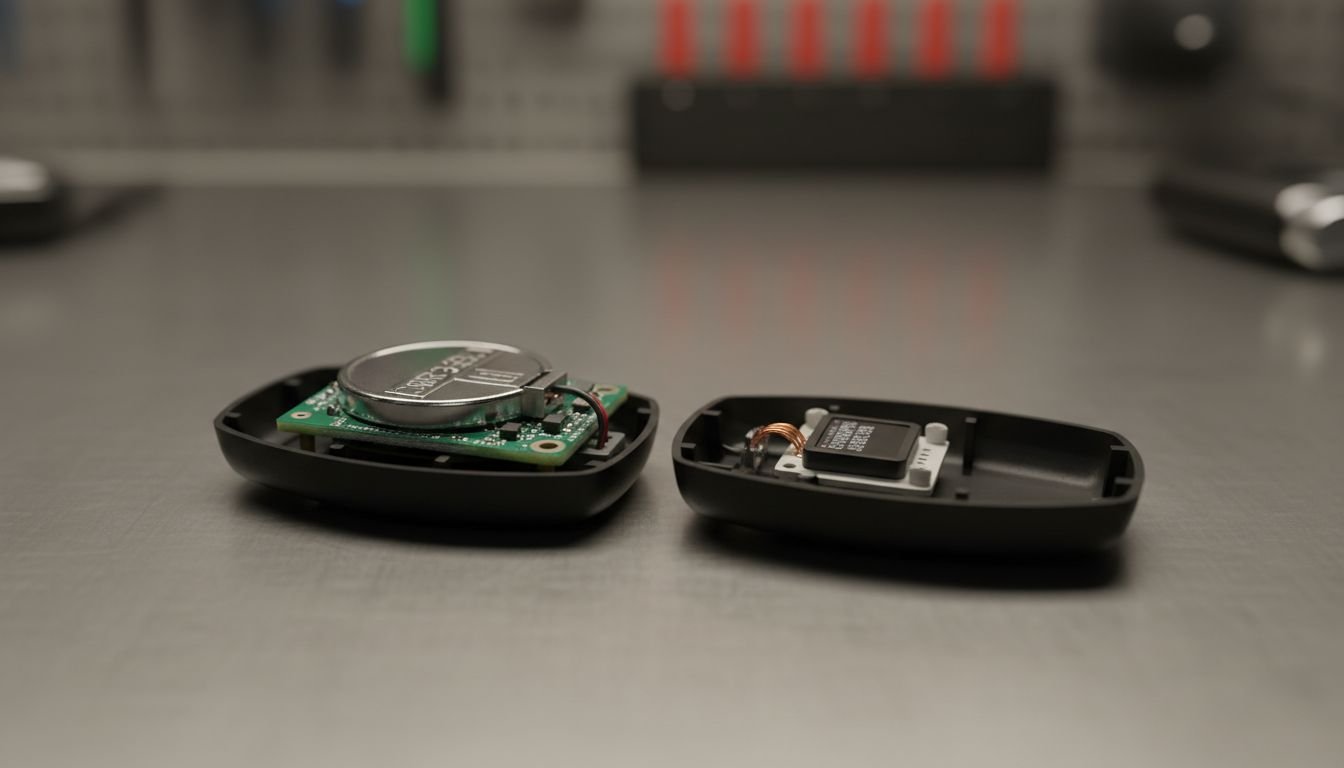
To make better decisions, it helps to know what’s actually inside most American and Japanese automotive key fobs and how each part can fail.
RF remote board and button circuits
The RF section is a small printed circuit board (PCB) with:
- Tiny micro-switches under each button
- A radio-frequency chip and antenna
- Battery contacts
Common RF failures include:
- Worn button pads – rubber pads no longer press the micro-switch reliably.
- Broken micro-switches – from years of pressing or impact.
- Cracked solder joints – from drops or flexing the case.
- Corrosion – from moisture, drinks, rain, or washing the key.
Transponder chip communication with the immobilizer
The transponder chip is usually a small glass or plastic capsule, or a tiny square embedded in the board or key head. It talks to the vehicle’s immobilizer system.
Failures are less common than RF issues, but can include:
- Chip damage from severe impact or crushing.
- Programming loss or corruption (rare, but possible after module changes or improper attempts at programming).
- Vehicle-side antenna or immobilizer faults (which can mimic a bad key).
When transponder communication is the problem, you usually need Transponder Key Programming or a professional Vehicle Diagnostic to confirm whether the issue is in the key or in the vehicle.
Proximity antennas and push-button start detection
Smart key systems use multiple antennas around the vehicle:
- Exterior antennas near door handles or trunk.
- Interior antennas in the cabin and near the center console.
These antennas look for a response from your key. If the response isn’t strong or clear enough, you’ll see messages like “key not detected” or “place key close to start button.” The fault can be in the key, the antennas, wiring, or control modules—this is where a Vehicle Diagnostic is often needed.
Battery supply, voltage drop, and low-power symptoms
Most remotes use coin cell batteries (like CR2032). As the battery weakens:
- Range decreases (you must be closer to the vehicle).
- Buttons become intermittent.
- Some smart key systems may show low key battery warnings.
However, a weak battery can also confuse diagnosis. You might swap a battery and still have trouble if the board is already damaged or the key needs reprogramming.
Internal board failure, corrosion, cracked solder joints, and damaged casings
Inside a typical fob, everything is tightly packed. Common internal failures:
- Corrosion from sweat, rain, or going through the washing machine.
- Cracked solder joints around the battery holder or buttons from drops.
- Damaged plastic shell that lets moisture and dirt get inside.
Once corrosion or board damage gets bad enough, simply changing the battery won’t fix it. At that point, the realistic answer is usually Key Fob Replacement & Programming rather than trying to salvage a failing board.
Common Signs Your Key Fob Is Failing
Here are the symptoms I see most often in Garland and the broader DFW area, and what they usually indicate.
Buttons only work at very short range
This is usually the classic key fob battery problem or early RF board degradation.
- First suspect: weak battery.
- Second suspect: dirty battery contacts or minor board damage.
If a new, correctly installed battery only helps for a short time, that fob is likely on its way out and may need Key Fob Replacement & Programming.
Doors lock/unlock, but the car will not start
This is often a transponder or immobilizer issue:
- RF remote is working (locks respond), so the board and battery are at least partly fine.
- The vehicle does not see a valid transponder code, so it will not allow the engine to start.
Here we typically look at Transponder Key Programming, and sometimes Vehicle Diagnostic if the vehicle may have module or antenna issues.
Push-button start says key not detected
For smart key systems:
- Low or dead fob battery can cause this.
- Failed proximity components in the key, or failed antennas in the vehicle, can also cause the exact same message.
If a fresh battery doesn’t solve the push-button start key not detected warning, you’re past DIY. This is usually where Smart Key Programming and/or a Vehicle Diagnostic comes in.
Intermittent performance after battery replacement
If you’ve already replaced the battery and still have intermittent issues, possibilities include:
- Wrong battery type or poor contact.
- Cracked solder joints or partial corrosion.
- Programming drift or lost sync with the vehicle.
- Vehicle-side receiver or antenna issues.
At this point, professional testing is recommended so you’re not just throwing parts at the problem.
Physical damage from drops, moisture, heat, or worn buttons
Visible shell damage, crushed keys, or fobs that have been submerged in water are strong candidates for complete replacement. In Texas, we also see a lot of keys baked on dashboards or accidentally run through the dryer. Once the casing and board are compromised, Key Fob Replacement & Programming is usually the only reliable fix.
Why Automotive Key Fobs Stop Working
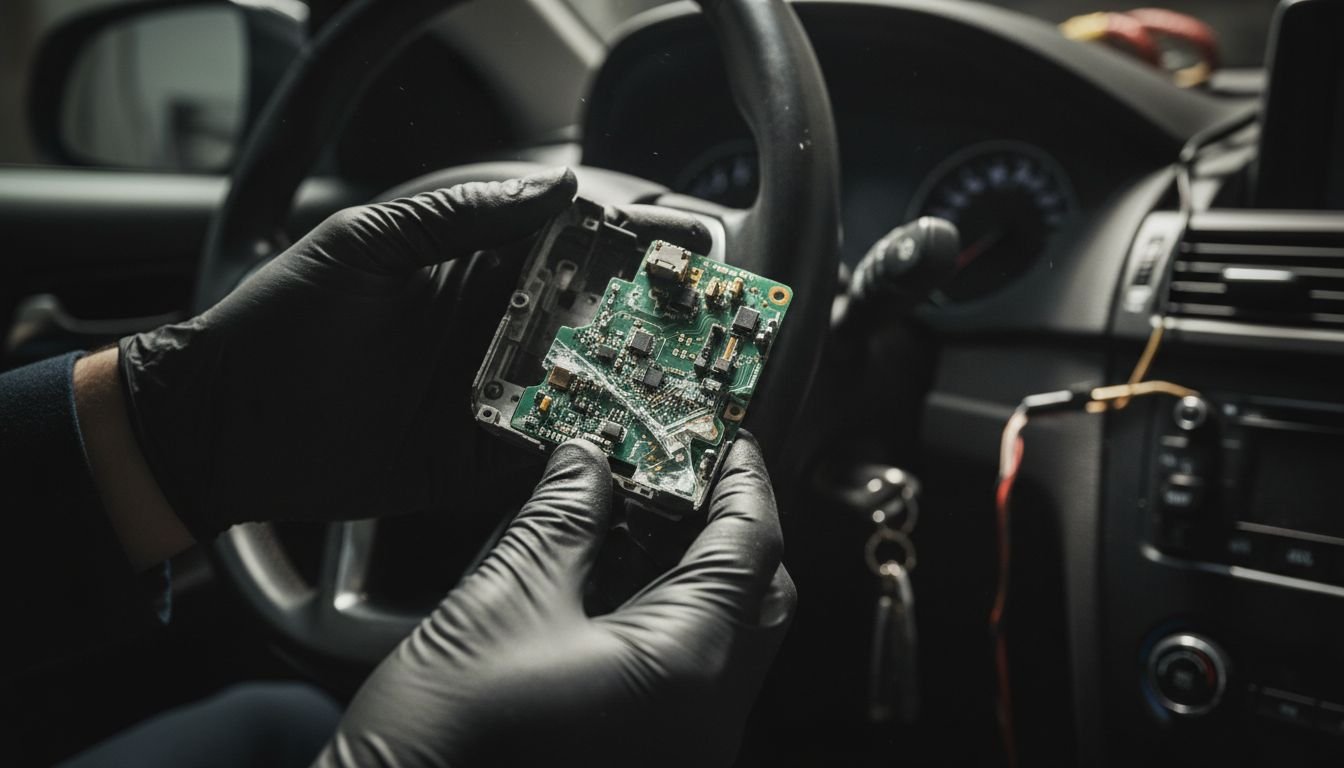
When a car key fob stops working, it’s usually one or a combination of these causes.
Dead or weak battery
This is the most common and the easiest to address. Symptoms:
- Range gets shorter over time.
- Sometimes works, sometimes doesn’t.
- Smart key may require placing the fob right against the start button to detect.
A proper battery replacement, with the correct type and orientation, often solves these issues. But if it doesn’t, something deeper is wrong.
Water intrusion and contamination
Rain, sweat, drinks, or the washing machine can push moisture into the shell. This leads to:
- Corrosion on the circuit board.
- Sticky or non-responsive buttons.
- Intermittent or total failure.
Once corrosion sets in, it tends to spread. Cleaning can sometimes buy time, but long-term reliability is usually poor. That’s when Key Fob Replacement & Programming is the safest option.
Damaged shell, worn contacts, or broken buttons
Exposed boards, cracked plastic, missing buttons, or a shell that no longer closes tightly will let dust and moisture in and physically stress the solder joints. If the board is already cracked or the button contacts have lifted off, a new shell alone won’t solve it.
Programming loss or sync issues
Sometimes the fob and vehicle simply lose their handshake. This can happen after:
- Certain immobilizer or body control module replacements.
- Wrong DIY programming attempts.
- Electrical issues or low vehicle battery during programming.
In these cases, you need proper key fob programming, Smart Key Programming, or Transponder Key Programming using professional tools that can talk to your specific vehicle.
Vehicle-side problems requiring a diagnostic check
Not every “key problem” is the key. Common vehicle-side issues include:
- Failed RF receiver or smart key module.
- Broken or shorted proximity antennas.
- Immobilizer faults and related DTCs (diagnostic trouble codes).
- Low or unstable vehicle battery causing modules to misbehave.
These situations call for a proper Vehicle Diagnostic. If you’re seeing multiple electrical issues or warning lights, it may be less about the key and more about the vehicle. For more details on how diagnostics work in this area, see this guide on vehicle diagnostic issues in Garland TX.
Why Texas heat can shorten battery and plastic life
In Garland and the wider DFW area, we deal with extreme heat inside parked vehicles. That heat:
- Shortens coin cell battery life.
- Makes plastic shells brittle.
- Can warp or stress solder joints on the board.
If you routinely leave your keys on the dashboard in summer, expect a shorter life span and more frequent need for Key Fob Replacement & Programming or new shells.
Simple Troubleshooting Before You Replace the Fob
Before you spend money, here are safe, simple checks you can do at home. These apply to most American and Japanese vehicles.
Confirm the battery type and orientation
- Remove the key fob battery and check the number (e.g., CR2032, CR2016).
- Replace it with a matching, name-brand battery.
- Match the plus (+) and minus (-) signs exactly as in the original orientation.
Wrong battery type or upside-down installation is more common than you’d think.
Inspect the shell, button pads, and battery contacts
- Check for cracks, missing pieces, or a shell that doesn’t close securely.
- Look at the battery contacts for rust, green residue, or heavy discoloration.
- Check that the rubber button pad isn’t torn or completely worn through.
Heavy corrosion or a shattered shell is usually a sign you’re past simple fixes.
Test with a spare key fob if available
If you have a spare key that used to work:
- Test lock/unlock and starting with the spare.
- If the spare works perfectly, you likely have a failing primary fob.
- If both keys act the same, that points more toward a vehicle-side issue that needs a Vehicle Diagnostic.
Rule out a vehicle battery or receiver issue
Weak vehicle batteries and failing modules can cause odd behavior:
- Instrument cluster flashing or dim.
- Multiple warning lights with no clear reason.
- Random loss of power accessories.
If you’re seeing those issues alongside key problems, a Vehicle Diagnostic should come before you start buying replacement keys.
When a battery change is enough—and when it is not
A battery change is usually enough when:
- Buttons were slowly losing range over months.
- No signs of physical or water damage.
- New battery immediately restores full, stable function.
A battery change is not enough when:
- There’s visible corrosion or shell damage.
- The fob works only sometimes even with a new battery.
- The doors respond, but the engine does not recognize the key.
- “Key not detected” persists on a smart key system.
When your DIY checks hit this wall, it’s time to involve a professional for Key Fob Replacement & Programming, Smart Key Programming, Transponder Key Programming, or a Vehicle Diagnostic.
Quick DIY checklist (safe steps only):
- ✔ Confirm the correct coin cell battery type (e.g., CR2032).
- ✔ Install the battery in the correct orientation.
- ✔ Visually inspect the shell and contacts for serious damage or corrosion.
- ✔ Test all buttons from normal distances.
- ✔ If you have a spare key, test it the same way.
- ✔ Note any warning messages like “key not detected” or security lights staying on.
When Key Fob Programming Is Necessary
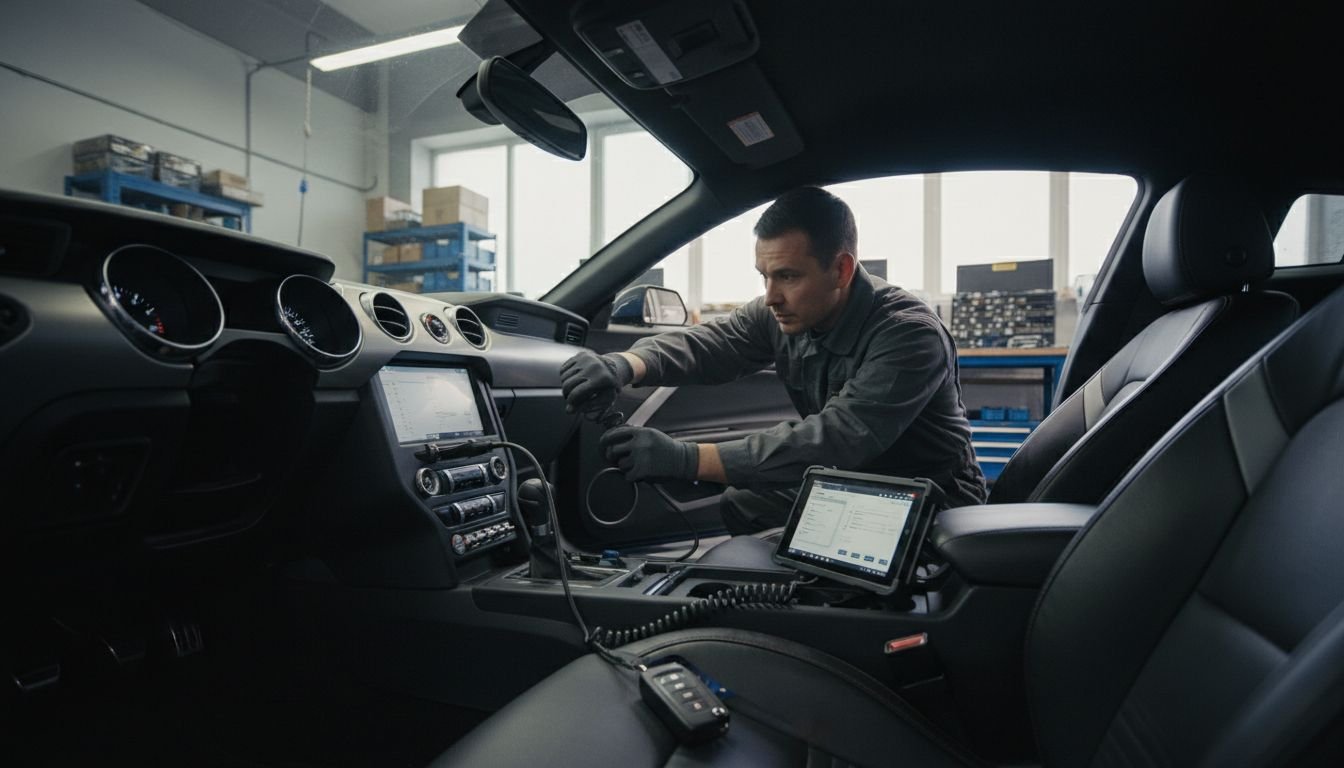
Key fob programming is not just “syncing the remote.” It’s a controlled process where the vehicle is told to trust a specific key or fob for locking, unlocking, and—most critically—starting.
New replacement fobs
Any time you buy a replacement key fob or smart key (OEM or high-quality aftermarket), it usually needs to be:
- Cut (if there’s a physical key blade) using Vehicle Key Cutting.
- Programmed to your vehicle with Key Fob Replacement & Programming, Smart Key Programming, or Transponder Key Programming, depending on the system.
Without this step, the new fob might lock/unlock in some cases, but it won’t authorize the engine to start.
Lost all keys situations
If you’ve lost all car keys, the vehicle has no remaining known key to copy from. This is a more advanced process:
- Accessing secure immobilizer or smart key data.
- Adding new keys while ensuring old (lost) keys can’t start the car.
This is where the Vehicle All Keys Lost service comes in. For a deeper example of what to expect, see this guide on Mazda 3 lost key what to do next. The steps are similar across many American and Japanese models.
After certain module or immobilizer changes
If a dealer or shop has replaced:
- Engine control module (ECM/PCM)
- Body control module (BCM)
- Immobilizer or smart key unit
Then keys often need to be relearned. Without this, you may have a physically correct key that the new module does not recognize.
Why some vehicles allow limited DIY steps while others require specialized tools
Certain older American and Japanese models allow basic DIY remote programming (e.g., turning the key in the ignition in a specific pattern). But:
- That usually only handles the RF lock/unlock part.
- Transponder programming for engine start typically requires a scan tool and security access.
- Newer push-button start systems almost always require professional equipment.
In other words, YouTube videos might get the doors to lock/unlock, but they rarely cover the full immobilizer programming process safely.
Where a transponder chip programmer fits into the process
A transponder chip programmer is a specialized tool that can:
- Read, write, or clone transponder data.
- Communicate with the vehicle through the OBD-II port to add or delete keys.
- Handle different key types for various American and Japanese brands.
It is not plug-and-play for the average driver. Using it wrong can:
- Lock out keys.
- Trigger immobilizer lockout.
- Require more complex recovery procedures.
That’s why this equipment is best left to trained technicians doing Transponder Key Programming and Smart Key Programming, not as a casual DIY purchase.
DIY Risks: Why Replacing a Battery Is Different From Programming a Key
Swapping a coin cell battery is one thing. Rewriting immobilizer data and smart key authorization is another.
Common online misinformation about self-programming
Online forums and videos often show simplified steps that:
- Only apply to specific older models.
- Ignore security changes on newer vehicles.
- Skip critical steps like erasing lost keys.
Following the wrong instructions can leave you with no working keys, especially on modern smart key systems.
Risk of buying the wrong FCC ID / incompatible fob
Not all fobs that “look the same” are compatible. Each has:
- A specific FCC ID or model number.
- A specific frequency and chip type.
- Vehicle-specific compatibility ranges.
Buying the wrong unit online may leave you with a fob that cannot be properly programmed at all, even with professional equipment. A technician will typically verify part numbers by VIN—something you can start yourself using the LockNCal VIN decoder.
Why a transponder chip programmer is not a universal DIY answer
Even if you buy a transponder chip programmer online:
- It may not have coverage for your exact year/make/model.
- It may require security codes and procedures the average driver does not have.
- A mistake can corrupt data or lock the system.
Professional locksmiths invest heavily in multiple tools, subscriptions, and training to do this work safely and legally.
Immobilizer, security, and module communication issues
Immobilizer and smart key systems talk to several modules at once. If one module doesn’t match the others, the car may:
- Crank but not start.
- Show security lights or warnings.
- Refuse to accept new keys during programming.
This is where a combined approach—Vehicle Diagnostic plus the correct Smart Key Programming or Transponder Key Programming—is essential.
When it makes more sense to call a professional locksmith
You should stop DIY attempts and call a pro when:
- You have no working keys left.
- “Key not detected” persists after a known-good battery.
- Both your primary and spare key show the same issue.
- You’ve replaced the fob and it still won’t start, even though it locks/unlocks.
In these cases, a local locksmith like LockNCal can provide same-day availability for many American and Japanese vehicles in Garland TX and surrounding DFW areas.
Modern vehicles tie key, immobilizer, steering lock, and other electronics together. Careless DIY work around wiring, steering columns, or under-dash areas can cause bigger problems or safety issues. Also remember that SRS (airbag) components involve explosive devices. Do not probe or disturb yellow airbag connectors or modules while experimenting with key or ignition circuits. If in doubt, step away and call a professional.
Automotive Key Fob Help in Garland TX: When to Call a Professional
When your own troubleshooting hits a wall, having a local specialist who understands both locksmith work and vehicle electronics makes a big difference.
LockNCal services for local drivers
In Garland TX and across much of the DFW metro, LockNCal offers:
- Key Fob Replacement & Programming
- Smart Key Programming
- Transponder Key Programming
- Vehicle All Keys Lost
- Vehicle Key Duplication
- Vehicle Key Cutting
- Vehicle Diagnostic
- Locksmith Services (vehicle lockouts and related needs)
You can learn more about local coverage and support on the Garland service page here: https://lockncal.com/Garland-TX.
Key fob replacement vs smart key programming vs transponder key programming
In practice:
- Key Fob Replacement & Programming – for standard remote keys and fobs that need to be replaced and paired.
- Smart Key Programming – for push-button start / proximity systems that won’t detect the key or need new smart keys added.
- Transponder Key Programming – for keyed ignitions where the chip in the key must be recognized by the immobilizer.
Help for lost, broken, or no-longer-detected keys
LockNCal can assist when:
- You have lost all car keys and can’t start or even unlock the vehicle.
- Your key is physically broken, crushed, or has missing buttons.
- Your vehicle says “key not detected” even with a known-good battery.
- You simply want a backup key before something goes wrong.
What to expect from a local diagnosis and service visit
Typically, a professional visit will include:
- Verifying your vehicle details (often by VIN).
- Reading immobilizer or smart key data and checking for trouble codes.
- Testing your existing keys where possible.
- Recommending the right mix of Vehicle Diagnostic, cutting, and programming instead of guessing.
In many cases, same-day availability is possible for compatible American and Japanese vehicles in the Garland and DFW area.
Which LockNCal Service Fits Your Situation?
Use this quick reference to connect your symptoms with the right service. When in doubt, start with Vehicle Diagnostic or call for guidance.
| Problem | Likely Cause | Recommended Service |
|---|---|---|
| Fob buttons dead after physical or water damage | Failed RF board, corrosion, or cracked solder joints | Key Fob Replacement & Programming |
| Car won’t detect smart key / “key not detected” on push-button start | Weak key battery, failed smart key, or vehicle antenna/module issue | Smart Key Programming and/or Vehicle Diagnostic |
| Doors unlock but engine will not start or keeps shutting off | Transponder not recognized, immobilizer issue | Transponder Key Programming and/or Vehicle Diagnostic |
| No working keys left (lost your only key) | All keys lost, immobilizer needs new keys added and old ones disabled | Vehicle All Keys Lost plus cutting and programming as needed |
| Need a backup key so you’re not stranded later | N/A (preventive) | Vehicle Key Duplication and/or Vehicle Key Cutting |
| Locked out of vehicle but keys are inside | Keys present but inaccessible | Locksmith Services |
| Multiple electrical issues plus key recognition problems | Possible module, wiring, or receiver fault | Vehicle Diagnostic first, then appropriate key service |
Final Takeaway: Don’t Guess When Security and Access Are on the Line
Modern automotive key fobs are more than just plastic and buttons—they’re part of your vehicle’s security system. Batteries, RF boards, transponder chips, and smart key antennas all have to work together. When something fails, guessing can waste money and time, or even leave you with no working keys.
If you’re in Garland TX or anywhere in the DFW area and:
- Your key fob suddenly stopped working.
- Your push-button start says “key not detected.”
- You’ve lost all car keys or only have one left and want a backup.
It’s smart to bring in a professional. Need help with key fob programming in Garland TX? LockNCal can diagnose the issue and offer same-day availability for many compatible American and Japanese vehicles, using services like Key Fob Replacement & Programming, Smart Key Programming, Transponder Key Programming, Vehicle All Keys Lost, Vehicle Key Duplication, Vehicle Key Cutting, Vehicle Diagnostic, and Locksmith Services.
When security and access are on the line, don’t keep guessing—get the key, fob, or smart system checked properly and drive away with confidence.
FAQs About Automotive Key Fobs
1. What is the difference between a key fob, a transponder key, and a smart key?
A key fob usually refers to the remote with lock/unlock buttons. A transponder key is a metal key (sometimes with remote buttons) that contains a chip recognized by the immobilizer so the engine can start. A smart key is a proximity-based system for push-button start and often passive entry, using both a transponder function and proximity antennas.
2. Can a dead battery in the fob stop my car from starting?
On many vehicles, a completely dead fob battery can prevent both remote functions and smart key detection. However, some systems allow you to start the car by holding the fob close to a specific spot (such as the start button) because the transponder chip itself doesn’t always rely on the coin cell battery. If that method doesn’t work, you may need professional Smart Key Programming or Transponder Key Programming.
3. Why does my key fob unlock the doors but not start the engine?
This often means the RF remote part is working, but the transponder chip is not being recognized. The immobilizer doesn’t see a valid key, so it won’t allow the engine to start. In that case, a technician would typically look at Transponder Key Programming or a Vehicle Diagnostic to confirm whether the fault is in the key or in the vehicle.
4. When do I need key fob programming instead of just a battery replacement?
If a fresh, correctly installed battery doesn’t restore normal function—or if you’ve added a new or different fob—you almost certainly need key fob programming. You’ll also need programming when you’ve lost all keys, replaced modules related to the immobilizer or smart key system, or changed to a different style of key.
5. Can I program a replacement key fob myself?
Some older American and Japanese models allow limited DIY programming for basic lock/unlock functions. But engine-start authorization, especially on newer or push-button start vehicles, typically requires professional tools and security access. Attempting the wrong DIY procedure can lock out keys or cause immobilizer problems, so most drivers are better off having a locksmith handle programming.
6. What does a transponder chip programmer do?
A transponder chip programmer is a specialized device that can read and write key chip data and talk to the vehicle’s immobilizer system to add or remove keys. It’s not universal, and using it incorrectly can lock the system or corrupt data. That’s why it’s primarily a professional tool used during Transponder Key Programming and Smart Key Programming.
7. Who should I call in Garland TX if my car says key not detected?
If your vehicle shows a “key not detected” message and a fresh battery doesn’t help, contact a local automotive locksmith who understands both keys and vehicle electronics. In Garland TX and the surrounding DFW area, LockNCal can provide Key Fob Replacement & Programming, Smart Key Programming, Transponder Key Programming, Vehicle All Keys Lost, and Vehicle Diagnostic services with same-day availability for many American and Japanese vehicles.
Compare your options and costs in our guide to key fob & remote programming.