 Skip to content

Ford Transponder Key Programming: How It Works, DIY Options, and When to Call a Locksmith
As an automotive safety and key systems technician in DFW, I see the same confusion over and over: the metal key for a Ford turns in the ignition, but the truck still won’t start, or the Ford key fob not programmed properly only locks/unlocks but won’t let the vehicle run. This is where understanding Ford transponder key programming and the way Ford’s anti-theft systems work really matters.
LockNCal cuts and programs car keys and fobs right where your vehicle is, anywhere in Dallas–Fort Worth. On-site: $0 today, pay after the job. Book online & see your price in 60 seconds or call (469) 277-7277.
Need a key made or programmed? Our automotive locksmith service in DFW comes to you across Dallas–Fort Worth.
This guide walks you through what Ford’s transponder and PATS systems are, how they behave on different model years (including F-150), what you can realistically do yourself, and when it’s safer to call a professional locksmith in Duncanville and the greater DFW area.
If you’re not sure exactly which key or fob your Ford uses, you can also look up your vehicle build details with this VIN tool: Ford VIN decoder.
What Is Ford Transponder Key Programming?
Ford transponder key programming is the process of teaching your vehicle’s anti-theft system to recognize a specific key’s electronic ID, not just its physical shape. The key blade might be cut perfectly and still not start the engine if the chip inside the key is not matched to the vehicle.
There are a few common Ford key styles you’ll see in Duncanville and across DFW:
- Cut mechanical key (no chip) – Older base models or certain fleet vehicles. The blade pattern alone controls the lock cylinder and ignition. No immobilizer chip in the head.
- Transponder chip key – A metal blade with a glass or carbon chip embedded in the plastic head. The chip communicates with the Ford immobilizer; the key must be both cut correctly and electronically programmed.
- Remote head key – A transponder key with lock/unlock buttons built into the head. Programming usually has two separate parts:
1) Transponder/PATS programming for engine start authorization.
2) Key fob programming for lock, unlock, panic, and sometimes remote start. - Smart / proximity key – No traditional metal key is used in daily driving. You keep a fob in your pocket and use push-button start. These require Smart Key Programming and follow a different procedure than older transponder keys.
Key point: On modern Fords, the blade turning the ignition only tells you the cut is right. It does not prove that the transponder chip or smart key is recognized. The electronic side is where most programming issues appear.
How Ford Anti-Theft Systems Work
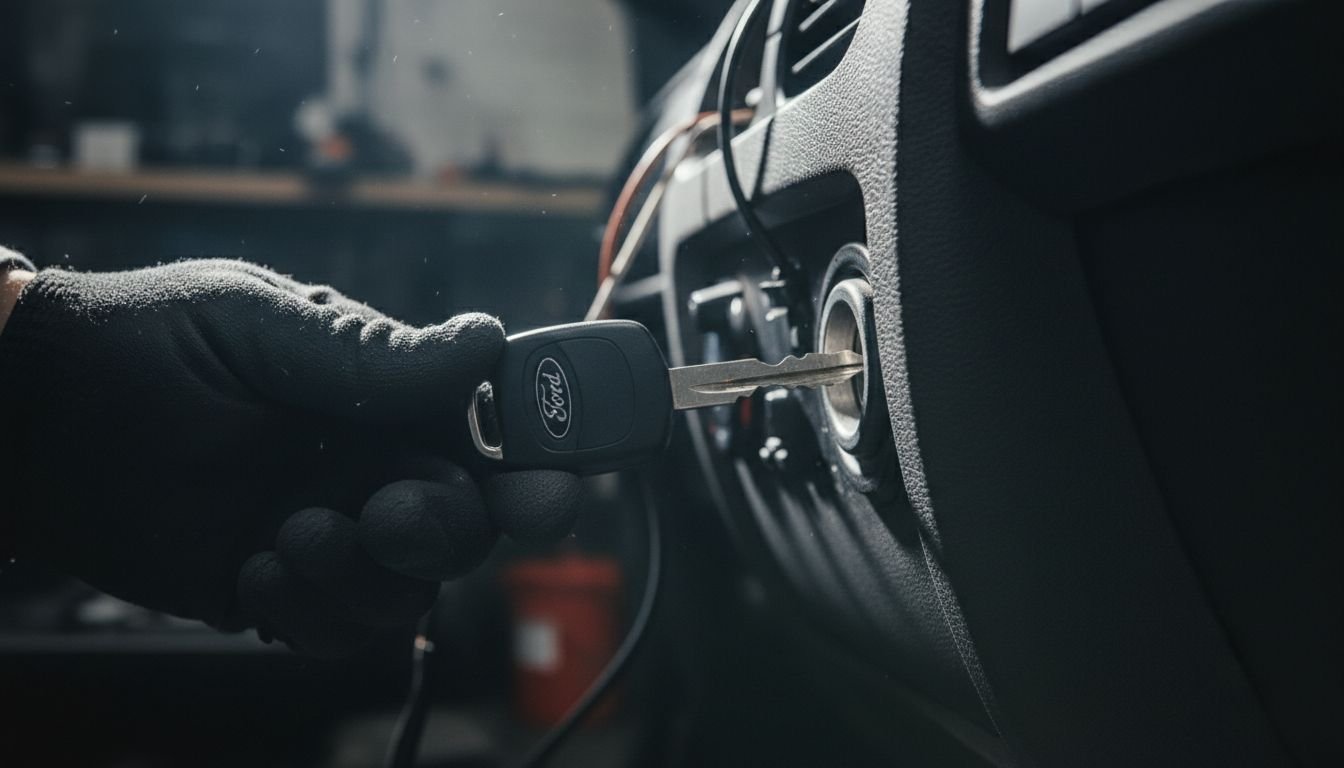
Ford uses a family of anti-theft systems built around a few core pieces working together:
- Key transponder chip – A tiny, passive chip inside the key or fob that carries a unique ID code.
- Antenna ring / coil – Mounted around the ignition cylinder or near the push-button start. It energizes and reads the chip when you attempt to start the vehicle.
- Immobilizer / security module – Sometimes built into the instrument cluster, body control module, or a dedicated PATS module depending on year and model.
- PCM (Powertrain Control Module) – The engine computer, which receives a “go / no-go” signal from the immobilizer. If the signal is wrong or missing, the PCM disables fuel or spark and the engine will not run.
During Ford key programming, we are updating the authorized key list stored in that immobilizer/security system so that it recognizes the new key’s ID.
What Is Ford PATS?
Ford PATS stands for Passive Anti-Theft System. When people talk about Ford PATS key programming, they’re referring to adding, erasing, or reprogramming the keys that the PATS module will accept.
On a typical PATS-equipped Ford:
- You insert the key or bring the fob into range.
- The PATS antenna reads the chip ID.
- The system checks that ID against its internal memory.
- If it matches an authorized key, it allows the engine to start; if not, it blocks the start.
Common symptoms when PATS does not recognize a key:
- Engine cranks briefly then stalls.
- Engine will not crank at all on some models.
- Theft/security light flashes quickly or stays on solid.
- Scan tools may show immobilizer/PATS-related fault codes.
Transponder Keys vs Smart Keys on Ford Vehicles
From a locksmith’s perspective in DFW, the big divide is:
- Older transponder systems – Metal blade, chip in the head, turn-key ignition. Many of these can allow onboard programming if you already have two working keys, though not all.
- Newer smart / proximity systems – Push-button start, fob presence detected by antennas. These typically require Smart Key Programming with professional diagnostic tools and secure access procedures.
Both systems still rely on the same core idea: the vehicle checks for a valid, pre-approved electronic ID before it lets the engine run. But the programming steps, tools, and DIY limits are very different.
Explain How Ford Transponder Systems Work, Model-Specific Procedures (Including F-150 / PATS Systems), DIY Possibilities, Required Tools, and When to Contact a Locksmith or Dealer
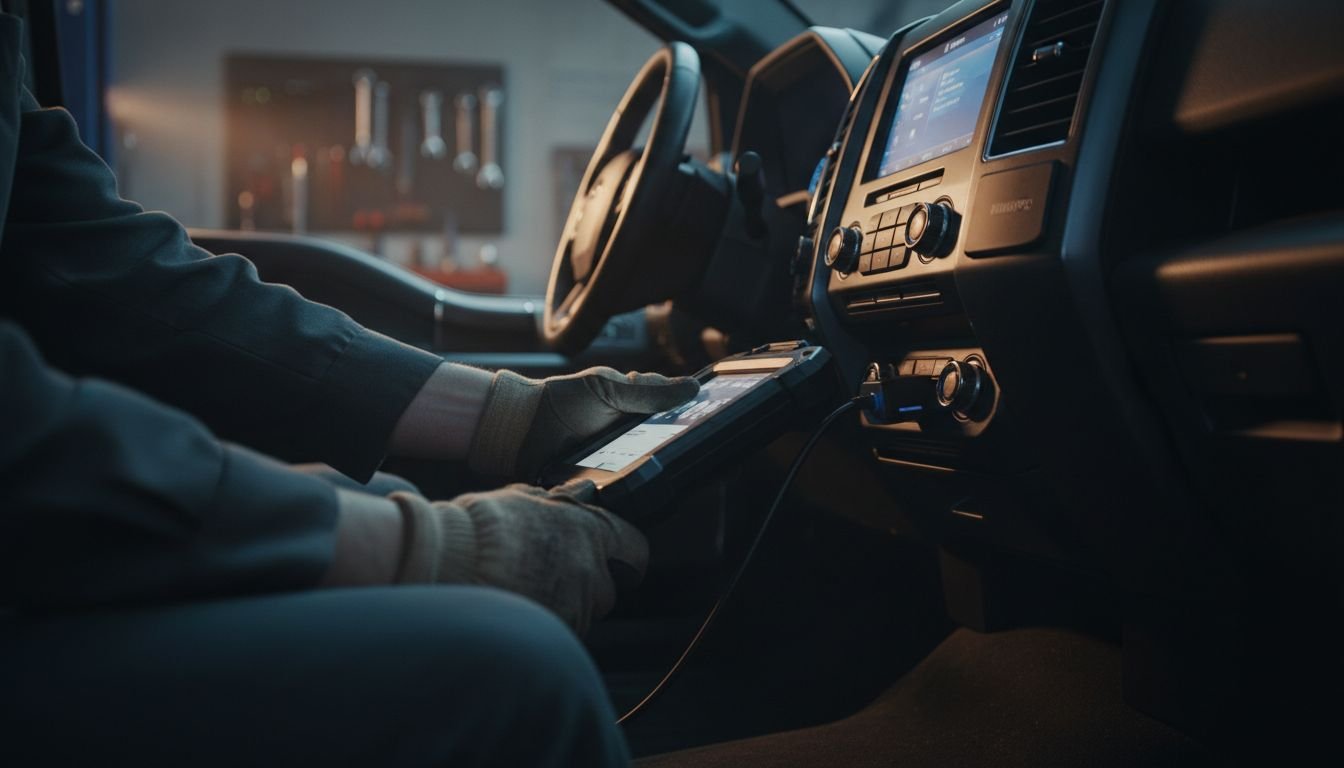
This section pulls everything together: how the system behaves, where ford transponder key programming differs by model year, how Ford F-150 key fob programming fits in, and when it’s time to call in a professional.
Older Ford Models That May Allow Onboard Key Addition
Many older Fords (late 1990s through the 2000s, and certain early 2010s trims) use PATS versions that sometimes allow you to add a spare Ford key yourself if you already have two working, programmed keys in hand.
Typical pattern on those systems:
- You start with two different keys that both start the vehicle.
- You perform a specific sequence (often cycling each key in the ignition within a set time window).
- You insert the new, properly cut transponder key and the vehicle learns it as a third key.
Important limitations:
- Not all Ford models support this. Even in the same year, one trim may allow onboard programming while another does not.
- If you only have one working key, the onboard add-a-key method typically will not work.
- If you buy the wrong chip type or aftermarket key, the procedure can fail even if you follow the steps exactly.
When onboard programming is not supported, you’ll need Transponder Key Programming done with a proper scan/programming tool by a locksmith or dealer.
Ford F-150 Key Fob Programming by Generation
For ford f150 key fob programming, it helps to separate two different functions:
- Transponder/PATS programming – Lets the F-150 start and run.
- Key fob programming – Controls lock/unlock, panic, and remote start (when equipped).
On many F-150 generations, the remote lock/unlock portion can be programmed by cycling the ignition a certain number of times and pressing buttons on the fob. That only deals with the remote side, not the transponder.
Broadly, you’ll see:
- Older F-150 (early 2000s) – Separate transponder key and separate keyless entry remote. The engine-start chip is in the key head; the keyless entry is a small fob. You might program the remote yourself, but the chip may still need PATS programming.
- Mid-generation F-150 (late 2000s–early 2010s) – Remote head keys become common. Same physical item contains both the transponder chip and the remote buttons, but they still program as two separate tasks.
- Newer F-150 (push-button start / proximity) – Smart fobs with proximity detection. These almost always require Smart Key Programming with factory-level or advanced tools. DIY is very limited, especially in all keys lost Ford situations.
Takeaway: Programming an F-150 fob so the buttons work is not the same as making the truck authorize the key to start. If your new F-150 fob locks/unlocks but won’t start the truck, the immobilizer side still needs programming.
Ford PATS Key Programming Requirements
When we talk about Ford PATS key programming, the requirements usually fall into these categories:
- Two working keys available – On certain PATS versions, you can add a third key yourself or a locksmith can perform a quicker procedure. This is the best-case scenario.
- One or zero working keys – Now the system often requires a specialized programmer to enter a secure mode, erase or reset keys, and then program in new keys.
- All keys lost – The Vehicle All Keys Lost scenario is the most complex. It often involves:
– Verifying ownership and VIN.
– Vehicle Key Cutting to create a new blade.
– Connecting a diagnostic tool for Transponder Key Programming or Smart Key Programming.
– Sometimes, extended security wait times or parameter resets.
When all keys are gone, DIY options are usually off the table. At that point, you’re realistically looking at professional Locksmith Services or dealer-level programming.
Tools Sometimes Needed for Ford Key Programming
Depending on your Ford and the situation, you may need:
- Correct key blank matched to your VIN/spec – Not all Ford transponder chips are the same. Using the wrong chip type is a common reason DIY fails.
- Properly cut key – Vehicle Key Cutting must match your original key code or lock pattern. A key that doesn’t turn smoothly in all locks can cause headaches later.
- Good battery in the remote/fob – Weak coin cells cause intermittent behavior during Key Fob Replacement & Programming.
- Owner’s manual / model-specific instructions – Some older Fords list onboard programming steps; many newer ones do not.
- Professional programmer / diagnostic equipment – Needed when onboard procedures aren’t available, when all keys are lost, or when the immobilizer has fault codes. This is where services like Transponder Key Programming, Smart Key Programming, and Vehicle Diagnostic come into play.
If you’re not sure what key/fob type your VIN calls for, you can double-check using the VIN decoder and then confirm with a local locksmith.
Common Signs Your Ford Key Needs Programming or Reprogramming
The Key Turns but the Engine Won’t Start
If your Ford key turns but won’t start, first verify that the engine is actually cranking:
- Cranks but doesn’t start: Could be fuel/spark issues, but on PATS vehicles it often points to immobilizer not recognizing the key.
- No crank at all: Some PATS configurations and smart key systems will block even the crank relay if the key is not recognized.
If a spare key starts the vehicle fine but the new one doesn’t, the new key’s transponder programming is likely incomplete or incorrect.
The Security Light Flashes or Stays On
A flashing theft/security light on the instrument cluster is one of the most important symptoms we look at. Depending on the blink pattern, it can indicate:
- Unrecognized key.
- Too many failed start attempts.
- Internal fault within the PATS or cluster.
This is where a Vehicle Diagnostic session can separate a real immobilizer issue from a simple battery or wiring problem.
The Remote Works but the Vehicle Says Key Not Detected
On smart-key/push-button start Fords, you may see a message like “Key Not Detected” even though the fob still locks/unlocks the doors. That usually means:
- The RFID/proximity side of the fob isn’t being recognized properly.
- The vehicle may only be seeing the remote-control radio signal, not the immobilizer chip presence.
In those cases, Smart Key Programming or replacing the fob itself through Key Fob Replacement & Programming is often required.
You Only Have One Key Left or Lost All Keys
From a safety and convenience standpoint, only having one working Ford key is a risk. If you lose it, you’re in a Vehicle All Keys Lost situation that’s more time-consuming and expensive to fix.
When you’re down to a single key, that’s the right time to schedule Vehicle Key Duplication or Vehicle Key Copying and Transponder Key Programming before it becomes an emergency.
Can You Program a Ford Transponder Key Yourself?
The honest answer: sometimes yes, sometimes no. It depends heavily on your Ford’s year, model, and key type, and whether you already have two working keys.
Ford transponder key programming on older, PATS-style systems can occasionally be done at home. But for newer smart keys, all-keys-lost cases, or Fords with complex PATS versions, a DIY attempt is more likely to waste time and money than to fix the problem.
When DIY Programming May Work
- Older models that specifically support onboard key addition.
- You have the correct transponder key type (matched by VIN and year, not just by appearance).
- You already have the required number of working keys, usually two.
- You follow the exact timing and ignition cycling sequence from the owner’s manual or a reliable source.
Even then, you should be prepared for the process to fail if the chip or key blank is wrong, or if there’s an underlying PATS fault.
When DIY Programming Usually Fails
- Wrong chip or wrong key blank – The key might cut correctly but the chip ID is not compatible with your Ford immobilizer.
- Key is cut incorrectly – It may partially turn or bind in the cylinder, causing unreliable readings at the antenna ring.
- No working keys available – All keys lost Ford scenarios almost always require professional tools.
- PATS/immobilizer mismatch or fault – If modules have been replaced or have stored faults, a simple add-a-key procedure will not fix it.
- Newer smart/proximity systems – These generally require Smart Key Programming with security access codes and are not designed for DIY.
When in doubt, it’s safer to consult an automotive locksmith before ordering keys or tools. A short phone call can prevent purchasing parts that will never program.
Troubleshooting Ford Transponder Key Programming Problems
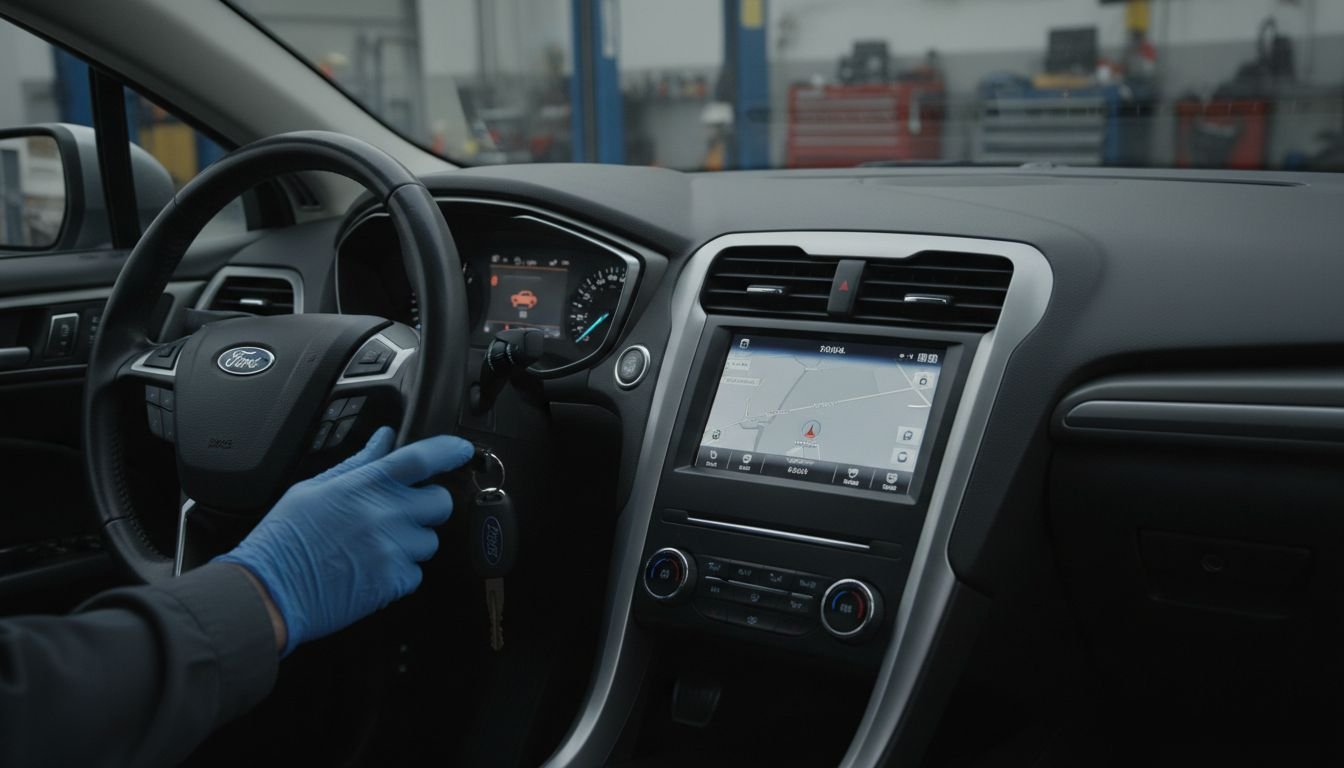
Why a New Key May Unlock the Door but Not Start the Truck
If your new Ford key unlocks the doors but does not start the truck, here’s what that usually means:
- The mechanical cut of the key is correct.
- The transponder chip is missing, wrong, or not programmed.
This is the classic case where people assume the key is fine because it turns in the locks, but in reality, the Ford immobilizer is rejecting the key electronically. The fix is typically Transponder Key Programming with the right chip type.
Why Ford F-150 Key Fob Programming Sometimes Only Fixes the Remote Functions
With ford f150 key fob programming, it’s very common for owners to successfully get the lock/unlock buttons working via an ignition-cycle procedure, but the truck still won’t start with that key.
This happens because:
- The ignition-cycling procedure only teaches the body control module to recognize the remote radio code.
- The transponder/PATS side still doesn’t know about the new chip, so it blocks engine start.
In short, key fob programming and transponder programming are two separate functions. Many F-150 owners only complete half the job when they follow remote-only instructions.
What a Flashing Theft Light Can Mean
A rapidly flashing theft light after a start attempt often indicates that PATS has actively disabled the engine. However, not all blinking patterns mean the same thing. Some are normal “armed” indicators; some signal faults.
If the theft light pattern changes only when you try a certain key, that key is a strong suspect. If it flashes even with your original key, there may be a deeper Ford anti-theft system problem that needs Vehicle Diagnostic work, not just key programming. In those cases, understanding Ford system warnings and diagnostic trouble codes is important, and you may find this Ford diagnostic overview useful: vehicle diagnostics and system warning diagnosis.
What to Do If You Lost All Working Keys
If you’re in a Vehicle All Keys Lost situation with your Ford:
- Do not keep trying random keys or forcing the ignition; too many failed PATS attempts can trigger lockout timers.
- Gather your vehicle information: VIN, proof of ownership, and location.
- Contact local Locksmith Services that specialize in automotive work in Duncanville or the wider DFW area.
The professional process typically includes:
- Decoding or looking up the key cut and performing Vehicle Key Cutting.
- Selecting the correct transponder or smart key for your year/model.
- Connecting a programming tool for Transponder Key Programming or Smart Key Programming.
- Verifying that the vehicle starts and the security light behaves normally.
Trying to bypass PATS or use non-matched modules is rarely safe and can create bigger electrical and security issues.
DIY Risks, Security Limitations, and Safety Considerations
Programming keys and fobs looks simple on paper, but there are several real-world risks that I see across Duncanville and DFW:
- Wrong key purchase – Buying low-cost keys or fobs online that have the wrong chip, frequency, or configuration for your Ford. These may never program successfully.
- Immobilizer lockout – Repeated failed attempts can trigger PATS security timers, adding extra wait time and complexity.
- Unnecessary towing – A DIY attempt at home can end with the vehicle immobilized, requiring towing to a shop or dealer that could have been avoided with mobile locksmith service.
- Module and wiring damage – Incorrect use of cheap programmers or probing wires can damage sensitive electronics.
Critical safety warning: Modern Ford steering columns and dash areas often contain SRS (Supplemental Restraint System) / airbag components. These systems use explosive devices to deploy airbags. If you start pulling trim panels, tampering with wiring, or working near airbag connectors without proper procedures:
- You risk accidental airbag deployment, which can cause serious injury.
- You can disable critical safety systems without realizing it.
For that reason, any work that involves removing steering wheel covers, airbag modules, or dash components is best left to a trained technician. For more on how integrated these safety systems can be, you can review this article on safety system electronics and airbags.
If you stay on the safe side of DIY—only inserting keys, following documented onboard steps, and avoiding disassembly—you reduce these risks. As soon as wiring, modules, or steering column parts are involved, call a professional.
When to Call a Locksmith or Dealer in Duncanville TX
In the Duncanville and DFW area, you generally have two main options when Ford transponder key programming or smart key issues come up: a qualified automotive locksmith or the dealership.
A mobile locksmith service like LockNCal in Duncanville TX can often come directly to your vehicle in areas we cover (Duncanville, Dallas, Arlington, Grand Prairie, Cedar Hill, DeSoto, and many other DFW communities) and provide:
- Transponder Key Programming
- Smart Key Programming
- Key Fob Replacement & Programming
- Vehicle Key Cutting
- Vehicle Key Duplication and Vehicle Key Copying
- Vehicle All Keys Lost solutions (where supported)
- Car Lockout Assistance and Broken Key Extraction when needed
- Locksmith Services focused on automotive security
Depending on your exact Ford model and security system, same-day availability may be possible in parts of DFW, but it always depends on technician scheduling, parts availability, and location.
Best Reasons to Call LockNCal
As a safety-focused technician, here are the situations where I strongly recommend calling a professional like LockNCal instead of pushing DIY further:
- You are down to one working key – Time to schedule Vehicle Key Duplication and Transponder Key Programming before you’re stranded.
- No working keys at all – This is a Vehicle All Keys Lost case and usually requires professional equipment and security procedures.
- You need same-day mobile help in DFW – Towing to a dealer can often be avoided when a locksmith comes to your home, work, or roadside location (within our covered areas).
- You need both cutting and programming – Getting both Vehicle Key Cutting and programming done in one visit is usually faster and more controlled.
- You’re unsure which key/fob is correct – A locksmith can verify proper part numbers and chip types so you don’t waste money on incorrect keys.
When a Dealer May Still Be Considered
There are cases where the Ford dealer remains a reasonable option:
- Very new model years where security procedures or parts are tightly controlled.
- Situations where a module replacement or firmware update is involved in addition to key programming.
- When your particular VIN requires a factory pre-coded component shipped via Ford’s network.
Even then, many everyday Ford transponder key programming, Ford PATS issues, and smart key problems can be handled by an experienced automotive locksmith in the Duncanville / DFW area without towing to the dealership.
Ford Transponder Key Programming Cost Factors
Owners often ask, “How much does it cost to program a Ford key?” The accurate answer is that cost depends on the vehicle, key type, and whether any working keys are available.
Main factors that influence pricing:
- Key type – Basic transponder key, remote head key, or full smart/proximity key.
- Model year and system – Some older PATS systems are quicker to program than newer high-security platforms.
- All-keys-lost vs. spare key – A simple spare key (with an existing working key) is almost always less expensive than a Vehicle All Keys Lost recovery.
- Need for cutting – If the locksmith must perform Vehicle Key Cutting from code or locks, that adds work compared to programming an already cut key.
- Smart key vs. standard transponder – Smart keys and proximity fobs generally cost more in parts and require more setup time.
- Mobile service and location – Coming to your vehicle in areas like Duncanville, Dallas, Arlington, or Fort Worth may change the final service charge.
If you want to get a realistic estimate, have your VIN, model, year, and whether you have any working keys ready when you call. A quick lookup (often with tools similar to the VIN decoder) helps narrow down the correct key/fob and programming path.
Final Takeaway: Know the System Before You Buy a Key
Ford’s security systems have evolved a lot over the last few decades, and that’s why Ford transponder key programming is not one-size-fits-all. Some older Fords allow limited DIY onboard programming with two working keys. Newer PATS versions and smart key systems often require professional diagnostic tools and secure access.
Remember these key points:
- Key cutting, transponder programming, smart key programming, and key fob programming are all different steps.
- Your Ford may require two existing keys before any DIY procedure works.
- Remote/fob functions (lock/unlock) and immobilizer/transponder authorization are two separate programming functions.
- When the security light flashes, the key turns but won’t start, or you’ve lost all keys, it’s time for professional Locksmith Services.
If you’re in Duncanville TX or the greater DFW area and need help with a Ford key that won’t program, an F-150 fob that only half-works, or an all-keys-lost Ford situation, a local automotive locksmith such as LockNCal in Duncanville can often provide on-site Transponder Key Programming, Smart Key Programming, Key Fob Replacement & Programming, and Vehicle Key Cutting to get you safely back on the road.
FAQs About Ford Transponder Key Programming
1. Can I program a Ford transponder key myself?
In some cases, yes. Certain older PATS-equipped Fords allow you to add a key yourself if you already have two working programmed keys and the correct new transponder key. For newer systems, all-keys-lost cases, and most smart key setups, you’ll usually need professional Transponder Key Programming or Smart Key Programming.
2. Do I need two working keys for Ford transponder key programming?
On many older PATS systems, you do need two existing, working keys to run the onboard “add a key” procedure. Without those, or on newer systems, the vehicle usually must be programmed with a diagnostic tool by a locksmith or dealer.
3. What is ford pats key programming?
Ford PATS key programming is the process of using a specific procedure or programming tool to add, erase, or re-authorize keys in the Ford Passive Anti-Theft System. It tells the immobilizer which keys are allowed to start the vehicle.
4. Is ford f150 key fob programming the same as programming the transponder chip?
No. Ford F-150 key fob programming usually refers to setting up the remote lock/unlock and panic buttons. Programming the transponder chip or smart key is a separate step that controls whether the truck will actually start and run. You can sometimes get the remote working while the immobilizer still rejects the key.
5. What happens if my Ford key turns but won’t start the vehicle?
If the key turns but won’t start, and especially if the theft light flashes, the immobilizer may not recognize the key. Try a known-good spare if you have one. If only the new key fails, it likely needs proper transponder programming. If none of your keys work, you may need Vehicle Diagnostic and professional Locksmith Services.
6. Can a locksmith program a Ford key if I lost all keys?
Yes, in many cases. For Vehicle All Keys Lost situations, an automotive locksmith with the right tools can often cut a new key, then perform Transponder Key Programming or Smart Key Programming so the vehicle starts again. This is usually done on-site in covered areas instead of towing to a dealer.
7. How do I know if my Ford uses a smart key or a standard transponder key?
If your Ford has a push-button start and you carry a fob instead of a traditional key, you likely have a smart/proximity key. If you insert a metal key and turn it, you likely have a standard transponder or remote head key. For certainty, you can check your VIN details with a tool like the VIN decoder or ask a locksmith to look it up.
See what to budget in our guide to key fob & remote programming.


