 Skip to content

Car Transponder Explained: How It Works, How to Tell If Your Key Has One, and What Replacement Involves
When drivers search for a car transponder, search results often mix two very different things:
LockNCal cuts and programs car keys and fobs right where your vehicle is, anywhere in Dallas–Fort Worth. On-site: $0 today, pay after the job. Book online & see your price in 60 seconds or call (469) 277-7277.
Need a key made or programmed? Our mobile automotive locksmith comes to you across Dallas–Fort Worth.
- Racing/timing transponders used on race tracks
- Automotive key transponders – small chips inside your car key or fob
This article is about the automotive key transponder chip that talks to your vehicle’s immobilizer system. As an auto safety technician working with drivers in Hurst TX and the wider DFW area, I’ll break down what that chip does, how it affects no-start issues, and what it means for replacement time and cost.
By the end, you’ll know:
- What a car transponder is and how it works with the immobilizer
- How to tell if your key has a chip
- Why key cutting is not the same as transponder key programming
- What usually affects price and turnaround time in Hurst TX / DFW
- When it’s safer and cheaper to call a pro like LockNCal instead of guessing or buying random keys online
What Is a Car Transponder?
In everyday auto terms, a car transponder is a small electronic chip built into your key, remote head key, or smart key fob. That chip communicates with your vehicle’s anti-theft immobilizer system to decide whether the engine is allowed to start.
It is not the same thing as a motorsports or racing transponder that tracks lap times. Those devices are mounted on the outside of a race car and talk to track timing equipment. Your car key transponder lives inside the key or fob and talks only to your vehicle.
In most modern American & Japanese vehicles, the transponder chip is:
- Embedded in a plastic key head, remote head key, or smart/proximity fob
- Passive – it doesn’t use a big battery to transmit like a garage remote; instead it’s energized by the car’s antenna ring
- Linked to the car’s computer (ECU/immobilizer) via a unique ID code or set of rolling codes
How a Transponder Chip Works With Your Car’s Immobilizer
Every time you start a modern vehicle, there’s a silent conversation between your car key chip and the immobilizer system. If that conversation fails, the car may crank and die, or not start at all.
What the immobilizer does
The immobilizer is an anti-theft feature built into the vehicle. Its job is to block fuel or ignition unless the correct, programmed transponder is present.
In simple terms, the immobilizer:
- Monitors for a valid transponder signal when you turn the key or push the start button
- Compares the chip’s ID against the authorized list stored in the vehicle
- Only allows the engine to start if there is a proper match
How the reader coil / antenna ring detects the chip
Around the ignition cylinder (or in the dash on push-to-start cars), there’s usually a reader coil / antenna ring. It does two main things:
- Sends a small electromagnetic field to “wake up” the transponder chip
- Receives the coded response from the chip and passes it to the immobilizer
This is why you can’t just tape a transponder chip near the ignition and expect everything to be secure. The system is designed so that the chip must be close enough and correctly oriented to be read properly.
Why the engine may crank but not start when the chip is not recognized
A very common complaint we hear around Dallas-Fort Worth is:
“My car cranks but won’t start, and the security light is flashing.”
This often points to a transponder or immobilizer issue rather than a dead starter. Typical behavior when the chip is not recognized:
- Starter motor turns the engine (cranks)
- Engine won’t fire or stalls immediately
- A security light on the dash may flash or stay solid
Why programming matters even when the key blade is cut correctly
You can have a perfectly cut key blade that turns the ignition and unlocks the doors, but if the transponder chip isn’t programmed to the vehicle, the immobilizer will still refuse to start the engine.
That’s why Transponder Key Programming and, on newer vehicles, Smart Key Programming are just as important as Vehicle Key Cutting. Mechanical fit gets you into the car and lets you turn the cylinder; electronic authorization is what actually lets the vehicle run.
Transponder Chips, Immobilizer Interactions, Programming Steps, How to Tell If Your Key Has a Transponder, and What Affects Replacement Cost and Time
This section pulls the big questions together in one place so you can see how the transponder chip, immobilizer system, programming, identification, and replacement cost/time all connect.
What information the chip and immobilizer exchange
In most American & Japanese vehicles, the transponder and immobilizer exchange:
- A unique ID code (sometimes fixed, sometimes rolling)
- Challenge/response data that proves the chip is legitimate
- Encryption or checksum information that keeps cloning more difficult
The vehicle only allows a start when the expected ID and response are received. If that data is wrong, missing, or scrambled, you see classic symptoms like a car won’t start, security light on, or a brief start followed by a stall.
Basic overview of programming and syncing
Transponder key programming or smart key programming is the process of teaching your vehicle to recognize a new key or fob. In practice, that usually involves:
- Connecting a diagnostic/programming tool to the vehicle
- Entering a security access mode (sometimes requires a PIN or code from manufacturer data)
- Adding or deleting authorized keys in the immobilizer memory
- Testing all keys to confirm they start the engine and operate any lock/unlock or remote functions
Some older vehicles allow limited onboard programming using a sequence of key turns and pedal presses, but many newer systems (especially smart/proximity keys) require professional tools and experience.
Signs your key likely has a transponder
Common clues that your key contains a car key chip:
- Vehicle is roughly late 1990s or newer (especially for Toyota, Honda, Nissan, Subaru, Ford, GM, etc.)
- Key head is a thicker plastic shell, a remote head key, or a smart/proximity fob
- There’s a security/immobilizer light that briefly comes on when you turn the key or press START
- A plain metal copy made at a hardware store unlocks the door but does not start the engine
If you are still asking yourself how to tell if my key has a chip, a quick way for DFW drivers to confirm key type is to use a FREE VIN Decoder or get a professional check.
Use our FREE VIN Decoder here to help identify your vehicle’s key/immobilizer setup before you order parts or schedule service.
Factors that affect price and turnaround time
The cost and time for a replacement car key with chip in Hurst TX or anywhere in DFW depend on factors like:
- Vehicle make, model, and year – A 2004 sedan is usually simpler than a late-model push-to-start crossover.
- Key type – Standard transponder key vs remote head key vs smart/proximity key.
- Whether you still have a working key – Duplicate programming is typically faster than an all keys lost situation.
- Need for cutting – If you need both Vehicle Key Cutting and programming, that adds steps.
- Immobilizer or vehicle issues – If the problem might be the antenna ring, ECU, wiring, or battery, a Vehicle Diagnostic is needed first.
In many cases, same-day availability may be possible depending on vehicle and key type, but it’s never one-size-fits-all. That’s why getting the right diagnosis is more important than chasing the cheapest key blank online.
How to Tell If Your Car Key Has a Transponder
Here are practical checks you can do before you start searching for a smart key replacement near me or buying keys online.
Vehicle age and model clues
Most American & Japanese vehicles built from the late 1990s onward use some form of immobilizer and transponder. By the mid-2000s, it was very common.
Rough guide:
- If your vehicle is 1995 or older, it may be a simple metal key with no chip (though there are exceptions).
- From about 1998–2005, many models transitioned to transponder keys.
- From around 2010 onward, more vehicles moved to remote head keys and smart/proximity keys.
Security light / immobilizer warning clues
Look for a small key icon, padlock icon, or “SECURITY/IMMOBILIZER” light that:
- Comes on when you turn the key to ON or press the START button
- Goes out shortly after the engine starts (this is normal)
- Flashes or stays on when the engine won’t start (this can point to a key/immobilizer issue)
If you’re not sure what a particular light means, it can help to review what warning lights can tell you about vehicle problems before assuming the key is bad.
Why a metal copy alone may unlock the door but not start the vehicle
One of the most common real-world situations we see in DFW:
- Owner has a working chipped key
- They get a plain metal copy made at a hardware store
- The metal copy unlocks the door and turns the ignition but the car won’t start
This is a textbook sign of a vehicle with a transponder system. The hardware store copy duplicates the metal pattern but has no programmed chip, so the immobilizer blocks the start.
When a FREE VIN Decoder or professional check helps confirm key type
If you’re unsure about your key type, two smart steps are:
- Run your VIN through a FREE VIN Decoder to see key and security info
- Ask a professional to scan and identify the immobilizer system
You can use the FREE VIN Decoder from LockNCal to gather details before you request Transponder Key Programming, Smart Key Programming, or Vehicle Key Cutting in the Hurst TX / DFW area.
Common Signs of a Transponder or Immobilizer Problem
When something goes wrong with the car transponder, the antenna ring, or the immobilizer system, you may notice:
- Car cranks but won’t start
The engine turns over, but it won’t fire or dies right away. A security light may flash or glow. - Security light flashes or stays on
The key icon or padlock symbol won’t go out when you try to start, which often indicates the immobilizer is not satisfied. - Key works in the door but not in ignition/start sequence
A copied key may unlock doors and turn the ignition, but the car won’t start because the immobilizer doesn’t see a valid chip. - Intermittent no-start with one key but not another
If one key starts the car perfectly and another is hit-or-miss, the second key may have a weak or damaged chip. - Replacement key purchased online does not work
Online keys often arrive uncut and unprogrammed. Even if cut correctly, they still require proper key fob programming or transponder programming to work.
LockNCal focuses on American & Japanese vehicles, where these symptoms are very common on transponder-equipped cars and trucks in Hurst TX and across Dallas-Fort Worth.
Why Programming a Car Transponder Is Not the Same as Cutting a Key
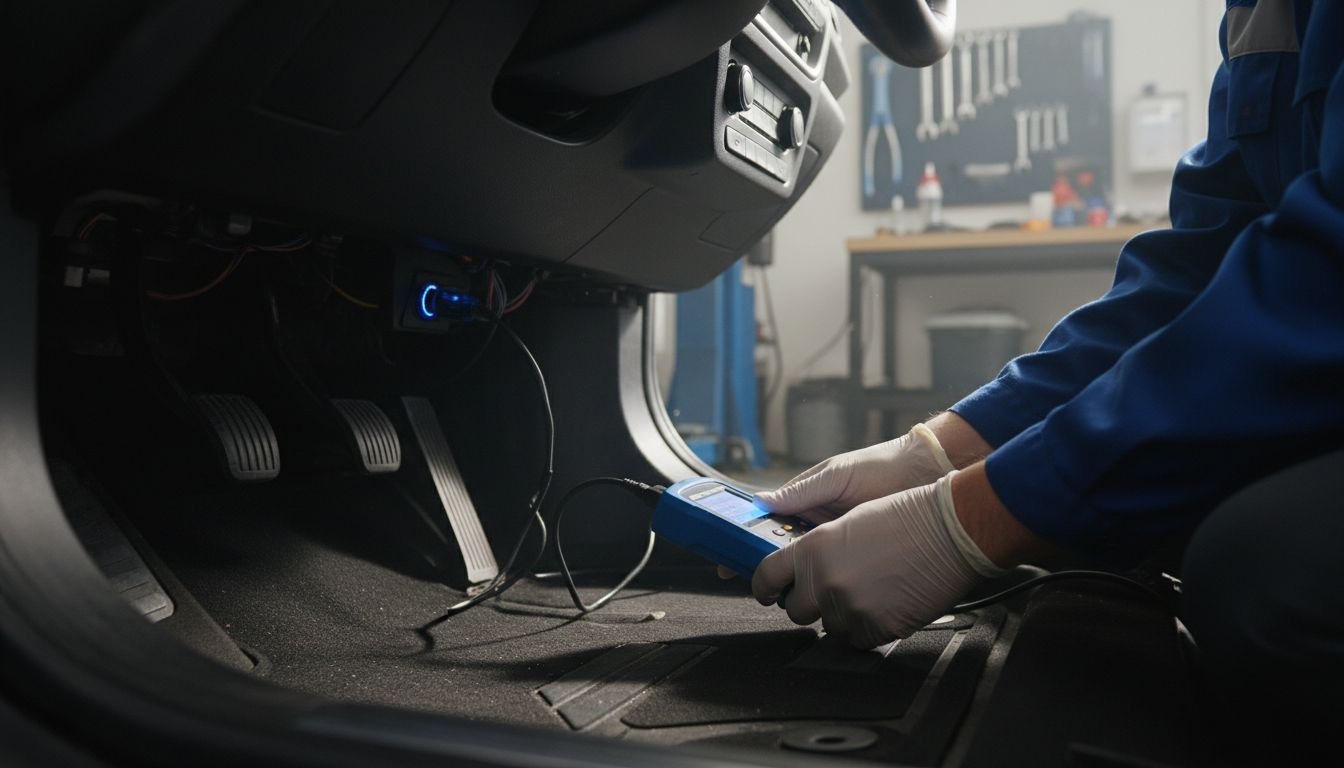
Many drivers assume that once the key is physically cut, they’re done. On transponder-equipped vehicles, that’s only half the job.
Mechanical key cutting vs electronic authorization
Mechanical cutting creates the correct metal pattern so the key:
- Slides into the lock and ignition
- Turns the lock cylinders
Electronic authorization is what the transponder chip and immobilizer handle:
- Verifying the key’s electronic ID
- Authorizing fuel/ignition so the engine can start
Without both parts done correctly, you end up with a key that fits but doesn’t start the car.
Why some vehicles allow limited onboard programming and others require professional tools
On some older American & Japanese models, if you already have a working master key, you can sometimes add a new key using a specific sequence of ignition turns and pedal presses. Even then, timing and steps must be exact.
On many newer vehicles – especially those with smart/proximity systems – onboard programming isn’t possible. They require:
- Specialized key programming tools
- Security access codes or PIN retrieval
- Correct key/fob part numbers compatible with your VIN
Why all-keys-lost situations are more complex
When you’ve lost all working keys, the job becomes a Vehicle All Keys Lost scenario. Often this means:
- Verifying vehicle ownership
- Accessing or resetting immobilizer/ECU data
- Cutting new keys from key code or from the locks
- Performing Transponder Key Programming or Smart Key Programming from scratch
All-keys-lost work is usually more time-consuming and can cost more than simple Vehicle Key Duplication / Vehicle Key Copying. That’s why we always recommend having a spare programmed key on hand.
What Affects Car Transponder Replacement Cost and Time in Hurst TX?
In Hurst TX and the surrounding DFW cities, the cost and time for dealing with a car transponder vary a lot from vehicle to vehicle. Here are the main factors we see on the job.
- Vehicle make, model, and year
A basic early-2000s sedan with a standard chip key typically takes less time than a late-model SUV with a complex smart key system. - Standard transponder key vs smart key proximity system
A regular transponder key usually needs Vehicle Key Cutting and Transponder Key Programming.
A smart/proximity key may require Smart Key Programming, often more steps, and a higher-cost fob. - Whether an existing working key is available
If you still have at least one working key, adding a duplicate is usually quicker and may cost less than a full Vehicle All Keys Lost recovery. - All keys lost vs duplicate key
In an all keys lost case, there is more security work, possibly ECU or immobilizer resets, and sometimes more labor to cut a key when no pattern is available. - Need for Vehicle Key Cutting
If you only need electronic programming on an existing cut key, time is shorter. If a new blank needs to be cut from code or lock, that adds a step. - Need for Transponder Key Programming or Smart Key Programming
Different vehicles use different procedures. Some are relatively quick, others require multiple cycles and checks. - Need for Vehicle Diagnostic if the issue is not just the key
If the car still won’t start after a correct key, we may need Vehicle Diagnostic time to check for issues in the antenna ring, immobilizer module, ECU, wiring, or battery/charging system. For deeper no-start issues tied to electronics, see our guide to vehicle diagnostics for electronic no-start issues.
Because these variables change from car to car, cost depends on your specific vehicle and situation. In many cases, same-day availability may be possible depending on vehicle and key type, but it’s never guaranteed.
DIY Risks: Why Guessing With Keys and Programming Can Waste Time or Create Bigger Problems
Modern keys are part of your vehicle’s security and electronics. Guessing can get expensive – or unsafe – quickly.
- Buying the wrong aftermarket key or fob
Different vehicles use specific key/fob part numbers. The wrong one may never program, no matter how many times you try. - Trying random programming sequences from the internet
Online instructions are often incomplete or for the wrong year/model. Repeating failed attempts can lock out the system or confuse diagnostics later. - Misdiagnosing a bad key when the real problem is elsewhere
Sometimes the problem is really the antenna ring, immobilizer module, ignition switch, battery, wiring, or ECU. Treating every no-start as a bad key wastes money and time. - DIY electrical work near the steering column or dash
Modern vehicles have SRS (airbag) wiring and components near the steering column and dashboard. SRS systems can involve explosive devices (airbag inflators and pretensioners). Careless disassembly or probing wires in these areas is unsafe and can lead to accidental deployment or damage.
If you suspect a broader electronic issue – for example, communication problems between modules – it’s worth understanding that there are communication faults that can affect vehicle systems beyond just the key and immobilizer.
When to Call LockNCal for Professional Help
For drivers in Hurst TX and the surrounding DFW communities, LockNCal offers targeted services to solve real-world key and immobilizer problems on American & Japanese vehicles.
- Transponder Key Programming
When you have a new or replacement key with a chip that needs to be authorized to your vehicle. - Vehicle Key Cutting
When you need a physical key blade cut to the correct pattern from code or from your existing key/locks. - Vehicle Key Duplication / Vehicle Key Copying
When you already have a working key and want a spare to avoid an all keys lost emergency. - Key Fob Replacement & Programming
When the remote lock/unlock, trunk, or panic functions are built into your key or separate fob and need setup. - Smart Key Programming
For push-to-start and proximity systems where the fob allows keyless entry and start. Many drivers searching for a smart key replacement near me don’t realize the critical programming step – we handle that for compatible American & Japanese models. - Vehicle All Keys Lost
When there are no working keys left, and the immobilizer must be accessed/reset and new keys must be cut and programmed from scratch. - Vehicle Diagnostic
When symptoms suggest that the issue might not be the key alone – for example, no-start with warning lights, suspected module or wiring faults, or mixed dash messages. - Locksmith Services
For broader vehicle lock/key help – such as lock issues in addition to chip-related problems – within our supported makes and service area.
You can learn more about local coverage and contact details on the LockNCal Hurst TX service page.
Smart Key vs Standard Transponder Key: What Drivers Should Know
Today’s vehicles commonly use either a standard transponder key or a smart/proximity key. Knowing which one you have helps you understand why parts and programming differ.
Why “smart key replacement near me” searches often involve programming, not just parts
When you look up smart key replacement near me, many ads focus on the fob itself. But the real work is usually in the Smart Key Programming process:
- Matching the new smart key to your specific vehicle’s immobilizer
- Linking keyless entry and push-to-start functions
- Ensuring old lost fobs are removed from the system when necessary
When a standard transponder key is simpler than a proximity smart key
A standard transponder key usually means:
- A mechanical blade plus a small chip inside
- No built-in remote buttons, or remote on a separate fob
- Simpler and often faster Transponder Key Programming compared to smart keys
A smart/proximity key involves:
- Keyless entry, trunk, and sometimes remote start functions
- A more complex communication process with the vehicle
- Typically higher parts cost and more involved programming steps
Why parts, labor, and programming time differ between the two
Because smart keys integrate more electronics and features, they tend to:
- Cost more as physical parts
- Take longer to program correctly
- Require more advanced tools and data access
By contrast, many older transponder keys can be handled more quickly – especially for American & Japanese models we commonly see in Hurst TX and DFW.
Make-Specific Examples: Toyota and Subaru
Let’s look at two popular brands in the Dallas-Fort Worth area – Toyota and Subaru – to show how this works in the real world.
Replacement Toyota key basics: what often needs to be cut and programmed
For a replacement Toyota key on many American-market models:
- You typically need Vehicle Key Cutting to match the locks and ignition
- You also need Transponder Key Programming for chip keys, or Smart Key Programming for push-to-start models
- In an all keys lost case, some Toyota systems require more in-depth immobilizer work and proof of ownership
Getting both the mechanical and electronic sides correct is what separates a key that just turns from one that actually starts the engine.
Subaru smart key programming basics: why proximity systems can require more steps
On Subarus equipped with proximity systems, Subaru smart key programming often involves:
- Matching the smart fob to both the immobilizer and keyless entry system
- Ensuring any lost fobs are removed from memory for security
- Following model-specific procedures that can change between years
Because these systems are more complex, they typically take longer and rely heavily on correct part numbers and up-to-date programming procedures. This is why professional help is strongly recommended for Subaru smart keys and many newer Toyota smart systems.
LockNCal focuses on American & Japanese vehicles like these in Hurst TX and across the DFW region.
Key Types Compared: Metal, Transponder, Remote Head, and Smart/Proximity
Here’s a quick comparison of common key styles you’ll see on American & Japanese vehicles:
| Key Type | Chip / Remote Presence | Programming Needed? | Cutting Needed? | Common Cost/Time Factors |
|---|---|---|---|---|
| Standard metal key only | No chip, no remote (or separate basic remote) | Usually no programming | Yes, mechanical cutting | Fast, low parts cost; mostly labor for cutting |
| Transponder key | Chip inside plastic head, no buttons or separate remote | Yes, Transponder Key Programming | Yes, mechanical cutting | Cost depends on chip type, vehicle year, and whether a working key exists |
| Remote head key | Chip + lock/unlock buttons in one unit | Yes, both chip and remote functions | Yes, mechanical cutting | More steps: cut key, program transponder, program remote; higher parts cost than plain chip key |
| Smart/proximity key | Advanced chip, keyless entry/start, often no visible blade | Yes, Smart Key Programming | Sometimes an emergency blade must be cut | Highest parts and programming complexity; time and cost vary widely by make/model |
Final Takeaway for Hurst TX Drivers
A car transponder is much more than a buzzword – it’s a critical part of your vehicle’s security and starting system. When a car won’t start, it’s not always a dead battery or starter. The car key chip, immobilizer system, and even related electronics can all play a role.
Key points to remember:
- Your key may contain a hidden transponder chip even if it looks simple.
- Correct Vehicle Key Cutting is only half the job; Transponder Key Programming or Smart Key Programming is often required.
- Not every no-start is a key problem – sometimes you need Vehicle Diagnostic to find the real cause.
- Guessing with keys or poking around steering-column wiring can be unsafe, especially near SRS components that involve explosive devices.
If you’re in Hurst TX or the greater DFW area and dealing with a lost key, a non-starting vehicle, or questions about your car transponder, LockNCal can help with:
- Transponder Key Programming
- Smart Key Programming
- Vehicle Key Cutting
- Key Fob Replacement & Programming
- Vehicle All Keys Lost situations
- Vehicle Diagnostic when the problem might not be the key alone
Start by confirming your vehicle details with our FREE VIN Decoder, then reach out through the Hurst TX service page to get guided, professional help instead of guessing.
FAQs About Car Transponder Keys
1. What is a car transponder key?
A car transponder key is a vehicle key that contains a small electronic chip inside the plastic head or fob. That chip communicates with your car’s immobilizer system. Even if the key is cut perfectly, the engine will not start unless the chip is correctly programmed and recognized.
2. How do I know if my car key has a transponder chip?
Signs include: a thick plastic key head, a remote head key or smart fob, a security/immobilizer light on the dash, and a situation where a plain metal copy will unlock the door but not start the engine. You can also use a FREE VIN Decoder or have a professional check your vehicle.
3. Can a key be cut without programming the transponder?
Yes. A key can be mechanically cut without programming the chip. It will usually unlock doors and turn the ignition, but on a transponder-equipped car it will not start the engine until the chip is properly programmed.
4. Why does my car crank but not start with a new key?
Often the chip in the new key hasn’t been programmed to your vehicle, or it’s the wrong type of chip or fob. The immobilizer sees it as unauthorized and blocks fuel or ignition, so the engine cranks but does not run. Proper Transponder Key Programming or Smart Key Programming is required.
5. How long does transponder key programming usually take?
It depends on the vehicle, key type, and whether you still have a working key. Some American & Japanese models can be done relatively quickly; all keys lost cases and complex smart keys may take longer. In some situations, same-day availability may be possible depending on vehicle and key type, but exact times vary.
6. Is smart key programming different from transponder key programming?
Yes. Smart key programming typically involves more steps because the fob handles keyless entry and push-to-start functions in addition to immobilizer authorization. The tools, procedures, and parts are often more complex than for a standard transponder key.
7. Can LockNCal help if I have lost all my keys in Hurst TX?
Yes. For compatible American & Japanese vehicles in Hurst TX and the surrounding DFW area, LockNCal offers Vehicle All Keys Lost services along with Vehicle Key Cutting, Transponder Key Programming, Smart Key Programming, and Vehicle Diagnostic when needed.
Compare your options and costs in our guide to our fob & transponder programming service.


