 Skip to content

Vehicle Diagnostics Austin: Local Buyer’s Guide to Fast, Accurate Answers
If you’re searching for vehicle diagnostics Austin, you likely already have a problem: a check engine light, a warning chime, a drivability issue, or a system that isn’t working right after a repair or collision. At this stage, guessing is risky and replacing parts at random gets expensive fast. You need a clear, verified answer before you approve more work.
LockNCal brings mobile automotive locksmith, airbag, ADAS and module programming service to you. On-site: $0 today, pay after the job. Book online & see your price in 60 seconds or call (469) 277-7277.
This buyer’s guide is built for Austin-area drivers who want professional, safety-focused vehicle diagnostic service and who may also need ADAS Calibration, Module Programming, or Airbag Module Programming once the real fault is identified. While LockNCal is based in North Texas (including Prosper TX), the same principles, process, and pricing logic apply if you’re evaluating diagnostic shops in the Austin market.
When You Need Vehicle Diagnostics in Austin
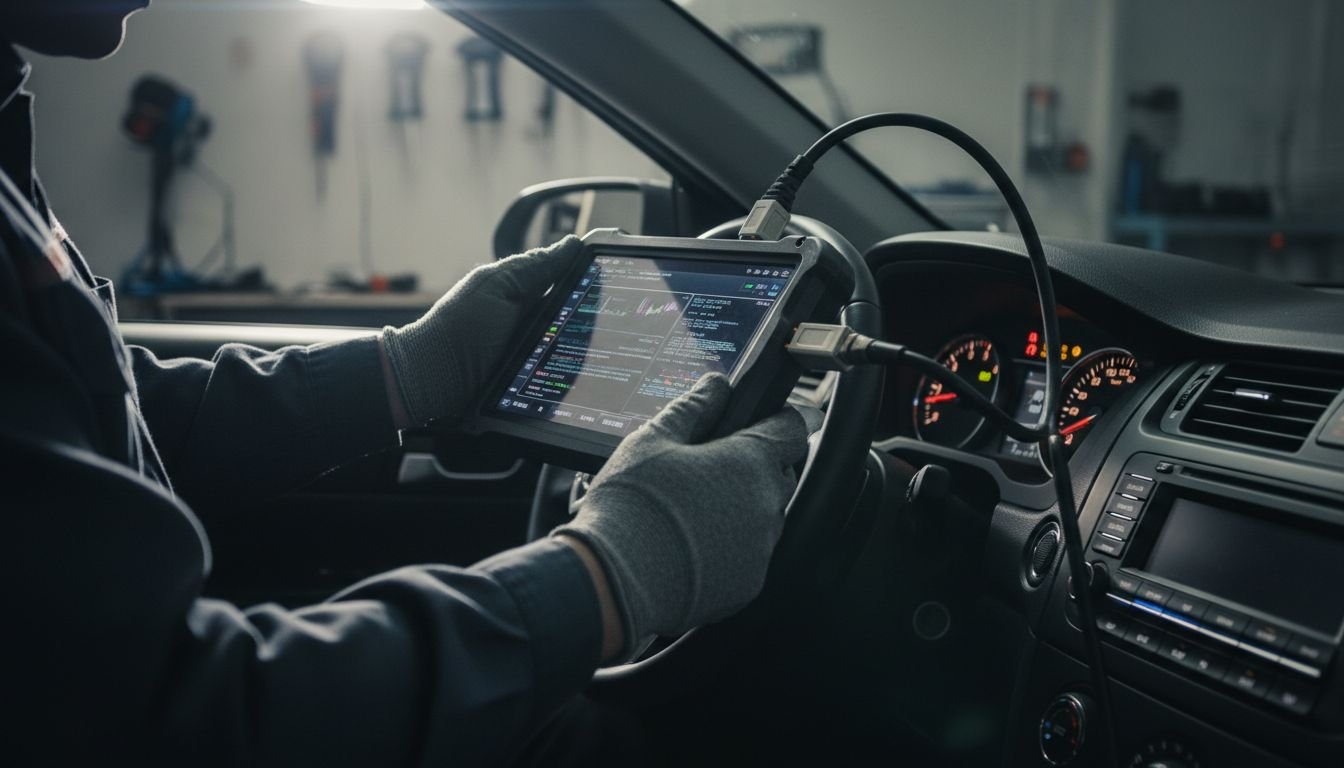
Drivers usually start looking for vehicle diagnostic service in Austin when something specific goes wrong. Common triggers include:
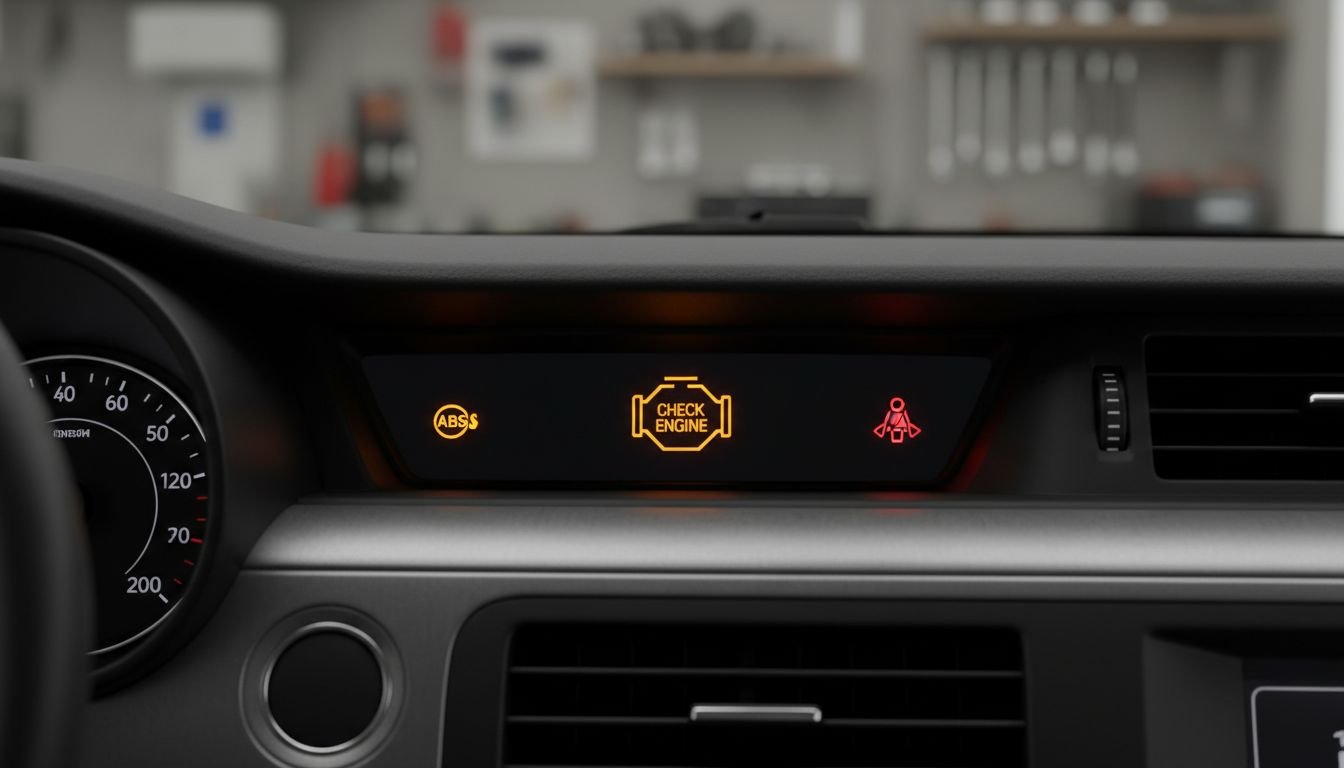
- Check engine light (solid or flashing)
- Airbag / SRS warning light after a collision or with no obvious cause
- ADAS warning messages (lane keep, forward collision, blind spot, adaptive cruise, etc.)
- Electrical or communication faults – modules not talking, random warning messages, or options that work intermittently
- Battery drain / intermittent no-start tied to electronics or modules staying awake
- After-collision or post-repair issues that require scan and verification before the vehicle is truly safe to return to the road
Many drivers start with a free parts-store code read or a basic handheld scanner. It’s important to understand that a basic code reader is not the same as a professional Vehicle Diagnostic:
- A free or DIY scanner usually only pulls stored trouble codes.
- It does not perform live data analysis, guided testing, or confirm which component actually failed.
- It can easily send you in the wrong direction and lead to unnecessary parts replacement.
A professional Vehicle Diagnostic is a structured, technician-led process that uses advanced scan tools, service information, and testing methods to determine what’s really wrong before you spend money on calibration, programming, or replacement parts.
The Risk of Guessing: Why Accurate Diagnostics Matter Before Parts Are Replaced
Modern vehicles—especially late-model American & Japanese vehicles—are packed with modules, sensors, and safety systems. Replacing parts based on a hunch or a single trouble code is no longer just wasteful; it can be unsafe.
Wasted money from guessing often looks like this:
- Replacing an oxygen sensor because of a code, when the real fault is a wiring issue or a power/ground problem.
- Installing multiple batteries or alternators to chase a battery drain that’s actually caused by a module that won’t go to sleep.
- Swapping expensive ADAS sensors or cameras without confirming if the issue is alignment, wiring, or module configuration.
Safety risks appear when warning lights and electronics are ignored or cleared without a true fix:
- SRS / airbag systems may not deploy correctly in a collision if underlying faults aren’t properly diagnosed.
- ADAS systems (forward collision, lane keep, blind spot, etc.) may give you a false sense of security if they’re out of calibration or disabled by an undiagnosed module fault.
- Drivability issues tied to engine or transmission control modules can worsen over time or cause sudden loss of power.
Critical safety warning: SRS/airbag systems contain explosive components. DIY probing, unplugging connectors, or swapping airbag modules without proper procedures can create serious injury risk, accidental deployment, or false assumptions about what actually failed. Any Airbag Module Programming or SRS Airbag Module Reset must be handled by trained professionals with the right safety process.
Unresolved electronic faults also directly affect:
- Whether an ADAS Calibration can be performed accurately
- Whether Module Programming will succeed or fail
- Whether it’s even safe to release the vehicle back to the road
In other words, Vehicle Diagnostic is the decision-making step. It identifies which system is failing and what needs to be addressed before you approve calibration, programming, or parts replacement.
Local Buyer Guide: Diagnostics Services, Pricing, Questions to Ask, and How It All Ties into Calibration & Programming
Typical Diagnostic Services Offered in Austin
While every shop is different, a professional vehicle diagnostics expert in Austin typically offers services such as:
- Vehicle Diagnostic – a full diagnostic session focused on your specific complaint or warning light.
- Warning light scan and troubleshooting – check engine, ABS, SRS, ADAS, and other modules.
- Electrical fault tracing – tracking down shorts, opens, power/ground issues, and communication faults between modules.
- Post-repair diagnostic verification – confirming that modules, sensors, and safety systems are functioning correctly after collision repair or component replacement.
- Diagnostics before ADAS Calibration – verifying that sensors, cameras, and related modules are online and fault-free before aiming and calibration are performed.
- Diagnostics before Module Programming or Airbag Module Programming – ensuring the wiring, power/grounds, and communication are correct so programming can complete successfully and safely.
Typical Pricing Ranges and What Affects Cost
Most Austin-area drivers want a straight, realistic answer: What does vehicle diagnostics cost? While every shop sets its own rates, here is a reasonable framework for market-guidance only (not a quote):
- Basic scan-level evaluation (code pull, brief review): often in the range of $75–$150.
- Full Vehicle Diagnostic with testing and documentation: commonly in the range of $150–$300+, depending on complexity.
Expect pricing to increase when the technician must invest more time to isolate the fault. Common cost variables include:
- Symptom complexity – intermittent issues, communication faults, and drains typically require more diagnostic time.
- Time required – detailed circuit tracing, scope work, and multi-module diagnostics take longer than a simple code scan.
- Make/model – late-model American & Japanese vehicles with advanced ADAS and multiple modules may require more in-depth testing.
- Module access – interior trim, body panels, or other components may need to be carefully removed to reach connectors or modules.
- Post-collision issues – collision damage adds complexity, especially when structural, glass, and body alignment affect sensor and camera positions.
A transparent, safety-focused provider will use clear language like: “Many professional diagnostic visits in Austin start around a basic evaluation fee and increase if advanced circuit tracing, programming support, or calibration-related testing is needed.”
Questions to Ask Before Booking Diagnostics
Before you schedule, protect your budget and your safety by asking:
- What does the diagnostic fee include? Is it just a code scan, or does it cover technician testing and a written or verbal explanation?
- Is scan data reviewed by a technician? You want more than an auto-generated printout.
- Will I get an explanation in plain English? You should leave knowing what system failed, what’s recommended next, and why.
- If the issue involves cameras, radar, airbags, or modules, can you also perform ADAS Calibration or Module Programming if needed?
- Do you regularly work on American & Japanese vehicles? These are the platforms LockNCal focuses on, and you should confirm the same compatibility with any Austin provider.
Certifications, Training, and Equipment to Look For
Modern diagnostics relies on people, tools, and process. When choosing a vehicle diagnostics expert, look for:
- Trained technicians with ongoing education in electronics, modules, and safety systems, not just mechanical repair.
- OEM-compatible or advanced scan capability that can access manufacturer-specific codes and data, not just generic OBD-II.
- Calibration capability – the ability to handle ADAS Calibration when diagnostic results show cameras or radar need alignment.
- Programming capability – tools and experience for Module Programming and Airbag Module Programming when new or reset modules are required.
- Safety-system awareness – especially around SRS and high-voltage or sensitive circuits, where improper testing can create new problems.
For real-world examples of how diagnostic trouble codes are interpreted and resolved, review LockNCal’s guides on what a diagnostic trouble code can mean for your vehicle and why professional diagnostics matter for electronic fault codes.
Code Scan vs. Full Vehicle Diagnostic: What Austin Drivers Are Really Paying For
What a Basic Code Scan Can Tell You
A basic scan—whether done at a parts store or with a budget handheld tool—can:
- Pull stored diagnostic trouble codes (DTCs).
- Clear codes and reset some warning lights.
- Give a generic description (for example, “Throttle Position Sensor Circuit Low”).
The limitation is crucial: a code points to a circuit or system area, not always the failed part. This is why DIY code readers often mislead drivers and lead to unnecessary parts purchases.
What a Full Diagnostic Can Uncover
A professional Vehicle Diagnostic session goes much deeper by:
- Reviewing codes in all relevant modules, not just the engine.
- Using live data to see how sensors and modules behave while the issue is happening.
- Performing guided tests (voltage checks, resistance checks, oscilloscope work, pin-out testing).
- Verifying power, ground, and network communication for the components involved.
- Confirming the root cause before recommending ADAS calibration, programming, or parts replacement.
This is what you’re truly paying for: accurate information and reduced risk, not just a list of codes.
When Diagnostics Should Lead to ADAS Calibration or Module Programming
Once the actual fault is identified, your next step may be:
- ADAS Calibration when diagnostics show that a camera, radar, or sensor is reading correctly but is physically misaligned due to windshield replacement, bumper work, or collision damage.
- Module Programming when a new module is installed or an existing module needs a software update or configuration to communicate properly with the rest of the vehicle.
- Airbag Module Programming or SRS Airbag Module Reset when the airbag control module has stored crash data or needs to be configured after repair. For customers outside DFW, a Mail-In Airbag Module Reset may be an option when appropriate.
Diagnostics is the gatekeeper. It verifies whether the issue is a sensor alignment problem, a wiring or communication issue, or a module configuration/software problem—each of which has a very different solution path and cost.
Diagnostics, ADAS Calibration, and Module Programming: How They Work Together

When Diagnostics Come Before ADAS Calibration
Before any ADAS Calibration is performed, a professional technician should:
- Scan all relevant ADAS and safety modules for codes.
- Confirm that the sensors and cameras have proper power, ground, and communication.
- Check for structural or mounting issues that might prevent a correct calibration.
If the diagnostic step is skipped, a calibration may fail, or worse, appear to succeed while the system still isn’t operating within design specifications. That’s why calibration should never be treated as a standalone step when there are active faults or unresolved warning lights.
When Diagnostics Reveal a Module Communication or Setup Issue
Some vehicles develop communication faults between modules (for example, ABS, steering, ADAS, or body control modules). Diagnostics may reveal:
- Network issues on CAN/LIN buses.
- Incorrect configuration after parts replacement.
- Software in one module that no longer matches the rest of the vehicle.
In those cases, the correct next step is often Module Programming to update or reconfigure the affected module. Without this diagnostic insight, shops may waste hours—or you may be sold parts you never needed.
When Airbag Module Programming May Be Part of the Solution
After a collision, the airbag control module can store crash data, lock out certain functions, or require replacement or reprogramming. Diagnostic work will determine whether you need:
- Airbag Module Programming for a replaced or reset module.
- SRS Airbag Module Reset when appropriate and safe.
- For non-local customers, a potential Mail-In Airbag Module Reset solution where allowed and applicable.
Again, because SRS systems contain explosive components, handling must be strictly controlled. DIY testing or random module swapping is never recommended.
What to Look for in a Vehicle Diagnostics Expert in Prosper TX and Greater Texas Service Support
While you may be searching specifically for vehicle diagnostics Austin, it’s useful to know how specialized diagnostic providers operate in other Texas markets like Prosper TX and the greater DFW area. This gives you a benchmark when evaluating any local shop.
LockNCal, serving select North Texas communities including Prosper TX, focuses on:
- Vehicle Diagnostic for complex electronic, warning light, and communication issues.
- ADAS Calibration when diagnostics confirm sensors and modules are ready to be accurately calibrated.
- Module Programming for critical control modules.
- Airbag Module Programming, SRS Airbag Module Reset, and in some cases Mail-In Airbag Module Reset for qualifying scenarios.
LockNCal is not a general mechanical repair shop and does not advertise engine rebuilds, transmission overhauls, AC services, or broad mechanical work. Instead, the focus is on safety, electronics, programming, and diagnostics for American & Japanese vehicles only.
When you find a provider in the Austin market, look for the same specialization and clarity: a defined diagnostic process, transparent pricing structure, and the capability to support ADAS calibration diagnostics and module programming diagnostics when your results call for it. For deeper insight into how environment can affect ADAS work, see LockNCal’s guide on how temperature changes can affect ADAS calibration accuracy.
Why LockNCal Is Different for Safety and Electronic Diagnostics
Focused on Approved Safety and Electronic Services
LockNCal’s strength is in precision electronics and safety-focused diagnostics for American & Japanese vehicles. The service menu is deliberately narrow:
- Vehicle Diagnostic
- ADAS Calibration
- Module Programming
- Airbag Module Programming
- SRS Airbag Module Reset / Mail-In Airbag Module Reset where applicable
By staying within this approved scope, the focus stays on getting accurate answers and supporting safe repair decisions, not selling unrelated services.
Clear Next Steps After Diagnostics
After a Vehicle Diagnostic, you should expect:
- A clear explanation of what system failed and why.
- Whether your case likely requires ADAS Calibration, Module Programming, Airbag Module Programming, or other electronic work.
- Guidance on urgency—especially for SRS/airbag and ADAS faults that may affect crash safety.
The goal is not just to turn off a light—it’s to help you make an informed decision about the next safe and cost-effective step.
Support for Calibration, Programming, and Safety System Concerns
Because LockNCal specializes in calibration and programming, the diagnostic process is designed to:
- Confirm that ADAS sensors and cameras are ready for accurate calibration.
- Verify network health and wiring so Module Programming is successful.
- Handle sensitive SRS and airbag module work with procedures that respect the explosive nature of the components.
For added clarity about your exact vehicle configuration, you can use LockNCal’s VIN decoder to identify safety and electronic equipment before scheduling service.
Booking Vehicle Diagnostics in Austin: What to Do Next
If you’re in the Austin area and dealing with a warning light, drivability issue, or post-collision concern, the safest next step is to book a professional Vehicle Diagnostic—not to clear codes and hope for the best.
When you call or request a quote, be ready to share:
- Year, make, and model of your American or Japanese vehicle.
- Which warning lights or messages are on.
- Recent work performed (collision repair, windshield, suspension, electronics, or module replacement).
- Whether you’ve already been told you need ADAS Calibration, Module Programming, or Airbag Module Programming.
Same-day availability may be possible depending on fault complexity and scheduling, but the priority is always safety-first diagnostics, not rushing through the process.
When you’re ready to move forward with vehicle diagnostics Austin shoppers can trust, look for:
- No guessing – technicians who test and verify, not just read codes.
- Clear explanation before next-step recommendations – in plain English, not just printouts.
- Safety-first diagnostic approach – especially around SRS, ADAS, and critical control modules.
Your vehicle’s electronics and safety systems are too important to leave to chance. Start with a proper Vehicle Diagnostic, then make informed decisions about ADAS Calibration, Module Programming, or Airbag Module Programming once you have the facts.
Frequently Asked Questions About Vehicle Diagnostics in Austin
1. How much does vehicle diagnostics cost in Austin?
Many shops in Austin structure diagnostics around a basic evaluation fee, often in the range of $75–$150 for a simple scan and initial review. A more in-depth Vehicle Diagnostic that includes guided testing, electrical checks, and module communication work is commonly $150–$300+, depending on fault complexity, time required, and the systems involved. These are typical market ranges, not a fixed quote—always confirm pricing and what’s included before you book.
2. What’s the difference between a code scan and a full vehicle diagnostic?
A code scan simply reads stored trouble codes and may provide a basic description. A full Vehicle Diagnostic goes further: a qualified technician interprets the codes, checks live data, performs targeted electrical tests, and confirms which component, circuit, or module is actually failing. The diagnostic process turns raw code data into actionable answers.
3. How long does a vehicle diagnostic usually take?
For straightforward issues, diagnostics may be completed within about an hour. More complex problems—such as intermittent electrical faults, communication issues between modules, or ADAS and SRS-related concerns—can require additional diagnostic time for thorough testing. Your provider should explain expected time ranges up front and update you if more in-depth work is needed.
4. Can diagnostics tell me if I need ADAS calibration or module programming?
Yes. A proper Vehicle Diagnostic is often the only reliable way to know whether a warning or fault is due to sensor alignment, wiring or communication issues, or a module configuration/software problem. Based on those results, your technician can recommend appropriate next steps like ADAS Calibration, Module Programming, or Airbag Module Programming when required.
5. Is it safe to drive with a warning light on?
Some warnings are less urgent than others, but it’s important not to ignore them—especially airbag/SRS, ABS/traction, and ADAS warning lights. These indicators can mean your safety systems are partially or completely disabled. Because SRS systems include explosive components, DIY attempts to “fix” or clear these faults can be dangerous. Have a professional perform a Vehicle Diagnostic to understand the risk before continuing to drive.
6. Why should I choose a vehicle diagnostics expert instead of a free parts-store scan?
A free parts-store scan can be tempting, but it only gives you codes without context. A vehicle diagnostics expert provides:
- Professional interpretation of codes and live data.
- Safety awareness around SRS, ADAS, and critical modules.
- Clear guidance on whether you truly need ADAS Calibration, Module Programming, or Airbag Module Programming.
This expert-level support helps you avoid unnecessary parts, prevents misdiagnosis, and ensures your vehicle’s safety systems are addressed correctly.


