 Skip to content

Best BMW OBD Scan Tool: Buyer’s Guide for DIY Owners and Shops in 2026
As an auto safety and diagnostics technician serving Pantego TX and the wider DFW area, I see the same problem over and over: BMW owners buying the wrong scan tool, misreading what the car is telling them, and spending far more on parts and guesswork than they needed to.
This commercial guide is designed to help you choose the right bmw obd scan tool by budget, use case, and BMW generation—and to show you where a professional Vehicle Diagnostic in Pantego TX may be safer and more cost-effective than piling up tools.
Before you order anything, you can also pull basic vehicle details using our free VIN decoder. Knowing exactly which BMW you have makes scan tool selection more accurate.
Quick Answer: Which BMW OBD Scan Tool Is Best for Your Needs?
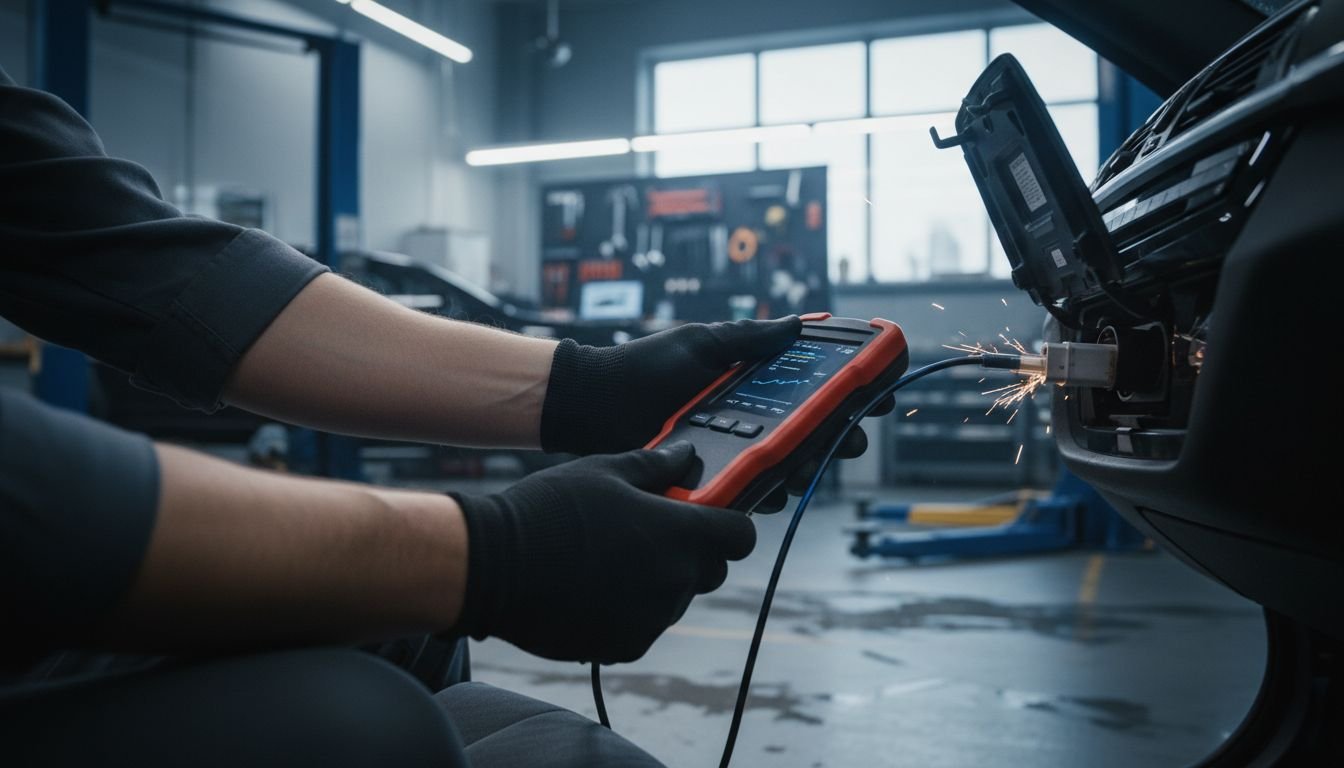
There is no true “one size fits all” best BMW OBD scan tool. The right choice depends on whether you just want to clear a check engine light, look at live data, or handle deeper BMW-specific diagnostics.
Best budget pick for basic code reading
If you only want to read and clear engine-related check engine light codes, a basic OBD2 code reader under $50–$80 is usually enough. These tools:
- Read generic powertrain codes (P0xxx etc.).
- Clear the check engine light.
- Offer basic freeze-frame data.
Limitations: They typically do not access BMW-specific modules (ABS, airbag, body, iDrive, etc.) and won’t perform BMW-specific service resets.
Best mid-range pick for BMW-specific diagnostics
For many DIY BMW owners, a mid-range BMW-capable handheld scanner in the $150–$300 range is the sweet spot. These tools often:
- Access engine, transmission, ABS, airbag/SRS, and body modules on many BMWs.
- Perform oil service and inspection resets.
- Offer better live data with multiple PIDs and limited graphing.
Foxwell-style BMW handheld scanners are common examples in this category. They’re not dealer tools, but they are far more capable than a cheap generic reader.
Best Bluetooth/app setup for live data
If you want to use your phone for live data and basic diagnostics, a Bluetooth adapter plus app can work well. An adapter like OBDLink MX is often used in this space when people want low-latency, stable live data. Paired with a strong app, this setup can:
- Provide live graphs of fuel trims, O2 sensors, misfire counters (depending on app/vehicle support).
- Store data logs for later review.
- Handle basic resets and code reading.
Warning: Many Bluetooth apps are not BMW-specific. Some will only see generic OBD2 data and cannot talk to all BMW modules. Read app and adapter compatibility details closely.
Best advanced option for shop-level users
Independent shops and serious enthusiasts often step up to an advanced, multi-brand shop-grade diagnostic platform in the $1,500+ range (tablet or laptop-based). These systems can:
- Talk to dozens of modules across BMW platforms.
- Run bi-directional tests (e.g., actuating ABS pumps, cycling solenoids, operating fans).
- Perform some coding and programming functions depending on the platform, subscription, and vehicle.
These are typically overkill for a first-time DIY owner with a single BMW but can make sense for shop environments. Note that although such systems may support coding/programming in general, that does not mean every shop is a BMW programming specialist.
Why Choosing the Wrong BMW OBD Scan Tool Costs More Than You Expect
Most BMW owners lose money in one of two ways:
- They buy a cheap generic reader that can’t see the modules related to their problem, then throw parts at the car based on guesswork.
- They buy a high-end, feature-heavy BMW diagnostic scanner and only use 5–10% of its capabilities.
Either way, you’re paying for the wrong solution. The bigger hidden cost is misdiagnosis. If you clear a check engine light without understanding what caused it, you can:
- Mask an underlying drivability or safety issue.
- Replace good parts because of a misunderstood fault code.
- Spend weekends chasing problems a professional could isolate quickly with the right equipment.
Codes are starting points, not verdicts.
The Danger of Using a Generic Scanner on BMW-Specific Problems
BMWs rely heavily on module-based electronics. A cheap OBD2-only reader will usually see only the engine and maybe generic emissions data. It may not see:
- ABS and stability control faults.
- Airbag/SRS module issues.
- Chassis and steering angle sensor data.
- Body control or comfort modules.
That means a generic tool can show “no codes” even while critical modules are storing serious fault information.
Misleading resets: Clearing codes or resetting service indicators with an underpowered scanner can give you false confidence. The warning might disappear briefly while the underlying fault remains, returning later in a more severe way or at highway speeds.
Mandatory safety warning: BMW SRS/airbag systems contain explosive/pyrotechnic components. DIY probing of airbag wiring, firing circuits, or pretensioners with generic tools or test equipment can lead to:
- Unintentional airbag deployment.
- Seat belt pretensioners firing unexpectedly.
- Serious injury and additional vehicle damage.
If your BMW has an airbag light on, it’s not the time to experiment. A proper Vehicle Diagnostic and, when appropriate, professional services such as SRS Airbag Module Reset, Mail-In Airbag Module Reset, or Airbag Module Programming should be considered instead of trial-and-error with a cheap reader.
Buyer’s guide comparing OBD scan tools and features relevant to BMWs (BMW-specific modules, live data, reset/programming capabilities), pricing tiers, recommended models, and decision criteria for DIY owners vs shops.
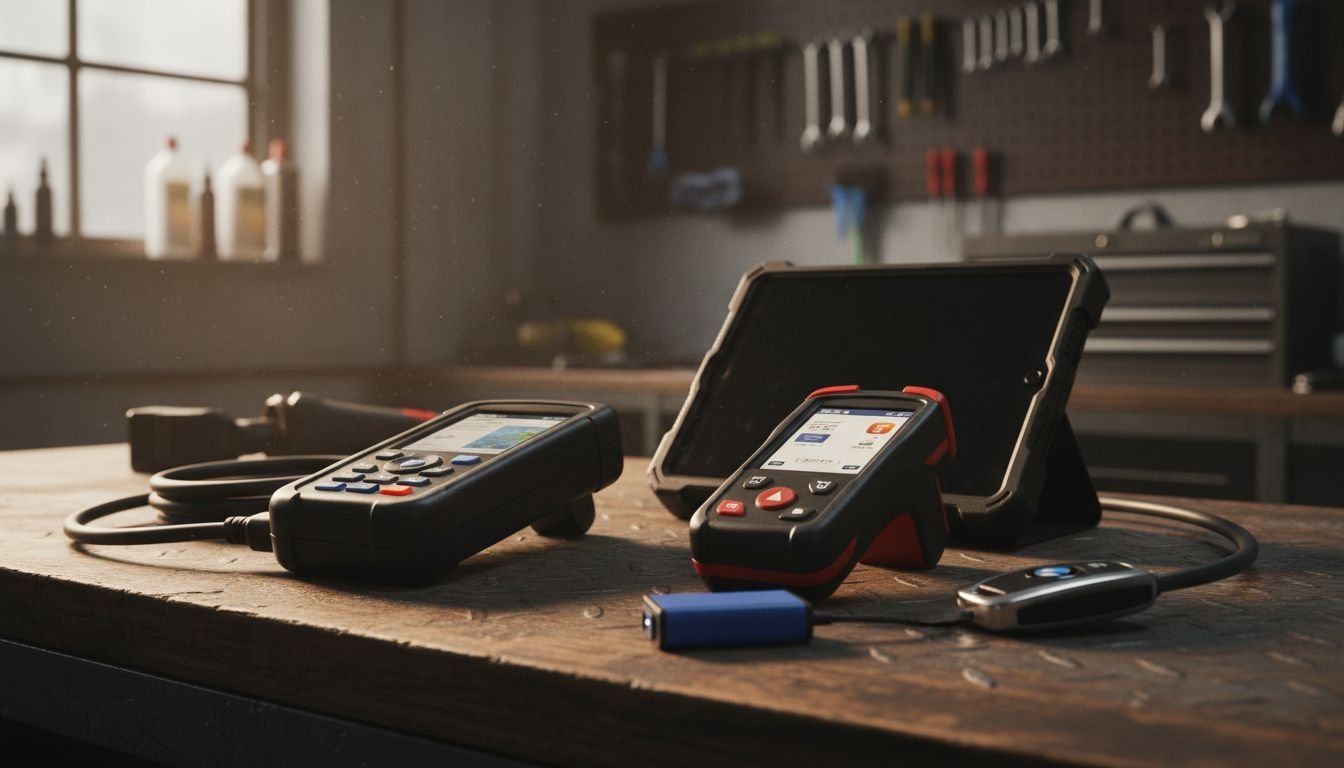
What features actually matter on BMWs
When you evaluate any BMW OBD scanner, focus on these feature buckets:
- Engine/transmission coverage: Non-negotiable. Even basic tools should handle powertrain codes on OBD2-compatible BMWs.
- ABS/airbag/body modules: This is where many “okay for a jeep obd scanning tool or nissan obd scanning tool” products fall short on BMWs. You want explicit coverage for ABS, SRS, and key body/chassis modules.
- Service reset functions: Oil, inspection, brake pad wear, and condition-based service resets are a key reason people buy a BMW diagnostic scanner.
- Live data and graphing: A good BMW scan tool with live data lets you see misfire counts, O2 sensors, fuel trims, and other PIDs in real time with graphing. This is essential for serious troubleshooting.
- Bi-directional controls: Shop-level tools can command components on/off (fans, pumps, valves) and run actuation tests. Many DIY owners do not strictly need this, but it’s valuable when diagnosing complex faults.
- Coding/programming support: Some tools advertise coding/programming options for BMWs. Understand that:
- Code reading and basic resets are not the same as coding or programming.
- Advanced coding/programming has real risk if done incorrectly.
- LockNCal does not position itself as a BMW dealer-level coding/programming provider; we focus on Vehicle Diagnostic and approved module-related safety services in general.
- Update costs and subscription model: Higher-end tools may have annual fees. For a single BMW, this may not make sense; for a shop, it’s often the cost of doing business.
Pricing tiers explained
Here is how scan tool pricing roughly breaks down:
- Basic readers (< $100): Great for quick check engine light reads. Limited or no BMW module access beyond engine. Fine as a glovebox backup, not a full solution.
- Mid-range BMW-focused handhelds ($150–$300): Target BMW owners, support multiple BMW modules, and provide service resets. This is the primary sweet spot for many DIY users.
- Bluetooth adapters and app-based setups ($60–$200 total, including app): Hardware like OBDLink MX plus a paid app can be a flexible option. Capabilities range from basic to moderately advanced depending on app and BMW support.
- Advanced shop-grade systems ($1,500+ plus subscriptions): Tablet or laptop-based solutions used by shops for multi-make coverage, deep module access, and bi-directional controls.
Recommended tool categories by owner type
Casual DIY owner (one BMW, basic needs)
- Use: Check engine light, basic maintenance, simple live data.
- Recommended: Mid-range BMW-capable handheld or a Bluetooth adapter plus BMW-aware app.
- Budget: $150–$250.
Serious enthusiast with multiple BMWs
- Use: Multiple models, more frequent diagnostics, deeper live data.
- Recommended: Higher-end BMW-specific handheld or a robust Bluetooth/app combo with proven BMW support.
- Budget: $250–$600.
Independent shop / fleet user
- Use: Many makes and models, including BMW, every day.
- Recommended: Advanced multi-brand shop scanner with BMW coverage, bi-directional tests, and guided diagnostics.
- Budget: $1,500+ plus ongoing subscription fees.
If you’re unsure which category you fall into, or you just need an accurate answer right now on a warning light, it may be smarter to book a Vehicle Diagnostic first and buy tools later.
BMW OBD Scan Tool Comparison Table
The table below gives a high-level comparison of common tool categories. Exact specs vary by brand and model; always confirm details with the manufacturer before you buy.
| Tool / Category | Approx. Price | BMW Module Access | Live Data Quality | Reset / Service Functions | Coding / Programming Ability | Best For | Main Drawback |
|---|---|---|---|---|---|---|---|
| Basic generic OBD2 code reader | $30–$80 | Engine only on most BMWs | Limited, basic PIDs | Usually none or very basic | None | Simple check engine light clearing | No ABS / airbag / body module access |
| Foxwell-style BMW handheld scanner | $150–$300 | Engine, transmission, many ABS/SRS/body modules (varies by model/year) | Good, with some graphing | Common BMW service resets | Limited or none; check model | BMW DIY owners wanting deeper coverage | Not as powerful as full shop systems |
| Bluetooth adapter + BMW-aware app (e.g., using an adapter like OBDLink MX) | $60–$200 (adapter + app) | Engine; some apps add limited BMW module support | Strong live data and graphing when app supports it | Some reset functions depending on app | Generally none; mainly diagnostics | Tech-savvy users who want live data on their phone | Capabilities vary widely by app; BMW coverage not guaranteed |
| Dealer-software-style laptop setup | $600–$1,500+ (hardware/software) | Very deep module coverage | Advanced, multi-stream graphing and logging | Extensive service functions | Some coding/programming possible with the right setup | Experienced DIY enthusiasts or specialty shops | Steep learning curve; risk if misused; often more than casual users need |
| Advanced multi-make shop-grade system | $1,500+ plus subscriptions | Comprehensive multi-module coverage across many brands | Professional-level data | Broad service function coverage | Some support coding/programming across brands | Independent shops needing broad coverage | Costly for single-vehicle owners; requires training |
Best BMW OBD Scan Tool by Budget
This section breaks down realistic expectations at each price point, so you avoid overspending or underbuying.
Under $100
In this range, you’re typically looking at basic readers and entry-level Bluetooth adapters:
- Good for reading and clearing check engine lights.
- Useful as a backup BMW code reader to keep in the glovebox.
- Not suitable for dedicated BMW module diagnostics, ABS, or SRS.
If all you want is to confirm that a loose gas cap set a code, this tier might be enough. For anything more, plan to step up.
$100 to $300
This is the primary sweet spot for many BMW owners:
- BMW-focused handhelds with decent module coverage.
- Better live data, more service functions.
- Some tools offer make-specific menus and guided functions.
Most DIY users who plan to own their BMW for several years will get the best value here.
$300 to $800
Now you’re in the range where you can consider:
- Higher-end dedicated BMW handhelds.
- More advanced Bluetooth/app ecosystems with additional features.
- Entry-level laptop-based setups for enthusiasts.
This tier starts to make sense if you handle diagnostics for multiple vehicles or help friends/family regularly.
Advanced / shop-level setups
Once you’re above $1,500, you’re usually in professional shop tool territory:
- Broad make/model coverage with deep module access.
- Bi-directional tests and guided diagnostics.
- Some coding/programming ability depending on brand and license.
These tools pay off only if you’re using them often. For a single BMW with an occasional problem, paying a shop or scheduling a Vehicle Diagnostic is usually more cost-effective.
Best BMW OBD Scan Tool by Use Case
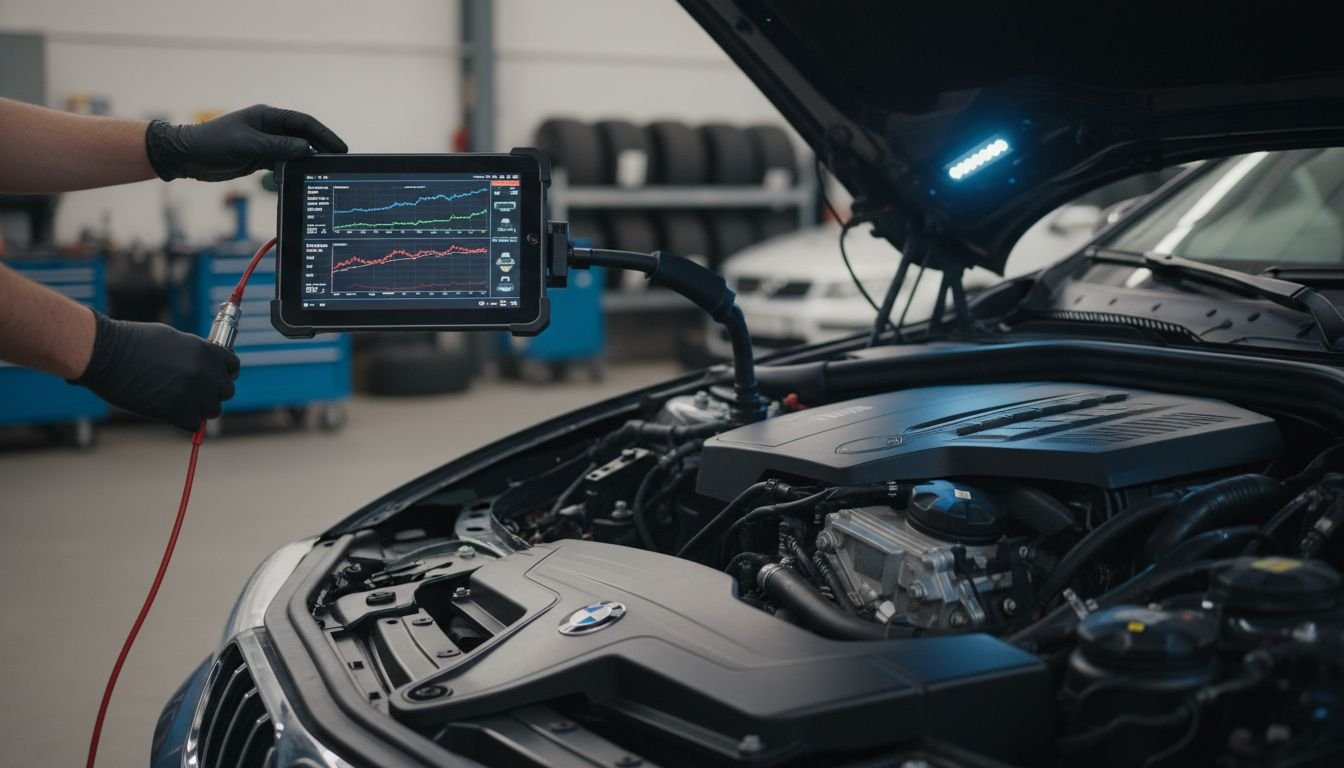
If you only want to read and clear check engine codes
Choose a basic OBD2 reader or simple Bluetooth adapter in the $40–$100 range. It will:
- Read/clear powertrain codes.
- Show basic live data like engine speed and coolant temperature.
What it won’t do is dive into BMW-specific modules or service resets, but for basic check engine light work, that’s often fine.
If you want BMW-specific service resets
Look for a BMW-capable handheld around $150–$300 that explicitly lists:
- Oil and inspection service reset.
- Brake pad wear reset (where supported).
- Condition-based service functions.
This type of BMW OBD scanner is ideal if you handle your own maintenance and don’t want to visit a shop after every oil change.
If you want live data for troubleshooting misfires, sensors, and drivability issues
For misfires or drivability problems, you want a BMW scan tool with live data and graphing. That usually means either:
- A stronger mid-range handheld with good PID coverage.
- A Bluetooth adapter like OBDLink MX paired with a robust app that supports your BMW.
This lets you see how sensors and systems behave in real time instead of guessing from a single static code.
If you need deeper diagnostics for ABS, airbag, or chassis modules
Now you’re beyond basic tools. You need:
- A BMW-capable handheld specifically stating ABS and airbag coverage, or
- A shop-grade diagnostic system with module-level BMW support.
Because these faults often tie into safety systems, be cautious. Airbag and seatbelt-related issues, in particular, are not safe DIY playgrounds. For post-collision concerns or ongoing safety warnings, it’s usually better to schedule a Vehicle Diagnostic and, if necessary, explore services like SRS Airbag Module Reset or Airbag Module Programming. To understand why relying on codes alone can mislead you, read our article on understanding Kia P1678 DTC code and how to resolve it.
If you are deciding between DIY and paying for professional diagnostics
Ask yourself:
- How often do I realistically use this tool?
- How comfortable am I diagnosing complex electrical or module issues?
- What is the cost of getting it wrong—especially with brakes, steering, or SRS?
If you’re chasing a stubborn issue, it’s common for a single misdiagnosis to cost more than a professional Vehicle Diagnostic. In many cases, a one-time diagnostic appointment followed by targeted DIY repairs is smarter than buying an advanced scanner first.
BMW Model-Year Buying Notes
Older BMWs and 20-pin adapter considerations
Some older BMWs built before the early 2000s use a 20-pin diagnostic connector under the hood in addition to (or instead of) the standard 16-pin OBD2 port inside the car. For these vehicles:
- You may need a 20-pin to 16-pin adapter to access all modules.
- Some newer tools only work fully through the 16-pin port and may have limited access on these older models.
Always confirm your BMW’s year and connector setup before purchasing a scanner.
E-series owners
E46, E39, E60, E90, etc. typically respond well to mid-range BMW-focused handheld scanners. For these generations:
- Module coverage on capable handhelds is generally solid.
- 20-pin adapter needs must be checked on earlier E-chassis cars.
- Bluetooth/app solutions vary; confirm E-series support before relying on them.
F-series owners
F10, F30, F15, etc. have more complex electronics, more modules, and often more advanced service functions.
- Choose tools that explicitly list F-series coverage.
- Expect more functions to be security or online-service controlled at dealer level.
- Many owners still do well with a strong mid-range handheld or a proven app/adapter combination.
G-series owners
Newer BMWs with G-chassis coding and advanced driver assistance systems have even more complex software environments.
- Confirm that any BMW diagnostic scanner you buy lists G-series support explicitly.
- Recognize that some high-level coding/programming and ADAS calibrations remain dealer or specialist territory.
- If safety systems or crash-related issues are involved, a professional Vehicle Diagnostic is strongly recommended before attempting DIY resets.
BMW Scan Tool vs Other Popular Choices Drivers Compare
How BMW needs differ from a jeep obd scanning tool
Many tools that work acceptably as a jeep obd scanning tool are built around simpler OBD2 needs—mostly powertrain codes and maybe a few chassis modules. BMWs often have more modules and more inter-module communication, so coverage requirements are stricter. A scanner that is “fine for a Jeep” may not be adequate for BMW-specific functions.
How BMW diagnostics compare with a nissan obd scanning tool
Similarly, a device marketed as a solid nissan obd scanning tool is not guaranteed to read all BMW systems. Nissan platforms are different in how they structure modules, and tool makers sometimes prioritize coverage differently by brand. Always check that BMW coverage is explicitly supported, not assumed.
Why honda civic obd scanning is usually simpler than BMW module-level diagnosis
For many model years, honda civic obd scanning involves fewer modules and less complex body integration than BMW. A basic or mid-range scanner can often cover most Civic systems reasonably well. On BMWs, that same scanner may miss body, comfort, or advanced chassis modules, which is why BMW buyers often need more than an entry-level OBD2 reader.
When an obd link mx setup makes sense
An OBDLink MX adapter (or a similar high-quality Bluetooth interface) can be a strong option if:
- You value fast, stable wireless live data.
- You’re comfortable managing apps, firmware, and settings on your phone or tablet.
- You pair it with an app that is explicitly tested on BMWs.
This can be a very flexible setup for multi-brand garages, where you might use the same adapter on a BMW, a Jeep, and a Nissan while running different apps or profiles for each.
Do You Really Need Programming, or Just Accurate Diagnostics?
Many BMW owners search for the “best BMW OBD2 scanner” and assume they need full coding and programming capability. In reality, most owners only need:
- Code reading and clearing.
- Service resets.
- Good live data for diagnostics.
Coding typically refers to changing options or behaviors within existing modules (for example, some comfort or lighting behaviors on compatible platforms). Programming typically refers to writing firmware or software to a module, often after replacement or when updating.
Programming carries real risk:
- A failed programming attempt can brick a module.
- Incorrect procedures can create new problems or safety concerns.
For most DIY owners, a capable BMW OBD scan tool with strong module coverage and live data is more than enough. When programming is legitimately needed, it is usually part of a professional service path. LockNCal offers Module Programming and related services in a general, safety-first context, but we do not present ourselves as a BMW dealer-level programming facility.
Vehicle Diagnostic Help in Pantego TX for Drivers Who Don’t Want to Guess
If you’re in Pantego TX or the greater DFW area and you’d rather have a professional handle the diagnostic side, you don’t have to keep buying tools and hoping.
- Vehicle Diagnostic services focused on accurate fault identification.
- A safety-first approach when warning lights involve brakes, airbags, or other critical systems.
- Clear next steps so you know which repairs are truly needed.
Need a second opinion before buying a scan tool or replacing parts?
Why LockNCal Is the Smarter Next Step for DFW Drivers
We focus on:
- Safety-first diagnostics: We pay particular attention to issues involving SRS, seat belts, and other safety modules.
Post-collision vehicles or cars with seat belt/SRS issues often require professional handling rather than DIY guesswork. For an overview of why seat belts should be replaced rather than repaired, see our guide on seat belt repair near me in Dallas–Fort Worth.
Final Recommendation: Which BMW OBD Scan Tool Should You Buy?
If you’re ready to choose a bmw obd scan tool, use this simplified roadmap:
- Budget under $100: Buy a basic reader only if you want simple check engine light reads and clears.
- $150–$300 and you service your BMW yourself: Choose a BMW-capable handheld with explicit module and service reset coverage. This is the best balance for most DIY owners.
- You love data and already use your phone for everything: Consider a Bluetooth adapter such as OBDLink MX paired with a BMW-aware app for stronger live data.
- You run a shop or manage multiple vehicles: A professional multi-brand diagnostic platform may be appropriate, considering cost and subscription needs.
Above all, remember that even the best tool is only as good as the interpretation of the data it provides—especially on safety systems.


