 Skip to content

Seat Belt Replacement Honda Civic: Buyer’s Guide for Cost, OEM Parts, and Safe Installation
If you’re searching for seat belt replacement Honda Civic, you’re already asking the right safety question. As a Honda-focused safety technician serving Addison TX and the greater DFW area, I’ll walk you through when a Civic seat belt must be replaced, what it should cost, and how to choose between DIY and professional installation without compromising safety or inspection readiness.
LockNCal replaces and repairs seat belts at your location across Dallas–Fort Worth. See what seat belt replacement costs. On-site: $0 today, pay after the job. Book mobile seat belt service or call (469) 277-7277.
If your seat belt needs replacing, our mobile seat belt replacement restores it to factory condition, mobile across DFW.
This is a commercial buyer’s guide – not a DIY hobby article. You’ll see clear guidance on when to book Seat Belt Replacement and, after a crash or SRS light, when to add Pre-Tensioner Replacement, a Vehicle Diagnostic, or an SRS Airbag Module Reset.
If you’re in Addison or anywhere in DFW, you can always start with our local safety-focused service hub here: Addison TX Service Area.
How to Tell If Your Honda Civic Seat Belt Needs Replacement
Frayed webbing, slow retraction, latch issues, and crash damage
There are a few common situations where it’s time to replace a seat belt on a Honda Civic rather than keep troubleshooting it:
- Frayed, cut, or chewed webbing – If the belt edges are fuzzy, threads are broken, you see cuts, or a pet has chewed the belt, it has lost strength and must be replaced, not repaired.
- Honda Civic seat belt won’t retract – Slow or inconsistent retraction may indicate internal retractor wear, contamination, or a failing spring. If cleaning the exposed webbing doesn’t restore smooth retraction, the retractor assembly is likely due for replacement.
- Buckle will not latch or randomly releases – If the buckle won’t click, requires wiggling, or pops open under light load, it’s not safe. Internal latch wear or contamination means the buckle assembly should be replaced.
- Honda Civic seat belt locked after accident – If you’ve been in a collision and the belt stays locked tight or won’t pull out, the retractor or pretensioner has likely deployed. That belt assembly should be replaced; it’s not designed to be “reset” by the owner.
Signs the pretensioner or retractor may also have failed
On modern Civics (especially 2006+ generations), the seat belt system often includes a pretensioner that tightens the belt in a crash. Signs the pretensioner or retractor may also have failed include:
- Belt locked solid and won’t feed out even when level on a bench or held in a neutral position.
- Visible melted plastic or burned-smelling components at the belt anchor or retractor.
- Rattling or loose internal components when the retractor is moved.
- A known crash event with airbag deployment followed by belt issues or an SRS warning light.
When you see these signs, this often moves the repair decision from simple belt replacement to a combined Seat Belt Replacement plus Pre-Tensioner Replacement and possibly SRS diagnostics.
When an SRS warning light changes the repair decision
If you have a Honda Civic SRS light seat belt issue, that light is telling you the restraint system isn’t fully functional. After a collision, the SRS control module records crash data and can disable components until they’re repaired or reset.
- If the SRS light appeared after a crash, you may need both Seat Belt Replacement and an SRS Airbag Module Reset once the physical components are replaced.
- If the SRS light appears with no obvious crash, a Vehicle Diagnostic is the right next step to confirm whether the fault is in a seat belt pretensioner, buckle switch, wiring, or the airbag module itself.
Key decision point: Any seat belt damage plus an illuminated SRS light is a strong indicator to stop driving, avoid DIY airbag/pretensioner work, and schedule a professional inspection.
Why a Faulty Civic Seat Belt Is a Serious Safety Risk
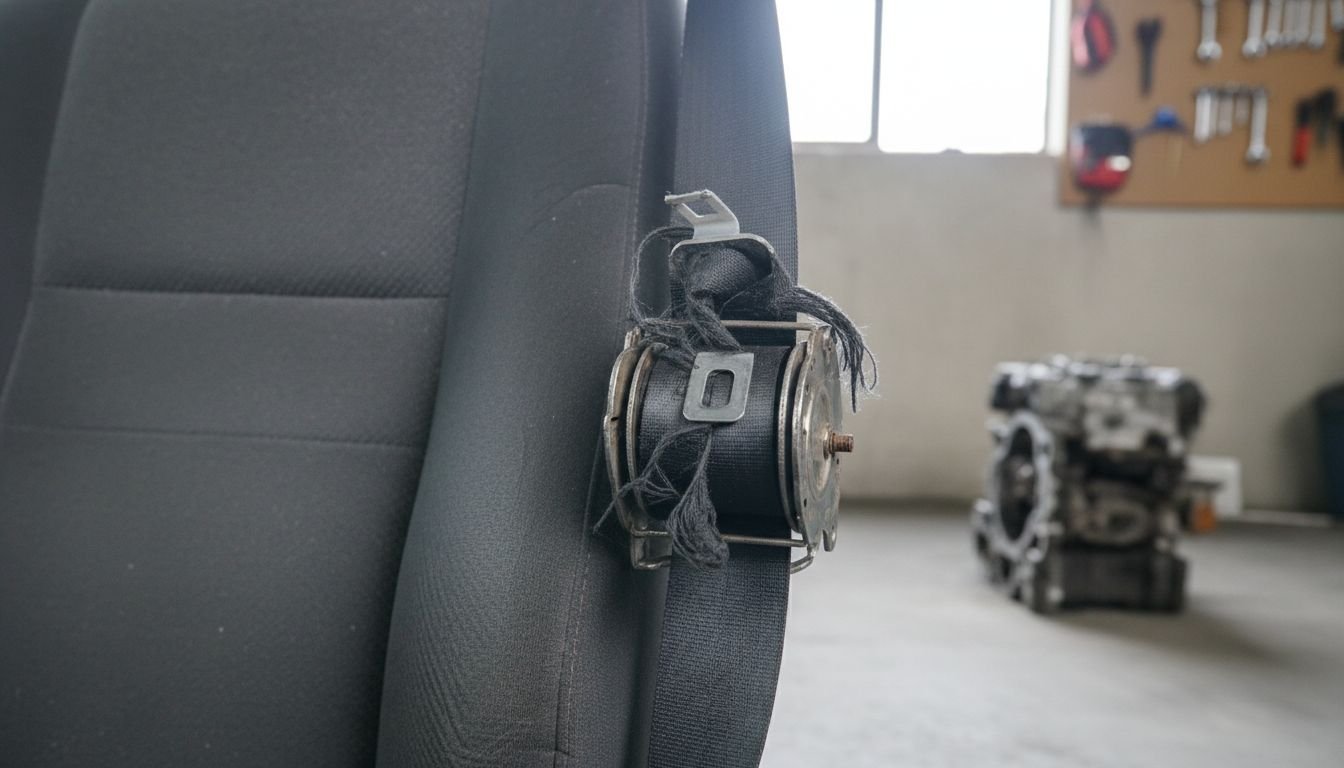
What happens in a collision when the belt, retractor, or pretensioner fails
In any collision, your seat belt and pretensioner are the first and most critical restraints. If the belt webbing is weak, the buckle doesn’t hold, or the retractor/pretensioner fails, the consequences can be severe:
- Increased forward movement – A weak belt or failed pretensioner allows more body movement, which raises the risk of hitting the steering wheel, dashboard, or airbag module too hard.
- Poor airbag timing – Airbags are engineered to work with a properly tensioned belt. If the belt doesn’t hold you in position, the airbag can actually do more harm.
- Submarining or ejection risk – A compromised belt can allow you to slide under the lap portion or, in severe cases, out of the seat entirely.
Why driving with a damaged restraint system can create bigger safety and inspection problems
Even minor-looking belt damage can cause major inspection and legal issues in Texas:
- State inspection failures – An illuminated SRS light, non-functioning seat belt, or obviously damaged webbing can cause your vehicle to fail inspection.
- Reduced crashworthiness – If another collision occurs, insurers and investigators will look closely at known safety defects. Driving long-term with a known belt fault is a serious liability.
- Hidden internal damage – After a crash, internal belt components and pretensioners may be compromised even if the belt looks “normal.”
Safety warning about airbags, pretensioners, and hidden crash damage
SAFETY WARNING: Modern Honda Civic seat belt pretensioners and airbag modules use pyrotechnic charges (explosive devices) to fire in milliseconds. They are dangerous to handle without training and the right procedures.
- Incorrect DIY probing, testing, or disassembly can accidentally deploy a pretensioner or airbag.
- Improper resistance measurements or jumpers can damage the SRS module or wiring harness.
- Static electricity or battery misconnection can trigger unexpected deployment.
For these reasons, anything beyond simple visual inspection should be left to a professional using proper SRS-safe procedures. When in doubt, schedule Seat Belt Replacement and, after a collision, an SRS Airbag Module Reset or Vehicle Diagnostic instead of experimenting.
A Civic-focused buyer’s guide detailing common failure points, OEM part numbers, cost estimates, DIY walkthrough vs professional installation, and safety checks after replacement.
Common Honda Civic seat belt failure points by age and use
Honda Civics are generally reliable, but age, mileage, and use patterns create predictable seat belt issues:
- Daily-driver front belts – The driver’s belt typically wears out first due to constant use and body oils. Expect fraying or slow retraction on 10–15+ year-old Civics or high-mileage commuters.
- Rear belts in family cars – Child seats, twisting, and food spills can contaminate or twist rear retractors, causing sticking or poor retraction.
- Sun-faded coupes and older sedans – UV exposure on 8th gen Civics (2006–2011) and older can weaken webbing and fade indicator labels.
- Crash-involved vehicles – Any Honda Civic seat belt pretensioner replacement is usually tied to a known impact. Even a minor crash can lock or deploy the pretensioner.
OEM part numbers: how to verify by VIN, trim, body style, and seating position
Honda uses different seat belt part numbers by:
- Model year and generation (for example, 2001–2005 vs 2006–2011 vs 2012–2015 vs 2016+).
- Body style – coupe vs sedan vs hatchback.
- Trim level – DX, LX, EX, Sport, Touring, etc., especially where side airbags and adjustable-height belts differ.
- Seat position – driver, front passenger, left rear, center rear, right rear.
The most accurate way to confirm the correct OEM part number is by using your VIN (Vehicle Identification Number). You can decode your VIN here before requesting a quote: LockNCal VIN Decoder.
Key decision point: Always match the belt to your exact VIN and seating position. That’s how we prevent ordering the wrong part and ensure the retractor, pretensioner, and buckle sensors all talk correctly to your Civic’s SRS module.
Realistic parts and labor cost ranges for front and rear seat belt replacement
While final pricing depends on generation and trim, typical ranges for Honda Civic seat belt replacement cost in the DFW area are:
- Front seat belt assembly (driver or passenger): usually in the $180–$420+ range for quality OEM or OEM-equivalent parts, plus labor.
- Rear seat belt assembly: often slightly lower, typically $150–$350+ for parts, plus labor.
- Labor: varies with access (2-door vs 4-door, interior trim level), but you can generally expect $120–$260+ per belt for safe removal, installation, and function checks.
Crash-related work that includes honda seat belt tensioner replacement and SRS Airbag Module Reset will add diagnostic and programming time. That’s why we start with VIN-based quoting and a clear inspection plan.
DIY walkthrough overview: what owners attempt and where mistakes happen
Some Civic owners try to replace a seat belt themselves, especially when they find a used part. Typical DIY steps include removing interior trim, unbolting the retractor and buckle, and swapping assemblies. Common problem areas include:
- Damaged trim clips or cracked panels from improper removal.
- Incorrect belt routing, causing twisting or poor retraction.
- Improper torque on seat belt anchor bolts, which can loosen over time.
- Plugging or unplugging SRS connectors with the battery connected, triggering new SRS faults or risking deployment.
- Installing incompatible used belts that don’t fully match the VIN, leading to persistent SRS lights.
For non-crash, simple wear issues (frayed webbing, slow retraction with no SRS light), experienced DIYers sometimes manage. But once pretensioners or the SRS system are involved, professional work is the safer route.
Professional installation: when it is the safer option
Professional installation is strongly recommended when:
- The belt issue follows a collision or airbag deployment.
- An SRS warning light is on.
- The seat belt assembly includes a pyrotechnic pretensioner.
- You’re unsure about compatibility between the belt and your specific Civic generation/trim.
At LockNCal, we focus on Seat Belt Replacement, Pre-Tensioner Replacement, Vehicle Diagnostic, and SRS Airbag Module Reset – not risky “repairs” to damaged belts. That keeps the work aligned with OEM-level safety expectations.
Post-replacement safety checks before the vehicle goes back on the road
Before declaring a Honda Civic safe to drive after seat belt work, a professional should:
- Verify the correct belt assembly and part number were installed for the VIN and position.
- Confirm smooth extension and retraction in all seat positions and normal driving angles.
- Check lock-up function with a sharp pull to simulate sudden deceleration.
- Ensure all anchor bolts are properly torqued and any height adjusters, guides, and trim are correctly positioned.
- Scan the SRS system to confirm there are no active seat belt or pretensioner fault codes and that the SRS light is off.
Only after these checks is your Civic ready for inspection and everyday use.
Repair vs Replace a Seat Belt on a Honda Civic
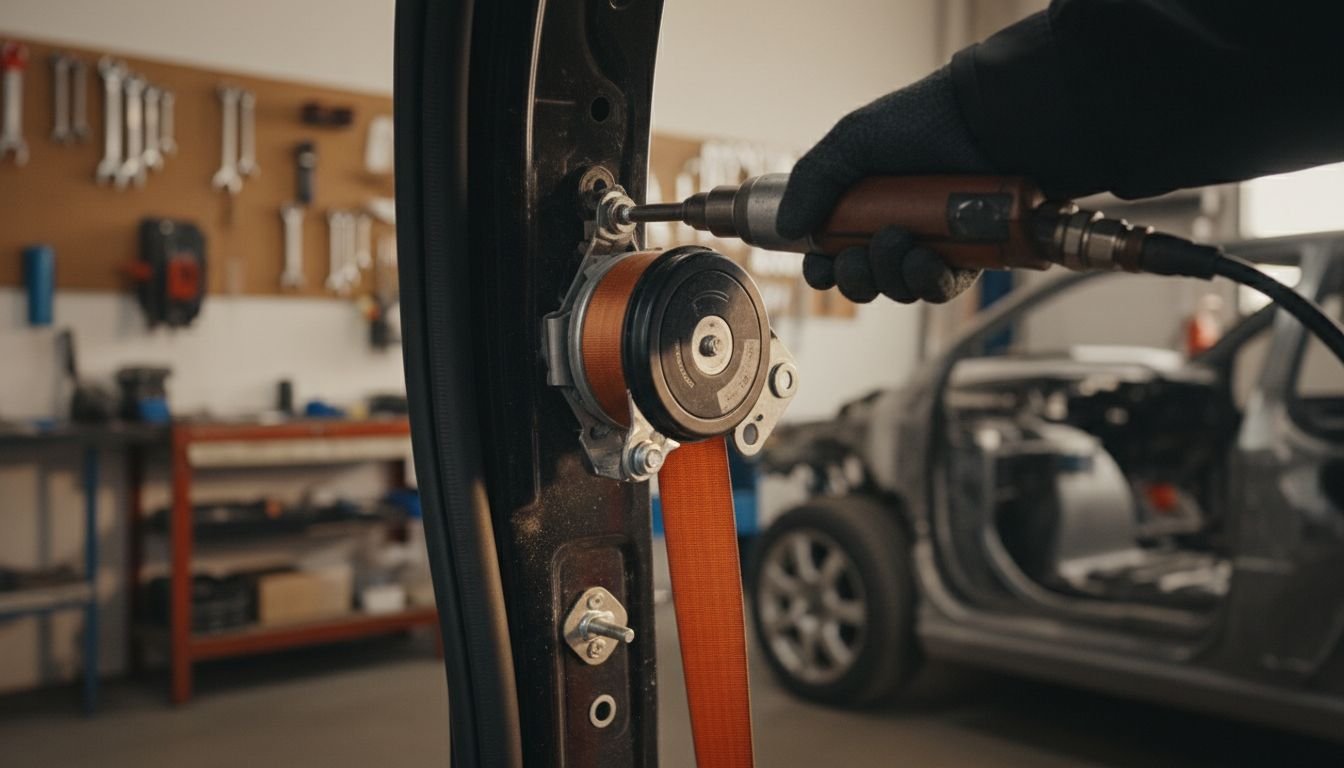
When replacement is the safer choice than trying to fix the original belt
Many drivers search for “seat belt repair” to save money. In reality, seat belt replacement is often the only safe choice for a Honda Civic when:
- The webbing is frayed, cut, melted, or heavily worn.
- The seat belt has locked after a collision or the pretensioner has deployed.
- The buckle fails to latch or hold under load.
- Internal retractor components rattle, bind, or won’t retract even after basic inspection.
Cleaning, sewing, or modifying belts is not considered safe. For most Civic owners, if the belt is damaged or crash-locked, it’s time to replace a seat belt assembly entirely.
Cost comparison: OEM dealer part vs aftermarket vs professional service
When comparing options, consider the total cost, not just the part price:
- OEM dealer parts – Often at the higher end of the $180–$420+ per front belt range but designed specifically for your Civic’s SRS system.
- Aftermarket belts – Can be cheaper, but quality and SRS compatibility vary. For critical restraint components, we favor OEM or OEM-equivalent, crash-tested parts.
- Professional service – Adds labor and diagnostic costs but includes proper torqueing, SRS-safe procedures, and verification that your airbag module agrees with the new components.
When you combine part quality with SRS testing, a properly installed OEM/OE-equivalent belt by a professional in DFW is often the best value long term.
When honda seat belt tensioner replacement should happen at the same time
Honda seat belt tensioner replacement (pretensioner) is generally done at the same time as belt replacement whenever:
- The vehicle has been in a moderate or severe collision, especially with airbag deployment.
- There are diagnostic trouble codes for the seat belt pretensioner circuit.
- There is visible damage (deformation, burn marks, or melted plastic) on the tensioner unit.
In many Civic designs, the retractor and pretensioner come as a combined unit. We’ll review your VIN and SRS fault codes to determine whether you need just a belt assembly, just a pretensioner, or both as a matched set.
For a deeper look at pretensioner issues and costs in DFW, review our guide on seat belt pretensioner replacement costs.
Where mail in seat belt replacement fits, and when local installation is better
Some owners compare local service with mail in seat belt replacement options they see online. These typically involve shipping your belt assembly to a refurbisher. While that might look cheaper, keep in mind:
- You still need proper removal and installation on the vehicle.
- There is often no in-person inspection of your vehicle’s overall SRS condition.
- Refurbished components may not always align with Honda’s original safety specifications.
For drivers in Addison TX and the broader DFW area, a local, inspection-focused Seat Belt Replacement is typically safer and more efficient than shipping safety components across the country with no direct oversight of the installation.
Honda Civic Seat Belt Replacement in Addison TX and DFW
Local support for drivers who need fast, safety-first service
If you drive a Civic in Addison TX, Dallas, Plano, Carrollton, Frisco, Arlington, Fort Worth, or surrounding DFW cities, you don’t have to guess at the right path. Local, safety-focused service matters when you’re dealing with SRS components and potential inspection issues.
Our approach is straightforward:
- VIN-based fitment checks before any parts are ordered.
- On-vehicle inspection to confirm whether only the belt is damaged or if the pretensioner and SRS module are also involved.
- A clear decision path for Seat Belt Replacement and, where appropriate, Pre-Tensioner Replacement, Vehicle Diagnostic, or SRS Airbag Module Reset.
To confirm we serve your city, start with our regional page: Seat belt replacement Addison TX and nearby areas.
When to pair seat belt replacement with Vehicle Diagnostic or SRS Airbag Module Reset
Adding a Vehicle Diagnostic or SRS Airbag Module Reset is especially important when:
- Your SRS light is on after a crash or seat belt issue.
- You’ve had airbag deployment or multiple impacts.
- You’re not sure if the SRS module or wiring has stored crash data or fault codes.
An SRS scan verifies that every component – including the new or replaced belts – communicates properly with the module. For more context on crash-related work, see our article on whether an SRS airbag module reset is needed after a collision.
Who benefits most from professional installation in DFW
You will benefit most from professional Civic seat belt replacement if:
- You commute daily on I‑35, 635, or 75 and depend on your car for work or family.
- Your vehicle is shared with young drivers or children using boosters or child seats.
- The car has already been in a collision and may have hidden restraint-system issues in Addison TX streets and highways.
- You want your inspection and insurance position as clean and defensible as possible.
If this describes you, your next step should be to Book Seat Belt Replacement and request a safety-focused inspection, not keep driving and hoping the belt “works if needed.”
Why Choose LockNCal for Honda Civic Seat Belt Replacement
Approved service options only: Seat Belt Replacement, Pre-Tensioner Replacement, Vehicle Diagnostic, SRS Airbag Module Reset
Our focus is on approved, safety-critical services. For Honda Civic owners in Addison and DFW, we provide:
- Seat Belt Replacement – For worn, frayed, non-retracting, or crash-locked belts.
- Pre-Tensioner Replacement – When crash data, diagnostics, or visible damage indicate a deployed or faulty tensioner.
- Vehicle Diagnostic – To identify the root cause of SRS warnings, pretensioner faults, or complex restraint issues.
- SRS Airbag Module Reset – When safe and appropriate after collision repairs and component replacement.
We do not promote unsafe “repairs” to damaged seat belts. If your Civic’s belt is compromised, we recommend replacement with correct-fit components.
VIN-based fitment guidance and safety-first recommendations
Buying a Civic belt by guesswork is risky. We use your VIN, model year, trim, body style, and seat position to identify the correct, compatible belt and pretensioner combination. You can start by decoding your VIN here: VIN-based seat belt fitment guidance.
From there, we provide clear, safety-first recommendations about whether you need only Seat Belt Replacement or should also consider Pre-Tensioner Replacement, Vehicle Diagnostic, or an SRS Airbag Module Reset.
Clear next steps for quotes, booking, or inspection support
To move from research to action:
- Gather your VIN and basic vehicle details (year, trim, sedan/coupe/hatchback, seat position).
- Note your symptoms – frayed webbing, belt won’t retract, buckle issues, crash history, SRS light status.
- Request a quote for Seat Belt Replacement in Addison / DFW and ask whether Pre-Tensioner Replacement, a Vehicle Diagnostic, or an SRS Airbag Module Reset is also recommended based on your situation.
We’ll help you prioritize safety and budget while keeping your Civic inspection-ready.
Honda Civic Seat Belt Replacement FAQs
1. How much does seat belt replacement Honda Civic usually cost?
For most Civics in the DFW area, expect roughly $180–$420+ for a front OEM or OEM-equivalent belt assembly and $150–$350+ for a rear belt, plus $120–$260+ in labor per belt, depending on year, body style, and access. Crash-related jobs that include pretensioner work or SRS diagnostics will be higher. A quick VIN-based quote will narrow this down for your exact car.
2. When should I replace a seat belt instead of trying to fix it?
You should replace a seat belt rather than try to fix it when the webbing is frayed or cut, the buckle will not reliably latch, the retractor is internally damaged, or the belt has locked after a collision. Attempting to clean, sew, or otherwise “repair” a damaged Honda Civic belt usually compromises safety and may fail inspection.
3. Does Honda seat belt tensioner replacement need to happen after a crash?
Often, yes. If the crash was significant enough to deploy airbags, lock a belt, or trigger pretensioner fault codes, then Honda seat belt tensioner replacement is usually recommended along with Seat Belt Replacement. A Vehicle Diagnostic can confirm whether your pretensioners have deployed and whether the SRS module has stored crash data that requires an SRS Airbag Module Reset.
4. Can I replace a seat belt on a Honda Civic myself?
Mechanically skilled owners sometimes replace non-crash belts themselves, but there are serious risks. You must correctly remove interior trim, torque anchors, and avoid unsafe contact with SRS wiring or pretensioners. Any work involving explosive pretensioners or SRS faults is best left to a professional. If you see an SRS light, or the belt issue follows a collision, schedule professional Seat Belt Replacement instead of DIY.
5. What safety checks should be done after seat belt replacement?
After replacing a Honda Civic seat belt, a technician should verify part-number correctness, confirm smooth extension and retraction, test lock-up with a sharp pull, ensure all anchors are properly torqued, and run an SRS diagnostic scan to clear codes and confirm there are no active seat belt or pretensioner faults. Only then is the car ready for regular driving and inspection.
6. Is mail in seat belt replacement a good option, or is local service better?
Mail in seat belt replacement can look affordable, but you still need safe removal/installation and, ideally, on-vehicle diagnostics. For Civic drivers in Addison TX and DFW, local Seat Belt Replacement with inspection and SRS scanning is usually safer and more practical, especially when crash damage or warning lights are involved.
7. Will a seat belt issue also require an SRS airbag module reset or diagnostic?
If your seat belt issue is linked to a crash or SRS warning light, then yes, a Vehicle Diagnostic and sometimes an SRS Airbag Module Reset may be needed. The diagnostic scan reveals whether the SRS module has stored crash data, pretensioner faults, or buckle switch codes. We use that information to recommend the right combination of Seat Belt Replacement, Pre-Tensioner Replacement, and module reset.
Get a Quote for Honda Civic Seat Belt Replacement Today
When it comes to seat belt replacement Honda Civic decisions, safety has to come before guesswork or short-term savings. If your Civic’s belt is frayed, won’t retract, stays locked after an accident, or you’re seeing an SRS light, it’s time to take action.
Next steps:
- Use our VIN decoder to gather accurate vehicle details.
- Get a quote for Seat Belt Replacement in Addison TX / DFW based on your generation, trim, and symptoms.
- If a crash or warning light is involved, ask us to include Pre-Tensioner Replacement, a Vehicle Diagnostic, or an SRS Airbag Module Reset in your plan as needed.
Whether you drive daily across Dallas, Plano, Fort Worth, or any of the nearby cities we serve, we’ll help you restore your Honda Civic’s restraint system the right way – with VIN-verified components, safety-first installation, and professional SRS checks before you’re back on the road.
For broader safety insight, especially before long trips, you can also review our guide on vehicle safety system warning signs and hidden restraint-system issues in Addison TX.


