
Carfax Vehicle Report: What It Includes, What It Misses, and When to Buy One
As an auto safety technician in Dallas County TX, I see one mistake over and over: buyers trust a carfax vehicle report like it’s a guarantee. It isn’t. It’s a useful vehicle history report, but it’s only one piece of your safety and buying decision.
This guide will show you:
- What a Carfax report really includes (and how to read it safely)
- What it can miss about accident history, flood damage, and safety systems
- When paying for a report makes sense vs. when free lookups are enough
- Why Dallas County TX buyers face some unique risks
- When to move from paperwork to a professional Vehicle Diagnostic before you commit
First smart step: Run your VIN through LockNCal’s FREE VIN Decoder to confirm basic specs and get an initial screen before you spend money on any report.
Why Buyers Check a Carfax Vehicle Report Before Buying a Used Car
Most Dallas-Fort Worth buyers order a carfax vehicle report because they’re worried about hidden problems that don’t show up on a quick test drive:
- Hidden accident damage and poor-quality repairs
- Salvage title or rebuilt title history that hurts value and safety
- Odometer rollback or inconsistent mileage entries
- Hard prior use: rental, fleet, rideshare, or commercial vehicles
- Gaps in service records or signs of poor maintenance
- Possible flood damage or hail damage that’s been “cleaned up”
You’re right to be cautious. But you also need to understand what a history report can and cannot tell you. This guide is your decision tool: when a report is worth buying, how to read it safely, and when you need a hands-on Vehicle Diagnostic to protect yourself and your family.
Explain what a Carfax vehicle report includes (title history, accidents, service records), how to interpret entries, pricing and free lookup options, limitations/missing data, and complementary checks (VIN decode, mechanic inspection, NICB). Help buyers decide when to purchase a report.

Think of a carfax vehicle report as a collection of reported events tied to a VIN, not a full biography of the car. It pulls from DMVs, insurance companies, body shops, service centers, auctions, and some dealers. Anything that never hits those systems may never show up.
What a Carfax vehicle report typically includes
Most Carfax-style reports will show:
- Title history: original title, salvage title, rebuilt, flood, lemon, junk, or total-loss branding, plus title transfers across states.
- Accident and damage records: police reports, insurance claims, and some body shop entries with severity notes like “minor,” “moderate,” or “severe.”
- Service and maintenance history: oil changes, major services, recalls performed, and some repair visits (only when the shop reports to the network).
- Ownership count and timelines: number of owners, approximate locations, and how long each owner kept the vehicle.
- Odometer readings: mileage snapshots at registration, inspections, service visits, and auctions to help expose odometer rollback.
- Vehicle use types: personal, fleet, rental, taxi, commercial, or government use.
- Recall visibility: some recalls may show, but you should always confirm through the manufacturer’s site or NHTSA, not just the history report.
How to read entries without misinterpreting them
This is where most buyers get into trouble. A few examples:
- “Minor damage” vs “severe damage”: These terms describe what was reported, not necessarily the full story. A “minor” parking-lot hit on paper can still knock an ADAS sensor out of alignment or crunch a seat belt pre-tensioner. A “severe” event is a huge red flag, but even a “minor” one should trigger a deeper look.
- Structural / frame damage: Any mention of frame, unibody, or structural repair is serious. That vehicle deserves a cautious approach and a thorough Vehicle Diagnostic plus physical inspection before you buy it.
- Branded title clues: Words like salvage title, rebuilt title, flood, or total-loss mean the vehicle was considered significantly damaged or uneconomical to repair at one point. These vehicles can hide deep safety and reliability issues even after “rebuild.”
- “No accidents reported”: This phrase only means that no accidents were reported into their data sources. It does not mean the car never had an accident. Uninsured repairs, cash deals, and work done outside reporting networks will not show.
- Service gaps: A big gap in service records might mean DIY maintenance, a different shop that doesn’t report, or simply poor maintenance. Treat it as a yellow flag—something to investigate with the seller and verify with a Vehicle Diagnostic and on-vehicle inspection.
- Short ownership periods: Many owners in a short time can hint at ongoing issues, but not always. Sometimes it’s just job changes or lifestyle shifts. Combine this pattern with other clues (recurring repairs, complaints from the seller, odd noises, warning lights) before you decide.
Bottom line: Don’t just read the summary box. Read the timeline line by line. Look for patterns, gaps, and anything that doesn’t match the seller’s story.
Pricing and bundle expectations
Carfax pricing changes over time, and different sites may bundle reports with listings. In general:
- Expect to pay for either a single report or a multi-report package if you’re shopping several vehicles.
- Use a single report when you already have one serious candidate and just want to verify its used car history.
- Consider a bundle if you’re comparing several similar vehicles and want to cross-check accident history, mileage patterns, and title history quickly.
Because current pricing varies, always confirm the latest cost and package details on the provider’s site before buying.
carfax free vin lookup and other free report paths
You can sometimes access history information without paying directly—this is where terms like carfax free vin lookup, free carfax vin lookup, and vin lookup car fax show up in searches.
Here’s how free access typically works:
- Dealer listings: Many franchised dealers in areas like Dallas County TX, Plano, and Arlington will include a free Carfax link on their online listings. That’s effectively a free Carfax report for used cars on that specific vehicle.
- Marketplace listings: Some online marketplaces embed a limited version of the report. It may show key events but hide some detail unless you unlock the full report.
- Seller-provided PDFs: Private sellers or small dealers may send you a recent PDF if they’ve already purchased it.
- Other free VIN tools: Government or insurer-backed tools show total-loss and theft information, but not the full depth of service and ownership history. These are useful, but they’re not a substitute for a full report.
Remember: free access is listing-dependent. You can’t always run any VIN through a fully free Carfax system. That’s where LockNCal’s own FREE VIN Decoder comes in—it’s a great screening tool before you decide whether to pay for a branded vehicle history report.
What a report can miss
Even a paid report has gaps. Common blind spots include:
- Unreported accidents: If a crash was repaired out-of-pocket, through a small shop that doesn’t report, or never went through insurance, it may leave no trace in the database.
- Delayed records: Insurance and body shop records can be weeks or months behind. You might buy a car before a recent collision ever shows up.
- Work done outside reporting networks: Many independent shops and DIY owners never send data to Carfax. Critical repairs—or the lack of them—can be invisible.
- Prior airbag deployment language: Airbag events don’t always show as “airbags deployed” in a neat line. Sometimes they appear in police or insurance notes. In other cases, the physical SRS system shows stored crash codes even when the report looks clean.
- Water intrusion and flood damage: A car can be exposed to flooding or deep water without ever being declared a total loss. That may not show as a “flood” title or event, yet corrosion can slowly attack connectors, modules, and sensors.
- Hail and cosmetic-only repairs: Roof, hood, and panel work for hail may be listed as “cosmetic,” but that same storm may have let water inside through bad seals or windshield leaks.
Complementary checks smart buyers should always use
Use the report as a starting point, not the finish line. Smart Dallas-Fort Worth buyers combine it with:
- LockNCal FREE VIN Decoder to verify year, make, model, engine, and key build info for American & Japanese vehicles before spending money.
- NICB total-loss and theft checks to confirm no undisclosed total-loss or stolen status.
- In-person inspection to look for paint mismatch, panel gaps, water lines, mildew smells, and abnormal tire wear.
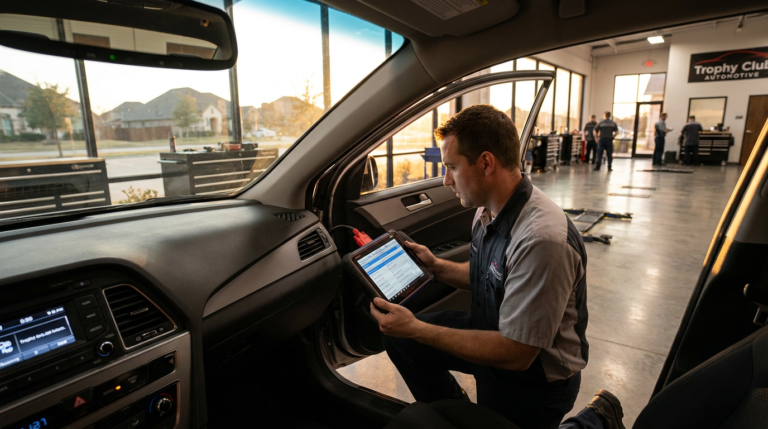
- A professional Vehicle Diagnostic with a safety-first technician to scan modules, read stored crash data, and check for hidden faults in SRS and ADAS systems.
- Title and ownership document review to match VIN, state, and branding to what the history report claims.
If you’re serious about a car in Dallas County TX, schedule a full car diagnostics in DFW through LockNCal before you sign anything. That’s your real-world verification step.
The Biggest Risks of Relying on a Carfax Report Alone
When you rely on a carfax vehicle report alone, you’re assuming that every event was reported accurately and promptly. In the real world, that’s rarely true.
Key risks include:
- Hidden crash repairs that never went through insurance or a reporting shop
- Post-collision electronics problems that don’t show up in paperwork but are stored as fault codes in modules
- Safety restraint issues (airbags, seat belts, pre-tensioners) that were never replaced correctly
- ADAS sensor misalignment after bumper or windshield repairs that were treated as “cosmetic”
Your safety systems—airbags, seat belt pre-tensioners, ABS, traction control, and ADAS features like lane-keeping and forward collision warning—depend on accurate sensors and correctly programmed modules. A report cannot see whether those are still in calibration or still armed properly. A Vehicle Diagnostic with a full scan is the only way to know.
What a Clean Report Does NOT Guarantee
A “clean” or “no accidents reported” status is not a safety guarantee. It simply means nothing serious has been reported into that database. From a safety-tech standpoint, here’s what that does not guarantee.
Hidden airbag and SRS issues
An airbag system can be compromised in several ways even if the history report looks clean:
- Prior crash with DIY or low-quality repair where SRS airbag modules were never reset or were replaced with wrong parts.
- Deployed airbags swapped with counterfeit or non-OEM parts.
- Warning lights temporarily cleared without actually fixing the root problem.
If a report or seller mentions any collision, or you see signs of prior front or side repair, it’s wise to consider a Vehicle Diagnostic that includes SRS scanning. If stored crash data or module issues are found, LockNCal can handle SRS Airbag Module Reset, Mail-In Airbag Module Reset (for out-of-area customers), or Airbag Module Programming on many American & Japanese vehicles.
Seat belt and pre-tensioner damage after a prior event
Seat belts with built-in pre-tensioners are often one-time-use devices. After deployment, they can look normal but no longer protect you correctly in the next crash. A clean report can’t tell you if someone installed used components, bypassed wiring, or left a pre-tensioner disabled.
Where restraint concerns exist, LockNCal offers Seat Belt Replacement and Pre-Tensioner Replacement services for applicable American & Japanese models, guided by what we find during a Vehicle Diagnostic.
ADAS sensor misalignment after collision repairs
Advanced systems like adaptive cruise, lane-keep assist, and auto braking rely on precisely aimed sensors. A minor bumper, grille, or windshield repair can knock those sensors out of spec—even if the car looks perfect and the history report only says “minor cosmetic damage.”
In those cases, a Vehicle Diagnostic plus proper ADAS Calibration is critical. For more depth on this, see our guide on ADAS calibration after cosmetic repairs.
Cosmetic repairs that hide deeper structural or electrical problems
Fresh paint and clean interiors sell cars—but they can hide rust, prior flood lines, cut-and-splice wiring, or welded frame sections. None of that is guaranteed to show in a carfax report for used cars. Only careful underbody inspection and module-level diagnostics will reveal most of these issues.
Dallas County TX Used-Car Risks a Vehicle History Report May Not Fully Show

Buying a used car in Dallas County TX comes with some region-specific risks that a standard vehicle history report may only partially reflect.
- Hail-damage repairs: North Texas hailstorms are brutal. Many vehicles get “cosmetic” roof and hood repairs. Sometimes that’s all it is—but sometimes hail damage leads to water intrusion, windshield leaks, and corrosion that doesn’t show clearly in a report.
- Flood migration from Gulf states: After major storms on the Gulf Coast, flood-damaged cars often move inland to markets like Dallas, Fort Worth, Arlington, Plano, and Frisco. Titles may transfer across states and not always carry clear “flood” branding.
- Auction vehicles entering North Texas: Dallas-Fort Worth is a major hub for auction sales. Many vehicles with prior damage, high miles, or commercial use pass through auction lanes before landing on local lots. Some will show this clearly in the report, but not all.
- High-mileage commuter vehicles: Our region is spread out. Long commutes from places like McKinney, Rockwall, or Burleson mean lots of highway miles. That’s not always bad, but heavy use with weak maintenance can create hidden wear on suspension, brakes, and electronics.
- Commercial and fleet use: Work trucks and fleet sedans see tougher duty cycles. A report may say “commercial” or “fleet,” but it won’t tell you how hard that vehicle was actually used.
If you’re shopping in Dallas County TX, combine the history report with a local, safety-first Vehicle Diagnostic. LockNCal serves buyers across Dallas, Tarrant, Collin, and Denton County areas—including Addison, Arlington, Carrollton, Frisco, McKinney, Plano, Irving, Grand Prairie, and more—with diagnostics focused on your real-world safety, not just dash lights.
When Paying for a Carfax Report Makes Sense
You don’t need to pay for a report on every random car you see. Here’s when it usually makes sense to spend the money.
Worth it before seeing the car
Pay for a carfax vehicle report early when:
- You’re shopping out of state or long distance and want to filter bad candidates before traveling.
- The vehicle price seems too low for the year/miles and you suspect a branded title or accident history.
- You’re comparing several similar vehicles and need to rank them by used car history—accidents, ownership count, and service patterns.
Worth it after a test drive but before deposit or paperwork
This is the most common use case. You drove the car, you like it, but before you put down a deposit or sign anything, you run the report to check:
- Title history for salvage, rebuilt, flood, or total-loss branding.
- Accident history including severity and recurrence.
- Odometer readings for consistency.
- Ownership patterns and possible fleet/rental use.
Right after that, if the vehicle still looks good on paper, the next step should be a Vehicle Diagnostic and in-person inspection with a local expert.
Less necessary when the dealer already provides a recent report
If a reputable dealer in Dallas County TX already provides a recent carfax report for used cars and it looks complete, you may not need to buy another on the exact same VIN. Instead, use your budget on a Vehicle Diagnostic to check the actual car in front of you.
When free tools may be enough for initial screening
For early shopping and low-commitment browsing:
- Use the dealer’s built-in free carfax vin lookup link if it’s available on the listing.
- Run the VIN through basic government and insurer checks for total-loss and theft.
- Start with LockNCal’s FREE VIN Decoder to confirm you’re looking at the right engine, trim, and configuration.
Once a vehicle passes your basic screen and you’re serious about buying, that’s when a paid report plus a Vehicle Diagnostic makes sense.
Carfax Report for Used Cars vs Free VIN Checks

Both paid and free tools have a place. The key is knowing what each can and can’t do.
Free VIN checks are best for:
- Confirming the basic identity of the car (year, make, model, engine code).
- Spotting obvious salvage title, rebuilt title, or total-loss status when reported.
- Early-stage shopping, where you’re just narrowing the field.
A paid carfax report for used cars is better for:
- Seeing ownership history and how long each owner kept the vehicle.
- Reviewing service records and maintenance patterns from reporting shops.
- Tracking accident history details, approximate severity, and repeat damage events.
- Seeing auction movement and state-to-state title transfers.
But remember: neither a paid report nor a free check tells you if the airbags were wired correctly, if the ADAS sensors are calibrated, or if stored fault codes are hiding in the modules. That’s why, for any serious candidate, you should move from screens and PDFs to a real-world Vehicle Diagnostic before you finalize the purchase.
Carfax Vehicle Report Red Flags That Should Trigger a Vehicle Diagnostic
When I review reports for patterns, there are certain red flags that always tell me: “Don’t buy this car on paperwork alone.”
Airbag deployment or restraint-related language
Look for any mention of:
- “Airbags deployed”
- “Passenger restraint” or “occupant restraint” system checked or repaired
- “Seat belt replaced” or SRS repair entries
These are clear signals to schedule a Vehicle Diagnostic. If module faults or crash data are present, you may need services such as SRS Airbag Module Reset, Mail-In Airbag Module Reset (if you’re outside DFW), or Airbag Module Programming on supported American & Japanese models.
Branded title, salvage, rebuilt, flood, or total-loss history
Any salvage title, rebuilt title, flood, or total-loss wording is a major warning. These vehicles can be made drivable again, but getting all safety systems back to proper spec requires careful work. Never rely on the seller’s word alone here—only a comprehensive Vehicle Diagnostic and hands-on inspection can tell you what you’re really buying.
Mileage inconsistencies and rollback suspicion
If odometer readings in the report jump backward or show odd patterns (for example, 150k, then 95k, then 120k), treat it as a serious concern. Odometer manipulation usually comes with hidden maintenance neglect. A diagnostic and under-hood inspection can help reveal whether the wear level matches the claimed mileage.
Frequent ownership changes or auction movement
Multiple owners in a short period, especially with multiple auction entries, may signal a difficult vehicle that dealers have been passing along. Sometimes that’s harmless; sometimes it points to intermittent electrical or safety issues that only show under certain conditions. A Vehicle Diagnostic with a road test and full scan is critical here.
Long service gaps or repeat damage events
Long periods with no service records, or repeated notes about front-end or rear-end damage, suggest the car has had a harder life than the seller might admit. These are prime candidates for deeper inspection before you buy.
Conversion note: If your report shows any of these red flags, do not skip the verification step. Book a Vehicle Diagnostic with LockNCal in the DFW area before you sign paperwork or wire funds.
Why Dallas County Buyers Choose LockNCal After Running a Vehicle History Report
LockNCal is designed to be your next step after the report. We don’t sell cars—we protect buyers by focusing on safety systems and diagnostics for American & Japanese vehicles across Dallas County TX and surrounding cities.
Here’s how we fit into your process:
- FREE VIN Decoder: Start with our FREE VIN Decoder to confirm you’re looking at the right trim and configuration before you invest time and money.
- Vehicle Diagnostic (primary service): This is our core pre-purchase tool. We use professional equipment to scan modules, check for stored crash data, SRS and ABS faults, ADAS issues, and other electronic problems that a report can’t see.
- ADAS Calibration: If your carfax vehicle report or inspection shows prior front-end, side, or windshield work, we can perform or refer for correct ADAS calibration for supported American & Japanese platforms.
- SRS Airbag Module Reset / Mail-In Airbag Module Reset / Airbag Module Programming: For vehicles with prior collisions, dash airbag lights, or SRS history, these services help ensure the system is correctly reset and configured—not just silenced.
- Seat Belt Replacement / Pre-Tensioner Replacement: Where we find compromised or deployed components, we can replace them on supported vehicles so your restraint system functions properly in a second event.
We serve buyers across Dallas County TX and neighboring areas like Arlington, Fort Worth, Plano, Frisco, McKinney, Mesquite, and more. When you’re ready to move beyond the report and check the actual car, schedule a Vehicle Diagnostic with a safety-focused technician.
Final Verdict: Should You Buy a Carfax Vehicle Report?
Here’s the bottom line from a safety technician’s perspective.
Yes, a carfax vehicle report is usually worth it when:
- You’re considering a medium or high-value used vehicle.
- You’re buying private-party and want a second opinion on the seller’s story.
- The car is out-of-state or has multiple prior states on the title.
- It’s a late-model vehicle where electronic and safety systems matter more to you.
- The price is suspiciously low, or the seller is vague about accident history and maintenance.
No, it is not enough by itself when:
- You see any signs of accident repair, mismatched paint, or panel gaps.
- Warning lights are or were recently on, especially SRS, ABS, or stability control.
- The title history, mileage, or ownership pattern looks odd.
- The vehicle has a branded title (salvage, rebuilt, flood, lemon, total-loss).
Use the report to ask smarter questions, then verify the car’s real condition. That’s where LockNCal comes in:
- Run our FREE VIN Decoder as your first screening step.
- Once you’re serious about a car in or around Dallas County TX, book a Vehicle Diagnostic with LockNCal to scan safety systems and confirm what the paperwork can’t show.
Do not rely on paperwork alone. A carfax vehicle report is a powerful tool—but your family’s safety depends on the actual condition of the vehicle in front of you.
Safety Warning: SRS and DIY Risk
Important safety notice: Airbags, seat belt pre-tensioners, and many SRS components contain pyrotechnic (explosive) devices. Attempting DIY repairs, resets, or wiring changes on these systems is dangerous and can result in accidental deployment, serious injury, or system failure in a crash.
Research your VIN check and history report as much as you like—but leave any SRS, airbag, or ADAS-related work to qualified professionals. If your car’s history suggests prior collision or restraint system involvement, schedule a Vehicle Diagnostic with LockNCal, and when needed, use our SRS Airbag Module Reset, Mail-In Airbag Module Reset, Airbag Module Programming, Seat Belt Replacement, or Pre-Tensioner Replacement services for supported American & Japanese vehicles.
FAQs About Carfax Vehicle Reports and Safety
1. What is a carfax vehicle report?
A carfax vehicle report is a branded vehicle history report tied to your car’s VIN. It pulls in recorded data like title history, accident history, some service records, and ownership changes from participating sources. It’s a great starting point, but it doesn’t replace a professional Vehicle Diagnostic on the actual vehicle.
2. What does a carfax vehicle report include?
Typically it includes title history (including salvage title or rebuilt title branding), accident and damage entries, some service records, ownership counts, mileage readings to help detect odometer rollback, and notes on vehicle use (personal, fleet, rental, etc.). Some recall information may appear, but you should always double-check recall status through the manufacturer or NHTSA—and, if relevant, review resources like our GM airbag recall list.
3. Can I get a carfax free vin lookup for any vehicle?
Not for every vehicle. A carfax free vin lookup or vin lookup car fax option is usually tied to specific dealer or marketplace listings that include a free link. For other vehicles, you’ll typically need to pay for access. Regardless, you can always start with LockNCal’s FREE VIN Decoder to confirm the basics before deciding whether to purchase a full report.
4. Is a free carfax vin lookup enough before buying a used car?
A free carfax vin lookup can be very helpful for screening, especially if it’s embedded in a dealer listing. It may show major title issues and key accident events. However, it may not provide full detail or complete history. For any car you’re serious about buying—especially in Dallas County TX—you should treat a free report as a starting point, then consider a full report plus a Vehicle Diagnostic for safety-critical verification.
5. When is a carfax report for used cars worth paying for?
A carfax report for used cars is usually worth it for higher-value vehicles, private-party sales, out-of-state cars, or any listing where the price or story doesn’t quite match expectations. It helps you spot red flags early and decide whether it’s worth spending money on a Vehicle Diagnostic and in-person inspection.
6. What should I do if the report shows accident or title problems?
If you see accident entries, branded titles (salvage, rebuilt, flood, total-loss), or odd mileage patterns, do not rely on the report alone. First, question the seller about the events. Then, if you’re still interested, schedule a Vehicle Diagnostic with LockNCal in the DFW area. Depending on what we find, you may need additional services such as ADAS Calibration, SRS Airbag Module Reset, Airbag Module Programming, Seat Belt Replacement, or Pre-Tensioner Replacement on applicable American & Japanese vehicles.
7. Can a clean Carfax still miss safety problems?
Yes. A clean or “no accidents reported” Carfax only means no qualifying events were reported to its data sources. Unreported crashes, DIY repairs, non-reporting shops, flood exposure, or hidden electrical and SRS faults can all exist under the radar. That’s why we strongly recommend pairing any clean report with a Vehicle Diagnostic before you buy, especially for vehicles driven in and around Dallas County TX.
Next steps: Start your search with LockNCal’s FREE VIN Decoder, then protect your investment—and your family—by booking a safety-focused Vehicle Diagnostic before finalizing any used car purchase in the DFW area.