 Skip to content

OEM Replacement Seat Belts Buyer’s Guide in Irving TX: Safety, Fitment, Cost & Installation Checks
As an expert auto safety technician serving Irving TX and the greater DFW area, I see the same core concern over and over: drivers and shops need OEM replacement seat belts that are safe, that fit exactly, and that won’t create inspection or airbag system problems later.
If your seat belt needs replacing, our seat belt replacement service restores it to factory condition, mobile across DFW.
This buyer’s guide is written for:
- Everyday drivers and families
- Body and collision shops
- Used and rebuilt vehicle buyers
- Fleet operators and commercial vehicles
LockNCal focuses on American & Japanese vehicles, and we provide safety-first services: Seat Belt Replacement, Pre-Tensioner Replacement, and Vehicle Diagnostic. We do not sell or promise risky “repairs” to damaged belts – we recommend replacement when safety is in question.
Critical safety warning: Modern seat belts often include SRS components and pyrotechnic pretensioners (small explosive devices). Incorrect DIY work can cause injury during handling, leave the belt inoperative, or create hidden failures where the system looks normal but will not protect you in a crash. When in doubt, seek professional help.
Why Drivers Shop for OEM Replacement Seat Belts
Most drivers don’t think about seat belts until something feels wrong – or an inspector flags an issue. Common reasons we see Irving and DFW customers shopping for oem replacement seat belts include:
- Frayed or cut webbing – visible wear, sharp edges, or damage from pets or tools.
- Locked or slow retractors – the belt won’t pull out smoothly or won’t retract fully into the pillar.
- Crash or airbag deployment – pretensioners may have fired, webbing may be stretched, or the belt may be locked after an accident.
- Failed state inspection or safety check – the inspector noted belt damage, improper operation, or missing mounting hardware.
- Rebuilt or salvage vehicles – missing belts, mixed components from different cars, or unknown crash history.
- Uncertainty after collision work – a body shop replaced panels and airbags, but you’re not sure the belt system and pretensioners were addressed correctly.
If any of these sound familiar, focusing on exact-fit seat belt replacement – not just “something that bolts in” – is essential to keep you and your passengers safe.
Buyer’s Guide: OEM vs Aftermarket Seat Belts, Certification, Safety Implications, Compatibility by Model, Cost Comparison, and How to Verify Correct Installation
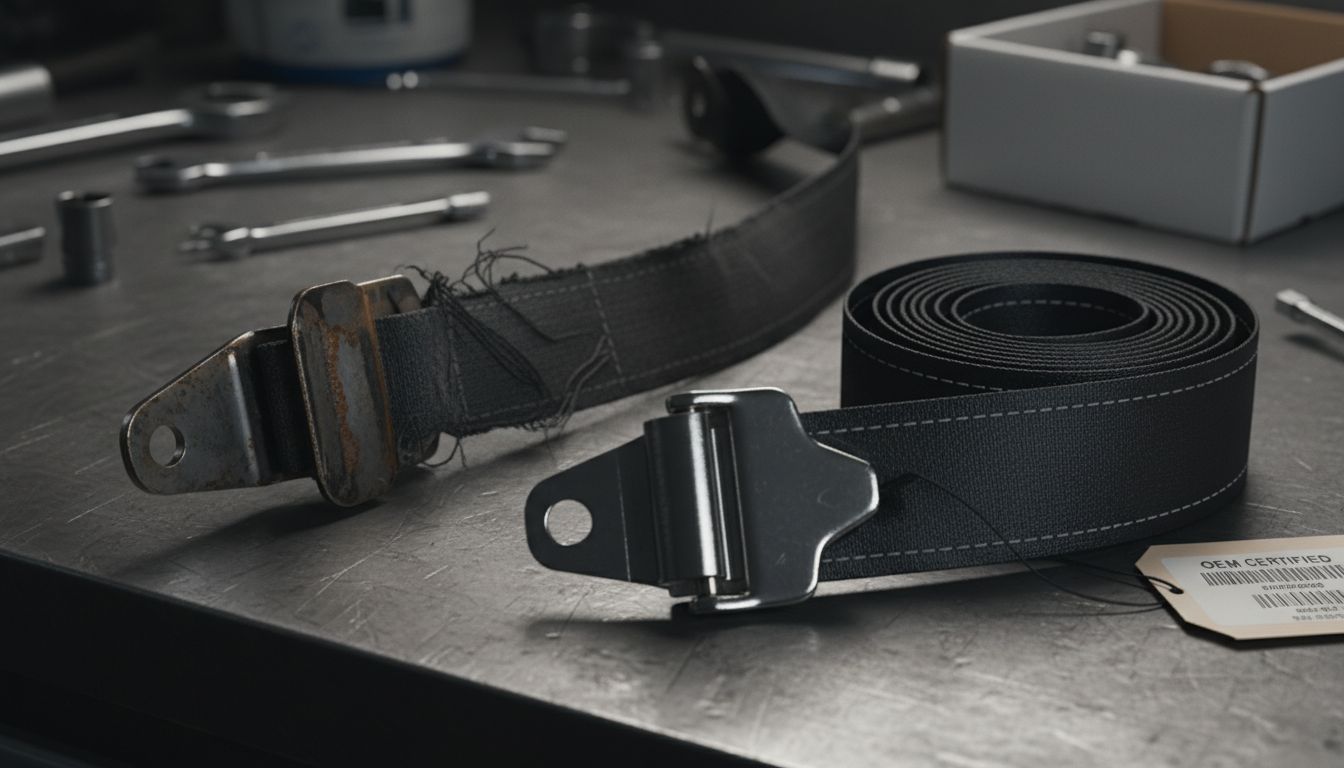
This section is your core decision guide. If you’re deciding between dealer parts, aftermarket, and cheap universal belts, read this carefully before you buy anything.
OEM replacement seat belts vs aftermarket vs universal: what buyers need to know
For American & Japanese vehicles, your main options look like this:
- OEM replacement seat belts (dealer-original or OEM-equivalent exact-fit)
These are designed for your specific year, make, model, and seat position. The retractor, webbing length, buckle, and mounting hardware are all engineered to work with your seat design, airbag timing, and body structure. - Aftermarket exact-fit replacements
Some quality aftermarket suppliers offer OEM-equivalent exact-fit replacement belts that match factory specifications and hardware for a defined application. These must still be selected carefully by exact part number or confirmed fitment, not just “close enough” length or bolt size. - Universal seat belts
These are marketed as “one-size-fits-many” and are usually cheaper. They rarely match factory geometry, pretensioner configuration, or buckle location precisely. Even when advertised as FMVSS-compliant, they may not be engineered for your specific seating position, seat track movement, or SRS timing.
At LockNCal, we focus our recommendations and services around OEM and OEM-equivalent exact-fit seat belt replacement for American & Japanese vehicles. That’s where we can stand behind the safety logic and compatibility with the vehicle’s restraint system.
What FMVSS compliance does and does not mean for real-world safety
Many belts advertise “FMVSS-compliant seat belt” features. FMVSS (Federal Motor Vehicle Safety Standards) set performance requirements for restraint systems. But there are two important points most competitors don’t explain well:
- FMVSS is a laboratory and design standard – it does not mean the belt is safe in your specific vehicle if installed in the wrong location or geometry.
- FMVSS compliance doesn’t guarantee compatibility with your existing seat belt pretensioner, airbag modules, seat sensors, or seat frame.
In other words, a universal belt can technically meet FMVSS pull tests but still fail to protect you properly if its anchor point forces the webbing across your neck or abdomen instead of your shoulder and lap, or if it interferes with the pretensioner system.
Why exact fit by year, make, model, and seat position matters
Seat belt compatibility by model is not just about bolt size or webbing length. OEM and OEM-equivalent belts are engineered to work with:
- Vehicle year, make, and model – small design changes from one model year to the next can change belt geometry.
- Seat position – driver, front passenger, 2nd-row outboard, 2nd-row center, 3rd-row positions all differ.
- Seat design and trim level – different seats, side airbags, or folding seat mechanisms require different belt routings.
- Mounting angle and height – the upper anchor and retractor angle control how the belt lays across the body.
That’s why LockNCal verifies exact fitment for American & Japanese vehicles before we proceed with Seat Belt Replacement. We confirm application by VIN, model, and seat location – not guesswork.
You can also use the LockNCal VIN decoder as a starting point to identify your vehicle’s exact configuration before you call.
What to know about retractors, buckles, pretensioners, and SRS-related components
Modern restraint systems are integrated:
- Retractor – controls belt payout and locking. Some retractors incorporate pyrotechnic pretensioners that fire in a crash to pull slack out of the belt.
- Buckle and buckle pretensioner – the buckle may contain a switch for the seat belt warning light, and sometimes its own pretensioner.
- Anchor points and height adjusters – critical for comfort and correct body placement in a crash.
- SRS-related wiring – seat belt pretensioners and some buckles are wired into the SRS (airbag) control module. Incorrect resistance, damaged wiring, or wrong parts can trigger an airbag light or disable the system.
If your issue involves a fired pretensioner, visible crash damage, or an SRS warning light, you may need Pre-Tensioner Replacement and a supporting Vehicle Diagnostic to clear codes and verify the system is fully operational.
Why cheap universal belts can create safety and inspection problems
Cheap universal belts are popular online because of price, but they can create serious problems:
- Poor geometry – belt crosses the neck instead of the chest, or rides too high on the abdomen.
- Insufficient retraction – belt doesn’t return fully, leading to loose belts and failures during sudden stops.
- Mounting mismatch – hardware that doesn’t seat properly in the vehicle’s reinforced anchor points.
- Inspection failures – inspectors can fail vehicles that have non-OEM, visibly incorrect, or poorly installed universal belts.
- Unknown SRS behavior – if pretensioners or sensors are bypassed or removed, airbag performance in a crash may be compromised.
This is where a lower upfront seat belt replacement cost can become an expensive mistake: failed inspections, rework, or worse, an injury that proper OEM or OEM-equivalent parts could have prevented.
The Danger of Choosing the Wrong Seat Belt
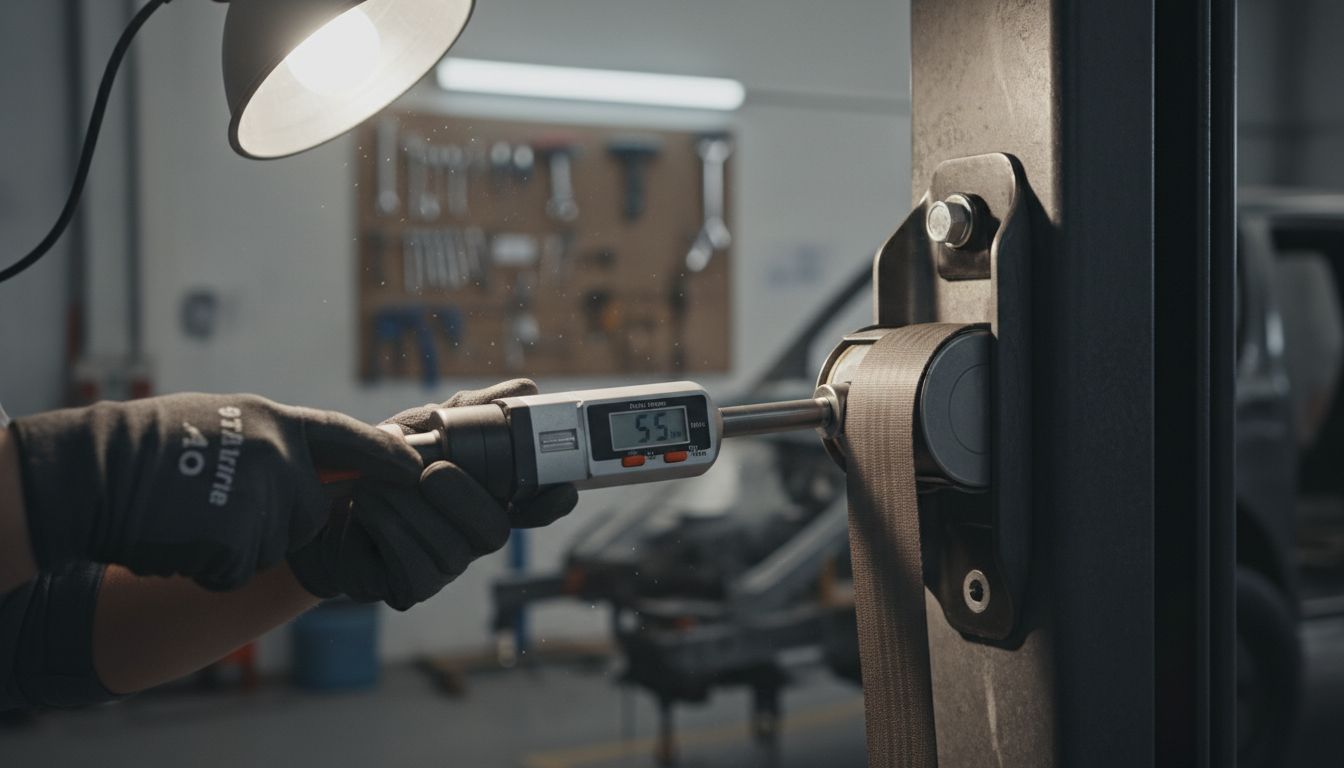
Seat belts are primary restraint systems. Airbags are designed to work with them, not instead of them. Choosing the wrong belt, or installing the right belt incorrectly, can have serious consequences in a crash.
Key danger areas include:
- Poor latch engagement – a mismatched buckle and tongue may look connected but can release under load.
- Improper retraction and locking – a retractor not matched to the seat angle or installed incorrectly may fail to lock when the vehicle decelerates.
- Mounting mismatch – wrong brackets or unreinforced mounting points can rip out of the body structure during impact.
- Hidden crash damage – webbing can be stretched, internal retractor components damaged, or pretensioners fired even if the outside looks normal.
- SRS integration failures – if pretensioners are left disconnected, or wrong resistance values are introduced, the system can disable airbags or set persistent warning lights.
Reminder: Seat belts and pretensioners are safety-critical. If you suspect they were involved in a collision, or if an SRS or airbag light is on, do not ignore it. LockNCal may recommend a Vehicle Diagnostic and, if needed, Pre-Tensioner Replacement in addition to Seat Belt Replacement.
For a broader look at collision- and technology-related safety risks, you can review our guide on used vehicle safety risks in Irving TX.
Should You Repair or Replace a Damaged Seat Belt?
Many people search online for “seat belt repair,” rewebbing, or cleaning tricks. From a safety standpoint, this is where we draw a clear line.
- LockNCal provides Seat Belt Replacement, not cosmetic or structural “repairs” of damaged belts.
- We do not promote sewing, gluing, patching, or modifying factory webbing or components.
- When in doubt, we default to replacement with OEM or OEM-equivalent exact-fit components for American & Japanese vehicles.
When replacement is the safer choice
Replacement is strongly recommended when you notice:
- Fraying, cuts, or melted spots on the webbing
- Locked or inconsistent retractor operation – belt won’t pull out or locks randomly
- Torn or loose stitching near anchors or latch plates
- Heat damage (from interior fires, cigarette burns, or extreme abuse)
- Crash history – especially if airbags deployed or pretensioners may have fired
- Failed inspection due to belt condition or operation
In these situations, Seat Belt Replacement is a safer, more defensible option than any attempt at “repair.”
When pretensioner replacement may also be necessary
If your vehicle has a seat belt pretensioner and has been in a crash – even a moderate one – the pretensioner may have activated. Signs can include:
- Belt locked in a partially retracted or extended position
- Visible damage, soot, or discoloration at the retractor or buckle base
- Persistent airbag or SRS warning lights
In these cases, LockNCal may recommend Pre-Tensioner Replacement along with the Seat Belt Replacement so the system can communicate correctly with the SRS module and provide full protection again.
When a vehicle diagnostic should come first
If you have an airbag light, SRS warning light, or seat belt warning that won’t clear, it’s smart to start with a Vehicle Diagnostic. A diagnostic can:
- Identify stored crash and restraint system codes
- Confirm which components (belt, pretensioner, buckle switch, wiring) are affected
- Help avoid replacing good parts based on guesswork
Once we understand the system status, we can recommend the appropriate combination of Seat Belt Replacement, Pre-Tensioner Replacement, and any additional SRS-related corrective work needed.
OEM Replacement Seat Belts Cost Comparison
Every vehicle and situation is different, but there are some consistent patterns when it comes to seat belt replacement cost. The goal here is to set realistic expectations, not quote guaranteed prices.
What affects the price of seat belt replacement
Typical cost factors include:
- Vehicle make and model – parts for certain models cost more than others.
- Seat position – driver belts with height adjusters and pretensioners often cost more than simple rear-center belts.
- Pretensioner involvement – belts with integrated seat belt pretensioner units are more expensive than passive belts.
- Labor – some belts require seat removal, trim disassembly, or calibration/diagnostic steps.
For American & Japanese vehicles, we typically see the following non-binding ranges for parts and labor combined:
- OEM dealer seat belt assemblies: often in the $250–$600+ per seating position range, depending on complexity and pretensioners.
- OEM-equivalent exact-fit replacements: often in the $200–$450+ per seating position range, again depending on features and configuration.
- Cheap universal belts: can be as low as $25–$100 per belt, but may require extra labor or modification – and can lead to inspection failures or safety issues.
These are illustrative ranges only, not quotes. Actual costs in Irving and DFW will depend on your specific vehicle, configuration, and diagnostic findings.
Why the cheapest option can become the most expensive mistake
It’s tempting to grab the lowest-priced belt online and bolt it in. The risk is what happens afterward:
- Vehicle fails inspection due to improper belts – you pay twice.
- Airbag or SRS lights stay on – you now need diagnostics plus proper parts.
- In a crash, the belt geometry is wrong and injuries are worse than they should have been.
Spending a bit more up front on OEM or OEM-equivalent exact-fit seat belt replacement through a safety-focused provider like LockNCal is typically far cheaper than correcting unsafe or non-compliant universal belts later.
How to Verify Correct Seat Belt Installation
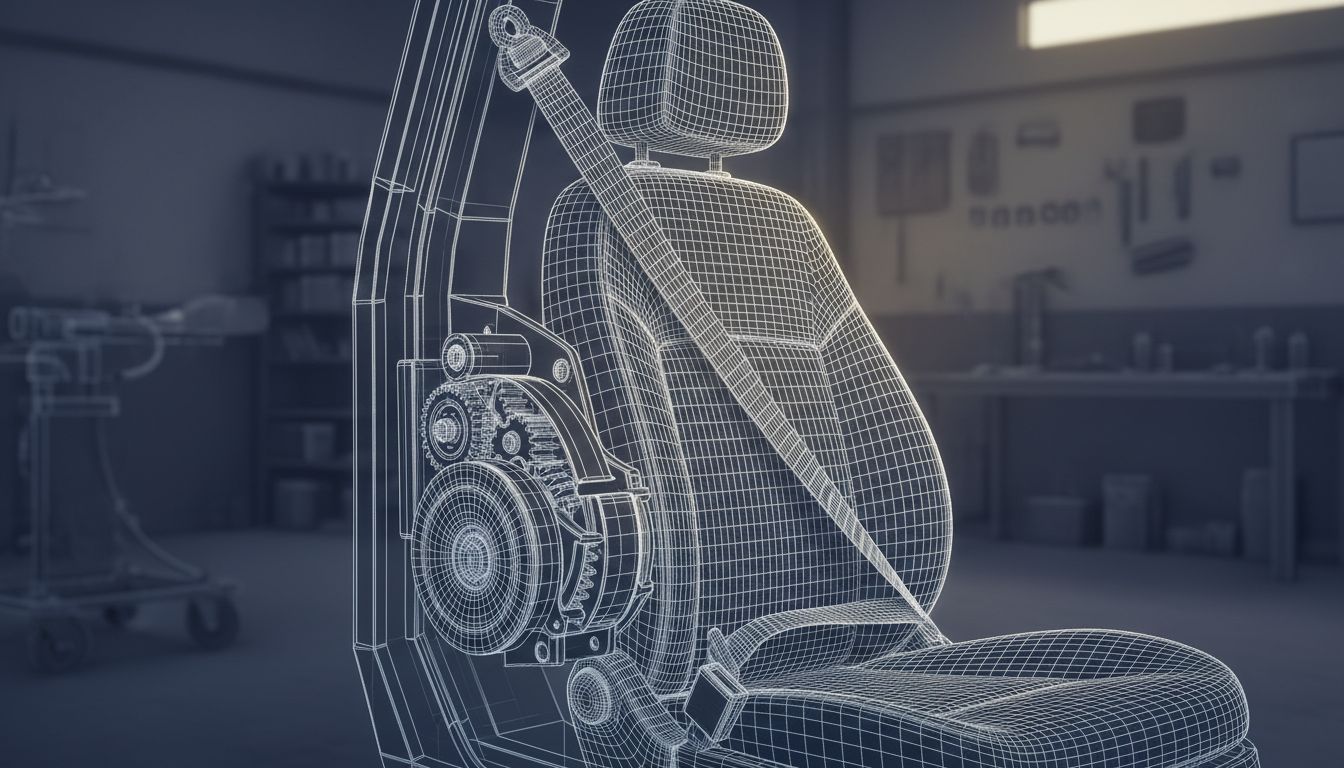
Even with the right part, installation quality matters. Here is a practical checklist on how to verify seat belt installation, whether you’re inspecting your own car or checking work done by a shop.
- Correct mounting points – Confirm the belt is attached only to factory-reinforced anchor points, not improvised holes or brackets.
- Proper bolt torque by manufacturer procedure – Seat belt and pretensioner bolts must be tightened to the specified torque. Loose or over-tightened fasteners can fail.
- Smooth extension and retraction – Belt should pull out evenly, retract fully, and lock when you tug sharply. It should not hang loose or bind in the trim.
- Secure buckle latch engagement – The buckle should latch positively, without partial engagement. Give it a firm tug to confirm it holds.
- No twists in webbing – Twists reduce effective width and can concentrate forces, increasing injury risk.
- Seat position / trim compatibility verified – Make sure the belt moves freely with seat adjustments and does not rub, pinch, or get trapped in trim panels.
- Warning lights checked if applicable – If the belt system ties into the SRS, verify that airbag and seat belt warning lights behave correctly during key-on self-test.
If you notice abnormal belt operation, warning lights, or evidence of improvised mounting, it’s time for a professional inspection. LockNCal may recommend a Vehicle Diagnostic to verify system status and identify whether Seat Belt Replacement or Pre-Tensioner Replacement is needed.
Parents can also benefit from broader seatbelts, airbags, and ADAS safety checks in Irving TX, especially before school seasons or long trips.
Seat Belt Replacement for Irving TX Drivers and DFW Shops
LockNCal supports drivers, body shops, fleet operators, and used-vehicle buyers throughout Irving TX and the wider DFW metroplex, including communities like Addison, Arlington, Carrollton, Coppell, Dallas, Euless, Fort Worth, Frisco, Garland, Grand Prairie, Grapevine, Lewisville, McKinney, Mesquite, Plano, Richardson, Rockwall, and more.
Whether you’re:
- A family in Irving concerned about a frayed driver belt
- A body shop in Grand Prairie finishing a collision job with deployed airbags
- A fleet operator in Dallas trying to keep vehicles compliant and safe
- A used car buyer in Plano unsure what was replaced after a prior accident
LockNCal can help you navigate oem replacement seat belts for American & Japanese vehicles, with an emphasis on safety, fitment, and proper integration with the vehicle’s restraint and safety electronics.
For localized help and contact options, visit our Irving TX service page.
Important Vehicle Scope: American & Japanese Vehicles
It’s important to be clear about vehicle scope. LockNCal focuses on American & Japanese vehicles for Seat Belt Replacement, Pre-Tensioner Replacement, and Vehicle Diagnostic related to restraint systems.
Advanced European systems – for example, those involved in searches like mercedes seat belt replacement or vw seat belt replacement – can use different restraint architectures, communication strategies, and calibration requirements. If you’re shopping for those vehicles, you should explicitly verify that your chosen provider is equipped and trained for those specific European systems.
This page and our services are focused on American & Japanese vehicles. We do not promise coverage or parts availability for all European models.
Why Choose LockNCal for Seat Belt Replacement
Not all providers treat seat belts as the safety-critical systems they are. Our approach in Irving and the greater DFW area is built around process and safety, not shortcuts.
Seat Belt Replacement done with safety and compatibility in mind
- We focus on OEM and OEM-equivalent exact-fit seat belt replacement for American & Japanese vehicles.
- Fitment is verified by year, make, model, and seat position – we don’t guess on compatibility.
- Installation follows manufacturer-style procedures, including respect for specified bolt torque and correct routing.
Pre-Tensioner Replacement when crash components are involved
- If diagnostics show a fired or faulty seat belt pretensioner, we can recommend and perform Pre-Tensioner Replacement along with the belt.
- This helps bring the entire restraint system – belts and airbags – back into proper operating condition after a collision.
Vehicle Diagnostic for SRS or warning-light concerns
- When airbag or SRS lights are present, we can recommend a Vehicle Diagnostic to read codes and verify system status.
- Diagnostics reduce guesswork and help ensure that Seat Belt Replacement and Pre-Tensioner Replacement are targeted and effective.
- We consider related issues such as vehicle communication and safety system diagnostic issues that can affect how restraint components talk to the rest of the car.
Get Help Choosing the Right OEM Replacement Seat Belts
If you’re unsure which direction to go, you’re not alone. Most drivers and even some shops do not deal with seat belt systems every day – but your restraint system only has to fail once for the consequences to be severe.
Primary CTA – Seat Belt Replacement:
Need help choosing the right oem replacement seat belts for an American or Japanese vehicle? Contact LockNCal for Seat Belt Replacement in Irving TX and the DFW area. We’ll help you confirm fitment by VIN, seat position, and vehicle configuration.
Secondary CTA – Vehicle Diagnostic & Pre-Tensioner Replacement:
If your seat belt concern may involve a pretensioner or an airbag/SRS warning light, schedule a Vehicle Diagnostic first. Based on the results, we can recommend the right combination of Seat Belt Replacement and, where necessary, Pre-Tensioner Replacement to restore your restraint system’s safety.
Before you call, you can also look up your VIN details using the LockNCal VIN decoder so we can confirm exact fitment faster.
FAQs About OEM Replacement Seat Belts
1. What are OEM replacement seat belts?
OEM replacement seat belts are belts built to the original equipment manufacturer’s specifications for your specific vehicle. They match your car’s original design in length, mounting points, retractor characteristics, and buckle configuration. OEM-equivalent exact-fit parts from reputable suppliers are designed to mirror this behavior for defined applications.
2. Are OEM replacement seat belts safer than universal seat belts?
In most real-world situations, yes. While universal belts may be FMVSS-compliant in general, OEM and OEM-equivalent belts are engineered for your vehicle’s specific seating position, crash structure, and SRS timing. That precise compatibility typically makes them a safer and more reliable choice.
3. How do I know if a seat belt fits my exact vehicle?
True seat belt compatibility by model is verified using your VIN, year, make, model, and seat position. LockNCal checks this information before recommending Seat Belt Replacement for American & Japanese vehicles. You can start by using our VIN decoder to gather your vehicle details.
4. How much does seat belt replacement usually cost?
Costs vary with vehicle and configuration, but for American & Japanese vehicles, combined parts and labor commonly fall in these non-binding ranges: $200–$450+ per seating position for OEM-equivalent exact-fit belts and $250–$600+ per seating position for many dealer OEM assemblies, especially where pretensioners are involved. Exact pricing requires reviewing your vehicle and diagnostic results.
5. Can I install a replacement seat belt myself?
While some mechanically inclined owners attempt DIY, modern belts can include SRS wiring and pyrotechnic pretensioners (explosive devices). Incorrect handling or installation can cause injury, trigger warning lights, or leave the system inoperative. For safety-critical restraint components, professional installation is strongly recommended.
6. What if my seat belt issue involves a pretensioner or warning light?
If your belt includes a pretensioner or you have an airbag/SRS warning light, the best first step is a Vehicle Diagnostic. From there, LockNCal can determine whether you need Seat Belt Replacement, Pre-Tensioner Replacement, or both to restore proper operation.
7. Do I need to replace a seat belt after an accident?
Often, yes. If airbags deployed, if the belt locked hard, or if a pretensioner fired, the belt assembly may be compromised even if it looks normal. Many manufacturers specify Seat Belt Replacement and pretensioner replacement after certain types of crashes. At minimum, you should have the system inspected and scanned with a Vehicle Diagnostic to confirm what was triggered and what must be replaced.


