 Skip to content

Car Diagnostic Codes List (OBD-II) – Meanings, Severity & Next Steps for DFW Drivers
Key Takeaways
• Understand what your OBD-II trouble codes mean with a practical, plain-English car diagnostic codes list for DFW drivers.
• Learn which codes are minor vs. which are safety-critical (airbag/SRS, ABS, stability) and should never be ignored.
• Know when basic checks are OK and when to schedule a Vehicle Diagnostic or SRS Airbag Module Reset with LockNCal in the Dallas–Fort Worth area.
In This Guide:
🔍 What Car Diagnostic Codes Are – How OBD-II works and how to read codes
📝 How to Use a Code Reader Safely – Step-by-step for DFW drivers
📝 Car Diagnostic Codes List & Meanings – Common codes, severity, and next steps
⚠️ Safety-Critical SRS-Airbag Codes – When to stop driving and call a pro
🚗 DFW Inspection-Emissions & Check Engine Lights – Texas rules you need to know
🔧 Professional Diagnostics & Safety Services in DFW – How LockNCal can help
❓ FAQs About Car Diagnostic Codes and Safety
If you searched for a car diagnostic codes list, you are probably staring at a check engine light, airbag light, or ABS warning and a code that makes no sense. As a safety-focused diagnostic shop serving Highland Park TX and the greater Dallas–Fort Worth area, our priority is to help you understand how serious that code is and what to do next. This guide breaks down common OBD-II codes, how to read them, and when to schedule a Vehicle Diagnostic or SRS safety service at LockNCal.
What Are Car Diagnostic Codes? (OBD-II Basics)
Modern vehicles use the OBD-II (On-Board Diagnostics) system to monitor engines, emissions, transmissions, and safety systems. When the computer detects a problem, it stores a Diagnostic Trouble Code (DTC) and usually turns on a warning light. A code is a starting point, not the full story, but it tells you which system needs attention.
Each code starts with a letter and four numbers, such as P0300 or B0100. The letter identifies the system, and the numbers narrow down the type of fault. Some codes are generic (the same on most brands) while others are manufacturer-specific, like specialized codes for a Suzuki or a Hummer that need brand-aware diagnostics.
Types of OBD-II Codes (Powertrain, Body, Chassis, Network)
- P – Powertrain: Engine and transmission. Examples: P0300 (random misfire), P0420 (catalyst efficiency below threshold).
- B – Body: Airbags, seat belts, climate controls, comfort systems. Examples: B0100 (airbag circuit fault), body module faults.
- C – Chassis: ABS, traction control, steering, suspension sensors. Examples: C0xxx ABS and stability codes affecting braking safety.
- U – Network: Communication between modules. Examples: lost communication with the ABS module or airbag module.
Some vehicles will also log brand-specific codes such as Suzuki code P1645, which reinforces why a professional Vehicle Diagnostic is often necessary beyond a basic scan.
How to Use a Code Reader and What to Do Next
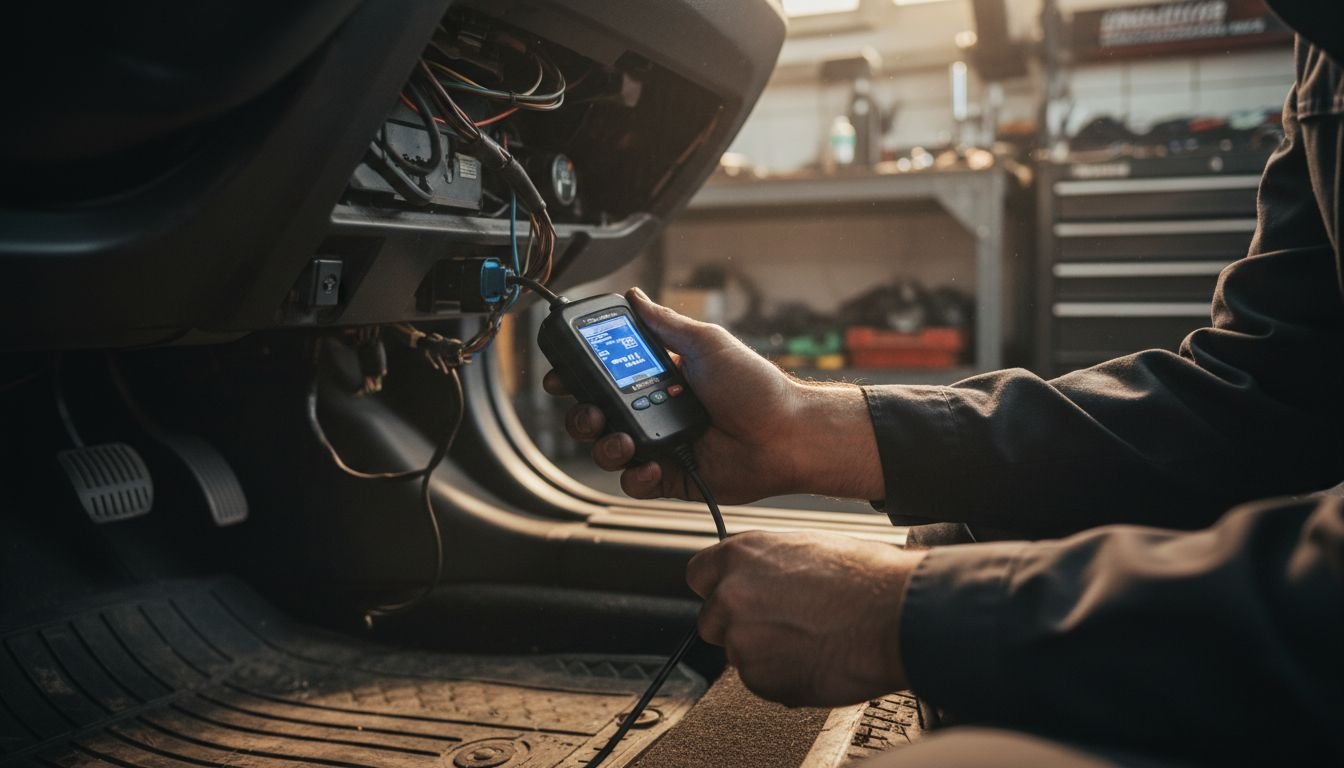
Many DFW drivers use a simple OBD-II scanner or visit a parts store to pull codes when a light comes on. That is a good first step, as long as you understand its limitations. Reading a code helps you know what system is complaining, but it does not confirm which exact part is bad.
Safely Reading Codes at Home
- Park safely, set the parking brake, and turn the ignition off.
- Locate the OBD-II port, usually under the dash near the steering column.
- Plug in your OBD-II scanner before turning the key to the ON position (engine off or running as the tool directs).
- Follow the scanner prompts to read stored and pending codes.
- Write down the codes exactly, including letters and leading zeros.
- Do not clear codes yet, especially for SRS, ABS, or airbag systems.
Remember, the same code can have several causes. A scanner report is just the first page of the story, which is why we pair code scans with a full Vehicle Diagnostic when safety or drivability is at stake.
Basic Checks vs. When to Call a Professional
Some codes relate to simple issues you can safely check, like a loose gas cap on EVAP codes or obviously damaged wiring in an easy-to-see area. For example, small EVAP leak codes might improve after you tighten the cap and drive a few days. If the code returns, you will still need a diagnostic appointment.
You should book a Vehicle Diagnostic with LockNCal when you see any of the following:
- Multiple codes at once or codes in different systems.
- Misfires, rough running, stalling, or poor shifting.
- Any SRS / airbag or seat belt code.
- Any ABS, traction, or stability warning light.
- Codes that come back quickly after being cleared.
- Inspection/emissions concerns in Dallas, Tarrant, or Collin County, including Highland Park TX.
For SRS and airbag systems in particular, DIY is not safe. Those systems include pyrotechnic / explosive devices, and work should be handled only by qualified technicians using proper tools.
Car Diagnostic Codes List: Meanings and Severity Guide
This section is a practical car diagnostic codes list focused on the most common OBD-II trouble codes we see from Dallas–Fort Worth drivers. For each group, we outline what the code means, typical symptoms, severity, and recommended next steps. Use this as a guide and then schedule a Vehicle Diagnostic if there is any doubt about safety or Texas inspection readiness.
Common Engine & Emissions Codes (Check Engine Light)
These codes typically turn on the check engine light, and they can affect fuel economy, emissions, and sometimes drivability. Even when the car seems to run fine, unresolved engine and emissions codes can lead to a failed emissions test in DFW counties. Use the table below as a quick reference.
| Code | Plain-English Meaning | Typical Symptoms | Severity | Recommended Next Steps |
|---|---|---|---|---|
| P0128 | Coolant temperature below thermostat regulating temperature | Slow warm-up, low heater output, reduced fuel economy | Low to Moderate | Generally safe to drive short-term. Schedule a Vehicle Diagnostic to confirm thermostat and cooling system health before it worsens or causes emissions failure. |
| P0171 / P0174 | System too lean (bank 1 / bank 2) | Check engine light, possible rough idle, hesitation, poor fuel economy | Moderate | Avoid long highway trips until checked. Book a Vehicle Diagnostic to investigate vacuum leaks, MAF sensor, or fuel delivery issues that could lead to engine damage. |
| P0300 | Random/multiple cylinder misfire detected | Shaking, rough running, flashing check engine light, poor acceleration | High – Drive with caution | If misfire is severe or the light is flashing, this is not safe to ignore. Minimize driving and schedule a Vehicle Diagnostic immediately to prevent catalytic converter damage or stalling in DFW traffic. |
| P0301–P0304 | Misfire in cylinder 1–4 | Similar to P0300, but linked to specific cylinders; rough idle, hesitation | High | Same concern as P0300. Do not keep driving for days with a misfire. Book a Vehicle Diagnostic to pinpoint the root cause safely. |
| P0420 / P0430 | Catalyst system efficiency below threshold (bank 1 / bank 2) | Check engine light, sometimes reduced power or rotten-egg smell | Moderate to High | Car may still drive normally at first, but long-term driving can damage the catalytic converter and fail Texas emissions. Schedule a Vehicle Diagnostic to confirm if the converter or an upstream issue is to blame. |
| P0440, P0441, P0442, P0446, P0455 | EVAP system leaks or purge/vent control issues | Check engine light, fuel smell in some cases, usually normal drivability | Low to Moderate | Check that the gas cap is tight and in good condition. If codes return, book a Vehicle Diagnostic because unresolved EVAP faults can cause an emissions failure in Dallas–Fort Worth counties including Highland Park TX. |
These are only some of the more common check engine codes. Manufacturer-specific codes, such as Suzuki code P1645, require a more detailed Vehicle Diagnostic to interpret correctly.
Transmission & Drivability-Related Codes
Transmission-related codes (often in the P07xx or P27xx ranges) can cause harsh shifting, slipping, or limp mode. Ignoring them can lead to more severe damage or sudden loss of power on a busy DFW highway. When these appear, a quick scan is not enough – you need a full diagnostic.
| Code | Plain-English Meaning | Typical Symptoms | Severity | Recommended Next Steps |
|---|---|---|---|---|
| P0700 | Transmission control system malfunction (request for more info) | Check engine light, possible limp mode, transmission warning | Moderate to High | This code usually appears with other, more specific transmission codes. Avoid highway driving and schedule a Vehicle Diagnostic to read the transmission control module and protect drivability. |
| P0740 | Torque converter clutch circuit issue | Shuddering at speed, overheating risk, poor fuel economy | High | Driving long distances with this fault can overheat the transmission. Book a Vehicle Diagnostic right away to determine whether it is electronic, hydraulic, or internal. |
| P0750 (and related P0751, P0753, etc.) | Shift solenoid A malfunction (and related solenoid issues) | Harsh or delayed shifts, staying in one gear, limp mode | High | Because these codes affect how the transmission shifts, you should not continue driving far with them active. Arrange a Vehicle Diagnostic to prevent being stranded or causing internal damage. |
SRS and Airbag-Related Codes (Safety First)
SRS (Supplemental Restraint System) includes airbags, seat belt pretensioners, and related control modules. These systems use pyrotechnic / explosive devices to deploy in a crash, which means DIY attempts can cause serious injury or accidental deployment. Any airbag or SRS warning light should be treated as High severity until inspected by a professional.
Below are common types of SRS/body codes you might encounter. Exact numbering varies by manufacturer, but the patterns matter more than the specific range.
| Code or Range | System Affected | Safety Impact | Severity | Recommended Next Steps |
|---|---|---|---|---|
| B0100–B0140 (example range) | Driver or passenger airbag circuits | Airbag may not deploy or may deploy unpredictably in a crash | Very High – Not safe to drive without evaluation | Do not attempt DIY repairs on airbags. Schedule a Vehicle Diagnostic with LockNCal for scan, then follow up with SRS Airbag Module Reset, Airbag Module Replacement, or Airbag Replacement as indicated. |
| B1000–B1499 (various SRS module / circuit codes) | SRS control module, wiring, crash data, or configuration | System may be disabled or partially functional; airbag light usually on | Very High | A crash-locked module after an accident often needs SRS Airbag Module Reset or Airbag Module Replacement. Never open or probe an airbag module yourself due to explosive components. |
| Examples like B156D or similar | Clock spring / steering wheel airbag circuits and controls | Driver airbag may not deploy; horn or steering wheel buttons may fail | Very High | These often point toward Clock Spring Replacement or wiring inspection. Schedule a Vehicle Diagnostic so a trained technician can safely access the steering column. |
| Seat belt and pretensioner-related B-codes | Seat belt latch, reel, or pretensioner circuits | Belt may lock incorrectly or fail to tighten in a crash | Very High | If a belt will not retract, is locked, or has fired in a crash, the safest solution is Seat Belt Replacement and Pre-Tensioner Replacement. Do not attempt to disassemble belts at home. |
Remember: SRS codes are not routine DIY issues. These components can deploy violently if mishandled. Always choose professional services like SRS Airbag Module Reset, Airbag Module Replacement, Airbag Replacement, Seat Belt Replacement, Pre-Tensioner Replacement, and Clock Spring Replacement at a qualified shop.
ABS, Traction, and Stability Codes (Linked to Safety)
ABS, traction control, and stability systems often show up as C0xxx chassis codes or occasionally powertrain codes that reference wheel speed or brake pressure. They are not SRS, but they are absolutely safety systems. A car that stops straight and stable on dry pavement may behave very differently in rain or an emergency stop in Dallas traffic.
Some manufacturer-specific codes, such as safety-critical ABS and traction issues like Hummer DTC P1915, highlight how complex these systems have become. When your ABS or traction light is on, you should schedule a Vehicle Diagnostic even if the brakes feel \”okay\”.
If ABS or traction faults overlap with SRS wiring routes or network communication, your visit may also include SRS Airbag Module Reset or related work to ensure all safety systems communicate correctly.
SRS and Airbag-Related Codes: Why DIY is Dangerous
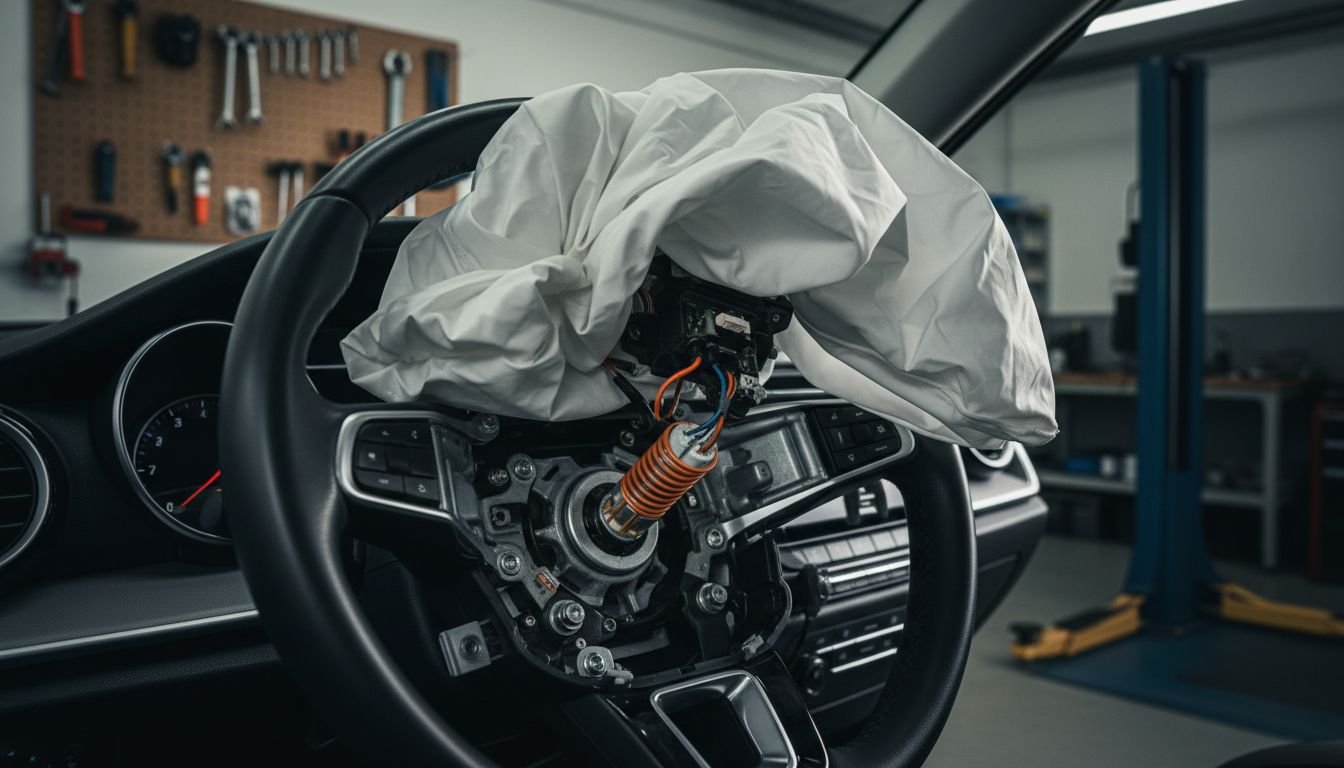
Airbag and SRS systems are not like regular electrical circuits you can safely probe with a test light. They are engineered to detonate small pyrotechnic charges in milliseconds during a crash. Mishandling those components can cause unintentional deployment, serious burns, or impact injuries.
Because of that risk, SRS work is one of the last areas you should attempt DIY. Even experienced general technicians often defer specialized airbag work to shops like LockNCal that focus on restraint systems.
SRS Components Contain Explosive Charges
Inside an airbag module or seat belt pretensioner is an explosive device designed to go off safely under controlled conditions in a collision. If triggered unexpectedly, that same force can injure your face, hands, or eyes. It can also damage the interior of the vehicle and still leave your SRS system non-functional.
Even seemingly simple parts, such as steering wheel clocksprings and SRS control modules, must be handled with airbag-safe procedures. A wrong move with a test lead or a battery reconnect can cause airbags to fire without warning.
That is why we stress: SRS work should be done only by qualified technicians using specialized tools and following proper safety procedures.
Why You Shouldn’t Clear Airbag/SRS Codes Yourself
Clearing SRS codes without fixing the root cause is dangerous because it can temporarily turn the light off while the underlying fault remains. In some cases, the airbag system may shut down to protect itself from a detected issue, meaning you could have no protection in a collision.
In other cases, crash data stored in the SRS module after an accident must be handled through a proper SRS Airbag Module Reset or Airbag Module Replacement, not simply cleared with a basic scan tool. This is especially important for high-end vehicles, where collision centers sometimes overlook module resets; you can read more about why airbag module resets are essential after collisions in luxury vehicles.
When your airbag light is on, the safest sequence is:
- Book a professional Vehicle Diagnostic focusing on SRS.
- Have a trained technician evaluate whether you need SRS Airbag Module Reset, Airbag Module Replacement, or Airbag Replacement.
- Address related components like Seat Belt Replacement, Pre-Tensioner Replacement, or Clock Spring Replacement as indicated.
This approach ensures that airbags and seat belts will work correctly when you need them most on I-30, the Dallas North Tollway, or any DFW road.
Will These Codes Fail Texas Inspection in Highland Park TX?
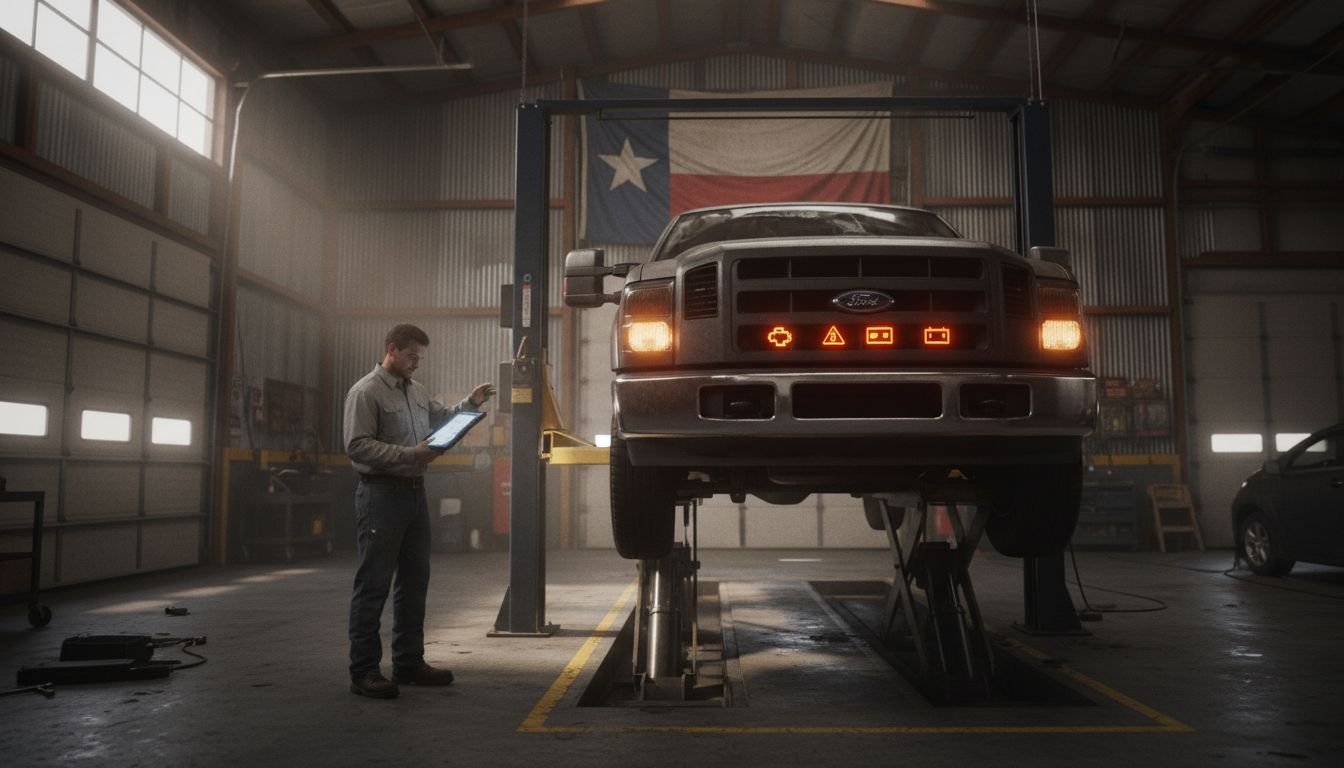
In Texas, many urban and suburban counties – including Dallas County and surrounding areas like Highland Park TX – require annual safety and emissions inspections. Active check engine lights and certain stored OBD-II codes will cause an automatic emissions failure. That is true even if the car feels like it is running well.
Beyond the legal requirement, unresolved warning lights can hide real safety issues. A vehicle that passes emissions but has an SRS or ABS light on is still not truly ready for DFW traffic.
Check Engine Lights and Texas Emissions Testing
For emissions, inspectors connect to the OBD-II port and check for:
- Active check engine light.
- Stored emissions-related codes such as EVAP, O2 sensor, or catalyst codes.
- OBD-II readiness monitors that show whether the system has completed its self-tests.
If you simply clear codes right before inspection, many monitors will reset to “not ready,” which can lead to a failure or require you to drive a specific pattern to reset them. The better approach is to have a Vehicle Diagnostic performed and address the cause of the codes before you head to an inspection station in Highland Park TX, Dallas, Plano, or any other DFW city we serve.
Safety Codes and Inspection Concerns
SRS (airbag) and ABS codes may not directly fail the emissions portion of Texas inspection, but they are major safety red flags. An airbag light means your restraint system may not protect you in a crash. An ABS light can mean longer stopping distances or instability in emergency maneuvers.
If you see these lights, you should not wait for inspection time to act. Schedule a Vehicle Diagnostic along with the appropriate safety service, such as SRS Airbag Module Reset, Airbag Module Replacement, Airbag Replacement, Seat Belt Replacement, Pre-Tensioner Replacement, or Clock Spring Replacement at LockNCal.
When It’s Safe to Drive vs. When to Park or Tow
Not every code means you have to pull over immediately, but some do. Think of your situation in three colors: Green, Yellow, and Red. When in doubt, err on the side of safety and have a professional check the vehicle before taking long trips in DFW heat and traffic.
- Green – Generally safe to drive short-term: Minor EVAP codes, single emissions codes like P0128 with no drivability issues. You can usually drive to work and back but should schedule a Vehicle Diagnostic soon, especially before inspection.
- Yellow – Drive with caution: Misfire codes like P0300, lean codes with noticeable hesitation, or transmission codes such as P0700 with mild symptoms. Limit driving, avoid long highway runs, and book diagnostics as soon as possible.
- Red – Not safe to drive: Flashing check engine light, severe misfire, overheating, loss of power, or any airbag/SRS or ABS light combined with braking or stability issues. In these cases, it is safer to park the vehicle and arrange for towing to a diagnostic shop rather than risk an accident or major damage.
DFW summers are hard on vehicles, and stop-and-go traffic can quickly turn a marginal problem into a breakdown. Taking warning lights seriously protects you, your family, and everyone else on the road.
Professional Diagnostics and Safety Services in DFW
At LockNCal, a Vehicle Diagnostic is much more than just pulling codes. We connect professional scan tools, monitor live data, check freeze-frame information, and visually inspect accessible wiring and safety components for American and Japanese vehicles. Our focus is on identifying what is really going on, especially in safety-related systems.
When SRS or restraint issues are found, we provide specialized services such as:
- SRS Airbag Module Reset when a collision or stored crash data has locked the module.
- Airbag Module Replacement and Airbag Replacement when components are damaged or have already deployed.
- Seat Belt Replacement and Pre-Tensioner Replacement for locked, frayed, or post-crash belts.
- Clock Spring Replacement when steering wheel airbag circuits, horn, or controls cause SRS warnings.
- ADAS Calibration support when advanced driver-assistance systems need recalibration after certain repairs or impacts.
We proudly serve drivers across the Dallas–Fort Worth area, including Addison, Arlington, Carrollton, Dallas, Denton, Frisco, Garland, Grand Prairie, Irving, McKinney, Mesquite, Plano, Richardson, Rockwall, The Colony, University Park, Highland Park TX, and many other nearby communities. If your warning lights are on, we help you move from confusion to a clear, safety-first plan.
Other Helpful Vehicle Information & Key Services
Sometimes a diagnostic visit reveals deeper history or practical ownership issues beyond the immediate code. That is where supporting services come in. Before you buy a used car or if you suspect prior damage, a CarFax Report and our FREE VIN Decoder can help uncover past accidents, structural repairs, or recalls that may relate to your current warning lights.
We also offer key and lock support for drivers who discover ignition or key problems alongside diagnostic issues, including:
- Locksmith Services and Car Lockout Assistance if you are unable to get into your vehicle during a breakdown.
- Vehicle Key Cutting, Transponder Key Programming, Smart Key Programming, and Key Fob Replacement & Programming.
- Vehicle All Keys Lost solutions, plus Vehicle Key Duplication and Vehicle Key Copying so you have a spare before an emergency.
While these services are secondary to your safety systems, they make ownership easier when you are already addressing codes and warning lights at LockNCal.
FAQs About Car Diagnostic Codes and Safety
Drivers across Dallas–Fort Worth, from Fort Worth and Arlington to Plano and Highland Park TX, ask similar questions when warning lights come on. Here are clear, safety-focused answers based on what we see every day in the shop.
What is a car diagnostic codes list and how do I use it?
A car diagnostic codes list is a reference of common OBD-II trouble codes used by modern vehicles to report system faults. Each code points to a system and type of issue, such as misfires, emissions problems, or airbag faults. You can look up your code in this guide to see a plain-English meaning, gauge severity, and then decide whether basic checks or a professional Vehicle Diagnostic in DFW is the safest next step.
Is it safe to keep driving if my check engine light is on but the car seems fine?
Sometimes, such as with minor EVAP leaks, the risk is lower and the car may feel normal. Other times, like with misfire, overheating, or catalyst codes, driving can quickly damage the engine or leave you stranded in traffic. You should never ignore a persistent check engine light in Texas heat; scheduling a Vehicle Diagnostic is the best way to know where you stand.
Can I clear my own OBD-II codes to pass Texas inspection?
Clearing codes right before inspection often resets your readiness monitors, which can cause an automatic fail or force you to drive a long drive cycle before retesting. More importantly, it hides real issues instead of fixing them. Codes should be properly diagnosed and addressed, and a professional Vehicle Diagnostic helps ensure your car is truly ready for inspection in Highland Park TX and the wider Dallas–Fort Worth area.
What should I do if my airbag or SRS light stays on?
An illuminated airbag or SRS light usually means your restraint system may not deploy correctly in a crash. Because airbags, pretensioners, and some SRS components are pyrotechnic/explosive devices, they are not safe for DIY repair or probing. You should schedule a Vehicle Diagnostic followed by services such as SRS Airbag Module Reset, Airbag Module Replacement, Airbag Replacement, Seat Belt Replacement, Pre-Tensioner Replacement, or Clock Spring Replacement performed by trained professionals.
Do you service all vehicle brands for diagnostic codes in DFW?
LockNCal specializes in American and Japanese vehicles for diagnostics, safety systems, and key/lock services. If you drive a European brand, contact us first so we can confirm compatibility and guide you accordingly, while still using this car diagnostic codes list to understand your OBD-II codes. Either way, your next step for warning lights in the Dallas–Fort Worth area is a professional, safety-first evaluation.
If you are in Addison, Allen, Anna, Arlington, Burleson, Carrollton, Cedar Hill, Celina, Colleyville, Coppell, Dallas, Denton, DeSoto, Duncanville, Euless, Farmers Branch, Flower Mound, Fort Worth, Frisco, Garland, Grand Prairie, Grapevine, Haltom City, Highland Park, Hurst, Hutchins, Irving, Kennedale, Lake Dallas, Lake Worth, Lancaster, Lewisville, Little Elm, Mansfield, McKinney, Melissa, Mesquite, North Richland Hills, Pantego, Plano, Prosper, Richardson, Richland Hills, Rockwall, Saginaw, Seagoville, Southlake, The Colony, Trophy Club, University Park, Watauga, White Settlement, Wilmer, or anywhere in Dallas, Tarrant, Collin, Denton, or Rockwall counties, LockNCal is here to help.
Have a code already? Grab your VIN and try our FREE VIN Decoder, then schedule your Vehicle Diagnostic so we can help you make a safe, informed decision about your next steps.


