 Skip to content

Steering Angle Sensor Reset After Alignment: Safety, ADAS, and Proper Calibration in DFW
Key Takeaways
• A steering angle sensor reset after alignment is often required on modern vehicles with ABS, ESC, and ADAS, especially common American and Japanese models in the DFW area.
• Skipping this step can cause ABS/ESC and traction control issues, poor lane-keeping, incorrect lane assist behavior, and persistent warning lights after an otherwise “good” alignment.
• The safest way to verify correct steering and ADAS function in Grapevine and the wider DFW metroplex is a professional Vehicle Diagnostic and ADAS Calibration at a qualified facility like LockNCal.
LockNCal calibrates cameras and radar on-site across Dallas–Fort Worth. See what ADAS calibration costs. On-site: $0 today, pay after the job. Book mobile ADAS calibration or call (469) 277-7277.
Driver-assist systems usually need recalibration after a repair — our ADAS calibration service comes to you across Dallas–Fort Worth.
In This Guide:
⚙️ What a Steering Angle Sensor Does in Modern Vehicles
🕒 When and Why You Need a Steering Angle Sensor Reset After Alignment
🛠️ How Steering Angle Sensor Reset and ADAS Calibration Are Performed
⚠️ Risks of Skipping the Reset: Stability Control and Lane-Keeping Problems
🧰 Tools, Scan Equipment, and Shop Workflow Best Practices
📍 Why DFW Drivers and Shops Rely on Professional Calibration in Grapevine TX
❓ FAQ: Steering Angle Sensor Reset After Alignment
If you just had a wheel alignment in Grapevine or anywhere in DFW and now see ABS, ESC, or steering-related lights — or your lane-keep assist feels wrong — the steering angle sensor reset after alignment may have been missed. From a safety standpoint, this is not something to ignore.
What a Steering Angle Sensor Does in Modern Vehicles
The steering angle sensor as the “eyes” of stability control
The steering angle sensor (SAS) measures exactly how far and how fast you are turning the steering wheel. It constantly sends that data to modules that control ABS, traction control, and electronic stability control (ESC). In modern electric power steering systems, the SAS is also a core input for how much assist the rack provides.
Think of the SAS as the “intended direction” signal for the car. The computer compares where you mean to go (steering angle) with where the car is actually going (wheel speeds and yaw rate). If those disagree, ESC and traction control step in to help keep the vehicle stable.
How SAS data feeds ADAS, lane assist, and cameras
Advanced Driver Assistance Systems (ADAS) use steering angle just as heavily as the stability systems. Lane-keeping assist, lane departure warning, and some auto-steering features depend on the SAS to understand how you are pointing the wheel compared to the lane lines the cameras see. When we perform ADAS Calibration, part of the goal is to make sure all of these systems agree on what “straight ahead” means.
That is why lane assist calibration is so sensitive to steering and alignment changes. If the SAS center does not match the front camera or radar perception of the road, you can see ping-pong steering, late corrections, or even assists in the wrong direction. On common local platforms like Ford trucks and SUVs, Ford camera calibration needs the camera, the alignment, and the steering angle sensor all synced up, especially after windshield replacement or front-end work.
Why alignment changes can confuse the sensor
A proper alignment adjusts toe, camber, and sometimes caster and thrust angle so the wheels track straight. But the SAS does not know that the alignment machine moved tie rods or subframes; it only knows the position of the steering wheel relative to its own zero point. If the wheel is recentered on the rack or the toe is significantly changed, the original SAS “zero” no longer lines up with the new mechanical straight-ahead.
That is where a steering angle sensor calibration after alignment comes in. After the mechanical work is correct and the steering wheel is physically centered, the SAS needs to be told, electronically, “this is the new straight-ahead.” Without that reset, the car can think you are always steering slightly left or right, even when you are going straight down 121 or I-35.
When and Why You Need a Steering Angle Sensor Reset After Alignment
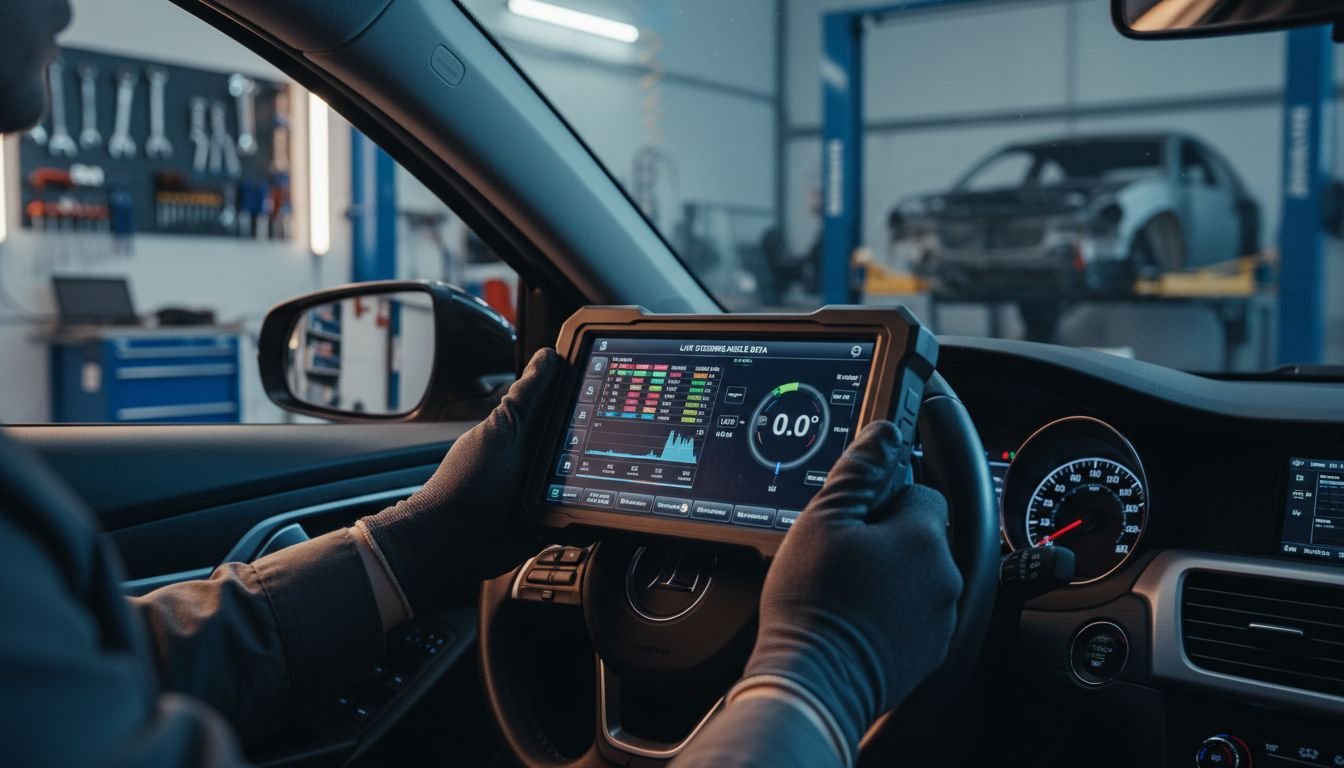
From a real-world shop standpoint in Grapevine, we focus on when the vehicle’s safety systems depend on the SAS. The more electronics tied to the steering wheel, the more critical a steering angle sensor reset after alignment becomes.
Vehicles where SAS reset is usually required
In practice, most American and Japanese vehicles from the mid-2000s onward with ESC, traction control, and ADAS expect the SAS to be calibrated any time you change alignment or steering components. OEM procedures often call out SAS calibration after:
- Front or rear wheel alignment
- Steering rack or tie rod replacement
- Steering column or clockspring replacement
- Subframe movement, suspension arm replacement, or collision repair
On these vehicles, the question is less “do you need steering angle sensor reset after wheel alignment?” and more “did anyone at least verify the SAS data and perform the reset if needed?” A quality shop in DFW will treat it as part of a complete Vehicle Diagnostic and post-alignment procedure, not an optional extra.
Symptoms that point to a missed steering angle sensor reset
Here are common signs we see in the DFW area after an alignment, especially when an alignment shop forgot to reset the steering angle sensor:
- Steering wheel is slightly off-center while the alignment printout shows everything “in the green”
- ABS, ESC, traction control, or power steering warning lights that were not on before the alignment
- Lane-keep assist pulling the car toward one side of the lane or correcting the wrong way
- Lane departure or collision warning errors appearing right after the alignment or front suspension work
- Adaptive cruise or lane-centering features disabling themselves with messages about sensors or cameras
Any of these symptoms justify a proper Vehicle Diagnostic. We hook up an OE-level scan tool, look at live steering angle data, check for SAS, ABS, ESC, and ADAS fault codes, and confirm whether a calibration is required, not just guessed at.
When a reset may not be needed
Some older vehicles without ESC or ADAS use simpler systems that either do not have a steering angle sensor or can self-learn center after a short drive. In those cases, if there are no warning lights and the steering wheel is perfectly centered, a separate SAS reset may not be necessary. That said, even on older platforms, it is smart to confirm with at least a basic scan of the ABS/ESC module.
Many newer vehicles also have auto-learn routines, but they still set fault codes or behave oddly if the alignment is way off from what the module expects. That is why the safest answer in the DFW area is: have the system checked with a scan tool, especially when your family is driving at 70+ mph between Grapevine, Fort Worth, and Dallas every day.
How Steering Angle Sensor Reset and ADAS Calibration Are Performed
Basic step-by-step steering angle sensor reset methods
While every make and model is different, the general process for proper steering angle sensor reset after alignment looks like this:
- Verify the mechanical side first. Confirm all suspension and steering components are tight, the alignment is within spec, and the steering wheel is physically centered on a level surface.
- Connect a capable scan tool. Use an OE-level or high-end aftermarket tool that can access steering, ABS, ESC, and ADAS modules, not just read generic engine codes.
- Enter the SAS calibration routine. Follow the on-screen prompts for that specific vehicle, typically with the engine running, wheels pointed straight ahead, and the car on level ground.
- Set and store the new center. The module records the current steering wheel position as zero degrees, clears related fault codes, and confirms the calibration.
- Road-test and verify. Drive the car, watch live steering angle data, and confirm the wheel is straight and no new codes or warning lights appear.
The specifics vary widely by brand, which is why we always rely on factory procedures and professional tools instead of “one-size-fits-all” resets.
Role of professional alignment machines and scan tools
Modern alignment racks can often talk to the vehicle through the OBD port or integrate with an external scan tool. This lets the technician perform the alignment, confirm the steering wheel is centered, and immediately run SAS calibration and related routines. It is the right way to do an ADAS-safe wheel alignment and calibration in DFW.
In contrast, a basic consumer OBD code reader can only read and clear generic engine codes. It usually cannot access the steering, ABS, ESC, or ADAS modules, and almost never has the menu options to perform a true SAS reset. That is why we treat calibration as part of a full Vehicle Diagnostic with proper equipment, not something you can safely knock out in the driveway with a $50 reader.
Integrating lane assist calibration and Ford camera calibration
Any time front toe, steering wheel position, or front subframe location changes, the relationship between the wheels and the forward-facing sensors can change too. That is where lane assist calibration and camera/radar alignment come into play. If the camera thinks the car is straight but the wheels are slightly left, lane keeping and auto-steer will constantly fight that disagreement.
On popular local models like Ford F-150s, Explorers, and Escapes, Ford camera calibration is often required after windshield replacement, collision repair, or significant alignment and suspension work. LockNCal treats these operations as part of a complete ADAS Calibration service, not just a quick reset. When we combine steering angle sensor calibration, camera and radar calibration, and a thorough road-test, we can verify that your ADAS systems are truly working together, not just hiding a warning light.
If you have had recent glass work, consider also reading our article on windshield replacement and ADAS calibration in Grapevine TX for more detail on how glass and cameras interact.
Risks of Skipping the Reset: Stability Control and Lane-Keeping Problems
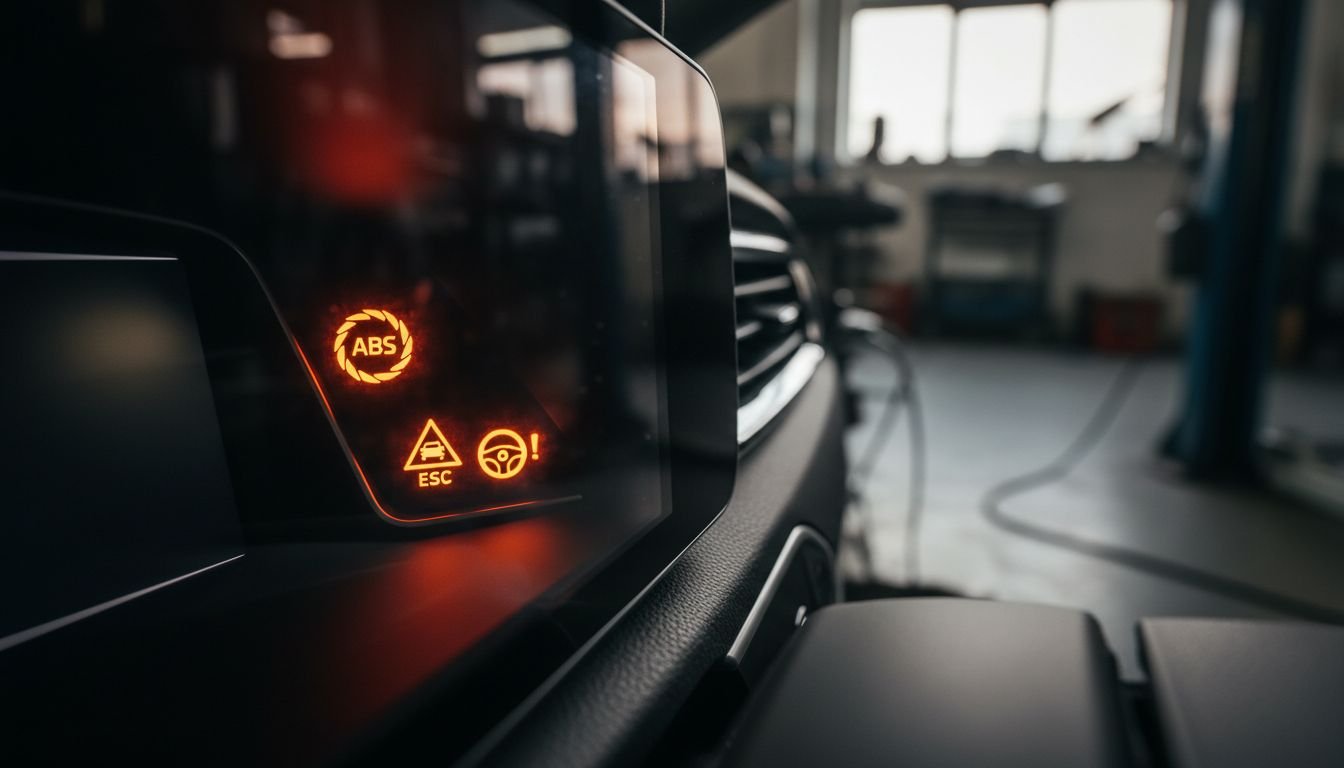
Ignoring SAS calibration issues is not just an annoyance; it can change how your safety systems behave when you need them most. In DFW highway traffic or during a Texas storm, that matters.
How wrong steering data affects ABS and ESC
ESC uses the SAS to know the driver’s intent, then compares that to yaw rate and wheel speed sensors. If the module thinks you are steering left when you are actually going straight, it can trigger the wrong wheels, at the wrong time, or not at all. That can cause longer stopping distances, unexpected pulsing from ABS, or loss of stability assistance in emergency maneuvers.
In severe cases, mismatched SAS data can cause the ESC light to stay on and the system to disable itself. From a safety-first shop perspective, that is your car telling you, “I am not fully watching your back right now.” A proper Vehicle Diagnostic and SAS calibration are the only reliable ways to clear that problem for the right reasons, instead of just clearing codes and hoping.
Lane assist and camera-based systems behaving unpredictably
Lane-keeping systems are especially sensitive to bad steering data. If the SAS center is off by just a few degrees, lane assist may:
- Ping-pong you from one side of the lane to the other
- Apply steering corrections that feel late, weak, or even reversed
- Constantly nudge the wheel on straight highways like 114 or I-820 when road markings are clear
- Log faults and shut the system down altogether
These are all strong signs that lane assist calibration and possibly Ford camera calibration or similar OEM camera/radar alignments are needed. Our ADAS Calibration process in Grapevine checks these interactions so you are not guessing why the steering feels wrong.
Warning lights, inspection problems, and liability in Texas
ABS, ESC, or steering warning lights are not just cosmetic. In Texas, they can cause inspection failures and are considered indicators that a safety system is not working correctly. From a liability standpoint, both for drivers and shops, documenting that a Vehicle Diagnostic was performed and any needed ADAS Calibration was completed is important.
DFW driving means heavy, fast traffic around Grapevine, Dallas, Arlington, and Fort Worth, along with sudden storms and low-visibility events. You want every safety system online and calibrated before you are dealing with wet pavement on the High Five or construction barrels on 635. That is why we urge customers to take post-alignment warning lights seriously instead of waiting for “next time.”
Tools, Scan Equipment, and Shop Workflow Best Practices
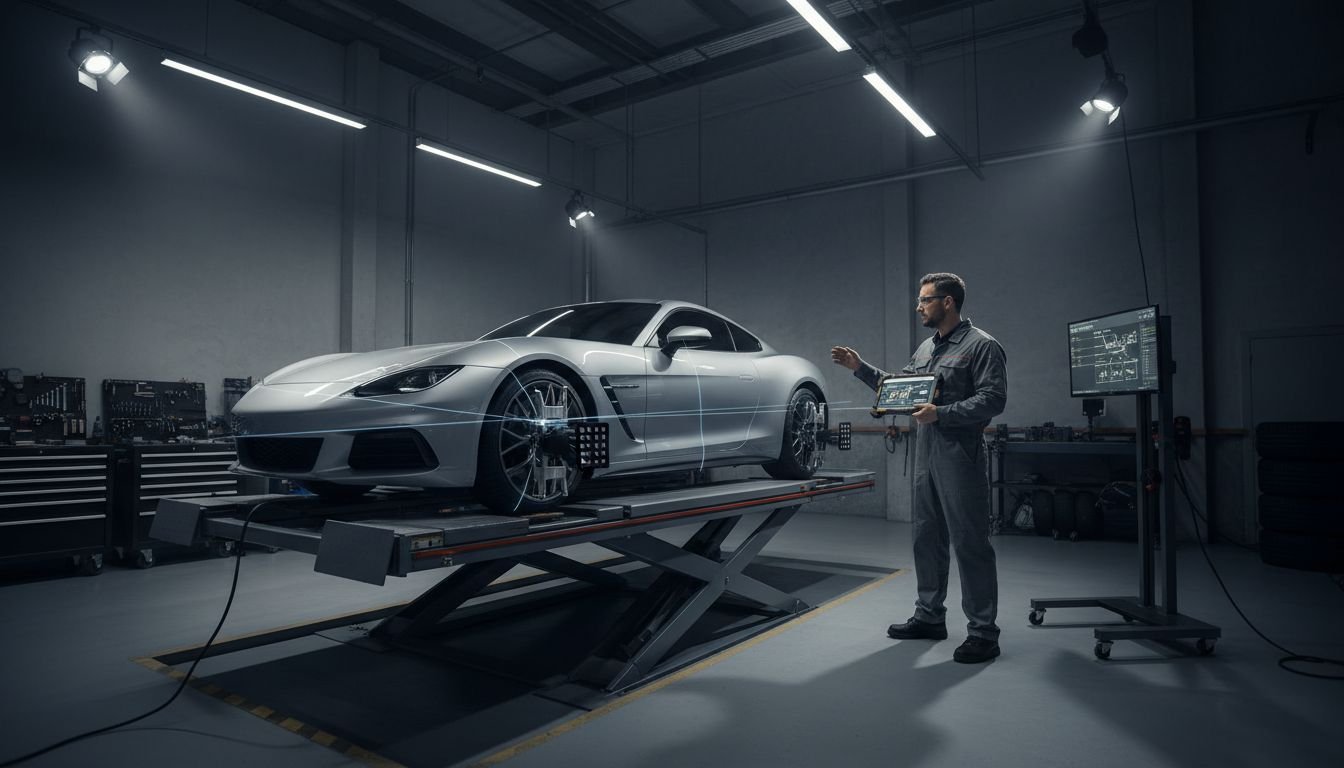
Getting steering angle and ADAS right after an alignment takes the right tools and a disciplined workflow. This is where a specialist facility in Grapevine can support both individual drivers and local repair shops.
Essential tools for accurate steering angle reset
For a reliable steering angle sensor reset after alignment, a professional shop should have:
- A modern, well-maintained alignment rack with accurate targets and a level floor
- OE-level or advanced aftermarket scan tools that can access steering, ABS, ESC, and ADAS modules
- Access to current factory service information and calibration procedures
- Stable power supply, proper tire pressures, and a weighted/level vehicle as required by OEM
- Time allocated for a thorough test drive and verification, not just parking-lot laps
Consumer-grade OBD scanners rarely offer the depth needed for SAS, lane assist calibration, or advanced ADAS Calibration. They are great for basic checks but not for safety-critical resets.
Why DIY resets can be risky
Some online advice suggests turning the wheel lock-to-lock or driving in a circle to “relearn” steering center. While a few cars will auto-adapt this way, many will not, and you can easily mask an underlying issue. Worse, DIY attempts often involve pulling the steering wheel or clockspring without fully understanding the risks.
Safety Warning: The steering column area houses airbags, clocksprings, and other SRS components that contain explosive charges. Disconnecting, probing, or mishandling these components without proper training and equipment can cause accidental airbag deployment or leave the system disabled in a crash. We strongly advise against DIY steering column disassembly or clockspring work; instead, rely on professionals who can handle related issues and, when needed, perform proper SRS evaluations and SRS Airbag Module Reset / Airbag Module Replacement according to manufacturer guidelines.
Recommended shop workflow after alignment
A professional workflow after alignment or steering work should look like this:
- Perform a thorough mechanical inspection and alignment. Verify all hardware is torqued, alignment specs are correct, and the steering wheel is centered.
- Connect a scan tool and run a full Vehicle Diagnostic. Check for steering, ABS, ESC, and ADAS fault codes and review live steering angle data at straight-ahead.
- Perform SAS calibration if indicated. Follow the OEM-specific steering angle sensor calibration procedure and clear related codes.
- Evaluate ADAS systems. If the car has lane-keep assist, forward cameras, radar, or adaptive cruise, perform the appropriate ADAS Calibration, including lane assist calibration and camera/radar alignment as required.
- Road-test and verify. Confirm straight-line tracking, steering feel, and correct ADAS behavior, and re-scan to ensure no new fault codes.
- Document results. Provide alignment specs and diagnostic/calibration reports for the customer or referring shop.
This is the kind of structured, safety-first process followed at LockNCal. It goes beyond just turning bolts on an alignment rack and makes sure the electronic side of the vehicle matches the mechanical work.
Why DFW Drivers and Shops Rely on Professional Calibration in Grapevine TX
Grapevine TX and the greater DFW driving environment
Grapevine sits at the heart of some of the busiest corridors in North Texas: 114, 121, I-635, and the DFW Airport area. Drivers from Grapevine, Southlake, Coppell, Euless, Arlington, Dallas, Fort Worth, and the rest of Dallas and Tarrant County deal with heavy traffic, construction zones, and sudden weather changes year-round. In that environment, precise steering, ESC, and ADAS performance are not luxuries — they are part of staying safe every day.
That is why we emphasize correct steering angle sensor reset after alignment and complete ADAS Calibration, not just clearing a dash light. When you are running at highway speeds between Allen, Frisco, McKinney, and downtown Dallas, you want to know that your lane-keeping, collision warning, and stability systems are calibrated correctly.
How LockNCal supports local drivers and repair shops
LockNCal in Grapevine TX serves drivers and shops across the metroplex, including Plano, Richardson, Lewisville, Denton, Flower Mound, Grand Prairie, Mesquite, and beyond. We act as a specialist resource for:
- Vehicle Diagnostic when warning lights appear after an alignment, suspension repair, or steering work
- ADAS Calibration when lane assist, forward cameras, or other driver assistance systems may be out of spec
- Supporting body shops, tire/alignment shops, and mechanical shops that do not have full ADAS or sensor-calibration capabilities in-house
If you are a local shop in places like Carrollton, The Colony, Rockwall, or Arlington, you can send vehicles to us for calibration and documentation while you focus on the mechanical work. Drivers get one cohesive solution instead of bouncing between multiple facilities trying to chase down an ESC light.
For an overview of our location and services, you can always start with our Grapevine page here: https://lockncal.com/Grapevine-TX.
When to call for professional help instead of guessing
Here are clear signs it is time to stop guessing and schedule a professional evaluation:
- Any ABS, ESC, steering, or ADAS warning light that appeared after alignment, suspension, or steering work
- Lane assist, lane-centering, or adaptive cruise that feels different, unstable, or unreliable
- Recent collision repair, major suspension replacement, or windshield replacement combined with new steering or ADAS symptoms
- Steering wheel off-center even though the alignment supposedly checks out
In these cases, the next step is a complete Vehicle Diagnostic and, when indicated, ADAS Calibration in Grapevine TX. That approach gives you a clear, data-driven picture of what is actually happening instead of trial-and-error parts swapping.
FAQ: Steering Angle Sensor Reset After Alignment
Do I always need a steering angle sensor reset after an alignment?
On most modern vehicles with ABS, ESC, or ADAS, it is recommended to at least verify steering angle sensor values any time a wheel alignment or steering repair is done. If the scan data shows the wheel is not at zero when straight, or if the OEM procedure calls for it, a steering angle sensor reset after alignment should be performed. The simplest and safest way to know for sure is to schedule a Vehicle Diagnostic so a technician can read the data and follow the correct procedure.
What happens if I skip a steering angle sensor reset after alignment on a car with ESC or lane assist?
Skipping the reset can cause incorrect or disabled ESC/traction control, longer stops in emergencies, and unpredictable lane-keeping or lane departure warnings. You may also see warning lights that will not stay off or systems that shut themselves down to protect you from bad data. Over time, that is not just annoying; it is a real safety risk in fast-moving DFW traffic.
Can I reset my steering angle sensor at home with a basic code reader?
In most cases, no. Basic code readers can clear some fault codes, but they usually cannot access the steering or ESC modules deeply enough to perform a true SAS calibration. Worse, clearing codes without actually fixing the underlying calibration issue can leave you driving with reduced safety systems and no warning. For this reason, we strongly recommend having SAS calibration handled as part of a professional Vehicle Diagnostic with proper equipment.
When do I need lane assist calibration or Ford camera calibration after steering or alignment work?
You may need lane assist calibration or Ford camera calibration any time:
- Front toe or caster is significantly adjusted
- The steering wheel, steering rack, or subframe is moved
- There has been collision damage or front-end repair
- A windshield with a forward camera mount has been replaced
These operations fall under ADAS Calibration. The goal is to synchronize the steering angle sensor, wheel alignment, and camera/radar perception so that all systems agree on where “straight” is and how the vehicle sits in the lane. If you are unsure, a diagnostic and calibration check is the safest call.
How can LockNCal in Grapevine TX help if my warning lights came on after an alignment?
If your warning lights came on after alignment in Grapevine or anywhere in the surrounding areas — from Plano, McKinney, and Allen down to Arlington, Burleson, and Mansfield — LockNCal can help by:
- Performing a full Vehicle Diagnostic to read all SAS, ABS, ESC, and ADAS fault codes and live data
- Determining whether a steering angle sensor reset after alignment and associated calibrations are required
- Carrying out the necessary ADAS Calibration, including lane assist and camera calibrations, using professional targets and tools
- Providing documentation you can share with your alignment, body, or mechanical shop
We work with both individual drivers and local shops across Dallas County, Tarrant County, Denton County, Collin County, and Rockwall County to get post-alignment steering and safety systems back where they should be.
If you are not sure where to start, you can also use our online VIN decoder to pull key information about your vehicle before scheduling your visit. For deeper examples of how we approach diagnostics, see our article on professional vehicle diagnostics and safety system repair in Grapevine, which shows how we interpret fault codes in a structured, safety-first way.
When you are ready to get clear, professional answers about your steering angle, warning lights, or ADAS behavior after an alignment, schedule a Vehicle Diagnostic and ADAS Calibration appointment with LockNCal in Grapevine TX. That way, you are not just hoping your car is safe — you will know it is.


