
Impact Sensor Basics for DFW Drivers: How Front Impact Sensors and Safety Modules Protect You
Key Takeaways
– An impact sensor (including the front impact sensor) detects crash forces and sends that data to the safety module, which decides if and when airbags and seat belt pretensioners deploy.
– Common impact sensor failure symptoms include an airbag/SRS light on, stored crash or sensor codes, and an airbag system disabled until the fault is repaired and cleared.
– Because impact sensors and safety modules are tied into the explosive SRS system, safe repair depends on professional Vehicle Diagnostic, proper SRS Airbag Module Reset or Airbag Module Replacement, and OEM-spec parts – not trial-and-error DIY.
What You Will Learn:
– What Is an Impact Sensor and How Does It Work?
– Front Impact Sensors, Safety Modules, and How They Work Together
– Common Impact Sensor Failure Symptoms and Safety Risks
– Diagnosis, DIY Risks, and Professional Solutions in DFW
– OEM vs Aftermarket Impact Sensors: What Drivers in Flower Mound TX Should Know
– FAQs About Impact Sensors and Airbag Safety
If your airbag light just came on in Flower Mound or you had a front-end collision on I‑35, there is a good chance an impact sensor or the safety module is involved.
Many DFW drivers hear phrases like crash sensor, front impact sensor, or airbag control module and are left guessing what is actually wrong and whether the car is safe to drive.
As SRS-focused technicians serving Flower Mound, Lewisville, Denton, Dallas, Fort Worth and the surrounding area, we see these issues daily and focus on calm, fact-based answers and proper Vehicle Diagnostic.
What Is an Impact Sensor in Your Airbag System and How Does It Work?
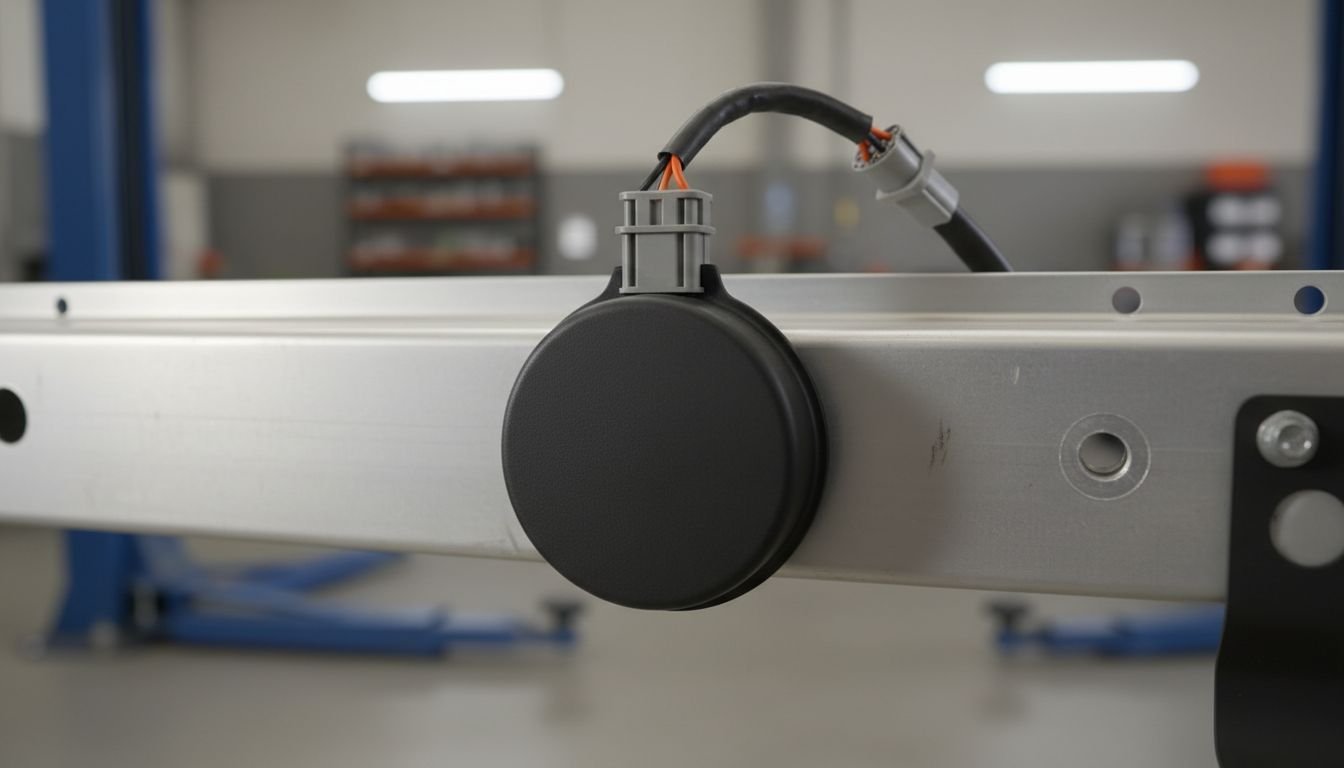
A impact sensor, also called an airbag impact sensor or crash sensor, is a small electronic device that detects rapid deceleration from a collision.
It does not react to normal braking or hitting a small bump; it is tuned to sense the sharp forces that match a real crash.
When that threshold is reached, the sensor sends a signal to the vehicle’s safety module so the system can decide how to respond.
Simple Definition in Plain English
In plain terms, an impact sensor is the airbag system’s “shock detector.”
It measures how fast the vehicle slows down in a fraction of a second, then tells the safety module if what just happened looks like a crash or just rough pavement.
This is critical for timing so the airbags and seat belt pretensioners fire in milliseconds, not too soon and not too late.
Types and Locations (Front Impact vs Other Sensors)
The most commonly discussed is the front impact sensor, which focuses on frontal crashes such as hitting another vehicle or a barrier.
On many vehicles, these sensors mount near the front bumper reinforcement, radiator support, or frame rails, where they can “feel” a front-end hit quickly.
Modern cars may also have side impact sensors in the doors or pillars, and rollover or rear sensors, all feeding information back to the same safety module.
How the Signal Reaches the Safety Module
During a collision, the crash impact sensor detects the spike in force and converts it into an electrical signal.
That signal travels through the SRS wiring harness to the safety module mounted typically in the center of the car, often near the console or floor tunnel.
The module then compares that signal with other sensors, seat belt buckle switches, and internal crash algorithms to decide which airbags and pretensioners to fire, all within a few thousandths of a second for maximum module safety and protection.
Front Impact Sensors, Safety Modules, and How They Work Together
The front impact sensor by itself does not fire airbags; it is one input into the brain of the SRS system.
That brain is the safety module, also called the airbag control module or SRS module, which decides if deployment is needed and which components should activate.
Understanding their teamwork is key to understanding why some crashes trigger airbags and others do not.
What Is the Safety Module (Airbag Control Module)?
The safety module is the central computer dedicated to your vehicle’s airbags and seat belt pretensioners.
It constantly monitors crash sensors, seat belt latches, seat occupancy sensors, internal self-checks, and power supply health.
During a crash, it runs built-in algorithms to decide which airbags, if any, should deploy to give protection without unnecessary or dangerous deployments.
How Front Impact Sensors Influence Airbag Deployment
In a frontal crash, the front impact sensor feels the force first and reports the rate of deceleration to the module.
The module then evaluates vehicle speed, crash direction, which seats are occupied, and whether seat belts are latched, and it evaluates seat belt pretensioner strategy.
If conditions meet its programmed thresholds, it sends commands to fire the driver and passenger airbags and tension the belts, or to limit deployment to just the zones that need it.
What Happens Inside the Module After a Crash
After a significant crash, the safety module usually stores permanent crash data and fault codes.
This can leave the SRS system fault active and the airbag system disabled until the data is properly handled.
Depending on the vehicle and severity, the correct repair may be a professional SRS Airbag Module Reset when the module is still healthy, or full Airbag Module Replacement when the unit is damaged or locked.
Common Impact Sensor Failure Symptoms and How a Bad Sensor Affects Your Airbag System
When an impact sensor or related wiring fails, the system is designed to let you know right away.
In Flower Mound, Dallas, Arlington, and across DFW, we frequently see drivers come in after an inspection or oil change where the technician mentioned a stored SRS or crash sensor code.
Knowing the typical impact sensor failure symptoms helps you decide what to do next.
Warning Signs You Might Notice
- Airbag/SRS light on and staying on after the normal start-up self-check.
- When scanned, you may see codes mentioning a specific front impact sensor, “crash sensor circuit,” or “front crash sensor communication” stored in the safety module.
- Airbags did not deploy in a noticeable front-end crash that caused structural damage or needed collision repairs.
- The airbag light turned on after a front-end bump, curb strike, deep pothole, or minor collision in city traffic.
- Shops attempting to clear the codes find that the SRS light returns right away, which often points to a real sensor, wiring, or module problem.
How a Failed Sensor Disables or Alters Airbag Protection
On many vehicles, if the safety module sees a serious fault with an impact sensor or SRS wiring, it will set a fault code and may partially or fully disable the airbag system.
This is a built-in safety strategy, because the system never wants to deploy based on bad or missing data.
The downside is that in a real crash you may end up with airbags not deploying when needed, or not deploying in the designed pattern that protects both driver and passenger.
Why Ignoring an Impact Sensor Code Is Risky in Real Crashes
In high-speed DFW driving, especially on I‑35, 121, 75, or the George Bush Turnpike, collision forces are significant even in what looks like a “minor” crash.
Driving around Flower Mound or Plano with an airbag light on is similar to driving without knowing if your seat belts will lock properly in a sudden stop.
The car may drive fine, but the hidden risk is that your airbag system is disabled or unpredictable right when you and your passengers need it most.
Diagnosis, DIY Risks, and Professional Impact Sensor Solutions in DFW
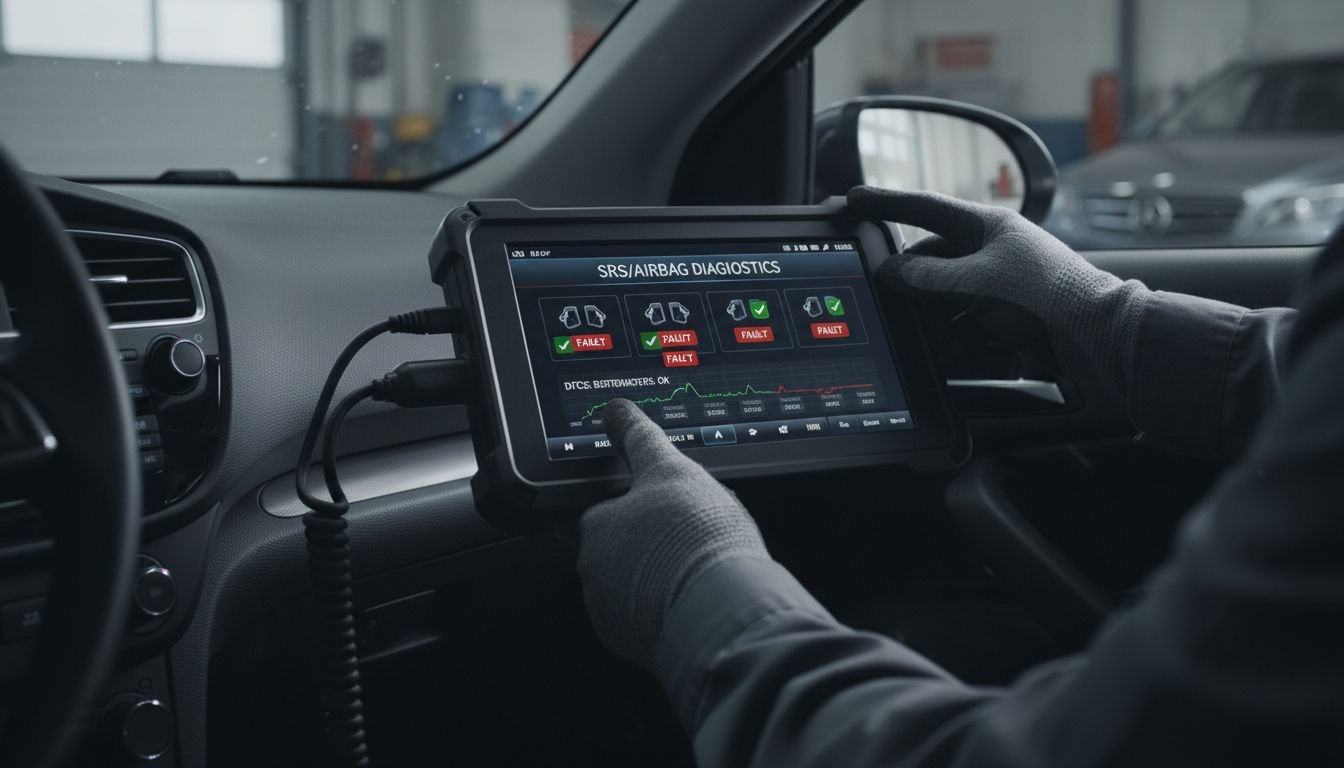
Because impact sensors tie directly into the explosive parts of the SRS, guessing at repairs is not just a money risk, it is a safety risk.
In our Flower Mound TX facility, serving surrounding communities like Lewisville, Coppell, Carrollton, Plano, McKinney, and much of Dallas and Tarrant County, we always start with a structured Vehicle Diagnostic.
This separates simple sensor or wiring faults from deeper safety module problems after an accident.
How Professionals Diagnose Impact Sensor and Safety Module Problems
A proper Vehicle Diagnostic for a crash sensor or airbag light issue is more than just plugging in a cheap code reader.
Here is a high-level look at the process professionals follow:
- Connect a professional scan tool and perform a full DFW / Flower Mound airbag diagnostic on the SRS system.
- Record all codes, paying close attention to impact sensor faults, internal safety module errors, and any communication issues.
- Perform visual inspection of the affected area for crash damage, bent brackets, broken connectors, corrosion, or prior collision repairs.
- Check related wiring and grounds using safe methods, not improvised test lights on SRS circuits.
- Determine whether the root problem is the sensor, the module, wiring/connectors, or a combination after a previous crash event.
This is also where professional help interpreting codes matters; if you want to understand more about codes in general, see our guide on understanding trouble codes and what they mean for your vehicle’s safety.
Why DIY Impact Sensor Replacement Can Be Dangerous
From the outside, changing a front impact sensor can look as simple as unbolting a small part and swapping it.
The problem is that you are working inches away from airbags, pretensioners, and high-sensitivity wiring designed around module safety, not DIY experiments.
Mistakes in this area can lead to no deployment in a real crash, or in rare but serious cases, unintended deployment during service or normal driving.
SRS Explosives and Safe Handling Warning (Mandatory Safety Warning Section)
Airbags, seat belt pre-tensioners, and some related SRS components are pyrotechnic devices that rely on controlled explosions to work.
Accidental deployment can cause serious injury, hearing damage, and interior damage, even in a parked vehicle in your Flower Mound driveway.
Simply clearing codes from an airbag impact sensor or safety module without fixing the underlying issue can hide a critical fault and leave the airbag system disabled when you think it is ready to protect you.
Manufacturers also specify strict handling, storage, and disposal procedures for deployed or faulty airbags and pretensioners, which the average DIYer does not have.
Never probe SRS wiring with test lights, jumper wires, or random tools; this can trigger faults or worse, deployment.
For these reasons, any work that affects impact sensors, airbags, or modules should be left to trained professionals with the right tools and safety procedures.
Professional Services LockNCal Offers for Impact-Sensor-Related Issues
At LockNCal in Flower Mound TX, we address impact sensor concerns as part of a complete SRS safety plan.
Our role is to correctly diagnose the issue and apply the right combination of approved services to restore your protection:
- Vehicle Diagnostic to pinpoint whether the fault is in an impact sensor, wiring, or the safety module itself.
- SRS Airbag Module Reset when crash data needs to be cleared but the module hardware tests healthy.
- Airbag Module Replacement when the control unit is damaged, water-intruded, or permanently locked after a severe crash.
- Airbag Replacement when airbags have deployed or are faulty.
- Seat Belt Replacement and Pre-Tensioner Replacement when belts have locked or fired in a collision.
- Clock Spring Replacement if steering wheel airbag circuits lose connection due to a damaged spiral cable.
- ADAS Calibration where needed, especially if the crash involved body, frame, or suspension work that may also affect driver-assist sensors; for more, see our article on how ADAS and sensors can be thrown off after suspension or collision repairs.
The impact sensor itself is typically replaced as part of this broader repair plan when diagnostics confirm it is faulty, instead of guessing with cheap parts.
OEM vs Aftermarket Impact Sensors: What Drivers in Flower Mound TX Should Know

Once drivers see impact sensor codes or an airbag light on after an accident, the next step many take is to search online for the cheapest sensor they can find.
For everyday parts that might be fine, but for crash sensors the choice between OEM, aftermarket, and used carries real safety implications.
Here is what Flower Mound and DFW drivers should understand before clicking “buy.”
How OEM Impact Sensors Are Designed and Tested
OEM impact sensors are engineered to match a specific vehicle, safety module software version, and crash algorithm strategy.
They are tested as part of the entire vehicle in full-scale crash tests, not just on a bench by themselves.
This integrated design helps ensure that, in a real crash, timing and deployment work exactly as the engineers intended.
Pros and Cons of Aftermarket and Cheap Online Sensors
Aftermarket crash impact sensors and off-brand parts from online marketplaces can be tempting based on price.
Here are some general pros and cons to consider:
- Pros: Lower upfront cost and easier availability for some models, with quick shipping.
- Cons: Unknown calibration accuracy, variable quality control, possible fitment issues, and potential for incorrect or delayed signals to the safety module.
- Possible electrical noise or communication issues that trigger new SRS faults after installation.
For safety-critical components like impact sensors, cutting corners on part quality can directly affect deployment timing and overall module safety in a real crash.
Why Used/Junkyard Impact Sensors Are a Bad Idea
Used or junkyard impact sensors come with two big unknowns: prior crash history and environmental exposure.
A sensor may have been through one or more accidents, or sat in a flooded or rust-prone vehicle, and you have no way to verify that from the outside.
Some manufacturers explicitly recommend replacing crash sensors after certain impacts, even if they look fine, because internal components can be stressed or partially damaged.
Installing a used sensor might clear a code today but fail the moment you actually need the system.
How LockNCal Approaches Parts Choices
For our customers in Flower Mound TX, Denton County, Dallas County, Tarrant County, and surrounding cities like Frisco, Arlington, Grand Prairie, and Irving, we focus on safety first.
Our approach is to start with a proper Vehicle Diagnostic, then match parts selection to OEM specifications or OEM-equivalent quality that keeps the safety module working as designed.
We concentrate on American and Japanese vehicles common in the DFW area, and we never treat crash sensors as simple “plug and hope” parts.
If you are also considering a used vehicle with unknown history, be sure to read our guide on used car airbag safety in Flower Mound TX so you understand what to look for beyond a clean paint job.
FAQs About Impact Sensors and Airbag Safety
This FAQ section addresses the most common questions we hear from drivers in Flower Mound, Lewisville, Plano, and across the DFW metroplex about impact sensors and the airbag system.
If your question is not covered here, a focused Vehicle Diagnostic is usually the fastest way to get clear, vehicle-specific answers.
What does an impact sensor do in my car’s airbag system?
An impact sensor detects rapid deceleration or crash forces, especially during front-end hits, and reports that information to the safety module.
The module then uses that data, along with seat belt and occupancy information, to decide if the airbags and seat belt pretensioners should fire.
It is a critical part of the timing and severity decision, so the protection you get matches the crash you are in.
Is it safe to drive with an impact sensor fault or airbag light on?
In many vehicles, an SRS fault means the airbag system is at least partially airbag system disabled, and you may not get full protection in a real crash.
The car will usually still start and drive, but you are effectively testing the system on the highway instead of in a controlled environment.
We strongly recommend scheduling a Vehicle Diagnostic as soon as possible, especially if you commute daily in DFW traffic.
Do I always need to replace the impact sensor after a minor accident?
Not always, but it depends on the severity, manufacturer guidelines, and what diagnostics show.
Some minor bumps may only leave stored crash data in the safety module, which can be addressed with a professional SRS Airbag Module Reset if the hardware is healthy.
Other situations, especially with visible front-end damage or repeated codes, may call for both sensor replacement and possibly Airbag Module Replacement after proper testing.
What’s the difference between OEM and aftermarket impact sensors?
OEM impact sensors are built and calibrated specifically for your vehicle’s structure and safety module software.
Aftermarket sensors may differ in internal design, calibration, and quality control, even if they bolt on.
For safety-critical parts like crash sensors, staying as close to OEM specs as possible is usually the safest choice for you and your passengers.
Can I replace an impact sensor myself at home?
Some mechanically inclined people can physically unbolt and replace a sensor, but that does not mean it is safe.
You are working around airbags and pretensioners that contain explosives, and incorrect handling can lead to injury, new faults, or airbag system disabled conditions.
On top of that, many vehicles need proper Vehicle Diagnostic, coding, or SRS Airbag Module Reset afterward to restore full function.
For drivers in Flower Mound TX and the greater DFW area, having an SRS specialist handle the entire process is the safer long-term choice.
If you are dealing with an airbag light on after an accident, an impact sensor failure code, or just want peace of mind about your SRS system, we are here to help.
You can learn more about our services and schedule a Vehicle Diagnostic through our Flower Mound TX page at LockNCal – Flower Mound TX.
To better understand your vehicle’s build data and safety equipment before you come in, you can also use our free VIN Decoder to see key details tied to your specific VIN.