
ECM Diagnostic: How Pros Really Test Your Engine Computer (And When to Get Help in Saginaw TX)
Key Takeaways
- An ECM diagnostic is a structured process where a technician evaluates your engine computer, sensors, wiring, and related modules using professional system diagnostics tools, not just a cheap code reader.
- Symptoms like hard starting, stalling, random warning lights, and intermittent power issues can come from the ECM, but are often caused by wiring faults, sensor failures, or a broader electrical fault.
- Because misdiagnosis can affect engine performance and safety systems, it is wise to schedule a professional Vehicle Diagnostic with DFW Safety Restore in Saginaw TX and the DFW area for accurate troubleshooting and safety checks.
What You Will Learn:
🔍 What an ECM Diagnostic Actually Checks – How technicians evaluate your engine control module and related systems
⚠️ ECM-Related Symptoms & Wiring Faults You Shouldn’t Ignore – When a check engine light or electrical fault could be more than a bad sensor
🛠️ Tools, System Diagnostics & When to Call a Specialist in Saginaw TX – Scanner tools, reflashing, and why pro Vehicle Diagnostic service matters
If you are searching for an ECM diagnostic, you are probably dealing with a stubborn check engine light, weird drivability issues, or electrical problems that come and go. You might already have a basic code reader and still feel like you are guessing. As a DFW-area technician who sees this daily, I can tell you that properly diagnosing the engine computer is about process and safety, not just reading codes.
This guide breaks down how pros in Saginaw TX and across the DFW metroplex approach ECM-related complaints, what you can safely check yourself, and when it is time to book a professional Vehicle Diagnostic with DFW Safety Restore in Saginaw TX.
What Is an ECM Diagnostic and Why It Matters
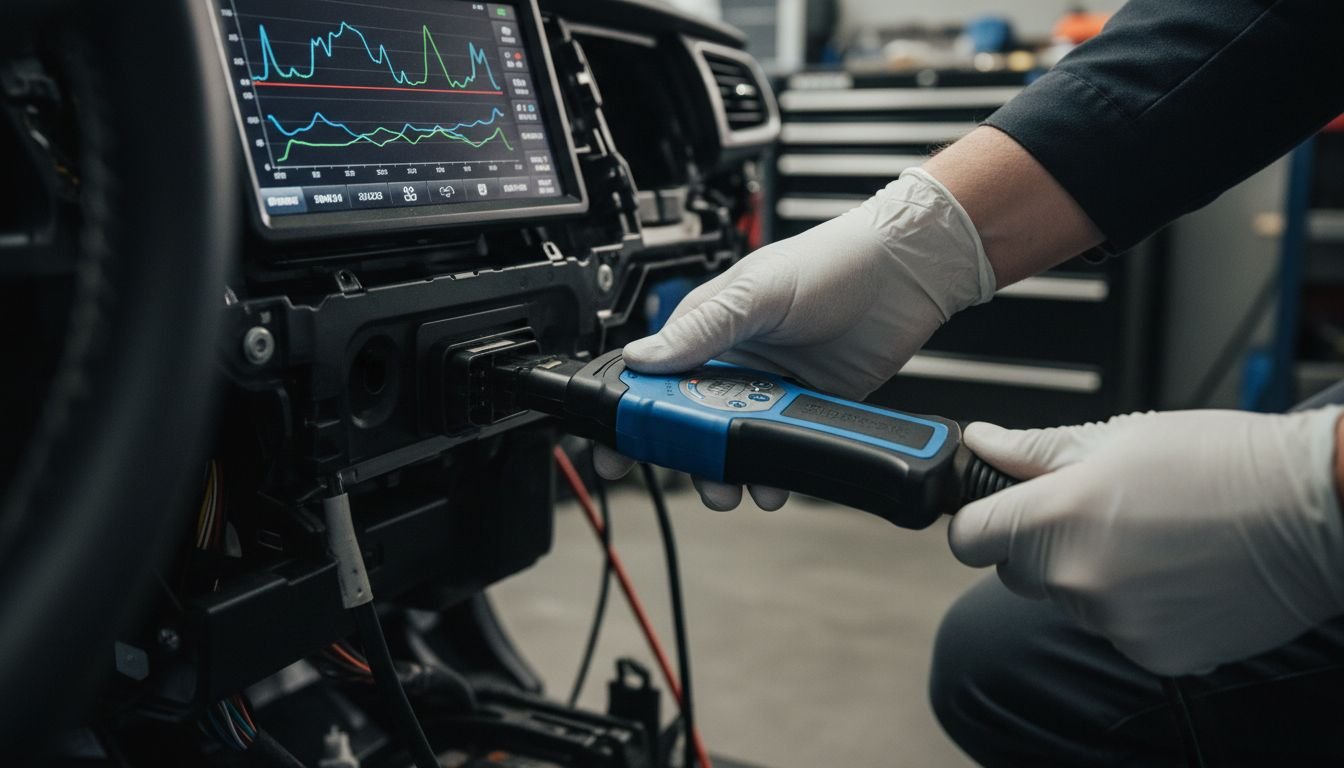
On modern vehicles, nearly every key function is supervised by at least one module, and the engine computer is at the center of it. Understanding what an ECM diagnostic really is will help you see why guessing or parts-swapping gets expensive fast.
The Role of the Engine Control Module in Modern Vehicles
The Engine Control Module is effectively the brain for the engine and powertrain. It takes input from dozens of sensors, including oxygen sensors, crank and cam sensors, throttle position, manifold pressure, temperature sensors, and more.
Using these signals, the ECM controls fuel injection, ignition timing, throttle angle, and sometimes transmission operation to balance power, drivability, emissions, and fuel economy. In many vehicles, the ECM also shares data with safety-related systems such as traction control, ABS, and stability control, so its decisions can indirectly influence safety.
What Technicians Mean by an ECM Diagnostic
When a professional talks about an ECM diagnostic, we are talking about a full set of system diagnostics, not just plugging in a cheap scanner and reading a code definition. We start with scan data, but then we verify power, grounds, communication lines, sensor inputs, and actuator outputs.
At DFW Safety Restore, ECM evaluation is done as part of a comprehensive Vehicle Diagnostic. That means we look beyond the ECM itself to the wiring, related modules, and safety systems that share networks or power sources, so you get a full picture instead of a guess based on one code.
ECM-Related Symptoms, Wiring Faults, and Electrical Fault Signs
Drivers often assume “bad computer” when symptoms feel random or when multiple lights come on at once. In reality, many of these issues are caused by wiring faults or another electrical fault that is confusing the ECM.
Common Symptoms That Lead Drivers to Suspect ECM Problems
- Hard starting or no-start, especially when hot or at random times.
- Stalling at idle, coming to a stop, or when hitting bumps.
- Rough idle, hesitation, or surging during acceleration.
- Sudden loss of power or “limp mode” where the vehicle will not rev normally.
- Poor fuel economy with no obvious mechanical cause.
- Transmission shifting oddly or holding gears longer than normal.
- Multiple warning lights on the dash at the same time (check engine, ABS, traction, airbag, etc.).
These symptoms can come from a failing ECM, but more often, a professional engine diagnostic service finds a weak power feed, poor ground, failing sensor, or corroded connector upstream of the computer.
When It’s Really a Wiring Fault or Electrical Fault Instead
Wiring faults are one of the most common sources of what looks like ECM failure. A broken conductor inside the insulation, a short to ground, a pin that is backed out of the connector, or a loose ground strap can all cause erratic data that the ECM has to interpret.
A broader electrical fault, such as low battery voltage, a failing alternator, rusted power distribution block, or bad relay can cause modules to reset, drop offline, or log false communication codes. In Texas, heat, moisture, and vibration in DFW traffic are especially hard on connectors and harnesses.
A proper Vehicle Diagnostic traces these problems systematically instead of jumping straight to “the computer is bad,” which is how a lot of unnecessary ECM replacements happen.
Red Flags That Need Immediate Attention for Safety
Some symptoms are more than just annoying. They are red flags that your engine or safety systems may not respond when you need them. These deserve immediate attention before you keep driving around Saginaw or the greater DFW area.
- Intermittent or sudden loss of power in traffic, especially on highways like I-35W or 820.
- The combination of check engine, ABS, traction, and/or airbag lights at the same time.
- Random shutdowns while driving or the engine cutting out when you hit bumps.
- Airbag or SRS warnings together with engine or communication codes.
When multiple systems show faults at once, that is not the time for trial-and-error. You should schedule a professional Vehicle Diagnostic in Saginaw TX as soon as possible so a trained technician can identify whether the root cause is the ECM, a wiring fault, another module, or a safety-critical issue.
For more context on when a warning light demands immediate action, see our guide on choosing a check engine light mechanic in Saginaw TX.
How an ECM Diagnostic Fits Into a Full Engine Diagnostic Service
An ECM diagnostic is only one piece of a complete engine diagnostic service. When done correctly, the ECM is evaluated in the context of the entire powertrain and electrical system.
From Basic Code Scan to Advanced System Diagnostics
The first step is usually a full-system code scan using a professional scan tool that can talk to all modules on the vehicle, not just the ECM. We capture stored, pending, and history codes along with freeze-frame data that shows what the engine was doing when a fault set.
From there, we move into deeper system diagnostics: reviewing live data streams, comparing sensor readings, performing bi-directional tests, and following manufacturer test plans. This is where a true engine diagnostic service separates itself from a quick code read at a parts store.
Inputs, Outputs, and Communication Checks
Before a technician blames the ECM, we verify that the module is receiving clean and correct signals from sensors and that it can command outputs properly. That includes checking crank and cam signals, throttle position, oxygen sensor response, injector and ignition control, and more.
We also verify that the ECM has solid power and ground, and that it can communicate over the vehicle network with other modules. Network issues can easily be mistaken for a bad ECM when the real problem is a shorted wire or another module pulling the bus down.
How ECM Issues Can Affect Other Modules (SRS, ABS, Body Control)
Modern vehicles use shared communication networks and power feeds, which means a fault in one area can ripple into others. A failing ECM, severe voltage drops, or corrupted data can lead to codes in ABS, SRS, body control, or ADAS modules.
For example, if an accident or repair work has affected both engine wiring and SRS wiring, you might see communication or crash-related codes in the airbag module. Once a complete Vehicle Diagnostic confirms the root cause, DFW Safety Restore can perform related safety services, including SRS Airbag Module Reset and Airbag Module Replacement, so your restraint system is restored to proper operation.
If you want a deeper dive into why proper SRS resets matter after repairs, read why proper airbag module resets are critical after a collision.
Informational Deep Dive into ECM Diagnostic Tools, Software, and When to Consult a Specialist
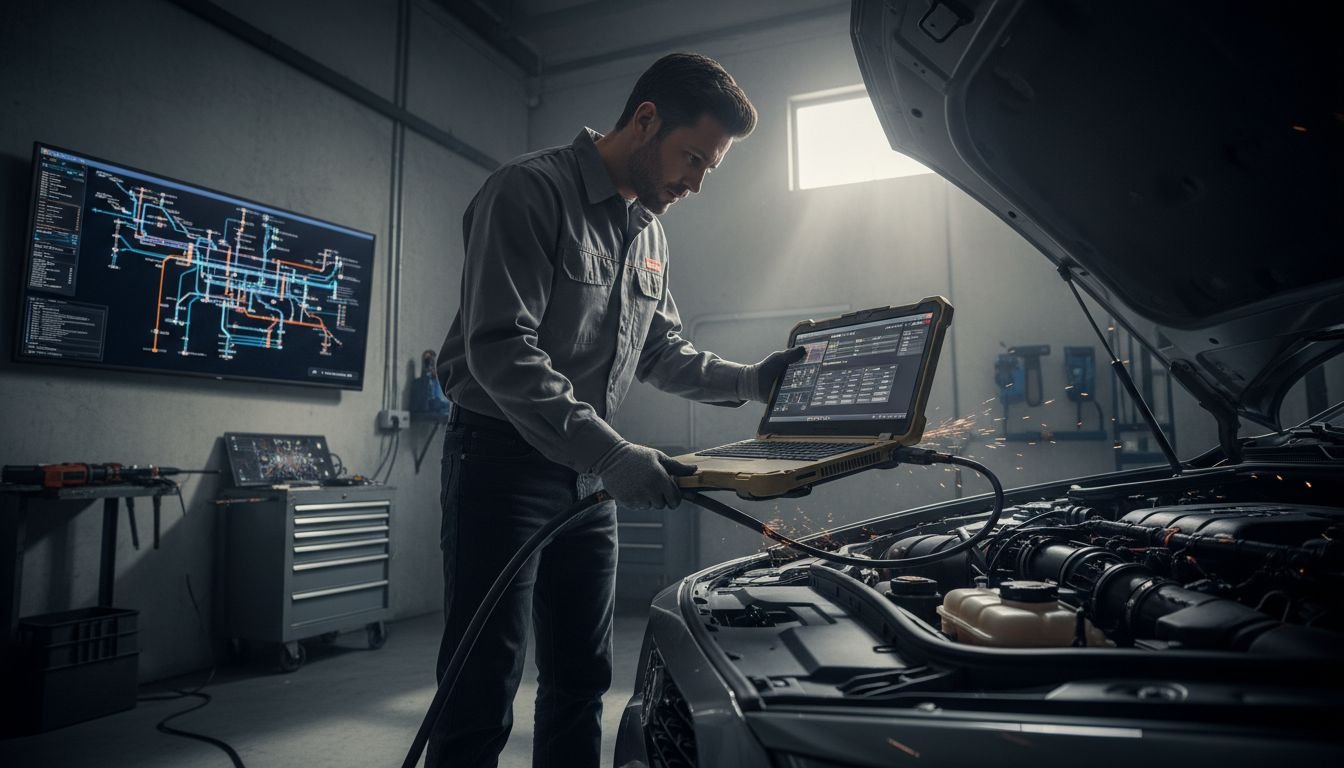
The tools and information we use in a professional shop are very different from a basic handheld code reader. This is where a true ECM diagnostic and full system diagnostics stand apart from DIY attempts.
Tools Used in Professional ECM and System Diagnostics
For ECM and engine diagnostics, technicians rely on a combination of specialized hardware and factory service information. Common tools include OEM-level or high-end aftermarket scan tools, digital multimeters, and high-speed oscilloscopes.
We also use detailed wiring diagrams, connector views, and pin-out charts to trace wiring faults and verify correct voltages and signals at specific pins on the ECM and related modules. This level of testing simply is not possible with a basic code reader that only pulls generic OBD-II codes.
When you schedule a professional engine diagnostic service or Vehicle Diagnostic in Saginaw TX, you are essentially buying access to this equipment and the experience needed to interpret what it shows.
Module Testing: Visual Inspection, Pin Checks, and Bench Tests
When testing a suspected ECM, we rarely start by removing it. Instead, we inspect the harness and connectors, looking for corrosion, water intrusion, loose pins, or signs of overheating. Many “computer problems” turn out to be harness or connector issues.
If needed, we perform pin checks at the ECM itself, verifying that power, ground, and signal lines are present and within spec. In some situations, advanced shops may perform bench tests or send modules out for specialized testing, but that only happens after on-vehicle checks confirm the need.
Pulling modules and probing pins without proper procedures can damage the ECM or other components, which is why complex pin testing should be left to a professional Vehicle Diagnostic provider.
Software Considerations – Reflashing, Reprogramming, and Security
Modern ECMs rely on software that can sometimes require updates or recalibration. Reflashing/reprogramming usually requires OEM software, a stable battery support unit, and a solid understanding of vehicle security systems and module configuration.
Incorrect programming can brick the ECM, cause communication failures, or interfere with immobilizer and SRS/airbag functions. In the worst cases, a bad flash can leave the vehicle in a no-start condition or with disabled safety features.
This is not a casual DIY laptop job. Any programming or configuration work should be coordinated through qualified professionals as part of a structured Vehicle Diagnostic, especially here in the DFW area where you depend on your vehicle daily.
When You Should Stop DIY and Call a Specialist in Saginaw TX
There is a point where continuing to guess or clear codes becomes more expensive and risky than getting a proper diagnosis. If you are seeing recurring codes that come back immediately after clearing, it is time to stop and get help.
You should schedule a Vehicle Diagnostic in Saginaw TX with DFW Safety Restore if you notice any of these:
- Repeated no-starts or random stalling that other shops have not fixed.
- Multiple module communication errors or “U-codes.”
- Any involvement of airbag/SRS codes or warning lights.
- Immobilizer or key recognition issues where the car cranks but will not start, or the security light stays on.
For a specific example of how communication problems are diagnosed, see our article on what to do when a diagnostic trouble code points to communication issues. When you are ready, you can book local service directly through our Saginaw TX Vehicle Diagnostic page.
DIY ECM Diagnostic Steps (And Their Limits)
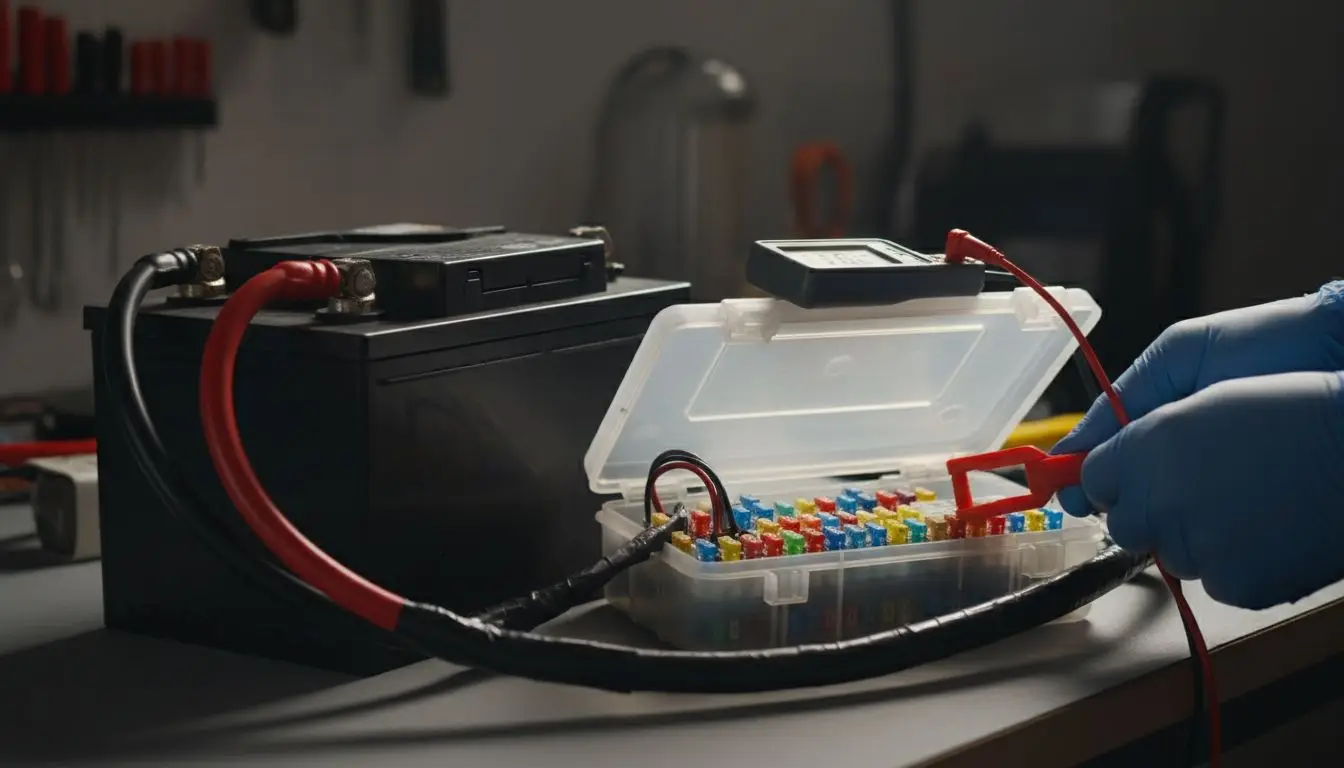
There are a few basic checks most owners or shop DIYers can do safely. The key is knowing where to stop so you do not damage modules or put yourself in danger, especially around SRS and airbag circuits.
Safe Basic Checks Most Owners Can Do
You can safely inspect your battery, main grounds, and visible wiring without special tools. Start by checking that the battery terminals are clean and tight, and that any visible ground straps from the engine to the body are intact and not heavily corroded.
Next, you can check fuses and some relays related to the ECM and engine systems using a simple test light or fuse tester. A basic OBD-II scanner is fine for reading codes and freeze-frame data, as long as you do not assume the code automatically means a part is bad.
If anything seems unclear beyond these basics, that is a good stopping point and a sign to book a professional Vehicle Diagnostic instead of guessing.
Why Code Readers Alone Don’t Confirm a Bad ECM
A generic code reader might show you codes for rich/lean mixture, misfires, throttle position, or even internal ECM faults. But most of those codes only tell you which system noticed something out of range, not why it happened.
For example, a misfire code may be caused by a coil, injector, compression issue, or a wiring fault feeding that cylinder, not the ECM itself. An electrical fault or bad ground can make multiple sensors look bad simultaneously, leading you straight to a wrong conclusion if you only rely on code definitions.
This is why a true ECM diagnostic combines codes, live data, and circuit testing instead of relying on a one-line description from a handheld reader.
When DIY Electrical Testing Becomes Dangerous
Some parts of the vehicle should never be probed casually with a test light or multimeter. SRS and airbag systems contain pyrotechnic/”explosive” components such as airbags and seat belt pre-tensioners that can deploy violently if mishandled.
DIY probing of airbag circuits, clock springs, steering column harnesses, or SRS modules can result in serious injury, accidental deployment, and long-term system malfunction. Only trained professionals should perform SRS Airbag Module Reset, Airbag Module Replacement, Seat Belt Replacement, Pre-Tensioner Replacement, or Clock Spring Replacement.
If your ECM or electrical fault diagnosis points anywhere near the SRS system, stop immediately and schedule a professional Vehicle Diagnostic in the DFW area rather than continuing DIY tests.
ECM Diagnostics, Safety Systems, and Vehicle Security
Engine management, safety systems, and vehicle security are more connected than most people realize. An issue that starts as a drivability complaint can easily cross over into SRS or immobilizer territory.
How Engine and Safety Systems Interact
In many modern vehicles, modules share information over data networks. When the ECM detects certain severe faults, it may limit power, disable features, or trigger warnings that show up in traction control or stability control systems.
Likewise, if there are communication errors between the ECM, ABS, body control, and SRS modules, you may see clusters of warning lights, reduced power, or disabled features. These interactions are exactly why ECM and system diagnostics should be handled with a big-picture approach.
SRS Airbag Module Codes and the Need for Proper Resets
Once the SRS/airbag module logs crash data or internal faults, basic scanners typically cannot clear these codes. The system often needs a dedicated SRS Airbag Module Reset or, in some cases, Airbag Module Replacement after the root cause is confirmed by a full Vehicle Diagnostic.
Improperly handled SRS modules and harnesses can leave airbags disabled or cause warning lights that mask new faults. To understand the stakes, review our article on why skipping safety module resets puts drivers at serious risk and why proper airbag module resets are critical after a collision.
Immobilizer, Keys, and Modules – Why Locksmith Services Matter
The ECM, immobilizer, and keys all have to agree before most vehicles will start. If one piece of that chain loses synchronization, you may experience a crank-no-start, flashing security light, or intermittent starting problems that look like ECM failure.
Once a professional Vehicle Diagnostic confirms that an immobilizer or key recognition issue is involved, DFW Safety Restore can assist with Vehicle Key Cutting, Transponder Key Programming, Smart Key Programming, Key Fob Replacement & Programming, Vehicle Key Duplication, Vehicle Key Copying, and general Locksmith Services. We can also help in Vehicle All Keys Lost and Car Lockout Assistance situations.
In many DFW-area cases, resolving a no-start or security code is a combination of accurate ECM-related diagnostics and the right locksmith/key programming solution rather than replacing the ECM outright.
Local Perspective – ECM Diagnostic and Vehicle Diagnostic in Saginaw TX
Living and driving in Saginaw TX and the greater DFW area puts unique stress on your vehicle’s electronics. Local conditions matter when we evaluate ECM, wiring, and module issues.
How Texas Heat and Driving Conditions Stress Your Engine Electronics
North Texas heat bakes under-hood components, accelerates plastic and insulation aging, and dries out seals, which invites corrosion. Stop-and-go Saginaw and Fort Worth traffic keeps under-hood temperatures high even at low speeds.
Rough roads, construction zones, and frequent short trips around Dallas, Arlington, and Denton counties add vibration and moisture, which can damage connectors and harness routing. All of this increases the chance of wiring faults, cracked solder joints, and intermittent electrical fault conditions.
Why Local Vehicle Diagnostic Beats Guessing and Parts Swapping
Because so many ECM-like symptoms are actually wiring or module issues, shipping your ECM to a distant rebuilder without a full on-car evaluation is risky. If the problem is in the harness, grounds, or another module, you will waste time and money and still have the same symptoms.
A local Vehicle Diagnostic in Saginaw TX lets a technician see the vehicle complete, test it under real driving conditions, and pinpoint the actual fault. That is far more effective than replacing parts by mail or guessing based on a code description.
How DFW Safety Restore Supports Saginaw TX Drivers and Shops
DFW Safety Restore works with individual drivers, independent shops, body shops, and used car buyers throughout Saginaw, Fort Worth, and the surrounding DFW cities like Arlington, North Richland Hills, Mansfield, and Dallas. Our focus is on accurate diagnostics and correctly restored safety systems.
We offer same-day Vehicle Diagnostic availability when possible, but we never promise fixed turnaround times without seeing the vehicle. Our team handles safety-related follow-up work, including SRS Airbag Module Reset, Airbag Module Replacement, Seat Belt Replacement, Pre-Tensioner Replacement, Airbag Replacement, Clock Spring Replacement, and automotive locksmith/key services once the diagnostic process reveals what is really going on.
If you are unsure exactly what your vehicle is equipped with, you can use our FREE VIN Decoder or request a CarFax Report to better understand its history before scheduling service.
When to Schedule a Professional Vehicle Diagnostic (And What to Expect)
Knowing when to transition from DIY to professional support can save you from towing bills, unnecessary parts, and safety compromises.
Situations Where Professional Diagnosis Is Non-Negotiable
You should not delay scheduling a Vehicle Diagnostic in Saginaw TX if you experience:
- Stalling while driving, especially at highway speeds or in busy DFW traffic.
- Repeated no-start conditions or severe hard starting.
- Multiple warning lights on the dash that return immediately after clearing.
- Any airbag, SRS, or ABS warnings, especially after a collision or recent repair.
In these situations, driving further without a professional evaluation can put you and others at risk.
What Our Vehicle Diagnostic Includes for ECM-Related Complaints
When you bring your car to DFW Safety Restore with an ECM or electrical concern, we start with a full-system scan of all modules, not just the engine. We review codes, freeze-frame data, and live data to see how the systems behave.
From there, we perform targeted electrical tests on relevant power, ground, and communication circuits, inspect harness routing and grounds, and verify critical sensor and actuator performance. You receive a clear explanation of what we found, what is confirmed, and what still needs further evaluation.
How ECM Findings Lead to Next Steps with Our Approved Services
Once an ECM diagnostic and full Vehicle Diagnostic clarify the root cause, we outline appropriate next steps using our approved services. If the issue involves the SRS system, that can include SRS Airbag Module Reset, Airbag Module Replacement, Seat Belt Replacement, Pre-Tensioner Replacement, Airbag Replacement, or Clock Spring Replacement.
If the problem touches the immobilizer or key recognition, we may recommend Vehicle Key Cutting, Transponder Key Programming, Smart Key Programming, Key Fob Replacement & Programming, or other Locksmith Services. Our role is to make sure your engine, electronics, and safety systems work together the way the manufacturer intended.
FAQs About ECM Diagnostics and Vehicle Safety
What is an ECM diagnostic and how is it different from a simple code scan?
An ECM diagnostic is a structured process where a technician uses professional tools to read codes, analyze live data, and test circuits related to the engine computer and other modules. We check for wiring faults, verify grounds and power, inspect connectors, and confirm sensor inputs and actuator outputs before calling any module bad.
A simple code scan only retrieves whatever codes are stored and a few snapshots of data. Without proper system diagnostics, a basic code read can easily lead to wrong part replacement and ongoing problems.
How do I know if my problem is really the ECM or just a wiring fault?
Symptoms alone almost never confirm that the ECM itself has failed. True diagnosis requires checking power and ground integrity, measuring communication lines, comparing sensor signals, and sometimes performing ECM-specific tests.
Because wiring faults and other electrical fault conditions can mimic a bad ECM, the safest approach is to schedule a professional Vehicle Diagnostic or engine diagnostic service in Saginaw TX. That way you avoid buying an expensive computer you do not actually need.
Can I drive my car if I suspect an ECM or electrical fault?
In many cases, the vehicle will still run with some ECM or electrical issues, but that does not mean it is safe. Driving with unresolved ECM-related or electrical faults can lead to stalling, poor performance, or disabled traction control and safety features.
If you notice multiple warning lights, loss of power, or intermittent no-starts, minimize driving and schedule a Vehicle Diagnostic with DFW Safety Restore as soon as possible, especially in heavy DFW traffic.
Do I need special software to reflash or reprogram my ECM at home?
Yes, proper ECM reflashing/reprogramming usually requires OEM-level software, a stable power supply, and experience with security and communication protocols. Attempting this at home without the right tools can corrupt the ECM, cause communication problems, or disable immobilizer and airbag systems.
Instead of experimenting with software, focus on getting a complete Vehicle Diagnostic first. If programming is required, let qualified professionals handle it within a controlled, safe process.
What can DFW Safety Restore do if my ECM diagnostic shows safety system issues?
Once a thorough Vehicle Diagnostic identifies safety-related issues, DFW Safety Restore can provide targeted services to restore proper operation. That includes SRS Airbag Module Reset, Airbag Module Replacement, Seat Belt Replacement, Pre-Tensioner Replacement, Airbag Replacement, and Clock Spring Replacement.
If immobilizer or key recognition problems are involved, we also offer Vehicle Key Cutting, Transponder Key Programming, Smart Key Programming, Key Fob Replacement & Programming, and other Locksmith Services. Our goal is to ensure your engine, electronics, and safety systems all work together reliably after the diagnostic process.
Call to Action – Get a Professional Vehicle Diagnostic in Saginaw TX
Don’t Guess with Safety and Electronics
Modern vehicles are too complex and safety-critical to fix by guesswork. An ECM diagnostic is not just about turning a light off; it is about making sure the engine, safety systems, and security systems are truly working the way they should.
Continuing to drive around Saginaw, Fort Worth, Dallas, or anywhere in DFW with unresolved ECM, electrical fault, or SRS warnings exposes you to breakdowns and reduced protection in a crash. A professional Vehicle Diagnostic is the most efficient and safest way to get real answers.
How to Book Your Vehicle Diagnostic with DFW Safety Restore
If you are experiencing any of the symptoms discussed in this guide, do not wait for them to get worse. You can schedule your Vehicle Diagnostic in Saginaw TX by visiting our local service page at https://lockncal.com/Saginaw-TX.
Have questions about your vehicle’s build or history before you come in? Use our FREE VIN Decoder to identify your options, or request a CarFax Report to see prior accident and repair information. Then let our DFW-based team handle the system diagnostics, safety checks, and next steps so you can drive with confidence again.