 Skip to content

Check Car Diagnostic: How Vehicle Diagnostic Tests Work and When You Need One
Key Takeaways
- A car diagnostic check uses your vehicle’s onboard computer (OBD-II) to read trouble codes and data from systems like the engine, ABS, and SRS airbag modules.
- A simple code reader only shows basic error codes, while a full vehicle diagnostic test includes multi-system scans, live data, and expert interpretation.
- In the Dallas–Fort Worth area (including Anna, TX), a professional diagnostic at LockNCal can lead directly to safety-critical services like SRS Airbag Module Reset, Seat Belt Replacement, and ADAS Calibration.
What You Will Learn:
– ⚙️ What a Car Diagnostic Check Actually Does – Plain-English explanation of OBD-II and modern vehicle diagnostics.
– 🧾 How Car Diagnostic Tests Work and What We Check – Systems scanned, what codes mean, and how results lead to real repairs.
– 🛠️ DIY Code Reader vs Professional Vehicle Diagnostic in DFW – When a cheap scanner is enough and when you need an expert.
– 💵 Car Diagnostic Test Costs and Time in DFW – Typical price and how long a diagnostic takes.
– 🚨 Warning Lights, Safety Systems, and When Not to Drive – Check engine vs airbag vs ABS lights.
– 📍 Vehicle Diagnostic Services in Anna TX and the DFW Area – How LockNCal can help locally.
– ❓ Car Diagnostic FAQs – Common questions about car diagnostic checks and safety.
When people search “check car diagnostic,” they’re usually staring at a warning light, feeling something off in the way the car drives, or getting ready for a Texas inspection.
You might be wondering if a quick free code scan is enough or if you need a full car diagnostic test from a professional shop.
This guide explains what a car diagnostic check really is, how OBD-II works, DIY vs professional options, and how diagnostics at LockNCal in the Dallas–Fort Worth area (including Anna, TX) tie directly into critical safety services like SRS Airbag Module Reset and ADAS Calibration.
What Is a Car Diagnostic Check?
Car Diagnostic vs Car Diagnostic Test vs Vehicle Diagnostic Test
People use terms like car diagnostic, car diagnostic test, car diagnostic check, and vehicle diagnostic test interchangeably.
In plain English, all of them mean using electronic tools and a trained technician to talk to your car’s computers and identify the cause of warning lights, strange behavior, or failed inspections.
At LockNCal, a Vehicle Diagnostic means we scan multiple systems, review data, and connect the dots so we’re not just reading codes, we’re finding root causes.
How Your Car’s Computer (OBD-II) Monitors the Vehicle
Every modern car and light truck in Texas uses OBD-II, an onboard diagnostics system that lets scan tools communicate with different control modules.
These modules include the engine control unit, transmission control, ABS/traction control, the SRS airbag module, and on many newer vehicles, ADAS-related modules for lane keeping and collision warning.
When something is out of range, the module stores diagnostic trouble codes (DTCs) and may turn on a warning light; these codes are clues, not full answers, so they must be interpreted in context by someone who understands the systems.
High-Level Guide to Vehicle Diagnostics: OBD-II, Common Checks, and Scan Results
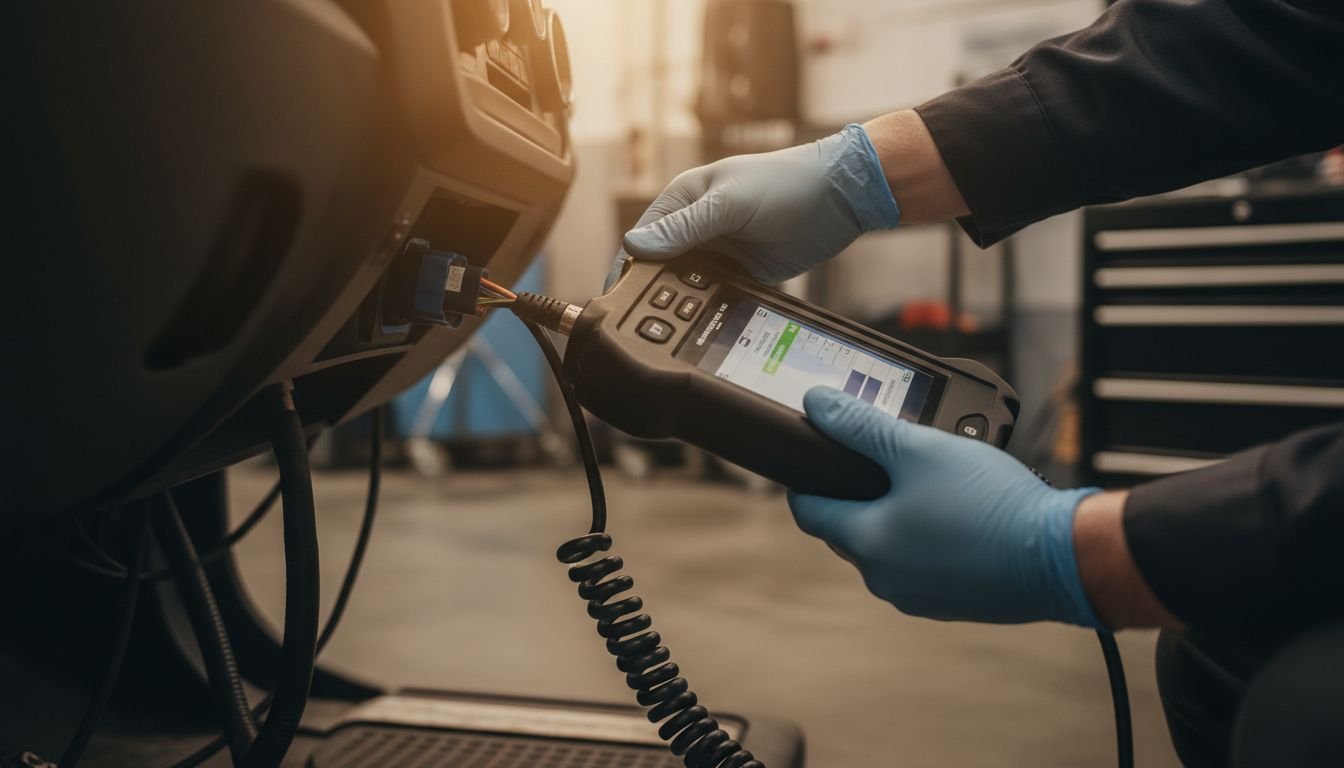
When you schedule a car diagnostic test in the Dallas–Fort Worth area, the process is more structured than just “plugging in a scanner.”
A proper vehicle diagnostic test follows a series of checks designed to build a full picture of what the vehicle is doing and why.
Here’s how that typically looks in our shop.
What Happens During a Typical Car Diagnostic Test
- 1. Connect to the OBD-II port. We plug a professional scan tool into the OBD-II socket, usually under the dash near the steering column.
- 2. Identify the vehicle. We confirm the VIN and system layout so the tool talks correctly to each module.
- 3. Scan for stored and pending codes. We pull all DTCs, including stored codes, pending codes (early warnings), and history codes.
- 4. Check readiness monitors. For emissions-related systems, we look at OBD readiness monitors to see what tests the vehicle has completed, which matters for Texas inspections.
- 5. Review live data. We view real-time sensor values like oxygen sensor readings, fuel trims, wheel speeds, steering angle, and more to see how the car behaves, not just what codes it saved.
- 6. Perform targeted tests. Depending on the issue, we may run bi-directional tests, such as commanding components on/off or checking responses from SRS or ABS modules.
- 7. Confirm with visual/basic checks. We may inspect connectors, wiring, fuses, and visible components to rule out the obvious and confirm what the data suggests.
Systems Commonly Checked During a Vehicle Diagnostic Test
A full car diagnostic check usually goes beyond the engine and reads multiple control modules, including:
- Engine and emissions: Misfires, fuel mixture, sensors, and issues that can cause a failed Texas emissions test.
- Transmission: Shift quality, solenoid performance, and sensor inputs on vehicles where the transmission module is accessible.
- ABS/traction control: Wheel speed sensors, hydraulic control units, and stability control data.
- SRS/airbag system and seat belt pretensioners: Airbag modules, crash sensors, seat belt status, and pretensioner fault codes.
- ADAS-related modules (where equipped): Lane-keeping, forward collision warning, adaptive cruise, and related camera/radar modules, which may later require ADAS Calibration if misalignment is found.
This multi-system scan is how we find not just drivability concerns, but also hidden safety issues in your vehicle’s safety systems that could put you at risk on I-35, 75, or 635 in DFW.
Understanding Scan Results: Codes, Severity, and Next Steps
Not all trouble codes are created equal, and understanding severity is critical.
Pending codes are early warnings the system is still evaluating, while confirmed codes mean a problem has consistently failed its self-tests.
Some codes point directly to failed components, but many—like more complex engine or SRS codes—are better understood as clues; for example, we have a full article on why specific diagnostic trouble codes like P2088 matter for your car, and why interpretation matters as much as the code itself.
We also look at how and when the codes set, sometimes using freeze-frame data that shows RPM, speed, and load at the moment the fault occurred.
A solid check engine light usually indicates an issue that should be checked soon, while a flashing light can indicate a severe misfire that can damage the catalytic converter.
Once we understand the pattern, we recommend next steps, which might include general mechanical work done elsewhere or, when safety systems are involved, menu-approved services at LockNCal like SRS Airbag Module Reset, Airbag Module Replacement, Seat Belt Replacement, Pre-Tensioner Replacement, Clock Spring Replacement, Airbag Replacement, or ADAS Calibration.
Common Signs You Need a Car Diagnostic Check
Dashboard Warning Lights
The most obvious sign you need to check car diagnostic data is when a warning light appears on the dash.
Common lights that call for a car diagnostic test include the check engine light, the airbag/SRS light, ABS or traction control lights, and ADAS icons for lane-keeping, collision warning, or adaptive cruise.
If more than one light comes on at once, especially after hitting a pothole or driving in heavy rain, a comprehensive vehicle diagnostic test is the safest move.
Drivability and Safety Symptoms
Sometimes there are no lights, but you can feel something is wrong.
Rough idle, hesitation, stalling, poor fuel economy, odd shifting, or warning chimes you’ve never heard before are all signs it’s time to check car diagnostic data.
Any symptom that affects braking, steering, or stability should be treated as a safety concern and checked right away, especially with North Texas traffic, heat, and long daily commutes.
After a Collision or Airbag Deployment
After any collision—especially one that triggers airbags or seat belt pretensioners—a car diagnostic check is essential.
The SRS airbag module stores crash data and may lock out until an SRS Airbag Module Reset or Airbag Module Replacement is performed.
Seat belts and pretensioners must also be evaluated; based on scan and inspection results, we may recommend Seat Belt Replacement or Pre-Tensioner Replacement, and if cameras or radars were affected, a follow-up ADAS Calibration to restore proper driver-assistance operation.
If you want to dive deeper into how subtle problems can hide in critical systems, see our article on hidden safety issues in your vehicle’s safety systems.
DIY vs Professional Car Diagnostic Tests in DFW
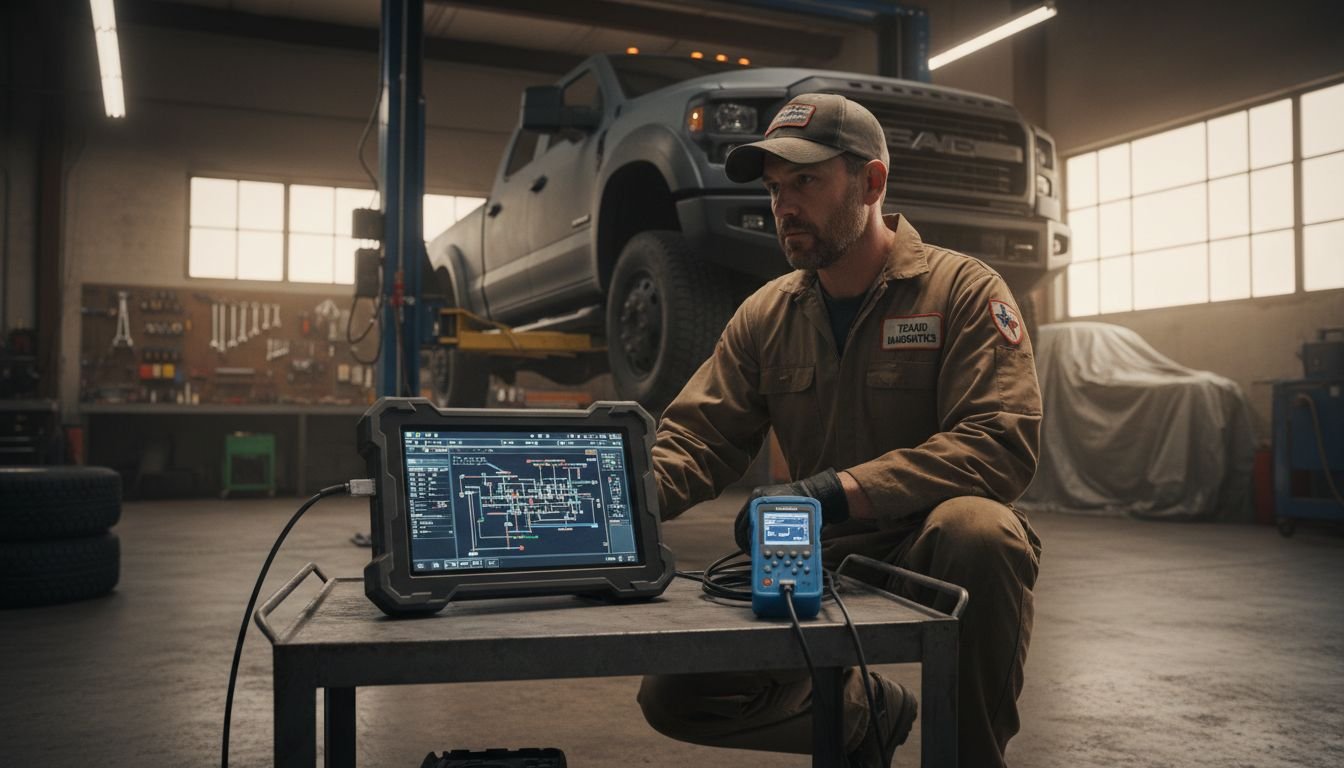
What a Basic DIY Code Reader Can (and Can’t) Do
Inexpensive handheld OBD-II scanners and free parts-store code reads can be useful starting points.
They typically access only generic engine and emissions codes, sometimes with basic live data, which can help confirm that you at least have an emissions or engine-related issue.
However, most of these tools do not talk deeply to SRS airbag modules, ABS systems, seat belt pretensioners, or ADAS modules, and they definitely do not replace a trained technician’s diagnostic process.
Risks of DIY on Safety Systems (SRS, Airbags, Seat Belts)
Safety Warning: Airbags, SRS airbag modules, and seat belt pretensioners contain pyrotechnic (explosive) charges.
Incorrect handling, probing connectors with test lights, or even static electricity can cause unexpected deployment or internal damage that leaves the system dead when you need it in a crash.
You should never attempt to open, modify, or repair airbag modules, seat belts, or pretensioners yourself; leave SRS and restraint systems to trained professionals at shops like LockNCal, where we handle SRS Airbag Module Reset, Airbag Module Replacement, Seat Belt Replacement, Pre-Tensioner Replacement, Clock Spring Replacement, and Airbag Replacement under controlled procedures.
Why a Professional Vehicle Diagnostic Matters in DFW
In the Dallas–Fort Worth area, vehicles deal with intense North Texas heat, stop-and-go traffic on I-35, I-20, I-30, US-75, and 635, and long commutes from communities like Anna, McKinney, Plano, and Arlington.
Small issues can escalate quickly under these conditions, and a basic code read rarely tells the whole story.
A professional vehicle diagnostic test at LockNCal checks more systems, uses higher-level tools, and can flow directly into our safety-focused services such as SRS Airbag Module Reset, ADAS Calibration, Seat Belt Replacement, and Pre-Tensioner Replacement when the data points to a safety concern.
How Much Does a Car Diagnostic Test Cost in DFW?
Typical Costs and What’s Included
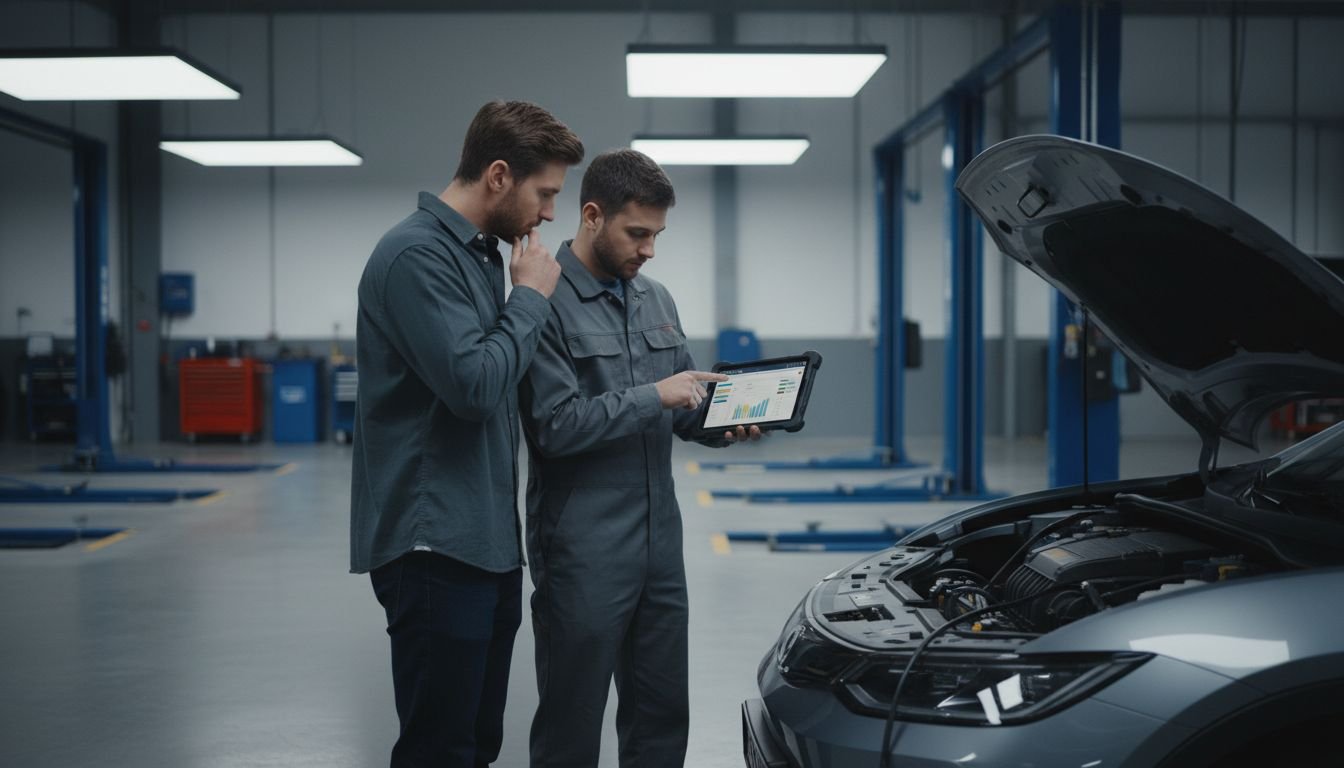
In the Dallas–Fort Worth area, a professional car diagnostic test typically starts around $90–$150, depending on the vehicle and how many systems need to be evaluated.
That fee usually covers a multi-system scan, review of codes and readiness monitors, basic inspection and confirmation checks, and a clear explanation of findings with prioritized recommendations.
At LockNCal, we keep the focus on what matters most: identifying any issues affecting your engine performance, emissions, and critical safety systems such as SRS airbags, seat belts, and ADAS.
Time Required for a Vehicle Diagnostic Test
Most straightforward vehicle diagnostic tests take about 30–60 minutes, assuming the issue is consistent and the codes point us in a clear direction.
More complex electrical problems, multiple system faults, or intermittent issues can take longer because they require deeper testing or road tests under specific conditions.
We recommend scheduling ahead if you want same-day diagnostic availability in busy DFW corridors or in growing communities like Anna, TX.
Free Code Scans vs Paid Professional Diagnostics
Free parts-store scans are quick and can be helpful for very simple, engine-only problems.
However, those scans usually cannot read SRS, ABS, seat belt, or ADAS modules and do not include professional interpretation, testing, or a safety-focused plan.
A paid professional car diagnostic check at LockNCal is the better choice when safety lights are on, the problem is intermittent, there has been a collision or airbag deployment, or you are preparing for an important trip on Texas highways.
Warning Lights and Safety Systems: When a Diagnostic Check Is Urgent
Check Engine Light: Solid vs Flashing
A solid check engine light generally means the car has detected a problem that may affect performance or emissions but is not yet an immediate emergency.
In many cases, it is safe to drive short distances to a shop, but you should schedule a car diagnostic test soon to avoid further damage or a failed inspection.
A flashing check engine light often indicates a severe misfire that can overheat and damage the catalytic converter; in that case, it’s best to stop driving and arrange for the vehicle to be checked as soon as possible.
Airbag/SRS Light and Seat Belt Warnings
An illuminated airbag/SRS light or seat belt warning that stays on is a serious safety concern.
It usually means one or more components in the SRS system—such as airbags, seat belt pretensioners, or the SRS control module—may not function properly in a crash.
After we run a vehicle diagnostic test on these systems, we may recommend services like SRS Airbag Module Reset, Airbag Module Replacement, Seat Belt Replacement, Pre-Tensioner Replacement, or Clock Spring Replacement to restore proper safety system readiness.
ADAS and Driver-Assistance Warnings
If your vehicle shows warnings for lane keep assist, forward collision warning, blind spot monitoring, or adaptive cruise control, those are part of your ADAS (Advanced Driver-Assistance Systems).
These systems rely on cameras, radars, and sensors that can lose calibration after windshield replacement, suspension work, or even minor bumps.
When ADAS warnings appear or the systems behave unpredictably, you should schedule a car diagnostic check followed by ADAS Calibration if the diagnostic shows misalignment or sensor issues.
Vehicle Diagnostic Services in Anna TX and the DFW Area
Why LockNCal for Car Diagnostic Checks
LockNCal focuses on diagnostics with an emphasis on your vehicle’s safety systems, serving drivers across the Dallas–Fort Worth area, including Anna, Allen, McKinney, Plano, Frisco, Dallas, Fort Worth, Arlington, Irving, Carrollton, Garland, Mesquite, Denton, and more.
We are especially experienced with American and Japanese vehicles, where accurate communication with SRS, ABS, and ADAS modules is critical.
Our goal is to provide a precise Vehicle Diagnostic, explain what we find in clear terms, and recommend only what you need, such as SRS Airbag Module Reset, Airbag Module Replacement, Seat Belt Replacement, Pre-Tensioner Replacement, Clock Spring Replacement, or ADAS Calibration when appropriate.
What to Expect When You Schedule a Vehicle Diagnostic
When you schedule a car diagnostic check at LockNCal, the process is straightforward.
- 1. Book an appointment. Call us or schedule online; if you’re in or near Anna, TX, you can review our local service info at our Anna TX service page.
- 2. Check-in and conversation. We discuss your symptoms, warning lights, recent repairs, collisions, and how the car behaves in local driving.
- 3. Connect diagnostic equipment. We scan all relevant systems—engine, ABS, SRS airbag system, seat belts, and ADAS modules where equipped.
- 4. Visual checks and basic tests. We inspect connectors, wiring, restraints, and obvious problem areas to confirm what the data suggests.
- 5. Review and plan. We explain our findings, prioritize safety-related issues, and, if needed, recommend services like SRS Airbag Module Reset, Airbag Module Replacement, Seat Belt Replacement, Pre-Tensioner Replacement, Airbag Replacement, Clock Spring Replacement, and ADAS Calibration.
We can also help you understand your vehicle’s background with tools like a CarFax Report and our FREE VIN Decoder available at this VIN decoder page.
Serving Drivers in Anna TX and Greater DFW
We proudly serve drivers in Anna, TX and throughout the broader Dallas–Fort Worth region, including Addison, Allen, Arlington, Burleson, Carrollton, Cedar Hill, Celina, Colleyville, Coppell, Dallas, Denton, DeSoto, Duncanville, Euless, Farmers Branch, Flower Mound, Fort Worth, Frisco, Garland, Grand Prairie, Grapevine, Haltom City, Highland Park, Hurst, Hutchins, Irving, Kennedale, Lake Dallas, Lake Worth, Lancaster, Lewisville, Little Elm, Mansfield, Melissa, Mesquite, North Richland Hills, Pantego, Plano, Prosper, Richardson, Richland Hills, Rockwall, Saginaw, Seagoville, Southlake, The Colony, Trophy Club, University Park, Watauga, White Settlement, Wilmer, and the surrounding counties.
North Texas driving means heat, traffic, and long distances, which is exactly why staying ahead of warning lights and strange symptoms with a proper vehicle diagnostic test is so important.
Whether you’re preparing for a Texas inspection, getting ready for a holiday road trip, or just want to make sure your safety systems are ready before holiday or road trip travel in the DFW area, we’re here to help you drive with confidence.
Car Diagnostic FAQs
What is a car diagnostic test?
A car diagnostic test is a process where a technician connects a scan tool to your vehicle’s OBD-II port, communicates with its control modules, and reads trouble codes, readiness monitors, and live data.
We then combine that data with basic inspections and tests to find the root cause of warning lights, drivability issues, or safety system concerns across multiple systems—not just the engine.
How often should I check car diagnostic codes or run a vehicle diagnostic test?
You don’t need to check car diagnostic data on a fixed schedule like oil changes.
Instead, you should schedule a vehicle diagnostic test anytime a warning light comes on, the car suddenly feels different, you fail a Texas inspection/emissions test, or after any collision or airbag deployment.
Can a free code reader replace a professional car diagnostic check?
A free code reader or parts-store scan can show basic engine-related codes and may point you in a general direction.
But it does not check all vehicle systems, usually cannot access SRS/airbag, seat belt, ABS, or ADAS modules, and does not provide the expert interpretation needed for accurate, safe decisions.
A full professional car diagnostic check includes deeper testing, safety module access, and a step-by-step plan to address what we find.
Can you diagnose airbag and seat belt warning lights at LockNCal?
Yes, LockNCal specializes in safety systems diagnostics, including SRS airbag modules and seat belt pretensioners.
After we complete a vehicle diagnostic test, we may recommend services such as SRS Airbag Module Reset, Airbag Module Replacement, Seat Belt Replacement, or Pre-Tensioner Replacement based on what is safest for your specific vehicle.
Is it safe to drive with my airbag or SRS light on?
Driving with an airbag or SRS light on is not recommended, because it usually means your airbags or seat belt pretensioners may not deploy correctly in a crash.
You should schedule a vehicle diagnostic as soon as possible and avoid ignoring the light, especially with daily highway speeds common in the Dallas–Fort Worth area.
Remember that SRS systems contain explosive charges, so diagnosis and any follow-up work should only be handled by trained professionals, not as a DIY project.


