
P0420 OBD Trouble Code – What It Means, How to Diagnose It, and When DFW Drivers Should Worry
If you scanned your car and saw a P0420 OBD trouble code, you are not alone. Drivers around Colleyville and the Dallas–Fort Worth area see this code often, especially as vehicles age or inspection time comes around. This guide explains what it really means, how serious it is, and when you should schedule a professional Vehicle Diagnostic instead of guessing at parts.
Key Takeaways – P0420 OBD Trouble Code
• P0420 means your catalytic converter system on Bank 1 is not cleaning exhaust efficiently, often due to a worn catalytic converter, oxygen sensor problems, exhaust leaks, or upstream engine issues affecting emissions.
• You can usually still drive short‑term with a P0420 code if the car runs normally, but you will likely fail Texas emissions/inspection in DFW and can risk more expensive damage if underlying causes are ignored.
• A proper professional Vehicle Diagnostic using live data, related codes, and system checks is the safest way to confirm the cause and plan repairs with your preferred exhaust shop.
In This Guide:
🔍 What Code P0420 Actually Means – Plain‑English explanation of this catalyst efficiency code
⚠️ Symptoms, Risks & When It’s Safe to Drive – How serious P0420 is for DFW drivers
🛠️ Causes, Diagnosis & DIY vs Professional Help – Common causes, tests, and when to book a diagnostic in Colleyville TX
📊 Related Trouble Codes on Toyota, Ford & Nissan – How P0171, P0430, U1000, and others connect to P0420
📅 P0420 and Texas Emissions/Inspection Rules – What Colleyville and DFW owners need to know before inspection
📞 Professional Vehicle Diagnostic Services in Colleyville TX – How LockNCal can help you pinpoint the real problem
What Code P0420 OBD Trouble Code Actually Means
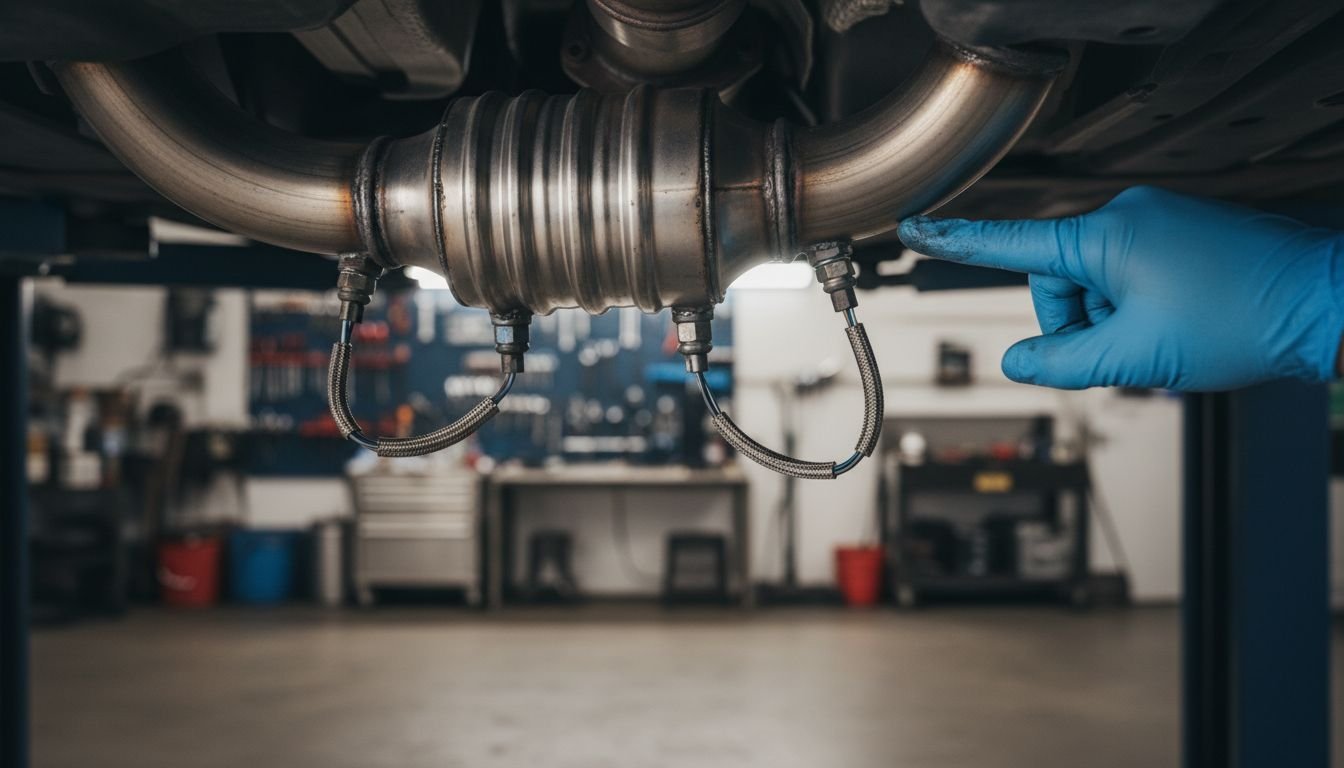
In official OBD‑II language, P0420 stands for “Catalyst System Efficiency Below Threshold (Bank 1)”. In plain English, your engine computer has decided that the catalytic converter on one side of the engine is no longer cleaning the exhaust as well as it should. It sees this by comparing oxygen sensor signals before and after the converter.
Bank 1 just means the side of the engine that has cylinder number 1. On most four‑cylinder engines there is only one bank, while V6 and V8 engines have Bank 1 and Bank 2, each with their own converter and sensors.
The key players in this system are the catalytic converter itself, the upstream (pre‑cat) oxygen sensor, the downstream (post‑cat) oxygen sensor, and the engine control module (ECM/PCM) that runs constant tests while you drive.
How the Catalytic Converter and O2 Sensors Work Together
Your catalytic converter is designed to turn harmful gases like carbon monoxide, unburned hydrocarbons, and nitrogen oxides into less harmful gases before they exit the tailpipe. To do that effectively, it must store and release oxygen inside its core at very specific times.
The upstream O2 sensor measures oxygen in the exhaust as it leaves the engine and helps the computer adjust the air‑fuel mixture. The downstream O2 sensor measures oxygen after the catalytic converter to see how well the converter is working.
When the converter is healthy, the upstream sensor signal switches up and down quickly, while the downstream sensor stays relatively steady. When the downstream sensor signal begins to mimic the upstream sensor, the ECM sees that the converter is not storing oxygen effectively and sets a P0420 trouble code or what some scanners label as a PO420 trouble code.
What P0420 Does Not Automatically Mean
Many drivers are told that P0420 always means a bad catalytic converter, but that is not always true. The converter may be worn out, but the same pattern can appear if other parts of the system are lying to the computer.
- Faulty or slow oxygen sensors (upstream or downstream).
- Exhaust leaks near the manifold, flex pipe, or before the downstream O2 sensor.
- Engine running lean or rich due to issues like a p0171 obd2 code, trouble code p0171, toyota po171, or toyota code po171.
- Misfires or fuel delivery problems that show up as codes like PO300 code Ford, engine code PO113, PO191 code Ford, or P0087 Ford code.
- Wiring or control‑module issues, including intermittent power or memory faults such as a P0603 code 7.3 Powerstroke, ECU 128 code Freightliner, or Freightliner EEC 61 code on heavy‑duty equipment.
Because of these possibilities, replacing the converter first is often an expensive guess. A professional Vehicle Diagnostic in Colleyville or the greater DFW area is the safest way to confirm the real cause before anyone starts ordering emissions parts.
Symptoms, Risks, and Whether You Can Keep Driving with P0420
Not every car with P0420 will drive badly. Some DFW drivers only notice a steady Check Engine Light, while others feel sluggish performance or smell something strange at the tailpipe.
Common Symptoms You Might Notice
- Check Engine Light (CEL) on steadily, sometimes with no other symptoms.
- Possible reduced fuel economy, especially on highway trips around Dallas or Fort Worth.
- A sulfur or rotten egg smell from the exhaust in some cases.
- In more severe situations, sluggish acceleration, poor performance, or a rattling noise from the catalytic converter area.
- Many vehicles show no obvious drivability changes beyond the warning light.
Is It Safe to Drive with a P0420 Code in DFW?
If your only symptom is a steady Check Engine Light and the vehicle runs smoothly, short‑term local driving is usually safe. That means basic commuting around Colleyville, Grapevine, Irving, or Arlington while you arrange a diagnostic visit is generally acceptable.
However, you should avoid long trips, towing, or heavy loads if the code is active, especially in high heat or stop‑and‑go traffic. Pushing a marginal converter hard can make a borderline situation much worse.
Red‑flag symptoms where you should limit or stop driving and get the car checked quickly include:
- Loud rattling from the catalytic converter area.
- Severe loss of power, stalling, or the engine struggling to rev.
- Strong raw fuel or burning smells from the exhaust.
- Additional serious codes popping up on the scanner, especially misfire, fuel pressure, or overheating codes.
On top of safety, remember that any active P0420 or P0430 trouble code will almost certainly cause you to fail emissions inspection in Dallas County, Tarrant County, Collin County, Denton County, and nearby areas.
How Long You Can Wait Before Addressing It
If the vehicle drives normally, many owners get through a few days or weeks before getting to a shop. The real risk is ignoring P0420 for months, especially if it is paired with lean codes like P0171, misfires, or fuel pressure issues.
Over time, an engine that is running too rich can overheat and damage the catalytic converter further. Ignoring the Check Engine Light can also mask other critical issues, such as turbo underboost (a P0299 code) or serious lean conditions.
In the Dallas–Fort Worth metroplex, the smarter approach is to schedule a Vehicle Diagnostic well before your Texas inspection is due. That gives you time to understand the cause, plan any repairs with your chosen exhaust shop, and complete enough drive cycles for monitors to be ready.
Causes, Diagnosis, and DIY vs Professional Help for P0420 and Related Codes
The right way to handle a p0420 obd trouble code is to treat it as a system issue, not just a single bad part. Below are the most common causes, how professionals in Colleyville TX diagnose the code, and what you can safely do yourself.
Most Common Causes of the P0420 Trouble Code
- Aging or contaminated catalytic converter – The most common root cause on higher‑mileage vehicles, especially those frequently driven in city traffic around Dallas, Fort Worth, or Plano.
- Failing upstream or downstream oxygen sensor – Sensors can become slow or biased over time, causing the computer to misread catalyst efficiency.
- Exhaust leaks near the manifold, flex pipe, or before the downstream sensor – Leaks let extra oxygen into the exhaust, confusing the O2 sensor readings.
- Engine running lean or rich – Often tied to codes like p0171 obd2 code, trouble code p0171, toyota po171, or toyota code po171, which point to unmetered air or fuel delivery problems.
- Misfires or ignition/fuel issues – Chronic misfires (such as a PO300 code Ford) or intake temperature problems (engine code PO113) can dump unburned fuel into the exhaust and overheat the converter.
- Fuel pressure problems – A P0087 Ford code or PO191 code Ford indicates fuel pressure or sensor problems that can create lean conditions and lead to catalyst codes later.
- Software or wiring faults – Intermittent power or memory codes like P0603 code 7.3 Powerstroke, ECU 128 code Freightliner, or Freightliner EEC 61 code on heavy‑duty platforms show how control issues can affect emissions calculations.
Step‑by‑Step: How Pros Diagnose a P0420 Code
A proper Vehicle Diagnostic at a safety‑focused shop in Colleyville or nearby cities like Southlake, Grapevine, or North Richland Hills goes far beyond reading a single code. We start with a full OBD‑II scan, including pending, stored, and history codes on American and Japanese vehicles.
The technician then reviews live data for O2 sensors, short‑term and long‑term fuel trims, coolant temperature, and other key parameters. We look for related codes such as P0430 trouble code or Ford code PO430 (Bank 2 catalyst), p0299 code for boost issues, and EVAP or fuel‑system codes that can explain why the converter is unhappy.
Next, we perform a visual inspection for exhaust leaks, damaged shields, crushed pipes, or evidence of impact. If needed, more advanced tests can be done by your chosen repair shop, but our role is to give you accurate data so you do not waste money guessing.
Using Live Data and O2 Sensor Tests (Plain English)
On a healthy system, the upstream O2 sensor switches up and down rapidly as the engine computer fine‑tunes the fuel mixture. The downstream O2 sensor should stay more stable because the converter is smoothing out the oxygen pulses.
If a scan tool shows the downstream sensor mirroring the upstream sensor, the computer will often set a P0420 trouble code. However, if the upstream sensor is lazy or biased, or if there is a code like a Nissan P2A00 code (O2 sensor range/performance Bank 1 Sensor 1), the pattern may be misleading.
This is why a basic code reader is not enough to decide on a catalytic converter. A trained technician can interpret sensor behavior, fuel trims, and any timing‑related codes (like a Nissan P0011 code) that affect how cleanly the engine burns fuel.
DIY Troubleshooting Steps You Can Safely Try
There are a few basic checks most drivers in Colleyville, Hurst, or Euless can do without special tools or lifting the vehicle very high. These are meant to gather information, not to replace a professional diagnostic.
- Listen and look for exhaust leaks around the engine bay and under the car. Hissing, ticking, or visible soot around joints can indicate a leak.
- Check basic maintenance items like the air filter and gas cap, and note any recent fuel quality changes or major driving‑pattern changes.
- If you own an OBD2 scanner, confirm additional codes:
- Lean mixture codes such as p0171 obd2 code, trouble code p0171, toyota po171, or toyota code po171.
- Catalyst codes like P0430 trouble code, PO420 trouble code (alternate labeling), or Ford code PO430 for Bank 2.
- EVAP codes such as PO440 code Toyota, code PO446 Toyota, toyota PO441, code PO441 Toyota, or trouble code P0455.
DIY should stop before you start replacing converters, O2 sensors, or touching wiring harnesses. Modern vehicles, especially with SRS airbags and ADAS systems nearby, are easy to damage if you unplug the wrong connector or disturb the wrong harness.
When to Stop DIY and See a Professional in Colleyville TX
You should schedule a professional Vehicle Diagnostic in Colleyville TX or nearby DFW cities when any of the following are true:
- The car shows multiple recurring codes like P0420 plus P0430, P0171, a P0299 code, Nissan U1000 code or code U1000, Nissan P0011 code, or other complex DTC combinations.
- You notice loss of power, stalling, rough running, or new noises from the exhaust area.
- Your Texas inspection or registration deadline is approaching for Dallas County, Tarrant County, Collin County, Denton County, Rockwall County, or neighboring counties.
- You are shopping for a used car and want to check for hidden engine, emissions, and safety issues. Our FREE VIN Decoder and CarFax assistance can help you spot prior emissions or accident history before you buy.
A professional diagnostic at a shop that understands engine management, SRS, and ADAS usually costs far less than one wrong catalytic converter replacement. At LockNCal, we focus on finding the cause, then you and your preferred exhaust or general‑repair shop can handle the actual repair work.
Related Trouble Codes: Toyota, Ford, Nissan Variants You Might See
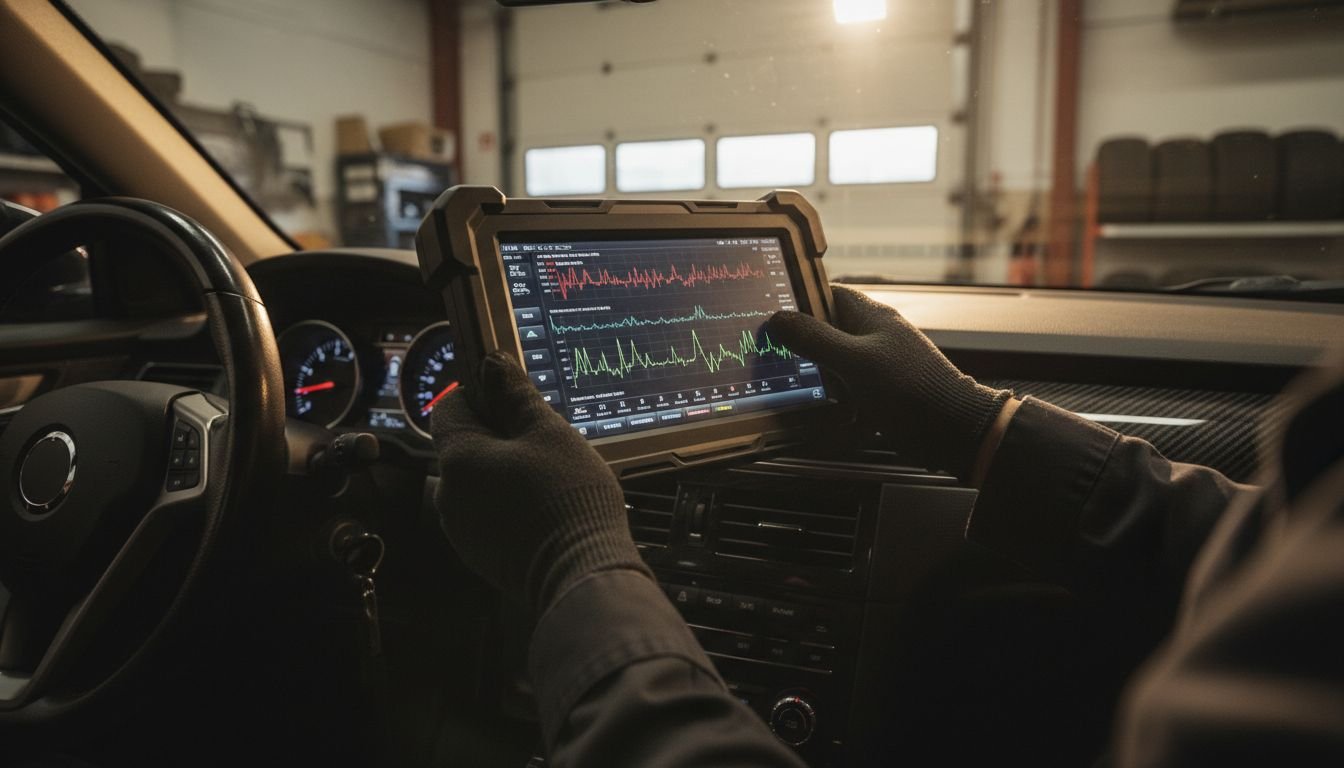
A P0420 code rarely appears alone. Especially in the Dallas–Fort Worth area, where stop‑and‑go traffic and high summer temperatures are tough on vehicles, you may see brand‑specific codes that point to the real root cause.
Toyota‑Specific Codes Often Seen with P0420
Toyota and Lexus vehicles driven around Colleyville, Plano, or McKinney often show a group of codes together. Understanding them as a set helps avoid misdiagnosis.
- Toyota P0171 / Toyota code P0171 / Toyota PO171 – System too lean (Bank 1), often caused by vacuum leaks, MAF sensor contamination, or intake duct problems. A lean engine can overheat the converter and eventually lead to P0420.
- Toyota P0440 (PO440 code Toyota), P0441 (Toyota PO441 / code PO441 Toyota), P0446 (code PO446 Toyota) – EVAP system issues like leaks, vent valve faults, or charcoal canister problems. These do not directly cause P0420, but they tell you the vehicle has broader emissions issues that deserve attention.
- Truble code P0455 – Large EVAP leak, commonly a loose or faulty gas cap or a significant leak in EVAP hoses.
- P1604 Toyota code – Startability or ECM issue, which can point to deeper control or fuel delivery problems that should be evaluated professionally.
When this cluster appears with P0420, the smart move is a full Vehicle Diagnostic rather than guessing component by component. For more insight into how different codes interact, you can also see our article on why DTC P2610 matters for Buick owners in Texas and how timing‑related codes affect drivability and emissions.
Ford‑Related Codes That May Point to Underlying Causes
On Ford cars and trucks in Arlington, Grand Prairie, or Mansfield, you may see P0420 along with another bank or with supporting fuel and misfire codes.
- Ford code PO430 – Catalyst system efficiency below threshold Bank 2, essentially the twin to P0420 but on the other side of a V‑engine.
- PO300 code Ford – Random or multiple misfire, which can quickly destroy a converter when ignored.
- P0087 Ford code – Fuel rail/system pressure too low, often causing lean conditions that overheat the converter and trigger P0420.
- PO191 code Ford – Fuel rail pressure sensor, again pointing to fueling issues that must be fixed before condemning the cat.
- Engine code PO113 – Intake air temperature circuit high input, which can skew mixture calculations and contribute to abnormal combustion.
For Ford drivers in DFW, resolving these upstream causes is critical before anyone considers replacing a catalytic converter.
Nissan & Heavy‑Duty Codes That Intersect with Emissions Issues
Nissan owners in cities like Carrollton, Lewisville, or The Colony often report communication and valve‑timing codes alongside catalyst efficiency codes. These can make diagnostics more complex.
- Nissan U1000 code / code U1000 – CAN communication error that can cause intermittent or confusing data readings for emissions systems.
- Nissan P2A00 code – O2 sensor Bank 1 Sensor 1 range/performance, directly tied to how the ECM interprets mixture and catalyst efficiency.
- Nissan P0011 code – Variable valve timing performance, which can alter cylinder filling, combustion, and emissions output.
Heavy‑duty codes like ECU 128 code Freightliner and Freightliner EEC 61 code remind us that proper diagnostic procedures are critical on all platforms, not just passenger cars. Whenever you see multiple different systems setting codes, that is exactly when a professional Vehicle Diagnostic becomes essential.
P0420 and Texas Emissions/Inspection Rules for DFW Drivers
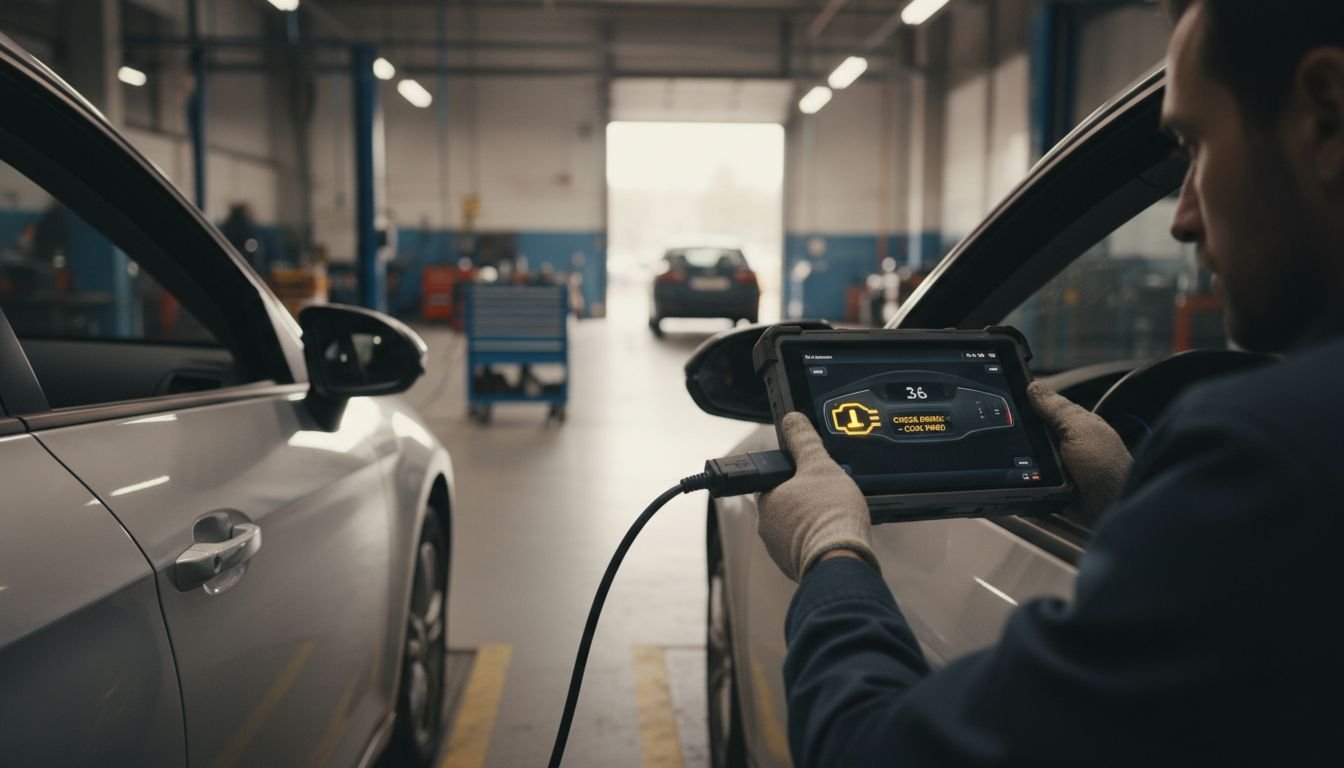
In the Dallas–Fort Worth area, including Colleyville TX, your annual Texas safety and emissions inspection relies heavily on OBD‑II data. A code like P0420 is not just an annoyance; it can block your registration renewal.
How Texas Treats the Check Engine Light and Emissions Codes
Counties such as Dallas County, Tarrant County, Collin County, Denton County, and Rockwall County require OBD‑based emissions testing. The inspector plugs into your diagnostic port and checks two main things: whether the Check Engine Light is commanded on and whether there are any active emissions‑related trouble codes like P0420 or P0430.
If your Check Engine Light is on with a P0420, P0430, or similar catalyst code, your vehicle will generally fail the emissions portion of the inspection. That failure prevents registration renewal until the issue is addressed and the system passes.
Texas also looks at readiness monitors. If you recently cleared codes to try to “cheat” inspection, many monitors will show as not ready. Too many not‑ready monitors can also cause a failed test, even if the light is currently off.
What DFW/Colleyville Drivers Should Do Before Inspection
If you live in Colleyville, Grapevine, Southlake, or any DFW city on our service list and your Check Engine Light is on with P0420, the best move is to schedule a Vehicle Diagnostic a few weeks before your inspection date. That timing leaves room for any necessary repairs and drive cycles.
After the underlying issue is addressed by your exhaust or general‑repair shop, you will need to drive the vehicle under normal mixed conditions so all the readiness monitors can run and pass. Only then is the car truly inspection‑ready.
Simply clearing the P0420 code without fixing the cause is not a real solution. It often results in not‑ready monitors, and once the system retests, the code usually comes back.
Why Overall Safety Systems Still Matter (SRS, ADAS, Keys)
While emissions compliance is important for your registration, your vehicle also needs to be safe to drive. Issues with airbags, seat belts, or ADAS (advanced driver‑assistance systems) can be just as serious as a Check Engine Light.
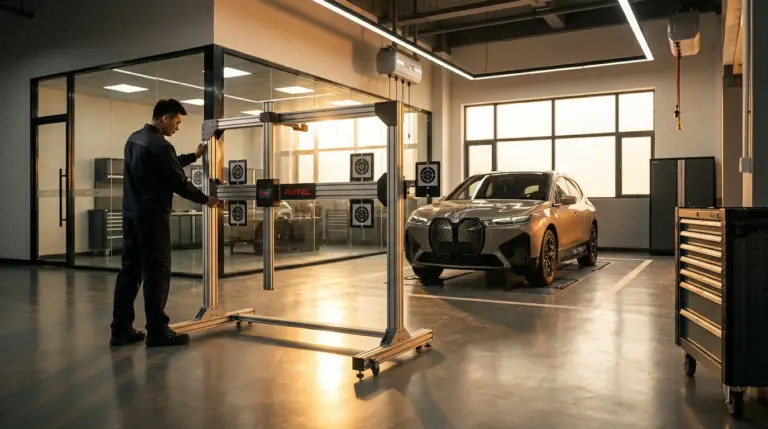
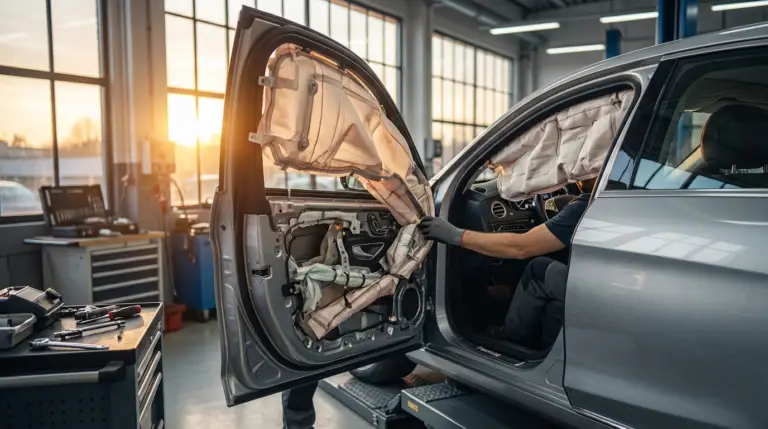
At LockNCal, we specialize in SRS Airbag Module Reset, Airbag Module Replacement, Airbag Replacement, Seat Belt Replacement, Pre‑Tensioner Replacement, Clock Spring Replacement, and ADAS Calibration on American and Japanese vehicles. These systems are often involved after a collision or when buying a used car with unknown history.
If you are a Colleyville parent getting a vehicle ready for your teen, you may also appreciate our article on safety system checks before your teen starts driving. It covers how SRS, seat belts, and ADAS all tie into overall safety readiness, not just passing Texas inspection.
Professional Vehicle Diagnostic Services in Colleyville TX
LockNCal is based in Colleyville TX and serves drivers throughout the Dallas–Fort Worth area, including Addison, Arlington, Carrollton, Coppell, Dallas, Euless, Flower Mound, Fort Worth, Frisco, Garland, Grand Prairie, Grapevine, Hurst, Irving, Keller‑area suburbs like North Richland Hills and Watauga, McKinney, Plano, Richardson, Rockwall, The Colony, Trophy Club, and more. Our focus is on accurate diagnostics and safety‑system expertise, not on selling catalytic converters.
What Our Vehicle Diagnostic Service Includes
When you bring us a car with P0420, P0430, or any other engine/emissions concerns, our Vehicle Diagnostic service is designed to give you clear, actionable information. We typically include:
- A full OBD‑II scan for P0420, P0430, P0171, and all active, pending, and history codes across powertrain, ABS, SRS, and body modules where applicable.
- Live data review of O2 sensors, fuel trims, temperature sensors, and other parameters that influence catalyst efficiency.
- A visual inspection of related components for obvious damage or leaks that could explain the issue.
- Clear documentation of findings so you and your preferred exhaust or general‑repair shop can decide on the right repair path without guesswork.
We do not sell or install catalytic converters. Instead, we deliver the technical clarity that helps you avoid unnecessary parts replacement and focus on real fixes.
Why DFW Drivers Choose a Safety‑Focused Shop for P0420 Diagnostics
Many general shops can read codes, but not all are equally focused on electrical, diagnostic, and safety systems. P0420 often overlaps with other systems, so a broad view matters.
- We are local to Colleyville TX and serve the wider DFW area, so we understand Texas inspection rules and local driving conditions.
- We specialize in American & Japanese vehicles, where P0420, P0430, P0171, P0299, U1000, P2A00, and similar codes are common.
- Our approach is data‑driven, focusing on whether a catalyst failure is primary or the result of upstream problems like lean conditions, misfires, or control‑module faults.
For used‑car buyers, especially those eyeing higher‑end models, we also recommend reading about hidden airbag resets on used luxury cars. Combined with our FREE VIN Decoder, it helps you spot both emissions and safety red flags before signing paperwork.
Other Safety & Security Services We Offer
Beyond Vehicle Diagnostics for codes like P0420, P0430, P0171, or U1000, LockNCal offers a full menu of safety and security services for American and Japanese vehicles:
- SRS & Restraints: SRS Airbag Module Reset, Airbag Module Replacement, Airbag Replacement, Seat Belt Replacement, Pre‑Tensioner Replacement, Clock Spring Replacement.
- ADAS: ADAS Calibration after windshield replacement, collision repair, or sensor replacement.
- Vehicle History & VIN Services: FREE VIN Decoder and CarFax Report assistance, especially useful if you are evaluating a vehicle that already shows a P0420 or other Check Engine Light.
- Keys & Security: Vehicle Key Cutting, Transponder Key Programming, Smart Key Programming, Key Fob Replacement & Programming, Car Lockout Assistance, Vehicle All Keys Lost solutions, Vehicle Key Duplication/Copying, and Locksmith Services.
These services do not “fix” P0420 itself, but they are part of making sure your car is safe, secure, and inspection‑ready across all systems.
To learn more about our Colleyville‑based services and coverage across Dallas–Fort Worth, you can also visit our main service page at https://lockncal.com/Colleyville-TX.
Practical Next Steps If You Have a P0420 Code in DFW
When the Check Engine Light pops on right before Texas inspection, it is easy to panic or start throwing parts at the problem. A simple, structured plan will save you money and stress.
Quick Checklist for Drivers
- Confirm the exact code(s) with an OBD2 scan so you know if you are dealing with P0420 only, P0430, or a mix of fuel, EVAP, and timing codes.
- Note any additional symptoms such as fuel smells, rattling noises, loss of power, or hard starting.
- Avoid long, high‑load trips or towing until the cause is evaluated, especially in summer heat around Dallas and Fort Worth.
- Schedule a Vehicle Diagnostic if the light stays on, if you have multiple codes, or if Texas inspection is coming up within the next few weeks.
- If buying a used vehicle with active codes, run the VIN through our FREE VIN Decoder and consider a pre‑purchase diagnostic for both emissions and safety systems.
How to Schedule a Diagnostic with LockNCal
To schedule a Vehicle Diagnostic for P0420 or any related trouble codes, you can call our Colleyville TX shop or use the booking form on our website. Simply provide your vehicle information, a brief description of the symptoms, and any codes you have already seen.
We offer prompt scheduling in many cases for drivers across Addison, Allen, Arlington, Burleson, Carrollton, Cedar Hill, Coppell, Dallas, Denton, DeSoto, Duncanville, Farmers Branch, Flower Mound, Fort Worth, Frisco, Garland, Grand Prairie, Grapevine, Haltom City, Highland Park, Hurst, Irving, Lake Worth, Lancaster, Lewisville, Little Elm, Mansfield, McKinney, Mesquite, North Richland Hills, Plano, Prosper, Richardson, Richland Hills, Rockwall, Saginaw, Seagoville, Southlake, The Colony, Trophy Club, University Park, Watauga, White Settlement, Wilmer, and more.
Our goal is simple: give you clear answers and a solid plan. We help you understand whether the issue is likely sensor‑related, fuel/air‑related, or an actual catalytic converter failure, so you and your repair shop can make the right decisions without pressure or upselling.
Safety Warning About DIY Repairs on Modern Vehicles
Modern vehicles pack far more safety and electronic systems than older cars. Chasing what looks like a “simple” Check Engine Light can easily overlap with SRS airbag wiring, seat belt pretensioners, and ADAS sensors if you are not careful.
Why You Should Be Careful Around SRS and ADAS
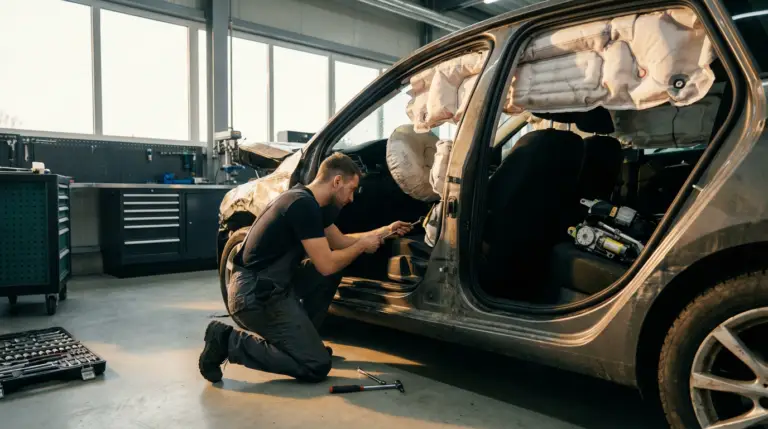
Important safety warning: airbags, seat belt pre‑tensioners, and some safety modules contain pyrotechnic or explosive components. Mishandling these parts, probing them with incorrect tools, or disconnecting them without proper procedures can result in accidental deployment, serious injury, or damage to your vehicle.
When do‑it‑yourselfers remove trim panels, lower steering columns, or disturb wiring harnesses while chasing engine codes, they can unintentionally affect SRS airbags, seat belts, clock springs, or ADAS sensors. A simple mistake can lead to new warning lights or disabled safety systems.
For this reason, services such as SRS Airbag Module Reset, Airbag Module Replacement, Airbag Replacement, Seat Belt Replacement, Pre‑Tensioner Replacement, Clock Spring Replacement, and ADAS Calibration should be performed only by trained professionals with the right tools and safety procedures.
When DIY Is Reasonable vs When It’s Not
Reasonable DIY tasks for most DFW drivers include visual inspections, reading codes with a scanner, checking fluid levels, and replacing basic service items like air filters or gas caps. These steps can be helpful for gathering information before scheduling a diagnostic.
However, replacing O2 sensors, working near the catalytic converter, or touching wiring harnesses in areas shared with SRS or ADAS components are best left to professionals. The cost of one mistake can easily exceed the cost of a proper diagnostic.
If you are unsure where an SRS or ADAS component is located, or if multiple warning lights are on (Check Engine and Airbag, for example), the safest first step is to book a professional Vehicle Diagnostic and let a trained technician map out the safest repair path.
FAQs About P0420 for DFW Drivers
Below are answers to some of the most common questions we hear from drivers in Colleyville and across the Dallas–Fort Worth area.
Q: What does the P0420 OBD trouble code mean on my car?
A: P0420 means “catalyst system efficiency below threshold (Bank 1)”. Your engine computer has decided that the catalytic converter on Bank 1 is not reducing emissions as effectively as it should, based on the readings from the upstream and downstream oxygen sensors. The cause may be a worn converter, faulty O2 sensors, exhaust leaks, fueling problems, or control‑module issues, so a professional Vehicle Diagnostic is recommended before replacing parts.
Q: Is it safe to drive with a P0420 trouble code in the Dallas–Fort Worth area?
A: If the vehicle runs smoothly with no loss of power, loud rattles, or strong fuel odors, short‑term local driving is usually safe around DFW. However, long‑term driving with P0420 risks failing Texas emissions inspection and may allow underlying problems to damage the converter or other components. It is wise to schedule a Vehicle Diagnostic before your inspection or registration deadline.
Q: Does a P0420 code always mean I need a new catalytic converter?
A: No. While a worn or damaged converter is common, many P0420 cases are caused by oxygen sensor issues, exhaust leaks, lean or rich mixtures, misfires, or fuel pressure problems. Replacing the converter without confirming the cause can be an expensive mistake. At LockNCal in Colleyville TX, we focus on correct diagnostic work so you and your chosen repair shop can decide whether the converter truly needs replacement.
Q: What other trouble codes are commonly seen with P0420?
A: Common companion codes include P0430 trouble code or Ford code PO430 for the other bank, P0171 lean mixture codes (Toyota P0171 / Toyota code P0171), Toyota EVAP codes like P0440, P0441, P0446, P0455, turbo or boost‑related codes like P0299, fueling issues such as P0087 or P0191, and Nissan‑specific codes like P2A00, P0011, U1000. Seeing several systems involved is a strong sign that you need a comprehensive Vehicle Diagnostic, not just parts swapping.
Q: Can I clear the P0420 code myself to pass Texas inspection?
A: Clearing the code with a scanner will temporarily turn off the Check Engine Light, but it does not fix the underlying problem. Texas emissions testing also checks readiness monitors, and clearing codes right before the test usually leaves several monitors in a not‑ready state, which can still lead to a failure. The best path is to diagnose and address the true cause of P0420, then complete enough normal driving for the monitors to reset and pass legitimately.
If you are dealing with P0420, P0430, P0171, or any confusing mix of engine and safety lights in Colleyville or anywhere in the Dallas–Fort Worth area, LockNCal is here to help with professional Vehicle Diagnostic and safety‑system expertise. Visit our Colleyville service page at https://lockncal.com/Colleyville-TX or use our FREE VIN Decoder as a first step in understanding your vehicle’s history and current condition.