How to Diagnose an Engine Misfire Safely (Step-by-Step Guide for DFW Drivers)
• An engine misfire is usually caused by ignition, fuel, compression, or sensor/electrical faults, and ignoring it can damage your catalytic converter and engine.
• You can start misfire diagnosis with basic checks and an engine light diagnostic (scan for codes), but accurate misfire diagnosis often requires pro tools like cylinder balance tests and fuel trim analysis.
• In DFW, LockNCal in Richardson, TX offers professional vehicle diagnostics to safely pinpoint engine misfires and related car diagnostic faults before they become expensive or unsafe.
What You Will Learn:
🧐 What an Engine Misfire Really Is – How modern cars detect and report misfires.
🚨 Common Misfire Symptoms and Why They Matter – Shaking, engine light, car noise diagnostic clues.
🔧 Step-by-Step: How Pros Diagnose an Engine Misfire – Ignition, fuel, compression, sensors, wiring faults, and ECM diagnostic steps.
⚠️ DIY Misfire Diagnosis Risks and Safety Warnings – When home testing can get dangerous or expensive.
📍 When to Get a Professional Vehicle Diagnostic in Richardson TX – How LockNCal can help DFW drivers.
❓ FAQs About Misfire Diagnosis and Engine Lights – Quick answers to common questions.
When your engine starts shaking at a stoplight on US-75, hesitates merging onto the George Bush, or the check engine light pops on with new popping or ticking sounds, you feel it right away. A misfire can turn a normal commute across Richardson, Plano, or Dallas into a stressful guessing game. It is more than annoying – left alone, it can quickly turn into engine or catalytic converter damage and even a safety risk in fast-moving DFW traffic.
This guide will show you how professionals diagnose engine misfire problems step by step, what common causes look and feel like, and which warning signs mean it is time to stop DIY. You will also learn when to schedule a professional Vehicle Diagnostic in Richardson, TX at LockNCal so you can protect your engine, your wallet, and your safety.
We will walk through symptoms, real-world patterns, ignition and fuel checks, and how ECM diagnostic work, wiring issues, and safety-system electronics can all tie together – especially on rebuilt or previously crashed vehicles in the Dallas–Fort Worth area.
What an Engine Misfire Really Is
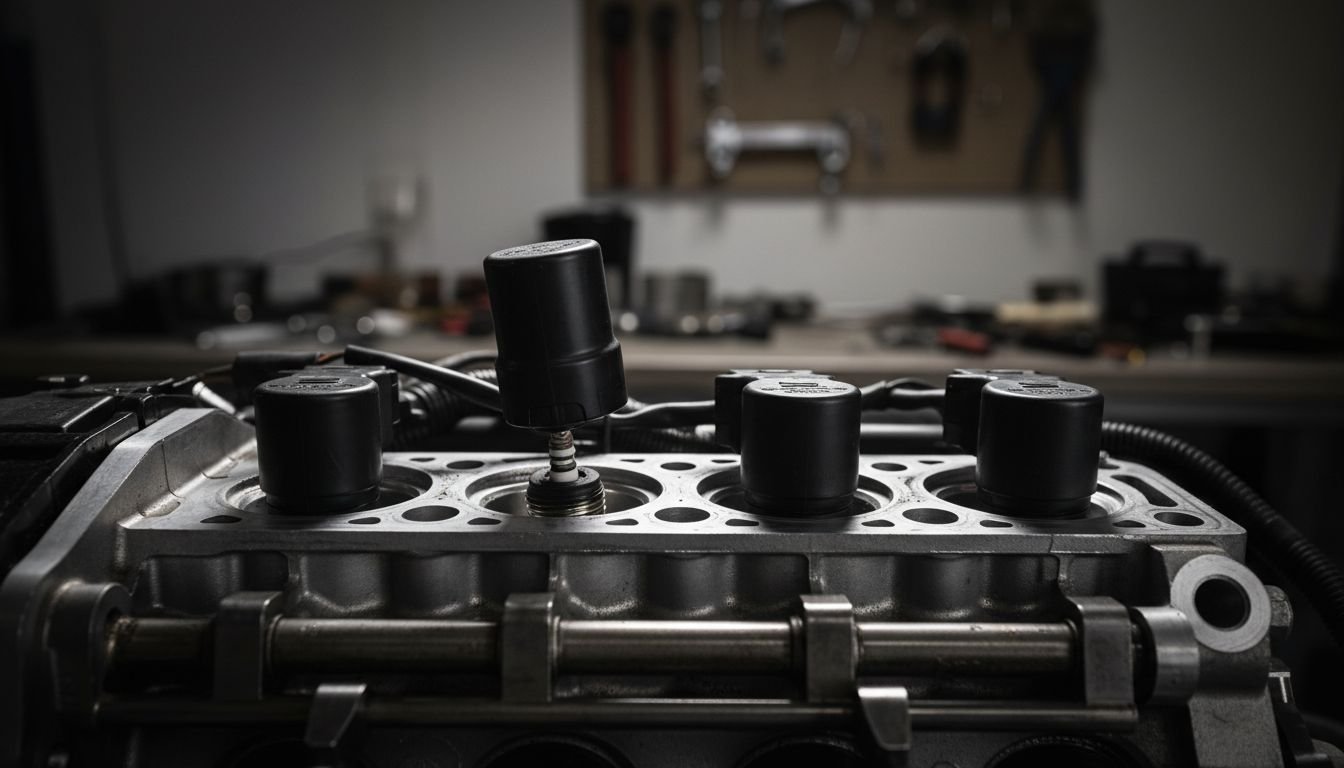
In simple terms, an engine misfire is when one or more cylinders do not contribute their normal share of power during a combustion event. Instead of a smooth, even rotation, the engine stumbles because one cylinder fires weakly, late, or not at all. You feel that as shaking, hesitation, or a rhythmic stumble.
Modern engine computers (ECUs or ECMs) continuously watch crankshaft speed and other data to detect misfires. When the crankshaft slows slightly after a specific cylinder should have fired, the computer flags a misfire and may set a car diagnostic fault in the form of a trouble code. This is the foundation of modern misfire diagnosis and engine light diagnostic work.
Misfires can be continuous (always there), intermittent (come and go), or load-specific (only show up under certain conditions like hills, highway speeds, or heavy acceleration. Understanding which pattern you have helps a technician narrow down whether the issue is ignition, fuel, compression, or an electrical fault.
Why Misfires Are Dangerous to Ignore
Every time a cylinder misfires, unburned fuel can enter the exhaust and overheat the catalytic converter. That can quickly damage the converter, which is an expensive component and required to pass Texas emissions inspections.
A severe misfire also means less power when you need it most. That can increase stopping distances if you are forced to let off the throttle suddenly or make it harder to merge into 70+ mph traffic on I-635, US-75, or the Dallas North Tollway.
Ignore it long enough and you risk stalling in summer Texas heat, being stranded on the shoulder, or causing further internal engine damage. That is why a persistent misfire deserves a proper vehicle diagnostic, not just parts guessing.
Common Misfire Symptoms and Why They Matter
Typical misfire symptoms that DFW drivers notice include:
- Rough idle, shaking steering wheel, or the whole car shuddering at a stop.
- Hesitation, stumbling, or surging when pulling away from a light or merging onto the highway.
- A check engine light that is either steady or flashing, sometimes with misfire codes.
- New noises that call for a car noise diagnostic: popping or backfiring through the exhaust, ticking from the engine, or deep, uneven exhaust rumble.
A steady check engine light usually means the ECM has detected a fault that needs attention but may not be immediately catastrophic. A flashing check engine light almost always signals a severe misfire that can damage the catalytic converter and should be treated as urgent.
If you want more detail on what to do when that light first comes on, see our guide on check engine light mechanic – what to do when your engine sign comes on. When the light is flashing or combined with strong shaking or fuel smell, it is time to limit driving and schedule a Vehicle Diagnostic as soon as you can.
Symptom Patterns (Idle, Acceleration, Highway, Cold/Hot)
A misfire that only happens at idle often points toward vacuum leaks, idle control issues, or sometimes a weak ignition coil that barely keeps up when the engine speed is low. In contrast, a misfire that gets worse under load or acceleration can indicate ignition coils breaking down, weak fuel supply, or spark being blown out under cylinder pressure.
Misfires more noticeable on the highway at steady speeds may relate to lean fuel mixtures, restricted fuel filters, or subtle electrical faults in sensors that only show up once the car is fully warmed and cruising. A misfire mainly when the engine is cold can suggest fuel delivery or cold-start enrichment problems, while one that appears when the engine is hot can point to heat-soaked ignition coils or wiring issues.
Sharing these patterns with your technician during a misfire diagnosis helps them zero in faster. The more precise you can be about when it happens – such as “only on hills in Plano” or “only in stop-and-go 635 traffic” – the more efficient the diagnostic process becomes.
Step-by-Step: How Pros Diagnose an Engine Misfire
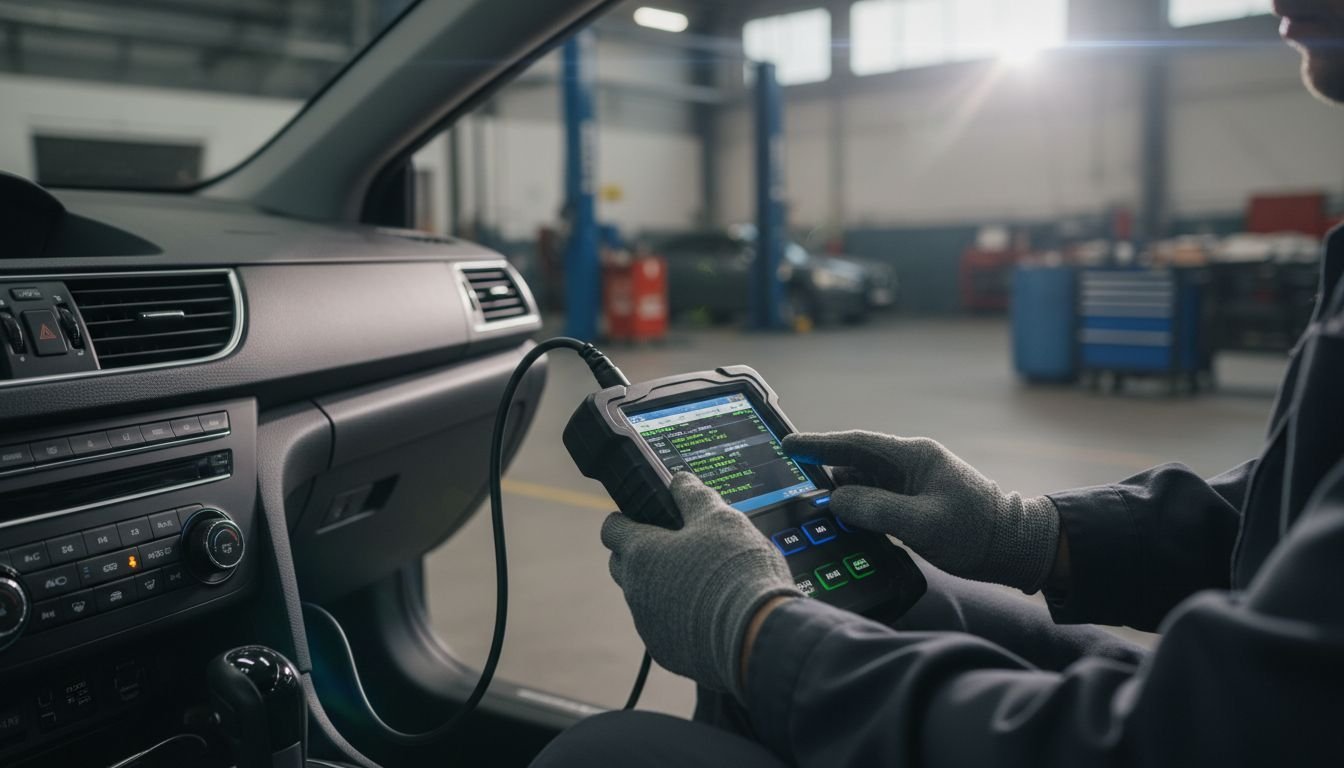
A complete professional plan to diagnose engine misfire problems follows a structured path. We start with basic safety checks, then pull codes and data, then dive into system-specific testing for ignition, fuel, compression, sensors, and potential wiring faults.
Rather than just throwing coils or plugs at the problem, the goal of a proper vehicle diagnostic is to identify the root cause. That is where tools like live data, misfire counters, fuel trims, and sometimes advanced tests like cylinder balance or oscilloscope traces come in.
Here is how a pro in Richardson or the greater Dallas–Fort Worth area typically works through a misfire step by step.
Step 1 – Basic Safety and Visual Checks
First, we confirm the vehicle is safe to run. That includes listening for loud knocking, metallic clattering, or extreme backfiring that might indicate internal damage rather than a simple ignition issue.
A quick visual check can reveal loose coil connectors, disconnected sensors, broken vacuum hoses, or obvious damaged wiring. We also verify engine oil and coolant levels to make sure a low-fluid condition is not pointing to a larger mechanical problem that could be aggravated by further driving.
If the check engine light is flashing or the car is shaking hard, minimize driving and consider towing the vehicle to a diagnostic shop rather than driving it across DFW. This single choice can save your catalytic converter and reduce your risk on crowded highways.
Step 2 – Engine Light Diagnostic and Trouble Codes
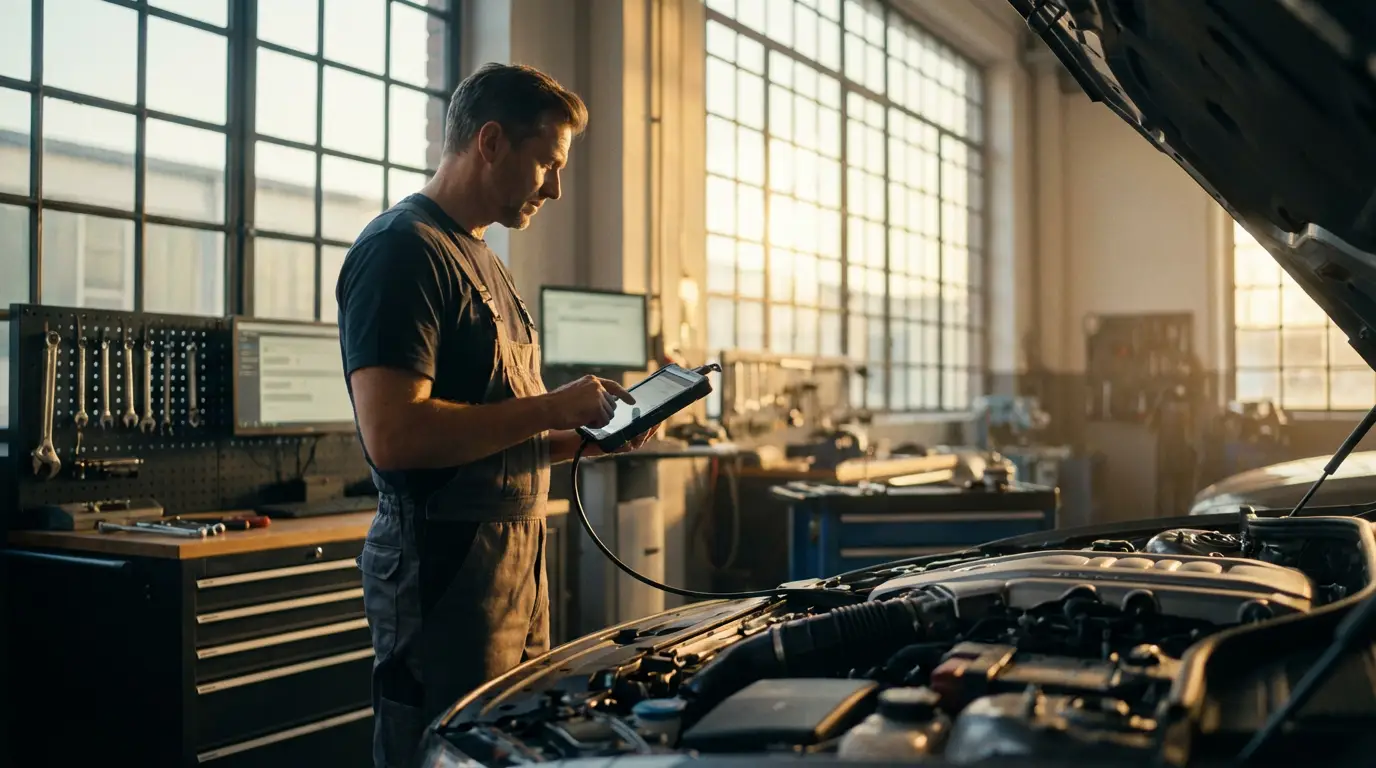
Next comes the engine light diagnostic phase using a professional-grade OBD-II scan tool. Misfire codes typically show up as P0300 (random misfire) or P0301–P0308 (misfire on cylinder 1 through 8, depending on engine).
At LockNCal, a Vehicle Diagnostic includes more than just reading codes. We review freeze frame data (what the engine was doing when the fault set), live data streams, misfire counters, and where applicable, Mode 6 data for deeper ECM diagnostic detail.
A car diagnostic fault like a stored misfire code is only the starting point. A trained technician interprets that code in the context of fuel trims, sensor readings, engine temperature, and how the symptom feels on a test drive in real DFW conditions.
Step 3 – Ignition System Checks (Plugs, Coils, Wires)
Most misfires are related in some way to the ignition system. Common culprits include worn or fouled spark plugs, failing coil-on-plug units, or damaged plug wires or coil boots that allow spark to arc to ground instead of firing the plug.
Professional tests may include swapping ignition coils or spark plugs between cylinders to see if the misfire follows the component. Visual inspection of plugs can also reveal clues: oily deposits, heavy carbon buildup, or a cracked insulator can all point toward specific issues.
On modern vehicles, pulling plug wires or coils off while the engine is running is not recommended. That old-school trick can damage ignition coils, stress the ECM, and even give you a serious shock, so it is better left out of your DIY toolbox.
Step 4 – Fuel System Checks (Injectors, Pressure, Fuel Quality)
If ignition checks pass, the next step is to confirm proper fuel delivery. Misfires can be caused by clogged or failing injectors, low fuel pressure from a weak pump, or even contaminated fuel (like water or diesel mixed into gasoline).
Technicians may listen to injector operation with a stethoscope, perform cylinder balance tests using scan data, or watch short-term and long-term fuel trims during an ECM diagnostic. Unusual fuel trim patterns can indicate a lean or rich condition affecting one cylinder or an entire bank.
Shops may also connect a fuel pressure gauge, measure volume, or run injector balance tests to see how each injector contributes. These are not easy DIY jobs, especially on tightly packaged engines common in modern Dallas–Fort Worth commuter cars and SUVs.
Step 5 – Compression and Mechanical Checks
When spark and fuel both appear normal, we look at the mechanical health of the engine. Low compression in a cylinder can be caused by worn piston rings, burned valves, or a head gasket problem.
A compression test compares each cylinder against the others, while a leak-down test adds compressed air and listens or measures where it escapes. Air leaking into the intake, exhaust, or crankcase helps pinpoint the mechanical issue.
These are advanced tests that typically happen during a professional vehicle diagnostic visit, not in an apartment parking lot. They are critical to confirm whether the misfire is something relatively simple or a sign of deeper internal wear or damage.
Step 6 – Sensor, Wiring, and Electrical Faults
Modern engines rely on a network of sensors and control modules. Faulty crankshaft or camshaft position sensors, MAF/MAP sensors, or oxygen sensors can create conditions that look like misfires or actually cause cylinders to misfire by commanding the wrong fuel or timing.
Wiring faults are a frequent problem in older vehicles, rebuilt or salvage titles, or cars that have seen collision repairs around the engine bay. Broken conductors inside insulation, corroded connectors, poor grounds, or pinched harnesses can all create intermittent electrical faults that only show up under heat or vibration.
On a scan tool, an electrical fault may look like intermittent sensor dropouts, unrealistic readings, or misfire counters that spike only when a harness is moved. Professional technicians use wiring diagrams, test lights, multimeters, and sometimes oscilloscopes during an ECM diagnostic to track these issues down properly.
Step 7 – Prioritizing Repairs for Safety and Reliability
Once test results are in, a good technician prioritizes repairs based on risk and value. Anything likely to cause immediate engine or catalytic converter damage – like a severe misfire with raw fuel in the exhaust – is addressed first.
Next come issues that could cause stalling, loss of power, or surge behavior at highway speeds around Richardson, Plano, Addison, or across Dallas County and Collin County. Less critical but still important issues are scheduled after the major risks are handled.
The key is that accurate misfire diagnosis comes before parts replacement. Correct diagnosis first saves money by avoiding parts-chasing and helps you decide whether to invest further in the vehicle or not. When in doubt, it is smart to schedule a professional Vehicle Diagnostic in Richardson, TX at LockNCal.
DIY Misfire Diagnosis Risks and Safety Warnings
It is understandable to want to check a few things yourself before visiting a shop. Done carefully, basic checks can help you describe the problem more accurately to your technician.
But there is a hard line where DIY stops being helpful and starts becoming unsafe or expensive. Knowing that line is especially important when working around modern ignition systems, fuel systems, and safety electronics.
This section will help you decide which checks you can safely tackle and when to stop and call a professional.
When DIY Checks Are Reasonable
Reasonable low-risk DIY checks include looking for loose connectors on top of ignition coils, obviously unplugged sensors, or vacuum hoses that have popped off. A flashlight inspection can also reveal cracked or chafed wiring harnesses around the engine.
You can also safely confirm basics like having enough fuel in the tank or spotting obvious fluid leaks (oil, coolant) under the car. If you are comfortable, you may remove a plastic engine cover to better see coils and hoses, as long as you do not disconnect anything unsure.
These checks are for information, not for full repair. They help you provide your shop with the best description possible during a vehicle diagnostic appointment.
When DIY Can Get Dangerous or Expensive
Never pull plug wires or coils off a running modern engine to see which one “does nothing.” This can damage coils, stress the ECM, and expose you to high voltage, especially in wet or sweaty conditions common in DFW summers.
Avoid probing airbag (SRS) or steering wheel connectors, even if you suspect wiring issues. These circuits can trigger airbag deployment if mishandled.
Also avoid guessing and replacing expensive parts without a clear plan. Many misfires on rebuilt or salvage vehicles around Dallas, Arlington, or Fort Worth are tied to prior crash damage, incorrect SRS Airbag Module wiring, or improperly installed Clock Spring assemblies, not just coils or plugs.
This is where a professional vehicle diagnostic at LockNCal is both safer and cheaper in the long run. Our team understands how collision repairs, safety modules, and engine performance all interact.
Safety Warning About SRS and Explosives
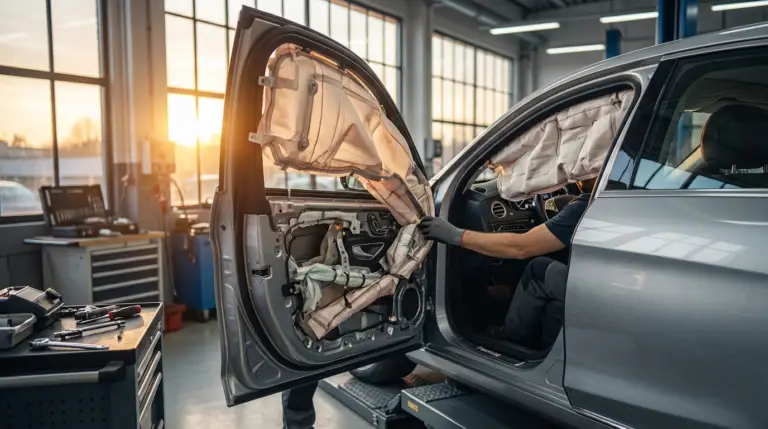
SRS airbags and seat belt pre-tensioners contain pyrotechnic (explosive) charges designed to deploy in milliseconds. Improper handling, testing, or wiring repairs around these systems can cause accidental deployment.
Never attempt airbag module or clock spring repairs yourself. DIY work around steering wheels, dash wiring, or SRS modules can result in serious injury, especially if power or static electricity triggers deployment.
If a misfire or new check engine light appears after a collision or airbag deployment, there may be combined drivability and SRS module issues. In those cases, it is critical to leave SRS Airbag Module Reset, Airbag Module Replacement, Seat Belt Replacement, Pre-Tensioner Replacement, Airbag Replacement, Clock Spring Replacement, and related diagnostics to trained professionals like LockNCal in Richardson, TX.
When to Get a Professional Vehicle Diagnostic in Richardson TX
North Texas driving is tough on vehicles. Long commutes from McKinney, Allen, or Frisco, stop-and-go traffic in Dallas and Fort Worth, and extreme summer heat all stress ignition coils, fuel pumps, and wiring.
On top of that, Texas inspection rules mean an active check engine light or stored misfire codes can cause a failed inspection in Collin County, Dallas County, Denton County, Rockwall County, or Tarrant County. Getting ahead of these issues with a professional vehicle diagnostic helps you avoid surprise failures.
LockNCal is based in Richardson, TX and serves surrounding areas like Plano, Garland, Addison, Carrollton, The Colony, and beyond. We focus on accurate diagnostics and safety-related electronics, not just “parts swapping.”
Red-Flag Signs You Should Stop DIY and Call a Pro
You should stop experimenting and schedule a Vehicle Diagnostic when you notice any of the following:
- A flashing check engine light combined with noticeable shaking or loss of power.
- Misfires that show up under heavy load, towing, or at highway speeds across DFW.
- Strong raw fuel smell, loud backfiring, or sudden new engine noises that worry you.
- Multiple car diagnostic faults or codes that keep returning after basic resets.
At that point, limiting driving is the safest choice. Towing the vehicle to us in Richardson or another qualified shop nearby can protect your catalytic converter and reduce your risk of breaking down in high-speed traffic.
How LockNCal Diagnoses Complex Misfires
At LockNCal, our focus is on high-quality Vehicle Diagnostic work, not just swapping hard parts. We use professional scan tools to read codes, examine misfire counters, interpret fuel trims, and correlate them with how the vehicle behaves on a real-world test drive.
Our ECM diagnostic approach includes live data review, car noise diagnostic observations, and careful inspection of wiring harnesses, grounds, and connectors around the engine and critical modules. This is especially important when a misfire appears alongside other warning lights or odd electrical symptoms.
For rebuilt, salvage, or crash-damaged vehicles, we are uniquely positioned to integrate Vehicle Diagnostic work with SRS Airbag Module Reset/Airbag Module Replacement, Clock Spring Replacement, and ADAS Calibration if safety systems were disturbed. Misfires, engine lights, and airbag or ADAS warnings often share the same underlying wiring or module issues.
Why Local DFW Drivers Trust Us for Diagnostic Work
Drivers from Richardson, Plano, Garland, Allen, Frisco, Carrollton, and across the Dallas–Fort Worth metroplex choose us because we take a safety-first, data-driven approach. Our technicians are experienced with the American, Asian, and European vehicles commonly found in North Texas neighborhoods.
We understand how Texas heat, long highway runs, and city stop-and-go combine to wear ignition, fuel, and electrical systems. That local experience matters when interpreting data and test results.
If you are dealing with a misfire, recurring engine light, or strange electrical behavior, we invite you to schedule a Vehicle Diagnostic appointment in Richardson, TX. Ask about our convenient scheduling options and same-day availability for diagnostics when possible.
How Vehicle Diagnostics Connect to Your Car’s Safety Systems
Unresolved car diagnostic faults and misfires do not always live in isolation. In many cases, especially on rebuilt or salvage vehicles in areas like Mesquite, Irving, Arlington, or Denton, they are tied to deeper wiring or module issues related to previous collision repairs.
Shared power feeds, grounds, and communication lines (CAN bus) often serve engine, transmission, SRS, ABS, and ADAS modules together. A problem in one area can cause seemingly unrelated codes or symptoms elsewhere.
That is why starting with a thorough Vehicle Diagnostic is critical. It is the gateway to find hidden links between your misfire, engine light, and safety-system warnings.
When Other Safety Services May Be Relevant
If your vehicle has a history of collision damage, airbag deployment, or major front-end work, the following services may need to be considered alongside misfire diagnosis:
- SRS Airbag Module Reset / Airbag Module Replacement after crashes when airbag or SRS warning lights remain on.
- Seat Belt Replacement / Pre-Tensioner Replacement if your belts locked up or no longer retract smoothly after a collision event.
- Clock Spring Replacement if steering wheel controls, horn, or airbag signals are intermittent or inoperative.
- ADAS Calibration when forward-facing cameras, radar sensors, or lane-keeping systems are touched during repairs – mis-calibrated ADAS combined with engine performance issues is a serious safety concern.
If you own a rebuilt or salvage vehicle in Texas, reviewing its history can be helpful. Our team can help you interpret your CarFax report and vehicle history for rebuilt and salvage vehicles so you understand past damage and repairs that might relate to current misfire or electrical issues.
We also provide a FREE VIN Decoder to give you quick insight into your car’s build, options, and sometimes recall information before we even begin diagnostics.
FAQs About Misfire Diagnosis and Engine Lights
Can I keep driving if my engine is misfiring?
If the check engine light is steady and the misfire feels mild, short trips to a nearby shop in Richardson, Plano, or Garland may be acceptable, but you should still get it checked soon. If the light is flashing and the engine is shaking, you risk damaging the catalytic converter and possibly the engine.
In that case, it is best to minimize driving and arrange a tow if needed. Schedule a Vehicle Diagnostic in Richardson, TX so a professional can assess the severity before further damage occurs.
How do mechanics diagnose an engine misfire?
Mechanics typically start by scanning for trouble codes, reviewing freeze frame data, and performing an engine light diagnostic. They then inspect ignition components, review fuel trims and sensor data, and may perform compression or leak-down tests.
Advanced ECM diagnostic work can include cylinder balance tests, fuel pressure checks, and oscilloscope readings on sensors and wiring. At LockNCal, our Vehicle Diagnostic process is tailored to local DFW driving conditions and focuses on safety as well as performance.
Can a bad sensor or wiring fault cause a misfire?
Yes, faulty sensors or wiring faults can absolutely cause or mimic misfires. If a sensor sends incorrect data about air flow, engine position, or oxygen content, the ECM may command the wrong fuel or timing.
Intermittent electrical faults are often the hardest to track because they only appear under certain heat or vibration conditions. These usually require advanced ECM diagnostic tools and experience, which is why a professional Vehicle Diagnostic is recommended.
Is a misfire always an expensive repair?
Not necessarily. Some misfires are caused by relatively simple issues like a bad coil, fouled plug, or minor vacuum leak, while others stem from serious mechanical damage or complex wiring problems.
What makes the biggest financial difference is getting an accurate misfire diagnosis before buying parts. Starting with a Vehicle Diagnostic at LockNCal gives you clear information so you can decide the smartest next step.
Can misfire or engine light issues be related to previous collision or airbag deployment?
Yes, especially on rebuilt or crash-damaged vehicles in DFW, misfires and engine lights can be linked to earlier body or frame repairs. Shared wiring harnesses and modules mean engine, SRS, and ADAS systems can all be affected by the same underlying damage or incorrect reassembly.
When misfire codes show up alongside SRS or ADAS warnings, we recommend a combined approach: Vehicle Diagnostic, SRS Airbag Module Reset/Replacement, Clock Spring Replacement, and ADAS Calibration if needed. LockNCal is equipped to handle these interconnected issues safely.
Call to Action – Schedule Your Vehicle Diagnostic in DFW Today
A misfire is your engine’s way of telling you something is wrong. Diagnosing it early protects your engine, catalytic converter, and safety systems while helping you avoid inspection failures in Dallas County, Collin County, Denton County, Rockwall County, and Tarrant County.
Whether you are driving daily between Richardson and Dallas, commuting from Allen or McKinney, or making weekend runs from Arlington, Frisco, or Fort Worth, a smooth and reliable engine matters. Local conditions – Texas heat, high speeds, and stop-and-go traffic – make proper misfire diagnosis even more important.
If you are feeling a misfire, seeing an engine light, or hearing new engine noises, now is the time to schedule a Vehicle Diagnostic with LockNCal in Richardson, TX. Bring your CarFax history or let us help you review a CarFax report and vehicle history for rebuilt and salvage vehicles, and use our FREE VIN Decoder so we can understand your vehicle before we even open the hood.