
ECU Reset Guide for DFW Drivers: What It Does, Risks, and When to Call a Pro
Key Takeaways
- An ECU reset (or ECM/PCM reset) clears learned adaptations and some fault data, but it does not fix underlying mechanical or electrical problems.
- Randomly disconnecting the battery or touching terminals together can erase valuable diagnostic data and may stress sensitive electronics and safety systems.
- In the Dallas–Fort Worth area, especially after collisions or repeated warning lights, a professional Vehicle Diagnostic and safety system check is often safer than a DIY ECU reset.
In This Guide:
- What an ECU/PCM/ECM Reset Really Does
- When an ECU Reset Helps (and When It Won’t)
- Common DIY ECU Reset Myths and Risks
- Safe Ways to Reset or Relearn Your ECU
- Ford F150 PCM Reset: Special Considerations
- ECU Resets, Airbags, and Safety Systems in DFW
- LockNCal Vehicle Diagnostics in Hurst TX
- DIY vs Professional ECU Reset: How to Decide
- Frequently Asked Questions About ECU Resets
If you’re in Hurst TX or anywhere in the Dallas–Fort Worth metroplex and searching for how to do an ECU reset, read this before you pull the battery cable. I see too many vehicles towed in from Addison, Arlington, Dallas, Fort Worth, and surrounding cities after a DIY reset went wrong or hid important safety faults. Use this guide to decide when a careful reset is reasonable and when you really need a professional Vehicle Diagnostic.
What an ECU/PCM/ECM Reset Really Does
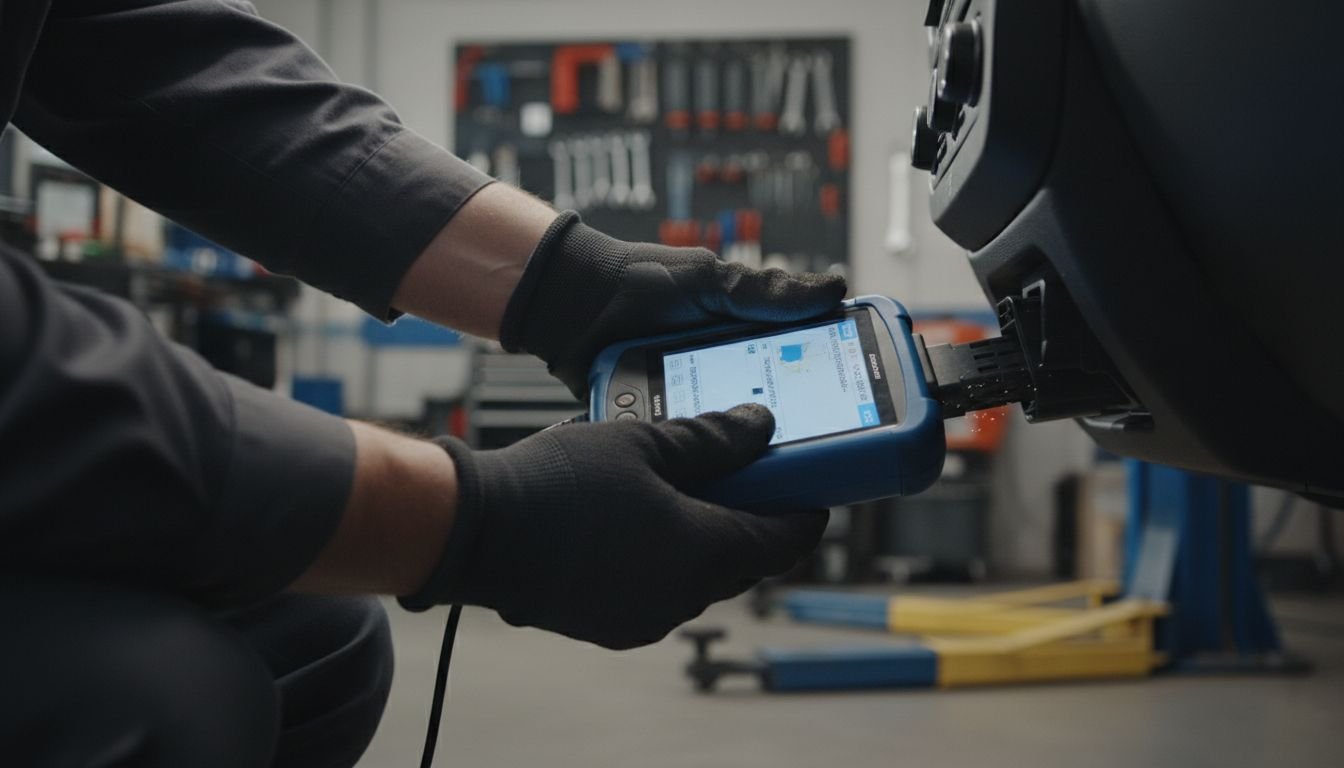
Modern vehicles in DFW rely on multiple computers, and a lot of confusion comes from the different names people use. Understanding what actually happens during an engine control module reset helps you avoid false expectations and bad advice. It also explains why a reset won’t fix a broken part.
ECU vs ECM vs PCM: What’s the Difference?
The term ECU (Engine Control Unit) is a general term for a computer that controls engine or powertrain functions. Many manufacturers use ECM (Engine Control Module) for engine-only control and PCM (Powertrain Control Module) when the same unit also controls the transmission. In everyday shop language, an ECU reset, ECM reset, or PCM reset are all referring to some form of reset engine control module operation.
What Actually Gets Erased During a Reset?
When you perform an engine control module reset, you mainly clear learned data like fuel trims, idle speed adaptations, and automatic transmission shift adaptives. You may also clear stored diagnostic trouble codes (DTCs) and related freeze-frame data depending on how the reset is done. What you do not erase with a simple reset is non-volatile data like VIN programming, immobilizer pairing, or crash data in the SRS airbag module.
That means an ecm reset or pcm reset will never physically repair a bad sensor, failing fuel pump, worn transmission, or damaged wiring. It only clears or relearns software-side data so the module can start from a “clean slate.” If your vehicle in Hurst, Euless, or North Richland Hills has a real mechanical fault, resetting will simply make the light disappear for a short time until the fault is detected again.
Soft Reset vs Hard Reset vs Reprogramming
A soft reset is usually done with a scan tool by sending a command to clear codes or reset adaptives, or sometimes by a specific key-on/key-off sequence. A hard reset happens when you disconnect the battery or pull the main fuse to the control module long enough for its volatile memory to clear. Reprogramming/reflash is a different operation entirely, where the module’s software is updated and typically requires professional tools during a Vehicle Diagnostic or programming session, not just a simple ECU reset.
When an ECU Reset Helps (and When It Won’t)
There are situations around Dallas–Fort Worth where a controlled ECU reset can speed up the relearn process after legitimate repairs. There are also plenty of situations where a reset is a waste of time or even dangerous because it hides information we need to diagnose a serious fault. Knowing the difference saves you money and protects your safety.
Common Scenarios Where a Reset Is Reasonable
- After replacing sensors like O2 sensors, MAF (mass air flow), or throttle body where the engine needs to relearn fuel and idle strategy.
- After a battery replacement where the idle is unstable, as some vehicles must relearn idle and transmission adaptives from scratch.
- After certain transmission or PCM updates or repairs where a pcm reset helps the unit relearn shift patterns.
In these cases, doing a careful engine control module reset with a scan tool is usually better than just pulling the battery. If you’re not sure whether your specific model needs a reset after repairs, that’s the perfect time to book a Vehicle Diagnostic in Hurst TX so we can confirm everything is relearning properly.
Problems an ECU Reset Will NOT Fix
A hard no-start condition from a bad fuel pump, failed crank sensor, blown fuse, or serious engine damage will not be fixed by any kind of ECU reset. Misfires caused by worn spark plugs, bad ignition coils, clogged injectors, or low compression will also return as soon as the module detects the problem again. If your DFW car cranks but won’t start and you keep resetting instead of testing, you’re delaying proper diagnosis and risking a roadside breakdown.
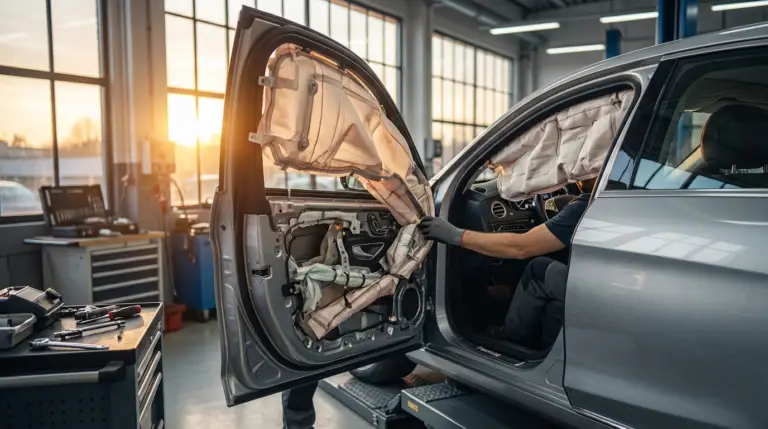
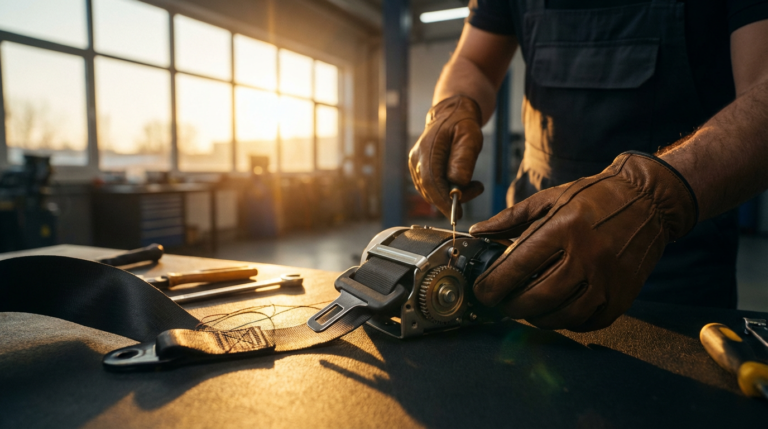
Airbag/SRS faults, seat belt pre-tensioner deployment, ABS faults, and crash data stored in safety modules will not clear with a simple reset engine control module. Those need proper SRS Airbag Module Reset, Airbag Module Replacement, Airbag Replacement, Seat Belt Replacement / Pre-Tensioner Replacement, Clock Spring Replacement, or ADAS Calibration after a collision. If your airbag or ABS light is on anywhere in Dallas County or Tarrant County, skipping straight to an ECU reset is the wrong move.
Why You Shouldn’t Reset Before Reading Codes
When you clear codes before anyone scans the vehicle, you wipe out critical “freeze-frame” data that tells us what the engine was doing when the fault first happened. That can make troubleshooting slower and potentially more expensive because we’re working without the original snapshot. If the car is driveable and feels safe, the best approach is to scan first, then decide whether an ECU reset makes sense.
If you’re dealing with a persistent check engine light and want more context, our check engine light mechanic guide breaks down what that light really means before you start clearing codes blindly. Once you have the codes recorded, we can perform a targeted Vehicle Diagnostic and tell you if a reset is appropriate or if we’re dealing with a deeper fault.
Common DIY ECU Reset Myths and Risks
There is a lot of questionable advice on forums and videos about how to do an ECU reset. Some of it comes from older vehicles that were much simpler than today’s networked cars and trucks driving around Hurst, Plano, Frisco, and Fort Worth. The wrong DIY tricks can lead to lost configurations, immobilizer problems, or even damaged electronics.
Is It Safe to Reset an ECU by Disconnecting the Battery?
The classic advice is to pull the negative battery terminal for a few minutes to reset the ECU. On some older vehicles, this was relatively low risk aside from losing radio presets and the clock. On modern American and Japanese vehicles in the DFW area, you can also lose window auto-up functions, sunroof calibration, steering angle sensor references, and sometimes trigger anti-theft re-learn issues.
Disconnecting the battery does not always fully clear all codes or learned data, and it does nothing to fix mechanical problems. It’s a blunt tool compared to using a scan tool for a controlled engine control module reset. Whenever you’re unsure, a professional Vehicle Diagnostic is safer than experimenting with your daily driver’s power supply.
Why Touching Battery Terminals Together Is a Bad Idea
One of the more dangerous myths is disconnecting both battery cables and then touching them together to “drain” the ECU. This can create voltage spikes and backfeed other modules through circuits they weren’t designed for. On complex late-model vehicles, that can stress sensitive electronics, especially modules connected to safety systems.
Never intentionally short battery cables together. Whatever tiny benefit you might get in memory discharge isn’t worth the risk to your engine computer, ABS module, SRS airbag control unit, or body control module. If your car in Garland, Mesquite, or McKinney is acting up, it’s better to record symptoms and codes, then schedule a proper Vehicle Diagnostic instead of trying this trick.
Risks to Modern Electronics and Safety Systems
Modern vehicles have dozens of networked modules, and a crude reset or short can confuse or damage systems like ABS, SRS airbag control unit, BCM, and ADAS components. When these modules see unstable voltage, they may set new fault codes or go offline temporarily. That’s the last thing you want when you’re sharing I-35, 183, or 635 with Dallas–Fort Worth traffic.
Airbags and seat belt pre-tensioners contain explosive charges. Never probe their wiring or attempt SRS resets without proper training and equipment. DIY work around SRS and ADAS without the right tools can be dangerous for you now and for your passengers later if those systems don’t deploy correctly in a crash. If you suspect any airbag or seat belt issue, skip the ECU resets and go straight to a safety-focused Vehicle Diagnostic.
Safe Ways to Reset or Relearn Your ECU
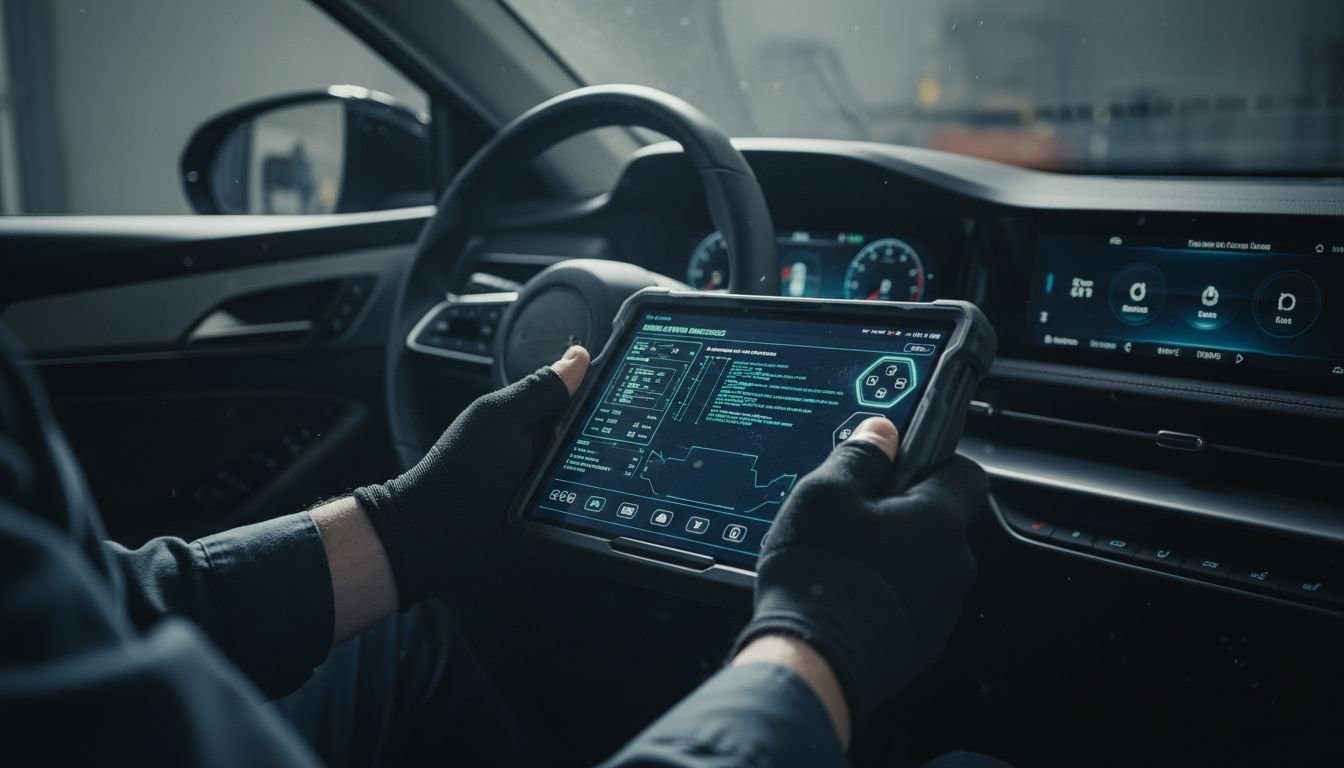
If you’ve confirmed there are no active safety warnings and the vehicle is basically running, there are safer ways to perform an ECU reset. The method you choose matters, especially on newer American and Japanese cars and trucks around Hurst TX. Any time you’re unsure, it’s worth letting a pro handle it during a Vehicle Diagnostic session.
Using an OBD-II Scanner for a Controlled Reset
The most controlled way to perform an engine control module reset is with an OBD-II scanner or professional scan tool. These tools can clear codes, reset adaptives, and sometimes walk through specific relearn procedures that your vehicle manufacturer recommends. The key difference is you can see what codes are there first, record them, and then clear them in a documented way.
Professional-grade equipment used during a Vehicle Diagnostic in our Hurst TX shop gives more control and data than a generic handheld code reader. We can view live data, check for updated procedures, and verify that modules communicate correctly after an ECU reset or ecm reset. That protects you from guessing and protects the vehicle from repeated blind resets.
Battery Disconnect Method – Step-by-Step & Precautions
If you’re working on an older or basic vehicle and choose the battery method, use a cautious approach. Here is a generic process many vehicles tolerate, but understand this is not model-specific advice:
- Park safely, set the parking brake, turn ignition off, and remove the key.
- Open the hood and locate the battery; wear eye protection and gloves.
- Disconnect the negative terminal only first to reduce the chance of accidental shorts.
- Wait about 10–15 minutes to allow capacitors to drain and volatile memory to clear.
- Reconnect the negative terminal securely, ensuring a clean, tight connection.
- Start the engine and let it idle without accessories for a few minutes to begin idle relearn.
Be aware you may lose radio presets, clock settings, and certain memory functions. Many vehicles also require window, sunroof, or steering angle sensor relearns after power loss. If you’re uncomfortable with these side effects or your vehicle has complex safety systems and ADAS, let us handle this as part of a controlled Vehicle Diagnostic instead.
After a Reset: Relearn Procedures and Test Drive
After an ecm reset or pcm reset, it is normal for the engine to idle a little rough or the transmission to shift differently for a short period. The module is re-learning fuel trims, idle control, and shift patterns based on your driving. Plan a gentle test drive that includes idle time, light acceleration, steady highway cruising, and moderate braking.
Watch the dash closely for the return of the check engine light, ABS light, or any other warnings. If lights or drivability symptoms return quickly after your ECU reset, that is your cue to stop repeating the same reset and instead schedule a Vehicle Diagnostic in Hurst TX or nearby cities like Bedford, Grapevine, or Colleyville. Repeated resets without diagnosis rarely end well.
Ford F150 PCM Reset: Special Considerations
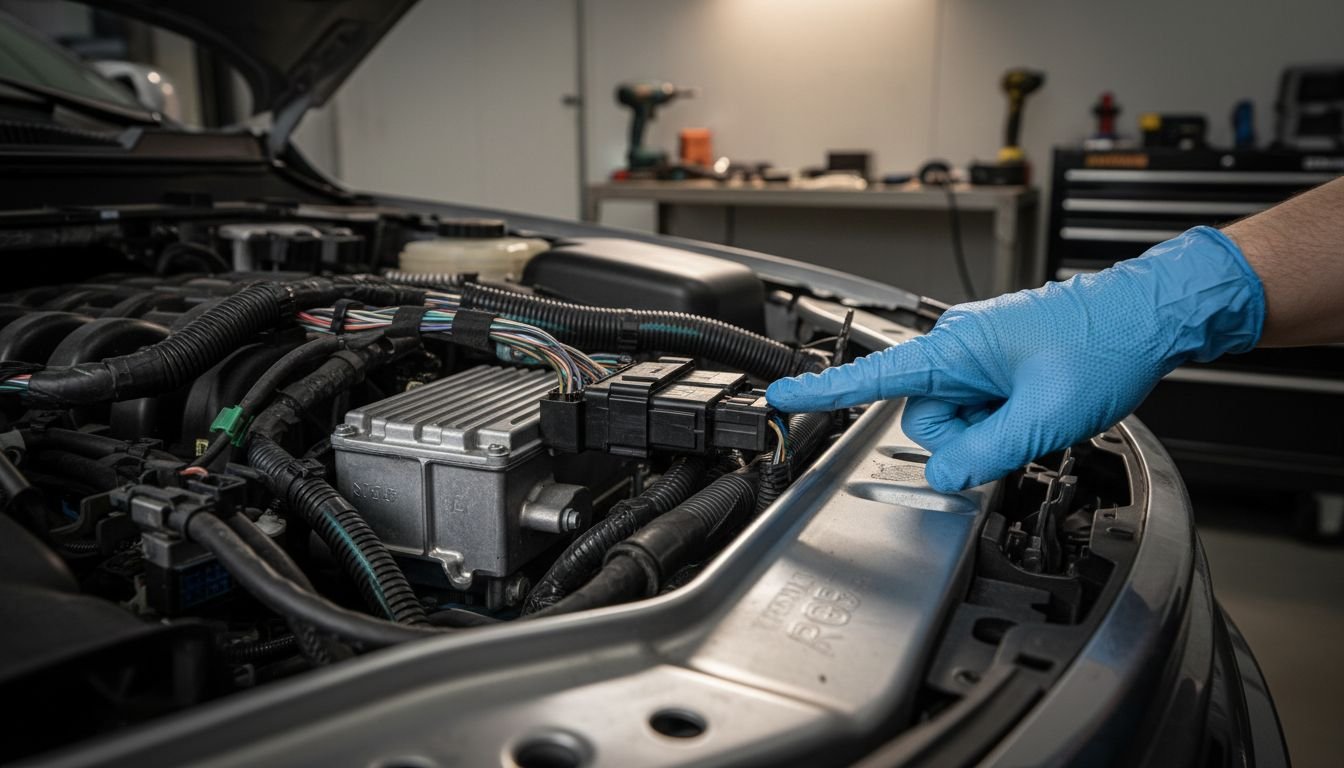
Ford trucks are everywhere in Dallas–Fort Worth, and it’s common for owners to search specifically for a Ford F150 PCM reset. Typical concerns include harsh or delayed transmission shifts, throttle body problems, or strange behavior after a battery disconnect. A pcm reset can help the truck relearn shift patterns and idle, but it will not fix a failing transmission or a bad sensor.
Why Ford F150 Owners Search for PCM Reset
Many F150 drivers notice strange shifting after towing, after transmission service, or after installing performance parts or tunes. Others see throttle body-related codes or limp mode and hope that a Ford F150 PCM reset will magically clear things up. Sometimes the adaptation data really is out of line and needs to be reset; other times, the adaptation is simply reacting to an underlying mechanical problem.
In our Hurst TX shop, we routinely see F150s from Arlington, Mansfield, and Saginaw where the owner has already tried several DIY resets. By the time the truck arrives, we often find real issues like failing throttle bodies, damaged wiring, or transmission faults that no amount of resetting would fix. A targeted Vehicle Diagnostic tells you which side of that line you’re on.
Typical Ford F150 PCM Reset Steps (High-Level)
Without getting into model-year-specific procedures, a high-level pcm reset on a Ford F150 usually involves a controlled reset with a scan tool or, in simpler cases, a battery disconnect with careful relearn. It is critical that the battery is strong and stable voltage is maintained during any reset or programming-related work. A weak battery in Texas heat can cause more issues than it solves, especially when multiple modules share power and grounds.
Make sure your keys and immobilizer system are working correctly before attempting any reset. If you suspect key or anti-theft problems on your F150 in Hurst, Irving, or Grand Prairie, you may actually need Vehicle Key Cutting, Transponder Key Programming, Smart Key Programming, or Key Fob Replacement & Programming instead of another Ford F150 PCM reset attempt. Our Locksmith Services, including Car Lockout Assistance, Vehicle All Keys Lost, and Vehicle Key Duplication / Copying, cover many “no start after reset” situations that people mistake for ECU issues.
When a Full Scan or Programming Is Needed on an F150
Serious drivability issues, repeated codes, module communication faults, or limp mode after a reset almost always require more than a basic ECU reset. Professional shops use advanced scan tools to perform full-system scans, check Technical Service Bulletins (TSBs), and sometimes advise on software updates. At LockNCal in Hurst TX, our Vehicle Diagnostic service for Ford F150 and other American/Japanese vehicles is built around finding the root cause, not just erasing warning lights.
If your F150 has been in a collision, we can also evaluate related safety systems. That includes arranging for SRS Airbag Module Reset, Airbag Module Replacement, Seat Belt Replacement / Pre-Tensioner Replacement, Airbag Replacement, Clock Spring Replacement, and ADAS Calibration as needed once diagnostics show what’s actually damaged.
ECU Resets, Airbags, and Safety Systems in DFW
One of the most dangerous misconceptions I see in the Dallas–Fort Worth area is the idea that an ECU reset can somehow clear or “fix” all warning lights. Engine, ABS, and SRS are different systems, and each has its own control module and logic. Clearing engine codes does not repair or reset airbag and ABS systems, and sometimes it makes it harder to prove what’s really wrong.
Why Clearing Codes Can Hide Serious Safety Issues
Some owners clear check engine lights right before a Texas safety/emissions inspection and then wonder why the inspector fails the car. When you clear codes, you also reset emissions readiness monitors, and the car may not have completed enough drive cycles for those monitors to show “ready.” Inspectors in Texas will not pass a vehicle if too many readiness monitors are incomplete.
More importantly, airbag/SRS and ABS faults do not magically fix themselves with a simple ECU reset. If your airbag, ABS, or traction control light is on anywhere in Collin County, Denton County, Rockwall County, or Tarrant County, you need a proper Vehicle Diagnostic and likely dedicated services like SRS Airbag Module Reset, Seat Belt Replacement, or ADAS Calibration. Clearing the code without fixing the cause just hides a safety-critical fault.
This is especially important for used vehicles. As we’ve seen, used car buyers in Hurst TX may be unknowingly purchasing vehicles with unresolved safety system issues if lights have been cleared without real repairs. An ECU reset in DFW should never be used as a way to hide problems before a sale.
SRS Explosives and DIY Risks
Every modern airbag and seat belt pre-tensioner uses a small pyrotechnic charge to deploy in a crash. That means the SRS system is literally wired to controlled explosives around you and your passengers. Airbags and seat belt pre-tensioners contain explosive charges. Never probe their wiring or attempt SRS resets without proper training and equipment.
Improper DIY attempts to reset SRS modules, tap into airbag wiring, or clear crash data without understanding what’s damaged can be life-threatening. After any collision in Dallas, Fort Worth, Arlington, or surrounding cities, the right move is to schedule a thorough Vehicle Diagnostic that includes the safety systems. From there, you may need SRS Airbag Module Reset, Airbag Module Replacement, Airbag Replacement, Seat Belt Replacement / Pre-Tensioner Replacement, Clock Spring Replacement, or ADAS Calibration depending on what we find.
For a deeper look at why some crash and communication codes matter so much, see our article on airbag module resets and crash data issues. It’s a good example of why just clearing codes after a crash is not enough.
When You Must Not Drive Until Inspected
There are situations where you should not continue driving or experimenting with any ECU reset until the vehicle is inspected. If you see any of the following, plan on towing or driving only the shortest distance to a trusted shop:
- Airbag or SRS light on after any collision, even a “minor” one.
- ABS, brake, or stability control lights on combined with abnormal brake pedal feel or traction issues.
- Strong burning smell, visible wiring damage, repeated stalling, or a no-start condition that appears suddenly.
In these red-flag scenarios, call us to arrange a safety-focused Vehicle Diagnostic rather than trying more DIY tricks. Your safety and your passengers’ safety on busy DFW roads are worth more than any temporary light being off.
LockNCal Vehicle Diagnostics in Hurst TX
If you’re near Hurst TX or anywhere in the Dallas–Fort Worth metroplex, you don’t have to guess your way through resets and warning lights. At LockNCal, our priority is accurate information and safety, not just turning lights off. We serve nearby communities like Euless, Bedford, North Richland Hills, Haltom City, and the broader DFW area listed on our Hurst TX service page.
Our Safety-Focused Diagnostic Process
Our Vehicle Diagnostic process starts with a full-system scan of the vehicle, not just the engine. We pull codes from engine control, transmission, airbag/SRS, ABS, and ADAS-related modules, then review freeze-frame data and live sensor readings. When needed, we follow up with guided test procedures to pinpoint faults before recommending solutions.
This approach is especially valuable if someone has already done an ECU reset in DFW and erased part of the story. We look for patterns, reoccurring codes, and hardware symptoms that tell us what’s really going on. The goal is always root-cause diagnosis and a clear path back to safe operation, not just another temporary reset.
Why Hurst TX & DFW Drivers Trust Us
Drivers from Dallas, Fort Worth, Plano, Arlington, Frisco, and many other local cities deal with unique conditions: intense Texas heat that kills batteries, heavy stop-and-go traffic, and frequent highway collisions. Our technicians are experienced with American and Japanese vehicles that live in these conditions every day. We focus on safety-critical systems and understand Texas inspection expectations around check engine lights and readiness monitors.
LockNCal is known for certified, safety-focused technicians, clear communication, and same-day availability on many diagnostics when our schedule allows. Whether your vehicle comes from Richardson, Carrollton, The Colony, or Rockwall, we treat your case like it might carry your family at 70 mph tomorrow. A careful Vehicle Diagnostic is the first step before any talk of resets or parts replacement.
From ECU Reset to Complete Safety Restoration
Once diagnostics show what’s actually wrong, we can move from simple ECU reset questions to real solutions. If we find safety-system issues, we coordinate and provide services like SRS Airbag Module Reset / Airbag Module Replacement, Airbag Replacement, Seat Belt Replacement & Pre-Tensioner Replacement, Clock Spring Replacement, and ADAS Calibration after collision repairs. That way, your airbags, belts, and driver assistance systems are ready if you ever need them.
When immobilizer or anti-theft problems are mimicking ECU failures, we handle those too. Our locksmith-related services include Vehicle Key Cutting, Transponder Key Programming, Smart Key Programming, Key Fob Replacement & Programming, Vehicle Key Duplication / Copying, Vehicle All Keys Lost, and Car Lockout Assistance throughout DFW. The point is to fix the true cause, whether it’s key-related or electronics-related, not just keep hitting reset.
For extra peace of mind when you’re evaluating or servicing a vehicle, you can also run your VIN through our FREE VIN Decoder to better understand the build and equipment.
DIY vs Professional ECU Reset: How to Decide
Not every situation requires a tow truck and a full diagnostic session. The key is knowing when a careful DIY ECU reset is low risk and when it’s safer to call a professional in Hurst TX or anywhere else in Dallas–Fort Worth. Use the checklists below as a practical guide.
When a Careful DIY ECU Reset Is Reasonable
A cautious DIY ECU reset can be reasonable when all of the following are true:
- No safety lights (airbag/SRS, ABS, brake, or stability control) are illuminated.
- The vehicle runs and drives reasonably well but has mild drivability issues after a recent non-safety repair, like a sensor or battery change.
- You have already scanned the vehicle, recorded the codes, and understand that they may return if the underlying issue is not resolved.
If that’s your situation in places like Lewisville, Little Elm, Flower Mound, or Southlake, a controlled engine control module reset with a scanner may be fine. Just remember that if the same code returns quickly, it’s time to stop resetting and get a professional Vehicle Diagnostic. Repeating the same reset over and over won’t turn a bad part into a good one.
When You Should Book a Professional Vehicle Diagnostic
Plan on a professional Vehicle Diagnostic with us in Hurst TX when you see any of these signs:
- Repeated check engine light that comes back shortly after each ECU reset or ecm reset.
- Any SRS, airbag, ABS, traction control, or brake warning light.
- No-start, severe stalling, or transmission harshly slamming into gear or going into limp mode.
- Post-collision situations, especially if airbags deployed, seat belts are locked, or the steering wheel feels different.
- You suspect someone has cleared codes to hide problems, such as a recently purchased used car.
In these scenarios, blind resets can hide important clues or even mask dangerous conditions. Our diagnostic process will tell you if a reset is appropriate, if you need safety services like SRS Airbag Module Reset or Seat Belt Replacement, or if key/immobilizer work is required. When in doubt anywhere in our service area, err on the side of a professional evaluation.
What to Expect and How to Schedule in DFW
When you contact LockNCal, we’ll discuss your symptoms, warning lights, and any prior ECU reset attempts. We then schedule a Vehicle Diagnostic, give you an estimate for the diagnostic work, and outline the next steps once we have scan data and test results. Many diagnostics can be scheduled with same-day or next-day availability depending on our calendar.
We serve Hurst TX and a long list of surrounding communities across Dallas County, Tarrant County, Denton County, Collin County, and Rockwall County, including Arlington, Grand Prairie, Irving, McKinney, Allen, and more. Call us or book online through our Hurst TX page and mention that you’re dealing with an ECU reset, Ford F150 PCM reset, or repeated warning lights. Contact us today for a safety-focused Vehicle Diagnostic in Hurst TX and the greater Dallas–Fort Worth area.
Frequently Asked Questions About ECU Resets
Does an ECU reset fix engine problems, or just clear codes?
An ECU reset / engine control module reset mainly clears learned adaptations and some stored trouble codes. It does not repair worn parts, damaged wiring, or failing sensors. If the underlying problem remains, the code and symptoms will usually return.
Is it safe to reset the ECU by disconnecting the battery?
On many vehicles it’s generally safe if done carefully, but you can lose radio presets, window and sunroof memory, steering angle references, and sometimes upset the immobilizer. It’s also not guaranteed to clear all fault data and should never be used to hide safety issues like airbag or ABS faults. When in doubt, a scan tool-based reset during a professional Vehicle Diagnostic is safer.
What’s the difference between an ECU reset, ECM reset, and PCM reset?
In everyday use, these terms describe similar actions on slightly different modules: ECU is a general term, ECM focuses on the engine, and PCM controls engine plus transmission on many vehicles. All three are forms of reset engine control module operations. Our Vehicle Diagnostic service identifies which module is involved and what type of reset or repair is appropriate.
How do I perform a Ford F150 PCM reset, and when should I avoid it?
A Ford F150 PCM reset is usually done with a scan tool or a carefully managed battery disconnect followed by proper relearn driving. You should avoid repeated resets if the truck goes into limp mode, sets the same codes quickly, or has serious drivability issues, as those signs call for professional diagnostics instead. Persistent problems after any pcm reset are a strong sign to schedule a Vehicle Diagnostic in DFW.
When should I skip DIY and get a professional Vehicle Diagnostic in DFW?
Skip DIY resets and come straight to a pro if you have repeated warning lights, any airbag/SRS, ABS, or traction control light, no-start or severe stalling, or a post-collision vehicle with deployed airbags or locked belts. DFW drivers in Hurst TX and the wider Dallas–Fort Worth area can rely on LockNCal for a thorough, safety-first Vehicle Diagnostic. From there we can guide you toward needed services like SRS and seat belt repairs, ADAS calibration, or key and immobilizer programming if that’s the real issue.