
Key Takeaways
• You cannot legally title or register a rebuilt car title after a salvage without passing a state-required DMV rebuilt title inspection (salvage/rebuilt vehicle exam).
• Passing depends on both paperwork (title, receipts, photos) and vehicle safety systems (airbags, seat belts, ADAS) being correctly repaired, reset/calibrated, and documented.
• LockNCal in North Richland Hills TX prepares American and Japanese salvage vehicles with Vehicle Diagnostic, SRS Airbag Module Reset, Airbag/Seat Belt/Pre-Tensioner/Clock Spring Replacement, and ADAS Calibration so you are ready for the official inspection.
In This Guide:
💡 What a DMV Rebuilt Title Inspection Actually Is – Plain-English overview of salvage/rebuilt inspections.
📝 Step-By-Step DMV Rebuilt/Salvage Inspection Process – From buying a salvage to getting a rebuilt title.
✅ Inspector Checklist: What They Really Look At – Safety, VIN, and documentation items.
💸 Costs, Fees, and Timeframes – Typical inspection, repair, and document prep costs.
🚗 Texas & DFW-Specific Rebuilt Title Rules – How it works in Texas and the DFW area.
🔧 How to Prepare Your Salvage Vehicle to Pass – Practical prep steps for the exam.
💀 Why DIY Airbag & Safety Repairs Are Dangerous – SRS explosives and safety risks.
🛠 How LockNCal Helps You Pass Inspection – Our services that align with state requirements.
📍 Rebuilt Title Help in North Richland Hills TX – Local support and next steps.
❓ FAQs About DMV Rebuilt Title Inspections – Clear answers to common questions.
DMV Rebuilt Title Inspection Guide for Texas & DFW: Pass Your Salvage Vehicle Inspection Safely
If you own or are eyeing a salvage vehicle in the Dallas–Fort Worth area, you will have to pass a DMV rebuilt title inspection before it can legally be titled, registered, and driven. This process is also called a salvage title vehicle inspection or salvage vehicles inspection depending on the state. Below is a safety-first guide from a North Richland Hills–based perspective so you can pass the inspection and protect everyone who rides in your car.
Throughout this guide we will show how professional Vehicle Diagnostic, SRS Airbag Module Reset, Airbag Replacement, Seat Belt Replacement, Pre-Tensioner Replacement, Clock Spring Replacement, and ADAS Calibration at LockNCal reduces the risk of failure, re-inspection fees, and dangerous shortcuts. This information applies to drivers across Texas, with a focus on North Richland Hills TX and surrounding DFW communities we serve. For local help, you can always start at our North Richland Hills page: https://lockncal.com/North-Richland-Hills-TX.
What a DMV Rebuilt Title Inspection Actually Is
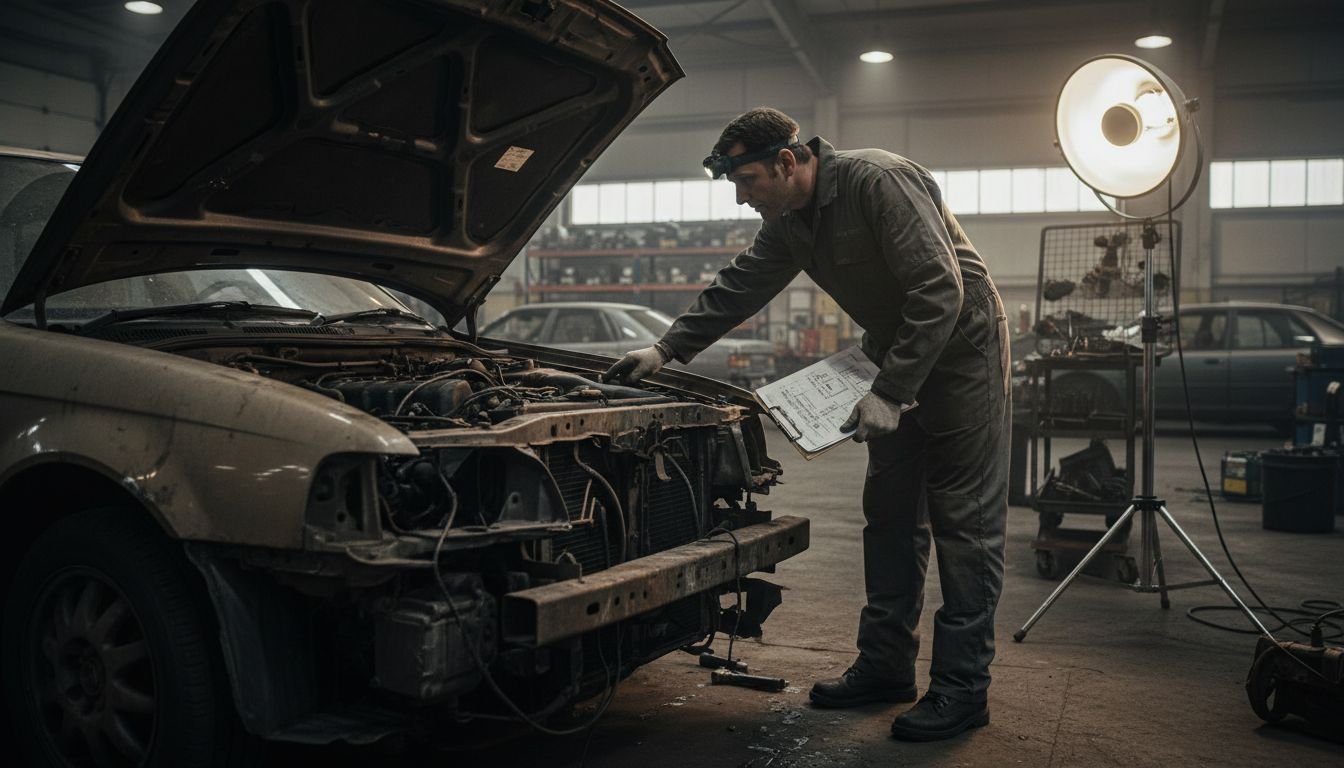
A DMV rebuilt title inspection is a special exam required after a vehicle has been branded salvage by an insurance company or state. The goal is to confirm the vehicle is not stolen, has been repaired correctly, and is safe enough to go back on public roads. When you search for a rebuilt inspection near me, this is usually the process you are trying to find.
Salvage vs Rebuilt vs Non Repairable Title (Plain-English Definitions)
A salvage vehicle is one an insurance company has declared a total loss because repairing it to pre-accident condition did not make financial sense. After proper repairs and passing a rebuilt title inspection, many states allow that same vehicle to receive a rebuilt car title so it can be registered and driven again. A non repairable title (often called non-rebuildable or junk) usually means the vehicle can never go back on the road and is only good for parts or scrap.
When you complete a salvage title transfer from the insurance company or auction into your name, the state will still treat it as salvage until the required inspection is passed. That inspection is a specialized car inspection for salvage title, separate from regular annual safety or emissions tests. Understanding which brand is on your title is the first step before spending money on repairs.
Different Names in Different States
Every state has its own terminology for the same basic process. You will see phrases like salvage vehicle examination, revived salvage inspection, or simply inspection for rebuilt title used by different DMVs. In practice, they all mean a focused exam of the paperwork, VINs, and repairs before issuing a rebuilt brand.
Online, drivers often just search for phrases like rebuilt inspection near me or rebuilt inspection Texas. No matter what it is called, you will not get a rebuilt brand or registration until that inspection is passed and recorded. The rest of this guide focuses on the steps and safety systems that actually decide whether you pass.
What the State Is Trying to Verify
The DMV and any law enforcement partner agencies have three big concerns. First is anti-theft: every visible VIN must match, and any major parts must be traceable so stolen components are not laundered through salvage cars. Second is safety: the body structure, brakes, lights, airbags, seat belts, and ADAS systems must be in proper working order.
Third is the paper trail: they want to see clear documentation that the car was legitimately purchased and that major replacement parts were obtained from traceable sources. That means your title, bills of sale, parts receipts, and repair photos need to be organized and ready to show at the time of the dmv rebuilt title inspection. Sloppy paperwork is one of the easiest ways to slow down or derail your rebuilt process.
Step-By-Step DMV Rebuilt/Salvage Inspection Process
The steps below will help you think like an inspector from the start so you do not waste time or money. Planning your build around salvage cars inspection requirements is much cheaper than fixing surprises right before your appointment. This is especially true for American and Japanese vehicles packed with SRS and ADAS technology.
Step 1 – Buy or Own a Salvage Vehicle and Verify the Title Brand
Before you commit to any project, read the front and back of the title and any auction listing carefully. Look for brands like salvage, non repairable title, flood, or rebuilt so you understand what is legally possible. In Texas, a true nonrepairable title generally cannot be made roadworthy again, no matter how much money you spend on it.
If you already own the vehicle, confirm that the name on the title matches your ID and that all prior assignments are properly filled out. If anything on the title looks altered or incomplete, fix it with the seller or title company before working on the car. You do not want to finish a full build and later discover that the paperwork itself blocks the rebuilt process.
Step 2 – Plan Your Repairs Around Inspection Requirements
Before turning a wrench, study what your state checks during the salvage title vehicle inspection. Body structure, frame or unibody alignment, SRS airbag and seat belt systems, lighting, and basic roadworthiness are all part of the exam. Every dollar you spend should move the car closer to meeting those standards.
This is where a professional Vehicle Diagnostic at LockNCal is valuable for DFW owners. We can scan SRS, ABS, and powertrain systems and look for hidden crash history or stored codes that will later trigger lights during inspection. Finding those issues early helps you decide whether the project makes financial sense before you sink money into paint and cosmetics.
Step 3 – Gather Parts, Receipts, and Photos
Inspectors want to see where major replacement parts came from, especially engines, transmissions, airbags, and body panels. For each purchase, keep a detailed receipt showing the seller’s name, address, and contact information, plus the VIN of the donor vehicle if available. Store these receipts by category (drivetrain, body, SRS, glass) so they are easy to reference on inspection day.
Take before, during, and after repair photos, especially of structural and safety-related work. Clear photos of bent rails, removed airbags, and then finished welds or replacement components show that the damage was properly addressed. Good documentation reduces suspicion and makes your inspection for rebuilt title smoother.
Step 4 – Complete Safety Repairs (Airbags, Seat Belts, ADAS)
Most rebuilds fail because of safety systems, not paint quality. If your airbag light, ABS light, or other warnings are on during a car inspection for salvage title, you are risking an automatic fail. Non-working seat belts, missing airbags, or uncalibrated ADAS sensors are red flags for any inspector.
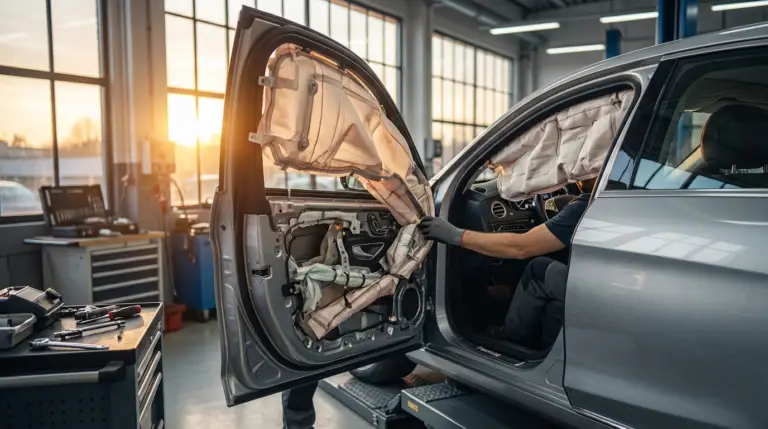
LockNCal focuses on the safety side of your build so you can arrive at inspection confident. Our services include SRS Airbag Module Reset after deployment, Airbag Module Replacement when needed, Airbag Replacement for driver, passenger, side, or curtain bags, Seat Belt Replacement and Pre-Tensioner Replacement, Clock Spring Replacement for steering wheel airbag and control issues, and ADAS Calibration after windshield, bumper, radar, or camera work. Handling these systems correctly is what separates a safe rebuilt from a dangerous “dashboard-only” fix.
Step 5 – Schedule Your Rebuilt Title / Salvage Inspection
Once the car is structurally sound, aligned, and free of warning lights, it is time to schedule your official exam. Contact your state’s DMV or use its website to locate authorized salvage vehicles inspection or rebuilt inspection Texas locations. Appointments can fill quickly, especially in busy markets like Dallas–Fort Worth, so plan ahead.
Make sure the vehicle is legal to move to the site under your state’s rules, whether that means temporary tags, permits, or towing. We will cover Texas-specific pointers for this later, but you should always confirm with the DMV before you drive a salvage vehicle on public roads. Arriving with the right paperwork and a truly safe car is your best strategy.
Step 6 – Attend the Inspection and Present Documents
On inspection day, bring your salvage title, government-issued ID, bill of sale, parts receipts, and your photo documentation. Some states require appointment letters, completed forms, or temporary operating permits, so read your confirmation email carefully. Keep everything in a single folder so you are not digging through loose papers while an inspector waits.
Your vehicle should have clean, readable VINs in all factory locations, no active warning lights, and all safety equipment installed. That includes headlights, brake lights, mirrors, wipers, airbags, seat belts, and any original ADAS systems. The more obviously organized and professional your build appears, the smoother the inspection tends to go.
Step 7 – After the Exam: Rebuilt Branding and Registration
If you pass, the DMV will process your paperwork and permanently brand the title as rebuilt (or similar language in your state). This rebuilt brand stays on the vehicle history and will usually be visible to future buyers and insurance companies. The good news is that once the title is branded rebuilt and registered, you can legally drive the car on Texas roads.
Keep your inspection report and all receipts even after the rebuilt car title is issued. They can be helpful for selling the car or answering questions from future inspectors or insurers. A clean, documented build often sells faster and inspires more confidence than a mystery rebuild with no paper trail.
Inspector Checklist: What They Really Look At
Government websites often list only basic requirements, but the real exam is more detailed. Below is a practical checklist of what inspectors actually look at during a dmv rebuilt title inspection. Use it as a build plan and as a final pre-appointment review.
Paperwork & Identity Check
- Title & ID: Original salvage title in your name and matching government-issued identification.
- Bills of sale: Proof of purchase for the vehicle and any major components like engines, transmissions, airbags, and body shells.
- Parts receipts: Detailed documents showing where key parts came from, especially SRS and structural parts.
- Photo evidence: Before & after photos showing initial damage, repair stages, and final condition.
Weak or missing paperwork can delay or prevent approval even if the car is physically sound. Inspectors must be confident that the vehicle and its major components are not stolen. Treat your receipts and photos as part of the build, not an afterthought.
VIN & Anti-Theft Verification
- Primary VIN: Dashboard or A-pillar VIN tag must be intact, legible, and properly attached.
- Secondary VINs: Door jamb labels, engine block VINs, and other factory identifiers checked against the title.
- Tampering signs: Ground-off rivets, mismatched VIN plates, or suspicious welds around tag areas.
On modern vehicles, some modules also store VIN information. A thorough Vehicle Diagnostic at LockNCal can help identify module VIN mismatches that might raise questions during inspection. Fixing those issues beforehand is far easier than explaining them in the inspection lane.
Structural and Body Integrity
- Frame or unibody: Inspectors look for kinks, severe rust, or unsafe welds that suggest the structure is still compromised.
- Panel alignment: Large gaps, misaligned doors, or uneven fenders can hint at underlying damage.
- Glass and roof: Windshield integrity and roof repairs are critical in rollovers or heavy hits.
Even seemingly minor hits can hide damage to crash sensors, wiring, and restraint mounting points. As we have covered in our article on how small parking lot accidents in North Richland Hills can hide safety system damage, it does not take a massive collision to compromise airbags and seat belts. That is why safety systems deserve just as much attention as the visible body repairs.
Safety Systems – Where LockNCal Comes In
- Airbags installed: All original-equipment airbags present (driver, passenger, side, curtain, knee where applicable).
- SRS light off: No supplemental restraint system warning lights on the dash after proper SRS Airbag Module Reset or Airbag Module Replacement.
- Seat belt function: Belts must extend and retract smoothly and lock properly in a simulated hard stop.
- Pre-tensioners: No deployed or visibly damaged pre-tensioners left in place; these should be addressed with Pre-Tensioner Replacement.
- Steering wheel & clock spring: Horn, airbag connections, and steering wheel controls should work after proper Clock Spring Replacement when needed.
- ADAS systems: Lane-keeping, adaptive cruise, collision warnings, and other ADAS features should operate correctly after ADAS Calibration when glass, bumpers, or cameras have been replaced.
LockNCal focuses on exactly these items for American and Japanese vehicles seen across North Richland Hills, Fort Worth, Dallas, Arlington, Plano, and surrounding cities. When these systems are properly reset, replaced, and calibrated, you reduce the chance of unexpected warning lights during your salvage cars inspection. You also protect your family and future passengers from hidden safety risks.
Lighting, Brakes, and Basic Roadworthiness
- Exterior lights: Headlights, brake lights, tail lights, and turn signals must all function.
- Brakes: No obvious leaks, soft pedal, or metal-to-metal grinding.
- Tires & glass: Adequate tread depth, no exposed cords, and a windshield free of critical cracks in the driver’s field of vision.
While LockNCal specializes in SRS and ADAS, these basic mechanical and visibility items cannot be ignored. An otherwise perfect SRS system will not save an inspection if your tires are bald or your brake lights are out. Always perform a full pre-trip check before driving to the inspection station.
Costs, Fees, and Timeframes
Building a safe, legal rebuilt vehicle takes both time and money. Planning for realistic inspection fees, safety system costs, and title processing timelines will help you avoid surprises. The better prepared you are, the fewer times you have to pay for a repeat rebuilt title inspection.
Government Fees for Rebuilt Title Inspections
Each state sets its own fee for a dmv rebuilt title inspection or salvage title vehicle inspection. In many states, the inspection itself often falls in the $100–$250 range, with additional charges for title issuance, registration, and taxes. Texas has its own fee schedule, which can change, so always confirm current amounts with the Texas DMV before you book.
Remember that this fee only covers the government exam, not any repairs or preparation work. If you fail, you may pay the inspection fee again or incur separate re-inspection charges. Investing once in professional safety preparation is usually cheaper than paying multiple inspection fees for an unready car.
Typical Repair & Prep Costs
On modern American and Japanese vehicles, the most expensive parts of a rebuild are often the SRS and ADAS systems. Airbags, modules, pre-tensioners, and sensors are highly engineered safety components, and cutting corners on them is dangerous. Depending on how many airbags deployed and what needs to be replaced, total SRS work can range from hundreds to several thousands of dollars.
Similarly, ADAS Calibration is essential when cameras, radars, or sensors have been disturbed, especially after front or rear collisions and windshield replacements. It is always more cost-effective to plan these services into your build from the start rather than discover them after a failed inspection. LockNCal can review your vehicle and provide a realistic picture of what it will take to make safety systems inspection-ready.
How Long the Process Takes
The time from salvage purchase to rebuilt title can vary widely. For many DFW owners, structural and cosmetic repairs alone can take several weeks depending on parts availability and shop scheduling. Once repairs are complete, getting on the calendar for a car inspection for salvage title may take a few days to a few weeks depending on local demand.
After you pass, the DMV may need additional time to process your new rebuilt car title and registration paperwork. That can also take several weeks depending on their backlog and whether you process by mail, in person, or through a third party. Doing things right the first time—especially with safety electronics and documentation—is the single biggest way to keep your overall timeline under control.
Texas & DFW-Specific Rebuilt Title Rules
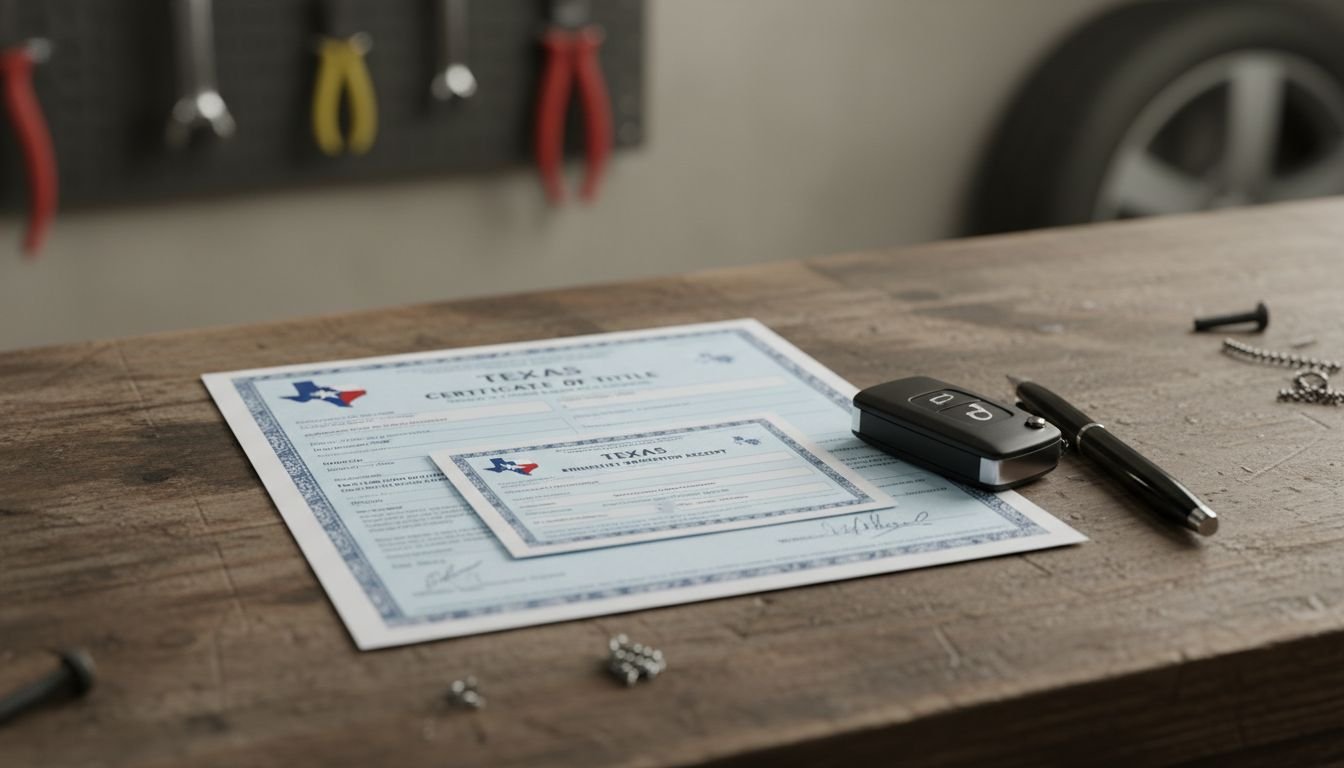
Texas has its own rules for converting a salvage vehicle into a roadworthy rebuilt car. While we cannot give legal advice, we can explain the general process so you know what to expect before scheduling a rebuilt inspection Texas. Drivers in North Richland Hills, Fort Worth, Dallas, and the rest of DFW all work within the same statewide framework.
How Rebuilt Inspections Work in Texas (High Level)
In Texas, salvage vehicles must be properly repaired and then pass required inspections before they can be titled and registered for road use. This often involves both a salvage title vehicle inspection and the normal Texas safety and, when applicable, emissions inspections. The Texas DMV and sometimes law enforcement agencies focus on anti-theft, VIN integrity, and the legitimacy of the parts used in your build.
Once you complete the required inspections, you can apply for a title branded to reflect its rebuilt status. The exact forms, fees, and procedures can change, so always verify details directly with the Texas DMV. Our role at LockNCal is to help make sure your airbag, seat belt, and ADAS systems are ready before you ever show up for that official exam.
Salvage vs Rebuilt vs Nonrepairable in Texas
In Texas, a salvage vehicle is one that has been deemed a total loss by an insurance company. After proper repairs and inspections, it can often become a rebuilt vehicle that can legally be registered again. A nonrepairable or non repairable title vehicle, on the other hand, is generally not eligible to return to road use, regardless of repairs.
Before buying any project car, carefully review the Texas title branding. If the word nonrepairable or a similar designation is present, you should treat the vehicle as parts-only. Knowing this upfront will save you from pouring time and money into a vehicle that can never pass a Texas dmv rebuilt title inspection or be registered.
Finding a Rebuilt Inspection in DFW / “Rebuilt Inspection Texas”
To locate an inspection site, use the Texas DMV’s official tools to find salvage/rebuilt inspection providers near you. Many drivers search for terms like rebuilt inspection near me or rebuilt inspection Texas and then verify the location is officially recognized by the state. Around North Richland Hills, you will find options in nearby cities such as Fort Worth, Hurst, Watauga, and other parts of Tarrant County.
Our LockNCal team regularly works with owners in North Richland Hills TX, Fort Worth TX, Hurst TX, Watauga TX, Richland Hills TX, Saginaw TX, Haltom City TX, and across Tarrant County TX to prepare vehicles before they visit these official inspection sites. We make sure the safety systems and electronics are ready so the state inspector can focus on verifying your documentation and overall build quality. That preparation often makes the difference between passing the first time and needing expensive re-work.
How to Prepare Your Salvage Vehicle to Pass
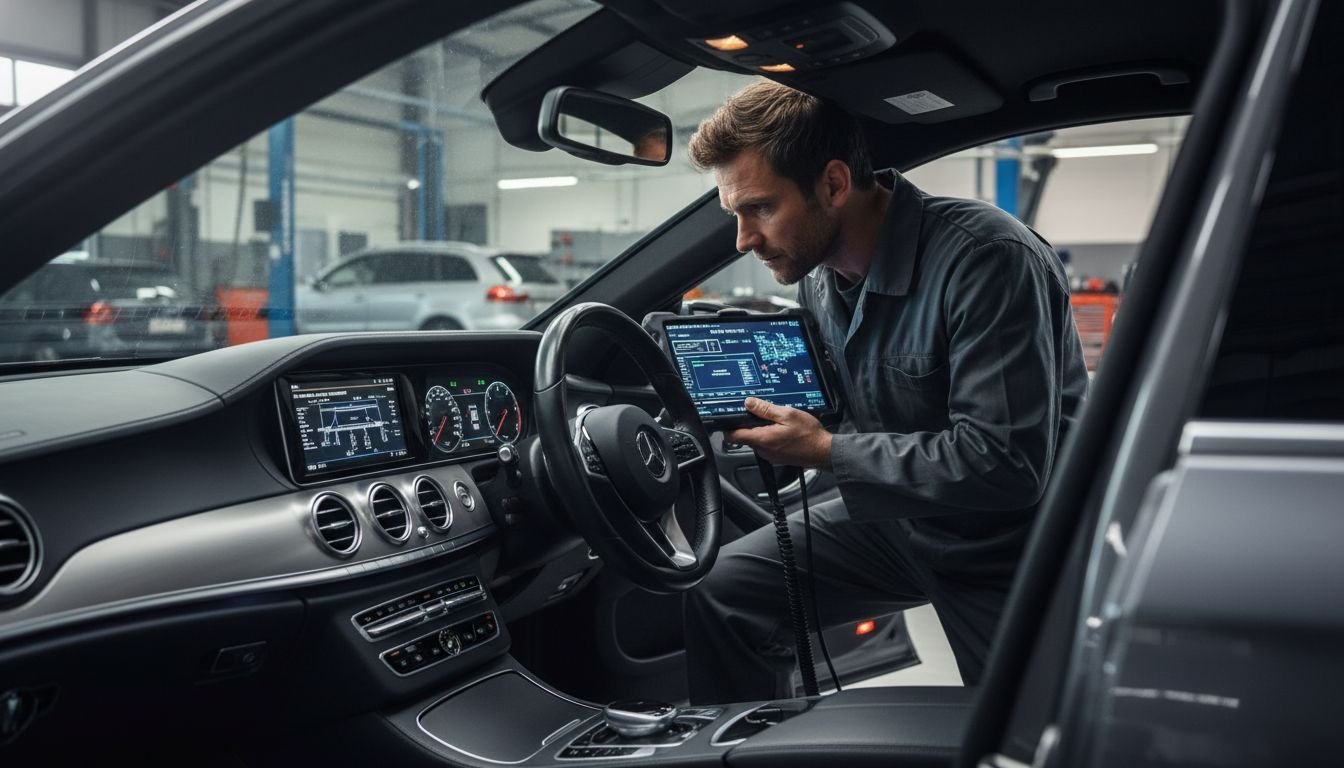
Proper preparation is the best insurance against failure at a dmv rebuilt title inspection. The focus should always be on safety systems and accurate documentation, not just cosmetics. Here is how DFW owners can stack the odds in their favor.
Pre-Inspection Vehicle Diagnostic
A professional Vehicle Diagnostic is your first line of defense against hidden issues. Modern American and Japanese vehicles store crash and fault data deep inside their modules, and many of these codes are not visible on a basic parts-store scanner. Our technicians use professional tools to pull SRS, ABS, powertrain, and ADAS codes that might not show up on the dash yet.
We have written extensively on diagnosing and fixing safety-related fault codes in rebuilt and salvage vehicles. The same principles apply no matter what brand you drive. Clearing and addressing these issues before your car inspection for salvage title means fewer surprises and a higher chance of passing on the first attempt.
Fixing Airbags, Seat Belts, and SRS Lights
Functioning airbags and seat belts are non-negotiable in any inspection for rebuilt title. Inspectors are trained to look for missing airbags, cut or locked seat belts, and any attempt to trick the SRS system with resistors or bypass plugs. Those shortcuts are dangerous and can lead to automatic failure or even legal trouble.
At LockNCal, we handle the critical SRS steps for American and Japanese vehicles, including:
- SRS Airbag Module Reset after a crash so the module is cleared properly instead of being bypassed.
- Airbag Module Replacement when the original unit is damaged or non-resettable.
- Airbag Replacement for driver, passenger, side, and curtain airbags using correct-spec units.
- Seat Belt Replacement to restore proper retraction and locking function.
- Pre-Tensioner Replacement when pre-tensioners have deployed or been damaged in the crash.
- Clock Spring Replacement to resolve airbag lights and steering wheel control issues linked to the clockspring.
We do not promote “repair” of explosive safety devices; instead, we focus on correct replacement, reset, and calibration so your vehicle meets modern safety expectations. This approach not only supports passing your salvage cars inspection but also protects you and your passengers in a real-world crash. Doing it right is always cheaper than doing it twice.
ADAS Calibration and Modern Safety Tech
Newer American and Japanese vehicles in DFW often come loaded with ADAS features like lane-keeping assist, forward collision warning, adaptive cruise control, and blind-spot monitoring. Any time you replace a windshield, front bumper, radar unit, or camera, these systems can go out of calibration. Uncalibrated ADAS can mean false alarms, no alarms, or warning lights that put your rebuilt title inspection at risk.
Our ADAS Calibration service ensures cameras and sensors are aimed where the manufacturer intended after repairs. When these systems behave normally under test and no ADAS-related codes are present, inspectors are more likely to sign off on your build. Correct calibration also restores the crash-avoidance features you paid for.
Documentation, Photos, and Organization
Even the best-built car can stumble at inspection if the paperwork is a mess. Use this mini checklist before your appointment:
- Receipts organized by category: drivetrain, body, SRS, glass, and electronics.
- Before/during/after photos: printed or on a tablet/phone, especially for structural and SRS repairs.
- Title and ID: stored together in an easy-to-access folder.
- Inspection confirmations: appointment letters, forms, or permits easily accessible.
We also recommend using our FREE VIN Decoder at https://lockncal.com/vin-decoder/ before you buy or build. Pairing that with a CarFax Report gives you a clearer picture of prior accidents, previous branding, and open recalls. Knowing the vehicle’s history in advance helps you plan your rebuild the right way.
Why DIY Airbag and Safety Repairs Are Dangerous
Nothing in this process is worth risking your life or your family’s safety. Airbag and seat belt systems are not just “parts”—they are small explosive devices wired into a complex electronic safety network. DIY shortcuts can cause both inspection failures and catastrophic injuries.
SRS Airbags Contain Explosives
Airbags, pre-tensioners, and some SRS modules contain pyrotechnic charges designed to fire in milliseconds during a crash. Mishandling these components can cause unintended deployment while you work, leading to severe injury, hearing damage, or even death. Bypassing or “tricking” the system with resistors or hacked wiring disables the very equipment meant to save you.
This is why we strongly recommend that only trained professionals handle SRS Airbag Module Reset, Airbag Replacement, Pre-Tensioner Replacement, Seat Belt Replacement, and Clock Spring Replacement. A few dollars saved on DIY experiments is not worth a trip to the hospital or a vehicle that fails a salvage vehicles inspection. Inspectors know what to look for and can spot non-factory wiring and fake fixes quickly.
Hidden Risks with Salvage Vehicles
Salvage vehicles can hide a variety of SRS and ADAS shortcuts from previous owners or shops. Common problems include installed used airbags from the wrong model, cut seat belts re-stitched to look new, clocksprings that were not replaced after deployment, and bypass plugs used to extinguish warning lights. These issues might not be obvious to a casual buyer but are dangerous in a crash.
As a safety-first shop serving North Richland Hills, Arlington, Grand Prairie, Irving, and other DFW communities, we see these issues regularly. Our job is to uncover them with solid diagnostics and then address them with the correct replacement, reset, and calibration services. Fixing someone else’s shortcuts now is far better than discovering them during a failed inspection or, worse, during an accident.
Why Professional Service Matters
Professional SRS and ADAS work is about more than turning off dashboard lights. It is about restoring the vehicle’s original crash management strategy so it performs predictably when it matters most. For American and Japanese vehicles in DFW, LockNCal is focused specifically on these systems.
Correct SRS Airbag Module Reset, Airbag Replacement, Seat Belt Replacement, Pre-Tensioner Replacement, Clock Spring Replacement, and ADAS Calibration give inspectors confidence that your rebuild is not just cosmetic. They also give you peace of mind every time you or your family gets on Highway 820, I-35W, or any local North Richland Hills street. Safety always comes before convenience or appearance.
How LockNCal Helps You Pass Inspection
LockNCal does not conduct the official dmv rebuilt title inspection, but we make sure your vehicle’s safety systems are ready for it. Our focus on American and Japanese vehicles in North Richland Hills and the wider DFW area means we know the patterns that lead to failures. We help prevent those problems before you pay the state’s exam fee.
Our Safety System Services for Rebuilt Vehicles
We offer a full menu of services aligned with what inspectors look for, including:
- Vehicle Diagnostic – Deep scanning of SRS, ABS, powertrain, and ADAS modules to reveal hidden crash data and active fault codes.
- SRS Airbag Module Reset – Properly clearing crash data from modules designed to be reset, instead of bypassed.
- Airbag Module Replacement – Installing correct-spec modules when damage or design prevents a safe reset.
- Airbag Replacement – Replacing deployed or missing airbags (driver, passenger, side, curtain, knee where applicable).
- Seat Belt Replacement – Restoring belt integrity, retraction, and locking performance.
- Pre-Tensioner Replacement – Addressing deployed or damaged pre-tensioners that are critical in a crash.
- Clock Spring Replacement – Fixing steering wheel airbag circuits and controls affected by a damaged clockspring.
- ADAS Calibration – Aiming cameras and sensors correctly after body, glass, or sensor replacement so advanced safety features work as designed.
- CarFax Report – Helping you understand the vehicle’s accident and title history before or during your rebuild.
- FREE VIN Decoder – Quickly checking build options and basic history at https://lockncal.com/vin-decoder/.
- Vehicle Key Cutting, Transponder Key Programming, Smart Key Programming, Key Fob Replacement & Programming, Car Lockout Assistance, Vehicle All Keys Lost, Vehicle Key Duplication, Vehicle Key Copying, and general Locksmith Services for salvage vehicles that arrive with missing or damaged keys.
For small rebuilders and used car dealers in places like Arlington, Carrollton, Plano, and North Richland Hills TX, we also support fleet-level work. Our article on airbag module resets for used car dealerships in North Richland Hills explains how ignoring these systems can become an expensive liability. Handling them correctly protects your customers and your reputation.
Repair vs. Replace – Making the Smart Safety Choice
For critical safety components like airbags, seat belts, and pre-tensioners, the safest standard is replacement with the correct parts plus proper module reset or calibration. We do not endorse shortcuts that try to “repair” explosive devices not designed for that purpose. Instead, we follow manufacturer-style logic: if a component has deployed or is out of spec, it should be replaced and then integrated correctly into the vehicle’s safety network.
This approach is more likely to satisfy inspectors during a rebuilt title inspection because it aligns with how these systems were engineered. It also ensures that if another crash occurs, the vehicle’s safety systems behave predictably. That is the only standard we are comfortable putting our name behind.
Why DFW Owners Trust Us for Rebuilt Prep
LockNCal is based in North Richland Hills TX and serves surrounding communities across Dallas and Tarrant counties, including Fort Worth TX, Dallas TX, Arlington TX, Grand Prairie TX, Euless TX, Hurst TX, Bedford TX, Watauga TX, Saginaw TX, Keller TX, Flower Mound TX, Plano TX, Frisco TX, McKinney TX, Mesquite TX, Garland TX, Carrollton TX, Irving TX, Addison TX, Allen TX, The Colony TX, Little Elm TX, Prosper TX, Rockwall TX, Richardson TX, University Park TX, Highland Park TX, Lancaster TX, DeSoto TX, Duncanville TX, Cedar Hill TX, White Settlement TX, Haltom City TX, Colleyville TX, Grapevine TX, Southlake TX, Coppell TX, Farmers Branch TX, Hutchins TX, Kennedale TX, Lake Dallas TX, Lake Worth TX, Melissa TX, Anna TX, Celina TX, Pantego TX, Seagoville TX, Wilmer TX and more. We regularly see American and Japanese salvage vehicles from local auctions and insurance pools. That experience means we know what tends to trip up local inspections and how to avoid those pitfalls.
Many customers appreciate our straightforward, safety-first approach and our ability to offer same-day availability on certain diagnostics and programming services when scheduling allows. We will never promise a 24-hour full rebuild or a lifetime warranty, but we do focus on doing critical safety work correctly the first time. That is what supports a smooth inspection and many safe miles afterward.
Clear Call to Action
If you are planning a rebuild or getting ready for a dmv rebuilt title inspection in the DFW area, your next step is simple. Contact LockNCal to schedule a pre-inspection Vehicle Diagnostic and discuss needed SRS Airbag Module Reset, Airbag Replacement, Seat Belt Replacement, Pre-Tensioner Replacement, Clock Spring Replacement, and ADAS Calibration. We will help you understand what your vehicle needs to be both safe and inspection-ready.
You can start by visiting our North Richland Hills service page at https://lockncal.com/North-Richland-Hills-TX or by calling to request a quote. Bring your questions, your salvage title, and any inspection letters you have received. Our team is here to turn confusing rules into a clear plan.
Rebuilt Title Help in North Richland Hills TX
North Richland Hills sits at the heart of the DFW metroplex, close to Fort Worth, Hurst, Richland Hills, and other active automotive markets. Many local buyers pick up salvage vehicles at nearby auctions or through private sales and then need help making them safe and legal. That is exactly where LockNCal steps in.
Local Support for DFW Rebuilt Title Owners
Whether you live in North Richland Hills itself or commute from places like Haltom City TX, Watauga TX, Saginaw TX, Hurst TX, Euless TX, Bedford TX, Colleyville TX, Grapevine TX, Southlake TX, Arlington TX, Dallas TX, Fort Worth TX, we are within easy reach. Our focus is on American and Japanese vehicles that dominate local roads and auction lanes. We understand the specific safety and electronics challenges that come with those platforms after a hard hit.
By handling your SRS and ADAS needs close to home, we save you from juggling multiple distant shops right before your inspection. This is especially helpful for small rebuilders and used car dealers in Tarrant and Dallas counties who manage several projects at once. One stop for safety systems simplifies your calendar and your quality control.
How to Get Started Today
Getting started is straightforward. Gather your salvage title, any prior inspection notices, and a list of known issues like airbag lights, non-working seat belts, or warning messages. Then contact LockNCal to set up a Vehicle Diagnostic and safety consultation.
We will help you prioritize SRS Airbag Module Reset, Airbag Replacement, Seat Belt Replacement, Pre-Tensioner Replacement, Clock Spring Replacement, ADAS Calibration, and any needed locksmith or key programming services. From North Richland Hills to the wider DFW area, we are ready to help you move from salvage to safe, roadworthy rebuilt. The sooner you start, the easier it is to hit your target inspection date.
FAQs About DMV Rebuilt Title Inspections
What is a DMV rebuilt title inspection and why is it required?
A DMV rebuilt title inspection is a specialized salvage title vehicle inspection performed before a once-totaled vehicle can receive a rebuilt car title and be legally registered again. States require it to verify that the vehicle is not stolen, that major repairs were properly completed, and that critical safety systems like airbags and seat belts are functional. It is a key step in protecting future owners and other drivers on the road.
What do I need to bring to an inspection for rebuilt title?
At minimum, bring your salvage title, government-issued ID, bill of sale, all major parts receipts, and before/after repair photos. You should also bring any appointment letters, completed DMV forms, and temporary operating permits required by your state. Using a CarFax Report and our FREE VIN Decoder at https://lockncal.com/vin-decoder/ beforehand can help you understand the vehicle’s history and title branding before inspection day.
How much does a rebuilt title inspection typically cost?
Government fees for a rebuilt title inspection or dmv rebuilt title inspection often fall in the $100–$250 range, depending on the state and type of exam required. You will also owe title, registration, and tax fees to actually put the vehicle back on the road. These costs do not include any preparation work such as Airbag Replacement, Seat Belt Replacement, Pre-Tensioner Replacement, SRS Airbag Module Reset, or ADAS Calibration, which vary based on the vehicle and damage.
What happens if my vehicle fails the salvage vehicles inspection?
If your vehicle fails the salvage vehicles inspection, you will usually receive a written report explaining why. You must correct each listed problem and then schedule a re-inspection, which may involve additional government fees and lost time. We recommend scheduling a Vehicle Diagnostic and any needed SRS Airbag Module Reset, Airbag Replacement, Seat Belt Replacement, Pre-Tensioner Replacement, Clock Spring Replacement, and ADAS Calibration at LockNCal before your next attempt to avoid repeat failures.
Can I drive my salvage vehicle to a rebuilt inspection in Texas?
Rules for moving a salvage vehicle to inspection vary by state and can change over time. In Texas, you may be required to use temporary permits, specific plates, or towing if the vehicle is not yet titled and registered. Always verify current requirements with the Texas DMV and never drive an unsafe or partially repaired vehicle on public roads just to reach an inspection station.
What is the difference between salvage and non repairable title?
A salvage title means the vehicle was deemed a total loss but may be repaired and, after passing inspection, branded as rebuilt and returned to road use. A non repairable title usually means the vehicle is considered a total loss that can never be legally driven again and is only suitable for parts or scrap. Always confirm the brand on the title before investing in repairs, especially in Texas where nonrepairable vehicles are not candidates for rebuilt branding.
For more personalized guidance on preparing your vehicle for a dmv rebuilt title inspection anywhere in the Dallas–Fort Worth area, reach out to LockNCal today. We are here to help you build a safer, more reliable vehicle that is ready for both inspectors and real-world driving.