
Check Engine Light Mechanic: What to Do When Your Engine Sign Comes On
When the engine sign on your dashboard pops on, it can make your stomach drop. As a Texas check engine light mechanic who works with Richardson TX drivers every day, my goal is to help you stay safe, avoid costly damage, and understand exactly what’s going on before you spend a dollar.
This guide walks you through what the light really means, when it’s safe to keep driving, how a professional check engine light analyzer works, and what to expect when you visit a check engine light mechanic in Richardson TX.
What the Check Engine Light Really Means
Your check engine light is part of your car’s onboard self-check system. Modern vehicles constantly monitor sensors and systems. When something goes out of range, the computer turns that engine sign on your dashboard to warn you.
How Modern Engines Use Sensors and Warning Lights
Today’s engines rely on dozens of sensors to keep things running smoothly and cleanly. A few examples:
- Oxygen sensors watch the exhaust gases.
- Mass airflow sensors measure how much air the engine is breathing.
- Knock and misfire detection help prevent damage inside the engine.
- Evap (EVAP) system sensors look for fuel vapor leaks.
When the computer sees a reading that’s out of normal range, it stores a diagnostic trouble code (DTC) and can turn on the check engine light. The light doesn’t tell you the exact part to replace; it tells you the engine or emissions system needs attention.
Solid vs Flashing Check Engine Light: Why It Matters
How the light behaves matters as much as the fact that it’s on:
- Solid check engine light
Usually means a problem that needs attention soon, but not necessarily an immediate emergency.
Examples: loose gas cap, failing sensor, small emissions leak. - Flashing check engine light
This almost always means a serious misfire. Unburned fuel is going into the exhaust, which can quickly overheat and ruin the catalytic converter. This can turn a few-hundred-dollar problem into a few-thousand-dollar repair.
Safety rule: Flashing light + car running rough = pull over as soon as it’s safe and call for a tow.
The Engine Sign on Dashboard vs Other Warning Lights
It’s easy to mix up the engine sign on the dashboard with other lights. They don’t all mean the same thing:
- Check engine light: Often a yellow or orange outline of an engine. Related to engine performance and emissions.
- Oil pressure light: Usually a red oil can symbol. Low oil pressure is an immediate emergency. Shut the engine off right away.
- Temperature/overheat light: A thermometer or “HOT” symbol. Overheating can damage the engine in minutes.
- Battery/charging light: A battery symbol. Means the charging system has an issue.
The check engine light is serious, but not always an instant “pull over now” the way a red oil or temperature light is. The rest of this guide will help you sort out which is which.
Common Reasons Your Check Engine Light Comes On
Here are some of the most common causes I see as a check engine light mechanic in Texas, grouped by typical urgency and general cost ranges. These are not quotes—just ballpark expectations.
Simple Issues (Often Low-Cost Fixes)
- Loose or faulty gas cap
What happens: The gas cap seals your fuel system. If it’s loose, cracked, or the seal is worn, the system thinks there’s a fuel vapor leak.
Symptoms: Usually just the check engine light; car runs normally.
Typical range: $0 (tighten it) to $25–$50 (replacement cap). - Temporary sensor glitches
What happens: A sensor reads out-of-range for a moment (after hitting a pothole, moisture in a connector, etc.). The computer stores a code and may turn on the light, especially in older vehicles.
Symptoms: Often no noticeable change in how the car drives.
Typical range: May only need clearing after checks, or could lead to further diagnosis if the code returns.
Emissions and Sensor Problems
- Oxygen (O2) sensor issues
What happens: The sensor in the exhaust gets slow, dirty, or fails, confusing the fuel mixture.
Symptoms: Worse fuel economy, sometimes rough idle or hesitation.
Typical range: Often a few hundred dollars depending on sensor location and vehicle. - Mass airflow (MAF) sensor issues
What happens: The sensor that measures incoming air gets dirty or fails.
Symptoms: Rough idle, poor power, stalling, hard starts.
Typical range: Cleaning may be low-cost; replacement often mid-hundreds. - EVAP system leaks (fuel vapor leaks)
What happens: Hoses, valves, or the charcoal canister leak or fail.
Symptoms: Usually just the check engine light; car may run fine.
Typical range: From simple hose repairs on the lower end to more extensive component replacement on the higher end.
Ignition and Fuel Problems
- Spark plug and ignition coil issues
What happens: Worn or fouled spark plugs, or failing coils, cause incomplete combustion.
Symptoms: Rough running, shaking at idle, hesitation, poor fuel economy, possible flashing check engine light.
Typical range: Varies by engine design; from moderate (plugs only) to higher if multiple coils or difficult access. - Misfires
What happens: One or more cylinders aren’t burning the fuel-air mixture properly. Causes can be spark, fuel, compression, or sensor-related.
Symptoms: Shaking, loss of power, flashing check engine light, strong fuel smell.
Typical range: Simple ignition fixes on the low end; deeper engine or fuel system issues can be significantly higher.
Serious Engine and Exhaust Problems
- Catalytic converter issues
What happens: The catalytic converter (part of the exhaust that cleans emissions) gets clogged, overheated, or damaged.
Symptoms: Low power, rattling noise, rotten egg smell, persistent check engine light.
Typical range: Often one of the more expensive emissions repairs, sometimes into the four-figure range depending on the vehicle. - Overheating, low oil pressure, or internal engine damage
What happens: Serious mechanical issues can trigger the check engine light along with red warning lights.
Symptoms: Visible temperature gauge in the red, red oil light, knocking noises, steam or smoke.
Typical range: Costs vary widely, and driving further can turn a repairable problem into a full engine replacement.
Remember: Catching problems early is almost always cheaper than waiting until the car barely runs.
Is It Safe to Keep Driving With the Check Engine Light On?
Use this simple safety framework. When in doubt, err on the side of protecting yourself and the vehicle.
Quick Safety Checklist (Sounds, Smells, Performance)
As soon as the check engine light comes on, ask yourself:
- Does the engine feel normal? Any shaking, loss of power, or stumbling?
- Do I see or smell anything unusual? Burning smell, strong fuel odor, smoke, or steam?
- Are any other lights on? Red oil light, red temperature light, or blinking check engine light?
- Is the temperature gauge normal? Not creeping toward hot?
When You Can Drive a Short Distance to a Mechanic
It’s usually okay to drive a short distance (for example, to a nearby check engine light mechanic in Richardson TX) if:
- The light is solid, not flashing.
- The car feels and sounds normal.
- No strong fuel, burning, or rotten egg smells.
- No red warning lights are on.
In that case, drive gently:
- Avoid hard acceleration.
- Stay off the highway if possible.
- Plan to have it checked in the next day or two—don’t put it off for weeks.
When to Pull Over and Call for a Tow
Safely pull over and arrange a tow if you notice any of the following:
- Flashing check engine light, especially with rough running or loss of power.
- Red oil pressure or temperature light on, even if the car still feels okay.
- Heavy shaking, banging, or loud knocking from the engine.
- Smoke, steam, or strong burning smell.
- You don’t feel safe driving the vehicle.
In North Texas heat, overheating and low oil can do major damage in just a few minutes at highway speeds. Protect the engine and your wallet by shutting it down and getting it towed.
What a Check Engine Light Mechanic Actually Does
A proper diagnostic is more than just “plug in a tool and read a code.” Here’s how a thorough check engine light mechanic should handle it.
Step 1 – Connect a Professional Check Engine Light Analyzer (OBD-II Scanner)
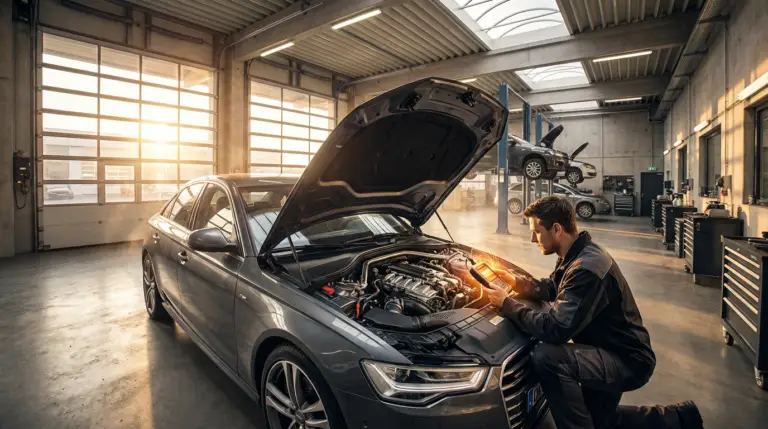
We start by connecting a check engine light analyzer—also called an OBD-II scanner—to the diagnostic port under your dash. This tool communicates with the car’s computer and:
- Pulls stored and pending DTCs (diagnostic trouble codes).
- Shows live data from sensors (airflow, oxygen sensors, fuel trims, etc.).
- Lets us view freeze frame data (a snapshot of conditions when the code set).
Step 2 – Read and Interpret Diagnostic Trouble Codes (DTCs)
Each code points to a system or type of fault, not a guaranteed bad part. For example, an oxygen sensor code could mean:
- A failing sensor, or
- An exhaust leak, or
- An engine running too rich or lean for another reason.
An experienced check engine light mechanic looks at:
- All codes together (not just the first one).
- How often they’ve occurred.
- Whether they are current, pending, or history codes.
Some codes are generic; some are brand-specific. For example, diagnosing a code like those covered in our BMW DTC P1418 trouble code diagnosis in Richardson, TX article takes brand-specific information and experience, not just a generic code reader.
Step 3 – Perform Targeted Tests and Visual Inspections
After reading codes and data, we confirm what’s really wrong using:
- Visual inspection: Look for loose connectors, broken wires, cracked hoses, leaks, or physical damage.
- System tests: Smoke tests for EVAP leaks, fuel pressure checks, compression tests, or advanced scan tool tests.
- Live data comparisons: Watching sensor readings while driving or under specific conditions.
This step separates a quick guess from a confident diagnosis.
Step 4 – Confirm the Root Cause and Explain Repair Options
Once we’ve pinpointed the root cause, we should:
- Explain what failed and why in plain language.
- Review what’s critical for safety versus what can wait.
- Give you repair options when possible—OEM vs aftermarket parts, staged repairs, etc.
- Tell you what will happen if you choose to delay or decline a repair.
You should leave understanding not just the bill, but the reason behind every recommended repair.
Free Code Read vs Full Diagnostic: What’s the Difference?
Understanding Offers Like “AAMCO Check Engine Light Free” and Parts Store Scans
Many shops and parts stores offer free code reads, including offers like aamco check engine light free or similar services from auto parts retailers. These can be helpful starting points, but they are not the same as a full diagnostic.
What Free Check Engine Light Scans Can and Cannot Tell You
Free scans typically:
- Use a basic handheld scanner.
- Read stored codes and maybe erase them.
- Sometimes print a simple explanation like “P0301 – Cylinder 1 Misfire.”
They usually do not include:
- Detailed live data analysis.
- Hands-on testing (smoke tests, fuel and compression tests, etc.).
- Brand-specific testing and technical service bulletin checks.
- Time from a trained diagnostic specialist to confirm the root cause.
Why a Proper Diagnostic Can Save Money and Prevent Repeat Failures
A full diagnostic costs more up front but often saves money later by:
- Preventing “parts darts” (guessing and tossing parts at the problem).
- Finding the real underlying issue, not just the symptom.
- Stopping repeat failures that keep turning the light back on.
- Protecting expensive components like the catalytic converter and engine internals.
In short, a free scan tells you where to look. A paid diagnostic tells you what’s actually wrong and how to fix it correctly.
Costs, Time, and What to Expect at a Check Engine Light Appointment
Typical Diagnostic Fees and How They’re Applied
Every shop sets its own rates, but here’s what you can generally expect:
- Basic scan and evaluation: Often a flat diagnostic fee that covers time with a technician and use of professional equipment.
- Deeper diagnostics: If the problem is complex, additional testing time may be needed, which the shop should explain and get approval for.
- Applying diagnostic fees: Many shops apply part or all of the diagnostic fee toward the repair if you approve the work—ask how your shop handles this.
Example Scenarios: Gas Cap vs Sensor vs Catalytic Converter
Here are a few realistic scenarios, without promising specific prices:
- Loose gas cap
The diagnostic shows an EVAP leak, and inspection finds a loose or worn cap. The fix may be as simple as tightening or replacing the cap and verifying the system. - Failed oxygen sensor
Diagnostic confirms the sensor is slow or not responding. The repair involves replacing the sensor, clearing codes, and verifying fuel trims and sensor activity. - Damaged catalytic converter
Readings and tests show the converter is not working efficiently, often due to long-term misfires or fuel issues. This is usually a more expensive repair and may require addressing underlying issues (like misfires) at the same time.
Questions to Ask Your Mechanic Before Approving Repairs
Before saying yes to repairs, ask:
- “What did you find and how did you confirm it?”
- “Is this repair safety-critical or can it wait?”
- “What are my options for parts? OEM vs aftermarket?”
- “Will this repair clear the check engine light, or is anything else borderline?”
- “What happens if I choose not to fix this right now?”
An honest check engine light mechanic will welcome these questions.
Texas-Specific Considerations for Check Engine Lights
How Texas Heat and Stop-and-Go Traffic Affect Engine Components
In North Texas, especially around Richardson TX, our driving conditions are hard on vehicles:
- High heat stresses cooling systems, plastic connectors, rubber hoses, and ignition components.
- Stop-and-go traffic on US-75 and local roads means more idling, which can clog EGR and intake systems and stress cooling fans.
- Short trips and long commutes can contribute to carbon buildup and sensor fouling.
All of this can increase the chances of a check engine light, especially on older vehicles or those overdue for maintenance.
Check Engine Light and Texas Emissions/Inspection Requirements
For most modern vehicles in Texas, a check engine light can cause an emissions inspection failure. If the light is on or certain readiness monitors are not complete, your vehicle may not pass its annual state inspection until the issue is fixed and the monitors reset properly.
Why Richardson TX Drivers Shouldn’t Ignore Intermittent Lights
If the light goes off by itself, the problem may still be stored as a history code. Ignoring it can lead to:
- Worsening fuel economy and performance.
- Hidden misfires that damage the catalytic converter.
- Failing inspection later when you’re short on time.
If your light comes and goes, it’s still worth having a check engine light mechanic scan for stored codes and check system data, especially before long trips or busy seasons.
How We Diagnose Check Engine Lights in Richardson TX
Our Process for Accurate, Safety-Focused Engine Diagnostics
As a local shop serving Richardson TX, we approach every check engine light with safety and long-term reliability in mind:
- Listen first: We start by asking about symptoms—when the light came on, how the car feels, fuel mileage changes, and any recent work.
- Scan and analyze: Use a professional check engine light analyzer to pull codes, view freeze frame, and watch live data.
- Inspect and test: Perform targeted inspections and tests based on the codes and your symptoms.
- Explain and plan: Review findings with you, prioritize safety-related items, and build a repair plan that fits your needs.
- Verify repairs: After repairs, we confirm codes are clear, test-drive the vehicle, and re-check for pending issues.
When we see families coming in for school carpools or long commutes, we may recommend tying engine diagnostics into a broader safety review like our back-to-school carpool safety check in Richardson TX so the whole vehicle is ready, not just the engine.
How Check Engine Issues Tie Into Other Safety Systems (Airbags, ADAS, etc.)
In many newer vehicles, an engine or emissions problem can interact with other systems:
- Reduced power modes can affect how your car accelerates into traffic.
- Communication network faults can cause multiple warning lights at once.
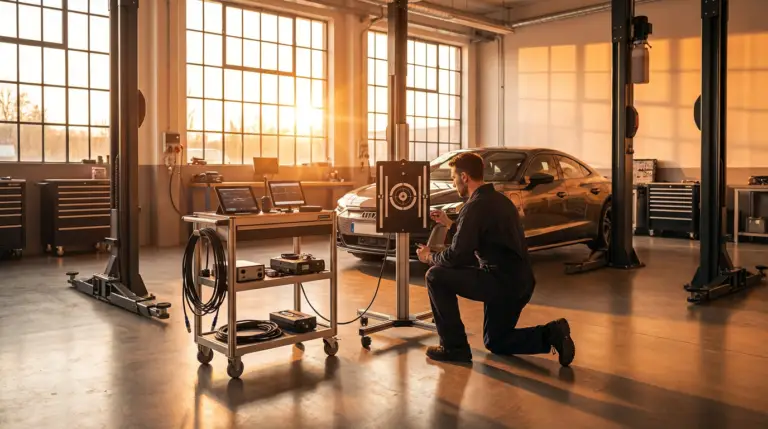
- Post-repair alignment or body work can affect advanced driver-assistance systems (ADAS) if sensors are not recalibrated properly.
That’s why, if your check engine light came on after collision or major repairs, we may also discuss post-repair ADAS misalignment risks for Richardson drivers and whether a full safety and alignment check is appropriate.
When to Combine Check Engine Diagnostics With a Broader Safety Check
It’s smart to combine a check engine diagnostic with a broader safety check when:
- You’re about to start a new job with a longer commute.
- Your family is planning a long road trip in Texas summer heat.
- The vehicle is new to you (recently purchased used).
- The check engine light showed up alongside ABS, airbag, or traction control lights.
This way, we’re not just turning off a light—we’re making sure the car is safe and ready for real-world Texas driving.
Step-by-Step: What to Do Right Now if Your Engine Sign Is On
If the Light Just Came On and the Car Feels Normal
If your check engine light just came on and the car still feels normal, here’s a simple 40–60 word answer to “What should I do when my check engine light comes on?”:
Safely check your gauges for overheating or low oil, listen and smell for anything unusual, and tighten your gas cap. If the light is solid and the car runs normally, drive gently and schedule a visit with a qualified check engine light mechanic soon to prevent bigger problems.
Then follow this checklist:
- Check the temperature gauge and oil pressure light—if either is in the danger zone, shut it off.
- Step out (in a safe place) and sniff for strong fuel or burning smells.
- Tighten the gas cap until it clicks; note the mileage and conditions when the light came on.
- Schedule a diagnostic within the next day or two.
If the Light Is Flashing or the Car Feels Rough
If your check engine light is flashing or the car feels unsafe:
- Ease off the throttle immediately.
- Move to the right lane and pull over safely.
- Shut the engine off.
- Call for a tow to a trusted check engine light mechanic.
Driving through a flashing light can severely damage the catalytic converter and, in worst cases, the engine itself.
How to Prepare for Your Visit to a Check Engine Light Mechanic
Before your appointment, it helps to:
- Write down when the light came on (cold start, after highway driving, in heavy traffic, etc.).
- Note any changes: rough idle, poor power, fuel smell, worse fuel mileage.
- Bring any previous repair invoices or inspection reports.
- Have your VIN ready—this helps us look up correct parts and service info. You can use our free VIN decoder to grab your vehicle details.
FAQs About Check Engine Lights and Mechanics
What should I do first when my check engine light comes on?
First, stay calm. Check your temperature gauge and oil pressure light. Listen for odd noises and sniff for burning or fuel smells. If everything feels normal and the light is solid, tighten your gas cap, drive gently, and schedule a diagnostic soon. If the car feels rough or the light is flashing, pull over and call for a tow.
Is it safe to drive with the check engine light on?
Sometimes. If the light is solid and the car runs normally, it’s usually safe to drive a short distance to a nearby shop. If it’s flashing, or you notice shaking, loss of power, or other warning lights, you should pull over and avoid driving further to prevent serious damage.
What does a flashing check engine light mean?
A flashing check engine light almost always means an active misfire that’s serious enough to risk damaging the catalytic converter. It’s your car’s way of saying, “Stop driving me like this right now.” Safely pull over and have the vehicle towed to a qualified check engine light mechanic.
Do I really need a check engine light mechanic, or can I just clear the code?
Clearing the code without fixing the cause is like turning off a smoke alarm without checking for fire. The light may stay off for a while, but the problem is still there and can get worse. A proper diagnostic finds and fixes the underlying issue instead of just hiding the warning.
What is a check engine light analyzer and how does it work?
A check engine light analyzer, or OBD-II scanner, is a tool we plug into your car’s diagnostic port. It talks to the vehicle’s computer to read stored codes, view freeze frame data, and monitor live sensor readings. Used properly by a trained tech, it guides us to the right tests to find the root cause.
Are free check engine light scans, like aamco check engine light free or parts store scans, enough?
Free scans are a helpful starting point, but they usually just read and clear codes. They don’t include the deeper testing, data analysis, and inspections a full diagnostic requires. For simple issues you might get lucky, but for anything more complex, a professional diagnostic is the safer and more cost-effective choice.
How much does it usually cost to diagnose a check engine light problem?
Diagnostic fees vary by shop and complexity, but expect a flat fee for the initial scan and evaluation, with possible additional time for complex issues. Many shops apply part of this fee toward the repair if you approve the work. Always ask your shop to explain their diagnostic process and how fees are structured.
Can a loose gas cap really cause the engine sign on my dashboard?
Yes. A loose, missing, or cracked gas cap is one of the most common causes of a check engine light. It can cause a small vapor leak in the EVAP system, which the car detects. Tighten the cap until it clicks. If the light doesn’t clear after some driving, have it checked.
Will a check engine light make my car fail inspection in Texas?
In most cases, yes. If the check engine light is on or certain emissions readiness monitors have not completed, your vehicle may not pass Texas emissions inspection. It’s best to have issues diagnosed and repaired well before your inspection date to avoid surprises.
How long does a check engine light diagnostic usually take?
A straightforward diagnostic might take around an hour; more complex issues can take longer, especially if multiple tests are needed or the problem is intermittent. Your shop should give you an estimated time frame after an initial evaluation.
Can I damage my engine by ignoring the check engine light?
Yes. Some issues are mild at first but become serious over time. Misfires can overheat and ruin the catalytic converter; fuel mixture problems can wash down cylinder walls; overheating and low oil can destroy an engine. Ignoring the light can turn minor repairs into major ones.
How do I choose a trustworthy check engine light mechanic in Richardson TX?
Look for a shop that:
- Has strong reviews and a solid reputation in Richardson TX.
- Explains findings in plain language and welcomes your questions.
- Uses professional diagnostic equipment, not just basic code readers.
- Provides written estimates and prioritizes safety-critical repairs.
You can learn more about our services and approach here: Richardson TX auto safety and diagnostic services.
When to Schedule a Professional Check Engine Light Diagnostic in Richardson TX
Signs You Should Call Today
You should schedule a diagnostic with a check engine light mechanic as soon as possible if:
- Your check engine light has been on for more than a day or two.
- The light is flashing or the car feels rough, especially under load.
- Your fuel economy has dropped noticeably.
- You hear new ticks, knocks, or rattles from the engine.
- Your Texas inspection date is coming up.
How to Contact a Local Check Engine Light Mechanic
If you’re in or around Richardson TX and your engine sign on the dashboard is on, don’t wait for it to turn into a breakdown on US-75 in rush hour. Reach out to a trusted local check engine light mechanic, bring your questions, and let a professional check engine light analyzer and thorough diagnostic process give you clear answers.
The sooner you have it checked, the easier it is to protect your engine, your budget, and your peace of mind on Texas roads.