
BMW Passenger Restraint System Malfunction: Causes, Diagnostics, and Safe Repair Workflow
Key Takeaways – BMW Passenger Restraint System Malfunction
- What it means: A bmw passenger restraint system malfunction warning means the SRS (Supplemental Restraint System) has detected a fault that can affect airbag and seat belt protection, even if everything looks normal.
- Common causes: Frequent issues include a faulty passenger seat mat/occupancy sensor, damaged wiring under the seat, seat belt buckle or pre-tensioner faults, and SRS airbag control module problems, which are risky to guess at without proper diagnostics.
- Next steps: The safest path is a professional Vehicle Diagnostic and, when needed, SRS Airbag Module Reset or Airbag Module Replacement, Seat Belt Replacement, or Pre-Tensioner Replacement performed by qualified safety-system specialists.
In This Guide:
🧩 What This BMW Warning Really Means – Understand your passenger restraint system.
⚠️ Symptoms, Safety Risks, and DIY Pitfalls – How to tell what’s serious and what not to do.
🛠️ Common Causes and Diagnostic Steps – From seat sensors to SRS modules.
🧪 Safe Repair Workflow for Owners and Independent Shops – A step-by-step outline you can follow.
📍 Professional SRS Help Near Farmers Branch TX – How DFW Safety Restore can assist.
❓ FAQs About BMW Passenger Restraint System Malfunctions – Clear answers to common questions.
What This BMW Warning Really Means
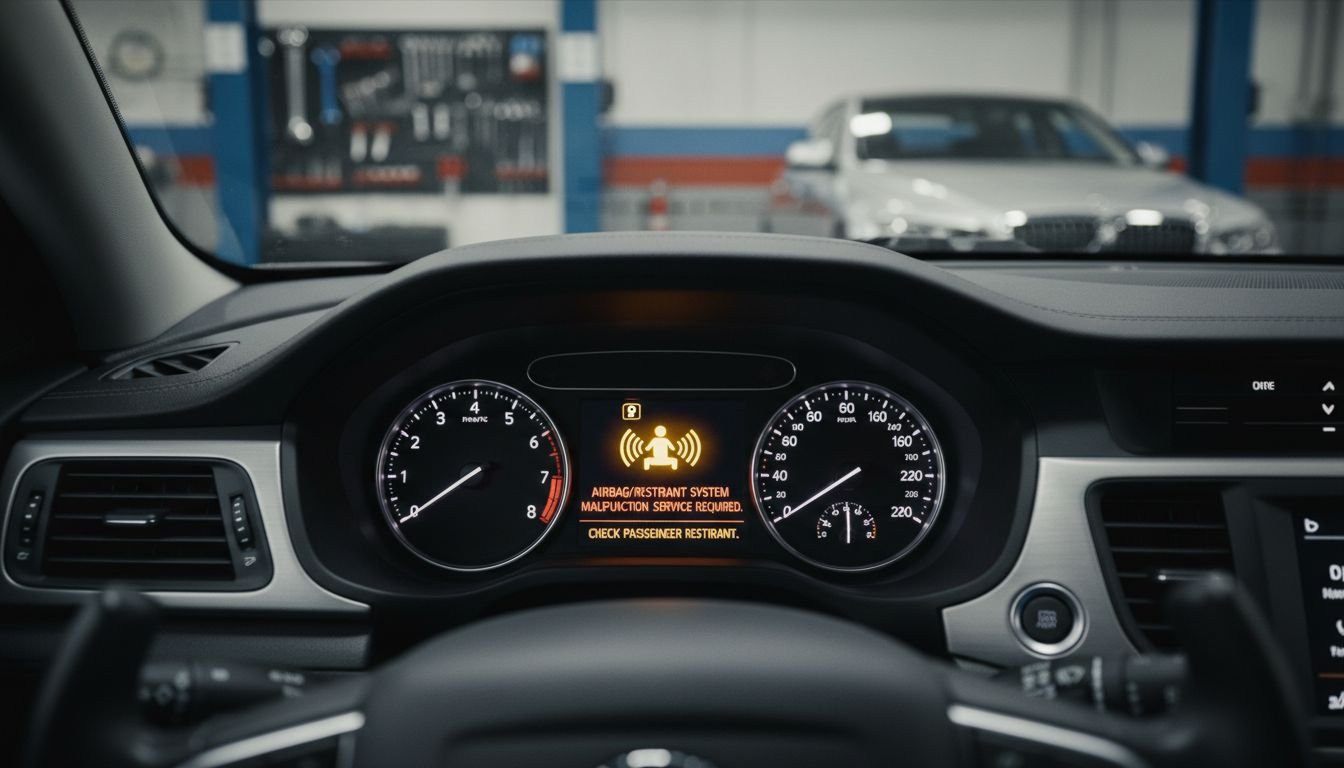
On a BMW, a bmw passenger restraint system malfunction or similar warning means the SRS computer has detected a problem in the system that helps protect you in a crash. That system includes airbags, seat belts, pretensioners, and multiple sensors that must all work together in milliseconds. When the SRS detects a fault, it turns the airbag light or message on and may change how certain airbags or seat belt pre-tensioners operate.
The important point is that this is not just a bulb or minor electrical warning. It is a direct indication that the vehicle’s crash protection strategy may be altered. In many cases the system will disable specific airbags or pre-tensioners to avoid deploying them unpredictably, which can reduce protection for front-seat passengers.
Components Typically Involved in a BMW Passenger Restraint System
When a BMW shows a BMW passenger restraint system warning, any of the following components may be involved. A proper scan tool is needed to narrow it down.
- Airbags: Front driver and passenger airbags, side airbags in the seats or doors, curtain airbags along the roofline, and sometimes knee airbags.
- Seat belts and pre-tensioners: The belt retractors and buckles, plus pre-tensioners that fire small pyrotechnic charges to tighten belts instantly in a crash.
- Passenger seat occupancy mat / seat sensor: A pressure or presence sensor in the front passenger seat that tells the SRS whether to arm or disable the passenger airbag.
- Seat belt buckle sensors: Switches in the latch that tell the system whether a belt is actually latched.
- Wiring harnesses and connectors: Especially those under the front seats and along the floor that can be stressed by seat movement or moisture.
- SRS / airbag control module: The central computer that monitors crash sensors and decides when to deploy airbags or pre-tensioners.
- Clock spring in the steering column: A spiral-wound ribbon cable that carries airbag and control signals to the steering wheel while allowing it to turn.
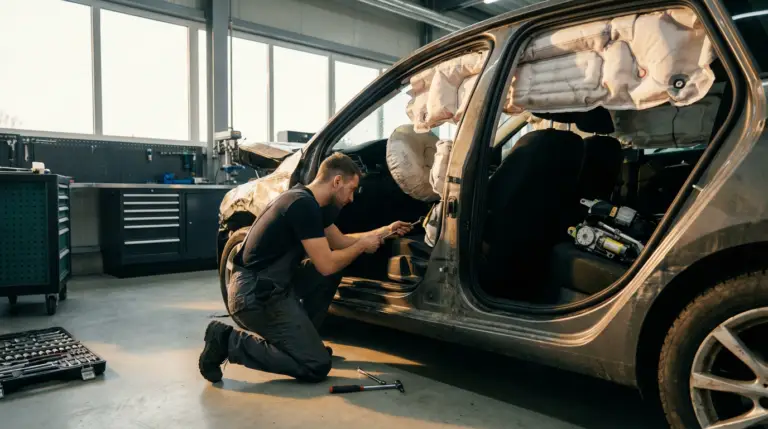
All of these components are part of the Supplemental Restraint System. Many of them, including airbags and pre-tensioners, contain pyrotechnic/explosive charges that can fire with tremendous force if mishandled.
Symptoms, Safety Risks, and DIY Pitfalls
Most drivers first notice a passenger restraint system malfunction airbag light as text and symbols on the dashboard. BMW clusters may display “Passenger Restraint System Malfunction,” “Fault in passenger restraint system,” or show an airbag icon together with a seat belt symbol. Sometimes the message appears only when someone sits in the passenger seat or when the seat is moved.
In some cases, you may also hear chimes or see warnings like “Drive moderately” or other advisory messages. The car usually drives and handles normally, which can tempt owners to ignore the warning. However, the underlying safety risk is that the SRS may not protect occupants as originally designed in a collision.
Is It Safe to Drive With This Warning On?
From a pure drivability standpoint, the vehicle will typically start, steer, and stop normally with this warning. The concern is not whether you can drive but whether you will be properly protected in a crash. When a BMW passenger restraint system malfunction is active, the SRS may disable specific airbags or pre-tensioners or change deployment thresholds.
That means there is no guarantee every airbag or seat belt device will deploy the way the original engineers intended. For that reason, it is wise to minimize driving until the fault can be professionally diagnosed, especially if you routinely carry passengers in the front seat. At the very least, schedule a Vehicle Diagnostic as soon as you can.
Why DIY Resetting or Bypassing Is Dangerous
The SRS is not like a typical electrical circuit you can probe freely. Airbags and seat belt pre-tensioners use pyrotechnic charges, and the wiring is designed to fire these devices under specific conditions. Probing yellow connectors with test lights, adding resistors to “fake” a good sensor, or splicing wires can lead to unintended deployment or non-deployment.
Forums sometimes suggest bypassing a passenger seat mat or jumpering a connector to extinguish the light. These shortcuts may be unsafe or illegal, and they can create serious liability problems for both owners and shops if someone is injured in a crash. The only safe path is to find and correct the root cause using proper diagnostic tools and following OEM-level procedures.
Any time you are dealing with SRS wiring, remember: do not unplug or modify yellow connectors, do not apply power to airbags, and do not attempt to “repair” explosive components. Leave that work to trained technicians with the right equipment and safety protocols.
Common Causes and Diagnostic Steps for BMW Passenger Restraint Faults
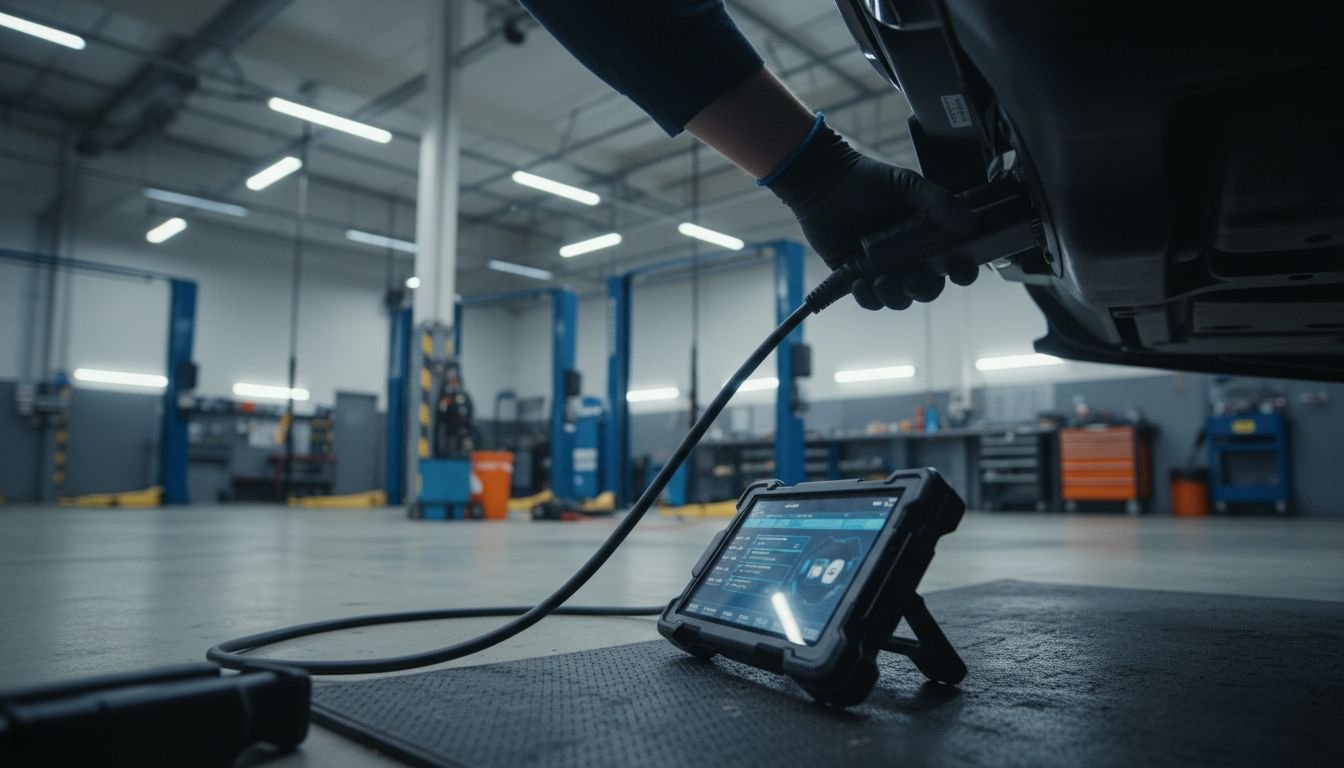
BMW vehicles have some typical patterns when a BMW passenger restraint system malfunction appears. Knowing the common failure points can help you ask better questions and avoid unnecessary parts-swapping, but you still need a scan tool and proper testing to be sure. Guessing based on symptoms alone is not enough for a safety-critical system.
Common BMW-Style Causes (Seat Mat, Buckle, Wiring, Module)
Here are some of the more frequent causes of an airbag and seat belt warning on BMW vehicles.
- Passenger seat occupancy sensor / seat mat failure: Many BMW generations use a sensing mat in the passenger seat cushion that can crack or fail over time, especially if the seat sees a lot of use.
- Loose or damaged wiring/connectors under the seats: Movement of the seat fore and aft can stress the harness and connectors, occasionally pulling pins loose or breaking wires.
- Seat belt buckle or pre-tensioner faults: The buckle switch may fail, or the pre-tensioner may show a fault or open circuit, especially after even a minor collision.
- SRS airbag control module issues: The module can store crash data after an accident or suffer internal failures or water intrusion, all of which can trigger warnings.
- Clock spring problems: A worn or damaged clock spring in the steering column can set airbag faults, especially for the driver airbag and steering-wheel controls.
- Other wiring damage: Rodent damage, corrosion under carpets, or prior poor-quality repairs can all cause intermittent or permanent SRS faults.
These are patterns, not diagnoses. The correct approach is to pull SRS fault codes with a capable scan tool and confirm each suspected component with appropriate testing. That’s the only way to know whether you are looking at, for example, a bad seat mat or simply a loose connector under the seat.
Basic Owner-Level Checks (No Tools, No Disassembly)
There are a few safe checks you can perform as an owner without touching SRS wiring or opening anything. None of these involve tools or working directly on airbag circuits. They are simply observations you can share with your technician.
- Note when the warning appears – only with a passenger, when moving the seat, randomly, or after hitting bumps.
- Look for obvious damage or moisture around the passenger seat, like bent seat rails, wet carpets, or standing water that might hint at wiring corrosion.
- Think about recent work done in the car, such as upholstery, stereo, or seat removal, where connectors under the seats might have been disturbed.
- Pay attention to other electrical issues like weak battery, flickering lights, or multiple warning messages that could point to low voltage or broader wiring problems.
Even with these observations, do not start unplugging connectors, especially anything yellow, or probing wires. Your goal is to provide better information to the shop that will perform the actual diagnostic work.
Professional Diagnostic Steps (For Shops and Serious DIYers)
For independent shops and advanced DIYers, a structured diagnostic approach is essential. The SRS requires more than a generic code reader; you need a scan tool that can talk directly to the airbag module and related systems. This is similar to how shops diagnose powertrain codes, as explained in guides like how diagnostic codes point to root causes instead of guesswork.
- Connect a professional scan tool that can access the SRS/airbag module and body modules, not just the engine ECU.
- Read and record all stored and current SRS fault codes, including freeze frame data if available.
- Use live data to monitor passenger seat occupancy status, buckle latched/unlatched state, and other relevant inputs while gently reproducing conditions.
- Visually inspect harnesses and connectors related to the reported fault, especially under seats, around buckles, and at the module for damage, corrosion, or pinched wires.
- If the SRS control unit reports crash data or internal module failure, note that it may require an SRS Airbag Module Reset or Airbag Module Replacement by a specialist service.
Shops should follow manufacturer-recommended safety procedures when working around SRS components, including battery disconnect and waiting periods. Never attempt to bench-test airbags or pre-tensioners with direct power, and avoid any improvised testing that could lead to accidental deployment.
Safe Repair Workflow for Owners and Independent Shops
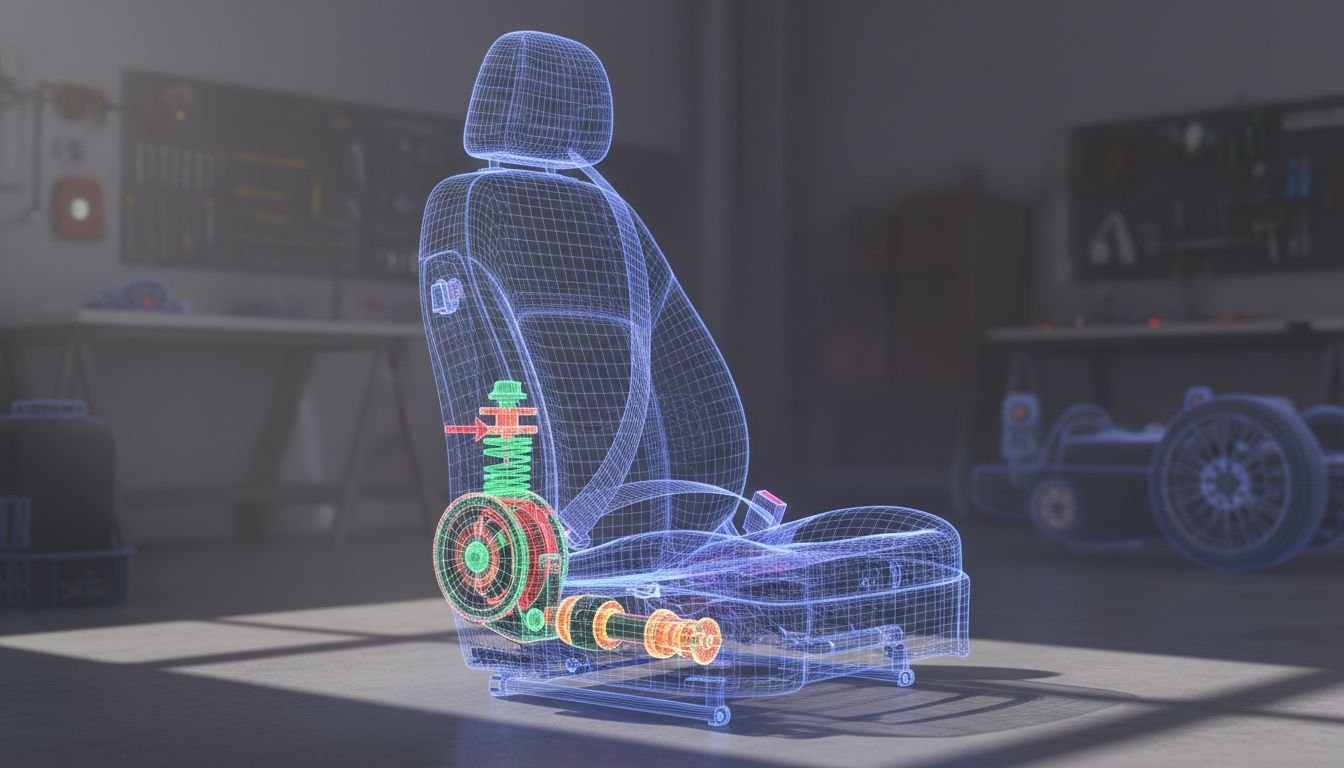
Once you have fault codes and basic information, the next step is to plan a safe, logical repair workflow. For owners, this usually means choosing a qualified shop and understanding the steps they should follow. For independent shops, it means slowing down, documenting each code, and deciding what to reset, what to replace, and what to leave alone.
Step 1 – Confirm the Code and Underlying Cause
Never start by just clearing SRS codes and hoping they do not return. Instead, record all codes and verify which ones are current and which may be history. Consistent, repeatable codes pointing to a specific seat mat, buckle, or pre-tensioner usually indicate where you need to focus testing.
If multiple codes are present – such as both a seat mat code and an internal SRS module fault – you will need a systematic plan. Address simple wiring or connector issues first, verify fixes, and then reassess remaining faults. This structured thinking is the same reason why precise diagnostics matter before replacing parts on any modern vehicle.
Step 2 – Decide What Needs Replacement vs. Reset
Most SRS “repairs” are actually replacements of specific components or a reset of the control module’s internal data. A frayed or burned pre-tensioner, for example, cannot be repaired; it must be replaced with the correct part. Likewise, a cracked seat mat or failed buckle switch needs replacement, not patching.
If a crash has occurred and the SRS module only contains stored crash data but is otherwise healthy, it may be a candidate for a professional SRS Airbag Module Reset. If testing shows an internal hardware fault in the control unit, an Airbag Module Replacement is typically needed. The same logic applies to other components: damaged seat belts, pre-tensioners, or airbags are safely addressed with Seat Belt Replacement, Pre-Tensioner Replacement, or Airbag Replacement, not improvisation.
While this guide uses BMW warnings as an example, similar passenger restraint, airbag, and seat belt faults occur on many American and Japanese vehicles. In those cases, specialty shops such as DFW Safety Restore in Farmers Branch TX can assist with Vehicle Diagnostic, SRS Airbag Module Reset, Airbag Module Replacement, Seat Belt Replacement, Pre-Tensioner Replacement, Airbag Replacement, and Clock Spring Replacement following OEM-style procedures.
Step 3 – Perform Repairs Safely
Whether you are an owner supervising the process or a shop doing the work, SRS repairs must follow strict safety steps. Always disconnect the battery and follow manufacturer-recommended wait times before touching any airbag or pre-tensioner connectors. Use correct torque specs and mounting procedures so that airbags and restraint components sit in the exact position engineers intended.
Never apply direct power, jumper wires, or homemade testers to any pyrotechnic device. After replacing components or performing an SRS Airbag Module Reset, clear codes using a capable scan tool. Then cycle the ignition and re-scan to ensure that no active SRS codes remain and that the airbag light stays off.
Remember that an incorrectly repaired SRS can be life-threatening and may expose shops to serious liability if a later crash reveals non-functioning airbags or belts. If your team is not comfortable with this level of work, it is better to partner with a specialist.
Step 4 – Final Verification and Documentation
A proper SRS repair ends with clean diagnostics and clear paperwork. The vehicle should have no active SRS fault codes, no airbag or passenger restraint warnings on the dash, and all related components operating as designed. A final road test and re-scan help confirm that intermittent wiring issues are resolved.
Shops should document all parts replaced, any SRS Airbag Module Reset or Airbag Module Replacement performed, and before/after scan reports. Some facilities also update a vehicle’s CarFax Report and use tools like a FREE VIN Decoder to confirm that correct, compatible restraint components are installed. This documentation protects both the shop and the vehicle owner long-term.
Professional SRS Help Near Farmers Branch TX
—IMAGE_BLOCK: Cinematic action shot of a safety-system specialist technician working on a sedan in a professional workshop, focusing on the dashboard area and diagnostic equipment, Cinematic lighting, photorealistic, 8k resolution, neutral workshop background—
Because the SRS involves explosive devices and critical safety components, it is not the place to cut corners. Misdiagnosis, cheap parts, or improper wiring repairs can leave airbags or seat belts inoperative when they are needed most. That risk applies whether the logo on the steering wheel is BMW, Ford, Toyota, or any other brand.
Specialized shops invest heavily in training, tools, and procedures specifically for safety systems. They understand how airbag algorithms work, how modules store crash data, and how to safely replace or reset components without creating new hazards. For many owners and general repair facilities, partnering with a restraint-system specialist is the safest choice.
How DFW Safety Restore Supports Drivers and Shops in DFW
DFW Safety Restore is a safety-system-focused facility based in Farmers Branch TX, serving drivers and shops across the Dallas–Fort Worth area. While this article uses BMW warnings as an educational example, we primarily assist with similar passenger restraint, airbag, and seat belt issues on American and Japanese vehicles. Our focus is on restoring safety system performance using tested workflows and high-quality components.
Our services include:
- Vehicle Diagnostic for SRS/airbag and related safety-system faults.
- SRS Airbag Module Reset and Airbag Module Replacement when modules store crash data or show internal failure.
- Seat Belt Replacement and Pre-Tensioner Replacement for damaged or deployed restraint components.
- Airbag Replacement and Clock Spring Replacement where necessary, following OEM-style procedures.
- Additional safety-related and support services such as ADAS Calibration, CarFax Report assistance, FREE VIN Decoder, and a full range of locksmith and key programming services including Vehicle Key Cutting, Transponder Key Programming, Smart Key Programming, Key Fob Replacement & Programming, Car Lockout Assistance, Vehicle All Keys Lost, Vehicle Key Duplication, and Vehicle Key Copying.
If you are dealing with a passenger restraint or airbag warning on your American or Japanese vehicle, we can help you determine whether you need diagnostics, module reset, module replacement, or specific restraint component replacements. You can learn more about our Farmers Branch location and services at this dedicated service page. For quick reference to your vehicle’s build information and safety equipment, we also provide a FREE VIN Decoder.
Service Area Around Farmers Branch TX
DFW Safety Restore proudly serves Farmers Branch TX and the greater DFW region, including Addison, Allen, Anna, Arlington, Burleson, Carrollton, Cedar Hill, Celina, Colleyville, Coppell, Dallas, Denton, DeSoto, Duncanville, Euless, Flower Mound, Fort Worth, Frisco, Garland, Grand Prairie, Grapevine, Haltom City, Highland Park, Hurst, Hutchins, Irving, Kennedale, Lake Dallas, Lake Worth, Lancaster, Lewisville, Little Elm, Mansfield, McKinney, Melissa, Mesquite, North Richland Hills, Pantego, Plano, Prosper, Richardson, Richland Hills, Rockwall, Saginaw, Seagoville, Southlake, The Colony, Trophy Club, University Park, Watauga, White Settlement, Wilmer, plus Dallas County, Denton County, Rockwall County, Collin County, and Tarrant County.
If you are in or near these areas and facing restraint-system or airbag warnings on an American or Japanese vehicle, we encourage you to call for same-day or next-available diagnostics. Addressing these warnings promptly helps ensure that your vehicle’s safety systems are ready when you need them.
FAQs About BMW Passenger Restraint System Malfunctions
What does “BMW passenger restraint system malfunction” actually mean?
This warning is sent by the SRS/airbag control unit when it detects a fault in a component that helps protect occupants in a crash. That component could be an airbag, seat belt, pre-tensioner, passenger seat occupancy sensor, buckle switch, or related wiring. It is a sign that the system may not be able to provide full protection until the issue is diagnosed and corrected.
Will my airbags still deploy if this warning is on?
In many cases, some parts of the system will still function while others are disabled for safety. The problem is that there is no guarantee every airbag or pre-tensioner will deploy as designed when the warning is present. This is exactly why a professional Vehicle Diagnostic is vital whenever you see a passenger restraint or airbag warning.
Is it safe to keep driving with a passenger restraint system malfunction?
The vehicle will usually drive normally, but its crash protection can be reduced. You could be at greater risk in a collision if key airbags or pre-tensioners are disabled or mis-calibrated. It is best to limit driving, avoid unnecessary passengers in the affected seat, and schedule diagnostics as soon as possible.
Can I just clear the code or disconnect the battery to fix the warning?
Simply clearing codes or disconnecting the battery does not fix the underlying fault. In some cases it can temporarily hide a serious safety problem, giving a false sense of security until the warning returns. Because the SRS contains pyrotechnic/explosive devices, it should only be serviced and reset by trained professionals using the correct tools.
Can I repair this or do I need to replace parts or reset the SRS module?
Most restraint system issues are solved by replacing failed parts such as seat belts, pre-tensioners, airbags, clock springs, or damaged wiring, and in some cases by performing an SRS Airbag Module Reset or full Airbag Module Replacement. The correct choice depends entirely on what a proper diagnostic reveals about the fault and the vehicle’s crash history. Shops like DFW Safety Restore in Farmers Branch TX can help with module resets, replacements, and restraint component replacements on American and Japanese vehicles that experience similar passenger restraint or airbag faults.