Best VIN Check: How to Choose the Right VIN Lookup, Decoder, and Report
Before you buy a used car or truck, the best VIN check is one that fits your risk level, budget, and safety needs—not just the one that’s free. This guide breaks down VIN checks, VIN decoders, and full vehicle history reports so you can compare them side by side, spot red flags, and make safer decisions whether you’re shopping in Texas or anywhere in the U.S.
Throughout this article you’ll see references to a dedicated VIN decoder tool you can use to start your research: VIN Decoder Tool.
What Is a VIN Check and Why It Matters
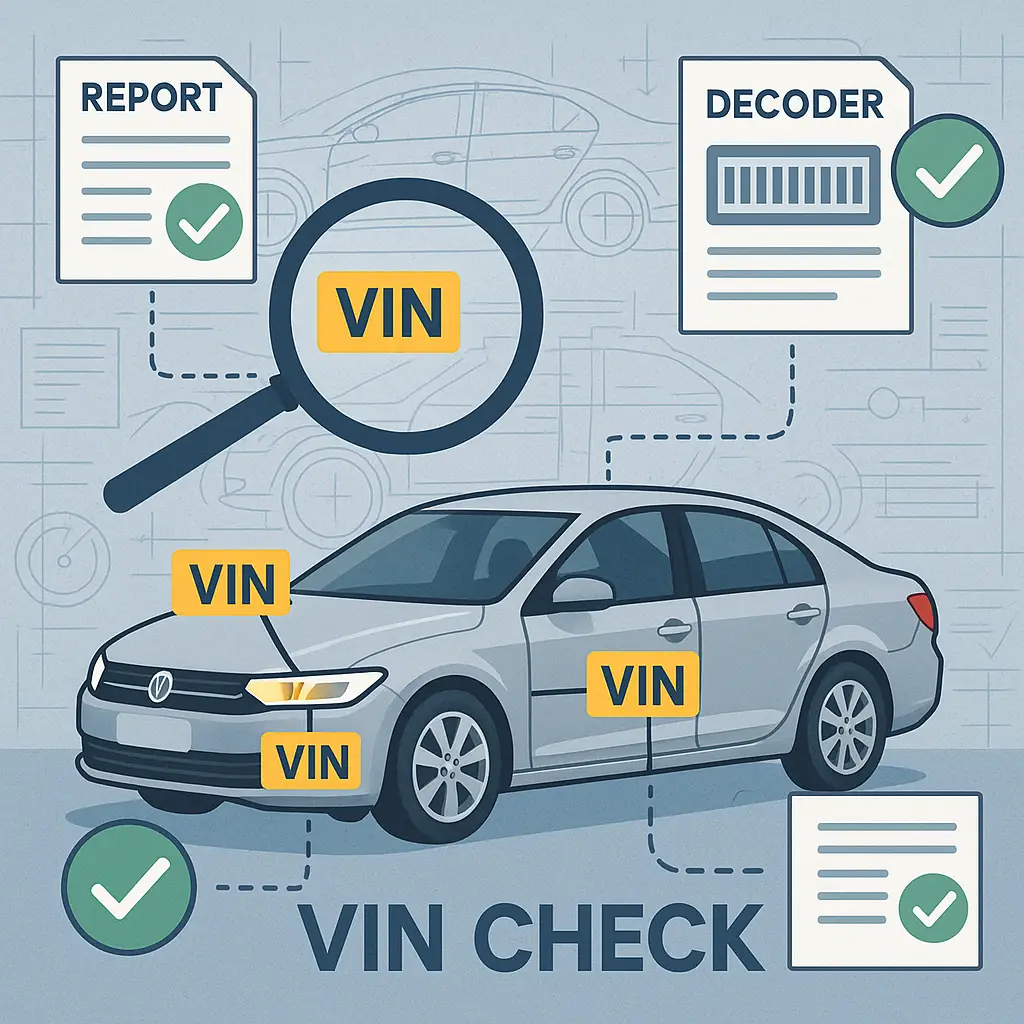
VIN check (definition for snippets): A VIN check is a search of a vehicle’s 17-character Vehicle Identification Number in multiple databases to reveal its title history, past accidents, mileage records, recalls, and sometimes basic specs.
What a VIN Is and How It’s Structured
A Vehicle Identification Number (VIN) is a unique 17-character code assigned to every modern vehicle. It works like a fingerprint.
- Characters 1–3: World Manufacturer Identifier (who built it and where).
- Characters 4–8: Vehicle attributes (model, body style, engine, restraint system).
- Character 9: Check digit (used to verify the VIN is valid).
- Character 10: Model year.
- Character 11: Assembly plant.
- Characters 12–17: Production sequence number.
A VIN decoder uses this structure to translate the code into human-readable details like engine size, body style, and sometimes trim level.
What a VIN Check Actually Shows (and What It Doesn’t)
Different VIN services pull from different databases. In general, a good VIN check can show:
- Title history: Where the car has been titled/registered and any title brands (salvage, rebuilt, flood, lemon, etc.).
- Reported accidents: Police reports, insurance claims, and some repair facility records.
- Odometer readings: From inspections, registrations, emissions tests, auctions, and service visits.
- Theft records: If the vehicle has been reported stolen (and not recovered).
- Open safety recalls: Many tools now show recall status or link to official recall sites.
- Basic specs: Engine, transmission, body style, drive type, and sometimes trim.
What a VIN check cannot guarantee:
- It does not show every accident—only ones that get reported into systems it checks.
- It may miss small private repairs and cash jobs (like fixing hail or minor fender-benders off the books).
- It cannot tell you current mechanical condition, rust inside frame rails, or whether the repair work was done correctly.
- It won’t replace a full pre-purchase inspection or ADAS/safety system calibration check.
When You Must Run a VIN Check (Before Buying, After a Crash, Before Repairs)
You should run at least one VIN check in these situations:
- Before buying any used vehicle: Private sale, dealer, auction, or online marketplace.
- Before buying a rebuilt/salvage vehicle: To see prior title brands, structural damage, and repeat total losses.
- After a serious crash: To document history and value impact, and to see if the vehicle later shows up as salvage or rebuilt.
- Before major repairs or ADAS work: Knowing past damage helps shops in places like Mansfield TX check for prior improper repairs and misaligned sensors.
What Makes One VIN Check “Best” for You?
There is no single “best VIN check” for everyone. The right choice depends on how much money is at stake, your risk tolerance, and what you need to know.
Key Criteria to Compare
Data Sources (DMV, Insurance, Auctions, OEMs, Recalls)
Better VIN services pull from many independent sources, such as:
- State DMVs and title databases.
- Insurance total loss and claim records.
- Major auctions (especially important for high-volume used trucks and fleet vehicles).
- Service and inspection records from dealers and chains.
- Manufacturer (OEM) recall and warranty systems.
The more sources a service uses, the more likely it is to spot issues like hidden salvage, rolled-back odometers, and chronic problems.
Depth of History (Accidents, Title Brands, Odometer, Theft)
When comparing the best VIN check tools, look for:
- Clear title brand list: Salvage, rebuilt, flood, lemon buyback, junk, export.
- Accident detail: Date, location, severity (minor/moderate/severe), and whether airbags deployed.
- Odometer timeline: Multiple readings over time with flags for inconsistencies.
- Theft status: Whether the car is or was reported stolen and if it was recovered.
Specs and Options Detail (Trim, Packages, Towing, Safety Features)
Some VIN tools act mainly as decoders and spec lookups. They focus on:
- Engine size, cylinders, and fuel type.
- Transmission type and drive type (FWD, RWD, AWD, 4×4).
- Trim level and sometimes option codes (towing package, off-road package, safety packages).
- Built-in safety systems like side airbags, blind-spot monitoring, or lane-keeping assistance.
If you’re trying to lookup car specs by VIN or check option packages (for example, on a Chevy truck), you may need an OEM-based decoder or window sticker tool in addition to a history report.
Cost, Free vs Paid, and Limitations
In broad terms:
- Free VIN checks: Great for a first screen (stolen/salvage, basic title data), but limited depth.
- Low-cost multi-report bundles: Good if you’re shopping multiple vehicles.
- Premium single reports: Most detail, best for high-value or high-risk purchases.
Always assume that free tools do not show everything. If thousands of dollars and your family’s safety are on the line, a paid history report is usually worth it.
Different Use Cases
Private Buyer vs Dealer vs Body Shop vs Enthusiast
- Private buyer: Needs clear, simple reports that highlight big red flags. One or two paid reports plus free checks is usually enough.
- Dealer: Often uses subscription-based history services and auction data; may also rely on OEM tools to verify options.
- Body shop / ADAS calibration shop: Needs VIN for build data, airbag systems, sensor locations, and recalls to ensure safe repairs.
- Enthusiast: May care more about rare options, exact build sheets, and original equipment; will lean on OEM decoders and enthusiast-run databases.
Daily Driver vs Work Truck vs Salvage Rebuild
- Daily driver: Focus on accident history, airbag deployments, frame or unibody damage, and open recalls.
- Work truck: Focus on mileage, usage pattern (fleet vs private), towing package, GVWR, and chassis condition.
- Salvage rebuild: You need the deepest possible history and should expect to run multiple reports, plus frame and ADAS inspections.
Best VIN Check Options: Side by Side Comparison
Quick Comparison Table
Side by Side VIN Lookup Chart for Major Providers
| Type | Example Tools | What They Do Well | Main Limitations | Best For |
|---|---|---|---|---|
| Free theft/salvage checks | NICB, some state portals | Show stolen/salvage status, some basic title info | No full accident history, limited mileage data | Quick first screen on any used car |
| Free VIN decoders | Online decoders, OEM VIN tools | Decode VIN structure, basic specs, sometimes trim | Little or no accident/title history | Checking engine, trim, or verifying seller’s claims |
| Paid vehicle history reports | Carfax, AutoCheck, similar | Deeper title/accident/mileage data, auction & service records | Cost per report, data still not 100% complete | Buying, selling, or valuing used vehicles |
| OEM recall & build tools | Manufacturer recall lookups, window sticker tools | Official recalls, exact factory options and safety equipment | Typically no accident or title history | Confirming safety features and packages by VIN |
| Research portals | Edmunds VIN check, similar sites | Specs, market value estimates, owner reviews | Not a full title/accident history in most cases | Understanding pricing and basic equipment |
Use this side by side VIN lookup approach: pair at least one free check with at least one paid report when the vehicle is expensive, newer, or has any hint of risk.
Free VIN Check Services
NICB and Other Theft/Salvage Checks
The National Insurance Crime Bureau (NICB) offers a free VIN check that focuses on:
- Whether the vehicle has been reported as stolen but not recovered.
- Whether it has been reported as a salvage vehicle by participating insurers.
NICB is excellent for catching major red flags like current theft status or past total loss. It’s not a full history report. You can access NICB’s VINCheck tool through their official website.
State or Government Resources (High-Level, Non-State-Specific)
Some states, DMVs, or title agencies offer limited VIN lookups, which may show:
- Current title status (clean, salvage, rebuilt, etc.).
- Branding notes (flood, lemon, junk).
- Odometer brand flags (not actual mileage, exceeds mechanical limits).
These are useful, but each state is different. Treat them as one piece of your overall best VIN check strategy, not the only step.
Limitations of Free VIN Checks
Free tools are powerful for quick screening, but they commonly miss:
- Minor to moderate accidents that never went through insurance databases.
- Service history at independent shops.
- Prior auction appearances and condition reports.
- Detailed odometer history and patterns of misuse (e.g., repeated auction flips).
Use them to rule out the worst candidates fast. Then use paid history reports on vehicles that pass that first filter.
Paid Vehicle History Reports
Carfax
Carfax is one of the best-known paid VIN checks for retail buyers. Strengths include:
- Broad data sources: auctions, some service centers, many dealer networks.
- Easy-to-read accident summaries and title brands.
- Odometer history and ownership timeline.
Limitations:
- Not every accident or repair is reported.
- Individual reports can be relatively expensive if you are shopping many vehicles.
For many buyers, a Carfax report is worth it on top of free checks, especially for newer or higher-priced vehicles.
AutoCheck and Similar
AutoCheck and comparable services focus on:
- Title and auction history.
- Odometer patterns and score-based risk assessment.
- Vehicle use types (fleet, rental, lease, taxi, police, etc.).
Some shoppers like to run both Carfax and AutoCheck for a true side by side VIN lookup on important purchases because each may show data the other misses.
When It’s Worth Paying for Multiple Reports
Consider buying more than one paid report if:
- The vehicle is expensive (late model luxury car, heavy-duty truck, high-end SUV).
- The VIN shows prior salvage, flood, or multiple owners in a short time.
- You see hints of prior body work, repaint, or uneven panel gaps during inspection.
- It’s a vehicle you plan to keep for many years, or your family’s primary transport.
Manufacturer and Dealer VIN Tools
OEM Recall Lookup by VIN
Every major manufacturer and the National Highway Traffic Safety Administration (NHTSA) offer recall lookups by VIN. These tools show:
- Any open recalls that have not yet been completed.
- Sometimes prior recall campaigns that were already performed.
Use these tools in addition to your main VIN check. Open recalls relating to airbags, seatbelts, or ADAS (braking, lane-keeping, collision-avoidance) are especially important to address quickly.
OEM Build Sheet / Window Sticker Tools
Some automakers and third-party tools can recreate the original window sticker or build sheet from the VIN. These are valuable for:
- Seeing every factory-installed option and package.
- Confirming safety and ADAS features your family depends on.
- Verifying that the vehicle matches the advertised trim and equipment.
Pairing these with a VIN decoder gives a strong picture of both history and equipment.
How to Lookup Car Specs by VIN
What Specs You Can Usually See by VIN
When you lookup car specs by VIN, you can often see:
Engine, Transmission, Drivetrain
- Engine size (e.g., 2.0L, 5.3L V8).
- Number of cylinders and fuel type (gas, diesel, hybrid, EV hardware).
- Transmission type (manual, traditional automatic, dual-clutch, CVT).
- Drive type (FWD, RWD, AWD, 4×4).
Trim Level and Package Codes
- Base, mid-level, or premium trims.
- Appearance packages (sport, chrome, blackout).
- Towing, off-road, or luxury packages.
Safety and ADAS Features Identified by VIN
Many modern vehicles encode safety equipment in the VIN or associated build data, such as:
- Front, side, and curtain airbags.
- Electronic stability control and traction control systems.
- Advanced Driver Assistance Systems (ADAS) like:
- Forward collision warning and automatic emergency braking.
- Lane departure warning and lane-keeping assist.
- Adaptive cruise control and blind-spot monitoring.
Tools to Lookup Car Specs by VIN
Free Spec Decoders and Data Aggregators
There are many free online VIN decoders that:
- Translate the VIN into engine and trim details.
- Show basic safety feature lists.
- Help confirm that what’s on the car matches what the VIN says.
Use these in combination with the dedicated VIN decoder to cross-check information.
OEM Sites and Enthusiast Decoders (Overview, No Endorsements)
Many brands have their own VIN-based tools or enthusiast-built decoders that:
- Show factory option codes in great detail.
- List production dates and plant info.
- Identify rare or special editions.
These are especially helpful for enthusiasts and for vehicles where options dramatically change value (e.g., heavy-duty trucks, performance models).
How to Verify Specs Match the Actual Vehicle
After you lookup car specs by VIN, always verify on the actual car or truck:
- Check engine bay labels for engine size and emissions info.
- Confirm transmission type during test drive.
- Verify ADAS features actually appear in the instrument cluster menus and behave as expected.
- Look for missing hardware (e.g., tow hitch on a truck supposedly equipped with a towing package).
If something doesn’t match, it could mean parts were swapped, the vehicle was incorrectly advertised, or there’s a deeper history issue.
How to Find Car Options by VIN (Packages, Tech, and Safety)
Why Options Matter for Price and Safety
Car options by VIN affect:
- Value: Leather, premium audio, sunroofs, and towing packages affect pricing.
- Safety: Extra airbags, ADAS packages, and better headlights can make a large difference in crash and avoidance performance.
- Insurance and repair costs: High-tech features can cost more to repair and recalibrate after accidents.
Best Ways to See Car Options by VIN
Window Sticker / Build Sheet Tools
Reprinted window stickers or build sheets list:
- All factory-installed options and packages.
- Original MSRP and package breakdown.
- Standard vs optional safety and tech features.
These are one of the most accurate ways to confirm car options by VIN at a glance.
Dealer Systems and OEM Decoders
Dealers and some independent shops can access factory systems that show:
- Warranty and recall status.
- Original build configuration down to interior color and option codes.
- Sometimes past warranty repairs and software updates.
If you’re serious about a higher-value purchase, asking a dealer service department or trusted shop in your area to verify options by VIN is smart.
Example: Using a Chevy Truck VIN Number Decoder
A Chevy truck VIN number decoder is a good example of how specific and helpful brand-focused tools can be.
Common Chevy Truck Codes Buyers Care About
With a Chevy truck VIN number decoder, you can often see:
- Engine: 4.3L V6, 5.3L V8, 6.2L V8, or Duramax diesel options.
- Series and weight rating (1500 / 2500HD / 3500HD).
- Cab and bed configuration (regular, double, crew; short/standard/long bed).
- Drive type: 2WD vs 4×4.
Towing Package, Off-Road Package, Safety/ADAS Options
With the right decoder or OEM build sheet, you can also identify:
- Towing package: Integrated trailer brake controller, upgraded cooling, hitch, wiring harness, and higher tow ratings.
- Off-road packages: Skid plates, off-road suspension, locking rear differential, all-terrain tires (e.g., Z71-type packages).
- Safety and ADAS options: Forward collision alert, lane-keep assist, blind-spot monitoring with trailer coverage, rear cross-traffic alert.
When comparing multiple used Chevy trucks, a detailed Chevy truck VIN number decoder plus a thorough VIN check can quickly show which truck really has the equipment and history you want.
Step-by-Step: Running a Side by Side VIN Lookup Before You Buy
Here’s a simple, repeatable process you can use on any used car or truck.
Collect the VIN and Basic Info
- Get the full 17-character VIN from the dash, door jamb label, or registration.
- Write down year, make, model, trim, mileage on the odometer, and asking price.
- Take photos of the VIN tags and odometer in case you need them later.
Run a Free VIN Check First
- Use NICB to check for stolen/salvage status.
- Use a free VIN decoder (and the VIN decoder tool) to confirm basic specs.
- If available, run any state/DMV title lookup.
Run 1–2 Paid Reports for High-Risk or High-Value Vehicles
- Purchase a Carfax, AutoCheck, or similar full report.
- For expensive vehicles, consider buying a second report from a competing provider for a true side by side VIN lookup.
Compare Results From Multiple VIN Lookups
- Line up key data: title brands, owner count, mileage readings, and accident entries.
- Highlight any differences between reports or between reports and the seller’s story.
- Check for consistency with what you see on the car (paintwork, frame rust, airbag indicators on dash, etc.).
Red Flags That Mean You Should Walk Away
Strong walk-away signals include:
- Unexplained salvage, rebuilt, or flood titles.
- Odometer rollbacks or big gaps in mileage history.
- Multiple accidents, especially with airbag deployment or structural damage noted.
- Recent title transfers across multiple states in a short time (possible title washing).
- Seller refusing to let you run your own VIN checks or showing only screenshots instead of real reports.
VIN Checks and Vehicle Safety: What to Watch For
Crash History, Airbags, and Structural Damage
When reading a VIN report, pay very close attention to:
- Airbag deployment: If the report notes deployed airbags, you must verify they were replaced with proper parts and that the airbag light comes on and goes off normally at key-on.
- Structural or frame damage: Many reports flag “structural damage” or “frame damage”. This can affect crash performance and may be impossible to fully fix on some vehicles.
- Multiple similar accidents: Repeated front or rear impacts increase the chance of hidden damage and misaligned safety systems.
Even low-speed bumps can cause hidden safety problems. For example, our separate article on hidden safety system failures from minor parking lot bumps explains how small hits can lock seatbelts or shift sensors without obvious exterior damage.
Open Recalls and ADAS (Advanced Driver Assistance Systems)
VIN checks and recall lookups help you see:
- Unrepaired safety recalls (especially airbags, steering, brakes, and fuel systems).
- Software updates that may be required for ADAS (e.g., camera and radar-based systems).
- Whether the car even came with ADAS features in the first place.
Modern ADAS systems are sensitive. Road conditions and repairs can confuse them. If you want more detail on how this happens locally, see our piece on how Mansfield TX construction zones confuse ADAS sensors.
Hidden Problems VIN Checks Might Miss
Even the best VIN check can miss:
- Unreported accidents paid for in cash.
- Shoddy collision repairs done outside insurance or at informal shops.
- Subtle frame or suspension tweaks that throw off alignment and ADAS calibration.
- Interior water leaks and mold not severe enough for an insurance claim.
This is why a physical inspection and, when needed, diagnostic scanning are still essential.
When to Have Safety Systems Professionally Inspected
Get a professional inspection (including ADAS and airbag/seatbelt checks) if:
- The VIN report shows any moderate or severe accident.
- Airbags have deployed, or you suspect they were tampered with.
- The car wanders, pulls, or shows unusual steering behavior on a test drive.
- Any warning lights (airbag, ABS, traction, lane-keeping) are illuminated.
A shop familiar with safety and calibration work can also use the VIN with diagnostic tools. Our article on understanding DTC P1705 and related safety system faults is an example of how diagnosis goes far beyond what a VIN report alone shows.
Special Considerations for Texas Buyers and Drivers
Common VIN Issues in Hot Climates and High-Mileage Trucks
If you’re in Texas and shopping for a used truck or SUV, pay special attention to:
- High mileage work trucks: VIN history may show prior fleet or commercial use. Expect more wear on suspension, brakes, and towing components.
- Heat and UV exposure: Interior plastics, wiring insulation, and rubber parts can age faster, leading to electrical and sensor issues.
- Oil leaks and cooling issues: Long hot seasons stress cooling systems and gaskets.
Flood, Hail, and Storm Damage Patterns
Texas sees serious storms and hail, and some regions are flood-prone. In VIN checks, watch for:
- Title brands or insurance notes for flood or water damage.
- Multiple hail claims over the years (signs of roof and panel repairs).
- Vehicles quickly retitled in other states after a major weather event (possible title washing of flood or hail damage).
Mansfield TX Example: Why Local Repairs and Calibration Matter
Drivers in Mansfield TX who rely on work trucks and daily commuters often face a mix of highway, construction zones, and tight parking. After any accident that shows up in a VIN report—or even if you suspect an unreported bump—having local, trusted shops verify:
- That airbags and seatbelts are in good working order.
- That ADAS sensors and cameras are properly calibrated.
- That prior repairs match what the VIN history suggests.
Whether you’re near Mansfield TX, Lake Dallas (see our Lake Dallas TX service page), or elsewhere, using the VIN plus a local expert inspection gives you the best blend of data and real-world safety assurance.
How to Avoid Common VIN Check Mistakes
Relying Only on a Single Free Report
Do not base a multi-thousand-dollar decision only on a free NICB check or a single basic VIN lookup. Always layer:
- Free tools (NICB, basic VIN decoder).
- At least one paid full history report.
- Physical inspection and test drive.
Ignoring Inconsistencies Between Reports
Differences between reports can be more revealing than what they agree on. Investigate if, for example:
- One report shows an accident that another does not.
- Mileage readings don’t line up year-to-year.
- Title status or owner count differs between providers.
Not Matching VIN on Title, Door Jamb, and Dash
Always verify the VIN is the same on:
- Dashboard (visible through the windshield).
- Driver’s door jamb label.
- Title and registration paperwork.
- Any major body or frame stamps, if visible.
Mismatched VINs can indicate stolen parts, body swaps, or serious prior damage.
Buying on Emotion Instead of Data
It’s easy to fall in love with a clean truck or a low-mile SUV. Don’t ignore:
- Title brands you don’t fully understand.
- Accident history that involves airbag deployment or structural damage.
- Repeated repair patterns (e.g., chronic transmission or electrical issues).
Your VIN checks and inspections are there to protect you from expensive, unsafe mistakes.
FAQs About Finding the Best VIN Check
What is the best VIN check for buying a used car?
The best VIN check for most used-car buyers is a combination: start with free tools like NICB, then purchase at least one full vehicle history report (Carfax, AutoCheck, or similar) for the car you’re serious about. If the vehicle is expensive or has any red flags, consider buying a second paid report from a competing provider to compare.
Is there a truly free VIN check that shows everything?
No. Free VIN checks are valuable but limited. They can show stolen/salvage status, some title info, and basic specs, but they do not capture every accident, repair, or odometer issue. To get the most complete picture available, you need at least one paid history report plus your own inspection.
What’s the difference between a VIN check, VIN decoder, and vehicle history report?
- VIN check: Any search of a VIN in one or more databases to return information (broad term).
- VIN decoder: Translates the 17-character VIN into specs like engine, body style, and sometimes trim.
- Vehicle history report: A paid, multi-source record including title history, reported accidents, mileage readings, and sometimes service and auction data.
Are Carfax reports worth it compared to free VIN checks?
In most cases, yes—especially for newer or more expensive vehicles. Free checks help you quickly filter out obvious bad cars, but a Carfax report (or similar) often adds accident detail, mileage history, ownership changes, and service records that free tools don’t show. That extra information can save you from buying a problem vehicle.
How do I lookup car specs by VIN?
To lookup car specs by VIN:
- Enter the 17-character VIN into a reputable online VIN decoder or OEM site.
- Review the engine, transmission, drive type, and trim that the decoder returns.
- Cross-check that information against the vehicle’s labels, badges, and what you see on the test drive.
- For more detail or rare trims, use OEM build sheet tools or enthusiast decoders, plus a dedicated VIN decoder as a second source.
How can I see car options by VIN, like packages and safety features?
Use a combination of:
- Window sticker or build sheet tools that reconstruct the original option list from the VIN.
- OEM dealer systems that show factory-installed equipment and packages.
- VIN decoders that list standard and optional safety/ADAS features for that trim.
Then verify on the actual vehicle that those options are present and functioning.
How accurate are VIN checks for accident and title history?
VIN checks are generally accurate for what they show, but they are not complete. They rely on data being reported by insurance companies, police, DMVs, and repair shops. Unreported accidents or cash repairs may never show up. Treat a clean report as a good sign, not a guarantee of a perfect history.
Can a VIN check tell me if airbags have deployed or been replaced?
Some vehicle history reports do note airbag deployment in accident summaries when that information is reported. However, a VIN check usually cannot confirm if airbags were replaced correctly. You still need to:
- Check for any airbag warning lights.
- Inspect for signs of dashboard or steering wheel replacement.
- Have a shop scan the car for airbag system fault codes if there is any doubt.
What red flags in a VIN report mean I should walk away from a car?
Strong walk-away red flags include:
- Flood, salvage, or rebuilt titles you’re not prepared to manage.
- Odometer rollbacks or unclear mileage history.
- Severe accidents with structural damage or multiple airbag deployments.
- Title history that jumps across several states in a short time (possible title washing).
- Major inconsistencies between the report and what you see on the vehicle or in the seller’s story.
Do I still need a mechanic inspection if I have a VIN check?
Yes. A VIN check tells you about history; an inspection tells you about current condition. Even the best VIN check can’t see worn ball joints, internal engine issues, frame rust, or misaligned ADAS sensors. Always combine VIN reports with a pre-purchase inspection by a trusted shop.
How do VIN checks help with safety and ADAS systems on modern cars?
VIN checks and OEM tools help you:
- Identify whether the vehicle was built with specific ADAS features (e.g., automatic emergency braking).
- See if there are open recalls related to airbags, steering, brakes, or ADAS components.
- Understand past accident history that may have affected sensor alignment or camera systems.
But final confirmation that ADAS works correctly still requires proper calibration and test drives under expert guidance.
Are there any special VIN check concerns for Texas or flood-prone areas?
Yes. In Texas and other flood-prone states, look carefully for:
- Flood or water-damage title brands.
- Vehicles first titled in known flood disaster zones then quickly retitled in other states.
- Multiple hail or storm-related insurance claims.
Back up VIN data with an in-person inspection for waterlines, musty odors, rust under carpets, and corrosion on wiring and connectors.
Key Takeaways: Your Pre-Purchase VIN Check Checklist
- Use the best VIN check for your situation: free tools for quick screening, plus at least one paid report for serious purchases.
- Always lookup car specs by VIN and confirm the car’s engine, trim, and safety features match what the seller claims.
- Use build sheets and decoders to verify car options by VIN, especially for trucks where towing and safety packages matter.
- For brands like Chevy, combine a Chevy truck VIN number decoder with full history reports to see both equipment and prior damage.
- Run a side by side VIN lookup with at least one free and one paid service, and investigate any inconsistencies.
- Never rely on VIN data alone—always get a physical inspection and, when needed, ADAS and airbag system checks by a qualified shop, whether you’re in Mansfield TX, Lake Dallas, or elsewhere.
Used smartly, VIN tools don’t just protect your wallet—they help protect everyone riding in your vehicle.