 Skip to content

Airbag Module Locked After Deployment — Reset Help
Direct answer: When an airbag module is “locked” after deployment it means the SRS control unit logged a crash and set permanent fault data. The safe path is an airbag module reset or replacement plus any required module programming — not a DIY repair. A certified reset (mail‑in or mobile) restores the SRS system to a safe, road‑legal state.
Not near Dallas–Fort Worth? Mail us your airbag / SRS module.
We reset most airbag control modules by mail — free 2-way shipping and a fast turnaround. We clear the crash data, restore factory settings, and ship it right back, anywhere in the U.S.
Key Takeaways
- “Locked” modules store crash data and will usually keep the SRS light on until reset or replacement.
- Resetting the module (or replacing it, if required) is the manufacturer‑approved fix — repair kits and splices are unsafe.
- LockNCal offers a nationwide mail‑in SRS airbag module reset service and local mobile support in DFW.
- LockNCal’s nationwide mail-in reset includes free two-way shipping, and most modules ship back within about 24 business hours — you’ll see your exact price in about 60 seconds when you book online.
What does “airbag module locked after deployment” actually mean?
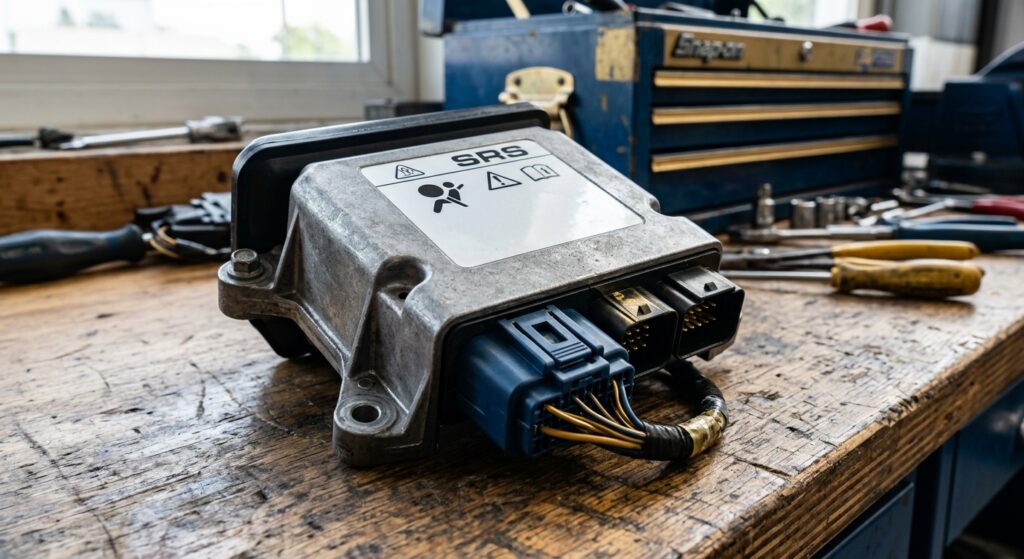
The SRS (Supplemental Restraint System) control module — sometimes called the airbag computer — records crash events, airbag firings, and signals from sensors. After a deployment the module marks itself to prevent re‑arming with possibly corrupted crash data. Technically it sets permanent Diagnostic Trouble Codes (DTCs) and may refuse to reinitialize until the crash data is cleared and the module is reset or replaced.
Common symptoms
- Persistent SRS / airbag warning light on the dash
- Airbag warning codes on an OBD‑II / SRS scan (e.g., crash data present)
- Vehicle won’t pass safety inspection or will show multiple related faults
Why a “locked” module is not a minor issue
After deployment the SRS module’s memory holds evidence of the crash. That memory can affect how the restraint system behaves in a subsequent incident. A module that appears “fixed” by bypassing wiring, splicing, or a cheap board‑level hack may look normal but could fail to deploy other restraints when needed — a life‑safety failure.
Risks of DIY repair kits, splices, and board hacks
- They can mask faults without restoring proper sensor inputs or crash history handling.
- Manufacturer airbag systems are calibrated to work as an integrated system; a patched module often won’t meet those specs.
- Board‑level or webbing repairs are not approved by OEMs and can leave a vehicle unsafe while offering a false sense of security.
What’s the correct fix?
There are two correct, manufacturer‑acceptable outcomes:
- Reset / reprogram the existing SRS module when possible (clears crash data and restores factory state), or
- Replace the module or any deployed pyrotechnic components (airbags, pretensioners, seat belts) when they are single‑use items.
LockNCal specializes in safe, compliant SRS module resets (nationwide mail‑in) and in‑person services in the Dallas‑Fort Worth area.
How an SRS airbag module reset works
The reset process is not simply erasing a light. A professional reset includes:
- Verification of crash data and deployed components using a scan tool
- Clearing recorded crash memory in an OEM‑compliant way
- Reprogramming or restoring required calibration parameters so the module communicates correctly with the vehicle
- Confirming the SRS light goes out and no related faults remain
Mail‑in vs. mobile reset
For most vehicles across the U.S., the fastest, most affordable option is the nationwide mail‑in SRS airbag module reset. LockNCal also offers mobile resets for DFW customers who prefer an on‑site service.
LockNCal’s nationwide mail-in reset includes free two-way shipping, and most modules ship back within about 24 business hours — you’ll see your exact price in about 60 seconds when you book online. If you want to confirm what applies to your vehicle, see your exact price and book online using the booking form.
Learn more about the mail‑in process and what to expect on our mail‑in service page: mail‑in SRS airbag module reset.
When you might need replacement instead of reset
Some situations require replacement rather than reset:
- Any deployed airbag or fired pretensioner (these are single‑use pyrotechnic devices and must be replaced)
- Physical damage to the module or connectors that prevents safe operation
- Manufacturer instructions specify module replacement after certain crash severities
In those cases, LockNCal can help with diagnostics, module programming, or guide you to the correct replacement workflow — but the replace step itself (installing new airbags, seat belts, or pretensioners) is performed by certified collision shops or dealers per OEM requirements.
Quick reference: symptoms, likely cause, and recommended action
| Symptom | Likely cause | Recommended action |
|---|---|---|
| SRS light stays on after a collision | Crash data recorded; module locked | Scan, then SRS module reset or replace deployed components |
| Airbag codes + no deployed airbags visible | Stored crash event or sensor fault | Diagnostic scan, clear crash memory if appropriate, reprogram module |
| Vehicle fails safety inspection because of SRS faults | Permanent DTCs from recorded deployment | Professional reset and verification; mail‑in reset available nationwide |
Practical steps you can take now
- Do not attempt to bypass the SRS system or use a cheap repair kit.
- Get a diagnostic scan that shows the DTCs and whether crash data is present.
- If crash data exists, choose a compliant reset or replacement path — consider our mail‑in services overview or mobile options if you’re in DFW.
- If parts were deployed (airbags, pretensioners), plan for replacement of those components and then reset/programming as required.
Common questions and misconceptions
People often ask whether clearing codes with a generic OBD scanner will fix a locked module. It usually will not — a generic clear can remove the code from the dash but not clear crash data or restore the module’s internal crash‑event state. That requires an OEM‑compliant reset procedure.
FAQ
Q: What does “locked after deployment” mean for my airbag module?
A: It means the SRS control unit logged the deployment and set permanent crash data that prevents the module from reinitializing until professionally reset or replaced.
Q: Can I drive my car if the SRS light is on after a deployment?
A: Technically the vehicle may be drivable, but the restraint system may not protect you properly in a second crash. Arrange a reset or replacement promptly.
Q: Can I clear the crash data myself with a scanner?
A: No. Generic code clearing does not remove the recorded crash event or restore the module; an OEM‑compliant reset or programming procedure is required.
Q: How long does a mail‑in reset take and how much does it cost?
LockNCal’s nationwide mail-in reset includes free two-way shipping, and most modules ship back within about 24 business hours — you’ll see your exact price in about 60 seconds when you book online.
Q: Are repair kits a safe alternative?
A: No. Repair kits, splices, and board hacks can hide problems and leave the system unsafe. The only safe options are proper replacement of single‑use parts or a professional module reset/programming.
Next steps and where to get help
If your airbag module is locked after deployment, the fastest way to resolve it is a verified reset by a trained technician. For most U.S. vehicles, our nationwide mail‑in SRS airbag module reset is the most convenient, affordable option — learn more on our mail‑in SRS airbag module reset page. If you’re in Dallas‑Fort Worth and prefer a technician to come to your vehicle, we also provide mobile services locally.
To confirm your exact price and schedule service, see your exact price and book online using our booking form: see your exact price and book online. Or call us at (469) 277-7277 for help deciding which option fits your situation.


