 Skip to content

U0140 Code — Proven Guide for Lost BCM (Critical)
Direct answer: The u0140 code means the vehicle’s network has lost communication with the Body Control Module (BCM). Fixing it requires systematic diagnosis—check battery and network health, wiring, fuses and connectors, then repair or replace and properly program the BCM if it’s failed.
Not near Dallas–Fort Worth? Mail us your airbag / SRS module.
We reset most airbag control modules by mail, with free 2-way shipping and a fast turnaround. We clear the crash data, restore factory settings, and ship it right back, anywhere in the U.S. Book online and you’ll see your firm price in about 60 seconds.
Key Takeaways
- The u0140 code indicates lost communication with the BCM, not a single definitive part failure.
- Common causes include poor battery/charging voltage, blown fuses, bad grounds, damaged wiring, water intrusion, or a failed BCM.
- Diagnosis is a step-by-step process: scan, confirm symptoms, inspect power/grounds/fuses, test network messages, and swap or reprogram modules if needed.
- LockNCal handles module programming in DFW and can help with BCM-related module work; nationwide mail-in services are available for certain safety modules.
What the u0140 code actually means
The u0140 code is a CAN-bus/network communication trouble code that means your vehicle’s control network is not receiving messages from the Body Control Module (BCM). That can happen for many reasons: the BCM itself may be dead or asleep, power or ground to the BCM may be missing, wiring or connector issues can interrupt the messages, or another nearby module is disrupting the bus.
Why it’s not helpful to assume one part
Because the CAN bus is shared, the u0140 code does not tell you exactly which physical component failed. Treat the code as a symptom of a communications problem and follow a logical test order; replacing parts without proper diagnosis often fails to fix the root cause.
Common causes of a U0140 code
- Low battery voltage or a weak/failing alternator causing modules to drop offline.
- Blown fuses or poor battery/BCM grounding.
- Damaged wiring, chafed harnesses, corroded connectors, or water intrusion near the BCM or junctions.
- A failed BCM or another module clamping the CAN bus.
- Aftermarket electronics or improper module programming causing address conflicts on the network.
Symptoms drivers see with u0140 code
- Multiple electrical functions fail or act erratically (interior lights, door locks, wipers, keyless entry).
- Instrument cluster warnings or multiple network-related codes alongside u0140.
- Vehicle may go into limp mode, or certain convenience features stop working.
- Intermittent faults: everything works sometimes and fails other times.
Step-by-step technician diagnosis (realistic workflow)
Work in this order—don’t guess. Good diagnosis saves time and prevents unnecessary module swaps.
- Verify the code and scan for related codes. Record freeze-frame data and any other U or B codes. The exact manufacturer sub-code suffix is a vendor detail—confirm in the OEM service information for your vehicle.
- Confirm symptoms. Which systems are affected? Is the loss continuous or intermittent?
- Check battery and charging system. A healthy, charged battery and steady charging prevents many module communication dropouts.
- Inspect fuses, fusible links and BCM power/ground pins. Corroded pins or a missing ground are a frequent and simple fix.
- Visually inspect wiring and connectors. Look for water damage, chafing, rodent chewing, or disconnected plugs near the BCM and junction boxes.
- Backprobe CAN bus lines with a good scope or a CAN diagnostic tool. Confirm bus activity and proper message voltages/patterns (professional tools required).
- Isolate modules. If a module is shorting the bus, disconnecting suspect modules (one at a time) can show whether the bus returns to normal.
- When the BCM appears failed: confirm with OEM test procedures, then replace and program/configure the new or refurbished BCM according to the manufacturer’s programming steps.
Common tests and expected results
| Test | What it checks | If test fails |
|---|---|---|
| OBD-II full network scan | Finds related U and B codes and message activity | Record all codes; proceed to power/ground checks |
| Battery/charging check | Voltage stability under load | Charge battery and re-test; inspect charging system |
| Fuse & ground inspection | Power to BCM and clean ground return | Replace blown fuses, clean or restore ground points |
| Visual wiring inspection | Physical harness damage or water intrusion | Repair wiring harness, replace connectors per OEM |
| Disconnect suspect module | Finds bus-clamping or shorting module | Isolate and replace the offending module |
When the problem is the module itself
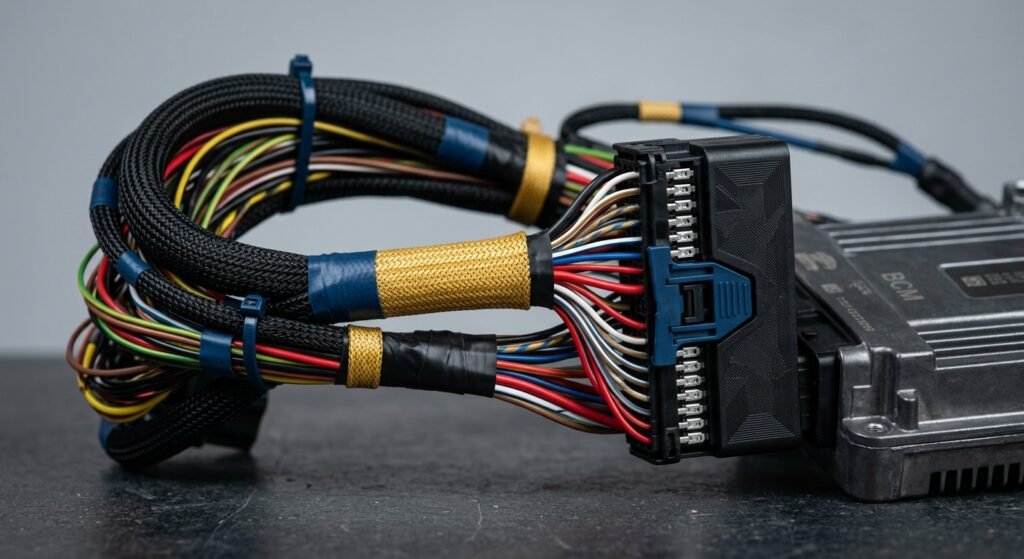
If diagnosis shows the BCM has failed, the correct path is to replace the BCM and program it for the vehicle. Replacing a module without correct programming/configuration will usually not restore full functionality. For many modules, programming requires OEM-level tools and procedures.
LockNCal offers professional module programming in DFW for American and Asian vehicles 2008 and newer. If the failed module is an SRS/airbag module and you need the crash data cleared or the module reset, our nationwide mail-in SRS airbag module reset covers all makes and models 2008+—ship from anywhere in the U.S.
Is it safe to drive with a U0140 code?
That depends on which systems are affected. If u0140 is only causing non-critical convenience features to fail (interior lights, some door functions) it may be drivable, but if safety systems—airbags, stability control, or alarm/immobilizer—are affected, the vehicle may be unsafe to drive. Always confirm which systems failed and consult a technician when in doubt.
What to tell your mechanic or shop
Provide a full scan report (all U and B codes), describe symptoms and when they occur, and note any recent work or aftermarket installs. Ask the shop to follow the logical power/ground/wiring tests above before recommending module replacement. If the fix requires programming, ask whether they will perform module programming or if the vehicle needs a specialist. If you’re in DFW, LockNCal’s module programming service handles replacement programming for American and Asian vehicles 2008+.
If your vehicle has open manufacturer recalls, those can sometimes relate to electrical modules—check your VIN for open recalls at the NHTSA site before replacing modules.
How much will it cost?
Costs vary widely by vehicle, module type, and whether wiring or connectors require repair. For an exact quote, use LockNCal’s quick online booking form to get a tailored estimate in about 60 seconds and schedule service: Schedule an appointment.
Real-world tips and pitfalls
- Don’t assume a module swap without programming will fix the issue—many modules need vehicle-specific coding.
- Aftermarket electronics often cause network issues; temporarily remove them during diagnosis.
- Water damage to connectors is common in BCM failures—look for corrosion before replacing modules.
- If you need an in-person diagnostic for airbag/SRS or ADAS faults in DFW, LockNCal’s vehicle diagnostic service covers those systems.
Summary: a practical checklist for u0140 code
- Get a full network scan and save the report.
- Confirm what electrical systems are affected.
- Check battery, charging system, fuses, and grounds.
- Inspect wiring and connectors for damage or water intrusion.
- Isolate modules and confirm whether the BCM itself is faulty.
- If replacement is required, ensure correct programming/configuration.
FAQ
What does the u0140 code mean?
The u0140 code means the vehicle’s network has lost communication with the Body Control Module (BCM). It’s a network-level symptom that requires further testing to find the root cause.
Can a dead battery cause u0140?
Yes. Low or unstable battery/charging voltage can cause modules to drop offline and set communication codes. Always confirm battery and charging health early in diagnosis.
Is the BCM repairable?
LockNCal does not perform board-level repairs. If the BCM is confirmed failed, the correct approach is replacement and programming per OEM procedures.
Will clearing the code fix it?
Clearing the code temporarily removes the stored fault but does not fix the underlying cause. If the cause remains, the code will return.
Can LockNCal help with this code?
Yes. In DFW we offer module programming and diagnostics for safety and network issues on American and Asian vehicles 2008+. For certain safety modules like SRS airbag modules, our nationwide mail-in airbag module reset is available for all makes 2008+.
If you need professional module programming or a dependable diagnostic in the DFW area, schedule module programming now at https://lockncal.com/module-programming/ or call (469) 277-7277 to discuss your vehicle and get an exact quote.
Authoritative safety reference: NHTSA vehicle safety & recalls.


