 Skip to content

Direct answer: The Chrysler P0420 code means “Catalyst System Efficiency Below Threshold (Bank 1)” — the vehicle’s OBD-II system thinks the catalytic converter (or related sensors) isn’t reducing emissions as expected. Fixing it requires proper diagnosis (scan tool data, oxygen sensor checks, exhaust leaks, and engine health) and usually replacing a failed catalytic converter or faulty oxygen sensor.
Key Takeaways
- Chrysler P0420 code = Catalyst System Efficiency Below Threshold (Bank 1).
- Common causes: worn catalytic converter, bad O2 sensors, exhaust leaks, or upstream engine problems (misfires, rich/lean running).
- Diagnosis relies on live OBD-II data, sensor tests, and a step-by-step elimination process — don’t just clear the code.
- Fixes typically mean replacing a failed catalytic converter or oxygen sensor and correcting root causes.
- Most vehicles remain driveable short-term, but you may fail emissions testing and should address persistent faults promptly.
What the Chrysler P0420 code means
The Chrysler P0420 code stands for the manufacturer-neutral definition: “Catalyst System Efficiency Below Threshold (Bank 1).” In plain terms, the engine control module (ECM/PCM) monitors upstream and downstream oxygen sensors and expects the downstream sensor to show much smaller changes once the catalyst is working. When the downstream sensor’s readings indicate the catalyst isn’t doing its job, the PCM sets P0420.
Not near Dallas–Fort Worth? Mail us your airbag / SRS module.
We reset most airbag control modules by mail — free 2-way shipping and a fast turnaround. We clear the crash data, restore factory settings, and ship it right back, anywhere in the U.S.
Common causes of P0420 on Chrysler vehicles
Some causes are mechanical, some are sensors or electronics, and some are secondary effects from other engine problems. Typical causes include:
- Worn or failed catalytic converter (most common).
- Faulty downstream or upstream oxygen (O2) sensor(s) — poor response, heater failure, or bad wiring.
- Exhaust leaks near the oxygen sensors or catalyst that let fresh air in and skew readings.
- Engine misfires, rich/lean conditions, or fuel system problems that overwhelm the catalyst.
- Physical damage or contamination of the catalyst (oil or coolant burning through the converter).
Symptoms you (or a technician) will notice
- Check Engine light (CEL) steady, usually with P0420 stored.
- Poor fuel economy if the engine is running rich due to underlying causes.
- Failed emissions test or readiness monitor failures during inspection.
- Rarely, rattling from a physically broken catalytic converter at the exhaust.
- Noisy engine or misfire codes accompanying P0420 — these indicate root-cause engine problems.
Step-by-step technician diagnosis (what a trusted shop will do)
When you get a scan, insist on a methodical diagnosis rather than just swapping parts. A competent tech follows a logical order of tests:
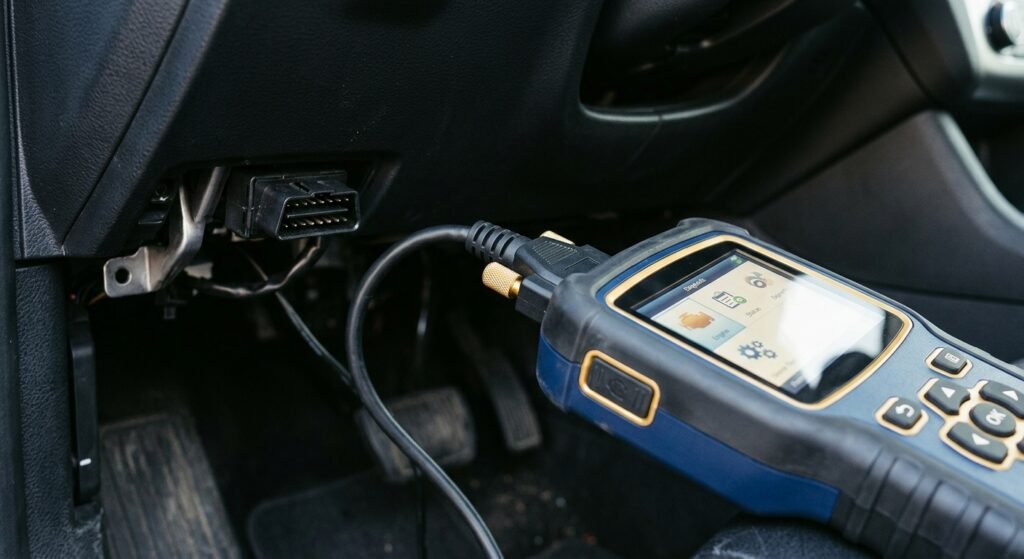
- Confirm the code and capture freeze-frame & live data with a bi-directional scan tool for your Chrysler model.
- Check readiness monitors and recent freeze-frame to see conditions when the code set.
- Inspect for obvious problems: damaged sensors, disconnected plugs, wiring chafing, or exhaust leaks near flanges and sensor ports.
- Compare upstream (pre-cat) and downstream (post-cat) O2 sensor voltages and switching behavior while the engine is at operating temperature.
- Upstream sensor should switch frequently (rich/lean). Downstream should be much steadier if the catalyst is working.
- Check O2 sensor heaters and sensor response with a scan tool or a meter. Slow or dead heaters and sluggish sensors can mimic a bad catalyst.
- Look for related trouble codes — misfires, fuel trim extremes, or sensors — and address them first. A misfiring cylinder can damage the catalyst quickly.
- Perform a smoke or pressure test to find exhaust leaks that could let air in ahead of the downstream sensor.
- If sensors and engine operation look healthy, measure catalyst temperature upstream vs downstream under load — a healthy converter shows a significant temperature rise across it.
- When in doubt, use a professional oxygen sensor simulator or a known-good sensor to confirm whether downstream readings change appropriately.
Live data points technicians watch
- Upstream O2 voltage and switching frequency (Bank 1).
- Downstream O2 voltage amplitude and comparison to upstream.
- Short-term and long-term fuel trims (STFT/ LTFT).
- Instantaneous fuel economy and commanded/actual injector trims.
- Misfire counters and catalytic temperature PIDs if available.
Common tests and quick reference
| Test | What it checks | Why it matters |
|---|---|---|
| OBD live data (up/down O2) | Sensor switching & relative voltages | Tells if the catalyst is actually changing downstream waveform |
| Physical exhaust inspection | Leaks, damage, sensor placement | Leaks can produce false P0420 without a bad converter |
| O2 sensor heater/resistance | Heater circuit and sensor health | Cold sensors give bad readings until warmed |
| Catalyst temperature differential | Upstream vs downstream temps under load | Healthy converter runs hotter downstream |
What actually fixes a Chrysler P0420 code
There’s no one-size-fits-all “fix.” Correct repair depends on the failed component or root cause identified by the diagnosis. Typical corrective actions include:
- Replacing a physically failed catalytic converter (common when the catalyst is chemically depleted or internally damaged).
- Replacing a slow or failed downstream or upstream O2 sensor when tests show poor response or heater failure.
- Repairing exhaust leaks, replacing gaskets, or tightening sensor ports if leaks were skewing readings.
- Fixing engine issues (misfires, fuel injector faults, coolant/oil burning) that damage the catalyst over time.
Because catalytic converters are emission-control devices with legal and environmental considerations, follow OEM procedures and local regulations when replacing them.
Is it safe to drive with P0420?
Often, yes for short trips — P0420 usually doesn’t cause immediate drivability loss. However:
- You may fail an emissions test or leave the EVAP/monitor readiness incomplete.
- If the cause is a misfire or oil/coolant burning, driving can worsen damage to the catalyst or engine.
- Address persistent or multiple codes promptly. If you see other warnings (loss of power, severe misfire, overheating), stop driving and have it checked.
How much will fixing it cost?
Costs vary widely by exact cause and vehicle. A faulty O2 sensor is cheaper than a catalytic converter replacement. Get a full diagnostic before you authorize parts. Avoid shops that immediately recommend converter replacement without performing the tests above.
Prevention and tips
- Keep up with tune-ups, spark plugs, and ignition components to prevent misfires that damage converters.
- Don’t ignore oil or coolant leaks — burning fluids contaminate catalysts.
- If you see intermittent stalling or rough running, scan for codes and address them early.
- When buying used Chrysler vehicles, include a Pre-Purchase Vehicle Inspection to identify existing emissions or engine issues before you buy: Pre-purchase vehicle inspection.
For an authoritative overview of OBD-II and emissions monitoring, see the EPA’s OBD program documentation: EPA OBD Program.
When to see a mechanic
Have a trusted mechanic run a full diagnostic if:
- The P0420 code returns after clearing.
- There are accompanying misfire or fuel-trim codes.
- You fail an emissions inspection or notice declining fuel economy.
LockNCal focuses on vehicle safety and security systems (airbags/SRS, ADAS calibration, keys/immobilizer) and mobile diagnostics for safety systems; for engine and emissions repairs like P0420 you should see a reputable repair shop or dealer for full engine and exhaust service.
Conclusion
The Chrysler P0420 code means “Catalyst System Efficiency Below Threshold (Bank 1).” Proper repair starts with a careful diagnosis — live OBD-II data, exhaust inspection, and sensor checks — so you only replace what’s necessary. If you’re buying a used Chrysler or want a broader inspection that includes emissions concerns, consider a professional pre-purchase inspection to avoid surprise repairs. You can schedule a Pre-Purchase Vehicle Inspection or diagnostic appointment here: https://lockncal.com/mobile-pre-purchase-vehicle-inspection/ or call (469) 277-7277 to discuss next steps.
FAQ
Q: What does the P0420 code mean on my Chrysler?
A: It means “Catalyst System Efficiency Below Threshold (Bank 1).” The PCM thinks the catalytic converter or related sensors aren’t meeting emissions performance standards.
Q: Will clearing the code make the problem go away?
A: Clearing the code only removes the symptom temporarily. If the underlying issue remains, the code will likely return. Proper diagnosis is required to fix the root cause.
Q: Can a bad O2 sensor cause P0420?
A: Yes. A slow or failed downstream or upstream O2 sensor can mimic a bad catalytic converter. Technicians test sensors first before replacing the converter.
Q: Will P0420 make my Chrysler undriveable?
A: Generally no — most vehicles remain driveable with P0420. However, you may fail emissions tests, and if the code is caused by misfires or burning oil, continued driving can cause more damage.
Q: Should I replace the catalytic converter right away?
A: Only after a proper diagnostic confirms the converter is the problem. Many shops perform sensor and exhaust tests first to avoid unnecessary converter replacement.


