 Skip to content

Chrysler DTC B0010 2B — Causes, Diagnosis & Fix
Direct answer: Chrysler DTC B0010 2B means a Passenger Frontal Stage 1 Deployment Control fault — a fault in the passenger airbag deployment circuit. This code points to the passenger airbag wiring, connector, or the SRS/airbag control module (or its programming). The correct remedy is a safe diagnostic sequence and, when appropriate, module reset or module programming — not guesswork.
Key Takeaways
- Chrysler DTC B0010 2B = Passenger Frontal Stage 1 Deployment Control – a fault in the passenger airbag deployment circuit.
- Common causes: damaged wiring, poor connector contact, a faulty passenger airbag, or stored crash data in the SRS module.
- Diagnosis requires a full SRS scan, connector and wiring checks, and confirming whether the airbag or pretensioner has deployed.
- The proper fix is targeted: replacement of single-use pyrotechnic parts if deployed, or SRS module reset/programming and wiring repair by qualified technicians.
- LockNCal provides SRS airbag module resets (mail-in nationwide and mobile in DFW) and module programming — not repairs to pyrotechnic components.
What B0010 2B Actually Means
The verified definition for this code is: Passenger Frontal Stage 1 Deployment Control – a fault in the passenger airbag deployment circuit. That description tells you exactly where to look: the electrical path and control for the passenger frontal airbag stage 1 (the first-stage inflator). It does not itself say whether the airbag has already deployed or whether the fault is purely electrical, so a full scan and physical inspection are required.
Not near Dallas–Fort Worth? Mail us your airbag / SRS module.
We reset most airbag control modules by mail — free 2-way shipping and a fast turnaround. We clear the crash data, restore factory settings, and ship it right back, anywhere in the U.S.
Common Causes
- Battery disconnects, crash events, or prior airbag deployment storing crash data in the SRS module.
- Damaged or rubbed-through wiring in the passenger airbag circuit (under the glovebox, dash harness, or in the passenger seat rail area).
- Loose, corroded, or pushed-back connectors at the passenger airbag, clock spring, or SRS module connector.
- Faulty passenger airbag inflator or internal short in the passenger airbag itself.
- Faulty SRS/airbag control module that has logged deployment or circuit faults — sometimes remedied by reset/programming if the module itself is healthy.
What the Driver Typically Notices
- Airbag warning light or SRS indicator on the dash stays lit or flashes.
- Possible disablement of supplemental restraint features (seat belt pretensioners may be affected).
- In some cars, the passenger airbag status message may indicate “passenger airbag off/on” inconsistently.
- After a collision, a B0010 2B may appear along with other crash-related codes.
Is It Safe to Drive?
Short answer: drive with caution. An illuminated SRS light means one or more airbag components may not deploy correctly in a crash. The car is generally driveable for short distances, but you should prioritize getting the fault diagnosed and corrected before relying on the vehicle for normal safety. If the vehicle was in a collision or you see deployed airbags or fired pretensioners, do not drive it — tow it to a shop.
Step-by-step Technician Diagnosis (Tools and Order)
The correct diagnostic approach follows a clear sequence. This is the order a trained technician should use to find the root cause:
- Confirm the code with a full OEM-level SRS scan tool and record active vs. historic status and freeze frame data. Use a scan tool that reads Chrysler/Fiat/Jeep codes and crash data from the SRS module.
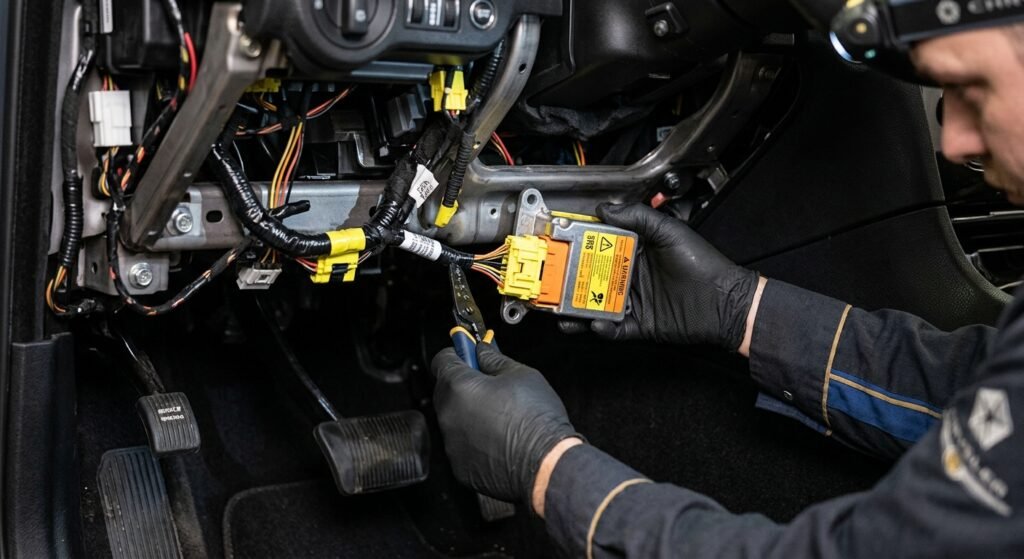
- Visually inspect the passenger airbag assembly and connectors. Check the inflator harness under the glovebox and the passenger-side seat area for rubbed wiring or damaged clips.
- Check SRS module connectors (usually under center console or behind kick panels) for pushed-back pins, corrosion, or water ingress. Do not disconnect or probe connectors while the system is powered without following OEM safety steps (battery disconnect, stored energy handling).
- Verify passenger presence system/occupant classification inputs if the vehicle uses an occupant detection module — a fault here can mask deployment readiness.
- Use a multimeter to check circuit continuity and resistance values on the passenger airbag circuit per factory specs if available. Look for shorts to ground or open circuits.
- If wiring and connectors check out, inspect the airbag inflator resistance at the airbag connector to detect internal short or open loops (follow OEM procedures and safety precautions).
- If crash data is present, download or capture crash event information. If module shows stored deployment/impact data, treat the module and vehicle as crash-involved and follow airbag replacement procedures.
- After repairs or replacements (airbag, connectors, wire harness repair), clear codes and perform a verification test drive with a scan to confirm the B0010 2B does not return.
Tools and equipment commonly used
- OEM-capable SRS scan tool that reads and clears airbag crash data.
- Multimeter for continuity and resistance checks.
- Manufacturer wiring diagrams and pinouts (to trace circuits safely).
- Basic hand tools, trim removal tools for safe access to connectors, and an insulated workspace.
Quick Troubleshooting Table
| Symptom | Likely Cause | Recommended Action |
|---|---|---|
| Persistent SRS light only | Stored code in SRS module or minor connector issue | Run full SRS scan; inspect connectors; reset if module shows no crash event |
| Code after collision | Crash data stored, possible deployment | Do not drive; inspect for deployed airbags and replace single-use parts and affected components |
| Intermittent SRS light | Intermittent open/short in wiring or poor connector contact | Wiggle test connectors, continuity checks, repair harness sections |
| Passenger airbag status incorrect | Occupant classification/seat sensor fault | Scan occupant module, reset or reprogram occupant classification module as needed |
The Correct Fix
There are two broad outcomes after diagnosis:
- If the passenger airbag or pretensioner has deployed or been fired, those components are single-use pyrotechnic parts and must be replaced with manufacturer-approved parts. LockNCal does not repair pyrotechnic components — replacement is the safe, correct choice.
- If the fault is stored in the SRS/airbag module (crash data or coded fault) but the hardware is intact, a proper SRS module reset or module programming can clear crash data and restore normal function. This is LockNCal’s flagship capability: the nationwide mail-in SRS Airbag Module Reset & Crash Data Deletion service and mobile resets in DFW.
For owners who prefer mail service, LockNCal provides a secure mail-in process with free 2-way shipping and fast turnaround. For local customers in Dallas-Fort Worth, on-site mobile resets are available when safe and practical.
When to Involve a Specialist
- Any time crash data is present or the vehicle has been in a collision.
- If you are not comfortable working around SRS connectors and pyrotechnic devices — SRS systems require careful handling.
- When initial wiring checks and connector cleaning do not clear the code, because module-level service (reset/programming) may be needed.
How LockNCal Can Help
LockNCal specializes in airbag/SRS module resets and module programming. If your Chrysler shows B0010 2B and a scan shows the module has stored crash data or SRS faults but airbags are intact, our nationwide mail-in airbag module reset service can clear the module and restore normal SRS behavior, or we can provide mobile service in DFW. For a broader picture of safety work we do, see our vehicle safety system services overview.
Next Steps to Get It Fixed
- Get the vehicle scanned with an OEM-capable SRS tool and save the code report (B0010 2B and any related codes such as seat belt pretensioner codes).
- If crash damage or deployment is present, arrange for professional replacement of airbags and pretensioners before any reset.
- If no deployment is present and the module simply needs clearing or programming, consider our mail-in airbag module reset or schedule service using our booking page.
FAQ
Q: What does Chrysler DTC B0010 2B mean?
A: It means Passenger Frontal Stage 1 Deployment Control – a fault in the passenger airbag deployment circuit. It points to the passenger airbag circuit or the SRS module and requires a proper SRS scan and inspection.
Q: Can I clear B0010 2B by disconnecting the battery?
A: No. Disconnecting the battery may reset some modules temporarily but does not clear crash data from the SRS module reliably and is unsafe if you are not following OEM procedures. Use a proper SRS scan tool and follow safety steps.
Q: Will LockNCal repair my deployed airbag or seat belt pretensioner?
A: No. Deployed airbags and fired pretensioners are single-use pyrotechnic devices and must be replaced with manufacturer-approved parts. LockNCal performs SRS module resets, programming, diagnostics, and calibrations, but does not repair pyrotechnic components.
Q: How long does a mail-in SRS module reset take?
A: Our national mail-in SRS airbag module reset service offers free 2-way shipping; most modules return within about 24 business hours after receipt. See the mail-in service page for current turnaround details and to start the process.
Q: Can a faulty occupant detection module trigger B0010 codes?
A: Yes. Occupant classification and detection inputs can affect passenger airbag readiness and may trigger related codes. A full SRS scan should include the occupant module and seat sensor checks.
For a secure, fast mail-in SRS reset or to book mobile service in Dallas–Fort Worth, visit our mail-in reset page or schedule an appointment and call (469) 277-7277 to discuss your vehicle.


