 Skip to content

Mazda B1213 — Fewer Than Two Keys: Causes & Fix
What B1213 means: Less Than Two Keys Programmed to the System. It is a immobilizer / keys code.
Not near Dallas–Fort Worth? Mail us your airbag / SRS module.
We reset most airbag control modules by mail — free 2-way shipping and a fast turnaround. We clear the crash data, restore factory settings, and ship it right back, anywhere in the U.S.
Does LockNCal handle this? Yes — B1213 involves your vehicle’s immobilizer / keys system, which is exactly what our mobile team specializes in. Call or text (469) 277-7277 or book online and we’ll take care of it.
Direct answer: Mazda code B1213 means the vehicle’s immobilizer system currently has fewer than two programmed keys — in practice it reports only one key on file. The actual fix is to add/program a second valid key or reprogram the immobilizer using dealer-level or locksmith tools so the system accepts the correct number of keys.
Key Takeaways
- Mazda B1213 = fewer than two keys programmed; the car believes only one key exists.
- Symptoms include no-start, key warning lights, or inability to program new keys until diagnosis confirms key count.
- Diagnosis requires a full immobilizer scan, a key presence test, and checking the BCM/immobilizer module communications.
- Correct fix: program at least one additional valid key or reprogram the immobilizer; an automotive locksmith or dealer can do this.
- LockNCal offers mobile key and fob programming and can come to you; schedule an appointment if you need on-site help.
What Mazda B1213 actually means
The verified meaning of B1213 is simple and specific: “Fewer than two keys programmed to the system – the vehicle has only one programmed key on file.” This is not an engine, transmission, or airbag code — it’s an immobilizer/key registration status message from the vehicle’s security system. It tells you the stored key count is below the expected number.
Why the vehicle cares (and why two keys?)
Manufacturers usually expect a minimum number of keys registered to the immobilizer database for redundancy and recovery. If the system detects only one key, it may flag that as a fault because losing that single key would leave the owner stranded. The code is a status flag — it doesn’t mean the single key is invalid, but it does mean you should restore at least one additional programmed key.
Common causes
- Owner literally has only one programmed key (the most common reason).
- A previously programmed spare key failed or its transponder was damaged and got erased from the system during a battery change or improper programming attempt.
- Immobilizer/BCM communication glitch after battery disconnect, jump-start, or module replacement.
- Someone attempted a key programming procedure and aborted partway, leaving the system with one key on file.
Symptoms drivers notice
- Key/immobilizer warning lamp on the dash.
- Vehicle refuses to accept a new spare key until proper programming is performed.
- Intermittent no-start events if the remaining key’s transponder is marginal (rare but possible).
- In rare cases, failure to recognize keys after battery replacement or remote replacement.
Quick comparison: symptom vs likely cause
| Symptom | Likely cause | First check |
|---|---|---|
| Only one working key available | That’s the cause | Confirm you physically have a single programmed key |
| New spare won’t program | Programming sequence not completed / wrong tool | Verify scan tool supports Mazda immobilizer programming |
| Key recognized sometimes | Weak transponder or antenna/coil issue | Test key detection with dealer-level scan tool |
Step-by-step diagnosis (what a technician actually does)
Follow this order — it’s efficient and separates simple fixes from complex ones.
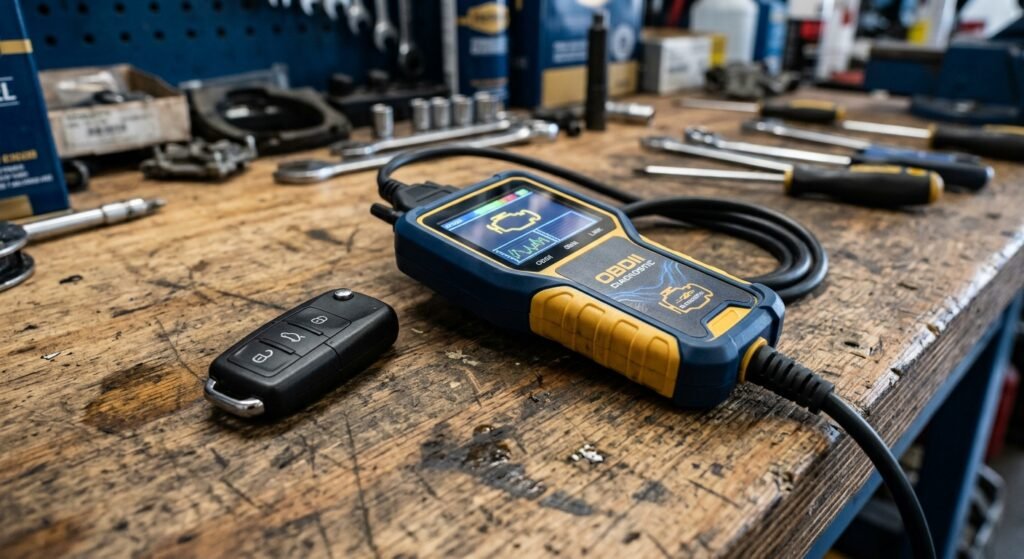
- Initial scan: Hook up a factory-level or capable aftermarket OBD2 scanner that can read immobilizer/BCM codes and key counts. Record the stored key count and any related codes.
- Confirm key inventory: With the scanner, ask the vehicle to list programmed keys (many Mazda tools will show key IDs or a count). Physically verify which keys you have and if they respond.
- Key test: Test each key one at a time — attempt door unlock, ignition recognition (or push-button detection), and remote functions. Swap fob batteries if remotes are unresponsive.
- Key reprogram attempt: If you have a spare blank or an existing unprogrammed key, attempt programming with a dealer-level tool or known-good locksmith tool. If the tool rejects programming, capture the exact error message.
- Check battery/communication events: Ask the owner about recent battery disconnects, module replacements, or unsuccessful programming attempts that could have reset counts.
- Network and module checks: If key programming fails and key hardware is good, check the immobilizer antenna ring (around the ignition or push-button area), immobilizer control unit, and BCM for communication faults using the scanner. Look for CAN or LIN bus errors affecting key registration.
- Decision point: If it’s simply one key on file, programming another key is the correct fix. If the immobilizer module or antenna is faulty, the module may need programming or replacement plus reprogramming of keys — that’s a more involved job.
Correct fix and options
The correct resolution for B1213 is to restore the expected key count by adding/programming at least one additional valid key into the immobilizer database. You generally have two practical options:
- Use an automotive locksmith: A qualified locksmith with Mazda-compatible programming tools can come to you and add a key. This is usually faster and cheaper than a dealer visit for many owners. LockNCal offers on-site key and fob programming and mobile car key copy services if you need a tech to come to your location.
- Dealer programming: The dealer can program keys and reconfigure immobilizer data; this is often straightforward but may cost more and require an appointment.
Either approach programs a new key and writes it to the immobilizer so the stored key count increases and B1213 clears. If an immobilizer or antenna fault prevents programming, that fault must be diagnosed and corrected before new keys will register.
When it’s safe to drive
If your only issue is a B1213 code but the existing key reliably starts and operates the vehicle, it is generally safe to drive short distances. However, because you only have one programmed key, losing it will leave you stranded — plan to get a second key programmed promptly. If you’re experiencing intermittent no-starts or the key is marginally recognized, avoid long trips and arrange on-site assistance.
Notes about related searches: p0513 subaru / subaru p0513
Some readers arrive here after searching for “p0513 subaru” or “subaru p0513.” That code is unrelated to Mazda B1213; DTCs beginning with P typically reference powertrain systems, while B-codes are body/comfort or chassis-related. If you meant the Subaru code, run a full scan on the Subaru and confirm the exact definition for that model and year — it will require a different diagnostic path than immobilizer/key work.
When a deeper repair is needed
If programming a new key repeatedly fails, or the immobilizer refuses to accept any keys, the problem may be a failed immobilizer module, damage to the antenna ring, or BUS/BCM communication errors. Those cases require module-level diagnostics and likely module programming/replacement by a dealer or specialist. In those scenarios a technician will often need to inspect connectors, test the transponder coil resistance, and verify CAN bus communication — steps that are beyond a simple key programming session.
Useful resources and next steps
- Need a mobile key programmer? See LockNCal’s mobile car key copy services for on-site help: mobile car key copy.
- If the vehicle requires module programming as part of the fix, our mobile module programming service can help: module programming.
- Ready to book a technician to come to you? Schedule an appointment or call (469) 277-7277 for on-site assistance.
FAQ
- Q: What does Mazda B1213 mean?
- A: It means the vehicle’s immobilizer reports fewer than two keys programmed — specifically only one key on file.
- Q: Can I clear B1213 by disconnecting the battery?
- A: No. Disconnecting the battery will not restore missing programmed keys and can sometimes make programming harder; the correct remedy is to add/program an additional valid key using proper tools.
- Q: Can I program a new key myself?
- A: Some owners can program basic remotes, but immobilizer transponder programming usually requires dealer or locksmith tools that can write keys to the immobilizer. Using an inexperienced method can erase existing keys, so professional help is recommended.
- Q: Is it safe to drive with one programmed key?
- A: If the single key works reliably, short trips are usually safe. However, losing that one key would leave you stranded, so you should get a second key programmed as soon as convenient.
- Q: How long does key programming take?
- A: A standard key programming session typically takes 30–90 minutes depending on complexity and whether any module work is required.
If you need professional on-site key programming or a technician to diagnose immobilizer faults, book a visit through our scheduling page: Schedule an appointment, or call (469) 277-7277 for help.


